DD
MM
YYYY

PAGES

DD
MM
YYYY

spot_img

PAGES

Home Blog Page 3246

Reviving Communal Food System in Rural Nigeria: A Technological Approach

0

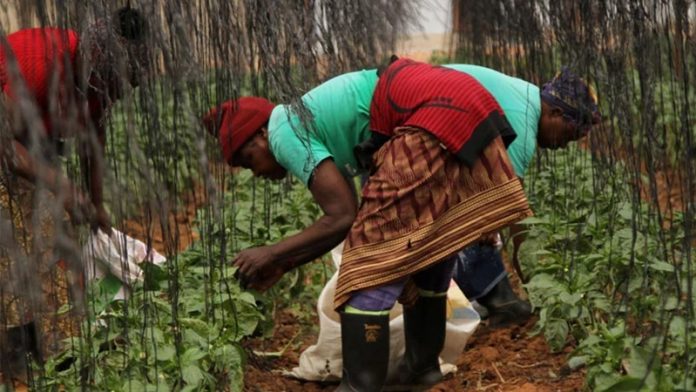
Growing up in rural Nigeria, agriculture was the backbone of our communities. During my teenage years and early twenties, I lived in two villages where farming was the major occupation. The system in place among the young people was a remarkable example of mobilizing community power to farm at scale using crude tools, without the need to hire labor. Groups of about 10-20 young men, usually in the same age bracket, formed teams. These able-bodied men took turns working on each other’s farms, driven not by wages but by the promise of shared harvests and community spirit. When it was your turn, your responsibility was simply to provide enough food for everyone, which was not difficult as the food was locally sourced.

This communal farming system was something I eagerly looked forward to witnessing. The men would move excitedly in groups, working for about 45 minutes to 2 hours on each other’s farms. This collective effort powered the rural agricultural system and kept the cost of goods down, as farmers did not include labor costs in their pricing, only the cost of inputs like seeds and chemicals. During harvest, another system eliminated the need to hire laborers. Women, who were invited to help, were incentivized by taking a portion of the harvest home. For example, if they peeled three basins of cassava, the fourth one was theirs. This motivated them to work hard and quickly, as 25% of everything they harvested was theirs.

However, over the years, young people began to pursue education outside the community and moved to towns in search of better opportunities. They took up non-agricultural jobs and professions like driving, motorcycle taxi riding (Okada), and building, which seemed to offer quicker income than farming. Consequently, farming became unattractive to young people, and these communal farming systems virtually disappeared. Farming has now become more expensive for those who want to farm at scale, as they need to raise money to pay for labor, which is already scarce. The cost of food has begun to rise due to these and other complex factors.

Telling young people to return to the farm just like in the old days is impractical. Instead, we must think of ways to incentivize young people to drive the food system. What if we could leverage technology to modernize these types of communal food systems? I believe it is possible to replicate and modernize the communal farming system using digital technology and leveraging the mental strength of young people.

Imagine creating Agricultural Communal Zones in villages close to towns. These zones would serve as hubs where modern agricultural practices are integrated with traditional communal farming principles. Digital platforms can play a crucial role in coordination and management. Mobile applications can help organize the farming schedule, send reminders, track progress, and facilitate communication among group members. Additionally, social media platforms and online forums can create communities where members share tips, experiences, and organize work schedules.

Access to information is vital for the success of these communal zones. Mobile technology can provide real-time agricultural advice through agricultural extension services. Apps can offer valuable information on best practices, weather forecasts, pest control, and crop management. Furthermore, e-learning platforms can provide online courses and video tutorials on modern farming techniques, soil health management, and sustainable practices, ensuring that all members are well-informed and up-to-date.

In these modern communal zones, the focus shifts from physical to mental strength. Each member of the group is trained to possess modern agricultural skills, ranging from scientific skills to high-tech skills for precision farming and vertical farming technology. They would also learn storage and processing technology, food product development, food safety, marketing, sales, branding, and business management skills. This comprehensive training ensures that within this community of young people, every necessary expertise is available to plan, plant, harvest, process, market, and distribute food. For instance, having a data analyst in the group can help in making informed decisions based on data-driven insights, optimizing yields and reducing waste.

Mechanization and the sharing of tools can greatly enhance productivity in these communal zones. Equipment rental services can be facilitated through platforms where farmers can rent modern farming equipment and tools, such as tractors, harvesters, and irrigation systems. Shared ownership models can also be explored, allowing groups to collectively own and maintain equipment. Additionally, apps can be used to organize group purchases of inputs like seeds, fertilizers, and pesticides, reducing costs through bulk buying.

Market access and sales can be improved by creating e-commerce platforms where farmers can sell their produce directly to consumers, restaurants, and retailers. This can help them achieve better prices by cutting out middlemen. Blockchain technology can be implemented to ensure transparency and traceability in the supply chain, increasing trust and potentially fetching higher prices for produce.

Financial services are crucial for supporting these communal farming systems. Mobile banking services can provide access to credit, savings, and insurance. Microfinance institutions can offer tailored financial products to support communal farming activities. Crowdfunding platforms can also be set up, allowing community farming groups to raise funds for specific projects or equipment.

Data collection and analysis can optimize farming practices within these zones. Farm management software can collect data on farm activities, yields, and input usage, helping in planning and optimizing farming practices. Remote sensing and Geographic Information Systems (GIS) can be utilized to monitor crop health, soil conditions, and land use patterns, ensuring precise and efficient farming.

Sustainable practices can be integrated through precision agriculture technologies like GPS-guided tractors, automated planting systems, and sensors to optimize input use and increase efficiency. Renewable energy solutions, such as solar-powered irrigation systems, can be incorporated to reduce dependency on traditional power sources, promoting sustainability.

In addition to growing crops, these communal zones would include facilities and training for food processing and product development. Young people can learn how to transform raw agricultural products into value-added goods, such as turning cassava into flour or producing canned vegetables. Training in food safety standards ensures that these products meet market requirements and are safe for consumption.

Marketing and distribution are key components of this modern communal system. Digital platforms can facilitate direct sales to consumers through online marketplaces, reducing reliance on middlemen and increasing profit margins for farmers.

Branding and sales training can help young farmers create appealing brands and develop effective marketing strategies to reach wider audiences. Distribution networks can be organized through partnerships with logistics companies, ensuring that products reach markets efficiently and in good condition.

Social and community engagement can be enhanced by creating incentive programs through technology. Digital tokens or points systems can reward productivity and participation in communal farming activities, redeemable for farm supplies or services. Virtual training sessions and workshops can keep the community updated on the latest farming techniques and innovations, ensuring continuous learning and improvement.

By leveraging these technologies and shifting the focus from physical to mental strength, it is possible to replicate and modernize the communal farming system. This approach makes farming more efficient, productive, and attractive to the younger generation, ensuring the sustainability of agricultural practices and improving the overall economic well-being of rural communities.

Conclusion

Reviving the communal food system through technological advancements is not only feasible but necessary to sustain agricultural practices in rural Nigeria. This approach promises to attract and retain young people in agriculture, ensuring food security and economic growth. We invite government bodies, NGOs, and tech companies to support and invest in these initiatives, building a sustainable future for rural Nigeria, powered by community and technology.


Crypto Investment Choices for June 2024: Bitcoin Cash Price and Algorand Up; BlockDAG Excels with $53.5M Presale

0

As the crypto market fluctuates, Bitcoin Cash and Algorand show potential for further increases, with promising growth for BCH and ALGO. In this landscape, BlockDAG, a layer 1 project with an impressive presale, has become a preferred investment, surpassing market leaders with its long-term promise. BlockDAG’s ecosystem has driven its growth, with projections indicating it could hit a $30 target by 2030 through wider adoption. The presale has surged past $53.5 million, fueled by growing investor interest. For those considering which crypto to buy in June 2024, these options are worth a look. 

Bitcoin Cash Price Momentum

Bitcoin Cash has performed well despite a market decline. Over the past week, Bitcoin Cash’s price rose from $453 to $517, showcasing its growth potential. Technical indicators like the Relative Strength Index (RSI) and Moving Average Convergence Divergence (MACD) suggest an ongoing upward trend.

If this momentum continues, Bitcoin Cash could soon break the $600 resistance level. Projections suggest Bitcoin Cash’s price may reach $668.48 by the end of 2024, making it an attractive investment. Bitcoin Cash’s focus on low transaction fees and increased block size supports its long-term appeal to investors.

Algorand Market Cap Growth

Algorand saw significant growth in Q4 2023, with its market capitalization increasing by 123%, far outpacing the general crypto market’s 53% growth. This surge is due to its thriving ecosystem, which saw various innovative applications launch. Transactions on the Algorand network rose by 58% quarter-on-quarter, and fee revenue increased by 60%, reaching its highest level in a year.

Despite a 49% year-on-year decline in staked ALGO and a drop in stablecoin market cap, Algorand’s decentralized finance (DeFi) total value locked (TVL) grew by 109% in Q4 2023. The platform added 1.9 million new addresses, marking a 72% quarter-on-quarter growth, and transaction volumes reached a record high of 5.5 million. The Algorand market cap reflects this substantial growth and ongoing user adoption.

BlockDAG Shines with Stellar Growth Potential

BlockDAG’s ecosystem has driven significant growth, making it a top contender in the crypto market. With a presale raising over $53.5 million and the current batch priced at $0.0122, BlockDAG is attracting investors. This strong start suggests BlockDAG could reach a $30 target by 2030, offering potential returns of up to 30,000x, making it an exciting option for those considering which crypto to buy in June 2024.

The platform’s advanced low-code/no-code technology simplifies the creation of utility tokens, meme tokens, and NFTs. By providing a variety of customizable templates, BlockDAG allows users to tailor projects to their specific needs, making blockchain technology more accessible. This ease of use speeds up development timelines, reduces time to market, and democratizes blockchain access for individuals and businesses alike.

Furthermore, BlockDAG supports the growth of decentralized applications with a robust and scalable infrastructure. This infrastructure enables the development of diverse applications, from digital art marketplaces to tokenized asset platforms, enriching the blockchain ecosystem. BlockDAG’s innovative approach and strong ecosystem growth make it a promising investment for the future.

Key Insights

Bitcoin Cash’s focus on usability and scalability continues to boost its upward trajectory, reflected by its recent price increase from $453 to $517. Similarly, Algorand’s innovative ecosystem has contributed to robust performance, significantly enhancing its market cap. However, BlockDAG sets itself apart with its impressive presale haul of over $53.5 million and advanced technological framework. These factors not only strengthen its standing but also enhance its potential to hit a $30 target by 2030, projecting returns up to 30,000x. For those pondering which crypto to buy in June 2024, BlockDAG’s proven growth driven by its dynamic ecosystem makes it a standout choice.

Join BlockDAG Presale Now:

Website: https://blockdag.network

Presale: https://purchase.blockdag.network

Telegram: https://t.me/blockDAGnetworkOfficial

Discord: https://discord.gg/Q7BxghMVyu

As Debt Burdens Scale in Africa, Expect Protests Like The One Happening in Kenya

0

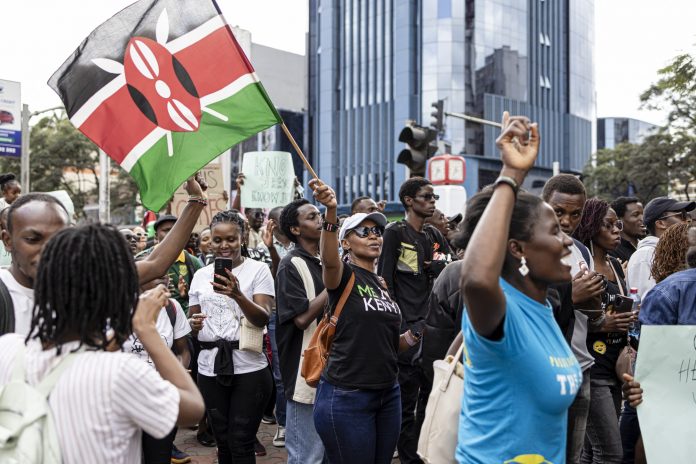
Why are Kenyans protesting? Simple answer: the young people do not want more tax burdens. But why does the government plan to scale the burdens? Answer: “In the 2024/25 bill, the Kenyan government aims to raise $2.7 billion in additional taxes to reduce the budget deficit and state borrowing. Kenya’s public debt stands at 68% of GDP, higher than the 55% of GDP recommended by the World Bank and the International Monetary Fund.”

Good People, this is going to be the new normal in most African economies. We carry excessive debts which were accumulated with nothing to show for. Debt is not bad, in itself, what is bad is debt without a strategic value.

Most African economies should be concerned because these debts are compounding their interests, and there is no viable path to deal with them. The Kenyan model of taxing the people has backfired: “In 2024, Kenya has been witnessing a significant civil unrest due to the government’s proposed finance bill. The bill, which includes tax hikes, has sparked widespread protests across the nation”.

The finance bill, which has now been approved by the parliament and awaits the president’s signature, has been the focal point of the protests. Demonstrators have used social media to organize and voice their opposition, with hashtags like #RejectFinanceBill2024 and #OccupyParliament gaining traction. The unrest is not just confined to Nairobi; it has spread to several other cities and towns, indicating a nationwide dissent against the proposed tax increases.

The Kenyan protest is not an isolated issue; it will be the new normal as most African economies explore ways to service those exploding debts! As that happens, no government can think strategically because they would be concerned about the next interest payment. Magically, you have a lost decade for Africa.

In other words, Africa will waste this decade as nothing is happening to advance the people. You are going to see governments fighting moving targets like forex, debts, etc, and will be severely lost that a 90-day plan will look like an eternity.

(All said, all protests should be peaceful and the government should respect the rights of peaceful protests).

Why are Kenyans Protesting in 2024?

0

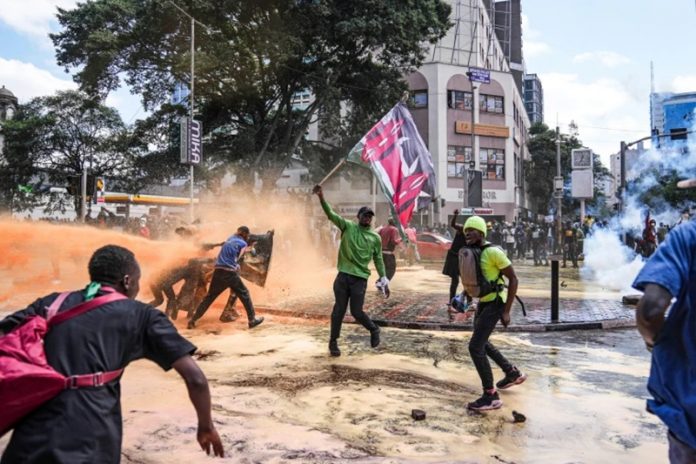
In 2024, Kenya has been witnessing a significant civil unrest due to the government’s proposed finance bill. The bill, which includes tax hikes, has sparked widespread protests across the nation. The situation escalated when thousands of protesters stormed the parliament, leading to a fire in part of the building and a violent confrontation with the police, who reportedly used live ammunition. The protests, primarily led by the youth, reflect a deep-seated frustration with economic policies perceived as unfair, particularly to younger generations.

The finance bill, which has now been approved by the parliament and awaits the president’s signature, has been the focal point of the protests. Demonstrators have used social media to organize and voice their opposition, with hashtags like #RejectFinanceBill2024 and #OccupyParliament gaining traction. The unrest is not just confined to Nairobi; it has spread to several other cities and towns, indicating a nationwide dissent against the proposed tax increases.

Here is a detailed look at the specific amendments:

Value Added Tax (VAT) Adjustments: The bill initially proposed a 16% VAT on essential commodities like bread and the transportation of sugar cane, which was met with public outcry. Following the protests, these measures were removed.

Excise Duty Revisions: The government had proposed an excise duty on vegetable oil, which would have increased the price of cooking oil by 80%. This proposal was also retracted after public disapproval.

Financial Services and Transactions: The bill sought to impose VAT on financial services and foreign exchange transactions, potentially increasing taxation on these services from 15% to 40%. This measure was removed in the revised bill.

Mobile Money Transfer Charges: An increase in excise duty from 15% to 20% on mobile money transfer charges was proposed. However, this was reversed in the face of strong opposition from the public.

Motor Vehicle Tax: A new motor vehicle tax was proposed, requiring vehicle owners to pay annually 2.5% of their car’s value. This proposal was met with immense uproar and was subsequently removed.

Housing Fund and Social Health Insurance Levies: These levies were converted to tax deductibles, meaning they will not attract income tax, which puts more money in the pockets of employees.

Eco Levy: The proposed Eco Levy was adjusted to be levied only on imported finished products, sparing locally manufactured products from this tax.

The response from the authorities has been severe, with reports of multiple fatalities and injuries as a result of police action. This has only added fuel to the fire, with human rights organizations expressing concern over the use of force against protesters. The government’s stance on the protests and the subsequent crackdown has drawn criticism both domestically and internationally.

The protests in Kenya are a manifestation of the citizens’ exercise of their democratic rights to peaceful assembly and expression. They highlight the importance of dialogue between the government and the populace, especially when implementing policies that have far-reaching impacts on the livelihoods of the people.

As the situation develops, it remains crucial for all parties to engage in constructive discussions to find a resolution that considers the welfare of the Kenyan people and upholds democratic values. The world watches as Kenya navigates through this period of political and social upheaval, hoping for a peaceful and equitable outcome.

BlockDAG Offers $2M Giveaway While BNB Drops and Uniswap Faces Decline – Be Thoughtful When Investing in Your Next Crypto

0

While BNB’s value dips from its peak, decreasing by 10.44% over the past week, and Uniswap experiences a 12% trading slump, BlockDAG captures the spotlight with its $2 million giveaway and a presale reaching $53.5 million. This makes BlockDAG a compelling investment choice, offering substantial rewards and featuring an easy-to-use low-code/no-code platform that streamlines the creation of meme coins and NFTs, boosting its allure as a strategic crypto investment.

BNB’s Market Sentiment Wanes

Recently, Binance Coin (BNB) has encountered strong selling pressures, retracting from its historical high. As of this June, BNB’s price encountered resistance at $600, marking a 10.44% decrease within the week. Despite its extensive applications in payment processing, travel bookings, and financial services, the market sentiment around BNB has turned bearish. The market cap stands at $89.82 billion, with trading volumes at $1.7 billion. An RSI of 46.4 suggests the market is shifting, with traders looking for alternatives.

Uniswap Faces Trading Troubles: A Closer Look

Uniswap has seen a significant downturn, with a 12% decrease in the last 24 hours, dropping to $9.86 and slipping below the critical $10 mark. This downturn disrupts a recent uptick last week, spurred by significant acquisitions by entities like Amber Group. Despite a bullish RSI of 52.68, Uniswap’s latest trading patterns underscore the volatile nature of the crypto market, with many waiting for a possible rebound. Analysts are closely monitoring UNI’s volume for signs of recovery.

BlockDAG’s $2M Giveaway and Technological Innovations

BlockDAG is revitalizing the cryptocurrency world with a $2 million giveaway aimed at energizing and rewarding its community. To qualify, participants must hold a minimum of $100 in BDAG coins from the presale. Engaging in various activities and recommending friends enhance their chances to win, rendering this giveaway both generous and interactive. This campaign highlights BlockDAG’s dedication to nurturing a dynamic community, distinguishing it from competitors like BNB and Uniswap, which are currently experiencing market pressures.

Additionally, BlockDAG introduces a revolutionary low-code/no-code platform that simplifies blockchain development, opening it up to a wider audience. This platform enables users to easily craft and launch smart contracts using customizable templates, without the need for extensive coding expertise. This accessibility is particularly enticing for developers eager to create utility tokens, meme tokens, and NFTs. By reducing the entry barriers, BlockDAG is making blockchain technology more democratic, spurring creativity, and broadening its ecosystem.

Furthermore, BlockDAG’s approachable technology allows individuals and organizations to innovate without the obstacles of traditional development. Its low-code/no-code features make blockchain technology accessible to a more diverse audience, promoting a more inclusive ecosystem. This expansion enables a greater variety of projects and participants, boosting the growth and diversification of the blockchain sector and establishing BlockDAG as a hub for future cryptocurrency initiatives. Additionally, the excitement around BlockDAG’s $2 million giveaway is driving its presale success, with over $53.5 million raised by batch 18, marking a significant 1120% growth from batch 1.

The Bottom Line

As the crypto market deals with BNB’s price fluctuations and Uniswap’s unstable trading, BlockDAG stands out as a prime opportunity for investors and developers. The $2 million giveaway not only rewards community involvement but also emphasizes BlockDAG’s forward-thinking approach to blockchain technology. With its user-friendly development platform, BlockDAG is poised to attract a diverse array of developers and projects, fostering growth and diversity within the blockchain sphere.

For those pondering which cryptocurrency to invest in, BlockDAG offers a persuasive argument with its ongoing presale and community-centered promotions. Investors have the chance to join the presale, engage with the active community, and possibly share in the $2 million giveaway, making BlockDAG an attractive investment in the evolving crypto landscape.

Join BlockDAG Presale Now:

Website: https://blockdag.network

Presale: https://purchase.blockdag.network

Telegram: https://t.me/blockDAGnetworkOfficial

Discord: https://discord.gg/Q7BxghMVyu