DD
MM
YYYY

PAGES

DD
MM
YYYY

spot_img

PAGES

Home Blog Page 3248

The Academic Music Festival Begins on Saturday at Tekedia Mini-MBA

0

We will begin the live Zoom component of Tekedia Institute Mini-MBA on Saturday.  I will be teaching on innovation, growth and the mission of companies, and how these components are entwined in interdependent relationships, to serve markets and capture value therein. We will have case studies and explain why innovation wins markets. I will introduce how AI systems are changing innovation in the marketplace, connecting to the Symphonic Innovation framework.

Symphonic Innovation is innovation that is not domain-specific, but is anchored on a unified and harmonious approach in the deployment of technology and business components to accelerate productivity gains and cushion competitiveness. With Symphonic Innovation, you do not deploy and launch for blockchain, for example, only to be tripped by AI; you launch with a mindset that these technologies and business components are like extended musical compositions which must be carefully organized to make the orchestra an unforgettable experience.

For the growth of firms, pick a seat for the Zoom link here .

Saturday, June 8, at 7-8.30pm WAT.

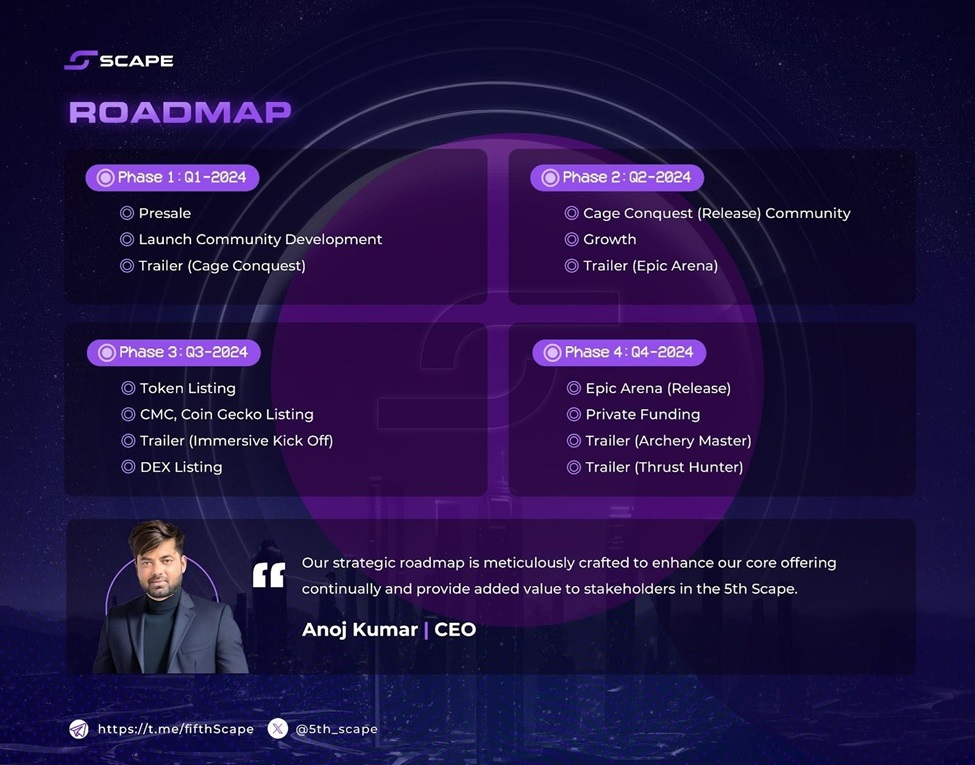
After a $6.5M Raise, 5thScape Plans 100+ Games and Animated Content for VR – Invest Now!

0

After reaching its $6.5 million funding round recently, 5thScape is set to transform virtual reality in the near future. Under its leader, who has a clear vision of the studio’s future and significant financial backing, the studio is preparing for an organized eruption of ideas to create over one hundred unique games and animated shows for the VR platform.

With each passing moment and as the world waits with bated breath, investors are allowed to be part of this ride toward the new entertainment frontier.

Beyond Playable: Become the Hero, Forge Your Destiny

5thScape opens the doors to a world without limitations, like traditional gaming. Here, you’re not stuck following a set path. Instead, you jump right into the heart of the story and become the main character! Imagine exploring amazing worlds, but you get to make the decisions instead of just watching things happen.

You choose what you do, and that can change the entire story! Want to be a hero? Go for it! Feeling a bit mischievous? You can be a villain, too! With 5thScape, your choices matter, and the story unfolds around you, making every adventure unique and exciting.

>>Click Here To Visit 5thScape Presale Page

This Isn’t replayability; It’s Deeper Engagement

You don’t just play the same story over and over with different options. When you play games, 5thScape gives you the tools and power to feel more connected to the journeys you go on.

Picture a game where you can choose to be good or bad. The story and the world around you would change depending on what you did. But in 5thScape, you don’t just play; you make the rules. In the VR world, you’re kind of like the author of your own exciting adventure story!

Invest in the Future of VR Entertainment: Lucrative Opportunities Await

This shift in VR entertainment isn’t just thrilling for players; it presents a golden opportunity for investors. 5thScape is at the forefront of a revolution in how we consume content.

Their focus on interactive storytelling within VR creates a market unlike anything we’ve seen before. The potential for long-term engagement with these evolving narratives is immense, fostering a loyal user base and consistent revenue streams.

Imagine being part of the next big thing in gaming!

5thScape is creating a new way to experience VR, with tons of unique adventures (over 100!) where your choices matter. Unlike other games, you can be the hero or the villain, and your decisions actually change the story! 5thScape is like having your own personal story writer crafting an adventure just for you, all inside the amazing world of VR.

With a clear vision and strong financial backing, 5thScape will be a VR entertainment leader. This is your chance to be a part of the future of gaming!

How Can Digital Assistive Technology Help Students Enhance Learning

0

In today’s tech-driven world, education extends far beyond traditional classroom settings and textbooks. It’s becoming more interactive, accessible, and tailored to individual needs, thanks to digital assistive technology.

Whether it’s software that reads text aloud or apps that help organize thoughts, these tools are changing the game for students everywhere. Now, if you’re tackling a challenging assignment, you can use tech tools to connect with experts and ask them to write me an annotated bibliography in just a few minutes. Picture having a personal assistant ready to step in and help whenever you encounter a challenge in your coursework!

Digital assistive technology improves learning even further; let’s take a look.

Types of Digital Assistive Technology

Assistive technology in education is a broad field, encompassing various tools designed to overcome the barriers that hinder student learning:

  • Text-to-Speech Software. Text-to-speech software converts written materials into audible speech, enabling you to listen to texts rather than read them visually. This is especially helpful for people with visual impairments or other reading difficulties. It’s like having someone read to you while you relax your eyes or multitask.
  • Speech-to-Text Software. Speech-to-text technology is perfect for when you have great ideas but find it tough to get them down on paper. Just speak into your device and watch your words appear in the text. This tool is a lifesaver for students with dysgraphia or anyone who finds typing cumbersome. Plus, it’s a great way to speed up your note-taking in class—just talk and let the tech do the typing.
  • Audiobooks and Digital Texts. Audiobooks and digitally formatted texts provide an alternative way to access literature and textbooks. If you’re an auditory learner or simply prefer listening over reading, these tools can enhance your comprehension and retention of information. Plus, they’re portable, so you can learn on the go—turn your commute into a mini-classroom!
  • Visual Aids. For students who are visually impaired, tools like screen readers and magnifiers can make text larger, clearer, and more navigable. These aids help remove the strain of reading and allow you to focus more on understanding and less on just deciphering what’s on the page.

Benefits of Assistive Technology in Learning

The introduction of assistive technology into the educational sphere has brought numerous benefits.

1.   Enhanced Accessibility

One of the greatest impacts of assistive technology is its ability to make learning materials accessible to everyone, regardless of physical or learning disabilities. This inclusivity ensures every student has the chance to excel and engage fully with their educational pursuits.

2.   Improved Engagement and Motivation

Assistive technology makes learning more engaging through interactive and multimedia elements that keep you hooked. It’s one thing to read about a scientific process; it’s another to watch it in action through an interactive simulation!

3.   Increased Independence

How can digital assistive technology help students in terms of autonomy? It allows you to take control of your own educational journey. You can work independently, use tools that suit your learning style, and become more self-sufficient. This builds your academic skills and confidence as you realize that you can tackle challenges on your own terms.

4.   Support for Diverse Learning Styles

Everyone learns differently, and assistive technology embraces this diversity. By accommodating different learning preferences, it provides custom learning support. For example, by utilizing the top ten essay writing services, students can gain access to expert guidance tailored to their request. These services offer personalized help, from crafting thesis statements to fine-tuning arguments.

Challenges and Considerations

Sometimes, the very technology meant to help can pose challenges. Limited access to the latest technology or fast internet can restrict some users from fully utilizing these digital tools. Plus, glitches and technical issues can make you want to pull your hair out—especially when you’re on a deadline.

Moreover, getting the hang of new tools can be tricky. Without proper training and support, you might feel more frustrated than assisted. Schools and institutions need to provide adequate training for both you and your teachers to make the most out of these technologies.

How Can Digital Assistive Technology Help Students in the Future?

With technology continuously evolving, the horizon is always brimming with possibilities. Artificial intelligence is influential in developing smarter tools that adjust to your specific learning needs and styles. Imagine a program that learns from your study habits and helps you optimize your learning. That sounds pretty cool, right?

As these technologies become more integrated into education, your learning experiences will become even more personalized and accessible. The focus will likely shift towards ensuring all students have equal access to these tools, leveling the playing field in education.

Conclusion

Digital assistive technology isn’t just about making learning easier; it’s about making it possible for everyone. Whether it’s helping you manage your dyslexia with text-to-speech tools or keeping you organized with digital notebooks, these technologies are here to stay—and improve. Stay open to possibilities and fearless when experimenting with new tools!

Understanding NATO’s Air Shielding Mission

0

In the ever-evolving landscape of global security, NATO’s Air Shielding mission stands as a testament to the alliance’s commitment to safeguarding its member states. This initiative is a direct response to the heightened air and missile threat perceived on NATO’s eastern flank, particularly in the wake of recent geopolitical tensions.

The Air Shielding mission is a multifaceted operation that involves the deployment of additional fighter jets and ground-based air and missile defense systems. These assets are strategically positioned to protect the airspace of NATO’s eastern allies, ensuring a robust defense against any potential aerial incursions or missile attacks.

One of the key components of this mission is the integration and interoperability of forces from different member states. For instance, Finnish F/A-18 Hornet fighter jets have been deployed to Romania, where they will conduct training and operational sorties along the Black Sea coast. This deployment not only enhances the defensive posture of the region but also demonstrates the unity and readiness of NATO forces to respond to threats collectively.

Coordinating Air Defense Across NATO Member States.

The coordination of air defense among NATO member states is a complex, yet seamlessly integrated operation that ensures the security of Alliance territories against aerial threats. This coordination is achieved through a well-established structure that combines various national and NATO assets into a unified defense system.

At the heart of this system is the NATO Integrated Air and Missile Defence System (NATINAMDS), which is a network of interconnected national and NATO systems comprised of sensors, command and control assets, and weapons systems. This system operates under the authority of NATO’s Supreme Allied Commander Europe and is designed to defend NATO forces, populations, and territories from threats emanating from all strategic directions.

Moreover, the Air Shielding mission is characterized by its defensive nature, aiming to deter potential aggressors while assuring member states of NATO’s protective umbrella. The mission involves a range of activities, from aerial maneuvers to surveillance flights, all conducted in compliance with international laws and standards. For example, a series of aerial maneuvers conducted by the United States, Poland, and Italy showcased the alliance’s ability to join forces and execute complex operations based on universal tactics, techniques, and procedures.

The strategic importance of the Air Shielding mission cannot be overstated. It serves as a key component of NATO’s strengthened deterrence and defense posture, especially in light of the ongoing challenges posed by Russia’s actions in Eastern Europe. The mission also underscores the alliance’s commitment to maintaining high readiness and interoperability among its forces, which is crucial for the effective protection of NATO’s airspace 24/7, 365 days a year.

NATO’s Air Shielding mission is a clear reflection of the alliance’s adaptability and resolve in the face of emerging threats. By bolstering its air and missile defenses, NATO not only secures its eastern flank but also sends a strong message of unity and deterrence to any potential adversaries. As the geopolitical landscape continues to shift, the Air Shielding mission will undoubtedly play a pivotal role in ensuring the collective security of NATO member states.

Blockchain Emergence in the Financial and Technological Space

0

Blockchain Technology is rapidly becoming a cornerstone in the financial and technological sectors, reshaping the way we think about transactions, security, and transparency. Its decentralized nature offers a level of security and trust that traditional centralized systems struggle to match. This is particularly evident in the financial services industry, where blockchain is streamlining payment systems, enhancing trade finance, and transforming asset management.

Cryptocurrencies, with their decentralized nature, have introduced a new paradigm in the financial sector, challenging traditional banking systems and reshaping how transactions are conducted globally.

At the heart of cryptocurrencies lies blockchain technology, a decentralized ledger that records transactions across a network of computers. This technology ensures transparency, security, and immutability, making it a cornerstone for the trustless environment that cryptocurrencies thrive in. The implications of this technology extend far beyond financial transactions, with potential applications in various sectors including healthcare, real estate, and supply chain management.

One of the most notable impacts of blockchain is its ability to facilitate faster and more secure cross-border transactions. By eliminating intermediaries, blockchain-based payment systems like Ripple are providing cost-effective alternatives to traditional methods, which are often slow and laden with fees. This innovation is not just improving efficiency but also democratizing access to financial services, especially for those who have been traditionally underserved by the banking sector.

The disruptive potential of cryptocurrencies is multifaceted:

Decentralization: By eliminating intermediaries such as banks and payment processors, cryptocurrencies facilitate peer-to-peer transactions, reducing fees and enhancing security.

Global Accessibility: Cryptocurrencies operate beyond borders and time zones, enabling instantaneous transactions and opening up international trade and remittances.

Financial Inclusion: Offering financial services to those without access to traditional banking, cryptocurrencies have the potential to uplift underserved populations.

Smart Contracts: Blockchain supports smart contracts, which automate processes and reduce reliance on intermediaries, thereby increasing efficiency across industries.

Despite these advantages, the cryptocurrency space is not without its challenges. Price volatility, regulatory uncertainty, and security concerns are significant hurdles that need to be addressed to foster wider adoption and stability in the market.

The intersection of cryptocurrency and space technology presents an intriguing aspect of crypto’s dominance. As the space economy becomes increasingly privatized, crypto moguls are determined to be a part of it. The synergy between these two frontiers is evident as cryptocurrencies are being used to fund novel space programs and companies. Moreover, space is poised to become a place to deploy infrastructure that could improve crypto networks and potentially serve as the monetary standard for future extraterrestrial settlements.

In trade finance, blockchain platforms are cutting through the red tape, reducing paperwork, and minimizing the risk of fraud. The digitization of trade documents and the creation of tamper-proof environments for transactions are fostering increased collaboration among trading partners and streamlining the entire process.

The asset management sector is also witnessing a revolution, thanks to blockchain. Smart contracts are automating trade clearing and settlement, reducing operational risks and costs. Moreover, the tokenization of real-world assets is opening up new investment opportunities, enhancing liquidity, and allowing for fractional ownership.

As blockchain continues to evolve, it is creating new markets and banking avenues, particularly for the unbanked population. It’s a technology that scales faster, offers cheaper solutions, and provides more security. The implications for U.S. economic strength are significant, as blockchain technology drives business models in high-tech and financial markets.

The rise of cryptocurrencies signifies a transformative era in the financial and technological domains. As the world becomes more interconnected and digital, the influence of cryptocurrencies is likely to expand, paving the way for a new economic order where decentralization, security, and inclusivity are paramount. The journey of cryptocurrencies is still in its early stages, and the future holds immense possibilities for this burgeoning asset class.