DD
MM
YYYY

PAGES

DD
MM
YYYY

spot_img

PAGES

Home Blog Page 3256

Nigeria Needs Platforms To Grow The Economy for Opportunities

0

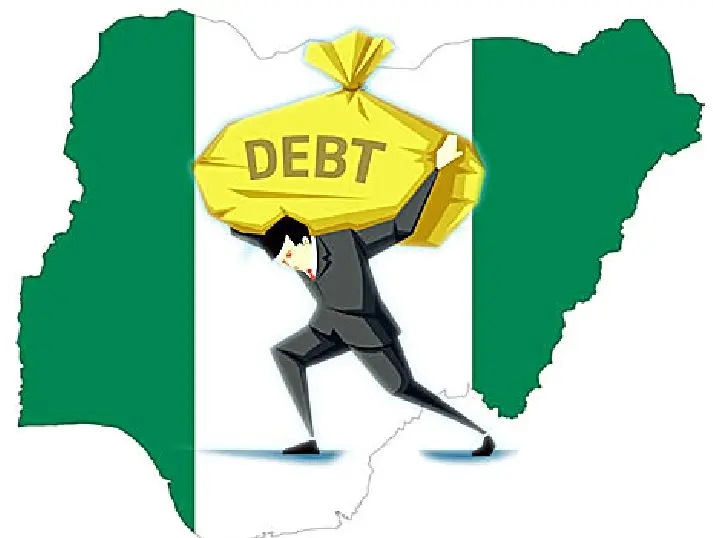
This is where we are as a country according to the Central Bank of Nigeria.  Yes, “in its latest financial report, the Central Bank of Nigeria (CBN) has disclosed that the federal government expended approximately $2.2 billion on debt servicing during the first five months of 2024….In total, the $2.2 billion spent from January to May 2024 is about 96.32% higher than the $1.12 billion spent during the same period in 2023.” The breakdown:

January: $560.52 million

February: $283.22 million

March: $276.16 million

April: $215.20 million

May: $854.36 million

Now, someone will tell me that Nigeria was saving money via fuel subsidies. In the Igbo Nation, if a bird leaves the ground and perches on the ant-hill, the elders will say that it is still on the ground. Nigeria may not be allocating money for subsidies (it claims), but it is allocating more for debt servicing as a result of decisions around Naira floating and fuel subsidies! Like I noted, nothing has changed, except the style!

Good People, if anyone tells you that Nigeria can be made whole through financialization, there is a bridge available to buy. We must make things (modern and old) for Nigeria to rise, and our leaders must provide platforms for such to happen. Those platforms include electricity, security and rule of law!

Simply, someone must be annoyed and angry that for 60 years we cannot figure out how to provide electricity to citizens and companies.

Nigerian Government Spends $2.2bn on Debt Servicing in First Five Months of 2024

Nigerian Government Spends $2.2bn on Debt Servicing in First Five Months of 2024

1

In its latest financial report, the Central Bank of Nigeria (CBN) has disclosed that the federal government expended approximately $2.2 billion on debt servicing during the first five months of 2024.

This significant outlay, gulping approximately 96 percent of the nation’s revenue, underscores the escalating fiscal pressures facing the country.

The CBN’s ‘International Payments Data’ report reveals that May saw the highest expenditure on debt servicing, amounting to $854.36 million. This figure represents the most substantial monthly payment in the past year and marks a 297% increase from April’s $215.20 million. Additionally, the amount spent in May is 286.49% higher than the $221.05 million expended in the same month in 2023.

According to FBNQuest Research, Nigeria’s external debt service payments rose by $1.1 billion to $3.5 billion in 2023, comprising $1.9 billion in market debt payments and $1.6 billion in non-market debt payments. This increase highlights the growing burden of Nigeria’s external obligations.

The monthly breakdown of debt servicing costs is as follows:

  • January: $560.52 million
  • February: $283.22 million
  • March: $276.16 million
  • April: $215.20 million
  • May: $854.36 million

In total, the $2.2 billion spent from January to May 2024 is about 96.32% higher than the $1.12 billion spent during the same period in 2023.

Decline in Letters of Credit

CBN data also indicated a significant decline in letters of credit (LCs) in the first five months of 2024 compared to the same period in 2023. LCs, a crucial payment method for importing goods, decreased by 63.26% to $279 million from $762.03 million in the same period last year. LCs are vital for facilitating international trade in Nigeria, providing a secure payment method that benefits importers and exporters.

However, on a positive note, the CBN’s International Payments Data showed a substantial increase in total direct remittances, which reached $841 million in the first five months of 2024. This is about 28.55% higher than the $654.51 million recorded in the same period in 2023, reflecting a robust inflow of funds from the Nigerian diaspora.

In response to these fiscal challenges, Nigeria is seeking financial support and implementing strategic measures to stabilize its economy. Finance Minister Wale Edun recently announced that Nigeria is set to receive a $2.25 billion package from the World Bank, expected to be approved soon.

Speaking on June 2 during an interview with Channels TV, Edun stated, “In two weeks, the board of the World Bank will consider a $2.25 billion package for Nigeria, which would be virtually free or almost grant funding, very low interest.”

This funding, which includes $1.5 billion in Development Policy Financing, aims to support Nigeria’s economic stabilization and growth initiatives.

Additionally, the government plans to issue Eurobonds in the second half of 2024, with Citibank NA, Goldman Sachs, and JPMorgan Chase & Co. hired as advisors. This move is expected to raise necessary capital from international markets.

High Debt Servicing Costs Compound Nigeria’s Economic Woes Amid Dwindling Oil Revenue

This significant expenditure on debt obligations is set against a backdrop of declining oil revenues and severe economic challenges, compounding Nigeria’s fiscal woes. The strain on Nigeria’s finances is further exacerbated by a significant shortfall in oil revenue, traditionally a cornerstone of the country’s economy.

As a result, the federal government has increasingly relied on borrowing to bridge the revenue gap, leading to a growing debt burden.

Economists have decried the situation, noting that the high cost of servicing this debt limits the government’s capacity to invest in critical sectors such as infrastructure, healthcare, and education, which are essential for stimulating economic growth.

They stressed that Nigeria’s heavy reliance on borrowing to address its fiscal deficit is not sustainable long-term, pointing out that the high cost of servicing this debt diverts essential funds away from development projects, hindering economic growth.

Muda Yusuf, Director-General of the Lagos Chamber of Commerce and Industry, underscored the broader consequences. He noted that increasing debt servicing costs are a significant issue as they limit investments in crucial sectors and hamper the government’s ability to provide necessary services.

“We should be worried, particularly from the point of view of the capacity to service the debt.

“In 2020, for instance, debt servicing to revenue was nearly 80 percent. In the current budget, the debt service provision is about N3.2tn. This is huge and clearly, the debt profile is clearly unsustainable.

“The debt to GDP argument is something that cannot stand in this type of economy because some major components of the GDP are not revenue-generating,” he said.

He noted the growing decline in productivity as a major contributor to the nation’s economic predicament.

“So, we have a major issue with productivity of many sectors, and that is why what we should be worrying about is how to ensure that the debt situation is sustainable, and we can only do that if we relate a lot more with the capacity to service the debt.

“Currently, our capacity to service debt is very weak. And this is time for a very difficult choice to be made if we want to get out of this situation,” he said.

Loopring Suffers $5 million hack Amid Gemholic $3.3M Rugpull

0

The recent security breach that hit Loopring, resulting in a $5 million loss, has sent ripples through the cryptocurrency community. Loopring, a protocol built on Ethereum that utilizes ZK-rollups for scalability and efficiency, faced a significant setback when its two-factor authentication service, known as ‘Guardian,’ was compromised. This incident highlights the ever-present risks in the digital asset space, even with advanced security measures in place.

Loopring’s Guardian service was designed to enhance wallet security by allowing users to appoint trusted individuals or institutions as guardians to assist in security operations. Unfortunately, a hacker managed to exploit this system, bypassing Loopring’s Official Guardian service to gain unauthorized access to wallets, leading to the substantial financial loss.

The attack specifically targeted wallets that had the Loopring Official Guardian as their sole guardian. In cases where users had appointed multiple guardians or used third-party services, the wallets remained secure, underscoring the importance of diversified security measures. Following the breach, Loopring has temporarily suspended all Guardian-related and two-factor authentication operations to prevent further unauthorized access.

Loopring’s response to the hack has been proactive, with the protocol actively collaborating with security experts to investigate the breach and working with law enforcement to trace the perpetrator. They have also urged anyone with information about the hack to come forward, demonstrating their commitment to transparency and user security.

This event serves as a stark reminder of the potential vulnerabilities in even the most secure systems and the importance of constant vigilance in the protection of digital assets. It also emphasizes the need for users to follow best practices, such as appointing multiple guardians and staying informed about the security features and risks associated with their chosen platforms.

The recent allegations against Gemholic, a project on the ZkSync network, have brought this issue to the forefront, with accusations of moving $3.3 million in what appears to be a rug pull.

Gemholic, which operated the GemSwap decentralized exchange, is now under scrutiny after the sudden transfer of substantial funds and the disappearance from social media platforms. This incident has sent ripples through the crypto community, raising questions about the security and reliability of DeFi projects.

The DeFi ecosystem is designed to be an open and trustless system, where smart contracts are supposed to replace intermediaries. However, the lack of regulation and oversight can sometimes create an environment ripe for fraudulent activities. The Gemholic case highlights the potential risks associated with investing in such platforms, where the promise of high returns often comes with high risks.

Investors are now left in a precarious position, trying to trace the contract creator’s address, which is reportedly funded by Binance. The silence from KYC providers like SolidProof, who verified Gemholic, adds to the uncertainty and fear among the investors.

This situation serves as a stark reminder of the importance of due diligence when investing in cryptocurrency projects. While blockchain technology offers a new frontier of financial freedom and innovation, it also demands a higher level of investor awareness and caution.

The Gemholic episode is not the first, and unfortunately, it may not be the last. However, it is a call to action for the crypto industry to work towards more robust security measures, transparent practices, and educational resources to protect investors from such fraudulent schemes.

As we navigate the volatile waters of digital investments, let us take this as a learning opportunity to build a more secure and trustworthy DeFi ecosystem. The future of finance is in our hands, and it is up to us to shape it with integrity, vigilance, and innovation.

The cryptocurrency community will be watching closely to see how Loopring addresses the aftermath of the hack and what steps they will take to bolster their security measures and restore confidence among users. The incident may also prompt other projects to re-evaluate their security protocols to prevent similar breaches in the future.

Cyberattacks and The Return of $5.7M Ronin Bridge Hack

The Norwegian government, in a significant move against cybercrime, has successfully frozen and returned $5.7 million connected to the Ronin Hack, a substantial cyber-attack that targeted the Ronin Bridge in 2022. This bridge is an integral part of the Axie Infinity ecosystem, a popular blockchain-based game. The attack resulted in a staggering loss of over $600 million, marking one of the most substantial thefts in the realm of digital assets.

The recovery of these funds is a testament to the effectiveness of international cooperation in combating cybercrime. The Norwegian National Authority for Investigation and Prosecution of Economic and Environmental Crime (Økokrim) played a pivotal role in this process, working alongside Sky Mavis—the creators of Axie Infinity—and other international agencies, including the FBI.

This collaborative effort not only highlights the increasing proficiency of law enforcement agencies in tracking and securing digital assets but also underscores the importance of global collaboration in addressing the challenges posed by cyber threats. The swift action taken by the Norwegian authorities sends a strong message to cybercriminals: the international community is vigilant and capable of responding effectively to such illicit activities.

Approximately 85% of the recovered funds are slated for deposit into the Axie Infinity treasury, with the remaining 15% allocated to cover the costs incurred during the recovery process. This includes expenses for law enforcement agencies, accountants, lawyers, and blockchain forensic teams, such as Chainalysis.

The funds recovered will be allocated with a majority going into the Axie Infinity treasury, which will undoubtedly bolster the security and trust in the platform. A portion of the recovered funds will also cover the costs incurred during the recovery process, including the efforts of law enforcement, accountants, lawyers, and blockchain forensic teams.

Moreover, there is an ongoing effort to recover an additional $40 million in assorted assets that have already been frozen by law enforcement agencies. While the timeline for this recovery remains uncertain, the progress made thus far provides a beacon of hope for the affected communities and serves as a deterrent to potential cybercriminals.

The digital landscape of 2024 has seen a continuation of the trend of significant cyber-attacks, affecting a wide range of sectors and organizations. Here’s a brief overview of some of the major cyber incidents that have occurred recently:

Ticketmaster Data Breach: In June 2024, Ticketmaster confirmed a data breach that compromised the records of over 560 million customers, including personal and partial payment information.

Helsinki City Council Data Breach: A hack targeting Helsinki’s education systems led to a breach of personal information of students and guardians in May 2024.

JPMorgan Chase Data Breach: A software flaw dating back to 2021 resulted in the potential exposure of personal information of nearly half a million JPMorgan Chase customers.

Dell Data Breach: Dell reported a breach in May 2024, where customer addresses and order information may have been compromised.

These incidents highlight the ongoing challenges in cybersecurity and the importance of robust security measures to protect sensitive information. For a more comprehensive list of recent cyber-attacks and breaches, you can refer to the detailed articles provided in the search results.

The successful freezing and return of the stolen assets from the Ronin hack by the Norwegian government is a testament to the resilience and determination of all parties involved in safeguarding the integrity of virtual economies. It also highlights the evolving landscape of cybersecurity and the need for robust measures to protect digital assets in an increasingly interconnected world.

Tekedia Capital Makes Additional Investment in MeekFi

0

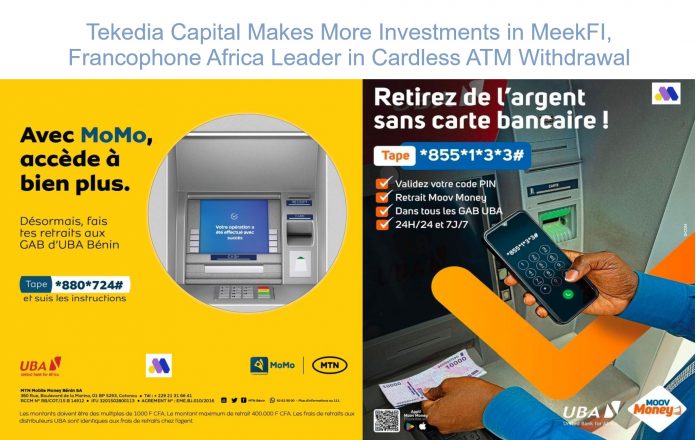
In the beautiful Cotonou, Benin Republic, we discovered you. We’re happy to have supported you, and treasure the progress you have made. As you work with MTN, UBA, and other leading global organizations in Francophone Africa, providing critical technology in the domain of mobile money, we will continue to support.

Tekedia Capital is excited to report additional funding to MeekFi. The journey of scaling to 20 countries has started. Make it happen profitably! Bienvenue chez Tekedia Capital. Prosperer.

Tekedia Capital >> a prosperous Africa is our mission.

BlockDAG Soars to New Heights: $48.8M Presale Redefines Digital Finance, Surpassing GME & XRP!

0

Recent market developments have brought significant attention to GameStop (GME) and XRP, showcasing notable fluctuations and potential in both. Amidst this dynamic landscape, BlockDAG has risen as a preeminent decentralized cryptocurrency.

It has captivated the market with a robust presale achievement of $48.8M, coupled with a remarkable 1120% surge in its price, leading to sales of over 11.4 billion coins. This surge is a testament to BlockDAG’s innovative technology and mobile mining features, which have successfully attracted a wide range of investor interest and solidified its position in the digital currency space.

GameStop Shares Waver Amid E*Trade Restriction Rumors

The recent spike in GameStop’s stock, propelled by Keith Gill, also known as “Roaring Kitty,” has encountered volatility following news that Morgan Stanley’s E*Trade may ban him.

Gill’s online posts about his large GameStop stakes have triggered major market moves. The potential restriction by E*Trade underscores concerns about the influence of retail traders and market fairness. Investigations by the SEC and Massachusetts Securities Division into Gill’s activities are intensifying, affecting the market’s sentiment and dynamics.

XRP’s Future Rally Dependent on Upcoming Breakout

XRP’s current trading range of $0.46 to $0.57 is ripe for a significant shift, according to analyst Pepa. The 44-day chart reveals a symmetrical triangle pattern, indicating a potential breakout by June 25. A close above the triangle’s upper boundary could set the stage for a bullish trend. Despite these prospects, the latest data presents a mixed picture among XRP holders, with larger investors selling off and smaller ones buying, reflecting persisting market uncertainties.

BDAG’s Decentralized Transformation Positions It as Top Cryptocurrency

BlockDAG is making strides as a top decentralized cryptocurrency, revolutionizing the digital landscape with its cutting-edge applications. Its strong support for smart contracts enables automated agreements and workflows, fostering major breakthroughs in areas like decentralized finance (DeFi). This decentralized model is appealing to a wide range of investors, as evidenced by its impressive $48.8M presale, which underscores strong confidence in BlockDAG’s decentralized vision.

As a catalyst for decentralized innovation, BlockDAG is reshaping multiple sectors. In DeFi, its novel tools and protocols are transforming how money is managed. Additionally, its technology is enhancing supply chain visibility and accuracy. Across sectors from healthcare to real estate, BlockDAG’s solutions are proving pivotal, delivering more equitable, transparent, and efficient outcomes.

Furthering its innovation, BlockDAG has rolled out the beta version of the X1 Miner app, democratizing mining for all users. Available on both Android and iOS, this app enables efficient mining of BDAG coins from mobile devices. With features like user onboarding, presale options, and an energy-efficient algorithm, the X1 app exemplifies BlockDAG’s dedication to making cryptocurrency mining accessible and beneficial for all.

Recent updates in Dev releases 47 and 48 have enhanced the X1 app’s design and performance, improving animations and integrating multiple OTP vendors for heightened security. These improvements are preparing the X1 app for its anticipated mainnet launch, aligning with BlockDAG’s mission to offer top-tier, user-friendly decentralized solutions.

BlockDAG’s technological innovations have catalyzed its $48.8M presale success, continuously expanding. By advancing supply chain transparency and benefiting various industries, from healthcare to real estate, BlockDAG’s robust, secure, and adaptable solutions are making a significant impact. Moreover, its approach to eco-friendly mining via mobile technology is making cryptocurrency mining more accessible. With a sales surge in its latest batch 18, including 7,533 miners generating $3.2M, BlockDAG’s novel approach continues to garner extensive interest and confidence.

Final Thoughts

While GameStop and XRP manage their distinct market scenarios and potentials, BlockDAG stands out as a decentralized crypto leader. Its groundbreaking technology and effective mobile mining capabilities are fueling impressive presale growth, securing $48.8M to date. Committed to decentralized applications and robust security, BlockDAG is well-positioned at the forefront of the crypto revolution, poised to drive transformative changes across industries and garner solid investor trust moving forward.

Invest in the BlockDAG Presale Now:

Presale: https://purchase.blockdag.network

Website: https://blockdag.network

Telegram: https://t.me/blockDAGnetwork

Discord: https://discord.gg/Q7BxghMVyu