DD
MM
YYYY

PAGES

DD
MM
YYYY

spot_img

PAGES

Home Blog Page 3261

US national debt increases by $1 trillion every 100 days!

0

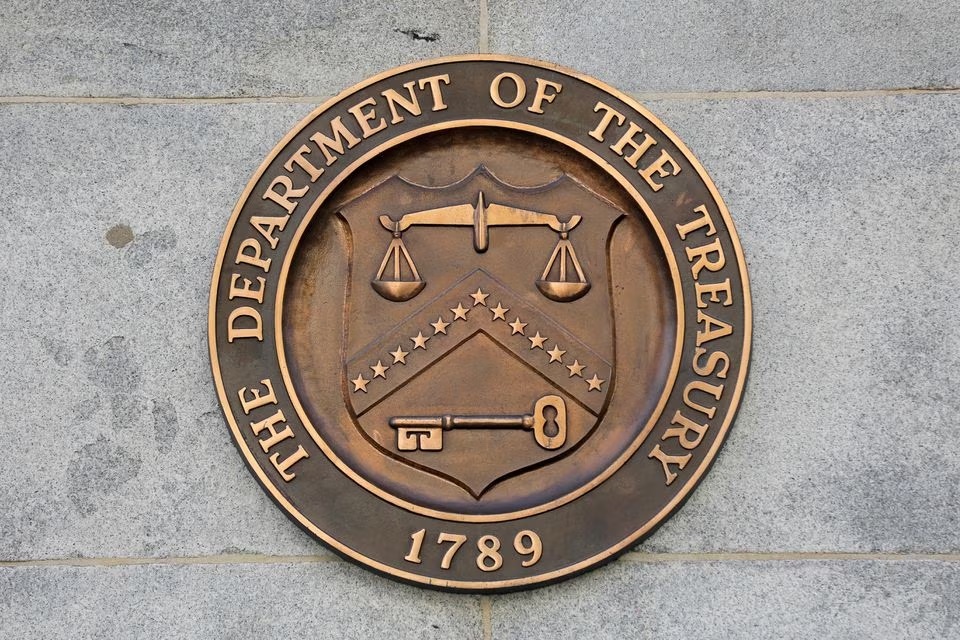
The US national debt is a topic that has been widely discussed and debated in recent years, especially as it continues to grow at an alarming rate. According to the latest data from the US Treasury Department, the national debt stood at $29.1 trillion as of February 28, 2024, an increase of $4.8 trillion since the start of the fiscal year on October 1, 2023. This means that the US national debt increases by $1 trillion every 100 days, or about $10 billion per day.

What are the causes and consequences of this massive debt accumulation? How does it affect the economy, the government, and the citizens of the US? And what can be done to address this looming fiscal challenge? These are some of the questions that we will explore in this blog post, using data and analysis from various sources.

The causes of the US national debt

The US national debt is the sum of two components: the public debt and the intragovernmental debt. The public debt is the amount that the federal government owes to external entities, such as foreign governments, corporations, individuals, and institutions. The intragovernmental debt is the amount that the federal government owes to itself, such as to various trust funds and accounts that are dedicated to specific programs, such as Social Security, Medicare, and military pensions.

The main cause of the increase in the public debt is the gap between the federal government’s revenues and expenditures, also known as the budget deficit. When the government spends more than it collects in taxes and other sources of income, it has to borrow money from the public to finance its activities. The budget deficit can be influenced by various factors, such as economic conditions, policy decisions, and unexpected events.

For example, in fiscal year 2020, which ended on September 30, 2020, the US government recorded a record-high budget deficit of $3.1 trillion, or 14.9% of GDP. This was largely due to the unprecedented fiscal stimulus measures that were enacted in response to the COVID-19 pandemic, which increased government spending by $2.6 trillion and reduced government revenues by $0.5 trillion. In contrast, in fiscal year 2019, which ended on September 30, 2019, the budget deficit was $0.98 trillion, or 4.6% of GDP.

The main cause of the increase in the intragovernmental debt is the accumulation of surpluses in some of the trust funds and accounts that are part of the federal budget. When these programs collect more in taxes and other income than they spend on benefits and services, they lend their excess funds to the Treasury Department in exchange for special securities that earn interest. These securities are counted as part of the intragovernmental debt.

For example, in fiscal year 2020, the Social Security program collected $1.06 trillion in payroll taxes and other income and spent $1.05 trillion on benefits and administration, resulting in a surplus of $0.01 trillion. This surplus was invested in Treasury securities that increased the intragovernmental debt by $0.01 trillion.

In contrast, in fiscal year 2019, the Social Security program collected $1.04 trillion in payroll taxes and other income and spent $1.04 trillion on benefits and administration, resulting in a balance of zero.

Top-performing sectors in the S&P 500 are technology, health care and consumer discretionary

0

The stock market continued its remarkable streak of gains, as the S&P 500 index closed the week with a modest increase of 0.4%. This marks the 18th consecutive week that the benchmark index has ended in positive territory, a feat that has not been seen since the late 1990s. The S&P 500 has now risen more than 25% since the start of the year, outperforming most other major markets around the world.

What is behind this impressive performance? There are several factors that have contributed to the bullish sentiment, such as:

The strong recovery of the US economy from the pandemic-induced recession, supported by fiscal stimulus, monetary easing, and widespread vaccination. The robust earnings growth of corporate America, especially in sectors such as technology, health care, and consumer discretionary.

The relative calmness of the geopolitical and trade landscape, as tensions between the US and China have eased under the Biden administration. The low interest rate environment, which has made stocks more attractive compared to bonds and other fixed-income assets.

Of course, there are also some risks and challenges that could derail the rally, such as:

The emergence of new variants of the coronavirus that could pose a threat to public health and economic activity.

The inflationary pressures that could force the Federal Reserve to tighten its monetary policy sooner than expected.
The potential for regulatory crackdowns on big tech companies that could hurt their profitability and valuation. The possibility of political gridlock and social unrest in the US ahead of the midterm elections in 2022.

However, for now, investors seem to be shrugging off these concerns and focusing on the positive aspects of the market. The S&P 500 has shown remarkable resilience and stability, with minimal volatility and few corrections. It seems that nothing can stop this bull market from reaching new heights, at least for the time being.

The possibility of a rate hike by the Federal Reserve in the near future is not ruled out by some analysts. In fact, former Treasury Secretary Larry Summers suggested that the Fed may have to tighten its monetary policy sooner rather than later, given the inflationary pressures and the robust recovery of the US economy.

The US stock market continues to soar, reaching new heights in 2024. The S&P 500 index, which tracks the performance of 500 large companies listed on US exchanges, has gained more than a quarter of its value since January, beating most of its global peers.

This remarkable rally reflects the strength and resilience of the US economy, which has recovered from the pandemic faster than expected. The S&P 500 is also supported by strong earnings growth, low interest rates, fiscal stimulus and investor optimism. Here are some of the key factors behind the S&P 500’s impressive run this year.

The top-performing sectors in the S&P 500 are technology, health care and consumer discretionary. These sectors have benefited from the digital transformation, the vaccine rollout and the pent-up demand for goods and services.

Technology companies such as Apple, Microsoft and Amazon have led the market with their innovative products and services, while health care companies such as Pfizer, Johnson & Johnson and Moderna have delivered breakthroughs in fighting the coronavirus. Consumer discretionary companies such as Tesla, Starbucks and Nike have seen strong sales growth as consumers spend more on leisure and entertainment.

What’s next for Meme coin, AI and GPT computing and Gaming Finance

0

The world of cryptocurrency is constantly evolving and innovating. New projects, platforms, and protocols emerge every day, offering new possibilities and challenges for investors, developers, and users. We will explore some of the most exciting trends and developments in the crypto space, focusing on four topics: Meme coin, AI and GPT computing, gaming finance, and Bitcoin layer 2.

Meme coin: The rise of meme culture and social media has given birth to a new phenomenon in the crypto world: meme coins. These are tokens that are created as a joke, parody, or tribute to a popular meme, such as Dogecoin, Shiba Inu, or Baby Yoda.

Meme coins often have no intrinsic value or utility, but they rely on the power of viral marketing, community support, and celebrity endorsement to gain popularity and price appreciation. Some meme coins have even surpassed the market capitalization of established cryptocurrencies, such as Ethereum or Cardano.

However, meme coins are also highly volatile and risky, as they can lose their value as quickly as they gain it. Therefore, investors should be careful and do their own research before buying any meme coin.

AI and GPT computing: Artificial intelligence (AI) and generative pre-trained transformer (GPT) computing are two of the most cutting-edge technologies in the crypto space. AI is the ability of machines to perform tasks that normally require human intelligence, such as natural language processing, computer vision, or machine learning.

GPT is a type of deep learning model that can generate coherent and diverse texts based on a given input or prompt. Both AI and GPT computing have many applications and implications for the crypto space, such as:

Creating synthetic data and content for blockchain projects and platforms. Enhancing security and privacy of transactions and smart contracts. Improving user experience and interface design. Generating new ideas and insights for innovation and research. Enabling new forms of decentralized governance and collaboration

Some examples of projects that use AI and GPT computing in the crypto space are:

OpenAI: A research organization that aims to create artificial general intelligence (AGI) that can benefit humanity. OpenAI is behind the development of GPT-3, the most advanced language model in the world. OpenAI also has its own cryptocurrency, called OpenAI Coin, which is used to incentivize and reward contributors to its platform.

Singularity NET: A decentralized network that connects AI agents and services across different domains and industries. SingularityNET allows anyone to create, share, and monetize AI services using its native token, called AGI.

Numerai: A hedge fund that uses crowdsourced machine learning models to make predictions on the stock market. Numerai pays its data scientists in its own cryptocurrency, called Numeraire (NMR), which is also used to stake on the quality of their models.

Gaming finance: Gaming finance is a term that describes the intersection of gaming and finance in the crypto space. Gaming finance involves using blockchain technology and cryptocurrencies to create new ways of playing, earning, and investing in games. Some of the benefits of gaming finance are:

Enabling true ownership and interoperability of digital assets across different games and platforms. Creating new revenue streams and business models for game developers and players.

Enhancing gameplay experience and engagement with social features and incentives. Fostering innovation and creativity in game design and development

Some examples of projects that use gaming finance in the crypto space are:

Axie Infinity: A game that allows players to collect, breed, battle, and trade cute creatures called Axies. Axies are non-fungible tokens (NFTs) that can be owned by players and used across different games and platforms. Players can also earn income by playing the game or selling their Axies in the marketplace. The game uses its own cryptocurrency, called Axie Infinity Shards (AXS), which is also used for governance and staking.

Decentraland: A virtual world that allows users to create, explore, and trade digital assets and experiences. Decentraland is built on the Ethereum blockchain and uses its own cryptocurrency, called MANA, which is used to buy land parcels (NFTs) in the world. Users can also earn income by hosting events or selling their creations in the marketplace.

Yield Guild Games: A decentralized organization that invests in gaming assets and shares the profits with its members. Yield Guild Games leverages the concept of play-to-earn, which means that players can earn income by playing games that use blockchain technology and cryptocurrencies. Yield Guild Games uses its own cryptocurrency, called YGG Token, which is used for governance and rewards.

Bitcoin layer 2: Bitcoin layer 2 is a term that refers to solutions that aim to improve the scalability, speed, and efficiency of Bitcoin transactions. Bitcoin layer 2 solutions operate on top of the Bitcoin blockchain (layer 1) and use various techniques, such as sidechains, payment channels, or rollups, to process transactions off-chain and then settle them on-chain. Some of the benefits of Bitcoin layer 2 solutions are:

Reducing transaction fees and congestion on the Bitcoin network, enabling faster and more frequent transactions, enhancing privacy and security of transactions and supporting new use cases and functionalities for Bitcoin

Some examples of projects that use Bitcoin layer 2 solutions are:

Lightning Network: A network of payment channels that allows users to send and receive instant and low-cost Bitcoin transactions. Lightning Network uses smart contracts to lock up funds in a channel and then update the balance between the parties without broadcasting to the blockchain. Users can also route payments through other channels to reach their destination, creating a network effect.

Liquid Network: A sidechain that allows users to transfer Bitcoin and other assets between exchanges and platforms. Liquid Network uses a federated model, where a group of trusted nodes validate transactions and issue Liquid Bitcoin (L-BTC), which is pegged to Bitcoin. Users can also issue their own tokens on the Liquid Network, such as stablecoins or NFTs.

RSK: A smart contract platform that is secured by the Bitcoin network. RSK uses a two-way peg, where users can lock up their Bitcoin in a smart contract and receive RSK Smart Bitcoin (RBTC), which is also pegged to Bitcoin. Users can then use RBTC to interact with smart contracts and decentralized applications (DApps) on the RSK network.

The crypto space is full of opportunities and challenges for investors, developers, and users. The four topics we discussed in this article are just some of the many trends and developments that are shaping the future of cryptocurrency. We hope you enjoyed reading this post and learned something new.

Composition of the Superior Courts in Nigeria

0

On the 26th of February 2024, exactly a week today, the Supreme of Nigeria welcomed eleven new justices adding to the existing ten justices at the Supreme Court so as to get the statutory full complement of Justices.

It is pertinent to point out that for years now, the Supreme Court has not had a complete number of justices as required by law. As statutorily provided, the Supreme Court is to have a total of twenty one justices to be headed by the Chief Justice of Nigeria (CJN) and in each case, it is expected that at least three justices preside and in some highly regarded matters, at least five to seven justices are to preside. 

It has been the custom that judges or justices are appointed and screened from the immediate preceding or the immediate lower courts. For instance, the eleven justices that were recently sworn into the Supreme Court were appointed or promoted from the Court of Appeal, the same way Court of Appeal judges are to be appointed or promoted from the high courts. 

Just as the Supreme Court is expected to have a total number of twenty-one justices, the Court of Appeal which is the immediate preceding court is statutorily expected to have the total number of forty-one judges which is to be headed by the president of the court of appeal. 

The Federal High Court has ninety-four judges spread across the thirty-eight divisions in the 36 states and the Federal Capital Territory (FCT), Abuja. You should note that there is only one federal high court in Nigeria but different judicial divisions in different states. Each state has its own judicial division and judges can be transferred, redeployed or reassigned within the 38 different judicial divisions. 

The federal high court is headed by the chief judge of the federal high court just as the one the Supreme Court is headed by the Chief Justice of Nigeria. 

As for state high courts, each state has its different judicial compositions and there are a total of 37 state high courts in Nigeria spread across the 36 states of the federation and the federal capital territory, Abuja all sharing concurrent jurisdictions. Each state high court is headed by the chief judge of the court. 

It is arguably better for courts to have more judges/justices or at least have the number of judges as statutorily required because having a lesser number of judges is the primary contributor to the delay in the dispensation of Justice as we often complain of; the lesser number of judges/justices simply translates to more work for the fewer judges available but if there are more judges presiding in different cases then justices/ judgements can be dispensed speedily. 

The Supreme Court, the appeal court and the high court (both federal and state high court) are regarded as the upper or superior courts in Nigeria with the Supreme Court at the apex whilst the customary courts, and magistrate courts are all regarded as the lower courts or the inferior courts. 


Ex President Donald Trump can appear on Presidential ballots – Supreme Court Ruling

0

The Supreme Court of the United States has issued a landmark ruling that allows former President Donald Trump to appear on the ballots for the 2024 presidential election. The decision, which was announced on Monday, overturns a lower court ruling that had barred Trump from running for office again due to his role in inciting the violent insurrection at the Capitol on January 6, 2021.

The majority opinion, written by Justice Brett Kavanaugh, argued that the Constitution does not give Congress the power to disqualify a former president from future elections, and that such a penalty would violate Trump’s First Amendment rights. The opinion also stated that the American people should have the final say on whether they want Trump to be their leader again, and that preventing him from running would undermine the democratic process.

The dissenting opinion, written by Justice Sonia Sotomayor, sharply criticized the majority for ignoring the gravity of Trump’s actions and the threat he poses to the nation’s security and stability. She wrote that Trump had “betrayed his oath of office” and “endangered the lives of millions of Americans” by spreading lies about the election results and encouraging his supporters to attack the Capitol. She also warned that allowing Trump to run again would “invite further violence and chaos” and “damage the integrity and legitimacy of our electoral system”.

The ruling has sparked mixed reactions from the public and the political parties. Trump’s loyalists celebrated the decision as a victory for democracy and freedom, and expressed their hope that Trump would reclaim the White House in 2024. Trump himself issued a statement thanking the Supreme Court for “upholding the rule of law” and “defending our great Constitution”. He also hinted that he would soon announce his candidacy for the 2024 election.

On the other hand, Trump’s opponents denounced the decision as a travesty of justice and a danger to the country. They argued that Trump had shown no remorse or accountability for his role in the Capitol riot, and that he continued to spread misinformation and conspiracy theories about the election. They also expressed their fear that Trump would use his influence and resources to undermine the current administration and interfere with the upcoming elections.

The ruling is expected to have a significant impact on the 2024 presidential race, as it opens the door for a possible rematch between Trump and President Joe Biden, who defeated Trump in 2020 by more than seven million votes. It also raises questions about how the Republican Party will handle Trump’s potential candidacy, as some GOP leaders have tried to distance themselves from Trump and his divisive rhetoric, while others have remained loyal to him and his base.

The Supreme Court’s decision is likely to be one of the most controversial and consequential rulings in its history, as it will shape the future of American politics and democracy for years to come.