DD
MM
YYYY

PAGES

DD
MM
YYYY

spot_img

PAGES

Home Blog Page 3261

Best Altcoins For 2024: BlockDAG Elevates With $52.5M Blastoff Following Viral Keynote; Render & Hedera Waver

0

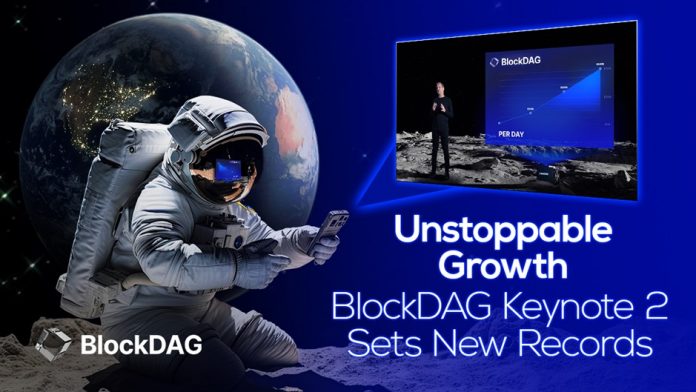
Cryptocurrency fans are always looking for the next big altcoin for 2024. Despite a 25% price dip, Render Token (RNDR) could be a smart buy, as its low Market Value to Realized Value (MVRV) ratio hints at being undervalued. Meanwhile, Hedera (HBAR) has shown strength with a six-month surge of 28%, supported by strong liquidity and a positive investor outlook. Recently, BlockDAG grabbed headlines with its second keynote delivered from the moon, achieving a significant funding milestone by stacking up over $52.5 million.

Render Token Prediction: Opportunity in a Downturn

Render Token (RNDR) has seen a significant 25% price drop over the past month, causing some concern among investors. However, the Market Value to Realized Value (MVRV) ratio indicates that RNDR might be undervalued, suggesting a possible buying opportunity. This key metric in cryptocurrency analysis implies that RNDR could appeal to investors seeking undervalued assets.

Technical indicators such as the MACD point to the possibility of continued bearish trends, potentially lowering RNDR’s value to $5.65. On the other hand, strong buying interest could propel its price above $8.95, presenting various scenarios for investors to consider.

Hedera (HBAR) Price: Steady and Promising

Hedera (HBAR) is currently valued at $0.09285, showcasing a 9.17% rise in the last 24 hours. Despite a 10% decline over the past week and a 16.59% dip this month, HBAR has seen a 28% increase over the past six months, demonstrating its potential as a reliable investment. The Relative Strength Index (RSI) at 49.37 indicates that HBAR is undergoing a correction phase. Investor confidence remains high due to its strong liquidity compared to its market cap.

BlockDAG’s Second Keynote Propels Mainnet, Enhances Crypto Accessibility

BlockDAG recently wowed the market with a keynote video from the moon, revealing new tech advances and strategic initiatives. The highlight was the fast-tracked Mainnet Launch, poised to uplift its value soon. BlockDAG’s DAG structure and Proof-of-Work (PoW) consensus ensure unmatched speed, security, and scalability, surpassing older blockchain models like Bitcoin.

BlockDAG also introduces a low-code/no-code platform, enabling even non-techies to craft and launch apps easily, potentially transforming meme coin creation and widening participation in the crypto realm.

Praised by big names like CoinTelegraph, Bloomberg, and Forbes, BlockDAG’s credibility is soaring. Early backers have netted a 1,120% ROI, with the token price rocketing from $0.001 in batch 1 to $0.0122 in batch 18. The community is booming, with substantial investments from whales and miners capitalizing on the vast potential of BlockDAG’s X series miners.

Major events in tech hotspots like Shibuya, Las Vegas, and Piccadilly Circus have spotlighted BlockDAG’s tech innovations, drawing investor interest. These events, including a standout keynote at Shibuya Crossing and features in Las Vegas and London, highlight BlockDAG’s dedication to innovation and expanding its global footprint.

Why Should You Watch BlockDAG?

In summary, while Render Token (RNDR) and Hedera (HBAR) present unique market opportunities, BlockDAG (BDAG) steals the spotlight with cutting-edge technology, user-friendly platforms, and a solid market presence. Its quick Mainnet rollout, easy application development, and impressive fundraising success position it as an attractive investment. Endorsed by leading publications and with a burgeoning community, BlockDAG is on track to be a top contender in the crypto arena.

Join BlockDAG Presale Now:

Website: https://blockdag.network

Presale: https://purchase.blockdag.network

Telegram: https://t.me/blockDAGnetworkOfficial

Discord: https://discord.gg/Q7BxghMVyu

 

The Biggest Threat to Nigerian Fintech Companies

0

Good People, Nigeria should declare a financial state of emergency on “Cyberfraud, Identity Theft & Wire Fraud” in the nation. In the last three years, many fintech startups have failed, not because of market conditions, but because of this fraud vector. 

Simply, this is now beyond EFCC which continues to do its best, but I think the nation must INVEST resources to combat this. May I also note that the National Identification Number (NIN) has introduced new layers here. In other words, the NINs are perpetually ACTIVE even when the owners have passed, meaning that criminals can play with them, and cause havoc in the nation. 

The National Assembly must compel the National Identity Management Commission (NIMC) to work with the National Population Commission to retire/deactivate NIN numbers once the owners have moved to the ancestors of Nigeria. 

More so, I am using this opportunity to ask banks to add a delay protocol in the stack which will give customers 12 hours before an online initiated debit is executed on their accounts, for an amount in excess of N1 million, irrespective of how the action was initiated. You can make this OPT-IN; we survived in the age of 3-day cheque clearance, a half-day will not be a problem even in this era. 

( I also propose for any transfer to settle for at least 24 hours before it could be further transferred. The idea that someone can receive N10m and can wire to 20 accounts immediately does not advance us. That money must be required to at least “sleep” before it could be moved around) 

More so, the value of hardware token should be well communicated to customers, especially business customers. I also expect a locked IP feature which will make it possible for customers to lock IP addresses through which debits could be initiated on their bank accounts. In other words, any transaction initiated outside that “computer IP” will not work.

We must push new innovations to stop these criminals even as the legal system ramps up fire on these low species. Bankers’ Committee: please take note and lead again.

NNPC-TotalEnergies JV Commits $550 Million to A New Oil and Gas Development Project

0

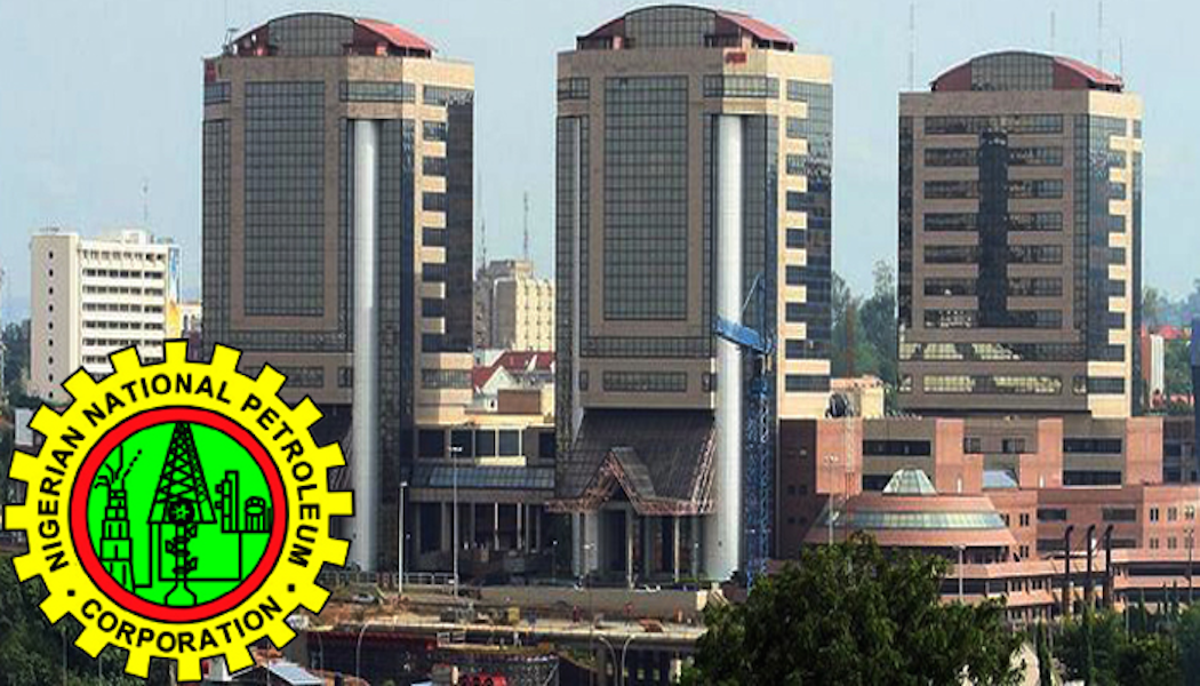
In a pivotal move to revitalize Nigeria’s oil and gas industry, the NNPC-TotalEnergies joint venture has announced a substantial $550 million Final Investment Decision (FID) for the Ubeta Field Development Project.

This decision is a direct response to President Bola Ahmed Tinubu’s Presidential Executive Order on Oil & Gas Reforms, which aims to enhance the investment climate and establish Nigeria as a top destination for oil and gas investments in Africa.

The Ubeta field, discovered in 1964 and located northwest of Port Harcourt in the eastern Niger Delta, is poised to play a crucial role in Nigeria’s energy landscape. Once operational, the field is expected to produce around 350 million standard cubic feet per day (MMScf/day) of gas and 10,000 barrels per day (BBLS/day) of associated liquids.

This development will significantly bolster gas supplies to Nigeria Liquefied Natural Gas (NLNG) Limited, addressing a vital need as LNG production has recently declined, contributing to rising cooking gas prices in the country.

The announcement came during a high-profile signing ceremony at the NNPC Towers. Mallam Mele Kyari, Group Chief Executive Officer of NNPC Limited, emphasized the importance of the government’s support in reaching this milestone. He credited President Tinubu’s administration with creating a favorable operational environment through targeted fiscal policies.

“We appreciate Mr. President for supporting us with the appropriate fiscal environment. The Presidential Executive Order is instrumental to us getting to this significant milestone, and we are now seeing the impact of the policy,” Kyari stated.

Mike Sangster, Senior Vice President for Africa, Exploration & Production at TotalEnergies, highlighted the strategic significance of the Ubeta project.

“Ubeta fits perfectly with our strategy of developing low-cost and low-emission projects and will contribute to the Nigerian economy through higher NLNG exports,” Sangster said.

The project is said to align with the government’s broader vision to enhance investor confidence in the oil and gas sector. Minister of State for Petroleum Resources (Oil), Sen. Heineken Lokpobiri, underscored this point, noting that the President’s policies have rekindled investor interest.

Minister of State for Petroleum Resources (Gas), Rt. Hon. Ekperikpe Ekpo added that the project exemplifies the effectiveness of government policies in creating a conducive environment for gas sector investments.

Located in Oil Mining Lease (OML) 58, the Ubeta gas condensate field will feature a new 6-well cluster connected to existing facilities at Obite via an 11km buried pipeline. Production is expected to commence in 2027, reaching a peak output of 300 million cubic feet per day, equivalent to about 70,000 barrels of oil equivalent per day, including condensates. Gas from Ubeta will be directed to the NLNG plant on Bonny Island, which is currently expanding its capacity from 22 to 30 million tonnes per annum (Mtpa).

The project is designed to be both low-cost and low-emission, utilizing existing gas processing infrastructure. Its carbon footprint will be further minimized through a 5 MW solar plant under construction at the Obite site and the electrification of the drilling rig. TotalEnergies is also committed to maximizing local content, ensuring over 90% of manhours are worked locally.

The development of the Ubeta field is expected to have a long-term positive impact on the domestic gas supply in Nigeria. With LNG production having seen recent declines, causing cooking gas prices to soar, the Ubeta project promises to stabilize and potentially reduce gas prices, making it more affordable for everyday Nigerians.

Additionally, the Ubeta FID is said to be a testament to the relentless efforts by NNPC Limited, supported by comprehensive executive backing, to resolve challenges that have historically deterred foreign investment in Nigeria’s oil and gas sector. The project is expected to stimulate economic activities, create numerous job opportunities, and provide significant value for stakeholders across the board.

Emirship Tussle: Confusion As Kano State Retains Sanusi as Emir, Orders Eviction of Bayero Despite Court Judgment

0

In the latest episode of the emirship tussle, the Kano State Government has directed the state’s Commissioner of Police to remove the 15th Emir of Kano, Aminu Ado Bayero, from the Nasarawa mini palace.

This decision follows a contentious ruling by a Federal High Court that has sparked significant debate and confusion, leaving the parties to interpret it to suit their respective narrative.

The Federal High Court’s judgment, delivered by Justice Abdullahi Liman, did not invalidate the Kano Emirate Council (Amendment No. 2) Law, 2024. This law had recently abolished four of the five emirate councils in Kano and deposed all the emirs, including Aminu Ado Bayero.

However, the court found that the government’s actions, including the appointment of Sanusi as emir, were null and void due to the government’s failure to adhere to a court order.

Justice Liman criticized Governor Abba Kabir Yusuf’s speech during the reappointment of Sanusi, describing it as a step towards anarchy for defying the court’s order.

“If a court order cannot be respected despite evidence of service, then the government is heading to chaos,” Justice Liman said. He declared all actions taken by the governor after the court’s initial order as null and void and ordered all parties to maintain the status quo.

Government’s Response

In response to the court’s ruling, Kano State Attorney General and Commissioner for Justice, Haruna Dederi, asserted that the judgment was in favor of the state government, maintaining that Sanusi remains the emir.

Dederi stated that the government has planned renovations for the Nasarawa palace, including the demolition and reconstruction of its dilapidated wall fence.

“Following this court’s ruling, Kano State Government has directed the State Commissioner of Police to remove the deposed emir of the 8 metropolitan local governments from the government property where he is trespassing as the government has already concluded arrangements for the general reconstruction and renovation of the property including the demolishing and reconstruction of the dilapidated wall fence with immediate effect,” Dederi announced.

Dederi further explained, “By the ruling of the court, it has unequivocally reaffirmed the validity of the law passed by Kano State House of Assembly and assented to by His Excellency the Executive Governor of Kano State on Thursday, 23rd May 2024 by 5:10 p.m.

“This means that the abolishing of the five emirates created in 2019 is validated, and the deposition of the five emirs is also sustained by the Federal High Court. By implication, this means that Muhammadu Sanusi II remains the emir of Kano.”

The judgment stirs confusion and criticism

The court’s ruling has left both parties in limbo, with both sides interpreting the judgment to their advantage. The court upheld the validity of the Kano Emirates Council (Repeal) Bill 2024 while setting aside Governor Yusuf’s actions, creating a complex legal scenario.

Renowned constitutional lawyer Professor Auwalu Yadudu criticized the judgment for its contradictory nature.

“How can you say the actions taken in pursuit of a law are set aside, and then say you are not delving into the validity of the said law?” he questioned. Yadudu described the judge’s approach as “strange and baffling,” noting that it does not help the judicial process.

He added, “The judge has more or less held that he lacked jurisdiction on the issue by transferring the case to another judge, but still went ahead to set aside the governor’s actions.”

Human rights lawyer Femi Falana also expressed confusion over the ruling, pointing out that the Supreme Court had previously limited federal high courts’ jurisdiction over traditional institutions.

“The order is a bit confusing,” Falana said during an interview on Arise TV. He noted that the Supreme Court had issued two separate judgments limiting the powers of the federal court on traditional institutions.

“It cannot be done via fundamental rights application. In any country that loudly claims to pronounce and operate under the rule of law, the judgments of the Supreme Court are binding on all authorities,” he said.

Backstory

This legal battle is part of a broader power struggle over the Kano emirship. The conflict intensified when Governor Yusuf appointed Sanusi as emir in May 2024, only for the Federal High Court to declare the appointment null and void due to procedural issues.

The ongoing tussle is believed to be a reflection of deep political power play between the federal government and the Kano State. The police, which is under the control of the federal government, said that it would not enforce the order of the state government to evict Ado Bayero.

Biden Administration Bans Kaspersky Lab Products in the US, Citing National Security Concerns

0

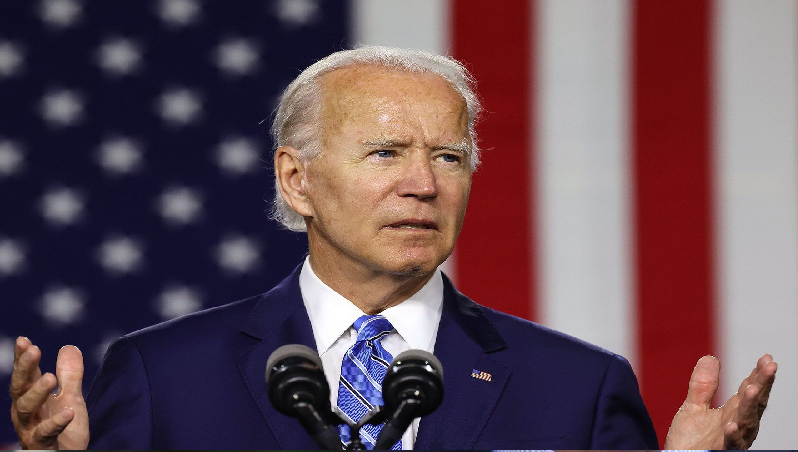
The Biden administration has banned the sale of Kaspersky Lab products and services in the United States, citing significant national security risks.

Commerce Secretary Gina Raimondo announced the crackdown during a call with reporters, emphasizing the potential threat posed by the Russian cybersecurity firm.

“Russia has shown it has the capacity – and even more than that, the intent – to exploit Russian companies like Kaspersky to collect and weaponize the personal information of Americans,” Raimondo stated.

The prohibition, which takes effect on July 20, will prevent the sale of Kaspersky software to new customers in the US. Furthermore, starting September 29, Kaspersky will be banned from distributing software updates and malware signatures to existing US customers.

This move, which follows the crackdown on China-based TikTok, is intended to eliminate any ongoing threat posed by the company’s software being used within the United States.

Highlighting the potential dangers of Kaspersky’s operations, Raimondo noted, “Kaspersky, based in Moscow, is basically at the mercy of Putin, and with its tools installed all over American computers, the antivirus maker could – ironically enough – be ordered or forced to act as a conduit into those systems by the Kremlin.”

The US government’s decision follows a thorough investigation that concluded Kaspersky’s operations in the United States posed an unavoidable national security risk. The investigation revealed the Russian government’s capacity to influence or direct Kaspersky’s operations, leveraging the company’s technology for offensive cyber activities.

An official statement from the US government said: “The company’s continued operations in the United States presented a national security risk — due to the Russian Government’s offensive cyber capabilities and capacity to influence or direct Kaspersky’s operations – that could not be addressed through mitigation measures short of a total prohibition.”

In response to the ban, Kaspersky Lab issued a detailed statement asserting that the White House’s decision was driven by geopolitical tensions rather than a fair evaluation of the company’s integrity. Kaspersky denied any involvement in activities threatening US national security and vowed to explore all legal avenues to maintain its operations and relationships within the US.

“Kaspersky does not engage in activities which threaten US national security and, in fact, has made significant contributions with its reporting and protection from a variety of threat actors that targeted US interests and allies,” the company said.

Kaspersky has been there before

The Biden administration’s action against Kaspersky is not an isolated incident. It follows a series of measures aimed at reducing the influence of the Russian cybersecurity firm in the US. In 2017, the Department of Homeland Security (DHS) issued a directive mandating federal agencies to remove and discontinue the use of Kaspersky Lab products on their IT systems. This decision followed reports suggesting that Russian government operatives had exploited Kaspersky antivirus software to steal classified material from a computer belonging to a National Security Agency (NSA) contractor.

In an effort to allay these concerns, Kaspersky Lab offered to open its source code for third-party review. Despite this gesture, the scrutiny over the company’s ties to the Russian government persisted.

The following year, the National Defense Authorization Act (NDAA) for Fiscal Year 2018 was enacted, formally prohibiting the use of Kaspersky products by federal agencies. This legislative move underscored the U.S. government’s ongoing apprehension regarding the potential security risks posed by the software.

Further intensifying the restrictions, in March 2022, the Federal Communications Commission (FCC) added Kaspersky products and services to its list of communications equipment and services deemed to pose a threat to national security. This addition came shortly after Russia’s illegal invasion of Ukraine, reflecting heightened concerns about cybersecurity threats emanating from Russian entities.

Broader Efforts Against Tech Companies from Hostile Nations

This move is part of broader efforts by the US government to contain threats posed by tech companies based in hostile nations. Washington has also targeted Chinese-owned TikTok, citing national security concerns. The Biden administration, like its predecessor, has expressed concerns that the app could be used by the Chinese government to gather sensitive data on American users or to spread misinformation.

TikTok’s parent company, ByteDance, has faced extensive scrutiny and legal challenges in the US. The Trump administration attempted to ban the app in 2020, though the effort was blocked by the courts. Recently, several states have enacted laws prohibiting the use of TikTok on official devices, and US lawmakers have passed a bill, which President Biden signed into law, to further restrict TikTok’s operations.

These stringent measures underscore the significant challenges faced by foreign tech companies operating in the US market, especially those originating from countries considered adversaries.

The bans and restrictions complicate their ability to do business and maintain user bases in one of the world’s largest tech markets. These companies must navigate an increasingly hostile regulatory environment and the potential for sudden policy shifts that can drastically impact their operations.

Kaspersky said “the primary impact of these measures will be the benefit they provide to cyber crime,” adding that “international cooperation between cyber security experts is crucial in the fight against malware, and yet this will restrict those efforts.”