DD
MM
YYYY

PAGES

DD
MM
YYYY

spot_img

PAGES

Home Blog Page 3270

BlockDAG’s $46.4M Presale Catapults It to CoinSniper’s Top Spot, Surmounting ADA & PEPE Highs

0

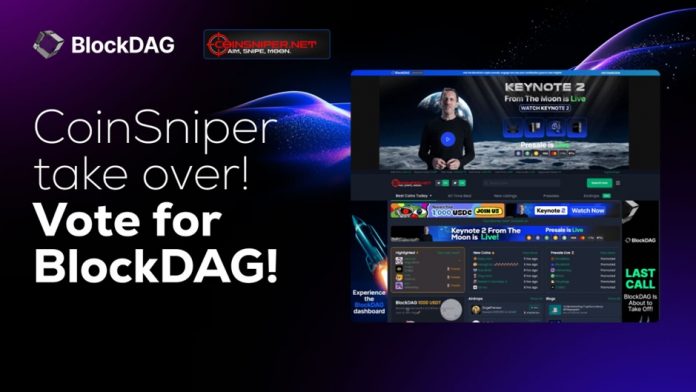
Amid Cardano’s steady phase, which sparked mixed community reactions, and Pepe’s record-breaking surge that delighted investors, BlockDAG has risen as a frontrunner. Rising to the top of CoinSniper’s rankings, this success is fueled by the influential Keynote 2 release and an impressive $46.4 million presale in batch 17. This milestone highlights BlockDAG’s potential to outshine both ADA and PEPE.

BlockDAG’s recent Moon-themed keynote showcased the innovative X1 Miner app and advanced DAG-based technology, revolutionizing mobile crypto mining. This combination of cutting-edge features and substantial growth potential positions BlockDAG as a top-tier investment opportunity, ready to lead the next wave of crypto innovation.

Cardano Holds Steady with Future Potential

Cardano (ADA) maintains a steady pace at around $0.45, eliciting mixed feelings within its community. Despite this stability being playfully critiqued, Cardano’s price saw a slight rise to $0.454, up 1.34%. It faces resistance at $0.4570, with more hurdles at $0.4720 and $0.4870. Supports are pegged at $0.4280, $0.4150, and $0.4030. As ADA steadies, investors remain alert for any significant moves, while eyes also turn to BlockDAG, which has recently surged by 1000%.
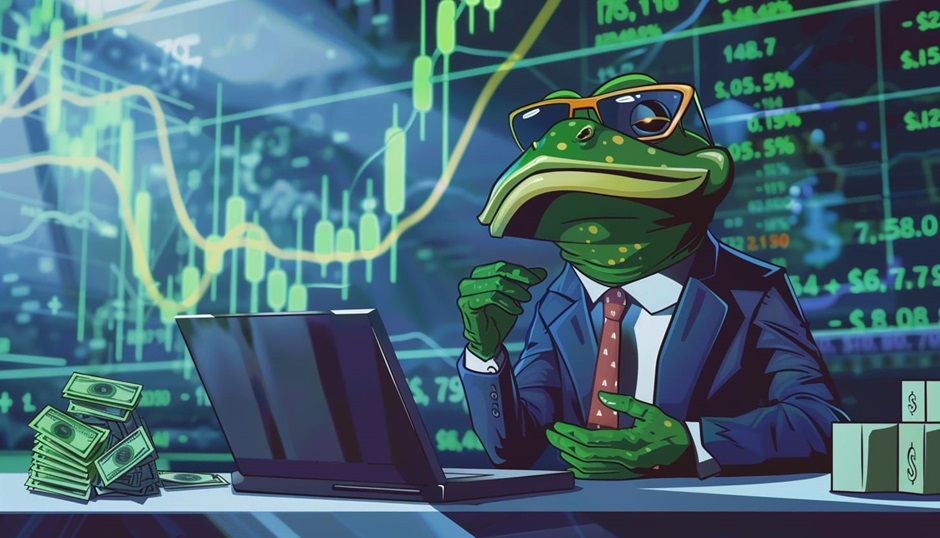
PEPE Hits Record High Amid Speculative Buzz

Pepe (PEPE) recently reached an all-time high of $0.00001716, marking a significant milestone for the meme coin. This impressive surge has attracted the attention of major investors, who are also exploring other promising ventures like BlockDAG. Pepe’s rise has resulted in substantial profits for its holders. However, while Pepe has provided notable short-term gains, concerns about its intrinsic value and potential regulatory challenges have led investors to consider other options. Although there is some bullish sentiment, the long-term outlook for PEPE remains uncertain, with many questioning its potential for sustained growth.

BlockDAG’s Stellar Rise on CoinSniper

BlockDAG’s rise to the top of CoinSniper marks a major milestone, highlighted by the influential Keynote 2 release. This event showcased several innovative advancements, including the beta version of the X1 Miner app and significant blockchain updates. The app, available for both Android and Apple users, facilitates mobile cryptocurrency mining, enhancing accessibility and user engagement. BlockDAG’s use of Directed Acyclic Graph (DAG) technology ensures faster transaction speeds and quicker confirmations, setting it apart from traditional blockchain structures.

Furthermore, BlockDAG’s moon-themed keynote detailed its comprehensive roadmap and ongoing development efforts, reaffirming its dedication to creating a decentralized future. The project’s ability to efficiently manage concurrent operations, combined with its DAG-based Proof-of-Work (PoW) consensus, highlights its potential to transform the crypto industry. This innovative approach enhances scalability, security, and reliability.

The buzz around BlockDAG is growing, thanks to its remarkable presale success, amassing $46.4 million. This feat reflects the strong confidence of early investors. The presale presents a compelling investment opportunity, accepting payments in USDT, Ethereum, and BNB. With the BDAG price currently at $0.011 and climbing with each batch, early investors have enjoyed a 1000% increase in value from batch 1 to 17, propelling the project’s momentum forward.

Final Insights

BlockDAG’s ascendancy on CoinSniper after Keynote 2 underscores its significant influence in the cryptocurrency market. Boasting cutting-edge technology, strategic innovations, and impressive presale results, BlockDAG offers a highly attractive investment opportunity.

While Cardano holds its ground and PEPE hits new peaks, BlockDAG’s distinctive mobile mining solution and strong growth potential make it a standout choice. Investors seeking lucrative opportunities should look into BlockDAG’s current presale, which has not only attracted substantial capital but also achieved exponential growth in investment value.

Join BlockDAG Presale Now:

Website: https://blockdag.network

Presale: https://purchase.blockdag.network

Telegram: https://t.me/blockDAGnetworkOfficial

Discord: https://discord.gg/Q7BxghMVyu
The MultiChoice Nigeria’s Limited Choices As Tribunal Rules Against It

0

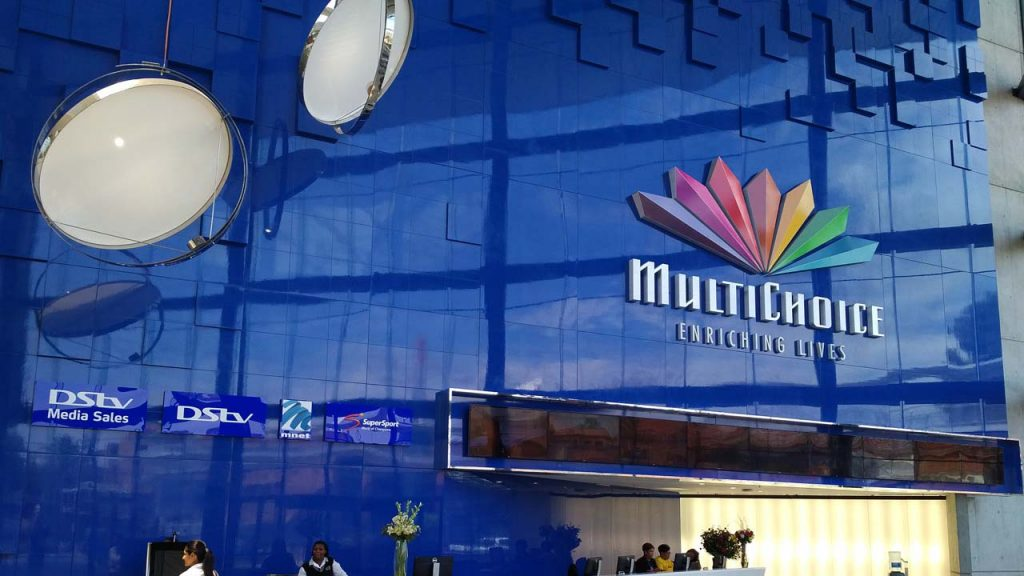
Poor MultiChoice, the owner of DStv and GOtv: “The Competition and Consumer Protection Tribunal has fined prominent Pay-TV operator Multichoice Nigeria N150 million for disobeying its order on a case involving subscription price increases for DStv and GOtv packages. The tribunal, led by Justice Thomas Okosu, also ordered Multichoice to offer Nigerian customers a one-month free subscription.” 

Of course, watching European footballers kick round leather is our constitutional right. MutiChoice is having limited choices to remain in Nigeria because the high voltage attack is unprecedented and the fact that it lost $190.5 million in the latest result in Nigeria

People accuse it of not offering pay per view (PPV) without knowing that PPV is not like dividing your monthly bill by the number of minutes in a month, and you can pay when watching. If someone offers PPV, there is going to be surge pricing on special games which may even make you pay in an hour your monthly regular bill! 

I am still waiting for when the court will rule against banks (central and commercial) for hiking interest rates or go against the Senators for jumbo allowances. Who can rule against the increase of USD dollars, petrol prices, food prices, etc since we can rule against MultIchoice increasing its prices? 

And those pushing this, can we do the Air Peace model on Lagos-London routes for football games? Raise money and go to Europe for TV rights! They can accept Naira and Kobo on Sundays! 

Tariff Hike: Tribunal Fines Multichoice N150m, Orders it to Offer One Month Free Subscription

1

The Competition and Consumer Protection Tribunal has fined prominent Pay-TV operator Multichoice Nigeria N150 million for disobeying its order on a case involving subscription price increases for DStv and GOtv packages.

The tribunal, led by Justice Thomas Okosu, also ordered Multichoice to offer Nigerian customers a one-month free subscription.

This ruling follows an interim order issued by the tribunal that restrained Multichoice from implementing a planned price increase pending the resolution of a motion filed by Barrister Festus Onifade. Onifade’s suit, which included the Federal Competition and Consumer Protection Commission (FCCPC) as a party, argued that Multichoice unjustly increased subscription fees without providing the legally required one-month notice to customers.

According to the suit, Onifade argued that Multichoice Nigeria Ltd violated consumer rights by not giving adequate notice before the May 1, 2024, price hike.

“It is our submission that the 8-day notice issued by Multichoice Nigeria is insufficient in law. A monthly subscriber should be given at least a month.

“Dismiss this application (by Multichoice) for being a waste of time of the court,” Onifade prayed.

Earlier ruling by a tribunal chaired by Saratu Shafii was in Onifade’s favor, issuing an interim injunction to prevent the price increase. However, Multichoice’s lawyer, Moyosore .J. Onibanjo (SAN), subsequently filed a preliminary objection, arguing that the tribunal lacked jurisdiction and cited a previous ruling (CCPT/OP/1/2022) in favor of Multichoice.

Onibanjo contended that the power to regulate prices lies with the President of Nigeria and not the tribunal. However, Onifade maintained that his case was focused on the adequacy of the notice given to consumers, not the price increase itself.

He also asked the Tribunal to direct Multi-choice Nigeria Limited to pay the sum of N1,000,000,000.00 (One Billion Naira only) or any amount the Tribunal deems may fit appropriate in this circumstance for “deliberately disobeying, contravening, and failure to comply with the Interim Order of this Honourable Tribunal granted on the 29th April 2024.”

Therefore, Justice Okosu referred to Section 39(2) of the FCCPC Act, asserting that the tribunal has jurisdiction over all business activities in Nigeria. He dismissed Multichoice’s preliminary objection, affirming that consumers do not need to appeal to the President or the Price Control Board to enforce their rights.

The judge noted that Onifade had appropriately contacted the FCCPC before filing the case.

The tribunal condemned Multichoice for disobeying its interim orders and proceeding with the price increase. As a result, Multichoice was fined N150 million and ordered to provide a one-month free subscription to its customers.

Backstory: Multichoice and Price Adjustments

Multichoice announced new price adjustments for its DStv and GOtv packages on April 24, 2024. The price changes, effective May 1, 2024, resulted in a 25% to 26% increase across its packages.

This development sparked widespread outrage among subscribers, prompting Onifade to file a suit. Onifade argued that the eight-day notice Multichoice provided was insufficient and did not meet the legal requirement of a one-month notice.

Despite the tribunal’s interim order, Multichoice, which has complained about the rising cost of operation – buoyed foreign exchange volatility and fuel subsidies removal, proceeded with the price hike, leading to the recent ruling that found the company in contempt and imposed significant penalties.

Implications of the ruling on Foreign Direct Investment (FDI)

However, this judgment against Multichoice, a major foreign investor in Nigeria’s entertainment industry, has sparked concerns about the country’s investment climate from many quarters. As the Nigerian government actively seeks to attract foreign direct investment (FDI) to spur economic growth, many argue that the ruling sends a troubling signal to potential investors.

The courts had previously intervened in similar cases, ordering Multichoice to halt plans to increase tariffs, or asking the company to reverse a hike. In 2020 the Nigerian House or Representatives asked Multichoice to develop a Pay As You Go or Pay-Per-View subscription plan for consumers, as the South African company sought to increase subscription fees. The move later died naturally after the House, and Nigerian consumers learned that PAYG or PPV comes with a higher cost.

These moves, among others, have alluded to the belief that Multichoice is being targeted because it is a foreign company. Business leaders believe the latest judgment highlights potential unpredictability in Nigeria’s regulatory environment.

According to financial analysts, unexpected penalties and stringent conditions can significantly deter new investments. The perceived regulatory uncertainty may lead investors to reconsider entering the Nigerian market, fearing similar unexpected challenges. They also noted that harsh penalties and ongoing regulatory disputes faced by the company could create a perception of hostility towards foreign businesses.

Economists have earlier warned that the government needs to demonstrate its commitment to fair and predictable regulatory practices. They said reassuring potential investors that their investments will be protected and fairly treated is vital for fostering a conducive investment climate.

AI Monopoly: U.S to Open Antitrust Probes Into Nvidia, OpenAI and Microsoft

0

In a bid to crack down on Artificial Intelligence monopoly, the United States Federal Trade Commission (FTC) and the Justice Department, have announced plans to open antitrust investions into Nvidia, OpenAI and Microsoft.

As Artificial Intelligence continues to gain momentum across the globe these tech giant companies have integrated the advanced technology into their platform, prompting the attention of regulators.

U.S. antitrust enforcer Jonathan Kanter disclosed that there will be an investigation on the nation’s artificial intelligence sector in response to concerns about a few companies holding too much control.

In a report by Financial Times, Kanter stated that he was examining AI’s competitive landscape and monopoly choke points. This includes computing power, data used to train large language models (LLMs), cloud service providers, engineering talent, and hardware.

According to Kanter, he started that it is crucial for the Al sector to act urgently, to ensure that the already dominant technology firms do not have sole market control. The executive further said that real-time intervention may be the most meaningful thing to do.

It is understood that Nvidia, a major player in the AI sector, has established a dominant position primarily through its advanced graphics processing units (GPUs), which are essential for AI research and applications. However, this dominance has raised concerns about potential monopolistic practices and their implications for the AI industry.

Also, in recent years, the collaboration between OpenAl and Microsoft has garnered significant attention, leading to discussions about their dominant position in the field of artificial intelligence (AI). This partnership has raised questions about potential monopolistic practices and their implications for innovation, competition, and ethical standards within the Al industry.

The objective of the antitrust probe seeks to achieve the following, Ensuring Fair Competition, Promoting Innovation, and Protecting Consumer Interests to ensure that consumers benefit from a diverse and competitive market with multiple choices for AI products and services.

Notably, the U.S. antitrust probe into Nvidia, Microsoft, and OpenAI is coming after a group of current and former OpenAI employees released an Open letter of AI’s serious risks and lack of oversight.

Part of the letter reads,

“We are current and former employees at frontier AI companies, and we believe in the potential of AI technology to deliver unprecedented benefits to humanity. We also understand the serious risks posed by these technologies. These risks range from the further entrenchment of existing inequalities, to manipulation and misinformation, to the loss of control of autonomous Al systems potentially resulting in human extinction.

“Al companies themselves have acknowledged these risks as have governments across the world. We are hopeful that these risks can be adequately mitigated with sufficient guidance from the scientific community, policymakers, and the public. However, Al companies have strong financial incentives to avoid effective oversight, and we do not believe bespoke structures of corporate governance are sufficient to change this.”

The U.S. government’s decision to open antitrust probes into Nvidia, OpenAI, and Microsoft marks a pivotal moment in the regulation of the AI industry. These investigations underscore the importance of maintaining a competitive market to foster innovation, protect consumer interests, and ensure the fair and equitable development of AI technologies.

Germany seeks to Deport Criminals from Afghanistan and Syria

0

The recent statement by German Chancellor Olaf Scholz has sparked a significant discussion on the topic of deportation and national security. In a move that underscores the complexity of immigration and crime, Scholz has indicated a shift in policy that would allow for the deportation of serious criminals to Afghanistan and Syria.

This policy change comes in the wake of a tragic event in Mannheim, where a police officer lost his life following a knife attack by an Afghan immigrant. The incident has not only caused a national outcry but has also brought to the forefront the delicate balance between providing refuge and ensuring the safety of citizens.

Chancellor Scholz’s stance is clear: individuals who commit serious crimes or pose terrorist threats should not find sanctuary within Germany’s borders. This is a sentiment that resonates with many, especially in light of recent events. The chancellor has been vocal about his outrage over the fact that someone who sought protection in Germany could commit such heinous acts.

Germany’s approach to migration and deportation has been a subject of intense debate and policy evolution, especially in the context of the global refugee crisis and security concerns. The country has been known for its welcoming stance towards refugees and asylum seekers, but recent developments have led to a shift towards stricter deportation policies for those who do not qualify for asylum or have been involved in criminal activities.

In 2024, Germany is set to implement significant changes to its immigration policy. The Repatriation Improvement Act aims to streamline the deportation process for rejected asylum applicants. One of the key changes is the discontinuation of announcing deportations in advance, coupled with an extension of asylum detention to 28 days. This move is intended to prevent absconding and ensure that deportations are carried out effectively.

The German authorities are also granted extended powers to search for individuals ordered to leave and access their property, such as phones, to establish identity more firmly. This is part of a broader effort to act more consistently and quickly against individuals deemed dangerous, including those suspected of criminal associations.

Moreover, Germany is negotiating migration agreements with several countries, aiming to designate more nations as “safe countries of origin.” This would facilitate the return of people to these countries, although it does not currently affect the majority of asylum-seekers from Syria, Afghanistan, and Turkey.

The proposed changes also include efforts to process asylum applications faster, reducing the current handling time from over two years to a target of three to six months. Additionally, there will be a reduction in benefits for asylum seekers, with welfare payments becoming accessible only after three years instead of 18 months, and the introduction of a card-based system for benefits to prevent misuse.

These policy adjustments reflect Germany’s attempt to balance its humanitarian responsibilities with the need to maintain national security and social cohesion. The government’s stance is clear: while Germany remains open to those in genuine need of protection, it is also determined to ensure that those who do not have the right to stay are returned to their countries of origin in a fair and orderly manner.

The logistics of implementing such deportations are complex, given the current diplomatic relations and security situations in both Afghanistan and Syria. Germany does not currently carry out deportations to these countries due to these concerns. However, Scholz has mentioned that the government is exploring solutions, including talks with neighboring countries of Afghanistan.

The debate is not without its critics. Some argue that deporting individuals back to unstable regions could lead to further radicalization or even allow them to plot attacks from abroad. Others raise concerns about the human rights implications of sending people back to potentially dangerous situations.

The issue also intersects with broader political movements across Europe, where migration has been a hot-button topic. The rise of far-right populism and the upcoming European elections add layers of political complexity to the decision-making process.

Chancellor Scholz’s proposal to deport serious criminals is a response to a specific and tragic event, but it also reflects broader questions about immigration, security, and human rights. As Germany and the rest of Europe grapple with these issues, the world watches to see how one of the continent’s largest economies navigates the challenges of a globalized society in an era of heightened security concerns.