DD
MM
YYYY

PAGES

DD
MM
YYYY

spot_img

PAGES

Home Blog Page 3333

Kenyan Health Tech Startup Ilara Health Secures $4.2 Million Fund to Scale Operations

0

Ilara Health, a Kenyan health tech medical products and solutions company, has raised $4.2 million in debt-equity in a pre-Series A round to expand operations in the East African country.

The funding round was led by DOB Equity, with participation from Philips Foundation and existing investors such as AAIC INVESTMENT, Angaza Capital, Black Pearl Investments, and Perivoli Innovations. Alphamundi, Kiva Capital, and Boehringer Ingelheim closed the debt investment. The new round brings the total debt, equity and grant funding secured by the startup to $11.7 million.

Ilara health plans to use the funds to scale operations to deepen healthcare access to the masses through the rollout of a B2B health and occupational service that will enable uninsured workers access to care at its network of partner clinics for a fixed monthly fee.

Speaking on the funding round, CEO and Co-founder of Ilara Health Emilian Popa said,

“Ilara Health came about by one common goal; to improve the quality of healthcare for Africans. We passionately believe healthcare should be affordable and accessible to all and I’m therefore proud of the measurable impact we have achieved in such a short space of time.

“There’s still so much more to be done, which is why we are thrilled to be joined by prominent global investors who share our core vision for Kenya and ultimately all of Africa. The funds raised will build on our continued growth and we look forward to driving standardized quality healthcare on the continent.”

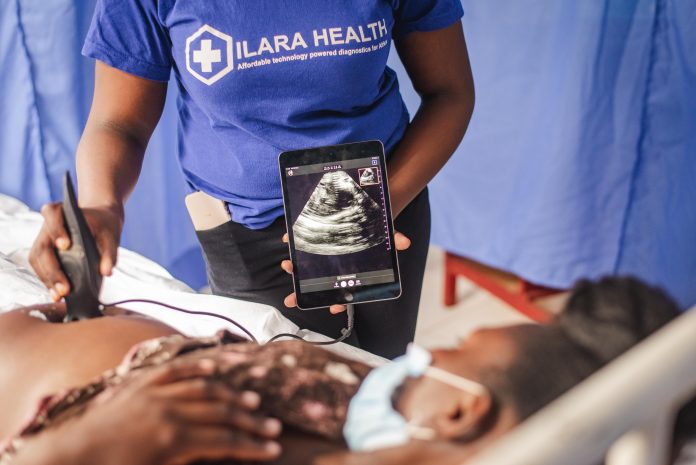
Founded in 2019, the startup helps primary care clinics across Africa deliver better healthcare. It distributes low-cost, modern-tech-powered diagnostic devices directly to primary care doctors in peri-urban and rural clinics, where the availability of common diagnostics is very poor.

Ilara Health started by leasing diagnostic devices to clinics, but has since evolved to enable health centers to acquire pharmaceutical products and other items like hospital furniture, on credit.

The startup proprietary software integrates all the devices that it distributes, and enables the doctor to provide effective patient management.

Notably, it offers clinics a monthly subscription-based practice management software for KSh1,000 ($6.25). Ilara Health is tapping the private healthcare sector in Kenya, which has become the preferred alternative for those with medical coverage or those who can afford to pay out of pocket.

According to the CEO, the startup serves 3,000 of Kenya’s 15,000 clinics. Located in residential neighborhoods, these clinics provide easier access but are more expensive than public facilities. 

In Ilara Health’s next phase of growth, they plan to double down on reaching the patients through the B2B health and occupational service, through which they will partner with employers to give employees access to various outpatient services at partner clinics.

—press release

 Ilara Health, the healthtech company digitising and consolidating  highly fragmented primary care in Kenya, has today announced the close of a $4.2M pre-series A round of equity and debt. Led by DOB Equity, the round also sees follow-on equity investment from AAIC INVESTMENT, Angaza Capital, Black Pearl Investments, Perivoli Innovations, as well  as debt investment from Alphamundi and Kiva Capital. New to the round are Philips Foundation and Boehringer Ingelheim. The new partners are strategic healthcare investors that bring their deep experience working with and investing in companies in the global healthcare industry.

Ilara Health will use the latest capital injection to scale its tech-enabled primary care model across Kenya before expanding to other regions. With this latest funding, the company’s total investment to date reaches $11.7M, encompassing various funding rounds, such as a $3.75M seed round in 2020, along with multiple grants, including two grants totaling $1.6M from the Bill & Melinda Gates Foundation.

Founded in 2019 by Emilian Popa, Maximilian Mancini and Sameer Afzal Farooqi, Ilara Health launched to deliver affordable and accessible quality healthcare in the peri-urban areas of Kenya. The company began by addressing the gap in diagnostics impacting primary healthcare centres in the region due to significant disparities in availability and quality testing. Ilara Health’s initial model offered revenue-generating diagnostic assets, which enabled clinics to instantly scale their businesses, whilst also providing flexible repayment plans, and also the training required to test patients.  The company has since expanded to digitising the entire end-to-end operations, leveraging data to enhance its infrastructural business model. This includes helping clinics electronically manage their patient base and becoming their one-stop shop for diagnostic tools, consumables, and pharmaceuticals.

The investment will facilitate Ilara Health’s focus for the next 12 months which is to achieve significant topline growth, keep growing the already large partner clinics network, and incorporate the next phase of growth into its model, which includes the launch of the employee health services through B2B health & occupational services, initially in select locations and later throughout the country. This is to further strengthen the Ilara Health branded clinics and achieve revenue growth, proving the path to profitability as the operating base remains broadly consistent. The healthtech company also intends to drive internal efficiencies in operations and embark on a fundraising round of both equity and debt, to support the working capital investments fueling the growth goals. There will also be a meaningful investment in technology and the proprietary Practice Management Software (PMS) to prove the longer-term data-driven potential of our business model. Live data from the PMS will enable the start-up to analyse the performance of primary care providers to provide follow-on asset lending and working capital of between $10,000 to $15,000 for: clinic rejuvenations, staff training, provision of diagnostic equipment and a ‘powered by Ilara Health’ co-branding opportunity. The company presently has 8 clinics covered by these follow-on investments and co-branding, with plans to expand to 50 by the end of the year.

Speaking on the round, Emilian Popa, CEO and Co-founder of Ilara Health says “Ilara Health came about by one common goal; to improve the quality of healthcare for Africans. We passionately believe healthcare should be affordable and accessible to all and I’m therefore proud of the measurable impact we have achieved in such a short space of time. There’s still so much more to be done, which is why we are thrilled to be joined by prominent global investors who share our core vision for Kenya and ultimately all of Africa. This fundraise will build on our continued growth and we look forward to driving standardised quality healthcare on the continent.”

Kenya has ~10,000 privately owned primary care facilities and a further ~7,000 that are publicly owned. Ilara Health’s growth momentum has so far seen it partner with over 3,000 of these clinics to deliver better healthcare across 42 Kenyan counties, which in turn serve over 5 million patients each year.

Margot Cooijmans, Director of Philips Foundation Impact Investments said, “Supporting Ilara Health reflects Philips Foundation’s effort to improve healthcare access through innovation, aligning with our goal to make quality healthcare available for all. This investment is a practical step towards bridging the healthcare gap, focusing on solutions that can be implemented in communities that need them the most.”

Bahaa Eddine Sarroukh, Impact Investment Lead at Philips Foundation said, “Ilara Health represents a significant stride forward in healthcare innovation, blending technology and finance in a manner that is both pioneering and profoundly impactful. Their approach goes beyond mere access; it’s about empowering the healthcare providers at the grassroots level with the tools and financial models they need to thrive. This blend is not just unique—it’s a critical enabler for expanding quality healthcare to those who need it most, setting a new standard for what’s possible in healthcare delivery across Africa.”

Hayo Afman, Managing Director at DOB Equity said, “Having supported Ilara Health and its founders since the beginning, we are enthusiastic about the progress and the notable improvement of patient outcomes thus far. We look forward to collaborating with our new partners to support the team in redefining the standard of medical care in Africa.”

Christian Bausch, at Boehringer Ingelheim said, “Ilara Health’s plan to decentralise financing for primary care clinics captured our hearts. We value companies and entrepreneurs that create innovative solutions that push the envelope and are proud to support Ilara Health as they address an unmet demand of clinics in Kenya and Sub Saharan Africa.”

Hiroki Ishida, Director at AAIC Partners Africa said, “Primary care represents one of the most challenging areas for business model development. Nevertheless, it serves as the foundation of the healthcare sector. As a healthcare-focused fund in Africa, I have confidence in the team’s capabilities, and I anticipate their role as innovators on this continent.”

Ilara Health intends to use its innovative tech infrastructure to bridge the estimated $66 billion financing gap and outdated processes affecting healthcare delivery across the African continent as a whole.

About Ilara Health

Since 2019, Ilara Health has partnered with more than 3,000 clinics, enabling access to life-saving point-of-care diagnostic tools to thousands of patients across Kenya. Its innovative underlying technology seamlessly integrates these diagnostic tools into easy-to-manage tablets and mobile phones that require minimal training to operate.


One way to protect the Intellectual Property of Crypto projects is to use Patents

0

The crypto industry is often seen as a bastion of innovation and creativity, where developers and entrepreneurs collaborate to create new solutions and protocols that challenge the status quo. However, this also means that the industry is constantly facing the threat of copycats, plagiarism, and infringement, which can undermine the originality and value of their work.

One way to protect the intellectual property of crypto projects is to use patents, which are legal rights that grant the owner the exclusive right to make, use, or sell an invention for a limited period of time. Patents can help crypto projects secure their competitive advantage, deter potential infringers, and attract investors and partners.

However, some may argue that patents are incompatible with the open-source ethos of crypto, which emphasizes transparency, collaboration, and sharing. They may fear that patents will stifle innovation, create monopolies, and hinder the adoption and development of crypto technologies.

This is a false dilemma. Crypto can benefit from patents without losing its open-source ethos. In fact, patents can be used to support and enhance the open-source movement, rather than oppose it. Here are some ways how:

Patents can be used defensively. Crypto projects can use patents to prevent others from patenting the same or similar inventions and suing them for infringement. This can create a “patent shield” that protects the project and its users from legal attacks.

For example, Square Crypto, a division of Square that focuses on Bitcoin development, has launched the Cryptocurrency Open Patent Alliance (COPA), a non-profit organization that aims to pool patents from crypto projects and make them available to anyone who joins the alliance. This way, COPA members can use each other’s patents defensively, while still allowing anyone to use their technologies for free.

Patents can be used strategically. Crypto projects can use patents to gain leverage in negotiations, partnerships, and licensing deals with other parties. For example, if a crypto project has a patent on a novel protocol or algorithm that solves a common problem in the industry, it can use it to bargain for better terms or conditions with potential collaborators or customers. Alternatively, it can license its patent to others for a fee or a royalty, creating a new source of revenue for the project.

Patents can be used ethically. Crypto projects can use patents to uphold their values and principles and ensure that their inventions are used for good purposes. For example, if a crypto project has a patent on a technology that enables social impact or environmental sustainability, it can use it to prevent others from using it for malicious or harmful ends.

Alternatively, it can grant permission to others who share its vision and mission, creating a positive network effect for the project.

Patents are not inherently antithetical to the open-source ethos of crypto. Rather, they are tools that can be used wisely and responsibly to protect and promote the innovation and creativity of crypto projects. By using patents in alignment with their goals and values, crypto projects can benefit from patents without losing their open-source ethos.

New York Attorney General’s office, Digital Currency Group and Bitcoin fell slightly on Monday

0
NEW YORK, NEW YORK - SEPTEMBER 21: NY Attorney General Letitia James speaks during a press conference at the office of the Attorney General on September 21, 2022 in New York, New York. NY AG James announced today that her office is suing former President Donald J. Trump and his children Donald Trump Jr., Ivanka Trump, and Eric Trump accusing the family of fraudulent statements of financial conditions to obtain millions in economic benefits. The lawsuit seeks to remove Trump and his children from their roles at their organizations and bans them from future leadership roles in the state of NY and repay $250 million that was illegally obtained. (Photo by Michael M. Santiago/Getty Images)

The New York Attorney General’s office has announced that it is expanding its lawsuit against Digital Currency Group (DCG), one of the largest and most influential companies in the crypto industry, to $3 billion. The lawsuit, which was filed in September 2023, accuses DCG of engaging in fraudulent and deceptive practices that harmed investors and consumers.

According to the amended complaint, DCG misled investors about the value and performance of its crypto assets, such as Grayscale Bitcoin Trust (GBTC) and Grayscale Ethereum Trust (GETH), which are publicly traded on the OTC markets. The complaint alleges that DCG artificially inflated the prices of these trusts by creating a false scarcity of shares and manipulating the supply and demand.

DCG also allegedly failed to disclose material information about the risks and fees associated with its products, such as the high premiums and discounts, the lack of liquidity, and the potential for conflicts of interest.

The Attorney General’s office claims that DCG’s fraudulent scheme resulted in investors losing over $2 billion in value, as the prices of GBTC and GETH plummeted in 2023. The office is seeking to recover these losses, as well as additional damages and penalties, totaling $3 billion. The office is also seeking to enjoin DCG from continuing its unlawful conduct and to impose reforms to protect investors and consumers.

DCG has denied the allegations and vowed to fight the lawsuit in court. In a statement, DCG said that it operates with the highest standards of integrity and transparency, and that it has always complied with all applicable laws and regulations. DCG also said that its products provide a valuable service to investors who want exposure to crypto assets without having to deal with the technical and regulatory challenges of buying and storing them directly.

The lawsuit against DCG is part of a broader crackdown by the New York Attorney General’s office on the crypto industry, which it considers to be rife with fraud, manipulation, and abuse. The office has previously taken action against other prominent crypto companies, such as Bitfinex, Tether, Coinseed, and BitPay, for violating various consumer protection and securities laws.

Bitcoin experienced a minor decline on Monday 12th February 2024, after posting its best weekly performance since October 2023. The leading cryptocurrency dropped by 1.2% to trade at $47,993, as some investors took profits from the recent rally.

However, the overall sentiment remains bullish, as Bitcoin has gained more than 20% in the past seven days, breaking above the $40,000 resistance level and reaching a new all-time high of $64,895 on Sunday.

What are the factors behind Bitcoin’s impressive recovery? And what are the challenges and opportunities ahead for the crypto market?

One of the main catalysts for Bitcoin’s surge was the launch of the first Spot Bitcoin exchange-traded fund (ETF) in the US, which began trading on the New York Stock Exchange on Tuesday 9th February 2024.

The ETF, called BITO, tracks the performance of Bitcoin futures contracts, rather than the spot price of Bitcoin itself. This allows investors to gain exposure to Bitcoin without having to buy or store the actual cryptocurrency, which can be costly and complicated.

The ETF also provides more regulatory clarity and legitimacy for Bitcoin, as it is overseen by the Securities and Exchange Commission (SEC) and follows strict rules and standards.

The BITO ETF attracted a huge demand from both institutional and retail investors, as it traded more than $1 billion worth of shares on its first day, making it one of the most successful ETF launches in history. The ETF also boosted the demand for Bitcoin futures contracts, which in turn pushed up the spot price of Bitcoin.

According to data from Skew, the open interest in Bitcoin futures contracts reached a record high of $27 billion on Sunday, indicating a high level of trading activity and optimism in the market.

Another factor that contributed to Bitcoin’s rally was the growing adoption and acceptance of Bitcoin by mainstream companies and institutions. For instance, Twitter announced on Thursday 11th February 2024 that it would allow its users to tip each other with Bitcoin using the Lightning Network, a layer-2 solution that enables fast and cheap transactions on top of Bitcoin.

Twitter also said that it would integrate Bitcoin into its e-commerce platform, Shop Module, which allows users to buy products directly from tweets. This move shows that Twitter is embracing Bitcoin as a form of payment and value transfer, following the footsteps of other tech giants like Facebook and PayPal.

Elon Musk has been known for his influence on the crypto market, as his tweets and comments often cause significant price swings. Moreover, Tom Brady, the star quarterback of the Tampa Bay Buccaneers and a seven-time Super Bowl champion, revealed on Saturday 11th February 2024 that he owns some Bitcoin and that he is a big fan of it. Brady also said that he thinks Bitcoin has a bright future and that he is excited to see how it evolves.

The Philippines said it doesn’t plan to use Blockchain Infrastructure for its future CBDC

0

The Philippines is one of the countries that is exploring the possibility of launching a central bank digital currency (CBDC), a digital form of fiat money that is issued and regulated by the central bank. However, unlike some other countries that are considering using blockchain technology to power their CBDCs, the Philippines has ruled out this option for now.

According to a report by The Philippine Star, the Bangkok Sentral ng Pilipinas (BSP), the country’s central bank, has no plans to use a blockchain for its future CBDC. The report quoted BSP Governor Benjamin Diokno, who said that the central bank is still studying the pros and cons of different technologies for its digital currency project, but that blockchain is not among them.

Diokno explained that blockchain is more suitable for decentralized applications, such as cryptocurrencies, that do not require a central authority or intermediary. However, a CBDC is a centralized system that is controlled by the central bank, and therefore does not need a blockchain to ensure its security and transparency.

He also said that blockchain is too complex and costly for a CBDC, and that it may pose challenges in terms of interoperability, scalability and efficiency. He added that the BSP is looking at other technologies that are simpler, faster and cheaper for its CBDC.

The BSP launched a formal study on the feasibility and policy implications of issuing a CBDC in July 2020, and expects to complete it by the end of 2024. The central bank has said that it is open to the idea of a CBDC, but that it needs to weigh its potential benefits and risks carefully before making any decision.

Some of the benefits of a CBDC that the BSP is considering include enhancing financial inclusion, reducing transaction costs, improving monetary policy transmission and supporting digital transformation. Some of the risks include cyberattacks, privacy issues, financial stability concerns and legal challenges.

The Philippines is not alone in excluding blockchain from its CBDC plans. Other countries, such as Sweden and Japan, have also opted for other technologies for their digital currency experiments. However, some countries, such as France, Singapore and Thailand, have tested or are testing blockchain-based CBDCs in collaboration with private sector partners.

However, unlike some other countries that are experimenting with blockchain or distributed ledger technology (DLT) to power their CBDCs, the Philippines has decided to rule out this option for its wholesale CBDC, which is expected to launch within the next two years.

According to the Inquirer, the governor of the Bangkok Sentral ng Pilipinas (BSP), Eli Remolona Jr., said that other central banks have tried blockchain for their CBDCs, but it didn’t go well. He did not specify which central banks or what problems they encountered, but he suggested that blockchain may not be suitable for a wholesale CBDC, which is intended for institutional use only, such as interbank payments and settlements.

A wholesale CBDC differs from a retail CBDC, which is designed for general public use, such as consumer payments and remittances. The BSP has decided to limit its CBDC project to wholesale only, citing concerns that a retail CBDC could exacerbate bank runs in times of financial stress. Remolona said that a wholesale CBDC could improve the efficiency and safety of domestic and cross-border payments, as well as reduce operational costs and risks.

The BSP’s stance on blockchain contrasts with some other central banks that are actively pursuing DLT for their CBDCs. For instance, China’s digital yuan, which is currently undergoing extensive trials, is based on a hybrid architecture that combines a centralized system with some decentralized elements.

The Bahamas’ sand dollar, which became the world’s first fully deployed CBDC in 2020, also uses a DLT platform that allows for offline transactions and integration with existing payment systems.

The Philippines’ decision to launch a wholesale CBDC without blockchain may reflect its pragmatic approach to digital innovation and financial inclusion. The country has been supportive of fintech and crypto initiatives, such as allowing licensed virtual currency exchanges to operate and testing a pilot program for a retail CBDC in partnership with the Alliance for Financial Inclusion.

Would You Consider This Investment Vision from Your Nigeria’s State Government?

1

Jamie Dimon calls the balance sheet of JP Morgan a “fortress”, and that means it is impregnable with capacity to withstand any shock including black swan-like economic meltdown. Warren Buffett controls BNSF Railway which brings in about $26 billion in revenue yearly. BNSF owns trains and train tracks. Nigeria’s Bayo Ogunlesi founded GIP (recently acquired by Blackrock) which “owns” many airports and seaports like Gatwick Airport in Europe. These entities invested in boring, but critical assets, which power the world of commerce and industry.

As a Nigerian diaspora or Nigerian in homeland, if your state government floats a Naira-based bond (a loan with interest) and asks you to invest, and that bond repayment is guaranteed by say African Development Bank or a top-tier development finance institution, would you be interested? You will pay in Naira, US dollars or any currency, but there would be a conversion to Naira where the bond contracts would be executed.

The money will not go to the state but to an internationally recognized builder to build, say a seaport, airport, hospital system, etc. More so, after construction, that asset will be concessioned, never to be managed by any bureaucrat, and that asset within five years will be taken public to the stock market. You are guaranteed that the assets would be delivered, and consider the leadership of the state to be competent, capable and credible.

You will get a Naira-based interest on that investment. And when the company goes public, you will also get equity. Together, the interest and the equity will not just bring financial return, but also guarantee that any currency loss will be well managed.

There are other components, but I have explained the grand scheme. Would you drop your $10,000 or so to this project, understanding that the whole framework is to support and develop your state, and not just to add digits to your bank accounts?

Comment below: 

Yes – looks exciting

No – not exciting

YN – explain how this could be sweetened to make it exciting for you.

(this is for an academic purpose)