DD
MM
YYYY

PAGES

DD
MM
YYYY

spot_img

PAGES

Home Blog Page 3335

General Advice for Students: Navigating College Life’s Challenges

0

Starting college is an exciting adventure filled with new opportunities and experiences. It’s a time for personal growth, academic development, and making lifelong memories. However, it also comes with its own set of challenges. From managing a busy schedule to handling the pressures of academic performance, college life can be demanding.

Balancing academics, social life, and personal responsibilities requires effective time management and self-discipline. The transition from high school to college often involves a higher level of independence, which can be both exhilarating and overwhelming. Knowing how to navigate these challenges can make your college journey more enjoyable and less stressful.

Every student faces unique hurdles, but some general advice can be helpful for everyone. Whether you’re dealing with homesickness, struggling to keep up with coursework, or trying to find a balance between studying and having fun, there are strategies you can use to make the most of your college experience. Sometimes, you might even wish someone could just make an essay for me when the workload feels too heavy. Let’s explore some practical tips to help you thrive during your college years!

Master Time Management

Prioritize Your Tasks

Effective time management starts with prioritizing your tasks. Identify what needs to be done first and tackle the most important assignments before moving on to less critical ones. Use tools like planners, calendars, or time management apps to keep track of your deadlines and commitments.

Create a Routine

Establishing a daily routine can help you stay organized and reduce stress. Allocate specific times for studying, attending classes, and relaxing. A consistent routine helps you develop good habits and makes it easier to manage your time efficiently.

Avoid Procrastination

Procrastination is a common challenge for many students. To combat this, break your assignments into smaller, manageable tasks and set deadlines for each part. This approach can make large projects feel less daunting and keep you motivated to keep progressing.

Stay Academically Engaged

Attend All Classes

Regular class attendance is crucial for academic success. Being present in class allows you to absorb information better, participate in discussions, and clarify any doubts with your professors. Missing classes can lead to gaps in your understanding and make catching up more difficult.

Take Effective Notes

Developing good note-taking skills can significantly improve your study sessions. Write down key points, concepts, and any additional information provided by the professor. Reviewing your notes regularly will reinforce your learning and prepare you for exams.

Seek Help When Needed

Don’t hesitate to ask for help if you’re struggling with a subject. Utilize resources like tutoring centers, study groups, or online forums. Many colleges also offer workshops and academic support services to assist students in need.

Balance Work and Play

Schedule Leisure Activities

While academics are important, it’s essential to make time for relaxation and fun. Schedule leisure activities that you enjoy, such as sports, hobbies, or social events. Taking breaks and engaging in enjoyable activities can help recharge your batteries and improve your overall well-being.

Join Clubs and Organizations

Getting involved in campus clubs and organizations is a great way to meet new people and explore your interests. Participating in extracurricular activities can enhance your college experience and provide a healthy balance between academics and social life.

Practice Self-Care

Taking care of your physical and mental health is crucial. Ensure you get enough sleep, eat a balanced diet, and exercise regularly. Practice mindfulness or meditation to manage stress and maintain a positive mindset.

Develop Good Study Habits

Find a Suitable Study Environment

Choose a study environment that is free from distractions and conducive to concentration. This could be a library, a quiet café, or a designated study area in your dorm. A good study environment helps you stay focused and productive.

Use Study Techniques

Experiment with different study techniques to find what works best for you. Techniques like active recall, spaced repetition, and mind mapping can enhance your understanding and retention of information. Tailor your study methods to suit your learning style.

Stay Organized

Keeping your study materials and notes organized can save you time and reduce stress. Use folders, binders, or digital tools to categorize your notes and assignments. An organized study space contributes to a clear mind and efficient study sessions.

Build Strong Relationships

Connect with Professors

Building a good rapport with your professors can be beneficial. Attend office hours, ask questions, and seek feedback on your work. Professors can provide valuable insights, recommendations, and support throughout your college journey.

Cultivate Friendships

Making friends in college can enrich your experience and provide a support system. Join study groups, attend social events, and be open to meeting new people. Strong friendships can help you navigate the ups and downs of college life.

Network for the Future

Networking with peers, professors, and professionals can open doors for future opportunities. Attend networking events, career fairs, and join professional organizations related to your field of study. Building a network can provide career guidance and job prospects after graduation.

Manage Finances Wisely

Create a Budget

Managing your finances is an essential part of college life. Create a budget to track your income and expenses. Prioritize necessities like tuition, books, and living expenses, and allocate funds for leisure activities and savings.

Look for Scholarships and Grants

Research and apply for scholarships and grants to help reduce your financial burden. Many colleges offer financial aid programs based on academic performance, extracurricular involvement, or financial need. Take advantage of these opportunities to ease your expenses.

Work Part-Time

Consider finding a part-time job to earn extra income. Many colleges offer on-campus jobs that are flexible and accommodating to student schedules. Working part-time can help you develop time management skills and gain work experience.

Final Thoughts

Navigating college life comes with its own set of challenges, but with the right strategies, you can make the most of this exciting journey. Prioritizing tasks, staying academically engaged, balancing work and play, developing good study habits, building strong relationships, and managing finances wisely are all essential components of a successful college experience.

Remember, it’s okay to seek help and use online resources to support your academic journey. Embrace the challenges, learn from your experiences, and enjoy the adventure that is college life!


Data Engineers vs ETL Developers

0

Introduction

We live in a world in which a wide variety of data constantly circulates. To manage them, humanity has already come up with many tools and continues to create new ones. As a result, there are also too many data management tools themselves. Blockchain technology has also contributed to the increase in data volumes and the developers were faced with the task of not only systematizing constantly updated information, but making the entire data management process accessible in real time. Since any information is the basis for the processes of analysis and decision-making, participants in blockchain networks must constantly have this opportunity.

They need this in order to monitor transactions, make forecasts, calculate fraudulent actions, etc. There are different ways to manage blockchain data, as well as different purposes for company projects that require this data. Such tasks are not always simple and easy to implement, especially in a short time. And since today the practice of outsourcing various processes has proven itself very well, the blockchain data management process can also be transferred to a blockchain data provider. Such a step creates a lot of advantages for companies that work with blockchain projects, and therefore can be considered as the most acceptable and cost-effective.

Two specialties with similar requirements

Getting acquainted with the latest methods of data management, including data from blockchain projects, you can see that, among other tools and methods, such a technique as ETL is constantly mentioned. Let us immediately note that today this technique is no longer innovative, just like the profession of an ETL developer, which has gradually transformed into a more universal specialty – a data engineer. However, many tools for working with data, both within the methodology itself and outside of it, have become firmly established in everyday information management processes.

Speaking about the profession of a data engineer, it should be noted that the requirements for his competence include the ability to work with modern technologies and tools, such as Python, Azure, AWS, Spark, etc. Of course, similar requirements were also typical for ETL developers, therefore, by and large, the latter can also work as data engineers. In fact, both ETL developers and data engineers carry out the same algorithm of actions – data integration, loading and transformation – and have an identical range of responsibilities, which includes the following steps:

  • understand the desire of the customer (business);

  • collect initial data;

  • determine the structure of the data;

  • specify the frequency of data loading;

  • determine appropriate tools for loading and unloading data, for their transformation and storage;

  • create a data pipeline taking into account business requirements;

  • implement process automation;

  • create a data model for storing and accessing them BI;

  • train users in the data management process.

It should be noted that in the list of responsibilities listed above, there is one position missing, which is inherent mainly in the functions of a data engineer. Unlike ETL developers, data engineers sometimes need the ability to scale data site models, that is, they help receive data, process and run it.

Knowledge and skills that are required

If you analyze the requirements of companies-employers for the skills that a data engineer should have, you can systematize them into a list of 11 main positions. It should be noted that there is a group of basic skills that not only a data engineer, but also an ETL developer should have. So, basic skills should include:

  1. Knowledge and ability to work with the SQL programming language
  2. Knowledge of Business Intelligence methods and tools for processing information obtained from transaction results
  3. Ability to work with analytical data warehouses – traditional and cloud
  4. Thorough knowledge and use of ETL and ELT tools for data integration, sometimes requiring documented evidence of this knowledge
  5. Possession of system administrator skills, because ETL tools are often installed on a server, where the ETL developer needs to be able to connect using the command line.

The following are the higher level skill positions and data engineers should have them :

  1. Ability to work with big data systems, structured or unstructured
  2. Knowledge and ability to work with additional programming languages Python, Scale, etc.
  3. Ability to use cloud technologies

The last positions are even higher level requirements for a specialist at the level of data engineer plus machine learning engineer

  1. Knowledge of basic statistics and mathematics
  2. Understanding Data Science approaches (regression, decision trees)
  3. Ability to use machine learning tools (neural networks, NLP, Computer Vision)

Guide to Betting on Euro Cup 2024 with BK8 Singapore: A Step-by-Step Tutorial for New Users

0

Introduction to Euro Cup 2024 Betting with BK8

The UEFA European Championship, commonly referred to as the Euro Cup, is one of the most anticipated football tournaments in the world, rivalling even the FIFA World Cup in its intensity and excitement. As we approach Euro Cup 2024, many football fans and bettors are gearing up to participate in this grand event. BK8 Singapore, a leading online sports betting platform, offers a comprehensive betting experience that caters to both seasoned bettors and newcomers. This article provides a detailed, step-by-step guide on how to navigate BK8 for betting on Euro Cup 2024, ensuring you are well-prepared to place your bets effectively.

Setting Up Your BK8 Account

Before diving into the world of sports betting, the first step is to create an account on BK8. The registration process is straightforward and secure. Begin by visiting the official BK8 website and click on the ‘Sign Up’ button. You will need to provide some basic personal information such as your name, email address, and contact details. Once your account is set up, it’s essential to verify your identity to comply with gaming regulations and ensure the security of your account.

Understanding Euro Cup 2024 Betting Markets

BK8 offers a wide range of betting markets for Euro Cup 2024, providing various opportunities to win. Some of the most popular betting options include:

  • Match Betting: This is the most straightforward type of bet where you predict the outcome of a single match (win, lose, or draw).
  • Over/Under Goals: In this market, you bet on whether the total number of goals scored in the match will be over or under a specified figure.
  • Player Bets: These bets focus on individual player performances, such as betting on who will score a goal or who will be the man of the match.
  • Accumulators: These are more complex bets that involve combining several bets into one. While they offer higher returns, they also come with a greater risk as all selections must win for you to claim victory.

Depositing Funds & Start Betting on BK8

To place bets, you need to deposit funds into your BK8 account. BK8 supports multiple payment methods, including credit cards, e-wallets, and bank transfers. Choose the method that is most convenient for you, and follow the on-screen instructions to make your deposit. It is crucial to manage your betting budget wisely to ensure a responsible gambling experience.

Placing Your Bets on Euro Cup 2024

With your account funded, you’re ready to place your bets on the Euro Cup 2024. Navigate to the sports betting section of the BK8 official website in Singapore, find the Euro Cup 2024 events, and select the match or markets you are interested in. After choosing your bet type, enter the amount you wish to wager and confirm your bet. BK8 also offers live betting options, allowing you to place bets on matches as they are happening, which adds an exciting layer of engagement to your betting experience.

Tips for Successful Betting

Successful betting requires more than just luck; it involves careful planning and strategic thinking. Here are some tips to help you enhance your betting strategy on BK8:

  • Stay Informed: Always stay updated with the latest team news, player injuries, and match conditions. This information can significantly impact the outcome of your bets.
  • Understand Odds: Learning how odds work and how to calculate potential winnings can help you make more informed betting decisions.
  • Set Limits: It’s essential to set limits on how much you are willing to bet and stick to them to avoid the pitfalls of problem gambling.
  • Explore Promotions: BK8 often offers promotions and bonuses, especially during big tournaments like the Euro Cup. Take advantage of these offers to maximise your betting value.

Conclusion

Betting on Euro Cup 2024 with BK8 offers both excitement and potential financial rewards. By following this guide, you will be better prepared to explore the various betting options available and make informed decisions. Remember, successful betting is about strategy, discipline, and a bit of fun. So, set your bets wisely and enjoy the thrill of the game!

DOGE and Toncoin Holders Excited as They Look to New 100X Memecoin Raboo!

0

The crypto market has been quite busy over the past weeks with a series of drastic movements. A good example is Toncoin, which has been on a downward trend over 7% down on its 7 day chart to be specific. Dogecoin has also put investors at the edge of their seat as they watch whether it will remain bullish.

However, Raboo, a new project that is yet to launch, is showing potential to be the next money maker. Its entry level presale token price was $0.003, but is now selling for $0.0042. The crypto has surpassed the $1 million sale mark, proving that investors are interested. Analysts predict Raboo could grow 100% once it launches. Read on to find out why.

DOGE: Investors Question if It’ll Sustain the Bullish Spike

Dogecoin, since its launch has grown into a significant force in the cryptocurrency space. Its vibrant community and sizable large holder inflows makes it one of the best coins to invest today. Large holder inflows grew by 582% in the first week of May, a bullish sign indicating more people are becoming confident and investing in Dogecoin. It has a $23.8 billion market capitalization.

Dogecoin, over the past 7 days has made a modest upward spike of over 4%, peaking at $0.1735. This can be traced to Elon Musk’s tweet about the coin which is known to impact Dogecoin price. The billionaire’s affiliation with DOGE is a major factor. However, it was followed by a 8% decline, as it is currently trading at $0.1582.

Analysts predict that if Dogecoin price falls below $0.16 it could retract to the $0.14 support, which could lead to a full bearish take over. This possibility has led holders of the coin to look to Raboo as a way out.

Toncoin: Doubt amongst visitors as it fails to participate in crypto rally

Toncoin is among the top 10 cryptocurrencies with a healthy $22 billion market capitalization. Although it has notably been unable to participate in the crypto rally. Which has been a cause of concern to investors.

Despite the slow price movement, it continues to play a vital role in the cryptocurrency ecosystem. Toncoin price is currently trading at $6.18 with the bulls in charge.  Coinmarketcap has brought attention to Toncoin’s remarkable rise since the start of the year. The number of non-empty wallets holding TON has shot up by 110%, now 16,800.

This implied that there is still a great deal of interest and confidence in Toncoin’s potential. With yearly growth of more than 220%, TON continues to be one of the market leaders. However, investors are looking to Raboo as a more secure investment.

Raboo: The newest meme coin already providing earning opportunities

Raboo is a new AI meme coin, crafted from the finest blend of cutting-edge technology. It is promising to be the next top meme coin aimed at building a strong community of memecoin enthusiasts by integrating social-fi and artificial intelligence elements. This allows its token holders to compete in fun-filled meme generating activities for a chance to win prizes and earn rewards.

Raboo is currently in Stage 3 of the presale. Fortunately, $RABT holders do not have to wait for the launch to earn  $RABT tokens and win prizes. They can take advantage of the coin’s unique social-fi model to earn extra tokens by competing in weekly, monthly, and quarterly challenges and special giveaways to earn $RABT and rewards.

Memecoin enthusiasts can monetize their social media via the post-to-earn platform. Analysts Predict $RABT could surge by 10,000% once it lists on major exchanges.

Conclusion

Dogecoin has very recently been fluctuating between the greens and reds, which has caused doubt among investors. A spike up in the crypto market is quite common, the question is whether or not the coin will sustain a bullish trend. This is the case of Toncoin price. Both coins are great, but are currently operating on uncertainties.

This has caused their holders to look to Raboo has an opportunity. The new meme coin that has turned a challenge to an earning opportunity.


You can participate in the Raboo presale here.

Telegram: https://t.me/RabootokenPortal

Twitter: https://twitter.com/Raboo_Official

“African Union Ban on Donkey Skins Illegal Trade” isn’t an affront on China

0

Donkeys, also called “Equus asinus” have for centuries played an important role in the African context. Donkeys have supported the livelihoods of an estimated of 500 million people in some of the world’s poorest countries, mostly Africans. Christened the beast of the burden, donkeys have provided labour to many African rural households where they have been used for land cultivation, pulling cargo, fetching water, and even transporting people. The donkeys have also the ability to withstand harsh climatic conditions, they have as well further endeared it to communities living in difficult terrains and arid spaces, where they were sometimes the only means of transportation. In Africa for instance, the donkey is also critical for many rural families. In particular, it can free women and girls from having to do heavy labour.

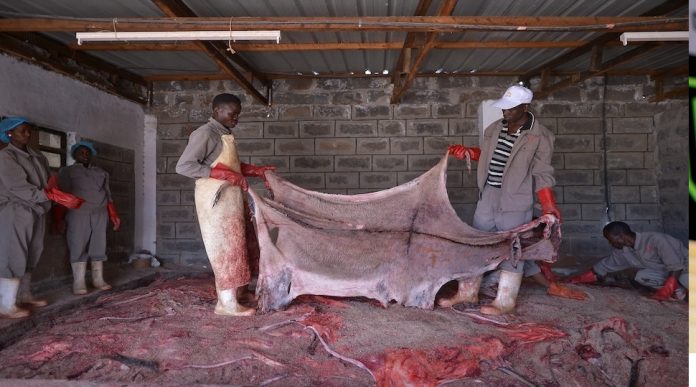
Donkeys, until this very day, often transport goods over long distances, carry household essentials, and help to cultivate land. However, in the last couple years, tens of thousands of donkeys have been ripped from these communities annually. Some have been traded often illegally, or stollen as the demand for their hide increases. Donkeys, which face that fate are often hauled over long distances without food, water or shelter and held for days if not weeks without proper rest before suffering a cruel fate. Most of them are herded up, killed, skinned, and traded as a commodity to be sent to the other side of the world.

The African Union (AU), in February 2024 announced a 15-year ban on slaughter of donkeys for their skins. This decision was arrived at following an upsurge in the slaughter of donkeys for their skin in many African countries. In the backdrop of relatively low levels of productivity of the animal, which is mostly found in the continent. After the AU’s ban, the next step was a creation of policies Africa’s Regional Economic Communities (REC) and member states to guide the implementation of the African Union resolution. Africa is home to an estimated 65% of the donkeys in the world; making it the most ideal place to get donkeys and donkey products. To this day, it is believed that Africa has the world’s largest donkey population. Africa has around 33 million donkeys, about two-thirds of the world’s estimated 53 million. Ethiopia is believed to be the African country with more than 10 million donkey population.

At the end of March 2024, the AU kept a close surveillance on the illegal trade of donkeys on the continent, as well as REC’s efforts on implementing related laws against illegal trade of donkeys. Mwenda Mbaka, a veterinarian and animal welfare expert based in Kenya said that, any African government that condones the continued slaughter of the donkeys is in contravention of the ban, and such countries can be censored through the structures established by the RECs and continental frameworks.

African Union’s decision on banning the slaughter and illegal trade of the donkeys was widely praised by animal welfare groups and environmentalists across the world as a milestone toward protecting Africa’s donkeys. Before the African Union’s bans of donkeys’ slaughter and illegal trade, some African countries had already raised red flags on the existing illegal trade, and passed legislation to curb the trade. Countries like Burkina Faso and Uganda banned the export of donkey skin whilst Tanzania back in 2022 implemented a 10-year ban on donkey skin trade. However, despite the African Union and some African countries efforts to ban the slaughter of the donkeys, there is still a high risk that illegal trade of donkeys is still being taking place. In fact, despite many African countries bans and moves to regulate the donkey skin trade, donkey trafficking and illegal slaughtering remains rife.

While the African Union ban has been welcomed by many communities in the continent as the right measure to protect, preserve and even enhance the welfare and sustainability of donkeys, the move has also elicited conversation about the global donkey value chain.

China is today the largest consumer market of donkey hides. In China, donkey skins are used to make traditional food, medicine and beauty products. The well-known product made in China is the E-jiao (??). The E-jiao, which is made using collagen extracted from donkey hides mixed with herbs, is the vital ingredient in food and beauty products believed by many Chinese consumers to enrich the blood, improve the human immune system, and prevent some diseases. Many E-jiao products are even available on online platforms such as Taobao, Jingdong, which sell items including Shandong walnut E-jiao cake and E-jiao black sesame balls among others.

Lauren Johnson, an expert on China-Africa relations published a study early this year called “China, Africa and the market for donkeys”. In the study, Lauren emphasized that the E-jiao was a luxury product that gained favor among Chinese elites during the Qing dynasty that ruled China from 1644 until late 1912. It’s popularity has surged in recent years due partly to its use in the Chinese television series called “Empress in the Palace” (??????), which aired in 2011. According to Chinese state media, the E-jiao price since the television series being popular among Chinese people has leapt 30 fold in the past decade, going from 100 Yuan per 500 grams in 2011 to about 2,986 Yuan ($ 420) in 2024.

A British charity devoted to the animals’ welfare published a report stating that the E-jiao industry requires at least 5.9 million donkeys annually, which has put an unprecedented pressure on donkey’s global populations. This report caught the eye of the concerned parties and put an alarm to stop the illegal trade of donkeys. For instance, in Nigeria alone, tens of thousands of donkeys are slaughtered annually due to the demand for its hides. In 2019, Nigeria’s government decided to put a stop to it and banned exports of donkeys.

While Nigeria’s government banned export of donkeys back in 2019, in some villages, slaughtering donkeys was still allowed. Typically, donkeys in Nigeria are brought from neighboring countries like Niger across the northern border on a market day, sold off and driven away in trucks to southern Nigeria. Some donkeys are slaughtered by Nigerians businessmen and sold to China’s merchant in the region, whom exports the skins back to China or sell them elsewhere. This is the harsh truth unfortunately.

China has also its donkey’s population, but not as much as Africa’s. It is believed that China’s donkey population has fallen just under 2 million from 11 million in 1992, prompting its E-jiao industry to source donkey skins elsewhere. As Africa still has the world’s largest donkey population, it has emerged as the key source of donkey’s skins. The demand for donkey skins in China has certainly driven exports of the commodity mainly from Africa, into the Chinese market. This is a normal business case scenario where similar dynamics would reflect in trade with any other country, not just China. However, some commentators see the AU’s ban as a blow to China-Africa trade and economic cooperation. Some critics even see the ban as an affront to China, which is not the case.

China is today Africa’s largest trade partner; a position Beijing has held for the last 15 years since it displaced Washington from the top trading spot with the continent in 2009. China-Africa trade, especially in the agriculture sector, has delivered tangible benefits to both sides with many rural African farmers benefiting from Chinese production technologies and market access. Under the auspices of the forum on China Africa Cooperation in Agriculture, the two sides have intensified exchanges, joint trainings on a wide variety of subjects including climate adaptation, food security and poverty reduction. Africa has imported over 300 technologies in the last decade which have directly benefited over 1 million smallholder farmers spread across the continent.

The China-Africa donkey trade existed for quite a while, but with the mass slaughter of the donkeys on the African continent raised red flags and has become a controversial issue that may harm China’s bigger aspirations in the Global South. Certainly, the unregulated cross border trade in donkey and donkey products saw upsurge in theft, mass slaughter and skinning of donkeys in the continent, raising concerns from respective authorities of the African Union member states. However, there is no data or even suggestions to imply that China has promoted or been involved in the illegal activities in donkey trade in Africa.

In recent years, and especially after the ban of the donkey trade on the African continent, China has begun looking to countries like Pakistan and Afghanistan to source donkey skin. This shift at some point is not beneficial to Africa, especially small African farmers. China is now looking for donkey’s skins from Pakistan. Most of the donkey skins shipped from Pakistan to China are also believed to be a part of an undercover trade. For instance, in 2022 in Karachi, there was a rumor suggested that there is a shipment that was seized carrying almost 10 metric tons of donkey skins on the way to Hong Kong. The shipment was declared as carrying salt and handkerchiefs. It seems that wherever China is doing good business, as long as there is an issue, all the eyes are turned to China and blame China for the outcome.

China was portrayed to be a part of illegal trade or encouraging illegal trade of donkey skins on the African continent and even in Pakistan, which I believe is not true. It is therefore troubling, to see commentaries that portrays China as hell-bent on wiping out Africa’s donkey population and completely ignoring the business dynamics of demand and supply of donkey skins globally. Africa simply happens to have what the Chinese market needs. The discourse should be more about how to sustain the trade and make it mutually beneficial to African farmers within the obtaining global value chains, including in China. Unlike African countries, Pakistan learned how to turn the tide and learned how to secure the donkey business by teaching its farmers how to grow donkey’s population and keep the business.

Like Pakistan, African countries have an opportunity within the ban period to expand production of donkeys which can then be exported to China and other countries looking for the commodity within the regulated and sustainable channels. In just one year, Pakistan is reported to have grown its donkey population by 100,000 to probably hit 5.8 million in 2023. The upsurge happened on the backdrop of increased trade in donkey products between Pakistan and China. China is now Pakistan’s biggest trade partner, and China secure its donkey hides from Pakistan. To this scale, Africa is losing a golden opportunity to sell its commodity to China.

Africa and China have multiple channels of trade and investments cooperation that can be tapped to spur productivity across the different value chains. With the right investments, and progressive regulatory framework, Africa’s livestock sector can play a role in creating wealth for the countries while delivering mutual gains for the continent’s trade partners. This could be the silver lining in the trade in donkeys and donkey products between different African cities and Beijing.

In Africa, donkeys are still a symbol of resilience. At the same time, donkeys have also come to represent low levels of development in the continent. It is the desire of the African rural communities to develop and experience modern ways of cultivation and transportation, key functions currently being performed by donkeys, and at some point, cows or horses.

China-Africa development cooperation can deliver on the aspirations of these communities as envisaged under Africa Agenda 2063 and the Forum on China Africa Cooperation. Through the Belt and Road Initiative, Beijing has for instance aided comprehensive modernization of Africa’s infrastructure spanning telecommunications, transportation, health, agriculture and green energy. This has made it possible for communities to increase yields, access markets and engage in the digital space. Within the proper channels, China can exchange its technologies on how to safeguard donkeys on the continent.

As Pakistan did, African farmers can learn from their experience as well. Higher development levels will enable African farmers to better take care of the donkeys and even go into mass production of the animals as an avenue of wealth creation and industrialization.    Abundance of donkeys in Africa will ensure its farmers, particularly in economically vulnerable settings, have the opportunity to sustain their lives. The international markets also offer such farmers avenue to generate income from the livestock and change their economic conditions, including overcoming poverty.

The African Union ban on the slaughter of donkeys for skin should therefore not be politicised as an affront on China. This kind of narrative has the potential to derail the momentum of economic and trade cooperation beyond the single commodity of donkey hides. African farmers, policy makers and traders should also be careful about voices that crowd out the real issues affecting the continent’s trade and economic partnerships with Beijing.

Genuine concerns should be addressed in rational, mutually beneficial and sustainable manner, giving priority to the perspectives of Africans and relevant partners. China-Africa trade and economic relations has registered remarkable resilience over the past few years. It is in the interest of both sides to support sustainable trade practices, including within the livestock’s sector.