DD
MM
YYYY

PAGES

DD
MM
YYYY

spot_img

PAGES

Home Blog Page 3337

Nigerian Government Plans Productivity-Based Wage System for Civil Service

0

In a bid to enhance efficiency and foster economic growth, the federal government of Nigeria announced on Monday, May 13, that it is in the process of implementing a new wage system in the civil service based on employees’ productivity. 

This innovative approach aims to reward workers based on their individual contributions, potentially leading to varying salaries among employees at the same level.

The revelation came from Nasir Raji-Mustapha, the Director-General of the National Productivity Centre (NPC), during a meeting with Labour correspondents. Raji-Mustapha emphasized the importance of productivity in driving economic development, highlighting the need for a wage system that aligns with employees’ performance.

“We are in the process of developing a productivity-led wage system that will ensure that those who are productive are rewarded for their efforts irrespective of their grade level,” stated Raji-Mustapha. “Under the proposed system, employees on the same salary scale can earn different wages.”

Addressing concerns about stakeholder involvement, Raji-Mustapha assured that organized labor has been actively engaged in the development of the new wage system. He underscored the collaborative nature of the initiative, emphasizing the importance of labor’s input in shaping the framework.

“Of course, labor as a critical stakeholder is being carried along in this exercise. As researchers, we don’t just do things without considering the recipient of the reports.

“When we started the project about three or four years ago, we held a stakeholders’ forum in which the labour unions participated. We even went further to send a memo to NLC and TUC to ask them whether they will support the proposed Wage System and they said they will welcome it,” he said.

The NPC has completed the first phase of the study, with the next stage involving extensive stakeholder engagement to refine the proposed system before presenting it to the federal government for consideration and potential adoption.

Furthermore, Raji-Mustapha revealed the NPC’s collaboration with international agencies and organizations to enhance the productivity and skills of Nigerian workers. Partnerships with entities such as the International Labour Organisation (ILO) and the Japanese International Cooperation Agency (JICA) aim to leverage global expertise and resources to bolster productivity in the country.

Highlighting the importance of youth empowerment, Raji-Mustapha noted the NPC’s efforts in promoting productivity among youth, particularly members of the National Youth Service Corps (NYSC). Initiatives to revive productivity advocacy at NYSC camps underscore the NPC’s commitment to fostering a culture of efficiency among the younger generation.

The culmination of these efforts will be the upcoming National Productivity Summit, where Vice President Kashim Shettima will serve as the keynote speaker. Raji-Mustapha emphasized the need for the summit to address the exigencies of the evolving global economy and harnessing science, technology, and innovation to optimize national resources.

“The summit is very important because, in today’s rapidly evolving global landscape, you will agree with me that there is a need for increased productivity. We must harness the power of science, technology and innovation and use them to optimise the resources in the country and the VP is the keynote speaker,” he added.

The federal government’s initiative to implement a productivity-based wage system reflects a strategic approach to incentivizing performance and driving economic growth. With stakeholder collaboration and international partnerships, the NPC aims to lay the groundwork for a more productive and prosperous future for Nigeria.

Former President Jonathan Advocates prioritization of Skills Acquisition Over Traditional Certificates in Higher Institutions

0

Former President Goodluck Jonathan has called for the prioritization of skills acquisition over traditional certificates in higher institutions to accelerate the country’s development and equip citizens for the demands of the modern world.

He was speaking at the 25th-anniversary celebration of Igbinedion University, Okada (IUO), in Edo State, where he reflected on his tenure and advocated for progressive ideas and women’s empowerment. Jonathan, who served as President of Nigeria from 2010 to 2015, lamented that some of the forward-thinking initiatives he championed during his presidency were abandoned after his tenure ended.

Recalling the challenges he faced during his presidency, Jonathan noted that despite the obstacles, he was able to implement significant changes, particularly in promoting gender equality. 

He highlighted the barriers faced by women in various career fields, particularly in the military, and cited his directive to the Nigerian Defence Academy (NDA) to admit women as a pivotal moment. Despite resistance, Jonathan said he exerted his authority as Commander-in-Chief of the Armed Forces to ensure the implementation of this directive, paving the way for women to become integral members of the military, with some excelling as jet fighters.

He said: “I recall the challenges faced by women in the military. But as President, I directed that the Nigerian Defence Academy commence admission of women into the institution.

However, Jonathan expressed disappointment that some of his ideas aimed at advancing the technological development of the country were abandoned after his presidency. He attributed this to resistance from certain quarters, underscoring the challenges of pushing forward progressive agendas in Nigeria’s political landscape.

In addition to advocating for progressive policies, Jonathan called for a recalibration of the nation’s education curriculum, emphasizing the importance of prioritizing skills acquisition and technology over traditional certificates. He asserted that a focus on practical skills would accelerate the country’s development and equip citizens for the demands of the modern world.

However, Jonathan condemned the prevalence of cultism and bullying in the nation’s lower school system, urging government intervention to eradicate these menaces and create safer learning environments for students.

Acknowledging the pivotal role played by former Head of State, General Abdulsalami Abubakar, in approving the establishment of Igbinedion University, Jonathan expressed gratitude for his contribution to the country’s democratic journey. He also commended Chief Gabriel Igbinedion, the Founder of Igbinedion University, for his vision and courage in establishing the institution, which has since become a beacon of excellence in Nigeria’s education sector.

General Abdulsalami, in his remarks, praised Chief Igbinedion for his foresight in establishing the university and thanked the Okada community for their support in fostering peace and stability within the university’s environs.

The celebration of IUO’s 25th anniversary was marked by the cutting of a commemorative cake, symbolizing the university’s journey of growth and excellence. Deputy Pro-Chancellor, Chief Lucky Igbinedion, and Vice Chancellor, Prof. Lawrence Ikechukwu Ezemonye, highlighted the institution’s achievements over the past 25 years, including the graduation of over 60,000 students.

Jonathan’s call for skills-based education resonates with a growing global belief that the labor market requires just the right skills, not certificates that in many instances, do not translate to productivity. 

In 2020, Elon Musk, the founder and CEO of corporate innovation giants Tesla and SpaceX, said he does not care about degrees when hiring, noting that skills matter more than diplomas and degrees issued by schools.

“A PhD is definitely not required,” Musk wrote. “Don’t care if you even graduated high school.” The billionaire entrepreneur added: “I think college is basically for fun and to prove that you can do your chores, but they’re not for learning.”

Musk’s sentiment has fueled debate around this subject as the world is notably shifting toward a skills-based economy.

Effects of Surging Metal Costs

0

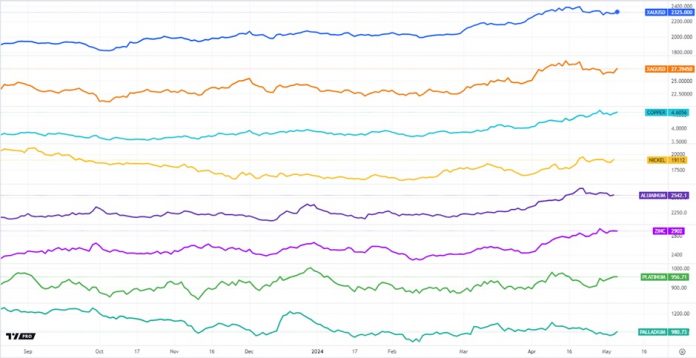
The global economy faces numerous challenges, including the sharp rise in metal prices over the past five years. This is particularly evident in the electronics industry, as metals are key components in semiconductors and various electronic components manufacturing. Over the past five years, metal prices, including precious metals like gold (XAUUSD) and silver (XAGUSD), have surged. Copper, for instance, has seen a significant price hike. In 2020, it was priced at $5000 per ton, and now it is already at $8300. Because of this, several Chinese semiconductor companies have reported price rises. In the foreseeable future, this trend may affect many more electronics manufacturers. Verify this using a free bar replay chart to compare the historical prices.

The main reasons for the surge in metal prices include geopolitical instability, environmental restrictions, and heightened demand. Political conflicts and trade wars significantly affect pricing, especially among large metal producers and consumers. International tensions can result in sanctions, tariffs, and export restrictions, leading to supply chain disruptions. Pursuing stricter environmental standards and sustainable production increases the costs of mining and recycling metals, thereby contributing to higher prices. The advancement of technologies and electronic devices fuels increased demand for metals, especially in the semiconductor industry, where the production of electric vehicles literally “absorbs” copper, cobalt, nickel, and other metals.

The escalation in metal prices directly affects chip manufacturers, as raw material expenses become a significant part of production costs. To sustain profitability, companies have to either cut costs or raise product prices, a challenge exacerbated by fierce competition.

A rise in chip production costs will inevitably translate into higher prices for electronics consumers. This can affect a range of products, from smartphones and laptops to consumer electronics and automotive components. Companies like HaloChip, Chiplink, TG-Star Electronics Technology, Sanliansheng, and Kangqiang Electronics have already announced price hikes. They supply essential components used in most modern smartphones, computers, and other electronic products. These semiconductor manufacturers, based in China, supply their products worldwide. For example, Smart Chiplink’s customers include Broadcom, Texas Instruments, Intel/Altera, and Analog Devices. This means the price increase will trickle down to end products and eventually affect consumers.

The shares of companies in the mining and processing sectors usually mirror raw materials prices. As metal prices rise, these companies’s stocks may rise in anticipation of improved profitability increase. However, the risk of reduced demand from inflated prices should also be taken into account, potentially affecting long-term outlooks negatively.

Graphics cards, among the most metal-intensive electronics components, may become one of the first products to witness price hikes. In a high-demand environment, driven largely by the rise of graphics-intensive video games and advancements in AI, graphics card prices could skyrocket.

Demand for metals remains consistently high in economically developed regions such as North America and Europe, as well as in rapidly growing economies such as China and India, due to substantial industrial output and electronic consumption.

The possibility of metal price reductions hinges on various factors, including geopolitical scenarios, new deposit discoveries, and advancements in mining and recycling technologies. Nevertheless, given current trajectories, a significant price drop seems improbable.

The surge in metal prices presents significant challenges for the electronics industry and may result in higher product costs for consumers. As producers and consumers adjust to these new conditions, it’s crucial to monitor market dynamics and explore avenues to cut costs, enhance efficiency, and invest in innovative technologies to mitigate the adverse effects of prevailing metal price trends.

Why Is Kaspa and KangaMoon Pumping While the Rest of the Market Is Bleeding?

0

In the current volatile cryptocurrency market, Kaspa (KAS) and KangaMoon (KANG) differ. While the top crypto coins bleed all over, these two are pumping as traders wonder what’s helping them move. Not only that, but many analysts have pegged KANG, which is now in the Bonus Stage of its presale, as the next 50x crypto in 2024. Let’s see why.

Miko Genno Reveals Kaspa (KAS) Trends

Recently, Kaspa (KAS) has been rising on the price charts. According to CoinMarketCap data, the Kaspa price increased by over 480% in the past year alone. Its market cap rose from $410M to $2.70B during that time. Crypto analyst Miko Genno claims that Kaspa behaves independently of the general market, following its distinct adoption curve and 8-month cycles.

In this respect, Genno introduces the idea of rapid emissions by Kaspa precipitating supply reduction and leading to these cycles. Unlike Bitcoin’s 4-year cycles, the Kaspa coin cycles are much more frequent. With this fact, plus over 16 technical indicators in the green, experts have made a bullish Kaspa price prediction. They foresee a rise to $0.16 for Kaspa within Q2 of 2024.

KangaMoon (KANG): The Top Crypto To Buy Now

Amidst the market turmoil, KangaMoon (KANG) has emerged as a standout presale performer. It has already provided early buyers a 400% ROI while boasting nearly 10,000 KANG holders. Evidently, global traders are enamored with this groundbreaking cryptocurrency. Analysts claim this is because of its SocialFi and Play-to-Earn (P2E) mechanics.

KangaMoon aims to dominate the P2E gaming market, which may reach a value of $8856M by 2028. It will accomplish this by launching its own P2E game where users can earn KANG by winning matches or participating in activities. With KANG, players can buy in-game items or even access exclusive challenges for extra rewards.

But, what really makes KangaMoon unique is its SocialFi aspect. Notably, KangaMoon rewards its most active community members with free KANG tokens before its official launch. This development has made over 20,000 registered community members begin liking/sharing KangaMoon’s social media content.

Currently, KANG is in the Bonus Stage of its presale and costs just $0.025. With two confirmed CEX listings coming in Q2 of 2024, analysts predict a potential 50x jump soon. If you want to buy it now, know that KangaMoon has already completed token audits while also finishing two extra smart contract audits. This makes KANG the best crypto investment at the moment.

Kaspa vs. KangaMoon: Which Crypto Has the Upper Hand?

In the Kaspa vs. KangaMoon war, KangaMoon is in a better position given its relatively low $25M market cap. KANG only needs $25M for its current price to double, while KAS needs $2.70B. With this advantage, KANG could soon become one of the top crypto coins. You can buy this crypto before its presale ends and capitalize on its growth.

Discover the Exciting Opportunities of the KangaMoon (KANG) Presale Today!

Website: https://Kangamoon.com/

Join Our Telegram Community: https://t.me/Kangamoonofficial

BlockDAG’s Spectacular Display in Piccadilly Circus Sparks Excitement, Exceeding ATOM and Avalanche Projections

0

Using its interoperability capabilities, Cosmos forecasts a favorable future for ATOM as it boosts communications across blockchains. At the same time, Avalanche has achieved a remarkable milestone, surpassing one billion transactions, highlighting its contribution to enhancing blockchain scalability and security.

Amid these milestones, BlockDAG stands out, launching with $100 million in liquidity. Its listing on CoinMarketCap, celebrated at Piccadilly Circus in London, underscores BlockDAG’s potential for significant profits and sets a new benchmark in the cryptocurrency sector.

Charting the Course: Optimistic ATOM Price Predictions Amid Enhanced Interconnectivity

Cosmos (ATOM) continues to capture attention with its Internet of Blockchains initiative, drawing traction through enhanced interconnectivity among various blockchain platforms. This interoperability is crucial in today’s segmented technological world, boosting the ATOM price outlook.

Recently, ATOM’s price reached $9.32, with its technical indicators, such as an RSI of 63.67, indicating strong buying interest. Surpassing its 200-day moving average of $10.046 might signal a reliable upward trajectory, particularly as it nears the $10 mark.

Avalanche Celebrates Over a Billion Transactions: A Key Achievement in Blockchain Operations

Avalanche (AVAX) has marked a significant achievement by crossing one billion transactions, underscoring its pivotal role in decentralized finance (DeFi). This milestone accentuates Avalanche’s ability to manage a large volume of transactions and its commitment to boosting scalability and security in the blockchain environment.

Since its inception, Avalanche has been at the forefront of DeFi innovation, propelled by its advanced consensus mechanism. This technology speeds up Avalanche transactions, maintains rigorous security standards, and improves compatibility with other blockchain networks. 

BlockDAG Prepares for Market Dominance with $100M Initial Liquidity Following CoinMarketCap Listing

BlockDAG is set to transform the crypto market, securing a formidable $100 million in liquidity for its launch. This substantial financial support, backed by top market makers and exchanges, reflects strong confidence in BlockDAG’s potential and its commitment to market stability. These financial strategies are about launching a new cryptocurrency and establishing a reliable and promising market presence.

BlockDAG has also captivated a global audience, gathering over $25.4 million in its presale, demonstrating robust investor confidence and belief in its value. Its visibility has been boosted by major events at globally recognized sites like Shibuya in Tokyo and Piccadilly Circus in London for its CoinMarketCap listing, reinforcing its growing influence in the crypto industry. These events have significantly advanced BlockDAG’s reputation as the top cryptocurrency for substantial gains.

Having sold over 8.9 billion BDAG coins and raised over $2.4 million from miner sales alone, BlockDAG is rapidly becoming a leading contender in cryptocurrency. Its strategic approach to creating a scalable and stable ecosystem positions it as a prime candidate for significant returns.

With its strategic launch and robust financial base, BlockDAG is well-equipped to lead in the cryptocurrency market, presenting an attractive investment opportunity in a digital asset poised for substantial growth.

Summing Up!

As ATOM’s price forecast remains strong with Cosmos enhancing interoperability, and Avalanche celebrates surpassing one billion transactions, BlockDAG sets itself apart with a groundbreaking $100 million liquidity at its launch.

With a grand celebration at London’s Piccadilly Circus, BlockDAG demonstrates strong market confidence and cements its position as the premier cryptocurrency for major gains, offering a more appealing presale option than its counterparts in the vibrant cryptocurrency market.


Join BlockDAG Now!

Website: https://blockdag.network

Presale: https://purchase.blockdag.network

Telegram: https://t.me/blockDAGnetworkOfficial

Discord: https://discord.gg/Q7BxghMVyu