DD
MM
YYYY

PAGES

DD
MM
YYYY

spot_img

PAGES

Home Blog Page 3341

The US Scores Twice Over the Rest of the World, As OpenAI Makes Google Better!

1

Google has unveiled new Gemini models as the battle with OpenAI intensifies on generative AI.  The recently released OpenAI’s GPT-4o is super-amazing.  And  Google’s Project Astra, an AI agent that responds to audio and video, seems to be of the same species with that GPT-4o.

The introduction of GPT-4o, the latest iteration in OpenAI’s esteemed GPT series, represents a quantum leap in AI capabilities. With superior speed and enhanced proficiency in text, video, and audio processing, GPT-4o heralds a new era of AI sophistication. 

The company said GPT-4o achieves GPT-4 Turbo-level performance on text, reasoning, and coding intelligence while setting new high watermarks on multilingual, audio, and vision capabilities.

“With GPT-4o, we trained a single new model end-to-end across text, vision, and audio, meaning that all inputs and outputs are processed by the same neural network. Because GPT-4o is our first model combining all of these modalities, we are still just scratching the surface of exploring what the model can do and its limitations,” the company said in a blog post.

Left and right, OpenAI has made Google a better company. Yes, Google is now forced to innovate for the good of the customers. I am using Google Search’s summaries more often these days, saving me time on clicking to get information. If that continues, we may not even need links, but that redesign may force Google to ask us to pay subscriptions. (I am a paid Google One subscriber).

As this rivalry intensifies, this is how I see this: the battle is now between  OpenAI/Apple/Microsoft vs. Google. I think it is a draw right now. I posit that OpenAI will dominate the enterprise market because of Microsoft which knows how to sell things to companies, while Google will continue to rule in the consumer world. (Apple will be using OpenAI. Microsoft has been funding OpenAI and some of its projects have been baked with OpenAI technologies.)

But at the grand scheme, the global score is

  • America: 2
  • The rest of the world: 0

Yes, on the principle of positive continuum, and network effect which AI lives on, America is well ahead on this. If we model that companies at the upstream capture more than 70% of the value compared with 30% for those at the downstream, it may not be out of order to say that AI will help US sustain its economic dominance for more decades, and the concern of China taking over may now be muted, at least in the next 3 decades.

Equities Return to All-Time Highs, as Debate over SAB 121 and Power of the US SEC Rages

0

In the ever-fluctuating world of finance, equities have shown remarkable resilience, bouncing back to all-time highs after a brief period of uncertainty. This pattern reflects the dynamic nature of markets, which are influenced by a myriad of factors ranging from economic indicators to geopolitical events. Despite a two-week spell where investors seemed to be searching for a catalyst to trigger market movement, equities have found their footing once again, much to the relief of stakeholders.

The recent performance of European equities is a testament to this trend, with the European Central Bank signaling a potential rate cut in June, which has bolstered investor confidence and pushed the markets to record highs. This move indicates a shift in monetary policy that could ease financial conditions and stimulate economic growth, encouraging investment in equities.

Across the pond, US stocks have also reached their all-time highs, with platforms like TradingView providing detailed financial analytics that suggest a continued upward trajectory or a possible correction. The sentiment is echoed by financial experts who argue that all-time highs should not be feared but rather seen as a sign of market strength and potential for further growth.

The tech sector, in particular, has been a significant driver of this upward momentum, with indices like the NASDAQ showcasing broad gains. This sector’s performance highlights the critical role of innovation and technology in driving economic progress and investor interest in the stock market.

Such milestones often prompt a mix of reactions from investors, ranging from elation to caution. The key takeaway, however, is that all-time highs are not necessarily a harbinger of a downturn. Historical data suggests that reaching new peaks can often lead to further highs, as was the case following the pronounced bear market that preceded the March 2013 all-time high.

Investors may find solace in the fact that despite short-term volatility, the trajectory of equities has been upward over the long term. This trend is a testament to the underlying strength of the market and the companies within it. As always, a diversified portfolio and a focus on long-term investment strategies remain prudent approaches in navigating the ebb and flow of stock market movements.

As markets navigate through these highs, investors are reminded of the importance of context and analysis. While some may feel they have missed out on the recent rally, deeper insights reveal that there is still potential for growth and opportunity within the equities market. The key lies in understanding market cycles, recognizing the signs of strength, and making informed decisions based on comprehensive market data.

In conclusion, the return of equities to all-time highs is a positive indicator for the financial markets, reflecting underlying strength and resilience. As investors continue to monitor the markets, it is essential to stay informed, analyze trends, and approach investment decisions with a balanced perspective.

Debate over SAB 121 and Power of the US SEC

Meanwhile, in a significant development within the U.S. financial regulatory landscape, President Joe Biden has expressed his support for Securities and Exchange Commission (SEC) Chairman Gary Gensler, even as the House of Representatives moves forward with a resolution that could potentially limit the SEC’s power. This resolution, which aims to invalidate the SEC’s Staff Accounting Bulletin (SAB) 121, has passed the House with a vote of 228-182 and is now proceeding to the Senate.

SAB 121, introduced in March 2022 and enacted the following month, requires digital asset custodians to report liabilities and corresponding assets on their balance sheets for all custodied cryptocurrencies. This bulletin was designed to mitigate the significant risks and uncertainties associated with safeguarding crypto assets. However, it has been met with opposition from some lawmakers who argue that the SEC issued SAB 121 without proper consultation with prudential regulators and without undergoing the notice-and-comment process typically required for such standards.

The Biden administration has warned that it would veto the resolution if it reached the President’s desk, emphasizing the importance of maintaining a comprehensive and effective financial regulatory framework for crypto assets to prevent financial instability and market uncertainty. The administration’s stance is that limiting the SEC’s ability to regulate the crypto market could introduce substantial risks to the financial system.

The debate over SAB 121 and the power of the SEC reflects broader discussions on the role of regulation in the burgeoning cryptocurrency market. Proponents of the resolution argue that the SEC’s approach could stifle innovation and deter banks from handling crypto customers due to the increased capital expenses required by the bulletin. On the other hand, supporters of SAB 121, including the Biden administration, believe that the guidance is necessary to protect consumers and maintain market integrity in the face of technological, legal, and regulatory risks associated with crypto assets.

The key arguments against Staff Accounting Bulletin No. 121 (SAB 121) are centered around concerns of regulatory overreach, the impact on innovation, and the procedural integrity of the rulemaking process. Critics argue that SAB 121 imposes stringent accounting requirements on digital asset custodians, which could potentially stifle innovation and deter financial institutions from participating in the crypto market due to the increased capital burdens.

One of the primary criticisms is that the SEC issued SAB 121 without adhering to the traditional rulemaking process, which includes public notice and comment periods. This has led to claims that the SEC bypassed established procedures, compromising the integrity of the regulatory framework and violating principles of transparent and inclusive governance.

Furthermore, opponents of SAB 121 assert that it treats crypto holdings differently than other assets, which could jeopardize the willingness of regulated banks to act as crypto custodians. The requirement for custodians to report liabilities and corresponding assets on their balance sheets for all custodied cryptocurrencies is seen as unprecedented and financially unfeasible, threatening the operational viability of digital asset custodians.

As the resolution heads to the Senate, the outcome of this legislative effort will have significant implications for the future of cryptocurrency regulation in the United States. It will also be a test of the Biden administration’s ability to uphold its regulatory agenda in the face of congressional challenges. The situation underscores the ongoing tension between innovation and regulation in the financial sector, a dynamic that is likely to persist as the crypto market continues to evolve.

BlockDAG Surpasses Crypto Giants: Dominating Solana and Toncoin with $25.7M Presale and Groundbreaking Roadmap

0

As May 2024 unfolds, the cryptocurrency market finds itself amidst a landscape marked by optimism and growth. Solana’s trajectory points towards substantial gains, instilling confidence among investors and enthusiasts alike. Simultaneously, Toncoin’s remarkable ascent into the top echelons of market capitalization signals its burgeoning potential, positioning it as a noteworthy contender in the ever-evolving crypto sphere.

Amidst these dynamics, BlockDAG rises as a standout entity, distinguished by its innovative roadmap and cutting-edge low-code/no-code platform. With a presale exceeding $25.7 million and over 8.9 billion coins already sold, BlockDAG asserts itself as a significant force driving transformative change within the industry.

Insights and Forecasts: Solana’s Market Outlook for May 2024

As of May 2024, Solana’s price forecast indicates a significant rise, with the cryptocurrency hitting the $155 mark and showing a monthly increase of over 25%. This upward trend is part of a broader positive movement in the global crypto market, fueled by favorable US economic indicators, with major cryptocurrencies like Bitcoin and Ethereum also seeing gains.

The derivatives market for Solana reflects investor optimism, with Coinalyze reporting a surge in open interest, totaling $260 million in early May. This increased activity suggests strong engagement from traders and supports a forecast that could see Solana’s value climb towards the $200 level as market conditions improve.

Elevating Toncoin Through Strategic Maneuvers and Technical Trends

Toncoin’s rise to the top ten by market cap highlights its increasing potential in the competitive crypto space. Integration with Telegram and bullish trading patterns, such as a bull pennant, suggest significant growth ahead.

Technical indicators like the Relative Strength Index (RSI) remain neutral, implying that Toncoin has room to rally without immediate overbought concerns. While there is potential for a rise to $21, critical support levels around $5.53 and $5 must be watched closely. These levels could influence Toncoin’s next major move, making it essential to monitor these indicators for signs of either continuation or reversal.

BlockDAG’s Roadmap Update and Low-Code/No-Code Platform Elevate Its Crypto Standing

BlockDAG has rapidly emerged as a notable cryptocurrency, with its innovative updates driving a leap in its token price to $0.0075. The release of an updated roadmap has renewed investor interest, particularly among those intrigued by meme coins and NFTs, with presales reaching $25.7 million. This surge reflects growing anticipation around BlockDAG’s evolving role in the digital asset sector.

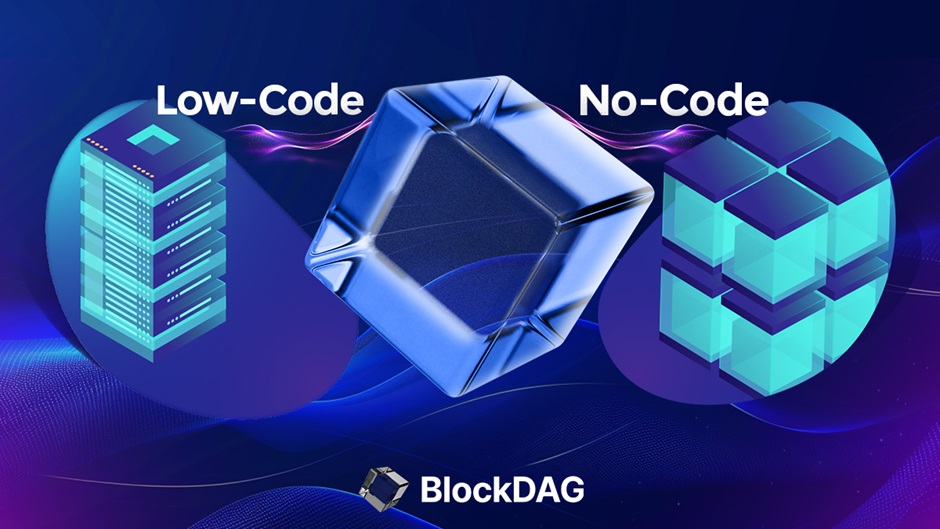
BlockDAG’s introduction of a low-code/no-code platform is a game-changer, simplifying blockchain application development. This development reduces production times and broadens the scope of projects within the BlockDAG ecosystem, fostering an inclusive blockchain community that encourages diverse participation.

The new platform is set to drastically cut development times while expanding the range of projects that can be created within the BlockDAG ecosystem. This inclusive approach invites a wide array of participants to contribute and benefit from new innovations.

As BlockDAG continues to enhance its offerings and streamline blockchain development, it solidifies its status as one of the top crypto picks for 2024. With the potential for a 30,000x return on investment, BlockDAG attracts both seasoned investors and new entrants, setting a high standard for cryptocurrency growth and profitability.

Wrapping Up

While Solana’s price forecast shows a robust recovery and Toncoin’s rise reflects its growing market influence, BlockDAG stands out with its revolutionary technologies and broad investor appeal. The project’s innovative roadmap and low-code/no-code platform have raised over $25.7 million in its presale and sold 8.9 billion coins. BlockDAG positions itself as a top crypto pick, offering significant growth potential beyond traditional market trends.


Join BlockDAG Now!

Website: https://blockdag.network

Presale: https://purchase.blockdag.network

Telegram: https://t.me/blockDAGnetworkOfficial

Discord: https://discord.gg/Q7BxghMVyu


BlockDAG Aims for $600M Jackpot While SHIB Soars with PayPal and Uniswap Faces Major Regulatory Hurdles!

0

As the crypto landscape endures fluctuations, BlockDAG emerges as a standout with its comprehensive roadmap and robust growth strategy. Meanwhile, Shiba Inu gains wider accessibility via PayPal’s partnership with MoonPay, and Uniswap contends with regulatory scrutiny. BlockDAG’s structured approach and promising market positioning starkly contrast with the prevailing uncertainties affecting other cryptocurrencies.

PayPal Partners with MoonPay to Enhance Crypto Accessibility

PayPal, on May 5, 2024, announced a partnership with MoonPay to enhance its cryptocurrency transaction capabilities in the United States. This collaboration allows users to purchase Shiba Inu and other cryptocurrencies directly using PayPal, significantly broadening crypto access and streamlining the purchase process.

The integration supports a wide array of cryptocurrencies, including Ethereum, Bitcoin, and Dogecoin, though it excludes specific assets like Pepe and Binance Coin in the U.S. to comply with local regulations. These developments are part of PayPal’s broader strategy to fuse traditional finance with blockchain technology, potentially increasing crypto adoption and market stability.

 Navigating BlockDAG’s Ambitious Path to a $600 Million Market Cap

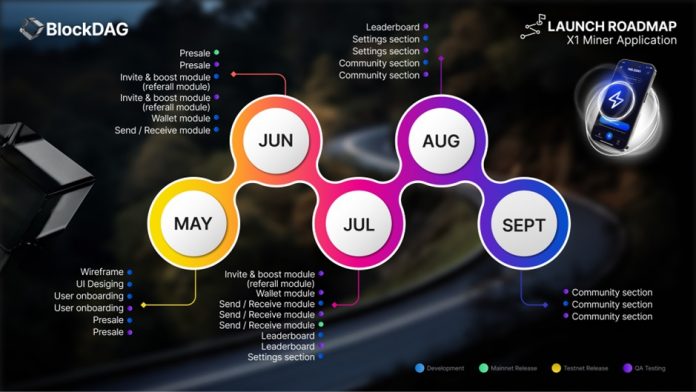
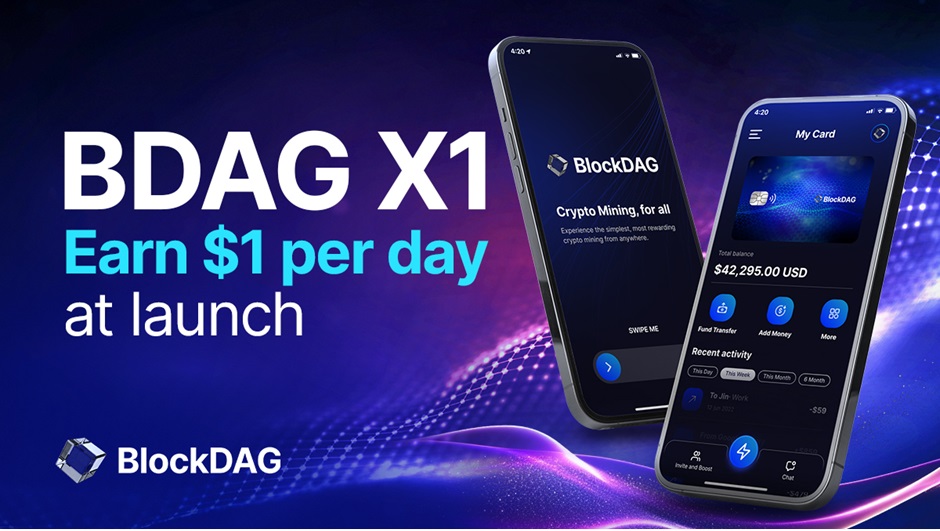
BlockDAG continues to impress with its strategic development, having raised over $25.4 million in its presale phase, with sights set on achieving a market cap of $600 million. The platform’s roadmap lays out an intricate plan beginning with the enhancement of its peer-to-peer engine and Ethereum Virtual Machine compatibility. The next phase includes the launch of BlockDAG Scan, aimed at improving network transparency and user engagement with innovative features such as a user-friendly dashboard and NFT contract support.

Moreover, the introduction of the X1 Miner Application is set to revolutionize participant interaction by facilitating user onboarding and optimizing transaction processes. This well-orchestrated strategy underlines BlockDAG’s commitment to sustainable growth and market stability, reinforced by new vesting protocols for presale participants.

Uniswap Under SEC’s Lens: A Sudden Market Dip

Uniswap has faced recent downturns, notably after falling under SEC scrutiny, which has impacted its market performance and shaken investor confidence. The decentralized exchange’s token saw a significant drop, reflecting the broader implications of regulatory challenges in the DeFi sector. Despite starting the year on a high note, UNI’s price experienced sharp declines, underscoring the volatile nature of the DeFi market.

BlockDAG’s Strategic Edge in the Crypto Market

While Shiba Inu enjoys new avenues of growth through PayPal and Uniswap navigates regulatory hurdles, BlockDAG sets itself apart with a clear, achievable roadmap toward significant market valuation. Its proactive approach and forthcoming mainnet launch position it as a promising investment in the volatile cryptocurrency market. For investors looking for stability and growth, BlockDAG offers a compelling opportunity, making it the preferred choice amidst the current crypto flux.


Join BlockDAG Presale Now:

Website: https://blockdag.network

Presale: https://purchase.blockdag.network

Telegram: https://t.me/blockDAGnetworkOfficial

Discord: https://discord.gg/Q7BxghMVyu

Pudgy Penguin Expansion, Ark Invest Removal of Staking, Jito DAO on Liquidity Mining

0

Pudgy Penguin toys expand to Target with each plushie containing a QR code for Pudgy World.

The Pudgy Penguins, a delightful collection of NFTs, have taken a significant leap from the digital realm into the physical world with their expansion into Target stores nationwide. This strategic move has been marked by the introduction of Pudgy Penguin plush toys, each embedded with a unique QR code that serves as a gateway to Pudgy World.

Pudgy World is an innovative digital experience that accompanies each Pudgy Penguin toy. By scanning the QR code included with the plushie, customers are introduced to a vibrant, multiplayer digital social space where they can redeem traits and collectibles. This feature not only enhances the value of the physical toy but also provides an interactive element that bridges the gap between tangible products and digital assets.

The success of Pudgy Penguins has been remarkable, with over one million toys sold in the past year alone, reflecting the growing consumer interest in products that combine physical and digital experiences. This expansion to Target is a testament to the potential of integrating NFTs with mainstream retail, offering a seamless entry into the world of blockchain and NFTs for the general public.

The Pudgy Penguin toys at Target are more than just cuddly companions; they represent a new era in the toy industry, where the integration of Web3 technology with traditional markets is becoming a reality. Each purchase not only delights the buyer with a plush toy but also immerses them in the Pudgy World, creating a comprehensive experience that is both enjoyable and educational.

ARK Invest’s Strategic Shift

In a significant development, ARK Invest, in collaboration with 21Shares, has amended its application for an Ethereum exchange-traded fund (ETF) by removing the previously included staking component. This move marks a pivotal change in the firm’s strategy towards the launch of this innovative financial product.

The initial proposal included plans to stake a portion of the ETF’s assets through trusted providers, a feature that was anticipated to be a key differentiator for the product. Staking is a process where investors can earn rewards for holding and supporting the network of a particular cryptocurrency, in this case, Ethereum. However, the updated filing no longer mentions this component, indicating a strategic pivot by the firms.

The decision to remove staking from the ETF application could be interpreted in several ways. According to Bloomberg ETF analyst Eric Balchunas, this could be an attempt to align the filing with comments from the Securities and Exchange Commission (SEC), potentially expediting the approval process. On the other hand, the absence of any public comments from the SEC on this matter leaves room for speculation that this could be a last-ditch effort or a strategy to minimize reasons for rejection.

The SEC has been known for its cautious stance on cryptocurrency-related products, and the regulatory body has delayed its decision on whether to approve Ethereum ETFs multiple times, with the latest postponement pushing the decision to July 5, 2025. The removal of the staking feature could be ARK Invest’s way of simplifying the product to meet the SEC’s regulatory standards.

ARK Invest and 21Shares’ decision underscores the complexities involved in launching cryptocurrency-based financial products in a regulatory environment that is still adapting to the rapidly evolving digital asset space. The move also reflects the challenges that companies face in balancing innovation with compliance.

As the market awaits the SEC’s decision, the outcome of ARK Invest’s Ethereum ETF application will be closely watched, as it could set a precedent for future cryptocurrency ETFs. The industry is at a crossroads, and the actions of pioneering firms like ARK Invest could significantly influence the trajectory of cryptocurrency integration into mainstream finance.

Jito DAO Propose to Spend $29M on liquidity mining

The Decentralized Autonomous Organization (DAO) governing Jito, a Solana-based liquid staking service, is currently deliberating a significant proposal that could shape the future of liquidity mining within its ecosystem. The proposal under consideration suggests the allocation of 7.5 million of its native JTO tokens, valued at approximately $29 million, for liquidity mining initiatives.

This move represents a strategic deployment of 3.1% of the 240 million JTO held in the DAO’s treasury and marks the second-ever governance proposal for Jito DAO. The proposal was crafted by Gauntlet, a DeFi research firm, and one of the 17 Jito Foundation-supported delegates. This decision comes after Gauntlet’s recent departure from Aave’s DAO due to disagreements.

Jito operates the largest liquid staking service on Solana by total value locked (TVL), with a significant percentage of Solana validators running its validator fork, Jito-Solana. The protocol has been distributing maximal extractible value (MEV) rewards, primarily as tips paid to validators by traders, to holders of its JitoSOL liquid staking token. Interestingly, the MEV collected by Jito validators has recently surpassed that of Ethereum validators.

The proposal by Gauntlet highlights the competitive landscape of liquid staking on Solana, especially in the wake of incentive programs by rivals Marinade and Blaze. To maintain its competitive edge, Gauntlet suggests that Jito DAO should invest in a variety of liquidity mining strategies, although the specifics of these strategies have not been disclosed.

The management of the funds, if the proposal is approved, would be entrusted to three members of the Jito Foundation and two members of Jito Labs. As the governance process dictates, the proposal must remain open for community comments for 30 days before it can be submitted to the DAO’s voting platform. At the time of writing, the proposal had not yet received any comments from the community.

The potential impact of such a large-scale liquidity mining program could be substantial for Jito. It could enhance the protocol’s liquidity, attract new users, and solidify its position in the DeFi space. However, it also raises questions about the long-term sustainability of liquidity mining as a growth strategy and the potential risks involved in allocating a significant portion of the treasury for such purposes.

As the DAO community awaits further comments and deliberations over the 30-day discussion period, the potential impact of such a sizable investment in liquidity mining remains a focal point of interest for stakeholders and observers alike. The outcome of this proposal could set a precedent for future governance decisions in the rapidly growing DeFi sector.