DD
MM
YYYY

PAGES

DD
MM
YYYY

spot_img

PAGES

Home Blog Page 3342

 Future of Cryptocurrency Investments in Mainland China, as Argentina Plots to use Stranded Gas to mine Bitcoin

0

The world of cryptocurrency investment is witnessing a potential game-changer as a Hong Kong-based issuer of a spot Bitcoin Exchange-Traded Fund (ETF) sets its sights on the vast investor pool of mainland China. This strategic move could mark a significant milestone in the integration of cryptocurrency into mainstream financial markets, particularly in a region that has historically maintained a cautious stance towards digital assets.

The CEO of Harvest, a pioneering firm in the Hong Kong ETF market, has expressed intentions to make their Bitcoin ETF accessible to investors in mainland China. This ambition aligns with the broader vision of the ETF Connect framework, which was established to foster financial cooperation between Hong Kong and mainland China by offering diverse asset allocation choices and promoting liquidity.

The Harvest CEO’s announcement comes at a time when the cryptocurrency landscape is rapidly evolving. Despite the restrictive approach towards cryptocurrencies like Bitcoin by Chinese authorities, the inclusion of Bitcoin and Ether ETFs in the ETF Connect program could potentially be a bullish trigger for the cryptocurrency markets. It represents a forward-thinking approach, acknowledging the growing demand for cryptocurrency investments and the need for regulated avenues to access these assets.

The launch of spot Bitcoin and Ether ETFs in Hong Kong was a significant development in itself, providing investors with regulated products that track the price of these cryptocurrencies without the need for direct ownership. The success of these ETFs in Hong Kong has been a testament to the market’s readiness for such investment vehicles, and it sets a precedent for their potential acceptance in mainland China.

However, the journey towards the acceptance of Bitcoin ETFs in mainland China is not without its challenges. Mainland Chinese citizens currently cannot purchase Bitcoin and Ether ETFs in Hong Kong due to the longstanding ban on crypto transactions. This regulatory hurdle underscores the delicate balance that must be struck between innovation and control in the financial sector.

The next two years will be crucial for Harvest and other ETF issuers who are eyeing the mainland Chinese market. If “everything goes smooth and well,” as stated by the CEO of Harvest, we may witness the inclusion of their ETFs in the ETF Connect, paving the way for a new era of cryptocurrency investment in mainland China.

As the global financial landscape continues to adapt to the digital age, the integration of cryptocurrency ETFs into traditional investment portfolios could represent a significant shift in how individuals and institutions approach asset diversification. The potential expansion of Hong Kong’s Bitcoin ETFs into mainland China is more than just a financial maneuver; it’s a signal of the growing legitimacy and acceptance of cryptocurrencies as a valuable component of the modern investor’s toolkit.

The anticipation surrounding this development is palpable, and the eyes of the world will be watching closely as the story unfolds. Will mainland China embrace this new investment frontier, or will regulatory caution prevail? Only time will tell, but one thing is certain: the conversation around cryptocurrency and its place in the global financial system is becoming increasingly mainstream, and developments like these are pivotal in shaping the future of digital asset investment.

Argentina’s subsidiary company to mine Bitcoin with Stranded Gas

In a groundbreaking move, Argentina’s state-owned energy company, through its subsidiary, has embarked on a venture to mine Bitcoin using stranded gas. This innovative approach not only promises to add value to the country’s natural resources but also stands as a significant step towards environmental sustainability.

Stranded Gas, often a byproduct of oil extraction, is typically flared into the atmosphere, contributing to greenhouse gas emissions. However, the subsidiary of YPF, the Argentinian energy giant, has partnered with Genesis Digital Assets (GDA) to convert this excess gas into electricity for Bitcoin mining. This initiative is expected to harness the power of 1,200 machines, aiming to monetize gas that would otherwise be wasted.

The implications of this project are manifold. Economically, it presents an opportunity to generate revenue from a previously untapped resource. Environmentally, it offers a way to reduce carbon emissions significantly. By repurposing the methane released during oil extraction, the project could potentially cut down CO2 equivalent emissions by 25% to 63%.

The strategic partnership between YPF Luz and GDA is a testament to Argentina’s commitment to innovation in its energy sector. With the election of the Bitcoin-friendly President Javier Milei in late 2023, Argentina has signaled its openness to integrating cryptocurrency into its economic framework. This move aligns with the global trend of utilizing Bitcoin mining to improve energy grids, as seen in countries like Bhutan and El Salvador, which mine Bitcoin using renewable hydropower and geothermal energy, respectively.

The project also reflects a broader shift in the narrative surrounding Bitcoin mining. Often criticized for its environmental impact, mining operations like the one in Argentina demonstrate how the industry can evolve to have a positive effect on the environment. The facility in Rincón de Los Sauces, Neuquén, is not just a mining operation but a symbol of how technology and sustainability can coexist.

As the world grapples with the challenges of climate change and energy management, Argentina’s venture serves as a pioneering example of how countries can leverage their natural resources responsibly. It showcases the potential of Bitcoin mining to be part of a sustainable energy solution, turning a problem—stranded gas—into a profitable and eco-friendly opportunity.

Japanese public company Metaplanet bought an additional 19.87 Bitcoin

In a move that echoes the strategies of prominent corporations like MicroStrategy, Japanese public company Metaplanet has made a significant purchase of 19.87 Bitcoin, further cementing its position in the digital asset space. This acquisition, amounting to approximately 200 million yen, showcases the growing trend of companies integrating cryptocurrency into their financial strategies.

Metaplanet, which began as a budget hotel operator and pivoted to become a Web3 developer, has seen its shares soar following its adoption of Bitcoin (BTC) buying policy. The company’s decision to incorporate Bitcoin into its treasury assets is driven by a multifaceted understanding of its potential as a hedge against inflation, a tool for macroeconomic resilience, and a basis for long-term capital appreciation.

The strategy not only aims to minimize exposure to the Japanese yen, which has been affected by Japan’s long-standing low-interest-rate environment, but also offers Japanese investors crypto access with a preferential tax structure. This innovative approach allows investors to gain exposure to Bitcoin without directly holding the asset, thus avoiding the high tax on unrealized crypto gains.

Metaplanet’s recent Bitcoin purchase is a testament to the company’s commitment to its earlier declaration to adopt Bitcoin as a treasury reserve asset. By doing so, Metaplanet has positioned itself as ‘Asia’s MicroStrategy’, potentially paving the way for other Asian companies to follow suit in recognizing the value of cryptocurrency as part of a diversified investment strategy.

The implications of such moves are far-reaching, indicating a shift in the traditional financial paradigm and underscoring the increasing acceptance of cryptocurrencies in mainstream finance. As more companies like Metaplanet integrate Bitcoin into their balance sheets, we may witness a new era of corporate investment, one that embraces the innovative potential of digital currencies.
FTX Lucrative Sale Amidst Bankruptcy Proceedings

0

The recent news of the FTX estate’s sale of Anthropic shares has been a significant development in the ongoing saga of the once-prominent cryptocurrency exchange. The estate’s decision to sell the shares, originally purchased by Sam Bankman-Fried (SBF) three years ago, has resulted in a remarkable 78% return on investment. This move has been met with a positive reaction, reflecting a strategic step towards financial recovery and stability.

In 2021, FTX, under the leadership of SBF, invested in Anthropic, an artificial intelligence startup. This investment was made during a period when AI technology was experiencing a surge in interest and development, primarily fueled by the success of platforms like ChatGPT. FTX’s initial investment amounted to $500 million for an 8% stake in the company, a testament to the high expectations and confidence in the AI sector’s growth potential.

Fast forward to 2024, and the landscape has drastically changed for FTX. Following its bankruptcy, the estate faced the daunting task of liquidating assets to repay creditors and customers. The sale of the Anthropic shares has been a silver lining, with the estate securing $884 million from the transaction. This sale represents a significant boost to the estate’s efforts to fulfill its pledge to repay the defunct exchange’s customers fully.

The buyers of the Anthropic shares comprise a diverse group of institutional investors. The leading buyer is ATIC Third International Investment Company, a tech investment firm wholly owned by the Abu Dhabi government’s sovereign wealth fund, Mubadala, which agreed to purchase a substantial portion of the shares for $500 million. Other notable buyers include Jane Street Global Trading, Fidelity Investments, and The Ford Foundation, reflecting the wide-ranging interest in AI technology and its potential.

The successful sale of the Anthropic shares has several implications:

Validation of AI’s Investment Appeal: The sale underscores the continued confidence in the AI sector, which has seen exponential growth and interest in recent years.

FTX Estate’s Strategic Asset Liquidation: It highlights the estate’s ability to navigate the complex process of asset liquidation, finding value in investments even amidst challenging circumstances.

Positive Market Response: The FTX estate’s satisfaction with the sale’s outcome is mirrored in the market’s reaction, with the FTX’s FTT token climbing 10% following the announcement.

Future of AI Startups: For startups like Anthropic, such investments from diverse institutional players could mean more robust support and accelerated growth in the AI field.

The FTX estate’s sale of Anthropic shares is a testament to the enduring value of strategic investments in technology, even in the face of adversity. The substantial return on investment not only aids in the estate’s recovery efforts but also signals a strong belief in the future of AI. As the FTX estate continues to navigate its bankruptcy proceedings, the successful sale of the Anthropic shares stands out as a beacon of strategic acumen and financial prudence.

Suspended Cybersecurity Levy Continues To Spark National Debate

0

President Bola Ahmed Tinubu has directed the Central Bank of Nigeria to suspend the implementation of the Cyber Security Levy. The decision was made due to widespread signs of resentment. Here we shall examine the National Cyber Security Fund, the Cyber Security levy, and the arguments for and against its implementation.

In 2015, Nigeria took a significant step forward in combating cyber threats with the enactment of the Cybercrime Act. This legislation established a cybersecurity fund to finance diverse initiatives aimed at bolstering Nigeria’s cybersecurity infrastructure. Additionally, the Act introduced a cybersecurity levy on the total value of electronic transactions to serve as a financial source for the fund. Alongside the levy, the Act outlined the following alternative funding sources to enhance Nigeria’s cyber defences:

  • Grants-in-aid and assistance from donor, bilateral, and multilateral agencies;
  • All other sums accruing to the Fund by way of gifts, endowments, bequest or other voluntary contributions by persons and organizations: Provided that the terms and conditions attached to such gifts, endowments, bequest or contributions will not jeopardize the functions of the Agency;
  • Such monies as may be appropriated for the Fund by the National Assembly; and
  • All other monies or assets that may, from time to time accrue to the Fund.

The Amendment of 2024:  These amendments were made to eliminate ambiguities and strengthen cybersecurity provisions. The amended act established a clear framework for the cybersecurity levy, setting it at 0.5% of the value of electronic transactions. The Central Bank of Nigeria directed financial institutions to start deducting the levy on May 20, 2024. This directive sparked public discourse with many people scrutinizing and debating its potential impact on Nigerian society.

However, according to the Central Bank of Nigeria, the following transactions are exempted from the levy:

  1. Loan disbursements and repayments
  2. Salary payments
  3. Intra-account transfers within the same bank or between different banks for the same customer
  4. Intra-bank transfers between customers of the same bank
  5. Other Financial Institutions instructions to their correspondent banks
  6. Interbank placements
  7. Banks’ transfers to CBN and vice-versa
  8. Inter-branch transfers within a bank
  9. Cheque clearing and settlements
  10. Letters of Credits
  11. Banks’ recapitalisation-related funding – only bulk funds movement from collection accounts
  12. Savings and deposits, including transactions involving long-term investments such as Treasury Bills, Bonds, and Commercial Papers.
  13. Government Social Welfare Programmes transactions e.g. Pension payments
  14. Non-profit and charitable transactions, including donations to registered non-profit organizations or charities
  15. Educational institutions’ transactions, including tuition payments and other transactions involving schools, universities, or other educational institutions
  16. Transactions involving bank’s internal accounts such as suspense accounts, clearing accounts, profit and loss accounts, inter-branch accounts, reserve accounts, nostro and vostro accounts, and escrow accounts.

Arguments for the Levy:

  1. Simplicity and Administration Ease: A flat levy is easy to administer, reducing bureaucratic hurdles and ensuring efficient collection of funds. This streamlines the process for both government agencies and businesses, allowing resources to be allocated more effectively towards cybersecurity initiatives.
  2. Promotion of Financial Inclusion: A flat levy is preferable over a progressive rate as it doesn’t discourage individuals from engaging in large-value electronic transactions. This, in turn, supports financial inclusion by ensuring that people from all income brackets can participate in the formal financial system without facing additional barriers. Moreover, a more secure cyberspace fosters confidence in the Nigerian financial system, encouraging greater participation and trust.
  3. Cybersecurity Enhancement: The funds generated from the levy are essential for strengthening Nigeria’s cybersecurity defences. Combatting cybercrime, protecting sensitive data, and safeguarding critical infrastructure requires substantial resources. By supporting initiatives like establishing counter-violent extremism cybersecurity research centers and promoting graduate traineeships in cybersecurity, the levy can help develop a skilled workforce and address emerging cyber threats effectively.

Arguments Against the Levy:

  1. Impact on Low-Income Earners: Critics express concerns about the levy’s potential burden on low-income earners. The additional financial strain on vulnerable segments of society could exacerbate existing socioeconomic disparities, making it harder for them to access financial services and participate in the economy.
  2. Timing and Economic Challenges: Introducing the levy during economic challenges may further burden businesses and consumers. Some fear the increased business costs would be passed on to consumers, contributing to inflationary pressures and hindering economic recovery efforts.
  3. Need for Balancing: Critics have emphasized the importance of balancing cybersecurity priorities with socioeconomic realities. Although cybersecurity is undoubtedly crucial, policies must consider their potential socioeconomic impact; taking into account the needs of low-income earners and the broader economic context.

Furthermore, effective implementation of the cybersecurity levy hinges on robust oversight mechanisms and transparent management of the cybersecurity fund. Following the Cybercrime Act, the fund is domiciled with the Central Bank of Nigeria, with the Office of the National Security Adviser tasked with administration, keeping records of accounts, and compliance monitoring. Furthermore, stringent auditing protocols outlined by the Auditor General of the Federation ensure accountability and transparency in fund utilization.

As Nigeria confronts the challenges of its cybersecurity landscape, the debate surrounding the cybersecurity levy underscores the delicate balance between security imperatives and socioeconomic equity. While the levy holds promise in strengthening Nigeria’s cyber defenses, it is imperative to navigate its potential impact on the average Nigerian carefully. Thus, the development of effective policies to safeguard Nigeria’s digital future requires ongoing dialogue, stakeholder engagement, and robust oversight to uphold principles of fairness and inclusivity. Through these concerted efforts, Nigeria can forge a path towards a resilient and secure digital ecosystem for all.

SBM Intelligence Raises Concern That Binance Bribery Claim Could Deter Foreign Investment in Nigeria

0

SBM Intelligence, an Africa-focused market/security Intel gathering and strategic consulting firm, has expressed concern that Binance bribery claim could deter foreign investments in Nigeria.

In its analysis of the Binance saga and its impact on the Nigerian economy, the firm noted that the circumstances that led to the detention of Binance executives could undermine Nigeria’s attractiveness to foreign investments.

The consulting firm further urges the government to thoroughly investigate the matter and punish anyone found guilty.

SBM Intelligence said,

“Accusations of bribery involving high-profile government officials like those in the Tinubu Administration can further damage the country’s reputation and that of the administration itself. Such allegations can undermine investors’ trust in the government’s integrity and ability to conduct fair and transparent business dealings.

“When government officials are perceived as corrupt or willing to engage in unethical behavior, it can deter foreign investment, undermine the rule of law, and hinder efforts to combat poverty and inequality. No matter the allegations against Binance, it is essential to remember that the story of one foreign business will serve as a cautionary tale to others. If Nigeria is tagged as a country where company officials can be solicited for bribes and then detained indefinitely, convincing investors to invest will become exceedingly challenging”.

The consulting firm further urged the Nigerian government to resolve its issue with Binance as quickly, fairly, and diplomatically, adding that it would be in their best interest.

Backstory

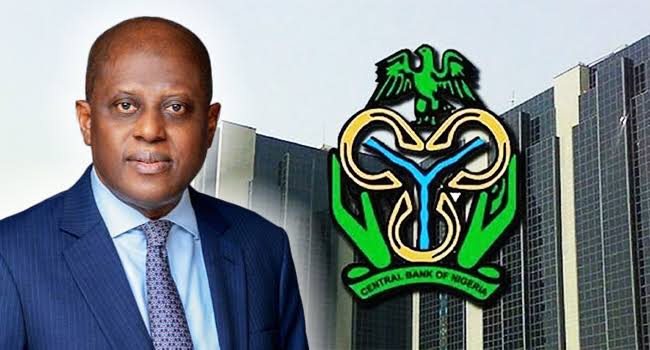
Recall that in February this year, the Central Bank of Nigeria (CBN) governor Yemi Cardoso alleged that over $26 billion in illicit flows passed through Binance last year. 

This led the Nigerian government to block Binance operations in the country, as well as other crypto firms to avert what it considers continuous manipulation of the forex market and illicit movement of funds.

In line with this, the Government detained at least two senior executives of Binance, Najeem Anjarwalla and Tigran Gambaryan, both of whom were charged with fraud and not adhering to regulations, among others.

In a recent disclosure, Binance accused some top government officials of demanding $150m in crypto to settle the criminal charge levied against them. Binance Chief Executive Officer, Richard Teng, made the bribery allegation in a blog post published by the New York Times.

However, Nigerian lawmakers knocked Binance over bribery allegations. The Minister of Information and National Orientation, Mohammed Idris, in a statement, dismissed the claims as baseless, stating that it is an attempt by Binance to evade accountability for alleged criminal activities.

The minister said,

“This claim by Binance CEO lacks an iota of substance. It is nothing but a diversionary tactic and an attempted act of blackmail by a company desperate to obfuscate the grievous criminal charges it is facing in Nigeria. We would like to remind Binance that it will not clear its name in Nigeria by resorting to fictional claims and mudslinging media campaigns. The only way to resolve its issues will be by submitting itself to unobstructed investigation and judicial due process.”

The government, therefore, pledged to address the legal issues surrounding Binance operations in the country.

The International Monetary Fund (IMF) has urged Nigeria to establish a robust regulatory framework for cryptocurrency trading platforms, emphasizing the need for anti-money laundering controls and platform supervision. This call comes amid allegations by Binance’s new CEO that Nigerian government officials took bribes, which Binance has refuted, stating inaccuracies in the report. The situation has raised concerns about the impact on Nigeria’s investment climate and the future of cryptocurrency regulation in the country.

As Predicted in July 2023, Nigeria Reinstates Fuel Subsidy at Scale

1

On July 28, 2023, I wrote that “Nigeria will either pause the full floating of its currency or return back to fuel subsidy” because using basic economics, Nigeria cannot handle both at the same time due to the heterogeneous nature of the economy, across regions. In other words, full removal of fuel subsidy will annihilate the northern region’s economy, as costs of logistics will skyrocket even as comparative advantages remain muted. 

When the government announced the policy, I posited that it was going to be reversed since there was no basis for it to even work. Nigeria is a one-city supply chain country, on global logistics. Yes, Lagos runs the show, and more than 90% of imported shipped items used in Nigeria come via Lagos. 

If you remove fuel subsidies, you give Lagos an asymmetric comparative advantage as production cost will become unusually cheaper in Lagos than other parts of the nation, even as Lagos retains most of its current advantages in other dimensions. Who will go to Sokoto, Uyo, Okigwe, etc to set up a factory considering that energy cost is a key component of production in our generator-run economy?

But if Nigeria has a working railway system, you can do that. You can also do that if you have a diversified deep seaport system which would have reduced cost for the east-northern corridor for imports via Cross River and Akwa Ibom states. We do not feel the fuel pricing imbalance because of the petroleum equalization fund which is a “magic fund” which is used to pay transporters to ensure fuel prices are largely uniform across Nigeria. 

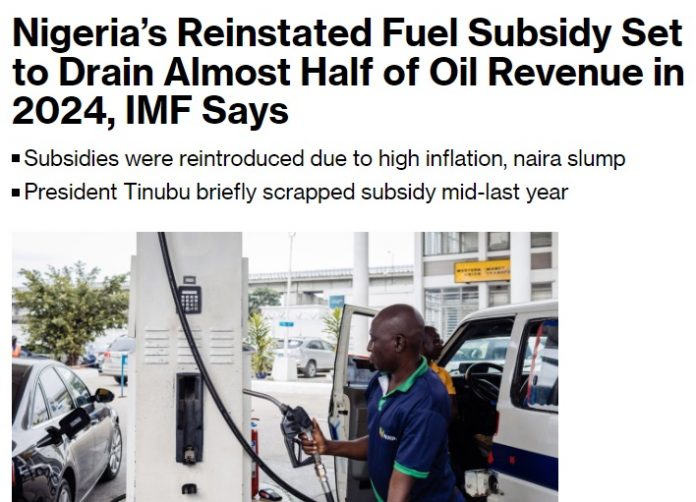
You want to remove that without providing options? You do not understand the geography of Nigeria.  Good People, Bloomberg just made it clear that Nigeria has since reintroduced fuel subsidy.  I am happy the experts are seeing what I saw in July 2023. 

From Bloomberg: “Nigeria’s reintroduction of a gasoline subsidy months after it was scrapped is expected to guzzle almost half of its projected oil revenue this year, according to the International Monetary Fund. The implicit subsidy will cost Africa’s largest crude producer an estimated 8.43 trillion naira ($5.9 billion) of its projected 17.7 trillion naira of oil revenue, the IMF said in a report published on Thursday. Its forecasts are similar to Bank of America’s, which projects it could cost Nigeria between $7 billion and $10 billion this year if it imports between 18 and 25 billion liters of gasoline…”