DD
MM
YYYY

PAGES

DD
MM
YYYY

spot_img

PAGES

Home Blog Page 3345

Analyzing Jack Dorsey’s Bold Prediction of $1M BTC Price

0

In the ever-evolving world of cryptocurrency, predictions about the future value of Bitcoin are commonplace. However, when a figure as prominent as Jack Dorsey, the former CEO of Twitter and a well-known advocate for digital currencies, makes a forecast, it garners significant attention. Dorsey’s recent prediction that Bitcoin will reach at least $1 million by 2030 has sparked a wave of discussions among investors, tech enthusiasts, and financial analysts.

Dorsey’s prediction is rooted in his belief in the collaborative ecosystem of Bitcoin and its growing mainstream adoption. He suggests that the collective efforts of everyone involved in Bitcoin—not just developers and miners, but also users and investors—are contributing to the overall improvement and value increase of the cryptocurrency.

This optimistic outlook aligns with other industry leaders, such as Cathie Wood of Ark Invest, who has projected that Bitcoin could soar as high as $1.5 million by the same year. Such forecasts are based on a variety of factors, including the limited supply of Bitcoin, increasing institutional interest, and the potential for Bitcoin to become a widely accepted form of payment and store of value.

The idea of Bitcoin reaching $1 million is not without its skeptics. Critics point to the cryptocurrency’s volatility, regulatory uncertainties, and the environmental concerns associated with mining. Despite these challenges, Dorsey’s vision for Bitcoin extends beyond its price. He is fascinated by the ecosystem and movement surrounding Bitcoin, emphasizing the decentralized nature of the technology and its potential to empower individuals financially.

Dorsey’s involvement in the cryptocurrency space has been significant since stepping down as Twitter’s CEO. His financial services firm, Block (formerly known as Square), has been actively investing in Bitcoin and supporting blockchain technology. Dorsey’s advocacy for a decentralized internet and his backing of projects like Nostr, which aligns with his vision for censorship-resistant social platforms, further demonstrate his commitment to the principles underlying Bitcoin and blockchain.

As we approach 2030, the trajectory of Bitcoin remains uncertain. While some see Dorsey’s prediction as overly optimistic, others believe it is a realistic possibility given the rapid pace of technological innovation and the increasing integration of cryptocurrencies into the global financial system. What is clear is that the conversation around Bitcoin’s future is as dynamic and multifaceted as the cryptocurrency itself.

Whether Bitcoin will indeed reach the heights predicted by Dorsey is a question that only time can answer. Until then, the speculation and debate will undoubtedly continue, as will the efforts of countless individuals working to shape the future of this groundbreaking digital asset.
EFCC Accuses Banks of Collusion with POS Operators to Limit ATM Cash Availability

1

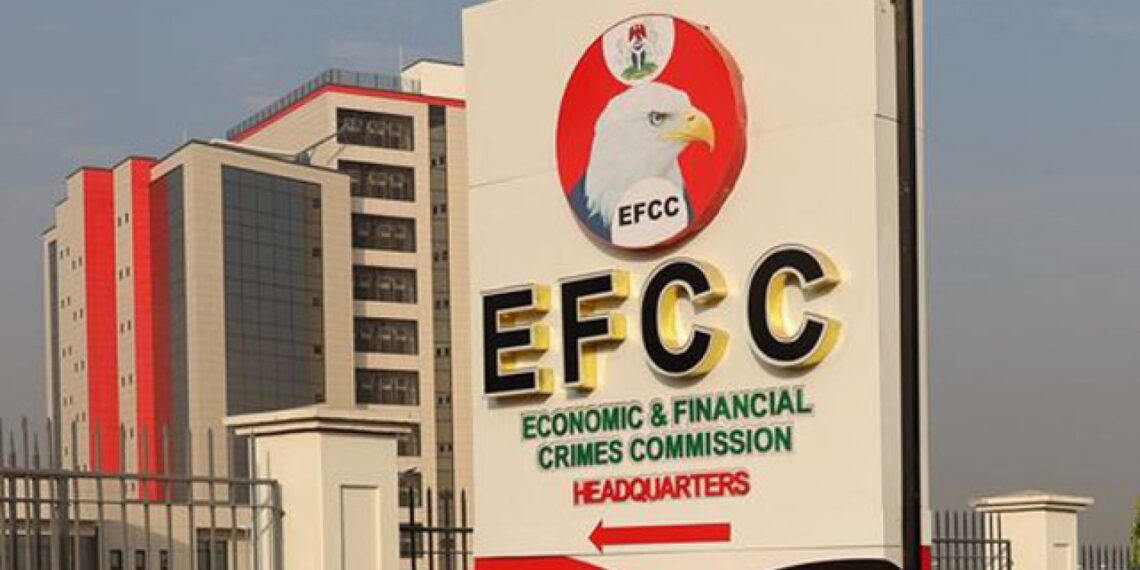
The Economic and Financial Crimes Commission (EFCC) has levied accusations against banks, alleging collusion with Point-of-Sale (POS) operators to restrict cash availability at Automated Teller Machines (ATMs). 

This accusatory finger points towards what the EFCC terms as “financial illegality,” where POS operators purportedly amass substantial cash from banks, leaving ATMs shortchanged and inconveniencing Nigerian consumers.

The EFCC, through its official communication channel on X, declared its stance on Saturday, May 11, 2024. Acting Zonal Director of the Ibadan Zonal Command of the EFCC, ACE I Hauwa Garba Ringim reiterated this position during a recent stakeholders’ meeting with Compliance Officers of Banks in Oyo State. 

Ringim emphasized the imperative to halt illicit dealings and the trading of naira with POS operators, calling for a cessation of this unfair practice that deprives Nigerians of convenient access to their funds.

“What we notice and see around lately is that Nigerians can only withdraw a small amount of their money with the banks in Automated Teller Machine (ATMs) but POS operators evidently go around with huge amounts of money gotten from the banks. This is not fair to Nigerians and we must fight it head-on,” said Ringim.

Moreover, Ringim cautioned banks’ compliance officers against disclosing EFCC’s financial probes to their clientele, citing the potential jeopardy it poses to ongoing investigations. He underscored the importance of maintaining confidentiality to avoid tipping off suspects, which could impede the agency’s efforts to gather crucial evidence for prosecution.

The EFCC’s concern over this collusion extends to its broader fight against economic and financial crimes, where it perceives an unhealthy support system for fraudsters within the banking sector. The agency urged Compliance Officers to promptly respond to its requests, providing certified true copies of relevant documents to expedite investigation processes and bring corruption cases to a swift resolution.

In response, Compliance Officers acknowledged the necessity for effective collaboration between the EFCC and financial institutions, expressing their commitment to uphold new dynamics in combating financial crimes.

This cautionary stance by the EFCC comes hot on the heels of its recent action freezing over 300 accounts suspected of involvement in illicit forex trading, a move aimed at curbing activities that could destabilize the national currency. Notably, a significant portion of the suspected individuals are identified as both Bureau de Change operators and POS operators, highlighting the interconnectedness of these illicit financial activities.

However, the anti-graft agency’s allegation of collusion against banks comes amid growing concern emanating from lack of cash in ATMs, while the bulk is given to POS operators – forcing consumers to pay for cash withdrawal.

Following the recent directive from the Nigerian government mandating POS operators to register with the Corporate Affairs Commission (CAC) as part of its regulatory oversight to fortify the financial sector, financial experts have raised concerns that the government is inadvertently, endorsing the trading of the naira as a commodity.

By formalizing the procedures of POS operators, it is believed that the government created a breeding ground for artificial arbitrage, which in turn undermines the stability of the currency and diminishes consumer confidence. 

“POS can’t take over function of cash deposits and withdrawal from licensed commercial and microfinance banks,” financial analyst, Kalu Aja said. “Are we so debased in expectations of service that licensed trillion naira banks with billions of naira investment in retail branches and ATMs have no cash but a chap with an umbrella down the street has cash?”

‘No country can tax itself to prosperity’: KPMG Critiques Timing and Implementation of Cybersecurity Levy

0

In its intervention in Nigeria’s fiscal discourse, KPMG, a globally recognized firm offering audit, tax, and advisory services, has voiced significant concerns regarding the federal government’s proposed 0.5 percent cybersecurity levy. 

The firm’s critique, articulated through a detailed analysis, sheds light on the timing and potential implications of the levy within the current economic context. It noted that while several reports suggested that the government could generate approximately N3 trillion annually from the levy, there has been no formal disclosure to the public regarding the cost and benefit analysis.

KPMG wasted no time in addressing the elephant in the room—the timing of the cybersecurity levy. In no uncertain terms, the firm labeled the levy as “ill-timed under the current economic realities.” It pointed out that while the idea itself wasn’t novel, implementing it amidst ongoing economic reforms risks compounding the financial strain already felt by businesses and individuals alike.

The firm said: “Though the cybercrime levy is not new as it has been in existence since 2015, the question is why implement it now given the prevailing economic challenges? The timing of any reforms is essential to the success of such reforms. This underscores the current public resistance to the implementation of the levy.

“This is certainly not the right time to implement this levy. Hopefully, the National Insurance Commission (NAICOM) and the Nigerian Communications Commission (NCC) will consider this before introducing their own guidelines with respect to those businesses under their purview.”

The firm’s reservations didn’t stop at timing. It delved deeper into the rationale behind the levy. Drawing on economic theory, KPMG emphasized that taxing the populace excessively does not lead to sustainable growth—a cautionary tale for policymakers navigating Nigeria’s turbulent economic situation.

By echoing sentiments often expressed by economists and fiscal experts worldwide: “No country can tax itself to prosperity,” KPMG warned against the allure of higher taxes as a panacea for economic woes, stressing the need for a more nuanced approach to revenue generation and economic management.

KPMG stated, “Undoubtedly, Nigeria faces significant revenue challenges. This has, therefore, constrained, and continues to constrain, the country’s capacity for achieving sustainable growth. Given this context, the government may go to any length to mobilize the required revenue.

“However, research has shown that higher taxes do not lead to sustainable growth. In fact, no country can tax itself to prosperity. Perhaps, it is in recognition of this that the current administration and the Presidential Committee on Fiscal Reforms have often emphasized that the government will not introduce new taxes.”

In dissecting the scope of the levy, KPMG revealed its far-reaching implications beyond financial institutions. From GSM service providers to telecommunication companies, internet service providers, insurance firms, and even the Nigerian Stock Exchange, no sector would be spared from its impact. This expansive reach underscores the levy’s potential to disrupt various facets of the economy.

However, KPMG’s critique wasn’t merely academic—it was pragmatic. It called attention to the lack of transparency surrounding the levy’s implementation, particularly concerning its cost and benefit analysis. With no formal presentation to the public, the firm urged for greater clarity and accountability in tax-related matters to foster trust and confidence among stakeholders.

“It is not sufficient to provide only the revenue projection, which is not certain as no details have been provided with respect to this; albeit there have been reports on how the money would be spent,” it said.

“Under the enabling Act, the Office of the National Security Adviser will be responsible for administering the fund.  Though the Act provides that the fund shall be audited in accordance with guidelines issued by the Auditor General of the Federation, this does not provide enough comfort.

“There are many government agencies that have not been audited for years and nothing has happened. It is, therefore, critical that practical measures be put in place to ensure transparency and accountability.”

Moreover, KPMG raised pertinent questions about the levy’s unintended consequences and potential loopholes. It pondered whether the levy could inadvertently lead to a resurgence of cheque transactions, given their exclusion as electronic transfers under the enabling Act—a loophole that could undermine the levy’s efficacy.

In a nod to responsible governance, KPMG urged the government to prioritize tax reforms that address revenue leakages and exercise prudence in public expenditure. It emphasized the importance of striking a balance between revenue-raising initiatives and responsible spending practices to ensure fiscal sustainability—a message that resonates amid Nigeria’s economic challenges.

Following heavy backlash from Nigerians and multinationals like KPMG, the federal government has asked the central bank to halt the implementation of the cybersecurity levy.

Navigating Economic Landscape around Inflation and Stagflation

0

In recent times, the global economy has faced a myriad of challenges, with inflation and stagflation being at the forefront of economic discussions. Inflation, the general increase in prices and fall in the purchasing value of money, has been a persistent concern for policymakers, businesses, and consumers alike. On the other hand, stagflation – a portmanteau of stagnation and inflation – refers to the situation where the inflation rate is high, the economic growth rate slows, and unemployment remains steadily high.

The specter of stagflation has been a topic of debate among economists and financial experts. Some have warned of its potential impact on the economy, suggesting that higher prices could lead to decreased consumer spending, which in turn might result in lower corporate profits and a potential stock market downturn. This scenario is reminiscent of the 1970s, when stagflation left a profound impact on the global economy.

However, it’s important to note that the current economic environment differs significantly from that of the 1970s. Federal Reserve Chair Jerome Powell has pointed out that there is no sign of stagflation in the U.S. economy, with both inflation rates and the unemployment rate below 4%. This is supported by data showing that wage growth has largely kept pace with inflation, and the effects of the pandemic on the prices of food and other goods have largely subsided.

Moreover, the current economic policies and conditions are distinct from those that led to stagflation in the past. Today, the central banks are more proactive and vigilant in monitoring inflationary pressures and adjusting monetary policies accordingly. The Federal Reserve, for instance, has planned interest rate hikes to a neutral rate, estimated to be between 2 and 3.5%, in an effort to prevent the risk of stagflation.

Understanding and navigating the complexities of inflation and stagflation requires a multifaceted approach. Governments and central banks must balance between stimulating economic growth and controlling inflation. Businesses need to adapt to changing economic conditions by managing costs and pricing strategies effectively. Consumers, on the other hand, must be prudent with their spending and investments, seeking opportunities that hedge against inflation.

In conclusion, while concerns about inflation and stagflation are valid, the current economic indicators suggest that the situation is under control. The lessons learned from the past, coupled with modern economic tools and policies, provide a framework for managing these challenges. It is essential for all stakeholders to stay informed and engaged in the economic discourse, as the global economy continues to evolve in an ever-changing landscape.

Airtel Payment Service Bank, SmartCash, Hits 1.5M Active Users in March 2024

0

SmartCash, Airtel’s innovative payment service bank (PSB), has recently reported that it reached 1.5 million active users in March 2024.

This was disclosed in the parent’s company (Airtel Africa) financial first quarter (Q1) result, for the year ended March 31, 2024.

The company wrote,

“During this year, we accelerated our customer acquisition strategy and our customer base is 1.5 million active customers. We continue to build the ecosystem to grow our transaction value”.

Airtel reported that the annualized transaction value for SmartCash PSB grew by 15% in the first quarter (Q1) of 2024 (Airtel’s financial year Q4) compared to the quarter ended December 2023.

It further noted that SmartCash added 39,000 agents during the quarter, reaching almost 205,000 agents as of March 31, 2024. Also, the mobile money customer base expanded to 38 million customers by the end of March across its operations in 14 African countries. This equated to SmartCash accounting for 4% of the Group’s mobile money customers.

Across Africa, Airtel said it would continue to leverage the low penetration of traditional banking services and the large number of unbanked customers to boost its mobile money business, whose needs can be largely fulfilled through mobile money services.

“We aim to drive the uptake of Airtel Money services in all our markets, harnessing the ability of our profitable mobile money business model to enhance financial inclusion in some of the most ‘unbanked’ populations in the world,” it said.

In 2022, Airtel Africa launched its payment service bank, SmartCash PSB to help further digitize the Nigerian economy and most importantly to help bank the unbanked by reaching millions of Nigerians who do not have access to financial services, by delivering payment and remittance services, debit and payment cards, amongst others.

Since the launch of SmartCash, the payment service bank has continued to record significant progress. In 2023, it hit 20 million accounts across Nigeria, which boosted its position as a major player in Nigeria’s digital banking landscape.

In October last year, the payment service partnered with Thunes, a cross-border payments infrastructure provider, to allow its customers to receive international remittances in Naira to their mobile wallets. According to the Managing Direcior of Smartcash PSB, Muyiwa Ebitanmi, he said through the partnership, the company can solve the problem of receiving funds from family and friends abroad.

Fast forward to January 2024, Smartcash announced a strategic partnership with Stanbic IBTC Bank which will focus on cash deposits and withdrawals for Smartcash customers across Nigeria. The collaboration between the two companies aims to leverage Stanbic IBIC Bank’s branch network to provide additional financial services to Artel SmartCash customers across Nigeria.

The primary purpose of SmartCash is to deepen financial inclusion, appropriating high-volume and low-value transactions in a safe, technology-driven environment. With its corporate headquarters in Lagos, Nigeria, its overarching objective is to ensure financial inclusion for everyone including persons in the furthest and remotest parts of Nigeria.