DD
MM
YYYY

PAGES

DD
MM
YYYY

spot_img

PAGES

Home Blog Page 3346

Elon Musk compares US Federal Reserve to Board Game Monopoly

0

Elon Musk’s recent comparison of the US Federal Reserve to the board game Monopoly has sparked a lively debate on social media and among financial analysts. The Tesla and SpaceX CEO’s analogy suggests that much like the game’s bank, the Federal Reserve can never go bankrupt and can always print more money. This comment comes at a time when discussions about monetary policy, inflation, and currency devaluation are at the forefront of economic discourse.

The Federal Reserve, often referred to as the Fed, is the central banking system of the United States and is responsible for implementing the country’s monetary policy. The comparison to Monopoly is particularly poignant because it highlights the Fed’s ability to influence the economy by controlling the money supply. In the game of Monopoly, the bank has an unlimited amount of money at its disposal, and if it runs out, players can simply create more using slips of paper. Musk’s analogy draws a parallel to the Fed’s practice of quantitative easing (QE), where it buys securities to inject money into the economy, a strategy that some critics argue could lead to inflation if not managed carefully.

Financial analysts have weighed in on Musk’s comments, with some advocating for investment in alternative assets like Bitcoin, gold, and silver. Michaël van de Poppe, a well-known figure in the cryptocurrency space, has urged investors to buy these assets in anticipation of the resumption of QE. Similarly, economist Peter Schiff predicts a significant increase in the prices of precious metals and advises them as hedges against inflation. Schiff, however, remains skeptical about Bitcoin, referring to it as “dead money.”

Musk’s statement has resonated with many who are concerned about the long-term implications of the Fed’s monetary policies. The fear is that excessive money printing could devalue the currency and lead to inflation, a scenario that some believe is already unfolding. The US debt nearing 106% of GDP further exacerbates these concerns.

The discussion around the Fed’s monetary policy is complex and multifaceted. On one hand, QE and other monetary tools can stimulate economic growth and help manage economic downturns. On the other hand, there is a risk that these tools could lead to unintended consequences if not used judiciously. Musk’s Monopoly analogy serves as a simplified representation of these concerns, encapsulating the fears of unchecked monetary expansion and its potential impact on the economy.

As the debate continues, it’s clear that Musk’s comments have struck a chord with a global audience, prompting a broader conversation about the role of central banks, the nature of money, and the search for stable investments in uncertain economic times. Whether his comparison will lead to any changes in policy or public perception remains to be seen, but it has undoubtedly contributed to an important dialogue about the future of monetary policy.


Stageging $25.4M BlockDAG Presale Shatters Records Post Piccadilly Circus, Surpasses Injective and Internet Computer!

0

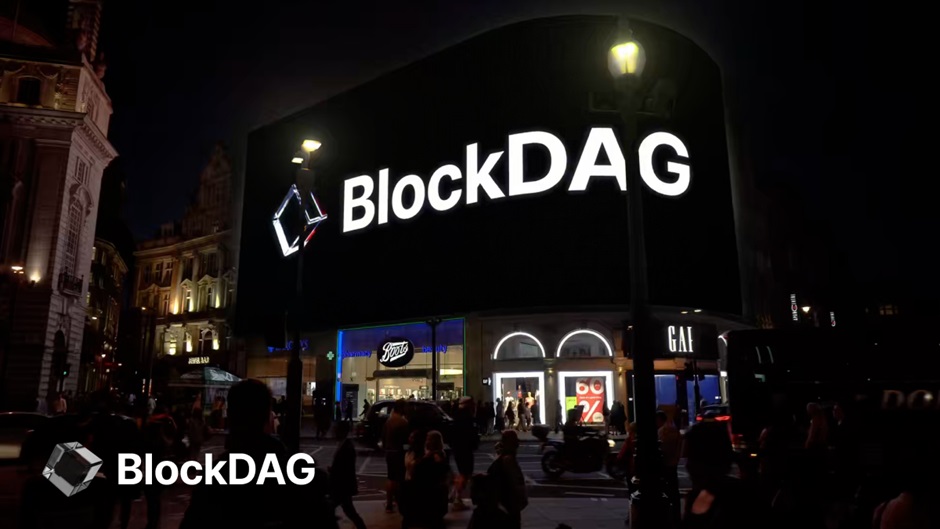
As Injective encounters resistance in its pricing and Internet Computer faces scrutiny over its innovative but uncertain cloud infrastructure overhaul, BlockDAG distinguishes itself with a strategic display at Piccadilly Circus. This celebration marked its successful listing on CoinMarketCap, catapulting its presale beyond $25.4 million and setting the stage for the forthcoming launch of its X1 app. This move underscores BlockDAG‘s emerging dominance in the crypto market, drawing both attention and investment with its projected 30,000x ROI.

Injective’s Market Challenges and Price Resistance

Injective (INJ) is currently experiencing a market downturn, influenced by the recent decline in Bitcoin’s value, placing pressure on its price. For Injective to signal a bullish recovery, it must surpass the resistance at $27.0 and maintain above the 9-day and 21-day moving averages.

Should Injective fail to breach these levels, it may continue a bearish trajectory, potentially testing lower support at $9.70. A bullish scenario would see Injective aiming for the $30.0 resistance, with potential to reach as high as $46.0. Observers are also watching its performance against Bitcoin, with key resistance set at 5000 SAT.

Internet Computer’s Ambitious Blockchain and AI Integration

Internet Computer seeks to revolutionize the blockchain sector by integrating with artificial intelligence to replace traditional cloud services. This ambitious plan aims to decentralize and secure web hosting for enterprise applications, presenting a groundbreaking shift in how blockchain technology is utilized.

Despite its innovative approach, Internet Computer has recently seen a 23% price drop over the past month, causing some investors to reassess their stakes amid ongoing price volatility. The project’s success now hinges on stabilizing its market position and reinforcing investor confidence in its long-term strategy.

BlockDAG Celebrates at Piccadilly Circus, Preparing for X1 App Launch

BlockDAG has successfully captured the crypto community’s interest with its dynamic event at London’s Piccadilly Circus, which celebrated its listing on CoinMarketCap. This event has not only enhanced its market visibility but also symbolized its growing influence in the cryptocurrency world. With more than $25.4 million raised in its presale and nearly 8.9 billion BDAG coins sold, BlockDAG is on a clear trajectory for substantial growth.

The upcoming X1 app launch on June 1st promises to revolutionize mobile crypto mining with its proof of engagement consensus mechanism, designed for energy efficiency and cost-effectiveness. The app’s user-friendly interface ensures easy navigation and participation, allowing even non-technical users to mine up to 20 BDAG coins daily. Compatible with both iOS and Android devices, the app requires Wi-Fi and is conveniently sized at about 50MB, making it accessible for a global audience.

BlockDAG’s Strategic Advancements Set It Apart

In a market where Injective and Internet Computer are working to overcome their respective challenges, BlockDAG stands out with its successful $25.4 million presale and impactful marketing strategy. The upcoming X1 app launch is poised to further enhance BlockDAG’s position as a leading cryptocurrency for 2024, promising significant returns and establishing its status as a top contender in the dynamic cryptocurrency market.


Join BlockDAG Presale Now:

Website: https://blockdag.network

Presale: https://purchase.blockdag.network

Telegram: https://t.me/blockDAGnetworkOfficial

Discord: https://discord.gg/Q7BxghMVyu

OpenAI Launches Upgraded Version of ChatGPT And A Desktop Version

0

American Artificial Intelligence (AI) research organization OpenAI, has launched an upgraded version of its chatbot ChatGPT, as well as a desktop version.

OpenAI says the updated model will provide capabilities to everyone that were previously only available to paid users.

OpenAI’s latest update makes ChatGPT even more powerful, but navigating the evolving world of AI tools can be overwhelming. Looking for a user-friendly way to access GPT-4o and other cutting-edge AI models like Midjourney and DALL-E? BotHub offers a centralized platform that simplifies AI interaction, bringing the latest advancements in text, audio, and visual processing to your fingertips. Meanwhile, let’s take a closer look at the specific features and improvements OpenAI is bringing to the table with its latest release.

Announcing the launch of GPT-4o, Chief Technology Officer Mira Murati said this is the first time the company is making a huge step forward when it comes to ease of use. She added that OpenAI wants to remove some of the “mysticism from the technology”.

In her words,

“We know that these models are getting more and more complex, but we want the experience of interaction to become more natural, and easy, and for you not to focus on the Ul at all, but just focus on the collaboration with GPTs. An important part of our mission is being able to make our advanced Al tools available to everyone for free.”

The newly launched version comes with upgraded functionality and improvements in text, audio, and visual. One of the standout features of GPT-4o is its voice mode, which represents a significant advancement in conversational Al technology. Users can now engage with ChatGPT in a manner akin to interacting with a personal assistant, using the chatbot’s ability to seamlessly transition between text, voice, and visual inputs.

The new model also comes with improved speed quality of ChatGPT for 50 different languages and is also available via OpenAl’s API so that developers can build applications using the new model.

Demonstrating the new audio capabilities, OpenAl researcher Mark Chen said the model has the capability to “perceive human emotion, adding that the model can also handle users interrupting it. The chatbot can also analyze users’ facial expressions to comment on the emotions the person may be experiencing.

OpenAI Team members also demonstrated the model’s ability to solve math equations and help write code, positioning it as a stronger competitor to Microsoft’s own.

GitHub Copilot.

“For OpenAl, it’s one of the company’s biggest announcements since its August launch of ChatGPT Enterprise, the Al chatbot’s business tier. That tool was in development for “under a year” and had the help of more than 20 companies of varying sizes and industries”, OpenAI COO Brad Lightcap said.

OpenAI rollout of GPT 4 has intensified competition in the chatbot industry. Since the launch of the chatbot, it has sparked a frantic rush to get new AI products to market, a frenzy that is consuming tech’s biggest behemoths and countless startups as they fight for space in the emerging sector.

In April this year, giant tech company Meta unveiled the latest version of its large language model (LLM), the technology behind generative AI chatbots, as the tech giant looks to take on ChatGPT. Called Llama 3, Meta said the latest version of the model is smarter and faster, as well as supporting “improved reasoning.”

Meta is one of several big tech firms fighting to challenge market leader OpenAI, whose ChatGPT has become the most prominent of the new generation of generative AI tools.

OpenAI announced it’s rolling out GPT-4 Omni or GPT-4o, a new, faster, more “emotive” model with significantly boosted voice, vision and text capabilities that will be free to all users. In several demos during Monday’s livestream, Chief Technology Officer Mira Murati and her team showcased impressive real-time interactivity that lets users engage with ChatGPT in conversation, much like having an assistant that can pick up on emotions. It can also “see” photos or screens, for example, and quickly answer questions about them. Murati said GPT-4o will debut “iteratively” across developer and consumer-facing products over the next few weeks.

OpenAI Launches GPT-4o, a new AI model with the ability to reason across audio, vision, and text in real time

0

In a bold leap forward for artificial intelligence (AI), OpenAI unveiled its latest innovation on Monday—a revolutionary AI model named GPT-4o, accompanied by a desktop version of ChatGPT and an overhauled user interface. 

This release represents OpenAI’s ambitious endeavor to democratize access to its renowned chatbot technology while elevating user experience to unprecedented heights.

During a live-streamed event, Mira Murati, the technology chief at OpenAI, delivered the momentous announcement, announcing the integration of GPT-4 into ChatGPT for all users, including those on the free tier. 

In her address, Murati highlighted the significance of this development, emphasizing OpenAI’s commitment to accessibility and user empowerment.

“This is the first time that we are really making a huge step forward when it comes to the ease of use,” Murati said.

Powered by Microsoft and boasting a valuation exceeding $80 billion by investors, OpenAI faces the dual challenge of maintaining its leadership in the fiercely competitive generative AI market while navigating the complexities of monetization amidst substantial investments in hardware and infrastructure.

The introduction of GPT-4o, the latest iteration in OpenAI’s esteemed GPT series, represents a quantum leap in AI capabilities. With superior speed and enhanced proficiency in text, video, and audio processing, GPT-4o heralds a new era of AI sophistication. 

The company said GPT-4o achieves GPT-4 Turbo-level performance on text, reasoning, and coding intelligence while setting new high watermarks on multilingual, audio, and vision capabilities.

“With GPT-4o, we trained a single new model end-to-end across text, vision, and audio, meaning that all inputs and outputs are processed by the same neural network. Because GPT-4o is our first model combining all of these modalities, we are still just scratching the surface of exploring what the model can do and its limitations,” the company said in a blog post.

Notably, OpenAI envisions extending ChatGPT’s functionality to encompass video chat capabilities in the near future, further expanding the scope of interactive experiences facilitated by the platform.

“The ‘o’ in GPT-4o signifies ‘omni,‘ reflecting the model’s versatility and adaptability,” Murati explained, highlighting GPT-4o’s ability to support 50 different languages with unparalleled speed and precision. Moreover, GPT-4o will be seamlessly integrated into OpenAI’s API, empowering developers to harness its transformative potential for a myriad of applications.

“Developers can also now access GPT-4o in the API as a text and vision model. GPT-4o is 2x faster, half the price, and has 5x higher rate limits compared to GPT-4 Turbo. We plan to launch support for GPT-4o’s new audio and video capabilities to a small group of trusted partners in the API in the coming weeks,” the company said on Monday.

In a captivating demonstration of GPT-4o’s capabilities, OpenAI showcased its advanced audio processing prowess. Mark Chen, a distinguished OpenAI researcher, demonstrated the model’s capacity to discern and respond to users’ emotions, setting a new standard for human-machine interaction. Furthermore, GPT-4o exhibited remarkable adaptability, seamlessly accommodating user interruptions and dynamically adjusting its responses to suit the conversational context.

As part of its commitment to enhancing user experience, OpenAI announced plans to introduce Voice Mode—an innovative feature that enables ChatGPT to respond to audio prompts with lightning speed. Leveraging cutting-edge technology, OpenAI aims to replicate the fluidity and spontaneity of human conversation, ushering in a new era of interactive dialogue between users and AI.

Beyond its proficiency in audio processing, GPT-4o showcased its versatility across diverse domains, from storytelling to code generation. With its ability to undertake complex tasks with unparalleled efficiency, GPT-4o emerges as a formidable competitor to industry giants like Microsoft’s GitHub Copilot, positioning itself at the vanguard of AI innovation.

The company said “GPT-4o’s text and image capabilities are starting to roll out today [Monday] in ChatGPT. We are making GPT-4o available in the free tier, and to Plus users with up to 5x higher message limits. We’ll roll out a new version of Voice Mode with GPT-4o in alpha within ChatGPT Plus in the coming weeks.”

As the rollout of GPT-4o commences, users can anticipate a transformative ChatGPT experience characterized by seamless interactions, enhanced capabilities, and unparalleled versatility. With GPT-4o leading the charge, OpenAI reaffirms its commitment to shaping the future of AI and revolutionizing the way humans engage with technology.

The Evolution of Nigerian Banks to the Edges of Smiling Curve

0
BVN
Nigerian bank customers

The smiling curve is a graph that measures value against the value chain of an industry. The curve appears like a smile when value added is represented on the Y-axis and the value chain stages are represented on the X-axis. I have used it to explain competitiveness in the financial services sector.

Before 2020, most banks in Nigeria were at the center of the curve, and they captured the least value in the ecosystem even though they provided the most support. But those at the edges, usually fintech companies,  captured the most value even though they did not provide a lot of catalytic support in the ecosystem.

Fast forward today, most banks have transmuted, creating fintech units, and in the process, they are now represented at the center and the edges. As a result, these banks are now capturing great value just as the fintech firms.

Sure, there is always going to be an innovation hangover which does imply that banks may not necessarily do what fintechs do very well since they may not like to cannibalize value elsewhere.

Immediately, I knew that there was the power of monopoly in town. With PayPal, you can sign-up for free, and within minutes be getting revenue online. But yet, I do understand that Interswitch has its own cost model, running its generators and providing its security since government is largely not part of building companies in Nigeria. But was that fee appropriate just to be connected online, in Nigeria? Not really, and I felt they were making a real mistake. A big mistake because such fat profits and margins would cloud their strategies to mine all the juices with the power of monopoly and suffering later the risk of not innovating. They did not make significant efforts to expand beyond Nigeria, at scale, because they could simply charge $1,000 for integrating websites. (Sure, they did expand to Uganda, etc but generally, the pace was slow. When they started in Nigeria, they could have taken over Africa, if they had not become very comfortable in Nigeria alone.)

For example, a fintech company may wire funds from Nigeria to London for $30, and a bank’s fintech unit can match that, but because a bank’s treasury unit charges $100 for that same service, the bank may pause the launch of that product in the fintech unit. Or if they do launch it, they will modify the problem and solve something that may cost the customer $70.  This hangover is the reason upstarts can win in a world of established incumbents. Check my video on the Smiling Curve here.

Banking, Fintech and Smiling Curve: Why Where You Operate Is More Important Than Efforts You Put In