DD
MM
YYYY

PAGES

DD
MM
YYYY

spot_img

PAGES

Home Blog Page 335

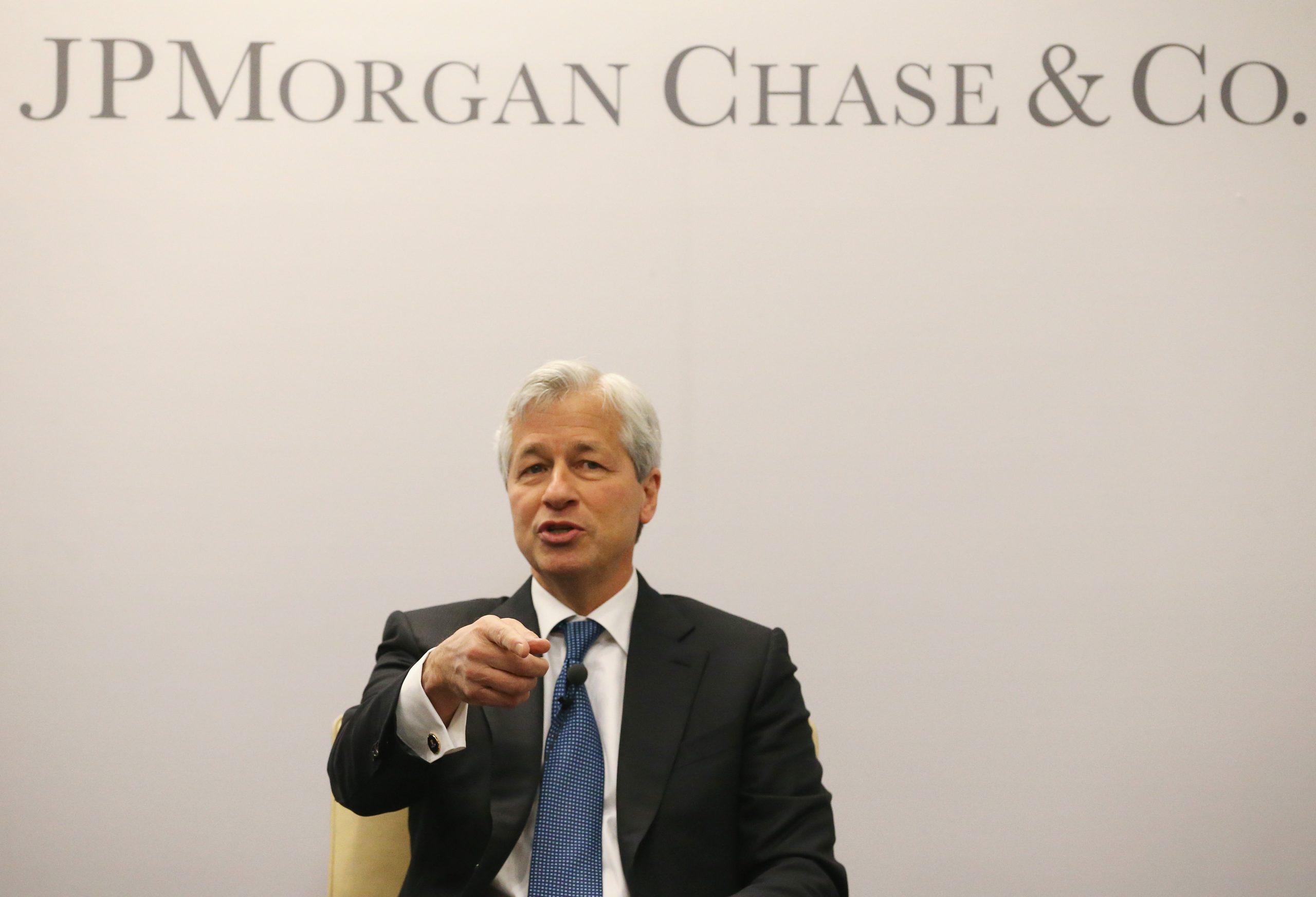
JPMorgan Expands Blockchain Strategy, Plans to Offer Crypto Trading Services

0
JP Morgan Chase puts contents through its CEO account, it goes viral. But the same content via JPMC account, no one cares (WSJ)

American multinational finance corporation JPMorgan Chase is preparing to deepen its involvement in blockchain and cryptocurrency, with new plans underway to introduce crypto trading services.

This was revealed by Scott Lucas, the bank’s Global Head of Markets and Digital Assets. In an interview on CNBC’s Squawk Box Europe on Monday, Lucas clarified that while JPMorgan is exploring the crypto trading space, directly custodying cryptocurrencies remains off the table for now. When asked whether the bank would follow peers like Citibank in offering crypto custody services, he stated that such a move was “not on the horizon near-term.”

In his words,

“I think Jamie Dimon was pretty clear on investor day that we’re going to be involved in the trading of that, but custody is not on the table at the moment. There’s a lot of questions around our own risk appetite and how far we want to go down that path, from trading and other sides of it, and custody, I guess would follow.”

In the meantime, the firm is assessing what the right custodians for crypto might look like. Throughout the discussion, Lucas emphasized JPMorgan’s strategic approach and outlook, which focuses on embracing multiple opportunities across the blockchain and digital asset landscape, rather than prioritizing one over another. “There’s the existing market, and there’s opportunities to do new things. And those ‘and’ opportunities aren’t exclusive to one or the other,” he explained.

Lucas also discussed the bank’s recently launched deposit token, JPMD, which entered its pilot phase on Base in June. He noted that the initiative is aimed at providing new services for institutional clients while also responding to growing interest in stablecoins. “There’s a real opportunity for us to think about how we can offer different services for our clients on the cash side, as well as respond to client demand to do things like stablecoins,” he said.

In the broader blockchain ecosystem, Lucas expressed the belief that no single network, such as Ethereum, will dominate the space. Instead, he anticipates a more fragmented but vibrant market with multiple competing blockchains. 

His comments highlight a growing shift in JPMorgan’s stance toward crypto. The banking giant, once cautious about digital assets, has become more open to blockchain innovation, striking notable partnerships with industry leaders like Coinbase.

Recall that in late 2023, JP Morgan warned that crypto markets were “overbought” due to hype around spot Bitcoin ETFs and predicted a pullback into 2024, though they saw potential for Ether to outperform Bitcoin post-upgrades. By May 2024, following Bitcoin’s halving event and ETF outflows, they maintained a “cautious stance” on crypto, citing dissipating retail enthusiasm and persistent headwinds like macro uncertainty.

As recently as July 2025, JP Morgan slashed forecasts for stablecoin growth to $500 billion by 2028, arguing there’s “little evidence of mainstream adoption” and payments usage remains negligible at just 6% of demand. The bank now supports a limited range of crypto ETFs (Bitcoin and some Ether-focused ones) but has no plans for broader crypto custody or spot trading desks.

As of October 2025, JP Morgan’s crypto offerings are confined to ETFs and blockchain services, excluding direct altcoin support or DeFi exposure. This evolution in approach is mirrored by a softer tone from CEO Jamie Dimon, who has long been one of crypto’s most vocal critics. In 2021, Dimon described bitcoin as ‘worthless’.

Recently, he described himself as a “believer in stablecoins” and acknowledged the potential of blockchain technology. His changing perspective appears to be influencing JPMorgan’s broader digital asset strategy. 

IMF Raises Global Growth Outlook for 2025 to 3.2%, Says Trump’s Tariffs Have Softer Economic Impact Than Feared

0

The International Monetary Fund has raised its forecast for global economic growth in 2025, citing a surprisingly mild hit from U.S. President Donald Trump’s trade tariffs and stronger-than-expected resilience in private sector activity.

But the Fund cautioned that risks from escalating trade tensions, elevated inflation, and slowing momentum in China remain serious threats to long-term global stability.

In its latest World Economic Outlook (WEO) report released Tuesday, the IMF revised its 2025 global growth projection upward to 3.2 percent, from 3.0 percent in July, while keeping its 2026 forecast unchanged at 3.1 percent.

IMF Chief Economist Pierre-Olivier Gourinchas said the revision reflects “a smaller-than-expected tariff shock,” noting that the private sector in many countries has adjusted quickly to the new trade environment created by Trump’s policies.

“The tariff shock itself is smaller than initially feared,” Gourinchas told reporters in Washington. “The private sector has responded in an agile way, and that adaptability has helped cushion what could have been a sharper slowdown.”

Tariff Impact Milder Than Feared

Since his return to the White House, Trump has reimposed sweeping tariffs on key U.S. trading partners, including China and the European Union, framing the measures as an effort to protect American jobs and manufacturing. Over the weekend, he threatened to double down with 100 percent tariffs on China, following Beijing’s move to tighten export controls on rare earth minerals — crucial inputs for defense and high-tech industries.

While economists initially warned that such aggressive trade policies could severely disrupt global supply chains, the IMF said their impact so far has been tempered by adaptive responses from businesses and governments.

Other factors, including the AI boom and expansionary fiscal policies in Europe and China, were noted to have helped to prop up the global economy.

However, the IMF warned that the broader effects of a trade war “are here” and could dim already weak global growth prospects if tensions escalate further.

The Fund noted that the latest projections were compiled before the most recent tariff threats between Washington and Beijing, meaning future updates could show greater risks if the dispute deepens.

Global inflation, while easing from the multi-decade highs of 2023, remains stubbornly above target in many economies. The IMF expects worldwide consumer prices to rise 4.2 percent this year and 3.7 percent in 2026, with elevated inflation in the United States, the Eurozone, and parts of Latin America keeping pressure on central banks to maintain restrictive policies.

The report said that while inflation has fallen sharply from its post-pandemic peak, the decline has been uneven, especially in advanced economies with tight labor markets.

U.S. Growth Outlook Upgraded

The IMF upgraded its forecast for the United States — the world’s largest economy — by 0.1 percentage point for both 2025 and 2026. U.S. GDP is now projected to grow 2.0 percent in 2025 and 2.1 percent in 2026, slower than the 2.8 percent expansion recorded in 2024 but still stronger than most other advanced economies.

The IMF attributed the resilience of U.S. growth to strong consumer spending, robust labor markets, and fiscal stimulus programs that have offset some of the drag from trade restrictions.

Still, the Fund warned that prolonged tariff conflicts could eventually weigh on investment and productivity.

Trade tensions, by their nature, raise uncertainty and discourage cross-border investment. That remains a risk to the medium-term outlook.

China Faces a Slowing Economy

Despite ongoing trade tensions, the IMF left its forecast for China unchanged, projecting growth of 4.8 percent in 2025 — down from 5.0 percent in 2024 — and a sharper slowdown to 4.2 percent in 2026.

Beijing’s economy, once the engine of global expansion, continues to lose steam amid weak exports, a faltering property market, and declining foreign investment. The Fund said China’s slowdown has been partially offset by stronger domestic demand supported by targeted policy stimulus, including infrastructure spending and consumption incentives.

Still, China faces “structural headwinds,” including high local government debt and demographic challenges, which the Fund said remain serious constraints on future growth.

India, Japan, and Asia Show Momentum

Elsewhere in Asia, the IMF raised India’s 2025 growth forecast to 6.6 percent, up from 6.4 percent in July, citing sustained domestic demand and expanding industrial output. Japan also saw an upgrade to 1.1 percent, a notable 0.4 percentage point increase, as its export sector benefited from the weaker yen and resilient global demand for high-tech components.

Europe’s Recovery Still Fragile

In Europe, economic recovery remains uneven. The IMF said the Eurozone would grow 1.2 percent in 2025 and 1.1 percent in 2026, both slight upgrades from July. Yet, the bloc continues to lag behind the United States, weighed down by sluggish industrial output and subdued investment.

Germany, the continent’s largest economy, is forecast to rebound modestly from recession, expanding 0.2 percent this year before rising to 0.9 percent next year. France, still grappling with political instability and labor unrest, is expected to grow 0.7 percent in 2025 and 0.9 percent in 2026.

Spain stands out as a rare bright spot in Europe, maintaining strong momentum with 2.9 percent growth this year and 2.0 percent in 2026, driven by tourism, construction, and resilient consumer spending.

The United Kingdom, outside the Eurozone, is expected to post steady growth of 1.3 percent this year and next — modest but better than earlier projections.

Russia’s Post-War Slowdown

The IMF sharply downgraded Russia’s outlook, forecasting growth of just 0.6 percent in 2025, compared with 4.3 percent in 2024. The Fund attributed the downturn to the economic fallout from the war in Ukraine, declining energy revenues, and international sanctions that have restricted access to technology and capital.

Risks Loom Despite Upgrades

Despite the upgrades, the IMF warned that the global economy remains vulnerable to multiple risks — including geopolitical instability, inflation persistence, and tightening global financial conditions.

“Everything is very fluid,” Gourinchas told AFP in an interview. “But I think it’s a very useful reminder that we live in a world in which this kind of increase in trade tensions, increase in policy uncertainty, can flare up at any time.”

Analysts say the IMF’s latest report underscores a central reality of the post-pandemic economy: while the world has proven remarkably resilient to repeated shocks — from tariffs and wars to inflation — that resilience has limits. If trade tensions between Washington and Beijing escalate further, or if inflation proves stickier than expected, the Fund’s next outlook could look considerably darker.

A Foray Into Coinbase’s New American Express Credit Card

0

Coinbase announced its first branded credit card, the Coinbase One Card, on June 12, 2025, during its State of Crypto Conference in New York City. This marks a significant expansion for the crypto exchange into traditional financial products, partnering with the American Express Network to power the card.

As of October 13, 2025, the card is set to launch this fall likely October or November, and interested users can join a waitlist for early access. The card is designed with a strong Bitcoin focus, appealing to crypto enthusiasts while integrating American Express perks.

Up to 4% back in Bitcoin on every purchase 2% base rate, scaling up based on assets held on Coinbase. Rewards are auto-deposited to your Coinbase account and won’t appear on 1099 tax forms though selling them may trigger taxes.

Metal card engraved with data from Bitcoin’s Genesis Block the first block mined by Satoshi Nakamoto in 2009, symbolizing crypto heritage. No annual fee for Coinbase One members; no foreign transaction fees.

Exclusive to U.S. Coinbase One subscribers excluding U.S. territories. Offered at no extra charge with the new Basic plan or higher tiers. Access to American Express benefits like exclusive events, offers, and purchase protections; up to $1,000 in crypto theft protection via Coinbase One.

To get the card, you need a Coinbase One membership launched in 2023 with nearly 1 million users. A new affordable “Basic” tier was introduced alongside the announcement:Basic: $4.99/month or $49.99/year – Includes the card, zero trading fees on up to $500/month in trades, 4.5% APY on first $10,000 in USDC, and boosted staking rewards.

Preferred/Premium: Higher tiers ($29.99+/month) offer enhanced limits and benefits. The card is issued by First Electronic Bank, with Cardless handling the embedded tech platform.

This launch comes amid a crypto-friendly regulatory environment under the Trump administration, with clearer rules expected from Congress. It’s Coinbase’s first credit card following a 2020 Visa debit card, competing with cards like Gemini’s up to 3% crypto back.

Experts see it as a retention tool for loyal users, blending everyday spending with crypto rewards to drive adoption. By integrating Bitcoin rewards into a credit card backed by American Express, Coinbase makes crypto more accessible for everyday spending.

This could normalize cryptocurrency as a reward mechanism, similar to cashback or travel points, encouraging non-crypto users to engage with digital assets. The up-to-4% Bitcoin rewards structure incentivizes users to accumulate and potentially hold or spend Bitcoin.

The card’s design, featuring Bitcoin’s Genesis Block, reinforces crypto’s ideological roots, appealing to enthusiasts and potentially attracting new users curious about Bitcoin’s history. Requiring a Coinbase One subscription starting at $4.99/month for the Basic tier ties users to Coinbase’s platform, encouraging them to consolidate trading, staking, and spending within its ecosystem.

The card positions Coinbase against competitors like Gemini which offers a 3% crypto rewards card and traditional fintechs like PayPal or Block. The American Express partnership adds prestige and perks, differentiating it from Coinbase’s earlier Visa debit card.

Beyond trading fees, Coinbase gains from subscription fees and potential interchange revenue from card transactions, bolstering its business model amid volatile crypto markets. The Coinbase One Card’s no-annual-fee structure for Coinbase One members and high crypto rewards challenge traditional credit card issuers like Visa and Mastercard to innovate, potentially sparking a wave of crypto-linked cards.

This collaboration signals growing acceptance of crypto by legacy financial institutions. Amex’s involvement could pave the way for other major networks to explore crypto integrations, especially as regulatory clarity improves under a crypto-friendly U.S. administration.

Auto-depositing Bitcoin rewards to Coinbase accounts simplifies the user experience, potentially setting a standard for how crypto rewards are managed compared to clunky cashback or points systems.

The launch aligns with a favorable U.S. regulatory environment in 2025, with anticipated clearer crypto rules from Congress. This reduces risks for Coinbase and users, fostering confidence in crypto-linked financial products.

While rewards aren’t reported on 1099 forms, selling Bitcoin earned from purchases may trigger capital gains taxes. This could push users to better understand crypto tax obligations, potentially spurring demand for tax software integrations on Coinbase.

Increased Bitcoin accumulation through rewards could drive demand, potentially influencing Bitcoin’s price, especially if the card gains significant adoption among Coinbase’s 100 million+ users.

The card’s rewards structure higher rates for users with more assets on Coinbase encourages holding crypto on the platform, which could lead to greater investment in Bitcoin and other assets. Features like $1,000 in crypto theft protection and Amex purchase protections add security, appealing to cautious users hesitant about crypto’s volatility or fraud risks.

The card intensifies competition among crypto exchanges to offer value-added services. Platforms like Binance or Kraken may respond with similar products, accelerating innovation in crypto-financial services. The success of Coinbase’s card could inspire other industries to offer crypto rewards, further embedding digital assets in consumer finance.

A high-profile product launch backed by American Express could boost investor confidence in Coinbase and the crypto sector, especially if the card sees strong adoption. Bitcoin’s price fluctuations could affect the perceived value of rewards, impacting user satisfaction if Bitcoin’s value drops significantly.

The card’s success depends on Coinbase One subscription uptake and user willingness to navigate crypto’s complexities, such as tax implications or wallet management. The Coinbase One Card is a strategic move to deepen crypto’s integration into everyday finance, leveraging American Express’s brand and Coinbase’s crypto expertise.

It could drive Bitcoin adoption, strengthen Coinbase’s market position, and influence the broader payments industry. However, its success hinges on user adoption, Bitcoin’s market performance, and sustained regulatory support.

Flying Tulip Releases Public Sale Guide for the $FT Token, as BitMine Capitalizes on Ethereum Weekend Dip

0

Flying Tulip, the full-stack onchain exchange founded by Andre Cronje creator of Yearn Finance and Sonic Labs, has just released its comprehensive Public Sale Guide for the $FT token.

This comes after their September 2025 announcement of a $200M private raise at a $1B fully diluted valuation (FDV), with plans to target up to $800M more via public sale—bringing total funding to $1B.

The guide outlines a fair, multi-round, multi-chain process with uniform terms across all participants, including principal protection via an onchain redemption right a perpetual put option allowing token burns for original investment recovery.

No KYC is required for most rounds, and there’s no team token allocation at launch to align incentives.The sale emphasizes risk management through network caps and a “waterfall” allocation system, ensuring no single chain dominates liquidity risks.

All official smart contract addresses and mechanics will be published solely on flyingtulip.com to prevent scams—beware of fakes, as the project warns: “No token. Do not fall for scams.”

The public sale is divided into phased rounds for orderly access, starting soon exact dates TBA via official channels. All rounds offer the same terms: $0.10 per $FT 10 FT per $1 invested, 100% unlocked at TGE, and full principal redemption rights.

The sale deploys across 6 chains for broad accessibility, using native assets via ETH AVAX, SOL, USDC/USDT—no bridging needed. Total cap: ~$562M based on network TVL. If a chain underperforms, excess flows to high-liquidity fillers like ETH/USDC/SOL.Chain

Per-chain caps prevent overload. Waterfall: If Sonic hits $6M early, overflow goes to Avalanche, then Ethereum, etc. Funds go into low-risk DeFi yields 3-4% APY initially, scaling to 8-12% via $ftUSD stablecoin, funding ops, rewards, and $FT buybacks for deflationary pressure.

LFixed at 10B $FT max deflationary—burns on redemptions/sales reduce it over time. $FT powers the exchange spot, perps, lending, options, insurance in a unified cross-margin system. No inflation; revenue drives buybacks.

Burn $FT anytime to redeem up to your principal, $100 invested ? $100 back in original asset. Settled from a segregated reserve ~$1B backing. Not insured/guaranteed—limited by reserves and params. Enables arb (e.g., buy at $0.095, redeem at $0.10 for 5% gain if below floor).

Instant secondary market + NFT redemption at launch; no exchange listings initially—trade on Flying Tulip’s venue. No looping/leverage during sale; min $10 investment. For Supporter/Intent rounds, submit via Google Form add MetaMask address. Early Access via CoinList/Impossible 1% fee.

TGE expected in weeks; sale live on their onchain platform. This isn’t your typical ICO—it’s a protected entry into a $1B FDV DeFi powerhouse with CEX-like tools hybrid AMM/CLOB, oracle-free perps but DEX transparency.

Backed by CoinFund, Brevan Howard, and DWF, it’s built for sustainability: yield funds growth until fees flow, and the put option caps downside while keeping upside open. Critics note the high FDV, but the model minimizes dump risks 0% team unlock and creates built-in demand via buybacks.

Flying Tulip secured $200 million in a seed round via a Simple Agreement for Future Tokens (SAFT), achieving a $1 billion fully diluted valuation (FDV).
Investors included Brevan Howard Digital, CoinFund, DWF Labs, FalconX, Hypersphere Ventures, Lemniscap, Nascent, Republic Digital, Selini Capital, Sigil Fund, Susquehanna International Group (SIG), Tioga Capital, and Virtuals Protocol. No single lead investor was involved.

BitMine Immersion Technologies (BMNR) Capitalizes on Ethereum Weekend Dip

BitMine Immersion Technologies (NYSE American: BMNR), the publicly traded firm positioning itself as the “MicroStrategy of Ethereum,” scooped up approximately 128,718 ETH—valued at around $480 million at average purchase prices near $3,800 per ETH—over the October 11-12, 2025 weekend.

This aggressive accumulation came amid a broader crypto market crash triggered by liquidation cascades, with Ethereum dipping below $3,800 for the first time in weeks before rebounding over 8% to $4,150 by Sunday evening.

On-chain data from analytics firm Lookonchain revealed six new BMNR-linked wallets withdrawing the ETH from exchanges like FalconX and Kraken on October 12. This followed a volatile Friday where over $1 billion in crypto positions were liquidated, creating a classic “buy-the-dip” opportunity.

BMNR, led by Fundstrat’s Tom Lee, has been on an ETH accumulation binge throughout 2025, aiming to control up to 5% of Ethereum’s total supply currently around 120 million ETH. Prior to this buy, the firm held over 2.8 million ETH worth roughly $13 billion, making it the world’s largest corporate ETH treasury.

The weekend haul edges them closer to that 5% goal, now at about 2.5-2.6% based on recent on-chain estimates. ETH surged 5-8% post-purchase, with technical indicators (e.g., RSI rebounding from oversold levels) pointing to potential tests of $4,500 resistance.

BMNR stock traded up modestly in pre-market on October 13, hovering around $59, reflecting renewed institutional interest despite earlier short-seller pressure from firms like Kerrisdale Capital.

BMNR’s Broader ETH Treasury Strategy

BMNR’s model mirrors MicroStrategy’s Bitcoin playbook: Raise equity capital often at premiums, deploy it into ETH holdings, and leverage staking yields currently ~3-4% APY for compounding growth.

Values approximate based on ETH prices at time of purchase; staking rewards add ~$30-40M annually. This isn’t isolated—BMNR raised $365 million in September via a stock offering at a 14% premium and counts backers like ARK Invest, Pantera Capital, and Galaxy Digital.

However, risks loom: The firm’s core mining operations generate minimal revenue ~$5M TTM, and its valuation is ~90% tied to ETH price volatility. A prolonged bear market could trigger dilution or margin calls.

As a top-5 ETH whale, BMNR’s dip-buying counters retail panic, potentially stabilizing price floors. With ETH’s Dencun upgrade boosting scalability and ETF inflows hitting $10B YTD, analysts like Tom Lee see $5,000+ by year-end.

Traders are buzzing, with posts on X highlighting BMNR’s “shopping spree” as a green light for recovery. One analyst noted: “Every dip is buy for $BMNR.” BMNR’s $480M Ethereum buy during the weekend dip has several implications across market dynamics, investor sentiment, and Ethereum’s ecosystem.

BMNR’s purchase of 128,718 ETH ~$480M at ~$3,800 per ETH absorbed significant sell-side pressure during the dip, likely contributing to the 8% rebound to $4,150 by October 12, 2025. Large corporate buys signal strong demand, potentially setting a price floor.

Withdrawing ETH from exchanges like FalconX and Kraken reduces circulating supply on trading platforms, which could amplify upward price momentum if demand persists. This aligns with Ethereum’s reduced issuance post-Dencun upgrade.

BMNR’s heavy ETH exposure 90% of its valuation ties its stock performance to crypto market swings. A deeper bear market could strain its balance sheet, especially with thin mining revenue $5M TTM.

BMNR’s aggressive accumulation, now at ~2.96M ETH 2.5% of total supply, reinforces confidence in Ethereum’s long-term value, especially among institutional investors. Backers like ARK Invest and Pantera Capital amplify this narrative.

The stock (BMNR) may attract speculative investors betting on ETH’s upside, but its premium valuation ~$59 pre-market and reliance on equity raises carry dilution risks. BMNR’s “MicroStrategy of Ethereum” strategy validates ETH as a corporate treasury asset, potentially inspiring other firms.

This could boost Ethereum’s legitimacy alongside $10B YTD ETF inflows. BMNR’s ~2.96M ETH, if fully staked, could generate ~$40M annually at 3-4% APY, locking up supply and supporting network security. However, concentrated holdings raise centralization concerns for Ethereum’s decentralized ethos.

BMNR’s goal to hold 5% of ETH’s supply ~6M ETH could tighten available supply, especially if ETF and institutional demand grows. This might drive prices but risks whale dominance in governance or market manipulation debates.

BMNR’s dip-buying during a $1B liquidation cascade signals to other crypto whales that accumulation opportunities exist in volatility. This could stabilize other major assets like Bitcoin.

Large corporate ETH holdings may draw SEC attention, especially post-ETF approvals, as regulators monitor market concentration and manipulation risks. BMNR’s low cash flow from mining ~$5M TTM versus its $13.9B ETH treasury creates a lopsided balance sheet. A prolonged ETH price drop could force stock offerings or liquidations.

While bullish for ETH, BMNR’s strategy risks being seen as speculative if Ethereum underperforms or if staking yields decline post-upgrades. Approaching 5% of ETH’s supply could spark community pushback, as Ethereum prioritizes decentralization. Governance influence by a single entity may face criticism.

BMNR’s $480M ETH buy is a bold bet on Ethereum’s future, bolstering price stability and institutional confidence while highlighting risks tied to volatility and centralization. It could drive ETH toward $5,000 if bullish momentum holds, but BMNR’s financial health hinges on ETH’s performance.

BlockDAG’s Record-Breaking $420M+ Presale Is the Most Anticipated Crypto Launch Since Ethereum

0

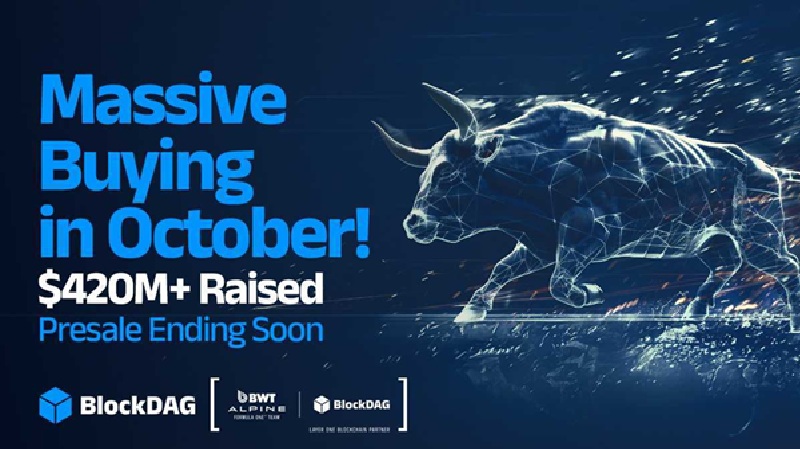
Back in 2014, Ethereum raised $18 million during its presale, a historic figure for the time, especially for a blockchain based more on vision than working products. Fast forward to 2025, and BlockDAG (BDAG) has shattered expectations by raising over $420 million, becoming the most talked-about crypto launch of the year. Among this year’s top altcoins, BlockDAG is drawing attention not just for its numbers, but for what it has already delivered before GENESIS Day even arrives.

While Ethereum introduced smart contracts to the world, BlockDAG builds on that legacy with real mining hardware, verified transparency, and a massive global user base. This isn’t just another presale. It’s a complete, functioning ecosystem set to go live in full on November 26. A moment already being compared to Ethereum’s game-changing debut.

Ethereum Set the Stage for Decentralized Innovation

Ethereum’s 2014 presale marked a new chapter in blockchain history. At a time when Bitcoin was still gaining mainstream attention as digital gold, Ethereum proposed a different use case: decentralized apps and programmable contracts through smart contracts. Even without much infrastructure, Ethereum’s early supporters saw its potential. What followed was the creation of an entirely new digital economy: DeFi, NFTs, and DAOs.

But the road wasn’t smooth. Ethereum took several years to deliver on its original promise. Scalability issues, rising gas fees, and delayed network upgrades created friction for users. Many had to wait through years of improvements before Ethereum reached its current level of maturity.

Despite these hurdles, Ethereum proved the value of open-source collaboration and community-driven development. That same spirit is now being reignited with BlockDAG, this time with a faster, more efficient rollout and real-world infrastructure already in place.

BlockDAG’s Presale Redefines Transparency, Delivery, & Speed

BlockDAG’s presale has already crossed $420 million, moving through 31 pricing batches. Each batch has brought a steady increase in coin value, with the current price now at $0.0304. Despite this climb, a limited-time offer still allows participants to acquire BDAG coins at a special discounted rate of $0.0015 with TGE code. A rare entry point this late in the presale, offering a 2940% increase in value compared to the initial batch.

In addition to the discounted price, BlockDAG offers early airdrop access on GENESIS Day using the “TGE” code. This code doesn’t affect pricing but instead determines how soon participants receive their BDAG coins once the network goes live. The system is tiered by user rank: those ranked 1 to 300 receive an instant airdrop, followed by 30 minutes for ranks 301 to 600, 60 minutes for 601 to 1000, 2 hours for 1001 to 1500, 4 hours for 1501 to 2000, 6 hours for 2001 to 5000, and 24 hours for ranks above 5000.

BlockDAG is also delivering real hardware before launch, with more than 20,000 X-Series miners shipped to users in 130+ countries. Meanwhile, the Awakening Testnet is already processing 1,400 transactions per second and supports EVM compatibility. With nearly 27 billion coins sold, 312K+ holders, and 3M+ X1 users, BlockDAG is clearly leading among top altcoins with a presale that blends product, performance, and transparency.

How BlockDAG’s Tech & Rollout Strategy Set It Apart From Ethereum

Ethereum took several years to reach full mainnet functionality, with major upgrades arriving in phases. In contrast, BlockDAG’s GENESIS Day on November 26 is a full-scale launch, including a live mainnet, working smart contracts, active miner networks, and coin listings on 20 confirmed exchanges, including MEXC, BitMart, and LBank.

On a technical level, BlockDAG is engineered differently. It combines a Directed Acyclic Graph (DAG) model with a Proof-of-Work consensus, allowing blocks to confirm simultaneously rather than one after another. This results in far better scalability, with projected speeds of 2,000 to 15,000 transactions per second, allowing BlockDAG to handle real-world use cases immediately.

To support mainstream adoption, BlockDAG also includes a Low-Code Smart Contract Builder, a drag-and-drop interface for businesses and developers. This feature removes the need for deep coding knowledge, empowering more people to build DApps and launch services on the network. A significant leap from the technical hurdles faced by Ethereum’s early adopters.

Final Thoughts

Ethereum’s 2014 presale laid the foundation for decentralized technology as we know it. In 2025, BlockDAG is taking that foundation further, delivering not only a massive presale success but also a functioning product ecosystem from day one.

With over $420 million raised, nearly 27 billion coins sold, 20K+ miners shipped, 312K+ BDAG holders, and a 3M+ strong app community, BlockDAG is more than just a presale; it’s one of the top altcoins to watch and a potential benchmark for future crypto launches.

Its approach combines real hardware, scalable tech, low-code tools, and an active global community, all supported by verified transparency and audits. If Ethereum symbolized the start of blockchain experimentation, BlockDAG represents a new phase where those ideas turn into usable, everyday tools from the beginning.


Presale: https://purchase.blockdag.network

Website: https://blockdag.network

Telegram: https://t.me/blockDAGnetworkOfficial

Discord: https://discord.gg/Q7BxghMVyu