
DD
MM
YYYY

PAGES

DD
MM
YYYY

spot_img

PAGES

Home Blog Page 3354

Unlocking Africa’s Gig Economy: Empowering Freelancers for Success

0

The gig economy in Africa has experienced significant growth in recent years. It has grown in popularity, attracting many participants. This shift is altering the way individuals work and earn income. In this blog article, we’ll discuss the gig economy in Africa and how it’s helping independent contractors succeed. We will examine the significance of freelancing and the potential it provides. So, stay tuned to discover more about how freelancers are finding success in Africa.

Understanding Africa’s Gig Economy

To understand the gig economy in Africa, one must understand how people work outside traditional job structures. It looks like a big marketplace where people do different jobs like writing or designing in return for money. This kind of work is growing quickly, especially as the internet becomes increasingly popular. Nevertheless, there are challenges like spotty internet and payment delays that can disrupt progress. Hence, to succeed in the gig economy, one must possess a thorough comprehension of its characteristics and tactics to overcome its challenges.

Opportunities for Freelancers in Africa

Across Africa, freelancers are grabbing hold of chances in the continent’s rapidly growing gig economy. More people are choosing to work for themselves financially as freelancers due to the changing nature of traditional jobs. This change goes beyond simply paying for costs; it represents a significant change in the perception and approach to work. We will explore the diverse possibilities that freelancers in Africa possess, considering the various methods they can use to thrive in an expanding digital landscape.

  • Freelancers in Africa have an extensive range of competencies consisting of writing, graphic design, programming, and social media management, allowing them various options for online work
  • The rise of the internet has enabled freelancers to get customers globally, broadening their opportunities and improving their prospects for locating jobs and being profitable
  • Freelancing is characterized by flexibility and autonomy, allowing people control over their schedules and work environments, enabling a harmonious combination of professional obligations and personal pastimes
  • Remote work picks have transformed the freelancing scene in Africa, permitting people to work from nearly everywhere, making job possibilities more available and serving the ones in rural or underserved regions
  • As organizations in Africa hastily flip to digitalization, the need for freelance offerings is regularly increasing, presenting freelancers with numerous possibilities in distinct fields and industries
  • Working as a freelancer encourages a mindset of entrepreneurship, giving one a feeling of responsibility for their career and motivating them to actively search for and take advantage of the various opportunities for improvement in Africa’s ever-converting economic environment
  • African freelancers benefit significantly from being able to access global markets. Thanks to the internet, they are able to reach out to customers across the globe, broadening their chances and connections. Dating with international people is now also made easy with various online platforms helping people build connections and relationships.

In Africa, the gig economy offers freelancers a wide range of professional prospects. People are establishing their places in an environment characterized by adaptation, autonomy, and global interconnectedness, from the hectic streets of Lagos to the serene expanses of the Serengeti. Acknowledging and seizing the opportunities that come with evolving work methods is essential for us. For those with experience as freelancers or those considering starting, remember that success is a process, not a final goal, and the gig economy in Africa offers an appealing chance for those ready to embrace the challenge.

Overcoming Challenges and Finding Success

Navigating the freelancing path in Africa can pose challenges occasionally. Navigating challenges like unreliable internet and delayed payments is necessary. Nevertheless, freelancers can conquer these obstacles with perseverance and strategic approaches. Improving skills constantly is essential for remaining competitive and attaining success in the market. Building a strong network of relationships can open up new possibilities. Freelancers can stay focused on their goals in managing finances by setting clear rates and budgeting well. By persevering and implementing successful tactics, independent workers can pave a path to success in Africa’s gig economy.

Conclusion

There are numerous opportunities for freelance workers in Africa. Due to the emergence of the gig economy, people can now take control of their futures and build satisfying careers based on their own conditions. For those currently freelancing or thinking about it, remember that achieving success is possible with the correct attitude and strategy. Welcome the adventure, take advantage of the chances, and start on the road to a more hopeful future.

Please don’t hesitate to express your thoughts and share your personal experiences in the comments section.

Tanzania’s Path from Isolationism to Re-engagement

0

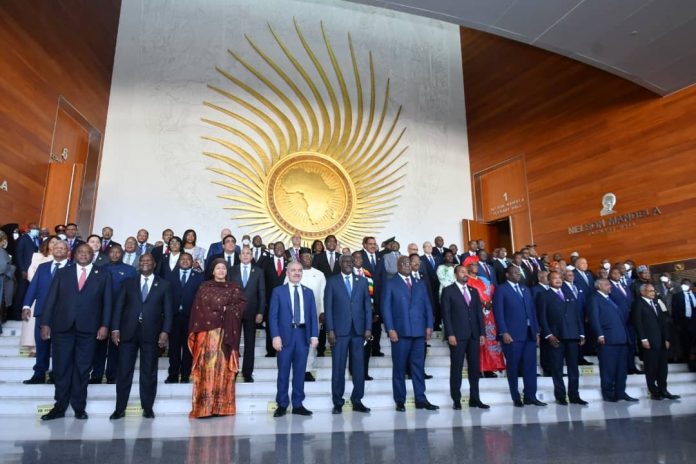
Tanzania, a country with a storied history of continental leadership and global engagement, has begun a significant transformation. Under the presidency of John Magufuli, Tanzania experienced a period of isolationism that impacted its international relations and economic prospects. This phase was marked by a focus on inward-looking policies and a reluctance to engage with international partners, which led to a decline in foreign investment and a tarnishing of its historical reputation as a regional leader.

The passing of President Magufuli in 2021 marked the end of an era and the beginning of a new chapter under the leadership of President Samia Suluhu Hassan. President Samia has embarked on a mission to revive Tanzania’s standing on the global stage. She has initiated a comprehensive review of the country’s foreign policy—the first in over two decades—with the aim of re-establishing Tanzania as a credible and reliable partner in the international community.

In the past two years, Tanzania has witnessed a significant transformation in its political and policy landscape. The shift in policy has opened doors for Tanzania to reclaim its role as a regional powerhouse. The country is poised to leverage its economic growth by completing ambitious cross-border infrastructure projects, such as railway and energy developments, which necessitate a more active engagement with neighboring countries.

Moreover, President Hassan has shown a commitment to improving Tanzania’s infrastructure and economic environment. Her praise for the African Development Bank’s contribution to Tanzania’s roads highlights the focus on enhancing the country’s physical connectivity and, by extension, its economic potential.

Moreover, Tanzania is uniquely positioned to take a leading role in addressing global challenges, including climate change, the management of critical minerals, and peacebuilding efforts.

The president’s diplomatic efforts have also been noteworthy. Tanzania’s agreement to support Somalia’s security strategy is a testament to its renewed commitment to regional stability and cooperation. Such moves signal Tanzania’s intent to reclaim its role as a regional powerhouse, contributing to peace and development beyond its borders.

Under President Hassan’s leadership, Tanzania is poised to navigate the challenges of the 21st century with a renewed sense of purpose and direction. The policy shifts have opened doors for the nation to engage more constructively with international partners and to assert its position on the African continent.

However, the journey ahead is not without its challenges. The legacy of isolationism has left its mark, and proactive measures are needed to ensure that Tanzania does not revert to its previous stance. The new foreign policy strategy emphasizes the importance of proactive engagement with regional institutions and a strong presence in global discussions. Policymakers in Tanzania, along with their international partners, are encouraged to adopt targeted recommendations to solidify the country’s re-emergence as a key player on the international stage.

The transformation of Tanzania’s foreign policy reflects a broader trend in international relations, where nations are recognizing the value of openness and cooperation. As Tanzania continues to navigate its way out of isolationism, it serves as a testament to the resilience of a nation and the enduring spirit of its people. The world watches with anticipation as Tanzania renews its commitment to regional leadership and global engagement, setting a precedent for other nations to follow.

Former Executives of Cred Charged for Wire Fraud in the US

0

The cryptocurrency industry has been shaken by a series of high-profile bankruptcies and legal battles, with the latest involving the former executives of the crypto lending platform Cred. The indictment of three key figures at Cred marks a significant development in the ongoing saga of crypto lending platforms facing legal scrutiny.

According to recent reports, Daniel Schatt, the co-founder and former CEO, Joseph Podulka, the former CFO, and James Alexander, the former chief capital officer, have been indicted by the U.S. Attorney’s Office in the Northern District of California on charges of conspiracy to commit wire fraud, wire fraud, and engaging in financial transactions for illicit purposes. This comes after Cred filed for bankruptcy in November 2020, amidst claims of “irregularities” in the handling of specific corporate funds.

The indictment alleges that the executives lured customers with promises of significant yields on cryptocurrency investments without disclosing that the returns were almost entirely dependent on a single company that made unsecured micro-loans to Chinese gamers. The U.S. Department of Justice stated that contrary to the defendants’ assurances, Cred’s lending practices were neither collateralized nor guaranteed, and their hedging strategy did not protect against market volatility.

The case of Cred is not an isolated incident but part of a larger trend of crypto lending platforms struggling to maintain solvency and fulfill their obligations to creditors. The collapse of Cred preceded the bankruptcies of other notable firms like Celsius and Voyager by approximately two years. These platforms similarly offered attractive interest rates to depositors before declaring bankruptcy, leaving investors questioning the safety of their funds.

The charges against the former Cred executives highlight the risks associated with the burgeoning field of crypto lending. Investors are attracted by the promise of high returns, but these can often come with high risks, especially when the lending practices are not as secure as they may appear. The indictment serves as a cautionary tale for both investors and operators within the crypto industry, emphasizing the need for transparency and rigorous risk management.

The indictment alleges that the executives engaged in a scheme to defraud investors by making false promises about the security and profitability of their investments. It is claimed that they did not disclose the precarious nature of the returns, which were largely dependent on a single company’s unsecured micro-loans to Chinese gamers. This lack of transparency and the alleged misrepresentation of the investment’s safety have led to serious legal repercussions.

As the legal proceedings continue, the crypto community will be watching closely to see the outcome of this case and its implications for the industry at large. The Cred indictment could potentially set a precedent for how similar cases are handled in the future and influence the regulatory landscape for crypto lending platforms.

For those interested in following the developments of this case, further details can be found through the provided references. The situation underscores the importance of due diligence and the careful evaluation of investment opportunities within the volatile and ever-evolving world of cryptocurrency.

Chipper Cash Resumes Operations in The US Months After Halting Services

0

Chipper Cash, an African Cross-border fintech company has announced the resumption of its operations in the United States three months after halting its services due to a restructuring exercise.

Following the resumption, US customers can now send funds to Chipper Cash’s African markets, which include Nigeria, Ghana, Rwanda, and Uganda.

Announcing the resumption, Chipper Cash wrote,

We are delighted to announce that Chipper Cash is fully operational and excited to serve you once again in the United States. Thank you for your patience as we worked to transition to a new US banking partner and further enhance our services. Our team has worked tirelessly to upgrade our platform, ensuring that we offer you an unparalleled transaction experience. Our newly optimized account top-up experience now provides you with your own dedicated bank account details, making it easier than ever to send money from the US to your family and friends across Africa.”

The fintech company has asked customers to head over to the Apple Store or the Play Store to ensure they have the latest version of the app to effect the changes.

Chipper Cash’s resumption of operations in the U.S. is coming months after it suspended its international money transfer services in the country after it informed users of the plans to halt operations due to a terminated bank partnership.

One week after suspending its services in America, Chipper Cash eliminated roles based in the UK and US to its other African business regions. Twenty people were laid off as a result of that decision, according to the company’s blog post. The decision also affected at least two executives, people familiar with the matter disclosed.

The fintech company, backed by Jeff Bezos’s Bezos expedition, laid off 15 people and slashed salaries by 25% for its UK and US employees in December 2023 but insisted its business was doing very well. While Chipper told US customers to withdraw their funds urgently, Serunjogi noted that the suspension had a “very small impact on very few people.”

Commenting on the downsizing of the workforce in the US, Chipper Cash co-founder Ham Serunjogi disclosed that the company’s core focus has always been its African markets, where it has some of the largest consumer products.

Chipper Cash launched in the United States in December 2022, and through Chipper’s US licensing program, the company obtained money transmitter licenses in 80% of the states, with banking partnerships supporting operations in the remaining 20%.

According to the statement, expanding its US licensing program (which began in 2021 through 2023 now includes money transmitter licenses for 40 individual states. Besides, the 40 licenses, combined with the 15 it holds across the continent, bring its global licensing portfolio to 55. It also said it aims to obtain all 53 US money transmitter licenses by 2024.

Navigating Security Breaches in the Digital Age

0

In the ever-evolving landscape of cryptocurrency, security remains a paramount concern for investors, traders, and the platforms that facilitate their transactions. The recent buzz around alleged security breaches at Bitfinex and concerns regarding Tether (USDT) have brought these issues into sharp focus, highlighting the need for vigilance and robust cybersecurity measures in the digital finance sector.

Bitfinex, a prominent cryptocurrency exchange, has found itself at the center of controversy following claims of a data breach by a group identifying as FSOCIETY. These allegations have been met with skepticism by Bitfinex’s Chief Technology Officer, Paolo Ardoino, who has publicly disputed the claims. Ardoino’s stance is supported by an internal system analysis that reportedly found no evidence of a breach, with only a small number of the email addresses released by the group matching those of actual Bitfinex users.

The situation underscores the complex challenges faced by cryptocurrency exchanges. Bitfinex is no stranger to security incidents, having experienced a significant hack in 2016. Since then, the exchange has taken considerable steps to bolster its security infrastructure, a move that is now under scrutiny amidst the current allegations.

The implications of such security concerns extend beyond the immediate stakeholders. Tether (USDT), a stablecoin pegged to the US dollar, is intricately linked to Bitfinex, with Ardoino also serving as the CEO of Tether. The stability and reliability of USDT are critical to the broader cryptocurrency market, where it serves as a key medium for transactions and value storage.

In response to the allegations, Ardoino has emphasized the importance of maintaining robust security measures and has reassured users of the integrity of Bitfinex’s systems. The exchange has not reported any direct communication from FSOCIETY regarding a data breach, and the lists of stolen emails and passwords appear to be from unrelated incidents.

This episode serves as a reminder of the inherent risks associated with digital assets and the importance of continuous improvement in security protocols. For users, it is a call to practice due diligence and to stay informed about the measures taken by exchanges to protect their investments.

As the cryptocurrency market matures, it is likely that we will witness further advancements in security technologies and regulatory frameworks. These developments will be crucial in building trust and fostering a stable environment for digital finance to thrive. For now, the crypto community watches closely as Bitfinex navigates these turbulent waters, with the hope that transparency and resilience will guide the industry toward a more secure future.