DD
MM
YYYY

PAGES

DD
MM
YYYY

spot_img

PAGES

Home Blog Page 336

Stellantis’ $13bn U.S. Investment Marks Major Shift Amid Trump Tariffs and Industry ‘De-Globalisation’

0

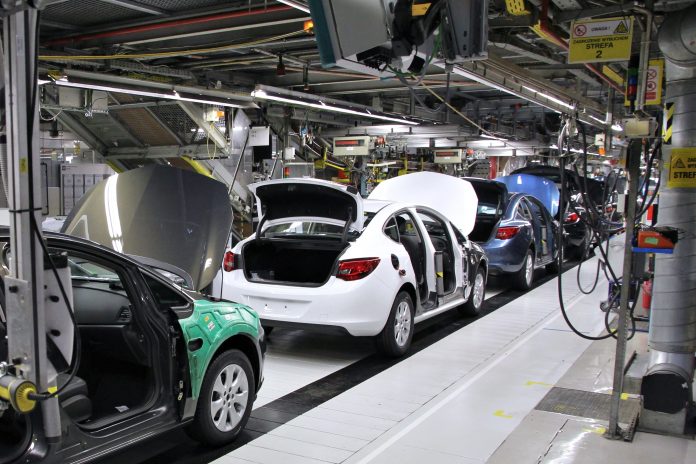
Stellantis’ new $13 billion investment plan in the United States signals a major shift in the global auto industry’s response to President Donald Trump’s sweeping tariffs — a recalibration that analysts say could permanently reshape how and where automakers build their cars.

The plan, announced late Tuesday, marks one of the most aggressive moves yet by the French-Italian-American carmaker to fortify its position in its most important market and shield itself from the escalating costs of tariffs imposed under Trump’s “America First” trade agenda. The company had estimated in July that the tariff burden alone would cost it around $1.7 billion this year — a hit that now appears to have pushed Stellantis toward decisive action.

“This move is relevant and part of a wider path started by Stellantis to be more and more aligned to the new business environment drawn by Trump with tariffs. It’s paying off,” Fabio Caldato, portfolio manager at AcomeA SGR, who recently increased his exposure to Stellantis, told Reuters.

However, the $13 billion investment underscores both the risks and opportunities facing global automakers as Washington’s trade strategy forces a reordering of supply chains. Analysts say it represents a turning point not only for Stellantis but for the broader auto industry, as companies reconsider the long-term viability of their North American production strategies.

‘Manufacture Where You Sell’ Becomes the New Rule

Stellantis, which owns brands including Jeep, Ram, Chrysler, Fiat, and Peugeot, sold about 1.2 million vehicles in the U.S. last year. More than 40 percent of those were imports — primarily from plants in Mexico and Canada — that are now subject to 25 percent tariffs under Trump’s trade framework.

The new investment plan is expected to increase local U.S. production, reducing reliance on imports and aligning Stellantis more closely with Washington’s industrial priorities.

“I see it as an irreversible trend, to manufacture more where sales happen, a sort of forced de-globalisation process,” said Massimo Baggiani, founder of London-based Niche Asset Management. “More investments and sales in the U.S. might also attract more American investors in the long term.”

Baggiani, who previously sold his Stellantis shares, said he was not reinvesting in the stock yet, noting that while Stellantis shares remain attractively priced, “they do not offer a significant discount compared to Ford or GM.”

That cautious stance reflects a broader investor mood. Stellantis shares rose as much as 4.3 percent in early trading on Wednesday following the announcement, but they remain down 33.5 percent year-to-date. Analysts attribute part of that decline to persistent uncertainty over trade policies, production costs, and consumer sentiment in the face of higher car prices.

Tariffs Push Automakers to Reinvent Supply Chains

Trump’s tariff wave — targeting goods from Mexico, Canada, and China — has already triggered a strategic rethink across industries. Automakers, long accustomed to integrated North American supply chains, are now being forced to localize production more aggressively.

For Stellantis, the decision is as much about survival as opportunity. The company has seen its U.S. market share weaken in recent years, particularly in its sedan and compact segments, while brands like Jeep and Ram face intensified competition from Ford and General Motors in the truck and SUV categories.

“The investment plan was necessary to mitigate the impact of U.S. tariffs and relaunch brands that have lost significant volume in recent years,” said Equita analyst Martino De Ambroggi, who added that the spending reshuffle “should result in limited changes to total capital expenditure.”

Some believe that Stellantis’ investment strategy could include expanding or repurposing existing plants in states such as Michigan, Ohio, and Indiana — regions where auto production and employment carry deep political significance. Such moves would not only curb tariff costs but also signal alignment with Trump’s emphasis on domestic manufacturing.

A Sign of ‘Greater Tariff Comfort’

The timing of Stellantis’ announcement has also drawn attention. After months of industry-wide uncertainty, the move is seen as a sign that the company now has a clearer understanding of Washington’s trade trajectory.

“The timing of this announcement possibly signals greater tariff comfort and clarity on the part of Stellantis management,” analysts at TD Cowen — Itay Michaeli, Justin Barrell, and Selina Liu — wrote in a note to clients.

By locking in a U.S. investment of this magnitude, Stellantis appears to be hedging against further escalation while simultaneously positioning itself as a long-term domestic manufacturer. That shift could earn it goodwill from both policymakers and consumers, particularly as other global automakers scramble to adjust to the new tariff regime.

A Broader Shift Toward Industrial Reshoring

Stellantis’ move fits into a larger wave of reshoring announcements by multinationals seeking to minimize exposure to tariff risk and geopolitical disruption. From electronics to electric vehicle batteries, companies have been relocating supply chains closer to major consumer markets — a process some economists describe as the “re-nationalization” of global manufacturing.

Trump’s policy framework, which includes incentives for companies to expand domestic operations alongside punitive tariffs on imports, has accelerated this transformation. Analysts note that while it increases near-term costs for automakers, it could also bolster domestic production and employment in the long term — a political win for the White House.

For investors, Stellantis’ U.S. investment plan represents both a reassurance and a calculated gamble. On one hand, it signals the company’s willingness to adapt quickly to policy changes; on the other, it raises questions about profit margins, capital allocation, and execution risks in a high-cost environment.

“Stellantis shares remain cheap, but like the rest of the industry, they do not offer a significant discount compared to Ford or GM,” said Baggiani.

Caldato, the AcomeA SGR portfolio manager, sees the investment as a vote of confidence in the company’s ability to navigate a new trade reality.

“It’s paying off,” he said, suggesting that Stellantis’ proactive stance could help it win market share from slower-moving rivals.

Still, analysts caution that even with new plants, supply chain volatility, inflationary pressures, and continued tariff uncertainty could weigh on margins.


They’re Cutting and Sharing the World with AI

0

They are cutting and sharing the world again, not with armies or colonial treaties this time, but with algorithms, data, and artificial intelligence (AI). The new industrialists, the ultra-rich and their machines, are redrawing the map of global production and wealth creation. When Britain and France carved Africa with compasses, they sought gold, land, and labor. Today’s empire is built on datasets, computing power, and digital platforms. The boardroom has replaced the battlefield, and the algorithm is the new weapon of conquest. As AI permeates every factory, company, and government, those who control it are quietly reshaping the foundations of capitalism.

In this new order, the pursuit is no longer about creating jobs or shared prosperity; it is about extracting maximal value from every process with minimal human involvement. Automation has made efficiency a god, and AI has made control an art. The assembly line no longer requires a thousand workers, it only needs a few engineers and a network of intelligent systems.

Across industries, machines are learning, optimizing, and replacing humans. The moral narrative of “job creation” that once justified industrial expansion has been rewritten into “productivity and shareholder value.” And the new script favors those who own the algorithms, not those who serve them.

Data reveals the trajectory clearly: productivity rises, profits expand, but wages stagnate. Wealth concentrates at the top while millions compete for relevance in an economy where cognitive machines outperform human labor. AI-driven systems are compounding inequality faster than any previous industrial revolution. Just as colonial trade routes once extracted raw materials from Africa and Asia to build European wealth, today’s AI routes extract human behaviour, attention, and intelligence to feed digital empires. And like before, the margins of the world are providing the data fuel while the center consolidates the capital.

Yet, this epoch also presents a paradox. The same AI that widens inequality can also democratize opportunity if societies choose differently. Nations that invest in human capital, reimagine education, and build local AI industries will not be mere consumers of algorithms but participants in the grand game. But make no mistake, this phase of capitalism is not about benevolence. It is about power and control.

Those cutting and sharing the world with AI are not asking for inclusion; they are defining who will own tomorrow. And for nations and people, the imperative is clear: either learn the tools of this new order or be managed by those who do. Nigeria and Africa: shine ya eyes!

Innoson Vehicle Motors – Brand Photos with Prices

339

Here are the major brands of Innoson Motors with their price guidance. The full company contacts are also provided below. Some of these prices fluctuate within a delta of N1,000,000 from the quoted mean based on delivery destination.

1. Innoson FOX: N7,665,000

2.  Innoson UMU: N8,000,000

3.  Innoson G5: N12,390,000

4.  Innoson G6: N32,915,000

5.  Innoson G80: N27,825,000

6.  Innoson G40: NN17,325,000

7.  Innoson Carrier 4×4: N13,860,000

8.  Innoson Carrier 4×2: N9,400,000

9.  Innoson 5000: N19,400,000

10.  Innoson 6601: N22,995,000

11. Innoson 6857: N27,700,00

12. Innoson 6800: N34,650,000


 Innoson Motor Price 
 Model   Price in Nigerian Naira
 Innoson FOX  N7,665,000
 Innoson UMU  N8,000,000
 Innoson G5  N12,390,000
 Innoson G6  N32,915,000
 Innoson IVM G80  N27,825,000
 Innoson G40  NN17,325,000
 Innoson Carrier 4×4  N13,860,000
 Innoson Carrier 4×2  N9,400,000
 Innoson 5000  N19,400,000
 Innoson 6601  N22,995,000
 Innoson 6857  N27,700,00
 Innoson Caris  N4,500,00
 Innoson Capa – The Indomitable  N8,000,00
 Innoson G6C Carrier Pick Up  N17,700,00
 Innoson 6800  N34,650,000


Headquarters Office Address: No.2 Innoson Industrial Estate, Akwu-Uru -Uru, Umudim, Nnewi, Anambra State.

Phone(s):+234 (0) 8105472222, (0)7089440040,(0)7033326171

Abuja+234 (0)8166126255

Lagos+234 (0)8035740097

email: innosonnnewi@gmail.com, innosonivm@yahoo.com


Prices have been Updated. And we turned an earlier post on this page to become a pricing page.

S&P Global Moves Deeper into Private Markets with $1.8bn Acquisition of Data Provider With Intelligence

0

S&P Global has agreed to acquire With Intelligence, a leading private markets data and analytics provider, as the financial information giant accelerates its expansion into one of the fastest-growing segments of global finance.

The deal, announced Wednesday, marks a strategic shift toward alternative asset data at a time when investors are increasingly turning to private markets amid volatility in public equities.

S&P Global did not disclose financial terms of the transaction, but said the acquisition is expected to close in late 2025 or early 2026, pending regulatory approvals. The company also noted that the purchase will be accretive to adjusted earnings per share by 2027, signaling confidence that private market intelligence will become a crucial growth driver in the years ahead.

Citi served as financial advisor to S&P Global, while Centerview Partners advised With Intelligence on the deal.

A Push into the Fast-Growing Private Markets Segment

Private markets — encompassing private equity, private credit, venture capital, real estate, and infrastructure investments — have been gaining traction among institutional and high-net-worth investors who seek higher yields and portfolio diversification. Yet the sector’s historical opacity and lack of standardized data have long made valuation, benchmarking, and risk assessment difficult.

That gap has created enormous demand for reliable intelligence — an opportunity S&P Global appears determined to seize. Founded in 1998, With Intelligence provides data and analytics on alternative investments to roughly 3,000 clients globally, including asset managers, hedge funds, and institutional investors.

The London-based firm is expected to generate about $130 million in revenue in 2025, with its annual contract value projected to grow in the high teens, according to S&P Global. Integrating the company’s data and analytical tools into S&P’s portfolio is expected to enhance the latter’s offerings across asset management, research, and risk assessment.

In a statement, S&P Global said the acquisition would “strengthen its data and technology ecosystem for private markets,” aligning with the company’s long-term plan to serve investors across both public and private capital markets.

A Wave of Consolidation and Investment in Private Data

The S&P Global deal comes amid a broader surge of acquisitions in the private markets data space, as financial institutions race to gain insights into a sector that remains less transparent than public markets.

In the past year alone, BlackRock, the world’s largest asset manager, has spent more than $28 billion expanding into alternative assets. That includes its $12.5 billion purchase of Global Infrastructure Partners in 2024, $3.5 billion acquisition of private markets data provider Preqin in February 2025, and a $12 billion deal for private credit firm HPS Investment Partners in July.

Some analysts have noted that these moves highlight how data, analytics, and infrastructure intelligence are becoming the backbone of investment decisions as capital flows increasingly toward private markets.

Policy Tailwinds from Washington

The deal also follows a major policy shift by the Trump administration in August, when the president signed an executive order easing access to nontraditional assets like private equity and private credit in 401(k) retirement plans. The move opened the door for millions of American workers to gain indirect exposure to private markets — a development expected to significantly expand the investor base for such assets over time.

Analysts say that policy momentum, combined with steady institutional inflows, will continue to lift demand for specialized data services that can help investors evaluate private market opportunities and risks.

S&P Global’s Expanding Strategy

For S&P Global, best known for its credit ratings, indices, and market intelligence divisions, the acquisition marks another step in diversifying its product base beyond traditional public market data. The company has spent the past several years modernizing its data infrastructure and deepening its presence in the financial analytics sector through acquisitions and partnerships.

The deal with With Intelligence complements S&P’s 2022 merger with IHS Markit, which expanded its reach into sectors like energy, technology, and transportation data. Integrating With Intelligence’s datasets could position S&P as a comprehensive data provider for both public and private markets — an edge that may help it compete with peers such as Bloomberg and MSCI, which have also been expanding their alternative asset data offerings.

Investor Appetite Amid Shifting Market Dynamics

Private markets have become an area of heightened interest as persistent high interest rates and muted exit opportunities pressure valuations across public markets. Many asset managers view alternative assets as a hedge against market volatility and inflation.

However, the lack of consistent pricing data has made these investments difficult to evaluate — a challenge that firms like With Intelligence specialize in addressing. Its datasets and analytical products provide comparables, benchmarks, and performance insights that help investors measure returns and risks more effectively.

The acquisition also reflects broader concerns about potential asset bubbles in public markets, where valuations have soared despite uncertain macroeconomic conditions. As a result, institutional investors have been seeking refuge in private credit, infrastructure, and other illiquid asset classes that promise more stable long-term returns.

Once completed, the acquisition will give S&P Global a new foothold in the private markets ecosystem, bolstering its position as one of the most diversified financial data providers in the world. By pairing With Intelligence’s analytics with S&P’s existing credit, ESG, and market intelligence platforms, the company aims to deliver a comprehensive suite of tools for the full spectrum of investors.

While the integration process is expected to unfold gradually through 2026, S&P executives say the payoff could be significant. With private markets projected to exceed $25 trillion in assets under management by 2030, the demand for data transparency and analytical precision is only expected to grow.

In that landscape, S&P Global’s bet on With Intelligence looks like more than just a data play — it is a strategic move to cement its place in the evolving future of finance, where private capital, digital analytics, and regulatory clarity increasingly converge.

CBN Governor Says Nigeria’s Trade Surplus Has Hit 6% of GDP As Economic Reforms Pay Off

0

Nigeria’s trade surplus has climbed to 6 percent of the country’s Gross Domestic Product (GDP), the highest in years, and is projected to remain stable at that level in the near term, according to Central Bank of Nigeria (CBN) Governor Olayemi Cardoso.

The improvement, Cardoso said, reflects the gains of ongoing economic reforms and tighter macroeconomic discipline aimed at restoring stability and encouraging domestic production.

Cardoso disclosed the figures during the G-24 press briefing on the sidelines of the IMF/World Bank Annual Meetings in Washington, D.C., where he represented the Minister of Finance and Coordinating Minister of the Economy, Wale Edun, who serves as First Vice Chair of the G-24 group of nations. The briefing, attended by top Nigerian officials, including Minister of State for Finance, Dr. Doris Uzoka-Anite, focused on themes such as domestic resource mobilization, inflation control, and the pursuit of sound macroeconomic policies amid a volatile global economy.

In a statement signed by Mohammed Manga, Director of Information and Public Relations at the Ministry of Finance, Cardoso emphasized that Nigeria’s economy has been relatively shielded from global uncertainties due to a mix of monetary and fiscal measures that have started to yield results.

Cardoso said the 6 percent trade surplus reflects Nigeria’s improving external position and growing competitiveness under a restructured economic framework. He noted that the CBN’s reforms — particularly its move toward a more market-reflective exchange rate — have led to a more competitive naira, spurring local production while discouraging over-reliance on imports.

He added that there is a strong correlation between disciplined economic management, sustainable growth, and disinflation — three goals the CBN is pursuing concurrently. According to him, Nigeria’s recent improvements in external trade performance are tied to those policies, which include curbing speculative activity in the foreign exchange market and supporting sectors that contribute to non-oil exports.

Cardoso also revealed that the apex bank is developing a framework for bilateral currency swaps designed to ensure mutual benefits for trading partners. This initiative, he said, aims to strengthen Nigeria’s trade ties while reducing pressure on foreign reserves.

NBS Data Confirms Surplus Growth

The CBN Governor’s statement aligns with recent data from the National Bureau of Statistics (NBS), which showed that Nigeria’s trade surplus surged by 44 percent in the second quarter of 2025.

According to the NBS, total merchandise trade for Q2 2025 stood at N38.04 trillion, representing a 20 percent increase over the N31.68 trillion recorded in the same quarter of 2024, and a 5.6 percent rise compared to the preceding quarter’s N36.02 trillion.

Exports accounted for 59.81 percent of total trade, amounting to N22.75 trillion, up 28.4 percent year-on-year and 10.4 percent from the previous quarter. Crude oil exports contributed N11.97 trillion, representing 52.6 percent of total exports, while non-crude oil exports reached N10.78 trillion or 47.4 percent of the total. Of this, non-oil products alone contributed N3.05 trillion, making up 13.4 percent of overall exports.

Imports, on the other hand, accounted for N15.29 trillion or 40.2 percent of total trade — a 9.4 percent rise from N13.97 trillion in Q2 2024, but a slight 0.9 percent drop compared to N15.43 trillion in Q1 2025.

The growing non-oil export component marks the gradual diversification of Nigeria’s export base, a trend the CBN and Ministry of Finance have repeatedly described as key to achieving sustainable growth.

A Turning Point for Nigeria’s External Balance

Economists say Nigeria’s ability to maintain a trade surplus at 6 percent of GDP represents a major improvement after years of balance-of-trade deficits driven by high import dependency, foreign exchange volatility, and declining oil revenues.

The development also comes amid early signs of easing inflation and modest stabilization in the exchange rate, trends that policymakers hope will translate into stronger real-sector performance and investment inflows.

But the CBN governor’s emphasis on maintaining policy consistency suggests the bank is wary of prematurely easing monetary discipline — especially as the country continues to grapple with imported inflation, high energy costs, and volatile global oil prices.

 Sustaining the Gains

While the CBN is optimistic about sustaining the current trade surplus, there is concern that external shocks — such as falling oil prices, supply chain disruptions, or weakening demand in key export markets — could pose risks.

However, Cardoso expressed confidence that Nigeria’s structural adjustments and focus on production-driven growth will help the economy stay resilient.

“The improved balance of trade reflects sound macroeconomic policies that are beginning to yield positive results,” he said, emphasizing that the current trajectory could strengthen if domestic productivity continues to rise.

Economists believe the challenge now lies in sustaining the momentum — consolidating non-oil export growth, maintaining a stable exchange rate, and ensuring that fiscal and monetary policies remain aligned.