DD
MM
YYYY

PAGES

DD
MM
YYYY

spot_img

PAGES

Home Blog Page 3360

Education Is Collapsing And It’s Just A Matter of Time for AI to Take Over

0

It was just Thursday morning when I posted an image of a book which I recently bought and was reading and a friend reached out to me with the desire that we go on a monthly reading spree. I was glad and accepted so I sent him an image showing list of books which I saw on twitter some time ago so we could choose one from each group to read every month. The following day he responded with a suggestion and I seconded to it.

On Saturday I kicked my bike and waited for the fumes to calm down as I rode to the market to find the book in which he suggested from local bookstores so I could prepare for the coming month. My house is not far from the market so it took me just a couple of minutes before I got there. I knew a popular bookstore which was always loaded with books and computer accessories so I headed there first so I could save time. To my surprise, the once popular bookstore became nothing but a shadow of itself. I rode my bike to a column where I knew there were series of bookstores. The lady attendants there were eager to lure me to their shops but I silently echoed in my mind, “don’t worry, it’ll get to your turn”. One after the other, I asked in each bookstore, “do you have Crucial Conversations?” That was the title of the book I was looking for. None had. In fact, some never possessed any novel, inspirational, motivational or business books. Just primary and secondary school textbooks and exercise books.

I crossed by to the other side of the road where I knew there were bookstores, on reaching there, two out of the three were closed and the shops in which they previously existed were used for selling mobile phones. The remaining one also didn’t have ‘classical books’, just exercise books and writing materials.

What is happening?, I asked myself.

Stores that I admired its array of books, the colorful row of shelves I thought one day would find solace in were now just a mirage of what we then knew as bookstores.

Is this the new order? Or are they just adjusting to market demands? Either way, countless of thoughts ran through my head on why any of the options you decide to go with, it all leads to one thing.

People are no longer interested in knowledge.

They feel education is just a waste of time. The school system is locked in an age long backward system and they are not ready to change. Most young people are no longer interested in going to school, some go to school but they say it’s just for the certificate; They just want to have it in case. Education is now a fallback plan for many in our society. Young people are now more glued to their phones and on social media now than ever before.

Technology has taken the front row in all aspects of life including the education system that people now see reading books on their devices as an alleged ‘better option’. Some do not have the funds to purchase the print version of the book so resolve to soft copies. But true book readers know and usually prefer the print version of books as it’s more conducive to read, stay more focused and disciplined to finish the book than when reading on mobile devices. The moment you open a mobile phone, notifications and several other distractions stray around and sometimes you even forget your initial intention for picking the phone in the first place.

Recently I was discussing on different occasions with some of the kids of my neighbors who just got admission into the university. One told me, “left on me, I wouldn’t have gone to university but I know it’s important”, I’m not a school type”, another said and yet another told me, “she wants to become a flight attendant”; Great, I told her, but does she feel that’s going to be the best version of herself?

It’s of no doubt that education is road to success and prosperity but the youth of nowadays are no longer interested in education. Some prefer to venture into careers like music, sports and general merchandise in which no one asks for your educational qualification.

I guess the reason behind the bookstores becoming empty. People no longer want to learn again. As a result, they no longer want to read the books in which these knowledge are hidden. The gap between readers and educated people is widening. It’s just a matter of time that the society will become bankrupt of knowledge and be so dependent on computers as AI is taking over. On Monday, OpenAI released its multimodal model, GPT-4o which took the world by storm and this is just the beginning.

As Dangote Refinery Offers Roadmap to Nigeria 2.0, Tekedia Capital Shows Interest to Invest

0

Nigeria 2.0 loading: “We have enough gasoline to give to at least the entire West Africa, diesel to give to West Africa and Central Africa. We have enough aviation fuel to give to the entire continent and also export some to Brazil and Mexico,…

“As I said, give us three or a maximum of four years and Africa will not, I repeat, not import any more fertilizer from anywhere. We will make Africa self-sufficient in both potash, phosphate, and urea, we are at three million tonnes and in the next twenty months, we will be at six million tonnes of urea which is the entire capacity of Egypt. We are getting there,” Aliko Dangote on Dangote Refinery and Petrochemicals

Nigeria should make sure Dangote Refinery has crude oil. If that happens, there is a possibility for the nation to compound the value from this refinery. Indeed, this company should not be importing crude oil. Nigeria is lucky to have Dangote because when great entrepreneurs emerge, nations rise. Aliko Dangote is serving his nation.

Alhaji, I am making it public: when you think it is necessary to select investment bankers/underwriters to take Dangote Refinery public, Tekedia Capital will take $3 million worth before the IPO day. We’re ready and would like to invest into the discount window of investment banks/underwriters. This is the decision of members of Tekedia Capital Syndicate.

We have enough fuel to give to at least the entire West Africa, Brazil and Mexico – Dangote

We have enough fuel to give to at least the entire West Africa, Brazil and Mexico – Dangote

2

Aliko Dangote, Africa’s richest man and President of Dangote Group, has assured that Nigeria will no longer need to import gasoline from next month, following the operational plans of the Dangote Refinery. The refinery, which began commissioning in February, is expected to meet not only Nigeria’s fuel needs but also those of the wider African market.

Speaking at the Africa CEO Forum in Kigali, Rwanda, Dangote highlighted the refinery’s capacity to supply West Africa’s petrol and diesel needs and the entire continent’s aviation fuel demand.

“We have enough gasoline to give to at least the entire West Africa, diesel to give to West Africa and Central Africa. We have enough aviation fuel to give to the entire continent and also export some to Brazil and Mexico,” Dangote stated.

The refinery’s output will also include polypropylene and polyethylene, essential for various industrial applications, as well as base oil and linear benzyl, key raw materials for producing detergents. Dangote said that Africa currently imports these materials, and his refinery aims to make the continent self-sufficient in their production.

The entrepreneur also outlined his vision for Africa’s self-sufficiency in fertilizers, with plans to double the production of urea to six million tonnes within twenty months. This capacity will match Egypt’s entire output, positioning Africa to stop importing fertilizers entirely.

“As I said, give us three or a maximum of four years and Africa will not, I repeat, not import any more fertilizer from anywhere. We will make Africa self-sufficient in both potash, phosphate, and urea, we are at three million tonnes and in the next twenty months, we will be at six million tonnes of urea which is the entire capacity of Egypt. We are getting there,” he said.

Economic Impact and Job Creation

The Dangote Refinery is expected to have a substantial impact on Nigeria’s and Africa’s economies by reducing reliance on imported petroleum products, creating jobs, and fostering industrial growth. Dangote highlighted the strategic importance of producing finished products locally to avoid exporting jobs and importing poverty.

“One of the things we also need to know as Africans is that we produce raw materials and export them, when you export raw materials and somebody now keeps importing things into your continent and dumping goods. What you are importing is poverty and exporting jobs out. So, we have to change that narrative,” he explained.

Amidst the progress were behind-the-scene challenges faced in building the refinery. Dangote acknowledged these challenges, particularly opposition from those accustomed to the status quo of trading without refining.

“The pushback was very impactful because there are people who have actually been used to just making money trading without refinery and you know, to get people who are committed to Africa has to be people that believe in investing in Africa because the companies that are operating today are actually not investing, and some of the issues of stopping that investment is going to impact us, not today but in the future, which means our oil production will continue to go down because in oil, unless you keep investing, the production is going to go down.

“So, that is the issue. The major burden on us was that there is no room for failure because we were the EPC contractors and ninety percent of people never believed that we were going to deliver but we have been able to deliver now,” he said.

Despite the successes, Dangote identified policy inconsistency as a significant hurdle for African entrepreneurs and called for supportive measures from leaders to ensure a conducive business environment.

Collaboration with TotalEnergies

In a related development, Patrick Pouyanne, CEO of TotalEnergies, announced a deal to supply crude oil to the Dangote Refinery. This partnership with one of Nigeria’s major crude producers, alongside Shell and ExxonMobil, is expected to address the concern of crude oil supplies to the refinery.

“The two CEOs met with our head of trading and we found the way to convince them to make a deal,” Pouyanne said.

Looking ahead, Dangote revealed that the next phase of the refinery’s expansion would begin early next year, further enhancing its capacity and impact on the African market.

While the Dangote Refinery represents a transformative project for Nigeria and Africa, aiming to make the continent self-sufficient in key industrial products and significantly reduce its dependency on imports, the major concern of consumers hinges on the cost.

With the cost of petroleum hitting the roof across West Africa, given the earning power of consumers, hope has been entertained that Dangote Refinery will bring a reprieve by cutting down the pump price of petroleum – especially in Nigeria where the government is still paying subsidies. However, challenges in the Nigerian oil sector, which currently limits oil production to barely 1.281mbd – forcing the refinery to source crude from the US, have cast a shadow on that hope.

Consumers can only wait and see whether there will be a favorable difference when the refinery begins to function at full capacity. Since its product costs are expected to reflect international prices, the cost impact on local markets remains uncertain.

As Atiku Abubakar Aligns for Peter Obi for Nigeria 2027 Presidential Contest

0

Politicians: no permanent enemy, no permanent friend, but permanent interest. So, the statement by former Vice President Atiku Abubakar, the 2023 presidential candidate for the Peoples Democratic Party (PDP), that he would offer conditional support for Peter Obi, the former presidential candidate of the Labour Party, for the Nigerian  presidency in 2027, is loaded with many variables.

The ex-VP noted that his support is contingent on the PDP’s decision to select a candidate from the South-East region, indicating a potential alliance between the two political figures.

Here is my take: what Nigeria needs is a FREE and FAIR election. Without those, the nation is lost. The legitimacy to lead, and mobilize citizens, towards a national grand vision are things no PR consultant can fix, if broken due to severely imperfect elections.

Good People, the electoral system must make people #believe that they have the capacity to choose their leaders. That is the most important national project for Nigeria right now. On what Atiku and Obi plan to do, that is part of politics. But what Nigeria needs and wants is clear: an electoral system that is evidently FAIR, FREE and CREDIBLE. If that happens, more people will be attracted to go into politics.

https://x.com/ndekekwe/status/1791856578380849526

Importance of Humanitarian Aid and General Principles that Govern its Provision in Conflict Zones

0

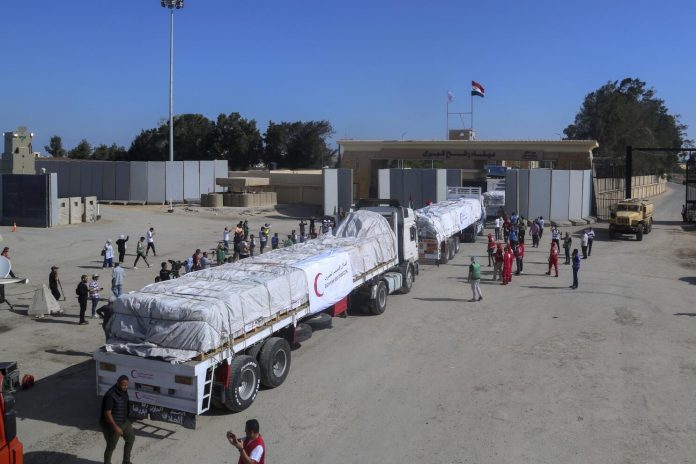
Humanitarian aid is a critical component in the response to crises and conflicts around the world. It is guided by principles of humanity, neutrality, impartiality, and independence. These principles are essential to ensure that aid reaches those in need without discrimination and without being affected by political agendas. These organizations are often the first responders in the wake of natural disasters, conflicts, and other emergencies, working tirelessly to ensure that aid reaches those in need.

Humanity dictates that human suffering must be addressed wherever it is found, with particular attention to the most vulnerable populations, such as children, the elderly, and the sick. Neutrality means that aid must not favor any side in an armed conflict or other disputes. Impartiality ensures that aid is given based solely on need, without discrimination. Independence is crucial for aid organizations to operate free from political, economic, or military objectives.

Here are some examples of prominent humanitarian aid organizations that have made significant impacts globally:

International Federation of Red Cross and Red Crescent Societies (IFRC): With a global presence in 192 national societies, the IFRC is the world’s largest humanitarian network. The organization aids approximately 160 million people annually, providing essentials like water, food, and medical supplies. It is actively involved in disaster relief, health training, and assistance in conflict zones.

The World Health Organization (WHO): As an agency of the United Nations, the WHO monitors global health and coordinates international responses. It operates across six regions with over 150 offices, preparing for health emergencies, developing health tools, responding to emergencies, and supporting supply delivery.

UNICEF: Operating in over 190 countries, UNICEF focuses on the needs of children, with programs in childhood nutrition, safe water, education, and more. It works in both humanitarian and development aid and was awarded the Nobel Peace Prize in 1965.

AmeriCares: Present in 164 countries, AmeriCares responds to emergencies with medical supplies and clinical services. It also runs health programs through more than 4,000 health centers globally and operates free clinics in Connecticut for uninsured individuals.

Save the Children: Founded in 1919, Save the Children is one of the oldest and largest humanitarian NGOs, focusing on programs for children in disaster response, nutrition, health, shelter, and education, with a presence in over 117 countries.

The provision of humanitarian aid in conflict zones is often fraught with challenges. Access to affected areas can be hindered by fighting, blockades, or bureaucratic obstacles. Aid workers themselves can become targets of violence, and aid convoys may be attacked or looted. Despite these challenges, humanitarian organizations strive to deliver aid and alleviate suffering in even the most dangerous and complex environments.

The international community has a responsibility to support these efforts and to uphold international laws that protect the delivery of humanitarian aid. When aid is obstructed, it is not just a violation of these laws; it represents a failure to uphold our collective humanity.

In times of conflict, the role of humanitarian aid becomes even more vital. It is a beacon of hope and solidarity, reminding us that even in the darkest of times, there are those who are committed to helping others, regardless of the risks or challenges involved. It is this spirit of common humanity that drives the provision of aid and underscores its importance in building a more peaceful and compassionate world.