DD
MM
YYYY

PAGES

DD
MM
YYYY

spot_img

PAGES

Home Blog Page 3365

BlockDAG’s Enhanced Dashboard Fuels Investment Insight, Outshining DOGE And SHIB Rivalry, BNB Market Movements

0

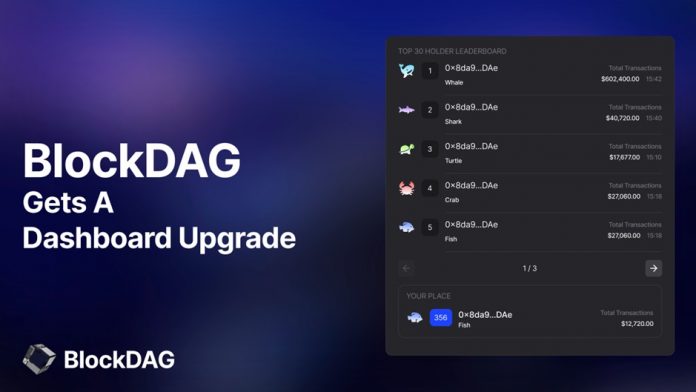
As the rivalry heats up between meme coins SHIB and DOGE, with nearly equal social dominance, and as BNB evaluates its market sustainability, BlockDAG has introduced a significant upgrade to its dashboard. This enhancement not only elevates user engagement by offering sophisticated investment management tools but also supports the visualization of whale transactions. This initiative has contributed to BlockDAG’s impressive $26.9 million in presale earnings, demonstrating its growing influence in the crypto world.

The Ongoing SHIB vs. DOGE Competition and Market Dynamics

Over the past month, Dogecoin has captured more public interest than Shiba Inu, despite their similar levels of social dominance, which paints a picture of a closely contested battle. Recently, SHIB’s price saw a 4.07% increase over 24 hours, while DOGE experienced a 1.48% rise. Market watchers speculate about the future standings in this rivalry, with some predicting SHIB might surpass DOGE, though opinions remain divided.

The market shows SHIB with a potential short-term upside, characterized by a solid base of holders compared to DOGE’s balance of traders and holders. Both cryptocurrencies are anticipated to experience price surges, with DOGE possibly reaching $0.17 and SHIB aiming for $0.000033.

BNB’s Trading Volume Surge and Sustainability Questions

Recently, the Binance BNB Chain experienced a significant increase in DEX trading volume, surpassing $700 million, suggesting a revitalized market interest. This uptick could potentially influence the price of BNB, as trading volume often correlates with asset demand. However, despite this increase, the chain’s on-chain volume has seen a downturn since May 10, prompting questions about its long-term sustainability.

The network’s Total Value Locked (TVL) remains below previous highs, indicating fluctuating network health. While the rise in TVL suggests growing trust in BNB Chain’s capabilities, analysts emphasize the need for thorough evaluation of various factors, including economic conditions and regulatory changes, before making investment decisions.

BlockDAG’s Dashboard Innovations and Mining Advancements

BlockDAG’s latest dashboard overhaul provides a more intuitive and detailed interface, enhancing the investment experience by allowing users to easily access transaction histories, notifications, and rank information. Users can now see their transaction details, manage their profiles, and track referrals and bonuses directly from the dashboard, promoting a transparent and interactive environment.

The dashboard also integrates a live transaction feature, showcasing purchases in real time and categorizing investors from small-scale ‘Crabs’ to large-scale ‘Whales’ based on their investment size. Moreover, BlockDAG has launched the X100 miner, a high-efficiency device capable of producing up to 2,000 BDAG daily, translating to substantial daily earnings. This mining technology, known for its power and low noise levels, is tailored for both novice and experienced miners.

BlockDAG Dominates with Advanced Dashboard and Robust Tools

In the competitive crypto landscape where SHIB and DOGE vie for dominance and BNB’s market dynamics evolve, BlockDAG sets itself apart with a state-of-the-art dashboard and significant presale success. Now in its twelfth batch, BlockDAG has amassed $26.9 million from sales of 9.1 billion coins. The X100 miner introduction further underscores BlockDAG’s commitment to innovation and superior investment resources, making it an attractive option for discerning crypto investors.


Join BlockDAG Presale Now:

Website: https://blockdag.network

Presale: https://purchase.blockdag.network

Telegram: https://t.me/blockDAGnetworkOfficial

Discord: https://discord.gg/Q7BxghMVyu

Morgan Stanley’s Strategic Bitcoin ETFs Investment, as FTT Token sees Skyrocketing Volume

0

In a landmark disclosure, Morgan Stanley has revealed a substantial investment in US spot bitcoin ETFs, amounting to over $270 million. This strategic move positions Morgan Stanley as a significant player in the cryptocurrency investment space, reflecting a broader acceptance and institutional confidence in digital assets.

The investment, primarily in Grayscale’s Bitcoin Trust (GBTC), makes Morgan Stanley one of the largest holders of GBTC, with a reported investment of $269.9 million. This is not just a mere financial maneuver but a testament to the growing recognition of cryptocurrency as a legitimate and valuable asset class within the traditional financial sector.

The significance of this investment extends beyond Morgan Stanley. It underscores a trend where Global Systemically Important Banks (G-SIBs) are increasingly disclosing investments in spot Bitcoin ETFs. This list includes other prominent financial institutions such as the Royal Bank of Canada, JP Morgan Chase, Wells Fargo, BNP Paribas, and UBS.

The first quarter of 2024 marked the end of the initial period during which investors could purchase most spot Bitcoin ETFs. The filings reveal a historical scale of professional investor ownership, reminiscent of the launch of gold ETFs in 2004, which was considered the most successful ETF launch at the time. According to Bitwise CIO Matt Hougan, over 700 professional firms have invested nearly $5 billion by the May 15 deadline, indicating a significant shift in the investment landscape.

Despite the influx of institutional money, retail investments continue to dominate the space, with spot Bitcoin ETFs collectively holding about $50 billion in assets under management (AUM) as of the latest reports. This balance between institutional and retail participation could be indicative of a maturing market, where cryptocurrencies are not just speculative instruments but are being embraced as part of diversified investment portfolios.

Morgan Stanley’s disclosure is a clear signal that cryptocurrencies, particularly Bitcoin, are gaining traction among traditional investment firms. It reflects a forward-thinking approach to investment, one that recognizes the potential of digital currencies to reshape the financial industry. As more institutions follow suit, we may witness a significant transformation in how investments are made, managed, and perceived in the years to come.

The broader implications of such investments by Global Systemically Important Banks (G-SIBs) suggest a maturing market where traditional and digital finance converge. With other significant financial giants also entering the bitcoin space through ETFs, the landscape of investment is witnessing a transformation.

For investors and market observers alike, these developments are worth watching. They may not only influence the performance and stability of cryptocurrency markets but also signal a new era of digital asset integration into mainstream finance.

FTT token sees skyrocketing volume following positive creditor news

The cryptocurrency market is known for its volatility and the rapid changes in the fortunes of its many tokens. In a remarkable turn of events, the FTX token, which had been considered defunct, has seen a significant surge in trading volume. This unexpected development follows the release of positive news regarding creditors, which has sparked renewed interest and speculation within the crypto community.

At the core of FTX’s initial decline was a critical report revealing questionable financial practices involving its sister company, Alameda Research. The report, published on November 2, 2022, by CoinDesk, disclosed that a significant portion of Alameda Research’s balance sheet was comprised of FTX’s native token, FTT, and other speculative digital assets created by FTX and its affiliates. This revelation raised alarms about the actual financial health and stability of the exchange.

The situation escalated when Binance, a rival cryptocurrency exchange, announced the liquidation of its position in FTT tokens. This move triggered a massive sell-off, leading to a domino effect of customer withdrawals from FTX. The exchange was unable to meet the sudden spike in withdrawal requests, exposing an $8 billion shortfall in its accounts.

The lack of liquidity was further exacerbated by allegations of mismanagement of funds by FTX’s leadership. The U.S. government brought civil and criminal charges against Sam Bankman-Fried, the CEO of FTX, accusing him of misappropriating customer deposits to cover losses incurred by Alameda Research, as well as for personal expenditures.

The culmination of these events led to the collapse of FTX, which declared bankruptcy on November 11, 2022. The aftermath of this event had far-reaching implications, not only for FTX and its customers but also for the broader cryptocurrency market, which saw a significant downturn in the value of many digital assets.

The FTX saga serves as a cautionary tale about the risks associated with the nascent and highly volatile cryptocurrency market. It underscores the importance of transparency, sound financial practices, and regulatory compliance in maintaining the integrity and trust necessary for the functioning of financial markets, especially those involving innovative and emerging technologies like cryptocurrencies.

The FTX token, also known as FTT, experienced a dramatic increase in spot volume, reaching $139 million on May 8. This level of activity was unprecedented since the token’s decline at the end of December. The surge aligns with comments from U.S. Securities and Exchange Commission (SEC) Chairman Gary Gensler, emphasizing the importance of operating within the legal framework of the cryptocurrency market. These remarks came amid discussions of potential bids to revive the FTX platform, which had previously faced significant challenges.

The crypto market is often influenced by regulatory news and the sentiment of investors. The SEC’s stance on legal compliance and the potential for a reboot of the FTX exchange have contributed to a speculative rally, with the FTT token’s price nearly doubling. This price movement reflects the market’s reaction to the possibility of FTX’s return under new management and a renewed commitment to transparency and legality.

The situation surrounding FTX, and its token is a microcosm of the broader crypto market, where news and sentiment can quickly shift the tides. Institutional traders and individual investors alike are closely monitoring the developments, as they could set precedents for the future of cryptocurrency exchanges and the tokens associated with them.

As the market continues to evolve, the FTX token’s resurgence serves as a reminder of the inherent uncertainties and opportunities within the world of cryptocurrencies. It underscores the importance of staying informed and cautious, especially in a landscape where the next twist can be just around the corner.

For those interested in the intricate details of the FTX token’s journey and the market’s response, further information can be found in the comprehensive reports provided by The Block and CoinDesk. These sources offer valuable insights into the complexities of the cryptocurrency market and the factors that drive it.

The rise in FTX’s token volume is not just a singular event but a testament to the dynamic nature of the crypto market. It highlights the potential for revival and growth, even in the face of adversity, and serves as a beacon for cautious optimism in the ever-evolving digital asset landscape.

Bitcoin Surges past $66,000 as Rise of Memecoins Opens New Era in Crypto Market

0

The world of cryptocurrency has once again proven its volatile nature with Bitcoin’s recent surge past the $66,000 mark. This significant increase has not only caught the attention of investors but also triggered a spike in short liquidations, showcasing the unpredictable yet fascinating dynamics of the crypto market.

Bitcoin’s price movement is a complex interplay of various factors, including investor sentiment, market trends, and macroeconomic indicators. The recent surge can be attributed to several macroeconomic factors, including the latest US inflation data, which has influenced the market’s direction. Additionally, the anticipation of regulatory changes and the adoption of cryptocurrencies in mainstream finance have played a crucial role in this upward trend.

The surge to $66,000 represents a remarkable 7% increase in just 24 hours, reflecting the rapid shifts that can occur within the crypto space. This volatility is not new to seasoned investors but continues to pose challenges and opportunities for those participating in the market. The spike in short liquidations is a direct result of traders betting against the currency being forced to buy back into the market to cover their positions, often at higher prices, leading to a further push in the upward trajectory.

The BlockDAG network, a fundamental technology behind several cryptocurrencies, has also been elevated to new heights with Bitcoin’s surge, highlighting the interconnectedness of the crypto ecosystem. As Bitcoin continues to make headlines, it’s essential to understand the underlying technology and the potential it holds for the future of decentralized finance.

Investors and enthusiasts are keeping a close eye on the market, with some analysts predicting the possibility of a new all-time high by the end of May. This optimism is fueled by patterns identified in Bitcoin’s price movements and the overall bullish sentiment in the market.

However, it’s crucial to remember that the cryptocurrency market is still highly speculative and subject to rapid changes. The recent price surge does not guarantee a continued upward trend, and the market’s inherent volatility remains a significant risk factor. Investors are advised to conduct thorough research and consider their risk tolerance before engaging in cryptocurrency trading.

As the crypto market continues to evolve, it remains a testament to the innovative spirit of the digital age. Bitcoin’s surge past $66,000 is just one example of the market’s dynamic nature, offering insights into the potential and challenges of this burgeoning financial frontier. For those interested in the detailed analysis of Bitcoin’s price movements and the factors driving the market, further information can be found in the comprehensive reports provided by financial news outlets.

Rise of Memecoins New Era in the Crypto Market

In the ever-evolving world of cryptocurrency, a new trend has taken the market by storm: memecoins. These digital assets, often inspired by internet memes and popular culture, have outperformed the wider crypto market, drawing significant attention from investors seeking quick returns.

The first quarter of 2024 has witnessed an unprecedented surge in memecoin value, with average returns reaching a staggering 1,312.6% across top tokens by market capitalization. This stellar performance has not only eclipsed gains from established cryptocurrencies like Bitcoin and altcoins but also highlighted the shifting dynamics within the investment landscape.

Memecoins such as Book of Meme (BOME), Brett, and Cat in a Dogs World (MEW) have made it to the top 10 largest memecoins list by market value, with BRETT recording the highest returns of 7,727.6% by the end of Q3 2024. The viral nature of these tokens, coupled with the frenzy surrounding Solana-based memecoins, has propelled them to new heights.

The total market capitalization of the memecoin sector now stands at an impressive $60.93 billion, accounting for approximately 2.32% of the total cryptocurrency market capitalization. This marks a 176.9% increase quarter-on-quarter, surpassing many mainstream sectors with significant capital and institutional involvement.

The demand for memecoins is stronger than ever, with fast money chasing after tokens like PEPE and WIF. CoinMarketCap registered a record 138 memecoins in April, indicating a robust and growing interest in this niche market. The meme coin season continues to march forward, undeterred by the stalled rally in bitcoin (BTC).

This phenomenon is not just a fleeting trend; it reflects a broader shift in investor sentiment and market dynamics. Memecoins are often criticized for lacking utility or actual use cases, yet they have become a proxy for pure speculation. Vitalik Buterin, the founder of Ethereum, suggests that people participate in memecoins because they offer potential value growth, democratic participation, and an element of fun.

The rise of memecoins also brings attention to the blockchain ecosystem, attracting more engineers and developers to the space. Arthur Hayes, a co-founder and former CEO of crypto exchange BitMEX, views the growth of memecoins as a positive value for the chain itself, driving ecosystem expansion.

As the crypto market continues to mature, memecoins represent a unique and intriguing aspect of the digital asset economy. Their performance and popularity underscore the diverse and innovative nature of cryptocurrency investments, where sentiment and virality can significantly influence market movements.

Investors and enthusiasts alike are keenly watching the memecoin sector, anticipating its next moves and potential impacts on the broader market. Whether memecoins will sustain their momentum or face a correction remains to be seen, but one thing is clear: they have carved out a niche that cannot be ignored in the cryptocurrency narrative of 2024.

Facebook And Instagram Face EU Probe Over Child Protection Concerns

0
social media apps

Social media platforms Facebook and Instagram are currently being investigated by the Europen Union (EU), over child safety concerns.

The EU via a press release on Thursday, said it was concerned that the systems of both Facebook and Instagram, including their algorithms, may stimulate behavioral addictions in children.

The EU wrote,

“Today, the commission has opened formal proceedings to assess whether Meta, the provider of Facebook and Instagram, may have breached the Digital Services Act (DSA) in areas linked to the protection of minors. The Commission is concerned that the systems of both Facebook and Instagram, including their algorithms, may stimulate behavioral addictions in children, as well as create so-called ‘rabbit-hole effects.

“In addition, the Commission is also concerned about age-assurance and verification methods put in place by Meta. Today’s opening of proceedings is based on a preliminary analysis of the risk assessment report sent by Meta in September 2023.”

In a briefing with journalists, senior Commission officials said they suspect Meta of failing to properly assess and mitigate risk affecting underage accounts.

Moving forward, the EU suspects Meta of infringing DSA Articles 28, 34, and 35. The Commission therefore announced plans to commence an in-depth investigation of the two platforms’ approach to child protection.

The EU investigation will address the following areas,

•Meta’s compliance with DA obligations on assessment and mitigation of risks caused by the design of Facebook’s and Instagram’s online interfaces, which may exploit the weaknesses and inexperience of minors and cause addictive behavior, and/or reinforce the so-called ‘rabbit hole’ effect. Such an assessment is required to counter potential risks for the exercise of the fundamental right to the physical and mental well-being of children as well as to the respect of their rights.

• Meta’s compliance with DSA requirements in relation to the mitigation measures to prevent access by minors to inappropriate content, notably age-verification tools used by Meta, which may not be reasonable, proportionate, and effective.

• Meta’s compliance with DA obligations to put in place appropriate and proportionate measures to ensure a high level of privacy, safety, and security for minors, particularly with regard to default privacy settings for minors as part of the design and functioning of their recommender systems.

In response to the EU investigation, a Meta spokesperson said,

“We want young people to have safe, age-appropriate experiences online and have spent a decade developing more than 50 tools and policies designed to protect them. This is a challenge the whole industry is facing, and we look forward to sharing details of our work with the European Commission.”

Meta further added that its method of verifying the age of users on Facebook and Instagram involves a blend of self-declared age and AI assessments to identify minors misrepresenting their age. Furthermore, the social media giant added that users are presented with the option to report suspected underage accounts.

Nigeria’s Q1 2024 FX Remittances Decline by 6.8% Amid Policy Changes and Market Volatility

0

Nigeria recorded a total of $282.61 million in direct foreign exchange (FX) remittances during the first quarter (Q1) of 2024, marking a decrease of $18.96 million or 6.28% compared to the $301.57 million recorded in Q1 2023. 

This data, sourced from the Central Bank of Nigeria (CBN), marks the growing trend of fluctuating remittance inflows influenced by various economic and policy changes.

Direct foreign exchange remittances refer to money transfers from individuals abroad to family members or other recipients within Nigeria. These transactions, facilitated through international money transfer operators (IMTOs), are critical for supporting many Nigerian households and the broader economy.

Breakdown of Remittance Payments

A closer year-on-year comparison of the monthly remittance figures reveals significant volatility:

– January 2023: Remittances totaled approximately $79.19 million.

– January 2024: Remittances surged to nearly $138.56 million, representing a 75% year-over-year increase.

– February 2023: Remittances amounted to about $83.76 million.

– February 2024: Remittances sharply declined to $39.15 million, indicating a 53% decrease year-over-year.

– March 2023: Remittances peaked at $138.63 million.

– March 2024: Remittances dropped to $104.91 million, a 24% decrease compared to the previous year.

Certainly! Here is the table in a plain text format that you can copy:

Tekedia Remittance Data Overview

Month Remittances 2023 (in millions USD) Remittances 2024 (in millions USD) Year-over-Year Change (%)
January 79.19 138.56 75
February 83.76 39.15 -53
March 138.63 104.91 -24

These fluctuations may be attributed to various economic factors, policy changes, or other external variables impacting remittance flows during these months.

Policy Shifts and Strategic Initiatives

In an effort to boost foreign-currency remittance flows through formal channels, the CBN granted Approval-in-Principle (AIP) to 14 new IMTOs. Mrs. Hakama Sidi Ali, the Bank’s Acting Director of Corporate Communications, emphasized the CBN’s commitment to removing bottlenecks that hinder formal remittance flows.

“We are wasting no time driving progress to remove any bottlenecks hindering flows through formal channels permanently. We have a determined pathway and a sequenced approach to tackling all challenges ahead, working hand in hand with key stakeholders in the remittance industry,” Ali stated.

Increasing formal remittance flows is seen as a strategy to mitigate the historical volatility in Nigeria’s exchange rate, often caused by fluctuations in foreign investment and oil export proceeds. The CBN’s recent policy changes are part of this broader strategy.

In January 2024, the CBN issued a circular removing the cap on exchange rates quoted by IMTOs. Previously, IMTOs had to quote rates within a -2.5% to +2.5% range around the previous day’s closing rate of the Nigerian Foreign Exchange Market. By the end of January, the CBN released revised guidelines for IMTO operations, significantly increasing the application fee for an IMTO license from N500,000 in 2014 to N10 million in 2024, an increase of about 1,900% over ten years. Additionally, the minimum operating capital requirement for IMTOs was set at $1 million for both foreign and local entities.

Collaborative Efforts to Boost Remittance Inflows

To further enhance remittance inflows, the CBN established a Collaborative Task Force with IMTOs. This task force, reporting directly to CBN Governor Yemi Cardoso, aims to double remittance inflows into Nigeria. During a CBN roundtable at the World Bank/International Monetary Fund (IMF) Spring Meetings in Washington DC, experts discussed measures to improve foreign exchange remittance flows, including reducing transaction costs for the diaspora and advocating for Nigeria’s removal from the Financial Action Task Force (FATF) grey list to lower high transaction costs for remittances.

In January 2024, the CBN issued a directive requiring International Money Transfer Operators (IMTOs) to quote exchange rates for naira payouts to beneficiaries based on prevailing market rates at the nation’s official foreign exchange market. Also, beneficiaries are to be paid in naira. This policy shift, aimed at mopping up FX inflow, is believed to have contributed to the decline of diaspora remittances during the first quarter of 2024.

The decline in Q1 2024 remittances, juxtaposed with the significant increase in January, suggests a complex interplay of factors affecting remittance flows. While the CBN’s initiatives to streamline remittance processes and reduce costs are steps in the right direction, their full impact will likely unfold over the coming quarters.

Against the backdrop of Nigeria’s growing economic challenges, underpinned by FX illiquidity, economists reiterate that the role of remittances remains crucial. They not only support households but also contribute to the country’s foreign exchange reserves, helping to stabilize the economy. Economists and financial experts advocate for continued efforts to enhance formal remittance channels and address underlying economic factors that will be essential for sustaining and increasing remittance inflows in the future.