DD
MM
YYYY

PAGES

DD
MM
YYYY

spot_img

PAGES

Home Blog Page 3373

4 Top Cryptos to Buy in Bull Run 2024: BlockDAG Takes Center Stage with Mobile Mining App Among Ondo, OP, and Aptos

0

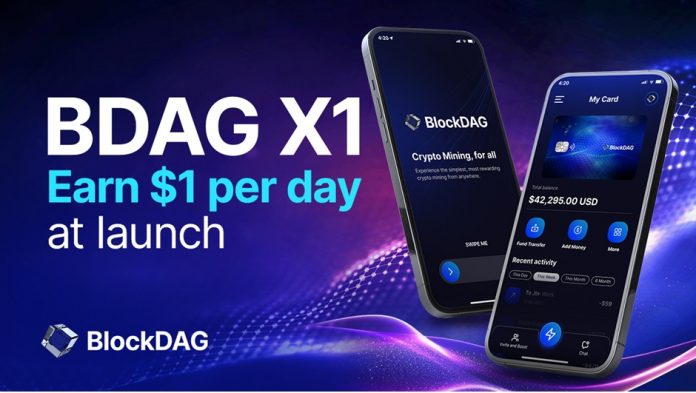
As the cryptocurrency market enjoys a bull run in 2024, investors are on the lookout for groundbreaking investment opportunities. Among the frontrunners are Ondo, Optimism, and Aptos, but BlockDAG stands out with its user-friendly mobile mining technology. The impending launch of the BlockDAG X1 Mobile Mining app on June 1 further cements its position as the top pick for those looking to capitalize on innovative crypto opportunities this May.

  1. BlockDAG: Transforming Crypto Mining

BlockDAG has redefined mining with its X1 mobile mining application that enables daily mining of up to 20 BDAG coins directly from smartphones. This feature offers unprecedented access to mining, appealing to both beginners and experienced miners. Alongside its mobile offerings, BlockDAG also provides advanced home mining equipment, including the X10, X30, and X100 models, which cater to various user needs with scalable efficiency and power.

The introduction of these mining solutions has significantly democratized the mining process, focusing on energy efficiency and ease of use. This approach has not only positioned BlockDAG as a leader for May 2024’s top cryptocurrency picks but also showcased its dedication to making cryptocurrency mining both accessible and profitable.
  1. Ondo: Notable Growth Over Six Months

Ondo has seen a remarkable 2846.67% rise in just six months, with a recent weekly increase of 7.44%. While currently trading between $0.64 and $1.03, Ondo shows potential to reach higher marks at $1.24 and possibly $1.63. However, investors are advised to remain cautious due to possible shifts in market sentiment that could impact its bullish trend.

  1. Aptos: Navigating Price Volatility

Aptos has exhibited a 7% growth over the past week, despite a 40% decline over the previous month. With prices fluctuating between $8.97 and $10.65, and potential to climb to $11.31 or $12.99, Aptos presents a challenging yet potentially rewarding opportunity for investors who can handle its volatility.

  1. Optimism: Resilience Amidst Market Fluctuations

Optimism has shown dynamic price movements, gaining 14% in one week, though it faced a 31% drop over the past month. The current price range from $2.14 to $2.64 suggests optimism for recovery, with possible resistance at $2.83 and an upside target of $3.33. However, the mixed market signals call for a cautious investment approach.
BlockDAG: The Premier Choice in May 2024’s Crypto Market

BlockDAG not only leads with cutting-edge mobile mining technology but also offers a comprehensive suite of products that cater to a broad spectrum of investors. Its innovative approach has revolutionized the digital currency landscape, providing tools that ensure profitability and ease of use.

As the cryptocurrency market evolves, BlockDAG continues to offer superior solutions, making it the top recommendation among May 2024’s expert cryptocurrency picks. This leadership is underscored by its successful presale and the exciting features of the upcoming X1 Mobile Mining app launch, promising significant returns and enhancing its attractiveness to potential investors.


Join BlockDAG Presale Now:

Website: https://blockdag.network

Presale: https://purchase.blockdag.network

Telegram: https://t.me/blockDAGnetworkOfficial

Discord: https://discord.gg/Q7BxghMVyu
BlockDAG’s Stellar $22.4M Presale And Versatile Payment Options Outshine Dogecoin And Cardano Market Movements

0

Among the rapidly evolving digital economy, cryptocurrencies like Cardano, Dogecoin, and the emerging leader BlockDAG are vying for investor attention. BlockDAG sets itself apart with a robust $22.4 million in presale funding and innovative payment options that allow purchases with a variety of cryptocurrencies, setting the stage for a potential 30,000x return on investment.

Cardano’s Market Dynamics and Volatility

Cardano has recently experienced significant market pressure, with its price dropping over 11% in the past week. Despite this downturn, transaction volumes for ADA tokens over $100,000 have reached new highs, indicating continued interest from large-scale investors. However, with a 43% decrease in market capitalization since mid-March and prices falling below key support levels, Cardano’s market trajectory faces uncertainty, pointing to potential further declines.

Dogecoin’s Continued Bearish Trend

Dogecoin’s market position remains bearish despite speculative interest in its potential integration into payment options on major social platforms. The cryptocurrency’s price is trapped within a descending triangle pattern, suggesting a continuation of selling pressures with a projected 43% decline to $0.08. Technical indicators such as the ‘death cross’ and a lack of bullish momentum on the RSI further underscore the challenges Dogecoin faces in reversing its current trends.

BlockDAG’s Impressive Presale and Payment Flexibility

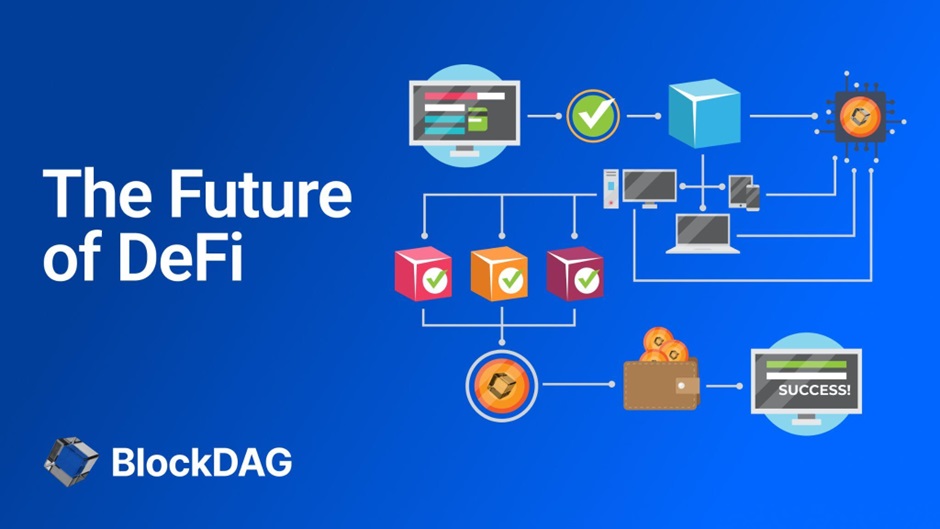
BlockDAG has revolutionized the accessibility of cryptocurrency investments with its expanded payment options, supporting a wide range of cryptocurrencies including Bitcoin, USDT (Tron), Doge, SHIB, Solana, XRP, MATIC, Kaspa, Fantom, and Cardano. This strategic move enhances the flexibility for investors, allowing them to leverage various crypto assets to engage with BlockDAG’s offerings.

Furthermore, BlockDAG’s underlying technology utilizing the PHANTOM protocol and GHOSTDAG algorithm ensures a secure and efficient consensus within its Directed Acyclic Graph (DAG) structure. This innovative approach supports a high transaction capacity of 10,000-15,000 TPS, underpinning the platform’s rapid growth and substantial presale success.

As BlockDAG continues to advance in the crypto market, its growth from $0.001 per coin in its first batch to $0.006 in its tenth batch reflects a significant 500% increase in value, translating a $100 initial investment into $600. With its robust technology, diverse payment gateways, and strong presale momentum, BlockDAG is poised to dominate the cryptocurrency investment landscape, offering substantial returns and setting a new standard for ROI potential in the industry.

Final Thoughts: BlockDAG’s Market Leadership

While Cardano navigates its price volatility and Dogecoin struggles with market sentiment, BlockDAG emerges as a formidable entity in the crypto space with unique payment solutions and significant presale achievements. Investors are encouraged to stay informed on BlockDAG’s developments as it paves the way for a new era of cryptocurrency payments, offering lucrative opportunities for substantial returns in a dynamic and diverse market.


Join BlockDAG Presale Now:

Website: https://blockdag.network

Presale: https://purchase.blockdag.network

Telegram: https://t.me/blockDAGnetworkOfficial

Discord: https://discord.gg/Q7BxghMVyu

Implications of Nigerian Government Stance on P2P Trading

0

The landscape of financial trading is witnessing a significant shift with the advent of peer-to-peer (P2P) trading, especially in the realm of cryptocurrencies. Nigeria, Africa’s largest economy, has been at the forefront of this shift, with a substantial number of its population engaging in P2P crypto transactions. However, recent developments indicate a tightening of regulations around this form of trading, which could have far-reaching implications for the Nigerian market and its users.

Peer-to-peer (P2P) trading is a method of buying and selling cryptocurrencies directly between users, without the involvement of centralized intermediaries like brokers, exchanges, or market makers. In P2P trading, both buyers and sellers interact without the involvement of a third party. P2P trading is a type of cryptocurrency exchange method that allows traders to trade directly with one another.

The Nigerian government’s approach towards cryptocurrency has been one of caution and scrutiny. In a recent move, the Nigerian Security Agency (NSA) classified crypto trading as a national security issue, leading to the imminent ban on P2P crypto trading. This decision marks a significant regulatory shift, especially after the initial softening of stance by the Bola Tinubu administration, which had lifted a two-year ban on cryptocurrency transactions in December 2023.

The rationale behind this stringent measure stems from the Central Bank of Nigeria’s (CBN) concerns over potential manipulation of the naira through P2P trading. The CBN believes that crypto traders might be using P2P platforms to engage in pump-and-dump strategies, which could destabilize the local currency. In February 2024, the Central Bank Governor, Olayemi Cardoso, highlighted the processing of $26 billion in untraceable transactions by Binance, leading to a crackdown on the global exchange and the freezing of over 1,000 bank accounts involved in P2P transactions.

The implications of such a ban are multifaceted. For one, it could stifle the burgeoning crypto market in Nigeria, which has seen a surge in digital asset trading despite previous bans. P2P platforms have become a lifeline for many Nigerians, providing an alternative to traditional financial systems and enabling easier access to global markets. A ban could, therefore, limit these opportunities and potentially drive the market underground, making it harder to regulate and more susceptible to fraud.

Moreover, the ban could impact fintech startups and financial institutions that have facilitated P2P transactions. Companies like Moniepoint, Paga, and Palmpay may have to block accounts dealing in cryptocurrency and report such transactions to law enforcement. This could lead to a loss of business and innovation in the fintech sector, which has been a significant contributor to Nigeria’s economic growth.

The international community is also watching closely, as Nigeria’s decisions could set a precedent for other nations grappling with the integration of cryptocurrencies into their financial systems. The ban could discourage foreign investments and partnerships in the Nigerian crypto space, affecting the country’s position as a leading player in the African crypto market.

Nigeria’s potential ban on P2P crypto trading is a complex issue with economic, social, and political ramifications. While the government aims to protect the integrity of its financial system, the move could have unintended consequences that may hinder the progress of the digital economy. It remains to be seen how the Nigerian market will adapt to these changes and what strategies will emerge to navigate the evolving landscape of P2P trading.

Marathon Digital Holdings’ Consulting for Potential BTC Mining in Kenya

0

The landscape of Bitcoin mining is ever-evolving, with companies continually seeking new frontiers that offer the optimal mix of resources to power this energy-intensive process. One such company at the forefront of this industry is Marathon Digital Holdings, a North American giant known for its large-scale and technologically advanced Bitcoin mining operations.

Recently, there has been a buzz around Marathon Digital Holdings’ potential expansion into Kenya, a country with a burgeoning interest in blockchain technology and cryptocurrency. The consultation between Marathon and Kenyan authorities signifies a pivotal moment for the country’s digital economy, potentially paving the way for a cryptocurrency revolution in East Africa.

Kenya’s appeal as a potential site for Bitcoin mining operations lies in its abundant renewable energy resources, particularly geothermal and hydroelectric power. This aligns with Marathon’s commitment to sustainable mining practices, as evidenced by their operational strategy and ESG (Environmental, Social, and Governance) initiatives.

The Kenyan government’s openness to exploring cryptocurrency as part of its economic strategy is a progressive move, with President William Ruto inviting Marathon for consultations with the National Treasury and Energy Ministry. This collaboration could lead to a regulatory framework that supports cryptocurrency while ensuring economic stability and security.

Moreover, the impact of Bitcoin mining on the Kenyan economy could extend beyond mere financial gains. There are reports of Bitcoin mining projects in rural Kenya that not only power mining operations but also bring electricity to local homes, thus contributing to community development. This model of using cryptocurrency mining to support local infrastructure could set a precedent for other regions in Africa.

However, the introduction of large-scale Bitcoin mining operations by companies like Marathon also raises questions about regulation, sustainability, and economic equity. The Kenyan government’s openness to these discussions indicates a willingness to address these concerns head-on, potentially creating a regulatory environment that benefits all stakeholders involved.

The path to establishing Bitcoin mining operations in Kenya is not without challenges. The recent exposure of a fraudulent scheme misusing Marathon’s name to target Kenyan investors highlights the need for stringent measures to protect consumers and maintain the integrity of the cryptocurrency market.

Marathon’s potential venture into Kenya represents more than just an expansion of their mining operations; it’s a testament to the global nature of cryptocurrency and its ability to transcend borders. If successful, this move could serve as a model for other African nations looking to harness the power of blockchain technology for economic growth.

As the world watches, the outcome of Marathon’s consultations in Kenya could mark a significant milestone in the global Bitcoin mining industry and the broader adoption of cryptocurrency in Africa. The synergy between Kenya’s renewable energy capabilities and Marathon’s mining expertise might just be the catalyst needed for a new era of digital economic development in the region.

Quandary of Immobilized Assets and Ukraine’s Reconstruction

0

The ongoing conflict in Ukraine between Russian Forces has led to widespread destruction, necessitating a colossal effort for survival and reconstruction. A significant point of discussion in this context is the $300 billions of immobilized assets, which, as it stands, can only partially address the financial requirements of Ukraine’s exigent needs.

The immobilized assets in question refer to Russian state assets that have been frozen by Western nations in response to the conflict. The moral and practical considerations of utilizing these assets for Ukraine’s benefit are complex and multifaceted.

On one hand, there is a strong argument for the confiscation of these assets to aid Ukraine, given the extensive damage inflicted upon the nation. On the other hand, legal and diplomatic implications make the process of repurposing these assets a subject of intense debate.

The costs of Ukrainian reconstruction are difficult to estimate, with figures ranging from $500 billion to $1 trillion. The $300 billion, if repurposed, could potentially cover five years of Ukraine’s war effort or three-fifths of the conservatively estimated reconstruction costs. However, this would still leave a substantial financial gap that needs to be addressed through other means.

The Group of Seven (G7) nations have been moving closer to an agreement on seizing these assets to aid Ukraine. This action could provide a significant boost to Ukraine’s defense and eventual reconstruction, and possibly serve as a deterrent to further aggression. The U.S. Congress has also passed a bill that could unlock billions in frozen Russian assets for Ukraine’s reconstruction, highlighting the international community’s efforts to find tangible ways to support Ukraine.

The debate over the immobilized assets is not just about the financial aspects but also about the principles of justice and accountability. There is a growing consensus that those responsible for the conflict should bear the costs of the damage caused. The G7’s stance that the assets will not be returned until Russia pays for the damage is a reflection of this principle.

While the $300 billions of immobilized assets represents a significant sum, it is clear that it can only partly address the cost of Ukraine’s survival and reconstruction. The international community continues to explore various avenues to support Ukraine, with the moral imperative of aiding a nation in distress guiding these efforts. The resolution of this issue will require careful navigation of legal, ethical, and diplomatic challenges, with the ultimate goal of facilitating Ukraine’s recovery and ensuring accountability for the conflict.