DD
MM
YYYY

PAGES

DD
MM
YYYY

spot_img

PAGES

Home Blog Page 3374

Sovereign Wealth Funds and Pensions Eye Bitcoin ETFs

0

In the dynamic world of finance, investment strategies are continually evolving, with institutions constantly seeking diversified portfolios to hedge against market volatility and inflation. A significant development in this arena is the growing interest of sovereign wealth funds and pension plans in Bitcoin Exchange-Traded Funds (ETFs). BlackRock, the world’s largest asset manager, has been at the forefront of this shift, playing a pivotal role in educating these institutional investors about the potential of Bitcoin ETFs.

The Bitcoin ETF market has seen a remarkable surge in 2024, with the price of Bitcoin stabilizing around $60,000, marking a 50% increase since January. This stability is attributed to the introduction of new U.S. spot Bitcoin ETFs, which have garnered attention from heavyweight financial entities, signaling a new wave of investment from large financial institutions.

BlackRock’s head of digital assets, Robert Mitchnick, highlighted the firm’s educational efforts with various institutions, including pensions, endowments, and sovereign wealth funds, about the new spot Bitcoin ETF products. The firm’s initiative is not just about promoting investment but also about re-initiating discussions around Bitcoin and its role in portfolio construction.

The interest in Bitcoin ETFs is not a sudden phenomenon. BlackRock has been engaging in conversations with these institutions for several years, and the pent-up demand for the much-anticipated ETFs has led to more than $76 billion being accumulated across these products since their approval in January. Registered Investment Advisors (RIAs) have already begun offering BlackRock’s IBIT ETF on an unsolicited basis, and the next step could see the unrestricted offering of Bitcoin ETFs to clients of large wealth advisory firms like Morgan Stanley.

Despite a recent cooldown and outflows from Bitcoin ETFs amidst market volatility, BlackRock remains bullish on institutional demand in the long term. The firm expects that the current lull will be followed by a new wave of buying from deep-pocketed institutional players. This optimism is grounded in the belief that as more institutions like BlackRock build multi-billion-dollar Bitcoin reserves, it validates Bitcoin as an investable asset class.

The growing institutional interest in Bitcoin ETFs is a testament to the recognition of cryptocurrencies as legitimate investment assets within the institutional space. This shift could potentially lead to a broader acceptance and integration of cryptocurrencies in mainstream finance, altering the investment landscape significantly.

As the world’s largest asset manager observes, the dive of sovereign wealth funds and pensions into Bitcoin ETFs could intensify competition in the market, further establishing the credibility and viability of cryptocurrencies as a component of diversified investment portfolios. With over $76 billion invested in Bitcoin ETFs, the competition between BlackRock’s IBIT ETF and Grayscale’s GBTC is a clear indicator of the market’s growth and the increasing institutional confidence in cryptocurrency investments.

The move by sovereign wealth funds and pension plans to consider Bitcoin ETFs reflects a strategic approach to investment, one that is informed, pragmatic, and indicative of the continued growth of the Bitcoin ETF market. As the financial landscape evolves, the integration of digital assets into traditional investment portfolios could become the norm, reshaping the way institutions and individuals alike approach investment in the digital age.

The Status of German Embassy in North Korea and Russia’s Recent Activities in Europe

0
North Korean leader Kim Jong Un and his daughter Kim Ju Ae visit the Ministry of National Defense on the occasion of the 76th anniversary of the founding of the Korean People's Army in Pyongyang, North Korea in this picture released on February 9, 2024 by the Korean Central News Agency. KCNA via REUTERS

The question of reopening the German embassy in North Korea remains a topic of interest and speculation. Recent developments have indicated that German officials are taking cautious steps towards assessing the feasibility of resuming operations in Pyongyang. In February, a German diplomat responsible for East Asia affairs made a visit to North Korea, marking a significant step since the closure of the embassy due to the COVID-19 pandemic.

A delegation from Germany has been reported to inspect the embassy building in Pyongyang, which suggests that preparations are underway for a potential reopening. However, the German Federal Foreign Office has made it clear that this inspection does not guarantee the reopening of the embassy. The decision to reopen lies with the political authorities in Berlin, who will consider various factors before making a final determination.

The bilateral relations between Germany and North Korea have a complex history that reflects the broader geopolitical shifts of the 20th century. The foundation of these relations can be traced back to the Cold War era when two separate German states existed: the Federal Republic of Germany (FRG or West Germany) and the German Democratic Republic (GDR or East Germany).

East Germany established diplomatic relations with North Korea shortly after the latter’s foundation in 1948. This relationship was grounded in their shared communist ideology and opposition to Western capitalism. East Germany was among the first countries to recognize North Korea and became a significant ally, providing economic and technical assistance.

The relationship between East Germany and North Korea was not only political but also personal at the leadership level. Erich Honecker, the East German First Secretary, and Kim Il Sung, the North Korean leader, enjoyed a close relationship, with state visits exchanged in the 1970s and 1980s.

These visits were symbolic of the strong ties between the two nations, which included cooperation in areas such as trade, education, and infrastructure development. For instance, East Germany played a crucial role in reconstructing North Korean cities damaged during the Korean War.

The closure of the German embassy, along with those of other European countries, was a response to the stringent pandemic measures imposed by North Korea, which included near-total travel bans and large-scale border walls. With the easing of these restrictions, there is a growing anticipation among European nations to re-establish their diplomatic presence in the country.

The situation is dynamic, and the decision to reopen the embassy will depend on a complex interplay of diplomatic, logistical, and safety considerations. The international community is closely watching these developments, as they could signal a shift in North Korea’s approach to foreign diplomacy and engagement.

For now, the status of the German embassy in North Korea remains uncertain, but the ongoing discussions and inspections are a sign that changes could be on the horizon. It is a matter of when, rather than if, the embassy will reopen, reflecting the cautious optimism that characterizes the current diplomatic climate between Germany and North Korea.

Understanding Russia’s Recent Activities in Europe

Recent events have highlighted a pattern of disruptive activities attributed to Russia within European territories, raising concerns over the potential for future aggression. The incidents range from alleged espionage and sabotage to electronic warfare, affecting various sectors from aviation to energy.

One notable case involves Britons allegedly working for Russian intelligence, accused of plotting arson against Ukrainian interests in the UK. This incident is not isolated; it reflects a broader campaign of subversion that spans across Europe. Germany’s arrest of individuals planning attacks on US military bases and Lithuania’s struggles with organized crime linked to Moscow are further examples of this disturbing trend.

Electronic warfare tactics have also been employed, with experts pointing to Russia as the source of GPS signal jamming affecting civilian aircraft across Europe. Such disruptions pose risks not only to safety but also to the trust in the region’s security and stability.

The implications of these actions are profound. They suggest a strategy of undermining European cohesion and security, testing the resolve of NATO and the EU. The use of proxies and cyber tactics indicates a preference for hybrid warfare, which complicates the attribution of direct responsibility and muddies the waters of international law.

The pattern of behavior aligns with predictions of Russian strategies in the event of heightened tensions with NATO. The targeting of logistics points, recruitment of local proxies for sabotage, and electronic interference are all tactics that have been anticipated by security analysts.

One of the immediate consequences is the strain on European unity and security. The pattern of Russian disruptions suggests a strategic effort to weaken the cohesion of European nations and institutions such as the EU and NATO. This could lead to a more fragmented Europe, with individual countries potentially adopting divergent foreign policies that could undermine collective responses to aggression.

The disruptions also have the potential to alter defense strategies and military alliances. Increased defense spending and a shift towards more aggressive military postures could become the norm as European nations seek to bolster their defenses against hybrid warfare tactics. This militarization could lead to an arms race, further escalating tensions and instability in the region.

On a global scale, these disruptions could lead to a realignment of international relations. Countries may seek new alliances and partnerships to counterbalance Russian influence. This could result in a shift away from a unipolar world dominated by the United States to a more multipolar world order, with several regional powers vying for influence.

Furthermore, the use of cyber tactics and the recruitment of local proxies for sabotage indicate a new era of warfare that is less about direct confrontation and more about indirect, covert operations. This could lead to a paradigm shift in international law and the rules of engagement, with nations having to adapt to the realities of hybrid and cyber warfare.

As Europe faces these challenges, the response must be multifaceted. Strengthening counterintelligence efforts, enhancing cybersecurity measures, and fostering international cooperation are crucial steps. Additionally, there is a need for increased vigilance and resilience against such covert operations.

Understanding the patterns of disruption is essential for anticipating and mitigating future threats. The international community must remain alert to the signs of hybrid warfare and ready to respond to protect the democratic values and security of Europe.

MoonPay team up with PayPal to enable fiat to crypto transactions for US customers

0

In a significant move for the cryptocurrency market, MoonPay has partnered with PayPal to facilitate fiat-to-crypto transactions for U.S. customers. This collaboration marks a milestone in the integration of traditional financial services with the burgeoning digital currency space.

MoonPay, a prominent player in the crypto payment gateway industry, has been at the forefront of simplifying the process of buying and selling cryptocurrencies. By joining forces with PayPal, a global leader in online payment systems, MoonPay is set to enhance its services by offering a seamless transaction experience to its users.

The partnership allows U.S. customers to use their PayPal accounts to purchase cryptocurrencies through MoonPay’s platform. This integration is expected to lower the barriers to entry for new users who are accustomed to PayPal’s interface and trust its security measures. With PayPal’s extensive user base and MoonPay’s crypto expertise, this partnership could significantly expand the accessibility of cryptocurrencies to a broader audience.

Key benefits of the MoonPay-PayPal partnership

Convenience: Users can now purchase cryptocurrencies using their existing PayPal accounts, eliminating the need to enter additional payment information or set up new accounts. The integration supports various funding options through PayPal, including PayPal Balance, direct bank withdrawal, and debit card transactions.

Security: PayPal’s robust security protocols provide users with peace of mind, knowing their financial information is protected during transactions. MoonPay offers access to over 110 different cryptocurrencies, giving users a wide range of options for their digital asset investments. With PayPal’s vast global reach and MoonPay’s commitment to expanding access to digital currencies, it’s likely that other countries will soon be able to take advantage of this service.

MoonPay has indicated that the integration with PayPal will be available through MoonPay’s partner networks by mid-2024. This suggests a planned expansion that could include various international markets where PayPal operates. Given PayPal’s presence in over 200 markets and its 426 million active accounts worldwide, the scope for international expansion is significant.

The exact details of which countries will be next in line to benefit from the MoonPay-PayPal partnership have not been disclosed. However, it’s reasonable to anticipate that the companies will target regions with a high demand for cryptocurrency services and a strong PayPal user base. This strategic move could potentially open up new opportunities for millions of users around the world to engage with cryptocurrencies more easily and securely.

The integration is a clear signal of the growing mainstream acceptance of cryptocurrencies and the desire of traditional financial institutions to adapt to this new digital economy. As the partnership evolves, it’s expected that MoonPay and PayPal will continue to work on enhancing their offerings and expanding their reach, ultimately making cryptocurrencies more accessible to a global audience.

As the crypto market continues to mature, collaborations like this between fintech giants and crypto-focused companies are likely to become more common, bridging the gap between traditional finance and the digital economy. The MoonPay-PayPal partnership is not just a convenience for users; it’s a strategic move that could pave the way for the future of financial transactions.

Retail vs Institutional Crypto Investors’ Dynamic Shift in April

0

In the ever-evolving landscape of cryptocurrency, market dynamics can shift rapidly, often driven by a complex interplay of factors and actors. April’s crypto sell-off presented a stark example of this phenomenon, with retail investors emerging as the primary force behind the significant profit-taking activities, according to a report by JPMorgan.

The report indicates that retail investors played a more consequential role than their institutional counterparts in driving the sell-off. This trend marks a notable shift from previous market movements, typically characterized by the dominant influence of institutional investors. The data suggests that retail investors sold both crypto and equity assets in April, contributing to a 16% decline in Bitcoin value—the most substantial monthly drop since June 2022.

JPMorgan’s analysis reveals that the sell-off was not just a spontaneous reaction to market conditions but rather a reflection of deeper strategic moves by retail investors. The bank maintains a cautious stance on the crypto markets, citing a lack of positive catalysts and a diminishing retail impulse as contributing factors to the current market state. Furthermore, the report identifies three persistent headwinds: elevated positioning, high Bitcoin prices relative to gold and estimated production costs, and subdued venture capital funding in the crypto sector.

Interestingly, the report also sheds light on the behavior of institutional investors during this period. It appears that momentum traders, such as commodity trading advisors (CTAs) and other quantitative funds, took profits on previously extreme long positions in both Bitcoin and gold. However, a more limited position reduction by other institutional investors outside of these groups was observed, suggesting a more cautious approach.

The sell-off’s intensity is further underscored by the record outflows from U.S.-based spot Bitcoin exchange-traded funds (ETFs), which saw a cumulative net outflow of $563.7 million, the largest since the funds began trading. This rapid exit from ETFs reflects the broader sentiment of profit-taking and risk aversion among retail investors.

As the dust settles on April’s tumultuous market activity, the insights provided by JPMorgan’s report offer a valuable perspective on the shifting roles of retail and institutional investors in the crypto ecosystem. The report’s findings underscore the importance of understanding the motivations and behaviors of different investor classes, as their collective actions can significantly impact market trends and asset valuations.

The crypto market’s future remains uncertain, with various factors at play that could influence its direction. Investors, both retail and institutional, will continue to navigate this complex and volatile landscape, making decisions that will shape the market’s trajectory in the months and years to come

Warren Buffett Cautions On AI Scams

0

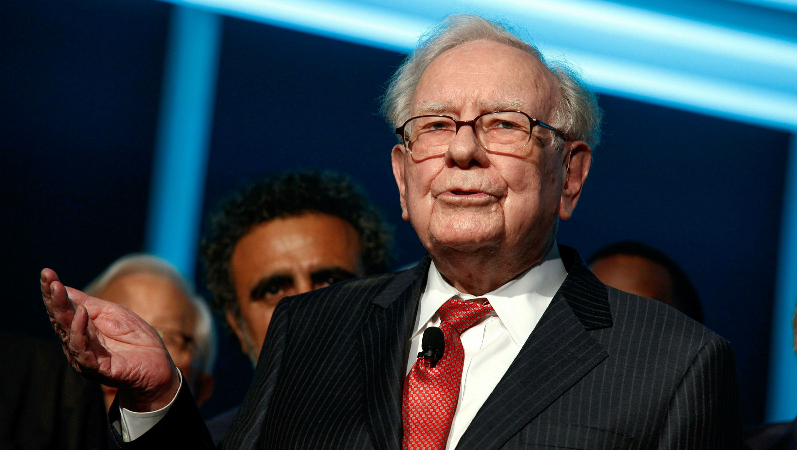
At Berkshire Hathaway’s annual shareholder meeting, renowned investor Warren Buffett issued a sobering warning about the potential risks associated with the rapid advancement of artificial intelligence (AI). 

Despite the widespread excitement surrounding AI and its transformative potential, Buffett sounded a note of caution, highlighting the technology’s capacity for both good and harm – particularly scamming.

Buffett expressed concern over the proliferation of AI-driven scams, noting the technology’s ability to create realistic and misleading content that can deceive individuals into providing money or personal information to malicious actors. 

“When you think about the potential for scamming people … if I was interested in investing in scamming, it’s gonna be the growth industry of all time and it’s enabled, in a way [by AI],’’ he said.

He pointed to AI voice-cloning and deep-fake technologies as tools commonly employed by scammers to impersonate individuals’ family members or friends.

While acknowledging AI’s potential for positive contributions, Buffett admitted his lack of expertise in the field and highlighted the need for careful consideration of its implications. 

 “Obviously, AI has potential for good things too, but … I do think, as someone who doesn’t understand a damn thing about it, it has enormous potential for good and enormous potential for harm — and I just don’t know how that plays out,” Buffett added.

He drew parallels between the advent of AI and the development of nuclear weapons, likening the technology’s impact to the unleashing of a powerful force with both beneficial and destructive capabilities.

“We let the genie out of the bottle when we developed nuclear weapons and that genie has been doing some terrible things lately, and the power of that genie is what scares the hell out of me,” he said.

Buffett’s cautious stance contrasts with the enthusiasm surrounding AI on Wall Street, where investors have been eagerly betting on its potential to drive profits. Stocks such as Nvidia and Meta Platforms have surged during the AI boom, reflecting investors’ optimism about the technology’s prospects.

Despite his reservations, the investment genius acknowledged the inevitability of AI’s continued advancement and its potential to reshape society. He likened the challenge of managing AI’s impact to containing the power of a genie unleashed from a bottle, recognizing the difficulty of reversing technological progress once it has been set in motion.

“I don’t know any way to get the genie back in the bottle, and AI is somewhat similar. It’s part of the way out of the bottle, and it’s enormously important and it’s going to be done by somebody … whether it’s going to change the future of society, we will find out later,” Buffett added.

In addition to Warren Buffett’s cautionary remarks on the potential risks associated with artificial intelligence (AI), other business leaders have also voiced concerns about the unchecked adoption of this transformative technology.

One prominent issue raised by business leaders is the ethical implications of AI, particularly regarding data privacy and security. As AI algorithms rely heavily on vast amounts of data to function effectively, there are concerns about the misuse or exploitation of personal information. Inaccurate or biased AI algorithms could lead to discriminatory outcomes, exacerbating existing social inequalities.

Furthermore, the rapid automation enabled by AI has raised fears about job displacement and the future of work. While AI has the potential to streamline processes and increase efficiency, it also poses a threat to certain job sectors, particularly those that involve routine tasks susceptible to automation. Business leaders are grappling with how to balance the benefits of AI-driven automation with its potential impact on employment and workforce dynamics.

Another area of concern is the lack of transparency and accountability in AI decision-making processes. As AI systems become increasingly complex and opaque, it becomes challenging to understand how decisions are made and to hold responsible parties accountable for any negative consequences. This opacity could erode trust in AI systems and hinder their widespread adoption across various industries.

Moreover, there are geopolitical and national security implications associated with the global race for AI dominance. Countries are vying for leadership in AI research and development, raising questions about data sovereignty, intellectual property rights, and cybersecurity. 

While AI holds immense promise for driving innovation and economic growth, it also presents significant challenges that must be addressed thoughtfully and responsibly. 

Concerns expressed by Buffet, Elon Musk, and others, show that business leaders recognize the need for robust ethical frameworks, transparent decision-making processes, and proactive measures to mitigate the potential risks associated with AI. 

Meanwhile, the battle for AI supremacy continues with major players.

AI startup Anthropic is taking aim at OpenAI’s ChatGPT, launching an iPhone app and a business tier. The free iOS app syncs with web chats and can upload photos and files. An Android version is also in development. Meanwhile, its new paid enterprise plan, called Team, gives businesses “higher-priority access” to its Claude 3 chatbot. Anthropic says Claude 3 Opus, its “most intelligent model,” outperformed OpenAI’s GPT-4 and Google’s Gemini Ultra on standard industry tests. Generative AI has exploded over the past few years, but a McKinsey survey indicates a majority of executives expect AI’s impact to be years away.