DD
MM
YYYY

PAGES

DD
MM
YYYY

spot_img

PAGES

Home Blog Page 3391

MicroStrategy is Strategically Accumulating Bitcoin as it adds 122 $BTCs

0

In the ever-evolving landscape of digital assets, MicroStrategy has positioned itself as a vanguard of corporate investment in Bitcoin. April 2024 marked another significant milestone for the company, as it acquired an additional 122 BTC, bringing its total holdings to a staggering 214,400 BTC. This move is not just a testament to the company’s bullish stance on Bitcoin but also highlights a broader trend of corporate adoption of cryptocurrencies.

MicroStrategy’s journey with Bitcoin began in August 2020, with an initial investment that signaled a strategic shift towards digital assets. Since then, the company has consistently increased its Bitcoin reserves, showcasing a strong belief in the long-term value proposition of this asset class. The latest purchase in April, amounting to $7.8 million, is a continuation of this strategy.

The company’s approach to Bitcoin investment is multifaceted, involving not only the acquisition of coins but also advocacy and technological innovation. MicroStrategy’s President and CEO, Phong Le, has emphasized the company’s commitment to the development of the Bitcoin network, which is reflected in its financial market activities and focus on technology.

Financially, MicroStrategy’s Bitcoin strategy is underpinned by a robust capital markets strategy. In the first quarter of 2024, the company raised over $1.5 billion through convertible debt offerings, which facilitated the acquisition of 25,250 additional bitcoins. This aggressive investment strategy has been a hallmark of MicroStrategy’s engagement with Bitcoin, and it shows no signs of abating.

The impact of MicroStrategy’s Bitcoin purchases extends beyond the company’s balance sheet. It has contributed to increased institutional demand and regulatory clarity, especially following the approval of spot Bitcoin exchange-traded products. The company’s sizable Bitcoin holdings, acquired at an average purchase price of $35,180 per BTC, represent a significant investment in the future of digital assets.

MicroStrategy’s Bitcoin accumulation also coincides with key events in the Bitcoin ecosystem, such as the halving, which reduces the mining reward and potentially influences the coin’s scarcity and value. The company’s steadfast commitment to Bitcoin, even amidst market fluctuations, underscores its long-term vision and its role as a pioneer in corporate cryptocurrency investment.

As the digital asset space continues to mature, MicroStrategy’s strategic Bitcoin purchases will likely be studied by investors and companies alike. The company’s ability to navigate the complex market dynamics and its unwavering confidence in Bitcoin’s potential are noteworthy elements of its investment philosophy.

For those interested in the intricate details of MicroStrategy’s Bitcoin strategy and its implications for the broader market, further information can be found through comprehensive reports and analyses. These resources provide valuable insights into the company’s decision-making process and the potential trajectory of Bitcoin as an institutional-grade asset.

In conclusion, MicroStrategy’s April 2024 Bitcoin purchase is more than just a financial transaction; it is a strategic move that reflects the company’s dedication to digital asset innovation and its role as a leader in corporate cryptocurrency adoption. As the digital currency landscape evolves, MicroStrategy’s actions will undoubtedly continue to influence the market and offer lessons for other entities considering a foray into this dynamic field.

American tech companies spend $billions to become AI utilities

0

“Tesla will spend around $10B this year in combined training and inference AI, the latter being primarily in the car. Any company not spending at this level, and doing so efficiently, cannot compete.” – Elon Musk

As big American tech companies spend $billions to become AI utilities (as in waterboard, electricity authority, etc), the rest of the world (outside China will be siddon look). Yes, it is beyond brilliance, you need to have truckloads of money these days to build the foundations of the empires of the future. Facebook’s Meta is going for $35 billion – $40 billion spend.

Money answereth breakthroughs, building moats around castles of profits. It is beyond knowledge; capital is king! When that is the case, many great things happen. Yes, new products are created as Amazon has now become an ad company:

Amazon’s cloud and advertising businesses boosted its bottom line, helping the e-commerce giant’s first-quarter earnings exceed analysts’ forecasts. The company reported a better-than-expected 24% jump in ad sales from a year earlier and 17% sales growth in AWS, its cloud computing arm. Looking ahead, Amazon tempered its second-quarter outlook, expecting 7% to 11% growth and net sales approaching $149 billion, just shy of analysts’ expectations of $150.1 billion. Still, revenue from cloud computing — the strongest in a year — signals recovery in the giant’s prospects for growth on renewed business spending and the AI boom.

Nigerian Government Approves Salary Increase for Civil Servants, Pensioners

0
  • Increase Ranges from 25% to 35%, Falls Short of Organized Labor’s Proposal

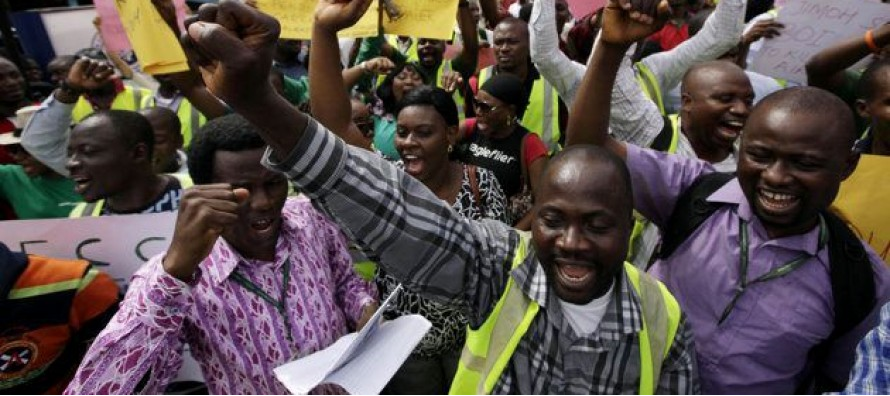
In a move aimed at addressing the financial concerns of civil servants and pensioners, the Federal Government of Nigeria has granted approval for an increase in salaries ranging from 25% to 35% for employees on the remaining six Consolidated Salary Structures.

While this decision is welcomed, it falls short of the ambitious proposal put forward by organized labor earlier this year.

The approved salary structure encompasses the Consolidated Public Service Salary Structure (CONPSS), Consolidated Research and Allied Institutions Salary Structure (CONRAISS), Consolidated Police Salary Structure (CONPOSS), Consolidated Para-military Salary Structure (CONPASS), Consolidated Intelligence Community Salary Structure (CONICCS), and Consolidated Armed Forces Salary Structure (CONAFSS).

It is noteworthy that sectors such as Tertiary Education and Health had already received their increments, which involved structures such as the Consolidated University Academic Salary Structure (CONUASS), Consolidated Tertiary Institutions Salary Structure (CONTISS), Consolidated Polytechnics and Colleges of Education Academic Staff Salary Structure (CONPCASS), Consolidated Tertiary Educational Institutions Salary Structure (CONTEDISS), Consolidated Medical Salary Structure (CONMESS), and Consolidated Health Sector Salary Structure (CONHESS).

According to a statement by Emmanuel Njoku, the Head of Press at the National Salaries, Incomes and Wages Commission (NSIWC), these salary increases will take effect from January 1, 2024. 

In addition to the proposed wage increases, the Federal Government has approved pension increments ranging between 20% and 28% for pensioners enrolled in the Defined Benefits Scheme. This adjustment applies to pensioners associated with the six consolidated salary structures mentioned earlier and will be effective from January 1, 2024.

In March, the Nigerian Labour Congress (NLC) and Trade Union Congress (TUC) proposed a substantial raise in the national minimum wage, with a fervent demand of N794,000 for workers in the Southwest geopolitical zone, and N540,000 for the Southeast region.

The call for wage increases is not limited to the South West and South East regions, as other geopolitical zones also put forth proposals. In the South-South region, there is a request for N850,000, while the North West proposes N485,000. Similarly, the Federal Capital Territory (FCT) suggests N709,000 as the new minimum wage. These proposals reflect widespread demands for higher wages across various regions in Nigeria.

The clamor for salary increases comes against the backdrop of fuel subsidy removal and the floating of Nigeria’s foreign exchange market, which orchestrated a high rise in the cost of living. 

With the impact underlined by skyrocketing inflation, which as of March stood at 33.20 percent, the majority of the country’s population is witnessing their spending power being eroded by the cost of goods and services, especially, food items. Food inflation rose to 40.1 percent in March, according to data published by the Nigerian Bureau of Statistics (NBS).

The labor unions described the N30,000 per month minimum wage as a “starvation wage”, demanding a substantial increase that will enable Nigerian workers to cope with the soaring cost of living.

“The national minimum wage is an issue that directly affects the livelihood of Nigerian workers. The minimum wage is the baseline level of income that workers are expected to earn and has far-reaching implications for economic growth, inequality, and social welfare,” Funmi Sessi, the chairperson of the Lagos State chapter of the NLC said.

German Bettina urges University to Weigh China ties in light of Espionage Allegations

0

The recent call by German Minister of Education and Research, Bettina Stark-Watzinger, for universities to reassess their collaborative projects with China in light of espionage allegations, has sparked a significant conversation about the balance between international cooperation and national security. The minister’s statement came after the arrest of three German citizens suspected of espionage, which has raised concerns about the potential vulnerabilities within academic and scientific exchanges.

The case highlights the complex nature of international relations and the need for vigilance in protecting sensitive information and technology. Universities, as centers of research and innovation, often engage in international collaborations to advance knowledge and technology. However, these partnerships can also pose risks if not carefully managed, especially when they involve countries with different political and legal frameworks.

The German government’s stance reflects a growing awareness of these risks, particularly in fields with potential military applications. The minister emphasized the importance of weighing the risks and benefits of cooperation more carefully, especially in science and universities. This includes reviewing existing cooperative relationships to ensure they align with national interests and security requirements.

The implications of this case extend beyond Germany, serving as a reminder to educational institutions worldwide to evaluate their international ties critically. It underscores the need for a strategic approach to international collaboration that safeguards intellectual property and sensitive information while fostering constructive global partnerships.

Recent developments have seen Polish Foreign Minister Radoslaw Sikorski expressing hope that Germany, under Chancellor Olaf Scholz’s leadership, will decide to supply Taurus cruise missiles to Ukraine. This comes in the wake of the Biden administration’s decision to provide Ukraine with long-range ATACMS missiles.

The call for Germany to step up its support for Ukraine is echoed by former UK Defense Secretary Ben Wallace, who has urged Chancellor Scholz to send Taurus cruise missiles to Kiev. The debate within Germany regarding this potential support is ongoing, with various political and public figures weighing in on the implications of such a move.

The provision of Taurus missiles by Germany would mark a significant shift in the country’s military support to Ukraine. Chancellor Scholz has been cautious, considering the potential risks of escalation and the broader consequences for the region and international stability. The decision is a complex one, balancing the urgent needs of Ukraine against the strategic considerations of NATO and its member states.

As the situation unfolds, the international community watches closely to see how Germany will respond to the calls for increased military support to Ukraine. The outcome of this decision could have far-reaching implications for the conflict in Ukraine and the future of European security.

The minister’s call to action is not just about reassessing current projects but also about setting a precedent for future international academic collaborations. It is a move towards a more cautious and informed engagement with international partners, ensuring that the pursuit of knowledge does not compromise a nation’s security.

As the global landscape evolves, the dialogue between international cooperation and national security will continue to be a critical issue for policymakers, educators, and researchers alike. The recent events in Germany serve as a catalyst for this important discussion, highlighting the need for a balanced approach that supports both the advancement of science and the protection of national interests.

Firms Not Investing Billions of Dollars in AI Can’t Compete Against Tesla – Elon Musk

0

Tesla CEO Elon Musk has stated that companies failing to allocate billions of dollars towards AI investments this year will struggle to match Tesla’s competitive edge.

Musk made this declaration on his X handle in response to a tweet that disclosed that Tesla spent $1 billion on training computing in the first quarter (Q1) of 2024.

Musk wrote,

“Tesla will spend around $10B this year in combined training and inference AI, the latter being primarily in the car. Any company not spending at this level, and doing so efficiently, cannot compete.”

Recall that in January, Tesla disclosed in its annual report filing with the Securities and Exchange Commission (SEC) that the company expects to spend over $10 billion on next-gen vehicles, AI products, and other projects this year.

The EV giant is simultaneously ramping new products, building and expanding manufacturing facilities on three continents and is investing in autonomy and other artificial intelligence-enabled training and products.

In its recent first quarter (Q1) report, Tesla spent $1 billion on AI infrastructure. In a call during which the EV maker reported falling profits and negative cash flow, Tesla pointed to its AI investment as an opportunity for future growth.

Commenting on the report Musk said,

“Over the past few months, we’ve been actively working on expanding Tesla’s core Al infrastructure. For a while there, we were training constrained and so we’re making rapid progress. We have installed and commissioned, meaning they’re actually working – 35,000 H100 computers or GPUs. Roughly 35,000 H100s are active and we expect that to be probably 85,000 or thereabouts by the end of this year just for training”.

Tesla’s earnings report also disclosed that the company had increased its AI training compute by more than 130 percent in Q1. Musk suggested that at some undefined point in the future, Tesla cars could operate as Edge systems when they are not moving. “So kind of like AWS but distributed inference”, he said.

As artificial intelligence continues to gain more prominence, it is worth noting that AI has been rapidly transforming the automotive industry. When it comes to electric vehicles, the AI in EVs is bringing several benefits. Some of which include predictive maintenance, improved performance, safety features, enhanced user experience, and increased efficiency.

Notably, AI maker Nvidia said it is expanding its collaborations with BYD and other Chinese automakers that are racing to build self-driving vehicles and AI-augmented infotainment technology to compete in global markets.

BYD, which overtook Tesla last year as the world’s No. 1 electric vehicle manufacturer, will use Nvidia’s next generation of in-vehicle chips, called Drive. Recall that in January this year, the Chinese EV maker launched its AI-powered smart car system as the company seeks to better compete with rivals on advanced technologies such as automated parking.

BYD will also use Nvidia technology to streamline factories and its supply chain, as well as to develop virtual showrooms, Nvidia Vice President for Automotive Danny Shapiro said during a conference call.

Meanwhile, Tesla continues to trim workers, and now it has gotten to interns.

The bad news for Tesla workers keeps trickling in this week following a string of layoffs. The EV maker is now rescinding summer internship offers — just weeks before the interns were due to start work. The move comes as CEO Elon Musk looks to slash costs at the floundering company, though it’s unlikely to save Tesla much cash, Bloomberg says: Some online postings for the internships offer between $18 and $28 an hour, while others are unpaid. Tesla generally hires more than 3,000 students from around the world for internships each year, promising them “meaningful work from day one.”