DD
MM
YYYY

PAGES

DD
MM
YYYY

spot_img

PAGES

Home Blog Page 3397

Nigeria’s Anti-Graft Agency EFCC Arraigns former Minister of Aviation over ‘Nigerian Air’ fraud

0

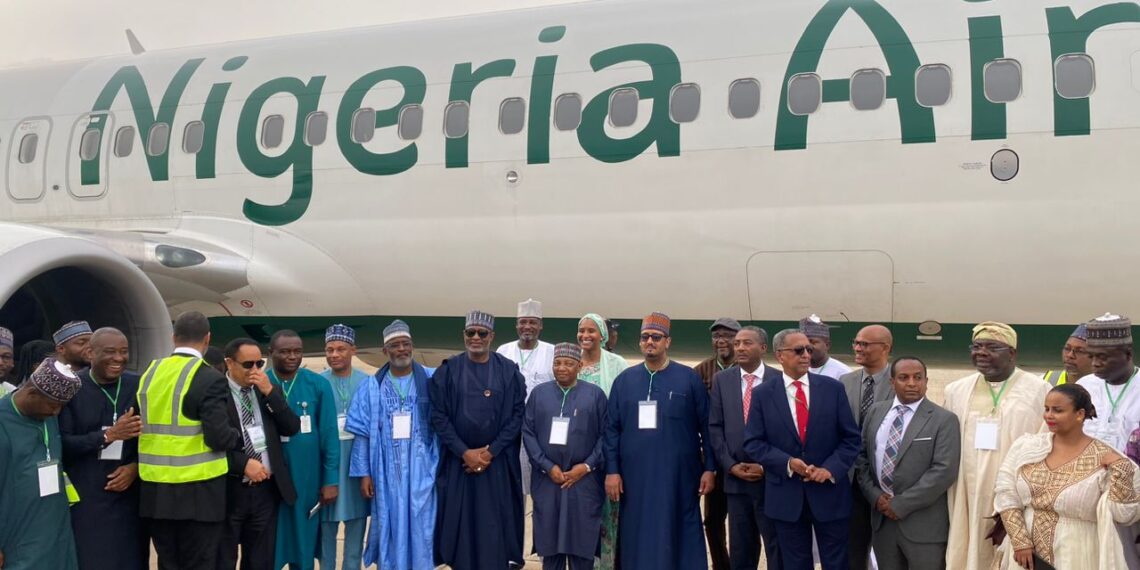
The former Minister of Aviation, Hadi Sirika, along with his daughter, Fatimah, and two others, has been arraigned before the Federal Capital Territory High Court by the Economic and Financial Crimes Commission (EFCC) over an alleged N4.1 billion fraud related to the failed Nigerian Air project between April 2022 and March 2023. 

The charges against them include conferring unfair advantage in the illegal award of consultancy contracts and awarding contracts to companies linked to family members.

Upon their arraignment, all defendants pleaded not guilty to the charges. However, the defense counsel, Kanu Agabi, sought bail for Sirika based on self-recognition, a request opposed by the prosecutor, Rotimi Jacobs. Despite the opposition, Justice Sylvanus Oriji granted bail to Sirika and his daughter of one hundred million naira each with two sureties in like sum.

The sureties are required to declare to an affidavit, and failure to meet the bail conditions would result in the defendants being remanded in prison pending compliance. This development follows the detainment of Sirika by the EFCC on April 23 before his arraignment.

The charges against Sirika include allegations of awarding consultancy contracts to Tianaero Nigeria Limited for the startup of Air Nigeria, with Prof. Gabriel Tillman, reportedly an associate of the former Minister, acting as the alter ego of the firm. 

Tianaero received N1.3 billion for its consultancy services. Additionally, Sirika is accused of awarding a contract worth approximately N1.4 billion for the construction of the apron at Katsina Airport to Al-Duraq Global Investment Limited, a company owned by his daughter and son-in-law.

The back story

Sirika’s tenure as the Minister of Aviation was mired in corruption allegations, notably, his purchase of 12 firefighter vehicles at the cost of N1 billion each, and the launch of the non-existent Nigerian Air. The national carrier was launched two days before the end of President Muhammadu Buhari’s government.

Last May, following the hasty launch of Nigerian Air, investigative journalist David Hundeyin reported that Sirika was being fraudulent by presenting a rented plane to Nigerians. In his report, Hundeyin noted that that unveiled aircraft, a Boeing 737-800 with registration number, ET-APL, belonged to the Ethiopian Airlines – and was still in active service with the company.

Aviation expert and analyst, Captain Ado Sanusi, also said in an interview with ChannelsTV then that it is practically impossible for Nigeria Air to start commercial passenger operation in two days given the rigorous process involved, upholding the Hundeyin’s report that the launch was fraudulent.

Although in June 2022, Sirika disclosed that the majority shares of 49 percent of the Nigeria Air project will be owned by Ethiopian Airlines, 46 percent by Nigerians while the Federal Government will own just five percent of the shares, the unveiling of just one plane not backed by operational infrastructure, among other things, created doubts and questions about the national carrier.

Against this backdrop, the House of Representatives launched an investigation. During the investigation, the Nigerian Airspace Management Agency (NAMA) told members of the committee that the aircraft bearing Nigerian colors was on a chartered flight to Nigeria. According to other stakeholders who confirmed NAMA’s disclosure, a chartered flight could be painted in any color and with any inscriptions.

Consequently in June 2023, the House of Representatives declared the launch of Nigerian Air fraudulent, ordering that the national carrier project, which reportedly gulped N85 billion, be suspended immediately.

The case against Sirika and his co-defendants, which has long been anticipated, is one of several others that allegedly took place under the administration of Buhari. Anti-graft said that this development, like several others, serves as a stark reminder of the persistent challenges posed by deep-rooted corruption in Nigeria’s governance system. 

They note that the alleged misappropriation of funds meant for crucial aviation projects reflects a systemic issue that undermines trust in governance and diverts resources away from much-needed infrastructure development. The ramifications of such alleged corruption in public office are profound, particularly in the context of Nigeria’s economic development

Such corruption not only erodes public confidence but also hampers the country’s ability to attract investment and foster sustainable economic growth, they say.

The current Minister of Aviation, Festus Keyamo, has suspended the Nigerian Air project. Keyamo, who pledged reforms in the aviation sector, announced that all arrangements initiated under Sirika, including the proposed Nigeria Air project, have been halted to facilitate a thorough audit of contracts.
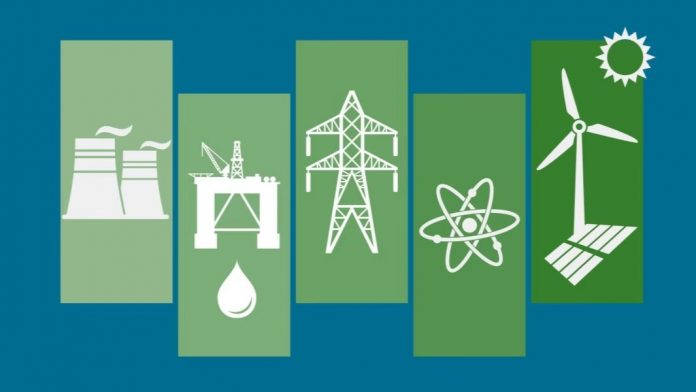

Beyond Oil Refineries, Nigeria Needs To Develop A Comprehensive Energy Transition Plan

1

Many petrol stations in China are bankrupt. In the United States, many petrol stations are closing. And now, some major car brands are discontinuing their fossil-fuel vehicles, for electric vehicles: “After almost 60 years, General Motors is discontinuing the Chevrolet Malibu, shutting down production and retooling its Kansas assembly plant to make next-generation Chevy Bolt electric vehicles…GM, which has sold more than 10 million Malibu sedans, has been moving aggressively in the direction of EVs and stopped producing other popular gas-powered models, such as the Chevy Camaro. ” – LinkedIn News note.

If this trajectory continues, what should be Nigeria’s energy policy?

Understand that we do not buy a lot of NEW cars for them to keep making these fossil-fuel cars if the main global markets have moved on. In other words, they will follow China and Americans who buy millions of new cars in a year: “ In 2022, the US sold around 13.6 million new light-duty vehicles, and in total, 52.2 million vehicles were sold that year. “

If a huge percentage is EV, I am not sure any car brand will keep making petrol cars because about 10,000 units would be sold in Nigeria. In other words, we can have our refineries but with few cars to use the petrol coming from them, in just a few years.

Sure, we need petrol today, and that is why the nation needs a solid energy transition strategy. Indeed, we do not have the capacity to tell Toyota, GM, Honda, etc what to make because we do not buy a lot of cars. If they move on, they’re gone.

Comment: Many is not a fact. You should instead show the numbers. If gasoline vehicles are being abandoned at the rate you claim, how come global gasoline demand hasn’t been significantly affected?

My Response: Your position is actually the same point many oil gulf regions make. But what they miss is this: gasoline demand is rising because the world is urbanizing and more people in developing countries are buying new cars (new and old) because the world is growing. So, if say we use 20 litres of gasoline today, even though it is higher than the previous number, if not for EV, it ought to be say 30 liters. That is the displacement.

“As of 2023, China’s rechargeable car market share was 37%, up from 30% in 2022. In March 2024, new energy vehicles (NEVs), which include all-electric models and plug-in hybrids, made up 41.5% of all passenger car sales in China. In 2023, EV sales in China increased by 38% to 9.49 million units, which is a 31% market share”

Yes, in China, 42% of new cars are new energy cars. That does not mean gasoline cars may not increase, from the previous number, but it is not going to increase at the rate  if there are no EV cars. So, using only the absolute gasoline number without looking at the growth rate may not give the full picture.

Q1 2024: Jumia Records Revenue Increase of $49 Million, Lowers Operating Losses by 70%

0

African e-commerce platform Jumia has reported its first quarter (Q1) earnings results, recording a $48.9 million revenue and a gross profit of $31.2 million, compared to $41.3 million and $24.9 million in the first quarter of 2023.

The company significantly reduced its operating losses by 70% after major cost-cutting measures that saw it trim advertising costs to $3.8 million, a 30% drop compared to Q1 2023

Jumia stated that its order and average order value (AOV) grew, with order growth in Nigeria and Ghana, despite volatile conditions. According to the CEO Francis Dufay, he noted that the company is off to a strong start to the year, following a transformational 2023. He added that disciplined expense management and streamlining of the company’s logistics network, reduced quarterly cash burn to $19.1 million from $22.0 million in the first quarter of 2023.

Among other things, Jumia stated that lower customer discounts helped attract a more loyal and high-quality customer base.

Commenting on the first quarter report, he said,

“Jumia is off to a strong start to the year. Following a transformational 2023, we continued to execute against our strategic priorities focused on strengthening our core business and improving cash efficiency while establishing a leaner organization primed for growth. Our efforts drove a 5% year-over-year and 39% constant-currency improvement in GMV in the quarter, while order growth and AV also expanded, a clear sign that our strategy is working. Disciplined expense management and further streamlining of our logistics network reduced our quarterly cash burn(I) to $19.1 million from $22.0 million in the first quarter of 2023.

“Efforts to orient spend toward more efficient marketing channels along with reductions in customer discounts also helped attract a stickier and higher quality customer base, driving a 300 basis-point improvement in repurchase rates versus the prior year. Our success is more notable when considered against the challenging macro environment in Africa. Significant currency devaluations in some of our largest markets impacted both purchasing power and supply availability, making for a difficult operating environment.

“However, our ability to secure sufficient inventory and offer a diversified product assortment at competitive prices continues to keep consumers engaged on our platform. Importantly, we are also beginning to see early signs of general stabilization in select markets, leaving us hopeful that conditions will continue to improve. For example, despite the volatile conditions, we are seeing order growth in Nigeria and Ghana, illustrating Jumia’5 value proposition. Additionally, in Egypt, the government floated the Egyptian pound and significantly increased interest rates, resulting in higher U.S, dollar inflows from foreign investors.”

Here is an overview of Jumia’s first quarter (Q1) 2024 report

•Revenue of $49 million, up 19% year-over-year, and up 57% in constant currency.

•GMV of $181 million, up 5% year-over-year, and up 39% in constant currency.

•Operating loss of $8 million compared to $28 million in the first quarter of 2023, down 71% year-over-year, and down 79% in constant currency.

• Adjusted EBITDA loss of $4 million as compared to a loss of $25 million in the first quarter of 2023, down 83% year-over- year, and down 94% in constant currencv.

•Loss before Income tax from continuing operations in the first quarter of 2024, was up 36% year-over-year and up 12% in constant currency largely driven by a $11 million increase in net foreign exchange losses

• Liquidity position of $101 million, a decrease of $19 million in the first quarter of 2024 as compared to a decrease of $22 million in the first quarter of 2023.

•Net cash flows from operating activities of $4 million as compared to net cash flows used in operating activities of $19 million in the first quarter of 2023.

Results highlights for the first quarter 2024

  • Revenue of $49 million, up 19% year-over-year, and up 57% in constant currency.
  • GMV of $181 million, up 5% year-over-year, and up 39% in constant currency.
  • Operating loss of $8 million compared to $28 million in the first quarter of 2023, down 71% year-over-year, and down 79% in constant currency.
  • Adjusted EBITDA loss of $4 million as compared to a loss of $25 million in the first quarter of 2023, down 83% year-over-year, and down 94% in constant currency.
  • Loss before Income tax from continuing operations in the first quarter of 2024, was up 36% year-over-year and up 12% in constant currency largely driven by a $11 million increase in net foreign exchange losses, mostly without a cash impact, as a result of currency devaluations in Nigeria and Egypt and an increase in finance costs related to Jumia’s treasury and investment portfolio management activities.
  • Liquidity position of $101 million, a decrease of $19 million in the first quarter of 2024 as compared to a decrease of $22 million in the first quarter of 2023.
  • Net cash flows from operating activities of $4 million as compared to net cash flows used in operating activities of $19 million in the first quarter of 2023.

Knots in Nigeria’s Cybercrime Act and Cybersecurity Levy

0

For several days, the Cybercrime Act, which was passed in 2015 and revised in 2024, has been debated on various digital and physical forums. The Act became the focus of discussions after the Central Bank of Nigeria announced that some electronic bank transactions should be charged and remitted as a cybersecurity levy. As arguments and counterarguments over the new levy persist, our analyst examined the Act and the inherent ideological orientations that underpin the execution of the tax deduction directive. 

The Cybercrime Act of 2015 (pdf) addresses the prohibition, prevention, detection, reaction, investigation, and prosecution of cybercrimes, as well as other connected issues. Nigeria hopes to do this in order to guarantee a sustainable and safe cyberspace comparable to that which is available in other nations. Using a corpus analysis approach, our analyst examined the Act and found that it was composed of 15,699 words, with three instances of levy and twelve instances of transactions. The most frequently used terms, according to analysis, are shall (166), person (161), offence (126), computer (126) and imprisonment (123).

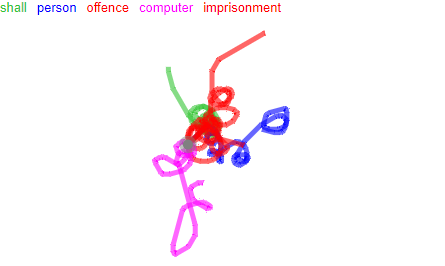
The data in Exhibit 1 further reveals material and non-material objects associated with the use of the key terms. The use of “shall” is intertwined with “person,”  “offence”, “computer,” and “imprisonment.” This reaffirms the long-held belief that in the legal field and practice, words like “shall” and “will” are strategic linguistic devices for helping law followers and enforcers understand the gravity of what they must do to effectively implement provisions in various sections of any Act.  

Our analyst notes that having a computer as a keyword at the centre of the Act indicates the prioritisation of it as a mechanical material object people need to use to commit varied cybercrimes. And at the same time, use for addressing issues that occurred after by the Act implementers. 

Exhibit 1: The key material-knot of the Act

Source: Nigeria’s Cybercrime Act, 2015; Infoprations Analysis, 2024

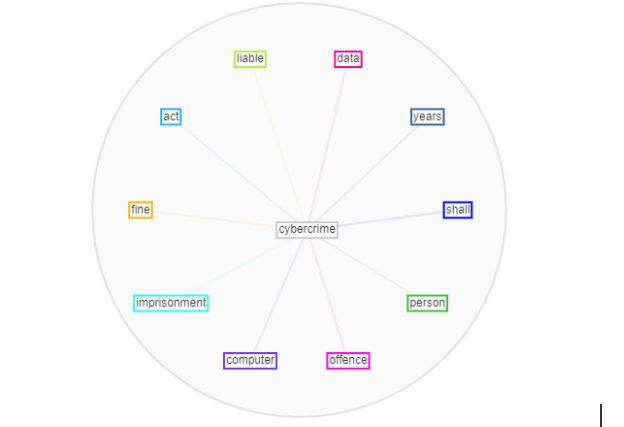
Exhibit 2: Circlic of key material-knot with cybercrime

Source: Nigeria’s Cybercrime Act, 2015; Infoprations Analysis, 2024

In Exhibit 2, it emerged that cybercrime is a keyword in the Act corpus that is connected with words that indicate actions needed and words that represent objects that would be used to judge people who violated provisions in various sections of the Act. The core processes for implementing the Act from a financial standpoint are mostly spelled out in Section 44. Subsection (1) of this section notes that “there is established a Fund, which shall be known as the National Cyber Security Fund (in this Act referred to as “The Fund”). This provision implies that maintaining a safe and secure cyberspace will be difficult if a special fund is not established. However, given the amount of existing sources from which the government may draw, our analyst believes that the creation of the Fund would create an additional burden on individuals, firms, and organisations that are expected to be key contributor to the Fund.

Subsection (2) of the same section clearly states the collection and deposit of the Fund in the Central Bank of Nigeria. In this regard, paying and remitting the Fund are intertwined with the human and mechanical processes that would be deployed. This becomes clear when one looks at paragraph (a) of subsection (2), which states, “A levy of 0.005 of all electronic transactions by the businesses specified in the second schedule to this Act,” where it is evident that people and businesses are the key contributors from a banking transaction perspective.

In what appears to be a balanced strategic choice game of getting the needed funds, paragraph (b) stresses grants-in-aid and assistance from donor, bilateral and multilateral agencies; (c) all other sums accruing to the Fund by way of gifts, endowments, bequest or other voluntary contributions by persons and organisations: provided that the terms and conditions attached to such gifts, endowments, bequest or contributions will not jeopardise the functions of the Agency.

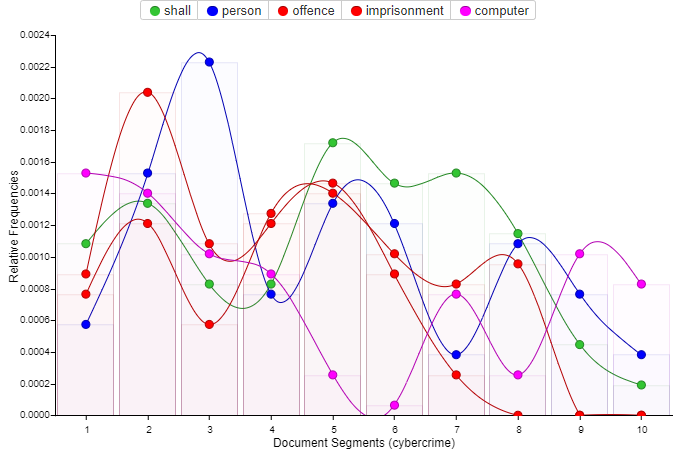
Exhibit 3: Relative frequency of the key material-knot with cybercrime 

Source: Nigeria’s Cybercrime Act, 2015; Infoprations Analysis, 2024

The Business of NBA Sponsorships: Impact on Brand Value and Stock Performance

0

Sports sponsorship is a two-way street. In exchange for providing funding to a team or organization, the sponsor is able to raise their brand awareness and reach out to a potential new audience of millions.

Fans are loyal, and if they see a company getting behind their franchise, they are more likely to consider their products or services. In exchange for that boost in sales, their team receives vital revenue which they use in a number of ways.

Big Attraction

As the top level league within its sport, the National Basketball Association and its thirty teams attract billions of dollars in sponsorship each year. Whether it’s a financial organization, a clothing company or a sports betting outlet looking to promote its NBA odds markets, the association is a huge deal.

It may seem like a cash-rich league such as the NBA doesn’t need to attract significant extra revenue, but this isn’t the case. The funds raised from sponsor deals are invested back into the club in many different ways.

Naturally, the team wants to improve, so extra revenue helps them to attract big-name trades, while paying the type of salary that the top-name players demand. NBA franchises also aim to improve their facilities at a time when demand for the sport continues to increase.

In the last fifty years or so, we’ve seen many of those NBA teams move stadium to accommodate extra supporters, while others have developed their existing grounds. All of this costs millions to put in place, so additional sponsor revenue is vital.

Money is also ploughed into the grass roots game to help develop the next generation of players. Sponsorship is big business in the NBA, but which are the most important deals in the history of the association?

Success Stories

Some organizations are so big that they don’t even have to use their name in the corporate logo. Perhaps the best example of this is Nike, whose unmistakable tick can be seen on every player’s jersey in the NBA.

Nike are synonymous with the association and are said to own around 90% of the basketball footwear market. The initial deal with the NBA saw the company win complete outfitting rights with the league in a deal worth a cool $1 billion.

Revenue of that size is vital to any sporting body, and it will have been boosted by merchandise sales across North America and beyond.

State Farm Insurance are a distant second in the race to be the NBA’s biggest sponsor. The firm pays around $60 million each year to be a part of the association, and while they trail Nike by some distance, State Farm enjoys center stage at times.

The insurance company were the principle sponsors for the NBA’s Rising Stars game, and they also lead the way on All-Star Saturday night.

Creative Engagement

The nature of basketball offers a number of unique ways for sponsors to get involved. In most sports, there is a drinks cart waiting behind the coaching team, and there is a battle for companies to attach their name to it.

At present, the appropriate drinks sponsors to the NBA are Pepsi/Gatorade, who pay around $35 million for the privilege to be seen around court.

Return on Outlay

As we’ve just seen, major brands pay serious amounts of money to be involved with the National Basketball Association, but can they expect to see a return on their significant investment?

It’s impossible to quantify how many consumers make a purchase based on a firm’s involvement with their favorite sport. Companies such as Nike and Pepsi can measure sales in and around the stadium, but there are clear links between NBA sponsorships and improved results in the stock market.

In fact, studies have shown that there is even a boost to performance before the deal is officially announced. Once the rumor mill is set in motion, the markets respond and the sponsor sees early benefits.

T. Bettina Cornwell of the University of Oregon is quoted as saying: “There is a significant effect for sponsorship announcements in the pre-window. Not on the day of the announcement, but in the days preceding it.”

Following that initial boost in shares, the markets tend to slow down, but there is still a clear advantage for any sponsor looking to get involved with an organization as big as the NBA.

All of these companies have benefited from their arrangements with the NBA and raised their considerable profiles. In return, the association and its franchises have earned millions of dollars in revenue, which can be used to plough back into the sport.

The corporations enjoy the spoils of those sponsorships, but so do the fans. The league continues to improve, build new stadiums and attract the best players from all over the world, so the spectacle that is the NBA gets even better.