DD
MM
YYYY

PAGES

DD
MM
YYYY

spot_img

PAGES

Home Blog Page 34

Apple Opens Apple Maps to Advertisers in U.S. and Canada This Summer, Bundling Business Tools Under Single “Apple Business” Brand

0
An Apple leader

Apple announced Tuesday that it will begin showing ads on Apple Maps in the United States and Canada later this summer, giving businesses of any size the chance to appear in search results for the first time.

The ads will be available to any company with a physical location that already has a listing on Apple Maps. Users will see a single clearly labeled ad next to relevant search results, marked with a small blue halo around the pin on the map and identified as an advertisement in the list of suggested places, much like the current format on the App Store.

The move marks another expansion of Apple’s advertising business, which has grown steadily in recent years without fundamentally altering the user experience on its core services. Apple executives have long held that the company can add new revenue streams while protecting privacy and maintaining the clean design that distinguishes its products.

In this case, the company said user data related to ad interactions will not be linked to Apple IDs, will remain on the device, and will not be collected, stored, or shared with third parties.

Businesses can create and run campaigns directly through their Apple Maps listing. They upload photos, add a promotional message, and set a budget. Apple uses automated matching to show the ad to users actively searching for similar businesses. Advertisers can start or stop campaigns at any time. Larger advertisers will have additional options, including scheduling and location targeting.

The system uses an auction-based pricing model standard in the industry, with advertisers paying only when users view or tap the ad.

The expansion was previously reported by Bloomberg and had been widely anticipated as Apple looks for new ways to monetize its services. Maps has long been one of the company’s most-used applications, yet it has remained largely free of advertising compared with Google Maps, which has relied heavily on ads for years. Apple’s entry could add a meaningful new revenue line as its overall ads business continues to scale globally.

Alongside the Maps announcement, Apple is consolidating its various business tools under a single brand called Apple Business, effective April 14, 2026, and available in 200 countries and regions. The unified offering brings together device management, productivity tools, and now advertising capabilities that were previously spread across Apple Business Connect, Apple Business Essentials, and Apple Business Manager.

For the first time, businesses will have access to an employee directory, custom domain email, and calendar services. Employee accounts include 5 GB of free iCloud storage, with U.S. businesses able to purchase upgraded plans starting at $0.99 per user per month for up to 2 TB of storage. Companies can also add AppleCare+ for Business support, priced per user or per device, starting at $6.99 per month.

The package includes free mobile device management tools for distributing apps to employees, previously a paid feature. Smaller businesses can use preconfigured “Blueprints” to set up devices without deep technical knowledge. Larger organizations will have access to an API for more advanced app deployment.

The combination of Maps advertising and the streamlined Apple Business suite shows Apple continuing to build out its services revenue while trying to keep the experience simple for both consumers and businesses. Executives have repeatedly said they see significant room to grow advertising without compromising the privacy-focused approach that differentiates the company.

Businesses’ ability to appear directly in Apple Maps search results could prove valuable, especially for local services where proximity and discovery matter.

The announcement comes at a time when Apple is under pressure to show continued services growth as iPhone sales face headwinds in key markets. The company is betting it can extract more value from its installed base without alienating users or crossing the privacy line it has drawn for years.

While the first ads are scheduled to appear later this summer in the U.S. and Canada, it is not clear how quickly the program will expand to other markets.

Tekedia Capital Q2 2026 Investment Cycle: Key Dates and Access

0

Hello,

Greetings! Please find below the key dates for the upcoming Tekedia Capital investment cycle:

Duration: April 6 – May 11, 2026
Startups Unveiled on Portal: April 6
Cycle Meeting Day: Saturday, April 18
Time: 4:00 – 6:00 PM WAT

We are sharing this early to support your planning. Fifteen companies will be featured, each pioneering new capabilities to redefine competition and deliver meaningful value.

Join us or renew your account if applicable here.

Regards,
Tekedia Capital Team
capital@tekedia.com

Arm Breaks With Tradition, Targets $25bn Future Revenue on Back of In-House AI Chip in 2031

0

Arm Holdings has laid out its boldest transformation in decades, pairing an aggressive long-term financial forecast with a decisive move into manufacturing its own chips, a strategy that could redraw competitive lines across the semiconductor industry.

The British chip designer said it expects annual revenue to reach $25 billion by 2031, a more than sixfold increase from the roughly $4 billion it generated in 2025. At the center of that projection is a newly unveiled processor, the Arm AGI CPU, expected to contribute about $15 billion in yearly sales within the same period.

The announcement, delivered by chief executive Rene Haas at an event in San Francisco, marks a turning point for a company long defined by its neutral role in the global chip ecosystem. For 35 years, Arm has supplied the underlying architecture for processors used by partners, earning licensing fees and royalties while avoiding direct competition. That model is now being recalibrated.

The AGI CPU is designed specifically for artificial intelligence inference, the stage where trained models are deployed in real-world environments. It is an area gaining commercial importance as companies shift from building AI systems to running them at scale. Meta Platforms has been named as the initial customer, signaling early validation from one of the largest buyers of data center compute.

Arm’s decision to produce its own silicon reflects a broader shift in how value is being captured in the AI era. While the company’s architecture already underpins a growing share of data center processors, much of the economic upside has historically accrued to its customers. By moving into finished chips, Arm is seeking to claim a larger portion of that value chain.

The timing aligns with a structural change in computing demand. The emergence of agentic AI, systems capable of carrying out tasks with limited human input, is driving renewed interest in central processing units. Unlike earlier AI workloads that leaned heavily on specialized accelerators, these systems require a balance of flexibility and performance that CPUs are well-positioned to provide.

Haas said demand for CPUs linked to such workloads could increase fourfold, adding that even that estimate may prove conservative.

“We may be under-calling that number,” Haas said Tuesday. “I think the demand is higher than we think it is.”

The implication is a sustained expansion in one of the industry’s most competitive segments, where Arm is now positioning itself not just as an enabler, but as a direct participant.

Financially, the shift could be transformative. Chief financial officer Jason Child said the company expects gross margins of around 50% on the new chip, significantly higher than the effective margins derived from licensing alone.

“It expands our market to include customers that were not interested in an IP model, gives our current customers choice, and for Arm it creates a much larger profit opportunity,” Child said at the event on Tuesday.

The move also opens access to customers who have historically bypassed Arm’s IP model in favor of off-the-shelf processors or fully in-house designs.

Yet the strategy carries clear risks. Arm’s customer base includes some of the world’s largest technology companies, many of which design their own chips using Arm architecture. By entering the market with its own products, the company risks unsettling those relationships, even as executives insist participation in the new model will remain optional.

“We’re not going to force any of our existing customers to migrate,” Child said, seeking to reassure partners wary of a shifting competitive dynamic.

The company’s push into higher-performance computing has been building for years. Since the introduction of its Neoverse platform in 2018, Arm has steadily gained ground in data centers, an arena historically dominated by x86 processors from Intel and AMD. Adoption accelerated when Amazon launched its Graviton chips, followed by similar efforts from Google and Microsoft.

What distinguishes the current move is the level of vertical integration. Arm is no longer content to sit at the architectural layer; it is moving into product design and, by extension, deeper into the commercial realities of pricing, supply chains, and customer support.

Analysts say the market is still adjusting to what that means. Ben Bajarin of Creative Strategies noted that the shift effectively creates a new business line that investors must evaluate alongside Arm’s legacy licensing operations.

“Arm has typically been modeled purely on their licensing and royalty business and now they have given investors a new market opportunity and business to wrap their head around and model, so it isn’t a surprise it will take some time for folks to wrap their head around the valuation and new revenue targets,” he told CNBC.

The scale of the revenue targets suggests management believes the addressable market for AI-focused processors is expanding rapidly, particularly as inference workloads begin to dominate computing demand.

There is also a broader industry context. As AI deployment accelerates, hyperscale companies are increasingly building or commissioning custom chips to control costs and optimize performance. Arm’s new offering could appeal to a tier of customers that lack the resources to develop in-house silicon but still require high-performance solutions tailored to AI workloads.

The early market response reflects cautious optimism. Shares rose about 6% in after-hours trading following the announcement, even after closing slightly lower during the regular session, indicating that investors are weighing both the scale of the opportunity and the complexity of execution.

Arm’s bet is that the economics of artificial intelligence will favor those who can deliver integrated, high-performance computing solutions at scale. The company has spent decades enabling others to build that future. With the AGI CPU, it is now attempting to build a larger share of it itself.

Euro Zone Growth Stalls as Iran War Drives Energy Shock, Rekindling Stagflation Fears

0

Economic activity across the euro area is losing momentum at a pace that is beginning to alarm policymakers, as the fallout from the U.S.-Israeli war with Iran feeds through energy markets into prices, supply chains, and household demand.

Fresh survey data from S&P Global, published by Reuters, show the bloc’s private sector barely expanded in March, with the flash composite Purchasing Managers’ Index slipping to 50.5 from 51.9 in February, its lowest level in ten months and only marginally above the threshold that separates growth from contraction.

Beneath that headline figure, the deterioration is more pronounced. Input costs are accelerating sharply, delivery times are lengthening at the fastest pace since mid-2022, and business expectations are weakening, all pointing to an economy under strain from an external shock it is poorly positioned to absorb.

The trigger is energy. Oil prices have surged since the escalation in the Middle East, driven in part by disruptions to key shipping routes, pushing up transport and production costs across Europe. The impact is already visible: petrol prices across the European Union have risen more than 10%, diesel by over 20%, compressing household spending power and eroding corporate margins.

“The flash euro zone PMI is ringing stagflation alarm bells as the war in the Middle East drives prices sharply higher while stifling growth,” said Chris Williamson, chief business economist at S&P Global Market Intelligence.

The data point to a classic stagflationary setup—weak growth combined with rising inflation. The manufacturing input price index jumped to 68.6 from 58.0, while the supplier delivery times index dropped to 40.9 from 47.3, signaling mounting supply bottlenecks and expectations of further price increases.

Economists say the euro zone entered this shock with limited buffers. Growth was already running at around 1%, leaving little room to absorb higher energy costs without a meaningful slowdown. Several member states, including Austria, Finland, and Portugal, have already revised down their growth outlooks, citing the drag from expensive fuel.

Germany, the bloc’s largest economy, has so far shown relative resilience in the latest data, but weakness is more evident elsewhere. France, in particular, has seen a sharp drop in business confidence, underlining the uneven nature of the slowdown.

Consumer sentiment is deteriorating even faster. Recent data showed euro area confidence falling to its lowest level since late 2023, in one of the steepest declines on record, as households adjust to higher living costs and growing economic uncertainty.

The external environment is compounding the problem. Trade data released earlier this month showed European exports already weakening before the conflict intensified, with shipments to the United States down nearly 28% year-on-year in January, alongside declines to China, the United Kingdom, and Japan. Analysts attribute part of that drop to shifting U.S. trade policy under President Donald Trump, which has added another layer of uncertainty for European exporters.

For the European Central Bank, the situation presents a familiar dilemma. Inflation had stabilized around its 2% target over the past year, but the latest energy shock is expected to push it higher. The ECB has already indicated that inflation could rise to at least 2.6% even under a relatively benign scenario, with risks tilted to the upside.

“The survey points to a large near-term inflation impact from higher energy that could feed into core prices,” said Raphael Brun-Aguerre of JPMorgan Chase. “The energy price shock could hit business profitability and has already damaged demand conditions and output more broadly in the region.”

Markets are responding by pricing in tighter monetary policy. Interest rates are moving higher as investors anticipate that the ECB may be forced to raise borrowing costs to contain inflation, even as growth slows. Mortgage rates have already begun to edge up, adding further pressure on household finances.

That policy response comes with risks. Central banks typically look through energy-driven inflation shocks, but the experience of 2021 and 2022, when similar pressures proved more persistent than expected, has made policymakers more cautious about waiting too long. The result is a tightening bias at a time when the economy is already weakening.

“The euro zone’s vulnerabilities are once again laid bare,” said Bert Colijn of ING Group. “For energy-intensive industry, this means that a recovery will be harder to achieve, which matters significantly for overall production.”

Financial markets are reflecting those concerns. Since the escalation of the conflict in late February, European equities have underperformed their global peers, with the STOXX 600 falling roughly 9%. That compares with a 4% decline in the U.S. S&P 500 and steeper losses in parts of Asia, highlighting how exposure to energy costs is shaping regional performance.

The divergence has led some investors to view the United States as relatively insulated.

“The U.S. can potentially absorb more economic impacts than other parts of the world can absorb. So I would expect it to outperform,” said Yung-Yu Ma of PNC Financial Services. He added, however, that “outperforming so far has meant being down… so it still can be painful.”

Markets briefly stabilized after Trump pointed to “productive” conversations with Iran, illustrating how sensitive sentiment has become to any sign of de-escalation. Oil prices eased from recent peaks, and equities staged a short-lived rebound.

But the underlying pressures remain unresolved. Energy infrastructure damage, supply bottlenecks, and geopolitical uncertainty mean that even a swift end to hostilities would not immediately reverse the economic impact. Fuel prices are unlikely to fall quickly, and supply chains could take months to normalize.

If diplomatic efforts fail and the conflict deepens, the consequences for Europe would be severe: higher energy prices, tighter financial conditions, weaker demand, and a greater risk that the current slowdown tips closer to stagnation.

How Artificial Intelligence Transforms Professional Development Programs in American Universities in 2026

0

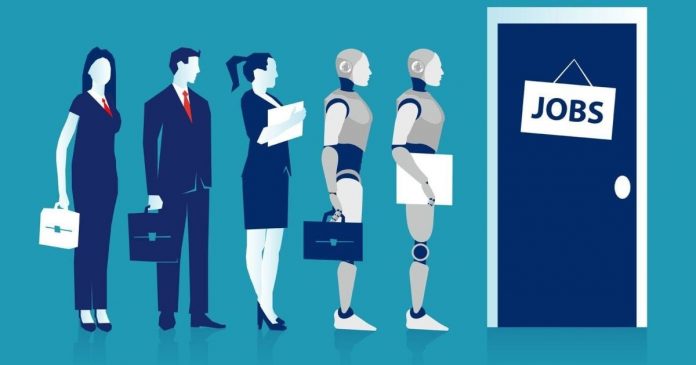
Professional development in American universities is no longer being treated as a side activity that happens a few times a year. In 2026, artificial intelligence is pushing it much closer to the centre of institutional planning. The change is not only about teaching people how to use new tools but helping faculty rethink decision-making and the skills needed to adapt.

EDUCAUSE’s January 2026 research on AI in higher education makes that clear. Institutions are now dealing with AI through strategies, policies, guidelines, and practical questions about how staff and faculty already use AI in their work.

That is why professional development looks different now. The strongest university programs are moving beyond one-off AI awareness sessions and into more structured models of training. Harvard, for example, has built a dedicated Generative AI resource hub focused on teaching, research, and institutional work.

Universities are Treating AI Training as an Institutional Skill, Not a Passing Workshop Topic

The biggest change in 2026 is that AI development is becoming more systematic. Universities are asking whether faculty can use AI responsibly, critically, and productively. This shift mirrors the commercial sector. For example, real money casinos like https://kasyno-na-pieniadze.pl/ utilize AI for gaming safety, demonstrating why these digital skills are now vital across all modern professional landscapes.

Against that backdrop, institutional professional development matters more now. Universities are increasingly expected to give people a clearer internal route through a confusing external landscape. The EDUCAUSE 2026 summit highlights how AI is redefining roles, augmenting teams, and requiring new leadership strategies.

The Strongest Programs are Moving From Tool Training to AI Literacy

This is where the shift becomes more interesting. Universities are starting to realise that AI training does not work well when it focuses only on prompts, platforms, or shortcuts. Those things matter, but they are not enough.

Stanford’s Teaching Commons now frames AI literacy as a set of skills and knowledge people need to navigate both the opportunities and the challenges of generative AI thoughtfully. UNESCO’s AI competency framework for teachers follows the same logic.

It defines competencies across ethics, AI foundations and applications, pedagogy, human-centred thinking, and AI for professional learning. That is a much broader model than simple software training.

That broader model matters because professional development programs in 2026 are not only trying to make people more efficient. They are trying to make them more prepared. The institutions taking AI seriously are not just asking whether staff can use a tool. They are asking whether they understand its limits, risks, and implications as well.

Universities are also Building More Formal Pathways for Applied AI Learning

Another clear development is the growth of structured AI programs inside and around universities. Some of these are aimed at faculty and staff directly. Others sit inside professional or executive education and shape the wider culture of institutional upskilling.

Michigan Engineering Professional Education’s Applied Generative AI Specialization is a good example. It includes AI literacy, model architecture, and application-building components, with hands-on work across real-world uses. MIT Professional Education’s 2026 Applied Generative AI for Digital Transformation course follows a similar path, presenting AI as a professional capability that needs structured learning rather than casual experimentation.

That matters because it shows where universities are heading. Professional development is becoming less reactive. It is starting to look more like a pathway, with levels, expectations, and clearer outcomes.

Faculty Development is Changing Because the Job Itself is Changing

This is probably the deepest shift of all. AI is not only changing what universities teach. It is changing what academic and administrative work looks like inside the institution.

EDUCAUSE’s March 2026 article on the role of faculty in the university of the future argues that AI should not be understood as replacing faculty, but as making it more important for them to focus on distinctly human work. This includes guiding students, building relationships, and handling ethical and intellectual complexity.

That is an important point because it changes the purpose of professional development. The goal is no longer simply to keep up. The goal is to help people redefine where their value sits in an AI-shaped university.

That is why 2026 feels different. AI training is no longer being folded into professional development as an extra topic. It is starting to reshape the purpose of professional development itself.