DD
MM
YYYY

PAGES

DD
MM
YYYY

spot_img

PAGES

Home Blog Page 3412

Marathon Digital Holdings’ Consulting for Potential BTC Mining in Kenya

0

The landscape of Bitcoin mining is ever-evolving, with companies continually seeking new frontiers that offer the optimal mix of resources to power this energy-intensive process. One such company at the forefront of this industry is Marathon Digital Holdings, a North American giant known for its large-scale and technologically advanced Bitcoin mining operations.

Recently, there has been a buzz around Marathon Digital Holdings’ potential expansion into Kenya, a country with a burgeoning interest in blockchain technology and cryptocurrency. The consultation between Marathon and Kenyan authorities signifies a pivotal moment for the country’s digital economy, potentially paving the way for a cryptocurrency revolution in East Africa.

Kenya’s appeal as a potential site for Bitcoin mining operations lies in its abundant renewable energy resources, particularly geothermal and hydroelectric power. This aligns with Marathon’s commitment to sustainable mining practices, as evidenced by their operational strategy and ESG (Environmental, Social, and Governance) initiatives.

The Kenyan government’s openness to exploring cryptocurrency as part of its economic strategy is a progressive move, with President William Ruto inviting Marathon for consultations with the National Treasury and Energy Ministry. This collaboration could lead to a regulatory framework that supports cryptocurrency while ensuring economic stability and security.

Moreover, the impact of Bitcoin mining on the Kenyan economy could extend beyond mere financial gains. There are reports of Bitcoin mining projects in rural Kenya that not only power mining operations but also bring electricity to local homes, thus contributing to community development. This model of using cryptocurrency mining to support local infrastructure could set a precedent for other regions in Africa.

However, the introduction of large-scale Bitcoin mining operations by companies like Marathon also raises questions about regulation, sustainability, and economic equity. The Kenyan government’s openness to these discussions indicates a willingness to address these concerns head-on, potentially creating a regulatory environment that benefits all stakeholders involved.

The path to establishing Bitcoin mining operations in Kenya is not without challenges. The recent exposure of a fraudulent scheme misusing Marathon’s name to target Kenyan investors highlights the need for stringent measures to protect consumers and maintain the integrity of the cryptocurrency market.

Marathon’s potential venture into Kenya represents more than just an expansion of their mining operations; it’s a testament to the global nature of cryptocurrency and its ability to transcend borders. If successful, this move could serve as a model for other African nations looking to harness the power of blockchain technology for economic growth.

As the world watches, the outcome of Marathon’s consultations in Kenya could mark a significant milestone in the global Bitcoin mining industry and the broader adoption of cryptocurrency in Africa. The synergy between Kenya’s renewable energy capabilities and Marathon’s mining expertise might just be the catalyst needed for a new era of digital economic development in the region.


Quandary of Immobilized Assets and Ukraine’s Reconstruction

0

The ongoing conflict in Ukraine between Russian Forces has led to widespread destruction, necessitating a colossal effort for survival and reconstruction. A significant point of discussion in this context is the $300 billions of immobilized assets, which, as it stands, can only partially address the financial requirements of Ukraine’s exigent needs.

The immobilized assets in question refer to Russian state assets that have been frozen by Western nations in response to the conflict. The moral and practical considerations of utilizing these assets for Ukraine’s benefit are complex and multifaceted.

On one hand, there is a strong argument for the confiscation of these assets to aid Ukraine, given the extensive damage inflicted upon the nation. On the other hand, legal and diplomatic implications make the process of repurposing these assets a subject of intense debate.

The costs of Ukrainian reconstruction are difficult to estimate, with figures ranging from $500 billion to $1 trillion. The $300 billion, if repurposed, could potentially cover five years of Ukraine’s war effort or three-fifths of the conservatively estimated reconstruction costs. However, this would still leave a substantial financial gap that needs to be addressed through other means.

The Group of Seven (G7) nations have been moving closer to an agreement on seizing these assets to aid Ukraine. This action could provide a significant boost to Ukraine’s defense and eventual reconstruction, and possibly serve as a deterrent to further aggression. The U.S. Congress has also passed a bill that could unlock billions in frozen Russian assets for Ukraine’s reconstruction, highlighting the international community’s efforts to find tangible ways to support Ukraine.

The debate over the immobilized assets is not just about the financial aspects but also about the principles of justice and accountability. There is a growing consensus that those responsible for the conflict should bear the costs of the damage caused. The G7’s stance that the assets will not be returned until Russia pays for the damage is a reflection of this principle.

While the $300 billions of immobilized assets represents a significant sum, it is clear that it can only partly address the cost of Ukraine’s survival and reconstruction. The international community continues to explore various avenues to support Ukraine, with the moral imperative of aiding a nation in distress guiding these efforts. The resolution of this issue will require careful navigation of legal, ethical, and diplomatic challenges, with the ultimate goal of facilitating Ukraine’s recovery and ensuring accountability for the conflict.

Quantum’s Role in Establishing Digital Provenance

0

The concept of provenance, the chronology of the ownership, custody or location of a historical object, has been a cornerstone in the art and collectibles world for centuries. It is the definitive record that ensures the authenticity and legal ownership of a piece, often increasing its value and significance.

In the digital realm, establishing provenance has been a complex challenge due to the ease of duplication and distribution of digital files. This challenge was the driving force behind the creation of the first-ever non-fungible token (NFT), known as Quantum.

Quantum marked a pivotal moment in the evolution of digital art and ownership. Created by digital artist Kevin McCoy and tech entrepreneur Anil Dash in May 2014, Quantum is a video clip made by McCoy’s wife, Jennifer. The artwork was registered on the Namecoin blockchain and sold to Dash for $4 during a live presentation at the Seven-on-Seven conference at the New Museum in New York City.

This act of registering a digital art piece on a blockchain as a unique asset was revolutionary. It demonstrated the potential of blockchain technology to authenticate, own, and trade digital assets in a way that was previously impossible.

The significance of Quantum lies not just in its artistic value but in its technological innovation. By utilizing the blockchain, Quantum established a verifiable and immutable record of ownership. This breakthrough paved the way for the burgeoning NFT market, which saw a meteoric rise in popularity and value. The NFT market exploded from a modest $82 million in 2020 to an astounding $17 billion in 2021. However, it also faced volatility and scrutiny, with concerns over environmental impact and market sustainability.

Despite these challenges, the promise of NFTs remains strong. They offer content creators unprecedented opportunities to assert ownership rights, engage communities, and access new financial prospects within digital landscapes. The World Economic Forum, in collaboration with Bain & Company, has recognized the transformative potential of NFTs, highlighting their ability to improve customer engagement, create innovative communication avenues, and facilitate novel experiences for fans and customers.

As we look to the future, the role of NFTs in the digital economy continues to evolve. With advancements in technology and a growing emphasis on digital ownership, the legacy of Quantum as the first NFT serves as a reminder of the power of innovation to redefine the boundaries of art and commerce. It stands as a testament to the human desire to preserve the uniqueness and ownership of creations, whether tangible or digital.

The journey of Quantum from a simple transaction at a conference to a historical digital artifact exemplifies the transformative impact of blockchain technology on the concept of provenance. It has opened a new frontier for artists, collectors, and investors alike, offering a glimpse into the vast possibilities of a future where the digital and physical worlds converge in ownership and value.

Quantum’s story is far from over. As the digital landscape continues to expand, the principles it established will undoubtedly shape the trajectory of digital ownership and creativity for years to come. The NFT revolution, sparked by a single token, continues to unfold, promising a future where every digital asset can be as unique and valued as its physical counterpart. Quantum, therefore, is not just a token; it is a symbol of the digital age’s potential to redefine ownership and authenticity in the ever-evolving world of art and technology.

Nigeria’s Nigerian Electricity Sector Undergoes Transformation: NERC Unbundles TCN

0

In a sweeping overhaul aimed at redefining Nigeria’s electricity sector, the Nigerian Electricity Regulatory Commission (NERC) has embarked on a transformative journey, unbundling the structure of the Transmission Company of Nigeria (TCN) and ushering in a new era with the establishment of the Nigerian Independent System Operator Limited (NISO). 

This groundbreaking development, unveiled through an official order dated April 30, 2023, jointly signed by NERC chairman, Sanusi Garba, and vice chairman, Musiliu Oseni, marks a watershed moment in the nation’s quest for energy sector reform.

At the heart of this monumental shift lies the imperative to enhance operational efficiency and optimize performance within the electricity value chain. 

The genesis of this shift can be traced to the guidelines outlined in the Electricity Act 2023, which ushered in a new regulatory framework aimed at fostering transparency, accountability, and sustainability within the sector. 

NERC had previously granted Transmission Service Provider (TSP) and System Operations (SO) licenses to TCN, aligning with the Electric Power Sector Reform Act.

However, with the enactment of the Electricity Act 2023 on June 9, clearer directives emerged for the establishment and licensing of the Independent System Operator (ISO), alongside the transfer of assets and liabilities from TCN’s segment of the ISO.

Consequently, in the circular, the commission mandated the Bureau of Public Enterprises (BPE) to duly incorporate, by May 31 without fail, a private company limited by shares under the Companies and Allied Matters Act (CAMA), 2020.

By delineating clear guidelines for the incorporation and licensing of an independent system operator (ISO), as well as delineating the seamless transfer of assets and liabilities from TCN, the legislation laid the groundwork for a seismic shift in the sector’s operational paradigm.

In accordance with NERC’s directive, TCN is mandated to begin the seamless transfer of all market and system operation functions to the newly minted NISO. This transfer of responsibilities meticulously carried out under the watchful gaze of regulatory authorities, heralds a new dawn for the electricity sector. It is expected to enhance transmission performance that has been characterized by inconsistencies.

Echoing the sentiments of regulatory authorities, NERC emphasizes the overarching objectives underpinning NISO’s mandate, as contained in its memorandum of association (MOU). 

“The company shall hold and manage all assets and liabilities pertaining to market and system operation on behalf of market participants and consumer groups or such stakeholders as the Commission may specify,” it said. 

Moreover, NISO is empowered to negotiate and enter into contracts for the procurement of ancillary services with independent power producers and successor generation licensees, thus fostering a more dynamic and responsive electricity market. 

By assuming the mantle of responsibility for all market and system operation-related contractual rights and obligations handed over by TCN, NISO has emerged as a linchpin in Nigeria’s quest for energy sector reform.

As Nigeria embarks on this transformative journey, Nigerians and stakeholders across the spectrum hold cautious optimism tempered with a sense of urgency. The establishment of NISO is expected to recalibrate the operational dynamics of the electricity sector, helping the nation harness the transformative potential of strategic reforms and regulatory interventions.

BlockDAG’s X1 App Launch Set For June 1st Amidst Cardano’s Surge & XRP’s Market Fluctuations

0

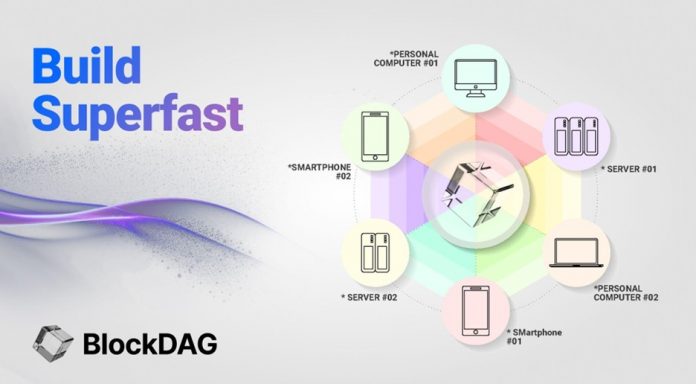
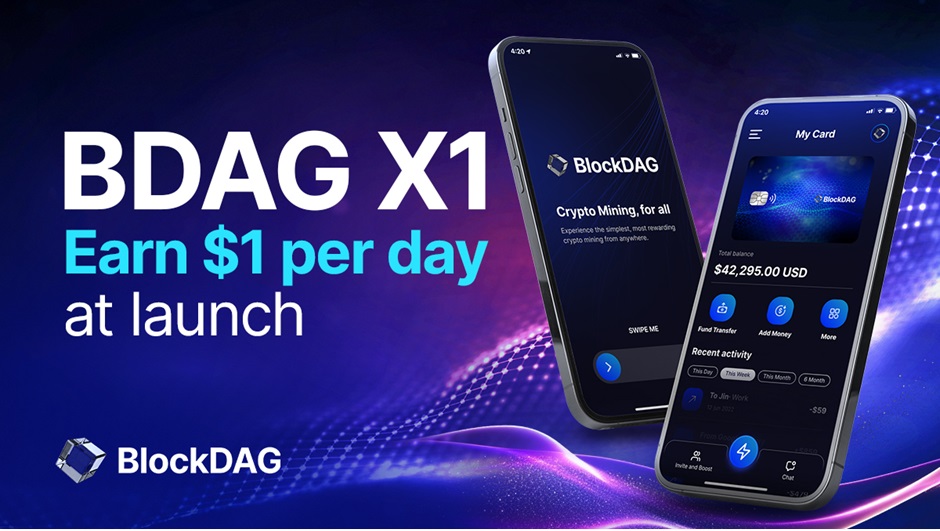
BlockDAG is set to transform the cryptocurrency mining landscape with its upcoming X1 app launch, scheduled for June 1, 2024. This innovation arrives during a notable bull run for Cardano and amidst fluctuations in XRP’s market price, highlighting a period of significant activity in the cryptocurrency sector. BlockDAG‘s new app will enable users to mine up to 20 BDAG coins daily using just their smartphones, democratizing access to cryptocurrency mining.

Cardano’s Thriving Market Driven by Proof-of-Stake

Cardano’s recent success in the cryptocurrency market can be attributed to its efficient Proof-of-Stake (PoS) consensus mechanism, highlighted by its Ouroboros protocol which ensures enhanced security and scalability. This technological advantage has spurred a bull run, bolstering Cardano’s standing in the decentralized finance sector. Its commitment to transparency and governance continues to attract a broad user base, reinforcing its position as a leading decentralized currency.

XRP Experiences Volatility Yet Remains a Key Player

Despite experiencing significant price volatility, XRP maintains a strong presence in the cryptocurrency market. Its unique consensus protocol, which does not rely on traditional mining, positions it as an attractive option for investors seeking stability in the often unpredictable crypto market. XRP’s ability to sustain its prominence despite uncertain market conditions reflects its resilience and enduring appeal.

BlockDAG’s Pioneering X1 App Poised to Change Mining

With the beta version of the X1 app launching on both iOS and Android platforms, BlockDAG is introducing a groundbreaking approach to cryptocurrency mining. The app’s design focuses on efficiency, allowing for mining without substantial resource consumption. Features such as a unique referral system and daily engagement rewards are designed to enhance user participation and profitability.

BlockDAG’s innovative ecosystem supports decentralized applications and offers competitive transaction fees, contributing to its robust presale success, which has already garnered over $22.4 million. The platform’s comprehensive tools, including blockchain explorers and options for mining and staking, ensure transparency and active user involvement in network security.

BlockDAG’s X1 App Marks a New Chapter in Crypto Mining

As BlockDAG prepares to launch its X1 app, the cryptocurrency community is poised to witness a significant shift in mining practices. This launch, aligning with Cardano’s bull run and amidst XRP’s ongoing volatility, positions BlockDAG as a formidable contender in the decentralized finance arena.

With a promising beta version on the horizon and a successful presale indicating strong investor confidence, BlockDAG is well-positioned to offer a lucrative, user-friendly mining experience. Investors and crypto enthusiasts alike are encouraged to stay tuned for the June 1 launch, promising a new era of accessible and profitable cryptocurrency mining.


Join BlockDAG Presale Now:

Website: https://blockdag.network

Presale: https://purchase.blockdag.network

Telegram: https://t.me/blockDAGnetworkOfficial

Discord: https://discord.gg/Q7BxghMVyu