DD
MM
YYYY

PAGES

DD
MM
YYYY

spot_img

PAGES

Home Blog Page 3415

Africa Accounted For Less Than 1% of Global Startup Funding in Q1 2024

0

According to a recent report by research firm Africa: The Big Deal, Africa accounted for less than 1% (-0.5%) of global startup funding in the first quarter (Q1) of 2024.

The continent’s startup funding remains a marginal fraction of global investment flows and experienced a more pronounced decline compared to most other regions in the first quarter (Q1) of 2024.

In terms of Quarter-on-Quarter (QoQ) evolution, start-up funding in Africa contracted slightly, recording-9%) while it grew in the two top regions (+33% in the US and +8% inEurope) and therefore globally (+11%). Meanwhile, Africa still performed better than Asia (-20%) and LatAm in particular (-38%).

On the Year-on-Year report, Africa performed poorly than other continents, with Q1 2024 funding representing just over half of Q1 2023 funding (-47%).  However, globally and across all regions except Europe (+3%), double-digit decrease was also the norm.

Check Out The Total Amount of funding startups raised in Each Region of Q1 2024

The total funding raised by startups globally in Q1 of 2024 reached $58.4%, representing a +11% Quarter-on-Quarter (QoQ) growth.

US:

Startups in this region raised a total sum of $34.2 billion, with a +33% Quarter-on-Quarter growth. Meanwhile it experienced a -21% decline in Year-on-Year (YoY) evolution.

Europe:

Startups in this region raised a total sum of $12.2 billion, with +8% Quarter-on-Quarter (QoQ) growth. It recorded a positive +3% year-on-year (YoY) growth.

Asia:

Startups in this region raised a total sum of $10.2 billion. However it recorded declines in QoQ and YoY, with -20% and -17% respectively.

LatAm:

Startups in this region raised a total sum of $0.5 billion, with -38% recorded on Quarter-on-Quarter growth, with -29% recorded on Year on Year.

Africa:

Startups in the African region performed poorly, raising $0.3 billion in funding and -9% in Quarter-on-Quarter (QoQ) and -47% Year-on-Year.

The report stated that if Q1 2024 funding were compared to the funding heatwave peak (in late 2021/early 2022), start-ups are currently raising 5x times less quarterly than they were when fundraising peaked in Q3 2021.

This highlights a more serious contraction than the global average (3.1x), which is very much influenced by Europe and US numbers (2.7x). It is in line with the Asian trend though, and much less dramatic than the gap registered in LatAm (14x).

Notably, the trajectory of venture funding to African startups is beginning to look like a bell curve from barely anything 10 years ago to a rapid acceleration in 2021, peak funding in 2022, and a deceleration starting from 2023.

For the coming quarters, with global inflation and interest rates still at record highs, there are expectations of similar declines in African startup funding versus the previous year’s equivalent quarter.

African startups have been urged to focus on generating revenue and strengthening financial management amidst the decline in VC funding. Meanwhile, in response to the funding crunch, several startups have implemented several strategic measures to keep their business afloat.

Apart from the downsizing of the workforce, reports reveal that some of these measures implemented varied from business model shifts to exploring asset-light approaches.

Top 5 Crypto Presales of 2024: BlockDAG Leads with $19.8M, Alongside Dogecoin20, 5th Scape, Sponge V2, and eTukTuk

0

The 2024 crypto market is bustling with activity, showcasing several presales that are set to redefine global investment approaches. In the top 5 crypto presales of 2024, leading the pack are BlockDAG (BDAG), Dogecoin20 ($DOGE20), 5th Scape ($5SCAPE), Sponge V2 ($SPONGEV2), and eTukTuk ($TUK). These projects not only offer groundbreaking opportunities but also feature unique innovations.

BlockDAG, in particular, excels with its sophisticated hybrid technology that merges the security features of blockchains with the efficiency of DAG systems, marking a significant evolution in the sector.

1. BlockDAG: Forefront of Hybrid Crypto Technology:

BlockDAG is transforming the crypto space by integrating blockchain with Directed Acyclic Graph (DAG) technology. This fusion enhances transaction speed while upholding the robust security and reliability that blockchain is known for. Having already amassed $19.7 million, BlockDAG aims to reach a fundraising goal of $600 million by 2025.

Starting at a presale price of $0.005, the token’s value is anticipated to soar, offering substantial returns. The project’s momentum is further boosted by recent strategic developments, including a key presentation in Shibuya and the release of a detailed technical whitepaper.

2. Dogecoin20 ($DOGE20): Advancing Meme Coins Sustainably:

Dogecoin20 expands on Dogecoin’s foundation by adopting an eco-friendly Proof-of-Stake protocol, enhancing both the speed and security of transactions while delivering high yields, initially offering an APY of over 1800%.

Starting at $0.00014 per token, Dogecoin20 has quickly secured over $270K in investments, demonstrating solid market interest and backing. Its focus on sustainable cryptocurrency exchanges and attractive staking rewards positions Dogecoin20 as a prime choice for eco-aware investors.

3. Sponge V2 ($SPONGEV2): Meme Coin with New Gaming Features:

Building on $SPONGE’s success, Sponge V2 aims to strengthen its community ties with improved tokenomics and a forthcoming play-to-earn game. Positioned strategically for future listings on major exchanges like Binance and OKX, Sponge V2 is poised for significant market impact. Early backers gain from staking V1 tokens and enjoy enhanced rewards over four years as they transition to V2.

4. eTukTuk ($TUK): Leading the Eco-Friendly Transport Revolution:

eTukTuk is making strides in the electric vehicle (EV) market in developing nations by introducing an economical and environmentally friendly transport option. Its presale has swiftly raised over $1.9 million, highlighting its potential.

Investors not only contribute to a green initiative but can also benefit from the profits generated through $TUK-powered charging stations that provide attractive staking rewards.

5. 5th Scape ($5SCAPE): Pioneering VR on Blockchain:

5th Scape delves into the growing VR market by providing token holders with access to an expansive range of VR services—from gaming to educational content and major cinematic releases. Priced at $0.00248 per token, 5th Scape offers perpetual access to a broadening portfolio of VR services and products, along with discounts on cutting-edge VR gear for its token holders.

Final Call

As we edge closer to a pivotal year in the cryptocurrency sector, these top 5 crypto presales of 2024 offer varied and exciting investment possibilities. Each project stands out for its distinctive strengths, yet BlockDAG clearly leads with its advanced technology and promising growth potential, positioning it as the top investment choice for 2024.

This selection of innovative cryptocurrencies provides diverse options tailored to every investor’s needs, with BlockDAG at the helm as the premier crypto acquisition.

Connect with BlockDAG Now!

Website: https://blockdag.network

Presale: https://purchase.blockdag.network

Telegram: https://t.me/blockDAGnetworkOfficial

Discord: https://discord.gg/Q7BxghMVyu

Tekedia Capital is excited to congratulate Revnabio for its dual ISO accreditations

0

Tekedia Capital is excited to congratulate Revnabio for this milestone: “Revna Biosciences has carved a niche for itself in Ghana and West Africa by being the first facility in the region to secure dual ISO accreditations: ISO 15189:2022 for clinical diagnostics and ISO 20387:2018 for biobanking. This milestone is a testament to RevnaBio’s unwavering commitment to championing precision medicine by propelling molecular diagnostics and therapeutic discovery in the region…..’

“The American Association for Laboratory Accreditation (A2LA) has bestowed the ISO 15189:2022 accreditation upon Revna Biosciences, acknowledging its dedication to delivering top-tier clinical testing services. The accreditation process entailed a rigorous on-site evaluation by A2LA’s assessors, verifying the facility’s compliance with strict standards of precision, reliability, and patient confidentiality.”

We thank the Revnabio Team for the exceptional execution and commend our members for their commitments to fund generation-shaping companies in Africa and beyond.

— press release

ACCRA, Ghana, April 23, 2024/APO Group/ — Revna Biosciences (www.RevnaBio.com) has carved a niche for itself in Ghana and West Africa by being the first facility in the region to secure dual ISO accreditations: ISO 15189:2022 for clinical diagnostics and ISO 20387:2018 for biobanking. This milestone is a testament to RevnaBio’s unwavering commitment to championing precision medicine by propelling molecular diagnostics and therapeutic discovery in the region.

A Pledge to Quality and Patient Care

The American Association for Laboratory Accreditation (A2LA) has bestowed the ISO 15189:2022 accreditation upon Revna Biosciences, acknowledging its dedication to delivering top-tier clinical testing services. The accreditation process entailed a rigorous on-site evaluation by A2LA’s assessors, verifying the facility’s compliance with strict standards of precision, reliability, and patient confidentiality.

Revna Biosciences’ accreditation encompasses an extensive array of human sample tests, including those involving urine, swabs, blood, bone marrow, tissue samples, and plasma. With a specialization in bacteriology, virology, and molecular pathology, the facility is dedicated to providing patients with accurate and dependable diagnoses.

we are dedicated to enhancing access to top-quality healthcare and research facilities, especially in Africa where the demand for such services is paramount

Biobanking Excellence

Revna Biosciences has also earned accreditation for its biobanking practices under ISO 20387:2018. This accreditation spans the entire biospecimen lifecycle, from collection and acquisition to preservation, testing, storage, and distribution of various tissues and blood products. The company’s adherence to international standards guarantees the quality and integrity of biospecimen, thereby contributing to advancements in global medical research.

Dr. Derrick Edem Akpalu, CEO and Co-founder of Revna Biosciences, stated, “Our dual ISO accreditations reflect our commitment to excellence and quality, from sample collection to data analysis. This not only reassures patients but also benefits researchers and industry partners. These accreditations enhance our clinical research services, paving the way for global therapeutics and diagnostics development. By adhering to these ISO standards, we ensure the reliability of our archived biosamples and data, thereby enriching clinicogenomic insights and propelling the advancement of personalized medicine in the region. ”

Dr. Yaw Asare-Aboagye, a board member of the company, added, “We aim to meet the highest international standards as we are dedicated to enhancing access to top-quality healthcare and research facilities, especially in Africa where the demand for such services is paramount.”

Global Recognition and Industry Alignment

A2LA, the accrediting organization, is renowned for its Centers for Medicare and Medicaid Services (CMS) Deemed Status and International Laboratory Accreditation Cooperation (ILAC) Recognition, an indication of its reputation as an accrediting board in global clinical diagnostics. Furthermore, RevnaBio is a member of ISBER, an international forum for biobanking that advocates for high-quality standards and innovation in biorepository management. Revna Biosciences’ achievement aligns with global recognition and industry standards, positioning the company at the vanguard of medical innovation.

Embracing Liquidity Aggregation in Rapidly Evolving DEFI Industry

0

In the rapidly evolving world of decentralized finance (DeFi), liquidity remains a pivotal element for the success and sustainability of any platform. Ran Hammer, the Vice President of Orbs, has recently emphasized the critical role of liquidity aggregation in shaping the future of DeFi. Hammer’s insights shed light on the fragmented state of the current DeFi ecosystem, where the lack of a unified liquidity pool poses significant challenges for users and protocols alike.

Liquidity aggregation refers to the process of pooling together liquidity from various sources to facilitate efficient and seamless transactions. This concept is not new; however, its application within the DeFi space is gaining traction as a solution to the existing fragmentation. By aggregating liquidity, DeFi platforms can offer better rates, lower slippage, and enhanced user experience, ultimately fostering a more competitive environment against centralized exchanges (CEXs).

Hammer points out that liquidity aggregators, such as UniswapX and Cowswap, are at the forefront of this innovation. These platforms are optimizing trades by accessing liquidity from all available sources, thereby leveling the playing field with CEXs. The goal is to create a more inclusive and efficient market where users can execute trades without the need to navigate through multiple platforms or suffer from poor liquidity.

The significance of liquidity aggregation extends beyond mere convenience. It is a fundamental step towards achieving the vision of DeFi: to democratize finance and provide equal access to financial services. By consolidating liquidity, DeFi can enhance capital efficiency, reduce barriers to entry, and promote a more equitable distribution of financial opportunities.

Orbs, as a Layer-3 infrastructure network, is contributing to this vision by introducing solutions that bridge the gap between liquidity sources. The launch of Orbs Liquidity Hub is a testament to the company’s commitment to fostering a more interconnected and fluid DeFi landscape. The hub aims to bring aggregated liquidity to decentralized exchange automated market makers (DEX-AMMs), enhancing the overall functionality and appeal of DeFi protocols.

The lack of clear regulatory frameworks for DeFi platforms creates an environment of uncertainty. Without defined rules, DeFi projects operate in a grey area that could potentially attract regulatory scrutiny or lead to sudden policy shifts, impacting their operations and user trust.

As DeFi platforms grow, they must be able to handle an increasing number of transactions without compromising speed or inflating transaction costs. Scalability remains a significant hurdle, with many platforms struggling to maintain performance during peak usage times.

Bridging the gap between DeFi and traditional finance is essential for broader adoption. However, integrating these systems poses technical and regulatory challenges, as well as resistance from established financial institutions.

Addressing these challenges requires a collaborative effort from developers, users, regulators, and other stakeholders in the DeFi ecosystem. Innovations in technology, governance models, and regulatory approaches will be key to overcoming these obstacles and unlocking the transformative potential of DeFi for a more inclusive and efficient financial system.

As the DeFi sector continues to mature, the emphasis on liquidity aggregation will likely grow. Innovations in this area could pave the way for a new era of financial inclusivity and empowerment. With thought leaders like Ran Hammer advocating for these advancements, the future of DeFi looks promising, hinged on the pivotal concept of liquidity aggregation.

Nigeria Should Not Reject IMF’s Report on 4th Position, as Ex-British Envoy Urges

1

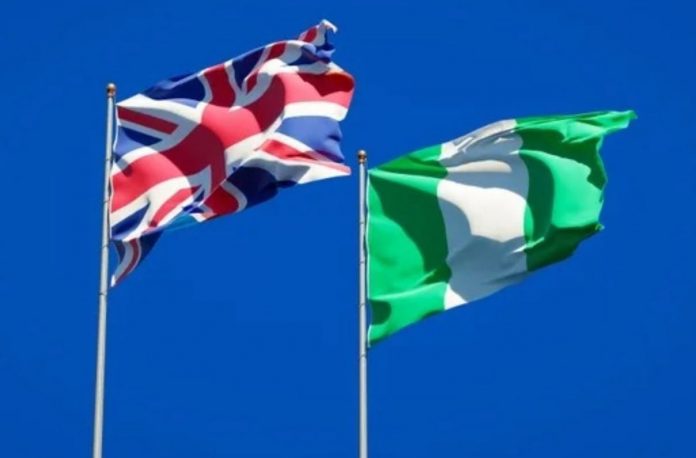
David Roberts, a former Director of the British Council in Nigeria, possibly wants to make Nigeria feel good, telling us to reject the International Monetary Fund (IMF) report which projects that Nigeria will lose its #1 ranking to the 4th position: 

 “In 2014 when Nigeria became the largest economy in Africa, it was not because of the calculations of the International Monetary Fund or the World Bank. It was because Nigeria’s economy had been rebased and recalculated by the National Bureau of Statistics. Were it not for the NBS, the world would have continued to perceive Nigeria as Africa’s third-largest economy

“That is certainly not true. If Nigeria became the biggest economy on the strength of the NBS data, why would Nigeria allow itself to be downgraded and labelled the fourth largest economy in Africa this year by the IMF? Does the IMF know Nigeria better than the NBS?”  –  David Roberts.

(As you know already, Nigeria is projected to fall to a Gross Domestic Product (GDP) of $253 billion, behind South Africa $373 billion, Egypt $348 billion and Algeria $267 billion.)

Good People, I do not know what data Mr. Roberts is contesting or rejecting. I hope Nigeria ignores him. Ignoring data you do not like does not make it go away. The IMF report is clear and simple: Nigeria you were the largest economy at N415/$ but when you deteriorated your currency to N1,000/$, we adjusted accordingly, and as a result of that, you are now #4.

Sure, I am not always a fan of the IMF, on its postulation on Africa. I was among those who rejected its rosy model on how Naira would stabilize around N650/$ post-Naira floating. But on this one, even though it was put on the IMF logo, the recalibration of Nigeria’s GDP is clear even to a secondary school kid, because our exchange rate has changed.