DD
MM
YYYY

PAGES

DD
MM
YYYY

spot_img

PAGES

Home Blog Page 3417

Dangote Refinery Petrol Supply Likely to Begin Q4 2024, S&P Analysts Project

0

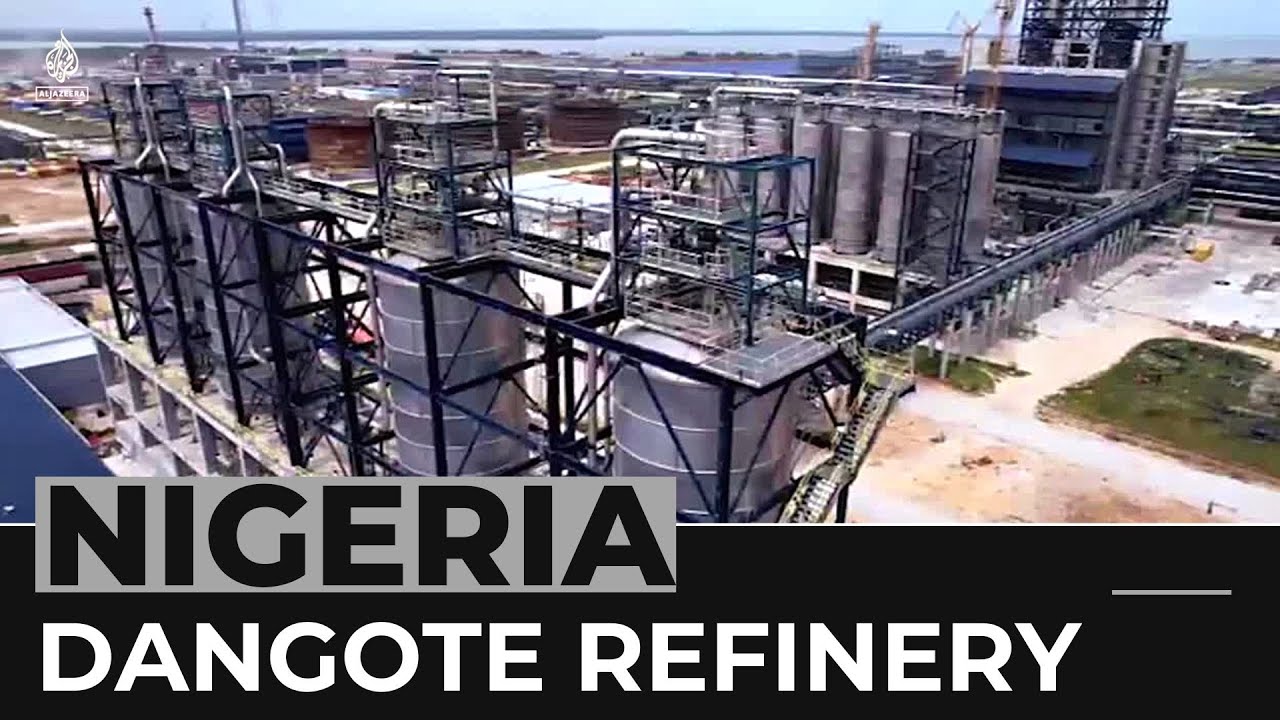
Standard and Poor’s (S&P) Global Commodities Insights analysts have projected a delay in the commencement of petrol supply from the Dangote refinery, suggesting a start date in the fourth quarter of 2024 rather than the May timeline stated by the company.

This revelation, made during an S&P podcast discussing West Africa’s oil product flows, stems from the instability in the Nigerian oil sector.

During the podcast titled “Exploring West Africa’s oil product flows in a changing refining landscape,” Kelly Norways, an African energy expert at S&P, discussed the anticipated impact of the Dangote refinery on energy imports in West Africa. Norways noted the refinery’s potential to substantially reduce energy imports, particularly petrol, estimating a supply of up to 290,000 barrels daily between 2024 and 2026.

However, Norways tempered expectations by stating that despite signs of activity at the refinery, the timeline for gasoline production remains uncertain.

“We are starting to see signs of activities, but all eyes are on when we’ll start to see gasoline production will commence from that project. There is a significant amount of pressure from the Nigerian government for significant volume of that supply to be sent to the domestic market,” she said.

While Dangote had expressed intentions to produce gasoline by May, S&P analysts anticipate a more realistic timeline for the fourth quarter of 2024.

“In reality, when we see that start scale up is still subject to debate. Dangote has recently been espousing some punchy timelines. They have most recently been saying that they are looking to produce gasoline by May. But in reality, our analyst expect that would be something like the fourth quarter of this year in a more realistic timeline,” she added.

The discussion also addressed shifts in petroleum product flows into West Africa, noting a reduction in supply from traditional suppliers such as the Netherlands’ Amsterdam and Rotterdam refineries. This decline is attributed to quality improvements and new regulations implemented since 2022, reflecting broader changes in the global refining landscape.

The Dangote refinery, officially commissioned in May 2023, has faced challenges operating at full capacity due to a series of delays. Despite setting a production projection for October, the 650,000 barrels per day oil plant missed its target, marking the second time in 2023 it raised hopes of ending petrol importation in Africa, particularly Nigeria.

Although it began receiving crude oil around December, production did not commence until March, when diesel distribution to local marketers commenced.

The refinery’s inability to start production stems from insufficient crude oil supply from the Nigerian National Petroleum Company Limited (NNPCL), a reflection of the broader dwindling oil production in Nigeria.

In response, Dangote Refinery has adopted an innovative approach, sourcing one-third of its oil from the United States to address domestic supply challenges and enhance operational efficiency.

Energy experts said that while the refinery holds promise for reducing energy imports and boosting regional energy security, operational hurdles must be addressed to realize its full potential.

Nigeria to Roll Out CNG Vehicles for greener and affordable transport

0

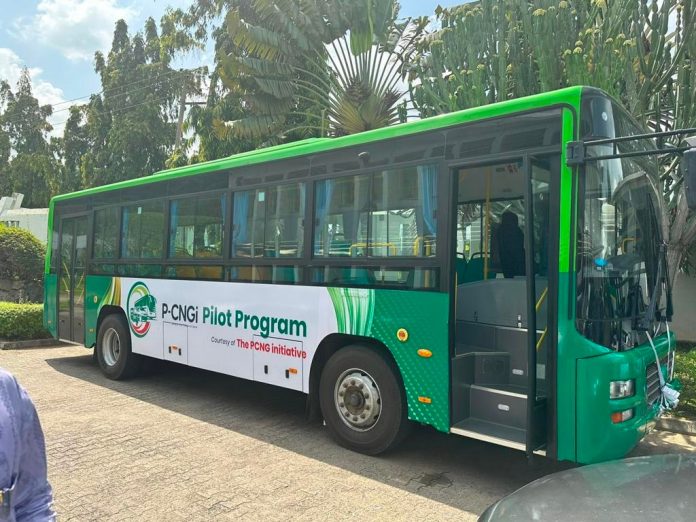
In a move towards cleaner energy and affordable transportation, Bayo Onanuga, the Special Adviser to the President on Information and Strategy, has announced that the federal government is set to inaugurate the first set of compressed natural gas (CNG) vehicles ahead of the Tinubu administration’s first anniversary on May 29.

Speaking from Abuja, Onanuga disclosed the Federal Government’s allocation of N100 billion from the N500 billion palliative budget towards the acquisition of 5,500 CNG vehicles, including buses and tricycles. Additionally, the allocation encompasses 100 electric buses and over 20,000 CNG conversion kits, with provisions for the expansion of CNG refilling and electric charging stations.

Under the stewardship of an expert committee led by Michael Oluwagbemi in the oil and gas sector, this initiative seeks to fulfill President Tinubu’s commitment to transitioning towards cleaner energy and environmentally friendly transportation alternatives.

Onanuga noted the substantial response from the private sector, with over $50 million invested in refueling stations, conversion centers, and mother stations.

He said in a statement: “After months of detailed planning and background work, the committee driving the initiative is set to deliver on President Tinubu’s vision and promise.

“Already, the committee, being led by Michael Oluwagbemi, an oil and gas expert, has delivered some major foundational reforms to enable the new CNG and Electric Vehicles future the President promised.

“All is now ready for delivery of the first set of critical assets for deployment and launch of the CNG initiative ahead of the first anniversary of the Tinubu administration on May 29.

“The private sector has responded with over $50 million in actual investments in refuelling stations, conversion centres, and mother stations.”

This collaboration between the government and private enterprises underlines the collective effort to promote the adoption of CNG vehicles and infrastructure.

The rollout of CNG buses and tricycles, coupled with the ambition to have at least one million natural gas vehicles on Nigerian roads by 2027, signifies a pivotal shift towards cleaner energy within the transportation sector. With potential emissions reductions of more than 40%, CNG vehicles align with Nigeria’s obligations under the Paris Climate Accord and contribute to global efforts to combat climate change.

CNG is said to be a more environmentally friendly fuel compared to other fuels. It produces up to 95% fewer harmful emissions or greenhouse gases, such as carbon dioxide, carbon monoxide, and nitrous oxide. For example, CNG emits 44% less carbon monoxide compared to the 80% emitted by burning petrol.

Drawing inspiration from other nations such as India, China, and Brazil, which have successfully deployed large fleets of natural gas-powered vehicles, Nigeria aims to reduce pollution and dependence on liquid petroleum products through the adoption of CNG technology.

The Presidential CNG Initiative, inaugurated in October 2023 following the removal of fuel subsidies, prioritizes the provision of more affordable, safer, and environmentally friendly energy solutions, particularly for mass transit. As the first set of CNG vehicles prepares for launch, Nigeria takes a significant stride toward realizing this vision.

Supported by substantial government funding and private sector investment, Nigeria hopes to achieve cleaner air, reduced emissions, and enhanced energy security as it embraces CNG vehicles as a key component of its transportation strategy.

CNG has a narrow range of flammability that varies from 5-15%. Due to its low flammability property, it lowers the chances of catching fire. However, a CNG car can easily reach its ignition temperature of 540 degrees Celsius while being used and can catch fire, raising concerns among Nigerian commuters about its safety.

Post-Halving: Bitcoin Price Surge Amidst Bullish Predictions

0

The price of Bitcoin has begun a rally to the upside, sparking excitement in the crypto market as several traders and analysts predict a continuous rally.

With Bitcoin currently trading at $66,224 as of the time of writing this report, the crypto asset has resumed its upward price trajectory, with the volume rising to 14.63% to $25.03 billion in the last 24 hours, amidst bullish predictions.

It is understood that due to the just concluded Bitcoin halving event that occurred on April 20, the price of Bitcoin is expected to move upwards.

Historically, the price of Bitcoin has followed a four-year cycle believed to be associated with each halving event. There has been a reliable pattern of rallies and blow-off tops before and after the halving.

While past performance does not guarantee future results, these historical precedents suggest that the reduced supply of new bitcoins entering circulation after a halving can lead to increased scarcity and, consequently, higher prices.

A Look at Previous Bitcoin Halving Events

Halving 1

  • The first halving occurred on November 28, 2012, and reduced the block reward to 25 BTC from 50 BTC.
  • Price of Bitcoin at time of halving: $13
  • Following year’s peak: $1,152

Halving 2

  • The second halving occurred on July 16, 2016, and reduced the block reward to 12.5 BTC.
  • Price of Bitcoin at time of halving: $664
  • Following year’s peak: $17,760

Halving 3

  • The third halving occurred on May 11, 2020, and reduced the block reward to 6.25 BTC.
  • Price of Bitcoin at time of halving: $9,734
  • Following year’s peak: $67,549

With the just concluded fourth halving event, there are significant bullish predictions of the price of Bitcoin. CoinCodex sees a BTC price peak above $170,000 in August 2025 before a retracement to levels near $95,000 to $100,000. BitQuant believes there will be a new all-time high sometime during the pre-halving rally, with the post-halving peak seeing prices over $250,000.

While the halving event is often preceded by a Bitcoin price rally, several analysts have warned against overly simplistic expectations of post-halving price surges, pointing out that Bitcoin’s price trajectory over the past years has been shaped by several external factors such as economic trends, monetary policies, the stock market, etc.

Notably, amid the ongoing discussions surrounding the recent Bitcoin halving and its potential impact on prices, analysts are divided between long-term optimism and short-term caution regarding market volatility.

Analysts and several crypto experts are closely monitoring the market, with prominent figures providing insights into potential future trends. This analysis has injected fresh optimism into the market, fueling anticipation among investors.

Unilever Nigeria Records N1.17bn FX Revaluation Gain in Q1 2024 As Access Holdings Shareholders Approve $1.5bn Offering for Recapitalization

0

Unilever Nigeria Plc has reported a significant foreign exchange revaluation gain of N1.17 billion in the first quarter of 2024, as per its unaudited financial results published on the NGX.

This marks a notable turnaround from the corresponding period in 2023 when the company recorded a foreign exchange revaluation loss of N458.29 million. The contrasting results reflect the volatility witnessed in the Nigerian foreign exchange market, with the naira depreciating by 184.34% over one year.

The depreciation of the naira, from N460.35/$1 in Q1 2023 to N1309/$1 as of March 31, 2024, has had profound implications for companies operating in Nigeria, including Unilever. The unification of the foreign exchange market by the Central Bank of Nigeria (CBN) in June 2023, coupled with subsequent devaluations, resulted in significant foreign exchange losses for firms with exposure to foreign currency-denominated loans.

Despite the challenges posed by naira volatility, Unilever Nigeria reported revenue of N32.31 billion in Q1 2024, accompanied by a profit-before-tax of N4.35 billion. While this represents a marginal decline from the previous year’s figure of N4.49 billion, the company’s prudent management is evident in its ability to navigate the turbulent economic environment.

Unilever’s reversal of foreign exchange revaluation losses in Q1 2024 has been noted as a positive indication amidst broader economic challenges. The company’s proactive measures and resilience are said to be underscored by its ability to mitigate the impact of currency fluctuations and sustain profitability.

Additionally, the increase in profit after tax to N3.35 billion, compared to N2.67 billion in the same period of 2023, reflects Unilever’s commitment to delivering value to its shareholders amidst evolving market conditions.

Access Holdings Receives Shareholders’ Approval to Raise $1.5 Billion for Recapitalization.

Meanwhile, Access Holdings has obtained shareholders’ consent to raise $1.5 billion from local and international capital markets as part of its recapitalization strategy.

The decision was made during the company’s annual general meeting (AGM) held in Lagos on April 19. This move aligns with the Central Bank of Nigeria’s (CBN) recent announcement of increased minimum capital requirements for financial institutions, prompting Access Holdings to bolster its capital base to meet regulatory standards.

Access Holdings plans to raise the capital through various methods, including public offerings, private placements, rights issues, and book-building processes. The company aims to issue ordinary shares, preference shares, alternative tier one, convertible and/or non-convertible notes, bonds, or other instruments to bolster its financial position.

At the AGM, shareholders voted in favor of increasing the company’s issued share capital from N17,772,612,811.00 to N26,658,919,216.50 ordinary shares. This decision reflects their support for Access Holdings’ recapitalization efforts in response to the regulatory requirements set forth by the CBN.

The CBN’s announcement on March 28 mandated financial institutions to enhance their minimum capital requirements within 24 months.

Commercial banks with international licenses are now required to maintain a capital base of N500 billion, while national and regional financial institutions must have capital bases of N200 billion and N50 billion, respectively.

The regulatory adjustment aims to bolster banks’ resilience, solvency, and capacity to support Nigeria’s economic growth amidst prevailing macroeconomic challenges and external shocks.

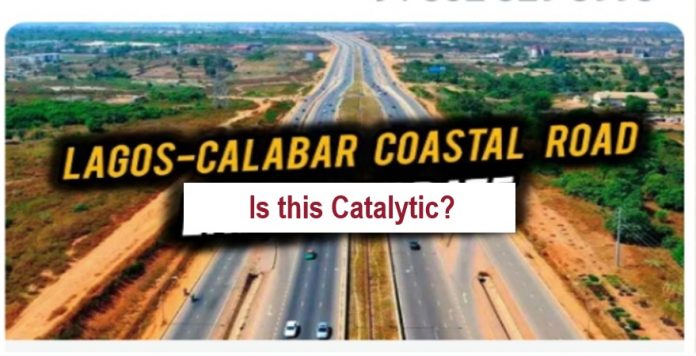
Lagos-Calabar Coastal Highway: Obi Asks Nigerian Government to Prioritize Existing Roads

0

Peter Obi, the former presidential candidate of the Labour Party, has voiced concerns regarding the Lagos-Calabar Super Highway project. His concerns stem from the dilapidated state of numerous roads across Nigeria, which he deems more pressing for rehabilitation due to their contribution to hazards faced by travelers and the stagnation of economic growth. 

In a statement issued through his X (formerly Twitter) account on Monday, Obi highlighted the need for a strategic allocation of resources to address existing infrastructure challenges before embarking on ambitious new projects. He expressed reservations about the timing and prioritization of the Lagos-Calabar Super Highway project, urging the federal government to redirect resources towards rehabilitating existing roads critical for regional connectivity and economic development across the six geo-political zones.

Besides indicating his reserved concerns about the cost of the project, Obi noted the perilous conditions of many Nigerian roads, which have become death traps for travelers, citing instances of vulnerability to kidnappers and other dangers. 

“At the forefront of my concerns is the pressing issue of numerous uncompleted roads scattered across the country, many of which have become hazardous death traps and security risks,” he said. “It is disheartening to witness the plight of innocent Nigerians who traverse these dilapidated roads under perilous conditions, vulnerable to kidnappers and other dangers.”

The Lagos – Calabar coastal highway, expected to gulp N15.36 trillion or N4.39 billion per kilometer over 30 years, has become a subject of controversy since it was announced. A large section of Nigerians, including the former Vice President Atiku Abubakar, have described the project as a conduit of corruption.

Obi outlined a comprehensive list of vital roads in various zones, including the North-West, North-East, North-Central, South-West, South-East, and South-South regions, which are in dire need of repair and completion.

  1. NORTH-WEST Abuja – Kaduna – Zaria – Kano Road, – Sokoto – Funtua – Zaria Road, Kano – Hadejia Road, Kano – Katsina Road , Zaria – Funtua – Shema – Tsafe – Gusau – Talata – Mafara – Sokoto Road , Kano – Kwanar – Danja – Hadejia Road.
  2. NORTH-EAST Kano – Damaturu – Maiduguri Road – Mubi – Maiduguri Road, Nguru – Gashua – Bayamari Road, Gombe – Biu – Numan Road, Dikwa – Marte – Monguno Road, Potiskum – Fika – Bajoga – Gombe – Biu Road , Mayo Belwa – Jada – Ganye – Tongue Road , Tumu – Pindiga – Kashere – Bashar – Wase – Wamba – Nassarawa Road. 

3. NORTH-CENTRAL Abuja – Lokoja – Okene- Auchi – Benin Road, Ilorin – Jebba Road Kabba – Omuaran Road, Suleja – Minna Road, Makurdi – Gboko – Yandev – Katsina-Ala Road, Buruku Bridge across Katsina River. 

4. SOUTH-WEST Lagos – Badagry Road , Ibadan – Ife – Ilesha – Osogbo Road , Itoikin – Ijebu Ode – Ibadan Road, Ibadan – Ilorin – Jebba – Mokwa – Bokani Junction Road Abeokuta – Ibadan Road, Ikorodu – Shagamu Road, Ado – Igede – Aramoko – Itawure Road Ajasse Ipo – Offa – Erinle – Osun State Border Road.

5. SOUTH-EAST 9th Mile – Oturkpo -Makurdi Road , Enugu -Port Harcourt Road , Onitsha – Awka – Enugu Road , Onitsha – Owerri – Umuahia Road, Bende – Arochukwu – Ohafia Road , Okigwe – Afikpo Road , Nsukka – Obollo Afor Ehamafu – Nkalagu Road, Oba – Nnewi – Okija Road 

6. SOUTH-SOUTH Benin – Sapele – Warri Road, East-West Road, (Warri – Kaiama – Ahoada – Port Harcourt – Eket – Oron) Yenegoa Road, Junction – Kolo – Otuoke Road, Sapele – Agbor – Ewu Road, Benin – Akure – Ore – Ife Road, Ikot Ekpene – Aba – Owerri Road, – Jattau – Fugar – Agenebode Road, Bodo – Bonny Road with Bridge across Opobo Channel, Port Harcourt – Onne Road, – Agbor – Sakpoba – Ogharefe Road, Odukpani Junction – Itu – Ikot Ekpene – Umuahia Road. 

“Most of these roads, vital for economic growth, regional connectivity, and overall development, have been under construction for several years if not decades now and are unlikely to be completed any time soon due to poor and unplanned funding,” he said.

Emphasizing the importance of prioritizing road infrastructure funding, the former Anambra State governor noted that the allocated capital budget of N892.461 billion for the Federal Ministry of Works in 2024, along with additional funding from multilateral loan projects totaling N94.828 billion, and expected contributions from sources such as the China-Exim Bank and the World Bank, will not suffice for comprehensive work on all critical roads. 

He stressed that this funding would not be adequate for completing the necessary infrastructure projects, including those listed earlier.

“So, why embark on another huge project that will not be completed in the next 20 or 30 years?” he asked, adding that doing so will only exacerbate the problem of abandoned, uncompleted projects that are not contributing to economic growth and overall development. 

“It will merely worsen our already sagging debt burden. Given the state of our economy now, prioritization and fiscal discipline should be our critical guiding principles now,” he said. 

Obi said although the superhighway possesses potential benefits, completing existing projects, and “the urgent needs of people must be prioritized” to ensure that our investments serve the collective good of the nation. 

“In any development formula, the primary focus should be on completing and rehabilitating existing infrastructure rather than embarking on colossal new projects that may never reach completion within the next 30 years,” he concluded.