
DD
MM
YYYY

PAGES

DD
MM
YYYY

spot_img

PAGES

Home Blog Page 3417

Nigerian Government Initiates N2.75bn Compensation Payments for Lagos-Calabar Coastal Highway Project

0

The Federal Government of Nigeria has on May 1, commenced the disbursement of N2.75 billion in compensation to property owners affected by the ongoing demolitions necessitated by the construction of the Lagos-Calabar Coastal Highway. 

The compensation covers the stretch from channel 0 to channel 3 of the expansive project.

David Umahi, the Minister of Works, disclosed this pivotal update during a stakeholders meeting convened in Lagos State. Addressing property owners and stakeholders present, Umahi noted the preliminary nature of the compensation disbursement, hinting at further compensatory measures in the pipeline.

“Today, we are paying over N2 billion in compensation from Channel 0 to Channel 3.

“So, I will invite the controller Lagos to stamp and sign and with this, the contractors can now go ahead confidently within the right of ways and then will also give a copy to the numerators to go ahead. We have rerouted a number of places.

“I wish to flag off the compensation from channel 0 to channel 3 in the total sum of N2.75 billion,” Umahi said during the meeting.

The initiation of compensation payments marks a crucial milestone in settling the controversies over the Lagos-Calabar Coastal Highway project, which was unveiled by the Federal Government in March. 

The ambitious project, spanning 700 kilometers and traversing nine states with two spurs leading to the Northern States, holds immense promise for infrastructural development and regional connectivity. However, it has been mired in controversy due to its impact on multi-million dollar businesses operating along the coastal areas and its cost.

During the official handover of the project’s first phase to Hitech Construction Company Ltd., Umahi underscored the utilization of concrete pavement in the construction process. He noted that Hitech Construction Company Limited has made commendable progress, completing 1.3 kilometers of the required filling since the contract was awarded.

However, the compensation plan has not stopped the backlash trailing the project, which is expected to gulp more than N15 trillion, from many quarters of the nation. Former Vice President Atiku Abubakar has described the project as ‘wasteful and a highway to fraud.’

“The total budget of all 36 states of the federation 2024 stands at about N14 trillion. If you add that of the FCT, the entire budget of all sub-nationals is N15.91 trillion. This is scandalous. Worse still, they have already awarded the contract but are still not sure of the level of the counterpart funding component of the Federal Government”, a statement from Atiku’s office read.

Atiku questioned the exorbitant budget allocation for the project, highlighting discrepancies between approved funds and actual money disbursed. 

“Although the National Assembly approved N500m for the project this year, the Tinubu administration has released N1.06tn. That is more than 200 times what is in the Appropriation Act. This is what happens when the National Assembly fails in its duties.

“It was curious that the N15.91 trillion announced by Umahi did not include the cost of the railway component. He therefore wondered how much the project would cost if the railway component was included.’’ 

Atiku’s critique resonates with concerns surrounding the transparency and fiscal prudence of the project, particularly given the absence of clarity regarding the railway component’s cost. 
The Intersection of Coal Mining and Cryptocurrency

0

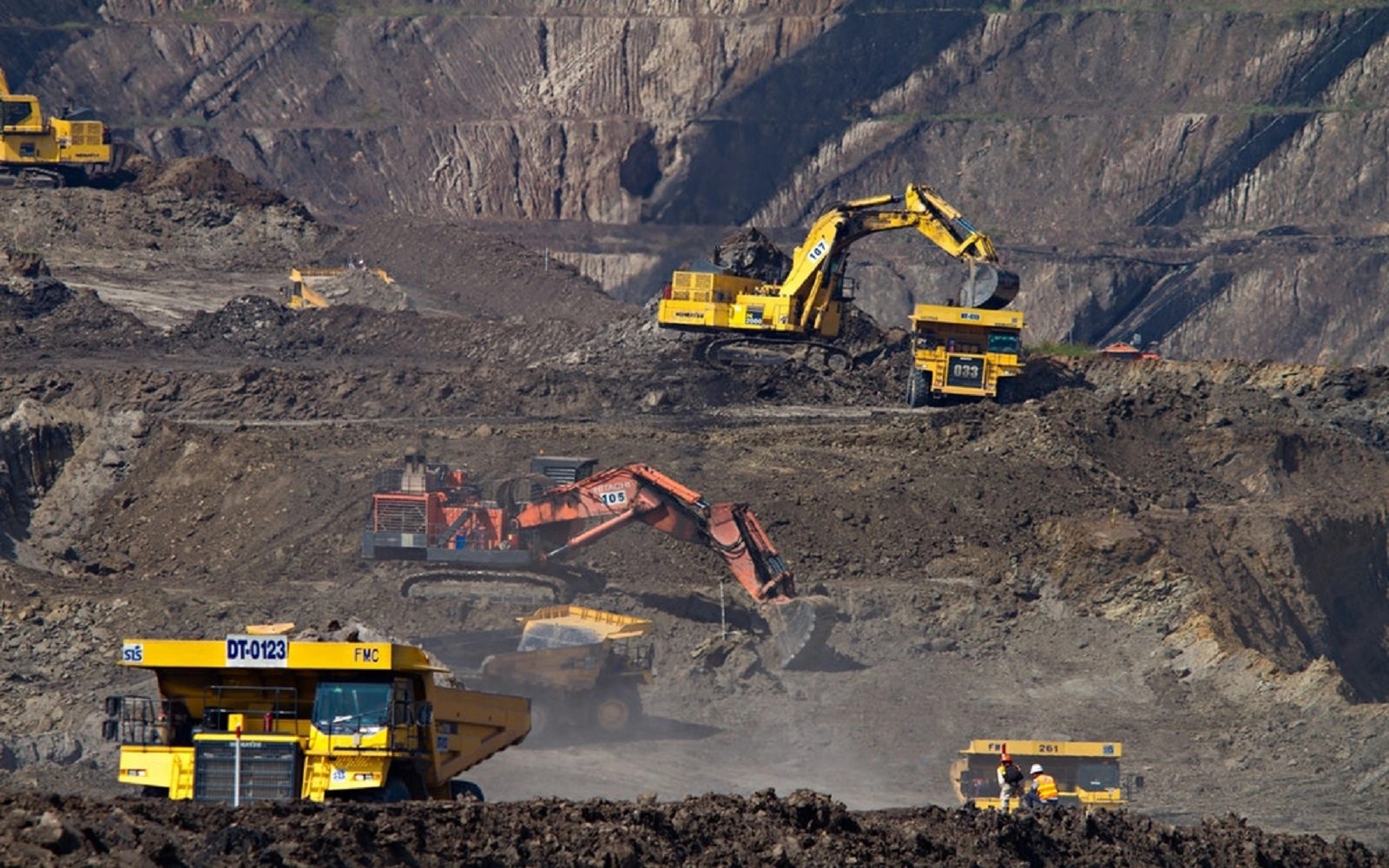
In a striking development within the energy and cryptocurrency sectors, Alliance Resource Partners, a prominent coal mining company, has successfully mined Bitcoin valued at $30 million. This venture, initiated as a pilot project in the latter half of 2020, was aimed at monetizing the excess electricity generated at the company’s River View mine.

The strategic move by Alliance Resource Partners to delve into Bitcoin mining is a fascinating example of how traditional industries are adapting to the digital age. By utilizing the already paid-for yet underutilized electricity load, the company has not only created an additional revenue stream but also demonstrated an innovative approach to asset management.

The decision to use excess power for Bitcoin mining reflects a growing trend among energy-intensive industries to seek alternative methods to optimize their resources. The process involves the use of specialized equipment to solve complex mathematical problems, thereby earning new bitcoins as a reward. For Alliance Resource Partners, this has resulted in the accumulation of 425 bitcoins on its balance sheet, which, after accounting for net costs, has led to an increase in value by over $25.7 million.

The implications of this development are manifold. Firstly, it highlights the potential for synergy between the energy sector and the burgeoning field of cryptocurrency. Secondly, it underscores the adaptability of established companies like Alliance Resource Partners in exploring new technological frontiers. Lastly, it raises intriguing questions about the future role of traditional energy companies in the digital economy.

As the world continues to witness the evolution of cryptocurrency and its increasing integration into various business models, the case of Alliance Resource Partners serves as a compelling example of how innovation can bridge seemingly disparate industries. With Bitcoin’s price currently above $63,000, the strategic decision to invest in cryptocurrency mining appears to be a lucrative one for the coal giant.

This development also sheds light on the broader economic and environmental implications of such ventures. While the financial benefits are clear, the environmental impact of using coal-generated electricity for cryptocurrency mining is a subject of ongoing debate. It presents a complex challenge that requires a balanced consideration of economic gains and environmental stewardship.

In conclusion, Alliance Resource Partners’ foray into Bitcoin mining is a testament to the dynamic nature of industry and the endless possibilities that arise from the intersection of traditional business and modern technology. As the company continues to navigate this new terrain, it sets a precedent for others to follow, potentially leading to a more interconnected and innovative future for both the energy and cryptocurrency sectors.

The Google Layoffs And How Apple Could Get Into Search Engine Business

0

One of the most amazing things about technology is that over time, many things become easier. I saved 100% of the money for my first car (Honda Accord) during NYSC. Then, it was easy to make tons of money buying computer motherboards, hard disks, RAMs, etc and coupling them together for a huge margin. The company, Ultinet Systems, which I registered with within two days of arriving at Jos NYSC Camp found open doors in that city. 

In such, I won the federal contract to lay the structured office wiring of the NYSC secretariat. That was the first time the government paid me. Connecting cables and RJ11 and RJ15 was like a geek-level job. It was like that when I got to Lagos, fixing computers, helping buy devices. Then, they took us out of business: computers became so easy to “install” that geeks were not needed to assemble anything! Today, it is buy, connect and use, with minimal help from any techie.

Yes, the boot diskette is gone and anyone can set up a PC or laptop; they do not even include manuals these days.

That trajectory is also happening in how companies assemble teams and create products: “…Google has made a significant reorganization, including the layoff of at least 200 employees from its “Core” teams”. Simply, the elite teams in Google are now largely plug and play; guys from Mexico and India will do those jobs at fractions of what Google could have paid the American workers! When you add AI into the mix, everyone becomes ordinary. This is how it is going to be in the next few years.

Google needs all the money it can save. The news is that Google’s Alphabet paid Apple $20 billion in 2022  to be the default search engine in the Safari web browser. That is a lot of money just to have a special seat on devices. Google controls 80% of the U.S. search market. Apple generates about 20% of its profit from such payments from Google. If you look at it carefully, this is a circle: Google pays Apple, Google gets funds from advertisers, and sends some to Apple, provided Apple does not allow another company into the party. Apple is happy since it is guaranteed a solid inflow. Government thinks that is illegal. 

Now, with that Apple-Google arrangement on shaky grounds (there is a court case playing with the US government), Google should be worried because if the government breaks that party, Apple will go into the search engine business, and can make its version the default search engine on Apple devices.

Google lays off over 200 ‘core’ employees, moves positions to Mexico, India for cheap labour

0

Amid anticipation of its first-quarter earnings report, Google has made a significant reorganization, including the layoff of at least 200 employees from its “Core” teams, according to CNBC.

This restructuring revealed just ahead of the earnings release on April 25, underscores the tech giant’s strategic realignment aimed at optimizing operations and resource allocation.

The Core unit, responsible for building the technical foundation of Google’s flagship products and ensuring users’ online safety, bore the brunt of the layoffs. The affected teams encompassed crucial technical units such as information technology, Python development, technical infrastructure, security foundation, app platforms, core developers, and various engineering roles.

Notably, about 50 engineering positions were eliminated at the company’s Sunnyvale, California offices, signaling a significant shift in Google’s workforce distribution. Many of the eliminated roles will be relocated to Mexico and India, reflecting the company’s focus on expanding its global footprint while leveraging high-growth workforce locations.

Asim Husain, Vice President of Google Developer Ecosystem, conveyed news of the layoffs to his team through an email, citing it as the largest planned reduction for his team this year. He said the company is committed to maintaining its global presence while enhancing proximity to partners and developer communities.

“We intend to maintain our current global footprint while also expanding in high-growth global workforce locations so that we can operate closer to our partners and developer communities,” Husain wrote in the email.

The restructuring aligns with Alphabet’s ongoing efforts to streamline operations and optimize its workforce following a downturn in the online ad market. Despite recent growth in digital advertising, Alphabet has continued downsizing, with layoffs spanning multiple organizations. The company announced plans to eliminate about 12,000 jobs, or 6% of its workforce, early last year.

Chief Financial Officer Ruth Porat announced a restructuring of the finance department, including layoffs and relocations to Bangalore and Mexico City, as part of the broader realignment strategy. During an all-hands meeting in March, Prabhakar Raghavan, the company’s search chief, informed employees that Google intends to establish teams in key markets like India and Brazil, where labor costs are lower than in the U.S., bringing them closer to users.

The reorganization underscores Google’s proactive approach to adapting to evolving market dynamics and regulatory challenges. With heightened competition and a more challenging regulatory environment, the company is strategically positioning itself for long-term success while remaining responsive to escalating regulatory scrutiny and consumer expectations.

In a separate email, Pankaj Rohatgi, Google’s security engineering vice president, told his team, “In order to optimize for our business goals, we are expanding work to other locations, which will result in some role eliminations and proposed role eliminations.”

Google’s annual developer conference, Google I/O, slated for May 14, serves as a platform to unveil new developer products and tools. Against the backdrop of advancements in generative AI, including Google’s Gemini, the company is poised to redefine software development paradigms, ushering in a new era of innovation and efficiency.

The Core layoffs encompass the governance and protected data group, crucial in addressing regulatory challenges ahead, especially as global lawmakers increasingly scrutinize AI advancements. The European Union’s Digital Markets Act, effective since March, targets anti-competitive behaviors within the tech industry.

While the Core layoffs reflect a significant restructuring effort, Google said it remains committed to supporting affected employees through outplacement services and opportunities to apply for open roles within the company.

“Awe’ve said, we’re responsibly investing in our company’s biggest priorities and the significant opportunities ahead,” the spokesperson said in an email. “A number of our teams made changes to become more efficient and work better, remove layers and align their resources to their biggest product priorities.”

Pay Paid Apple $20 billion for Default Search Box

From LinkedIn: Google parent Alphabet paid Apple $20 billion in 2022 for Google to be the default search engine in the Safari web browser. That’s according to newly unsealed court documents in the Justice Department’s antitrust case against Google, which heads into closing arguments Thursday and Friday. The feds argue that Google has illegally dominated the online search market and its related advertising. The case has revealed exactly how much Apple relies on those payments from Google, which made up more than 17% of the iPhone maker’s 2020 operating income. A decision is expected later this year.

Google Lays Off Hundreds of Workers From Its Core Teams

0

A recent report has revealed that tech giant company Google has laid off at least 200 employees including key teams and engineering talent from its “Core Teams”, following a reorganization process.

As part of its reorganization, the company will hire corresponding roles in Mexico and India. Google’s core team is responsible for building the technical foundation behind its flagship products, protecting users online safety, and maintaining global IT infrastructure.

Also, these core teams include key technical units from information technology, Python developer team, technical infrastructure, security foundation, app platforms, core developers, and various engineering roles.

Announcing the layoff, Vice President of Google Developer Ecosystem Asim Husain wrote via an email,

“Announcements of this sort may leave many of you feeling uncertain or frustrated. We intend to maintain our current global footprint while also expanding in high-growth global workforce locations so that we can operate closer to our partners and developer communities”. He added that his message to developers is that the changes are in service of the company’s broader goals.

In a separate email, Pankaj Rohatgi, Google’s security engineering vice president, disclosed to his team that in order to optimize for business goals, there will be an expansion of work to other locations, which will result in some role eliminations.

Google has been slashing its headcount since early last year, when the company announced plans to eliminate about 12,000 jobs, which is about 6% of its workforce, following a downturn in the online ad market. Even with digital advertising rebounding recently, the company has continued downsizing, with layoffs across multiple sections this year.

The latest cuts at the company’s core team comes as it enjoys its fastest growth rate since early 2022, alongside improving profit margins. Last week, it reported a 15% jump in first-quarter revenue from a year earlier and announced its first- ever dividend and a $70 billion buyback.

Notably, CEO Sundar Pichai told employees in January that more job cuts were likely coming in 2024, though he did not specify which teams would be affected. Meanwhile, Chief Financial Officer Ruth Forat last month April, said via a memo that Google is restructuring its finance organization, a move that will include layoffs and relocations, as the company pushes resources to favor investments in artificial intelligence.

Part of the memo reads,

“The tech sector is in the midst of a tremendous platform shift with Al. As a company, this means we have the opportunity to make more helpful products for billions of users and provide faster solutions to our customers, but it also means we collectively have to make tough decisions, including how and where we work to align with our highest priority areas.”

It is understood that the broader cuts by Google to downsize its workforce and allocate resources to key areas is to accommodate further investment in new technologies such as AI as advertising growth slows. The company intends to spend over $100 billion in investment in the development of artificial intelligence (AI) technology.

Google laid off 200 employees from its “Core” division, moving some roles to Mexico and India, reports CNBC. The division is responsible for Google’s online safety, the technical foundation for flagship products and maintaining the company’s global IT structure, according to its website. At least 50 of the jobs cut were engineering roles at the company’s offices in Sunnyvale, California. The latest in a series of layoffs this year comes amid parent company Alphabet’s fastest pace of growth in more than two years. Last week, Alphabet announced its first ever dividend after a 15% year-over-year revenue jump.