DD
MM
YYYY

PAGES

DD
MM
YYYY

spot_img

PAGES

Home Blog Page 3418

Why 24/7 Stock Trading Will Cause Stress for Many Investors

0

I will vote NO for this: “The New York Stock Exchange (NYSE) is considering a proposal for 24/7 stock trading, a move that mirrors the continuous trading model of the cryptocurrency market.” The grand scheme is to “keep up with the digital age… The NYSE is currently polling market participants on the merits of trading stocks around the clock, as regulators scrutinize an application for the first 24/7 bourse.”

“ND, I have sold my Bitcoin” – he said.

“What happened?”, I asked.

“Can you believe that I now wake up in the middle of the night to check the price of bitcoin. It is affecting my mental health”, he responded.

People, if you make trading stocks 24/7, some people may not sleep, and that may cause mental stress in the land. Of course, you can make the same argument for cryptocurrency.

Nonetheless, I vote NO because it is very scary that 24/7 means some crazy guys can cause problems for companies at all times, even when people are sleeping. Unlike cryptos with no balance sheets and income statements, companies are people and things are produced, elevating the risks for investors. That said, this will happen either now or in the near future!

How Universities Support Student Startup Initiatives

0
A university

Launching a startup while still in college is an increasingly popular path for today’s most ambitious students. As entrepreneurial talent emerges earlier than ever, universities have raced to build robust ecosystems to support and nurture their students’ startup dreams. If you need help writing an essay on this topic, you can always ask to write me an essay with Academized. From dedicated accelerators, seed funding sources, and prestigious pitch competitions, to entrepreneurship coursework, research commercialization opportunities, and powerful alumni networks, top schools are rolling out comprehensive resources and programming. This holistic approach fuels campus cultures of innovation, empowering students to transform bold ideas into pioneering companies. By making entrepreneurship a core part of the university experience, schools elevate their brands, inspire the next generation of founders, and ultimately produce breakthrough startups tackling society’s biggest problems.

The Rise of Student Entrepreneurship

Starting a business while in college is an increasingly popular path for ambitious students. Universities recognize the value of nurturing entrepreneurial talent and many have developed robust programs to support student startup initiatives. As someone deeply involved in the university entrepreneurship ecosystem, I’ve utilized some of the best research paper services to gather insights on how these initiatives can supercharge a student’s path to building a successful company. I’ve seen firsthand the tremendous impact accelerators, funding sources, competitions and more can have in propelling student startups.

Accelerators and Incubators

One of the primary ways universities enable student entrepreneurship is through campus accelerators and incubators. These programs provide dedicated co-working spaces, mentorship from experienced entrepreneurs and investors, training covering all aspects of starting a business, and often seed funding. Having this full suite of resources on campus allows students to immerse themselves in an entrepreneurial environment while still being students.

For example, the Stanford Students Startup AcceleraTour (SSAT) is an intense 10-week program that guides students through customer discovery, product development, pitching to investors, and more. Teams receive mentorship, workshops, and up to $30,000 in funding. Similarly, the Harvard Innovation Labs offer a variety of curriculum, resources, and venture programming tailored to different startup stages.

Funding Support

Another key ingredient is funding support beyond just accelerator/incubator programs. Many universities have dedicated student venture funds that invest in alumni-founded startups. A few examples:

  • The University of Illinois’ Student Venture Fund is run entirely by students and manages over $3 million in assets
  • The Penn Venture Capital (Penn Wharton Entrepreneurship) invests up to $250,000 in alumni startups
  • The Dorm Room Fund, backed by First Round Capital, provides student founders from top schools with $20,000 to $25,000 investments

Funding helps student founders delay having to raise an institutional seed round, buying them time to grow their startup while still being students. It’s a major asset amidst high living costs that often force founders to take jobs versus pursuing their company full-time.

Startup Competitions

Beyond funding, competitions like business plan competitions and pitch competitions are extremely common. Aside from cash prizes, these events provide valuable exposure within the university’s entrepreneurship ecosystem and alumni network. Top performers often attract interest from the school’s affiliated venture funds.

  • The Harvard Business School’s New Venture Competition is one of the biggest. Its alumni prize track awards $315,000 in cash prizes annually.
  • The Rice University Business Plan Competition is billed as the world’s richest and oldest graduate student startup competition, awarding over $1 million annually.

Broader Entrepreneurial Resources

Outside of centralized entrepreneur support programs, universities provide less overt but equally valuable enablers. Many offer entrepreneurship coursework, research opportunities with commercialization potential, and connections with local incubators and angel investors. There’s also the simple perk of being surrounded by incredibly smart, driven people who can become technical co-founders or early hires.

The Value of the University Brand

The university’s brand itself is hugely valuable for student startups seeking talent, partnerships, or fundraising. An endorsement from a top school helps tremendously with initial credibility. Successful founders often leverage their alma mater’s alumni networks for mentors, advisors, investors, customers, and more.

The Virtuous Cycle

Ultimately, for students determined to launch a startup, there’s enormous value in being part of a thriving entrepreneurship community at university. Beyond dedicated programming, there are powerful network effects at play. Entrepreneurially-minded students attract each other, creating a critical mass of creative people all striving to build impactful companies.

When blockbuster success stories emerge, it inspires more students to take the entrepreneurial leap. These success stories become case studies and lore within the university. They fuel a virtuous cycle of more startup activity, more support resources and funding, better human capital, and bigger successes.

Over the past two decades, universities have raced to build robust entrepreneurship ecosystems for this very reason. It’s an incredibly mutually-beneficial dynamic: The university’s brand gets elevated, students live out their dreams, and society gains innovative new companies tackling massive problems.

The Future of Student Entrepreneurship

Looking ahead, I expect entrepreneurship will only become further engrained into the university experience. Schools are developing even closer ties between entrepreneurship and their core curriculum. We’re already seeing some leading universities embrace experiential majors and dual degree programs that integrate entrepreneurship with STEM fields or social sciences.

The long-term goal is for universities to create end-to-end startup factories. Streamlining every step of that journey so motivated students looking to start companies have a clear pathway to turn ideas into market-changing realities. Because for many of today’s best and brightest, that entrepreneurial itch hits early. By making entrepreneurship part of the university DNA, schools put their students on the fast-track to success.

Japan-China Trade Relations

0

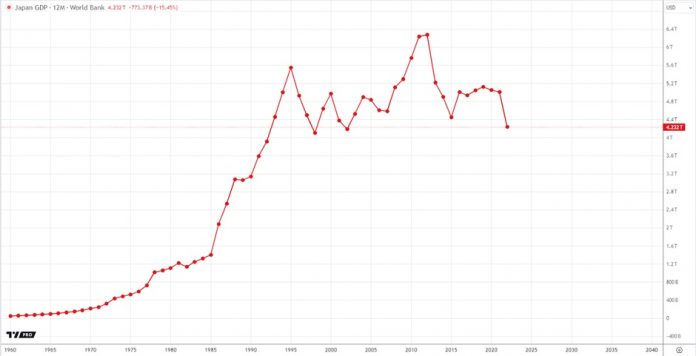
The trade turnover between Japan and China is a major driving force in the economic dynamics of the Asia-Pacific region. As the two largest economies in Asia, their ties significantly impact each other’s financial well-being and the regional economy as a whole. Japan predominantly exports high-tech goods, such as electronics and chips, to China and other Asian nations, bolstering its own economy by fostering technological advancement, job opportunities, and GDP growth. Recent Japanese export data from March 2024 highlights a significant increase in revenue from supplying chip production equipment to China, soaring by 82.4%.

In particular, the export of Japanese microchips and semiconductors, produced by companies like Toshiba, Sony, and Renesas, is a key aspect of this trade dynamic. Japan’s reputation for quality and precision in electronics stems from strict production standards, continuous research and development, and a culture of constant improvement known as kaizen. Exports of all goods and services from Japan to China saw a robust increase of 12.6% reaching $11.3 billion in March. This positive trend has been maintained for the fourth consecutive month. Japan’s exports to other Asian countries collectively grew by 6.6%, while exports to the United States experienced an 8.5% rise. However, exports to Europe saw a more modest increase of 3%. Overall, these March figures, as reported by the Japanese Ministry of Finance, resulted in a foreign trade surplus, with Japan’s export revenue climbing by 7.3% year-on-year to $61 billion.

For Japan, trade ties with China are not only essential due to the size of the Chinese market but also because of the numerous export opportunities it presents. Geographical proximity and longstanding cooperation further solidify China as Japan’s preferred trading partner. Beyond electronics, Japan exports automobiles, machinery, chemicals, medical equipment, and various industrial components to China and neighboring countries, supported by government policies promoting innovation and a robust education system.

Japan’s strategic choices in export destinations and import sources, particularly focusing on Asian countries and minimizing reliance on Europe and the United States, are influenced by multiple factors. These include historical economic and cultural ties with neighboring Asian nations, the pursuit of opportunities to integrate into regional value chains, and leveraging geographical advantages. Additionally, close collaboration with China holds the potential to enhance the international standing of the Japanese yen. Increased bilateral trade can spur demand for the yen, bolstering its role as a significant global reserve currency over the long term.

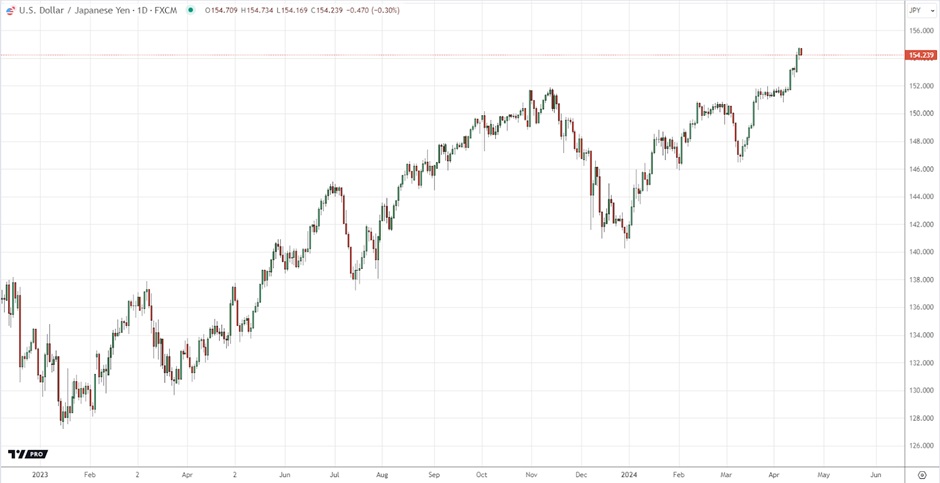
Throughout 2024, the USDJPY performed favorably, reflecting the positive trade dynamics between Japan and its partners. Even minor fluctuations in prices were closely monitored using tools like the free bar replay, shedding light on how external factors influence currency movements.

While actual exports from Japan to China and the United States saw modest increases of 0.9% and 1.8%, respectively, analysts attribute the restrained growth in Japanese exports to these regions to high refinancing rates. They suggest that only with higher prices can more substantial export growth be achieved. Importantly, energy prices play a significant role in determining Japan’s import patterns. In March 2024, export prices from Japan rose by 8.5% year-on-year, while import prices increased by 1.4%, with a notable decline of 6.9% in the energy segment.

Japan’s trade partnership with China holds immense significance for both nations’ economic strategies. This collaboration fosters industry strengthening, technological advancement, and increased interdependence, laying a sturdy foundation for stability and growth in the Asia-Pacific region as a whole.

Tekedia Capital Demo Day Video Published

0

The video for Tekedia Capital Demo Day has been posted in the investment board.

Good People, you’re all invited to Tekedia Capital Demo Day. We hope to support another class of great startups. Tekedia Capital has incubated startups which ended up joining YCombinator, Techstars, Seedstars, etc besides raising $millions on follow-up capital. In this cycle, we have 10 amazing startups, from the US, Canada, Congo DRC, Benin Republic, Nigeria, etc.

  • Date:  Saturday, April 27, 2024
  • Time: 4pm – 6pm WAT
  • Venue: Zoom 

Learn more and join our community here

If you are not a member of Tekedia Capital Syndicate and want to join, go here.

Video Overview of the 10 Startups

Tekedia Capital offers a specialty investment vehicle (or investment syndicate) which makes it possible for citizens, groups and organizations to co-invest in innovative startups and young companies in Africa and around the world. Capital from these investing entities is pooled together and then invested in a specific company or companies.

Membership Fee of $1,000 or Naira equivalent for 4 Investment Cycles

Pay for your 4-cycle membership fee. The fee provides access to 4 investment cycles of Tekedia Capital deal flow. We typically do 2-3 cycles per year (i.e. 12 months). After payment, our team will give you access to the deal flow board.

(If after 4 cycles, you can decide not to renew. Yet, you will continue to receive updates on your prior investments. But we will not provide access to new startup deal flows.)

Greetings! We are very happy to update that Tekedia Capital has published 10 startups for the current investment cycle. We have presented a highly diversified group across sector, geography, maturity phase, etc including Canadian, Benin Republic, Congo DRC, Nigerian, USA, etc, firms. We have three YC companies in the cohort.

Tekedia Capital Posts 10 Startups for April 2024 Investment Cycle

Why Tech Investors ‘sometimes’ Focus on Revenue Over Profit

0

Why tech investors are ‘sometimes’ more concerned about revenue than profit

Have you ever wondered how some startups can secure investors in millions of dollars, even when they are not yet profitable? Do you sometimes wonder why there is so much hype around the revenue, and sometimes, no one asks about profits? Well, this will help you understand why Revenue seems to take the Center Stage when it comes to Tech Investments.

The familiar buzz phrase: “revenue over profit” is a mantra that often perplexes budding entrepreneurs and seasoned business managers alike. Anyone with essential business knowledge wonders why investors would be interested in a business with only revenue but no profit. Here are some reasons why.

Revenue=Cashflow

Revenue, simply put, is the lifeblood of any business, especially startups. It’s the money generated from selling products or services. While profits represent what’s left after subtracting expenses from revenue, revenue is crucial for several reasons.

1. Proof of Concept

Revenue is tangible evidence of a demand for your product or service in the market. It validates your business model and shows everyone that there’s a market out there for what you are offering. Revenue demonstrates that customers are willing to pay for what you offer. For startups seeking investment, a solid revenue stream can be a powerful validation tool, showing potential investors that your venture has market viability.

2. Fuel for Growth

Revenue provides the necessary capital to fund operations, invest in innovation, and scale the business. It enables startups to hire top talent, enhance product offerings, expand into new markets, and ramp up marketing efforts. Without a steady stream of revenue, it’s challenging for startups to sustain themselves, let alone grow and thrive in a competitive landscape. Even if you are not yet turning a profit, if you have revenue, it means you have some cash flowing in, which can serve as operations capital while you await the injection of more funds.

3. Customer Feedback Loop

Revenue is a product of purchases and transactions, and each transaction generates valuable data and insights about customer preferences, pain points, and behavior. By analyzing revenue trends and customer feedback, startups can refine their offerings, improve user experience, and tailor their strategies to meet market demands better. In essence, revenue acts as a feedback loop that informs business decisions and drives continuous improvement.

Investor Perspective: Why Revenue Trumps Profits

Now that we’ve established the significance of revenue for startups let’s explore why tech investors often prioritize revenue over profits when evaluating investment opportunities:

1. Growth Potential

Tech investors are typically drawn to startups with high growth potential. While profits are essential for long-term sustainability, investors are more interested in a company’s growth trajectory. Rapid revenue growth indicates scalability and market traction, key factors driving investor interest. An investor can choose to invest in a startup with rapid revenue growth that has already achieved break-even and ignore one with a small but steady profit margin.

Even if there is no current profit, revenue tells investors that there is a product here that people want. With a bit of tweaking on the price or streamlining the production costs, the business can become profitable. A small and stable profit can even indicate to investors that the business has reached its peak and so has no growth or exit potential for investors.

2. Market Dominance

The tech space is hyper-competitive, and often, speed is of the essence. Investors understand that capturing market share early on is critical for long-term success. Startups prioritizing revenue growth can outpace competitors, establish themselves as market leaders, and create barriers to entry, making it difficult for new players to gain a foothold.

3. Valuation and Exit Opportunities

When it comes to valuing startups, revenue growth plays a significant role. Higher revenue figures translate to a more attractive valuation, which benefits both founders and investors. Additionally, a robust revenue stream enhances the likelihood of successful exit opportunities, such as acquisitions or IPOs, enabling investors to realize substantial investment returns.

4. More likelihood of profitability

Now, let’s get real. If you don’t focus on getting revenue first, you will never turn a profit.And a startup that has a revenue already is more likely to become profitable soon than one that is still at the ideation stage. So, if you pitch to investors and they are bent on knowing your revenue numbers, don’t blame them.

The Balance: Profitability Matters Too

While revenue growth is undeniably significant, it’s essential to recognize that profitability ultimately determines the sustainability and long-term viability of a business. Profits ensure that a company can cover expenses, reinvest in growth initiatives, reward stakeholders, and weather economic downturns.

Moreover, sustainable profitability is a testament to the efficiency and effectiveness of a business model. While rapid revenue growth may initially overshadow profitability concerns, investors ultimately seek companies that can generate sustainable returns over the long haul. So, if you can become profitable before seeking investors, it is better for you.

If you have become profitable, you may not even need investors.

The Bottom-line

Profitability is the ultimate indicator of a truly sustainable business, but revenue is a good start, too. So, if your business has only gotten to the revenue stage, don’t panic. It means you are doing something right first of all. Now, you must figure out how to get from revenue to profit.