DD
MM
YYYY

PAGES

DD
MM
YYYY

spot_img

PAGES

Home Blog Page 3420

Cryptocurrency Investing Is Not For the Faint-hearted or Uninformed

0

Cryptocurrencies are a fascinating and complex topic that attracts many investors, enthusiasts and researchers. However, they are also very volatile, risky and unpredictable, and require a lot of knowledge and expertise to navigate successfully. I will explain some of the challenges and opportunities that cryptocurrencies present, and why they are not for the faint-hearted or the uninformed.

Cryptocurrencies are digital assets that use cryptography to secure transactions and control the creation of new units. They operate on decentralized networks of computers that follow a set of rules or protocols. Unlike traditional currencies, they are not issued or backed by any central authority, such as a government or a bank.

This gives them some advantages, such as lower transaction costs, faster processing times, greater transparency and anonymity, and resistance to censorship and manipulation.

However, cryptocurrencies also come with many drawbacks and risks. One of the main challenges is their high volatility, which means that their prices can fluctuate dramatically in a short period of time. For example, in 2017, the price of Bitcoin, the most popular cryptocurrency, rose from about $1,000 to almost $20,000, and then fell to below $4,000 in 2018. Such swings can be influenced by various factors, such as supply and demand, technical issues, regulatory changes, hacking attacks, media coverage, public sentiment and speculation.

Another challenge is their security and reliability. Cryptocurrencies rely on cryptography and blockchain technology to ensure the validity and integrity of transactions. However, these technologies are not foolproof and can be vulnerable to errors, bugs, hacks or malicious attacks.

For instance, in 2014, Mt. Gox, the largest Bitcoin exchange at the time, lost about 850,000 Bitcoins (worth about $450 million) due to a hacking attack. In 2016, a hacker exploited a flaw in the code of a smart contract platform called Ethereum and stole about $50 million worth of Ether, another cryptocurrency.

A third challenge is their regulatory and legal uncertainty. Cryptocurrencies are subject to different laws and regulations in different countries and jurisdictions. Some countries have banned or restricted their use or trade, while others have embraced or regulated them.

For example, China has banned cryptocurrency exchanges and initial coin offerings (ICOs), while Japan has recognized Bitcoin as a legal tender and licensed several cryptocurrency exchanges. The lack of a clear and consistent legal framework can create confusion and ambiguity for users, investors and businesses.

These challenges and risks mean that cryptocurrencies are not for the faint-hearted or the uninformed. They require a lot of research, education and caution to understand and use them properly. They also require a high tolerance for risk and uncertainty, as well as a long-term perspective and patience.

Cryptocurrencies are not a get-rich-quick scheme or a magic bullet for financial problems. They are an innovative and experimental phenomenon that may have a significant impact on the future of money and society.

Trading, market making, staking see funding after Spot ETF approval

The recent approval of the first cryptocurrency exchange-traded fund (ETF) by the US Securities and Exchange Commission (SEC) has sparked a wave of interest and investment in the crypto space. Many traders, market makers and stakers are looking for ways to capitalize on this opportunity and increase their returns.

One of the main benefits of an ETF is that it allows investors to gain exposure to a basket of assets without having to buy and store them individually. This reduces the risks and costs associated with custody, security and regulation. An ETF also provides more liquidity and transparency than other types of funds, as it can be traded on a stock exchange like any other security.

However, an ETF also comes with some challenges and limitations. For example, an ETF may not track the underlying assets perfectly, due to fees, tracking errors and rebalancing issues. An ETF may also face competition from other similar products, such as trusts, futures and options. Moreover, an ETF may not capture the full potential of the crypto market, as it may exclude some segments or innovations that are not yet mainstream or regulated.

This is where trading, market making and staking come in. These are three different ways of participating in the crypto ecosystem that can offer higher returns, more flexibility and more innovation than an ETF. Let’s take a look at each one in more detail.

Trading

Trading is the act of buying and selling cryptocurrencies or other digital assets for profit. Traders can use various strategies, such as arbitrage, scalping, swing trading or trend following, to exploit price movements and market inefficiencies. Traders can also use leverage, derivatives and margin trading to amplify their gains or hedge their risks.

Trading requires a high level of skill, knowledge and discipline, as well as access to reliable platforms, tools and data. Trading also involves significant risks, such as volatility, liquidity, slippage and counterparty risk. Traders need to be aware of the regulatory and tax implications of their activities, as well as the ethical and social impact of their decisions.

Market making

Market making is the act of providing liquidity to a market by quoting both buy and sell prices for an asset. Market makers earn profits from the spread between the bid and ask prices, as well as from fees or rebates from the platform or exchange they operate on. Market makers also help reduce price fluctuations and improve market efficiency by facilitating trade execution and price discovery.

Market making requires a large amount of capital, as well as sophisticated algorithms, models and systems to manage inventory, risk and orders. Market making also involves high competition, low margins and regulatory uncertainty. Market makers need to constantly monitor the market conditions, the demand and supply of the asset, and the actions of other market participants.

Staking

Staking is the act of locking up a certain amount of cryptocurrency in a smart contract or a wallet to support the security and operation of a blockchain network. Stakers earn rewards from the network for validating transactions, producing blocks or participating in governance. Staking also gives stakers voting rights and influence over the network’s direction and development.

Staking requires a long-term commitment, as well as trust in the network’s stability, security and performance. Staking also involves opportunity costs, as stakers forego other uses of their funds while they are locked up. Stakers need to carefully choose which network to stake on, based on factors such as reward rate, inflation rate, lock-up period and slashing risk.

Trading, market making and staking are three different ways of engaging with the crypto market that can offer more benefits than an ETF. However, they also come with more challenges and risks that require careful consideration and preparation. Ultimately, each investor needs to decide which option suits their goals, preferences and risk appetite best.

Crypto Industry cautious on new EU AML rules

0

The European Union has reached a provisional agreement on new anti-money laundering (AML) rules that will affect the crypto industry. The new rules, which are part of the AML/CFT package proposed by the European Commission in July 2021, aim to enhance the EU’s ability to prevent and combat money laundering and terrorist financing, as well as to ensure a level playing field for all actors in the financial sector.

The crypto industry has cautiously welcomed the agreement, which is expected to be formally adopted by the European Parliament and the Council of the EU in the coming months. The agreement introduces a number of changes to the existing AML framework, such as:

Creating a new EU-level authority, the Anti-Money Laundering Authority (AMLA), that will supervise and coordinate national AML authorities and have direct supervisory powers over some high-risk entities.

Extending the scope of AML rules to cover all crypto-asset service providers (CASPs), such as exchanges, wallets, custodians, brokers, and issuers of crypto-assets. CASPs will have to register with AMLA or a national authority and comply with customer due diligence, transaction monitoring, and reporting obligations.

Establishing a single EU-wide list of high-risk third countries that pose a threat to the EU’s financial system and imposing enhanced due diligence measures on transactions involving those countries.

Harmonizing the rules on beneficial ownership registers, which will require all legal entities and trusts to disclose their ultimate owners and make this information accessible to the public.

Introducing a limit of 10,000 euros for large cash payments, which will apply to both professional and non-professional transactions.

The crypto industry has expressed support for the EU’s efforts to create a clear and harmonized regulatory framework for crypto assets, which could foster innovation, competition, and consumer protection. However, some industry representatives have also raised concerns about the potential impact of the new rules on privacy, innovation, and competitiveness.

For instance, some CASPs have argued that applying the same AML rules as traditional financial institutions could undermine the privacy and security of crypto users, as well as create excessive compliance costs and barriers to entry for smaller players. Some CASPs have also questioned the feasibility and effectiveness of applying AML rules to decentralized platforms and protocols that operate without intermediaries or central authorities.

Moreover, some industry experts have warned that the new rules could create regulatory fragmentation and uncertainty in the global crypto market, as different jurisdictions may adopt different approaches to AML regulation. They have called for more international cooperation and coordination among regulators to ensure a consistent and balanced approach that respects the global nature of crypto assets.

The agreement on the new EU AML rules is a significant milestone for the crypto industry, as it signals the EU’s recognition of crypto assets as a legitimate and important part of the financial system. However, it also poses significant challenges and opportunities for CASPs and crypto users, who will have to adapt to the new regulatory environment and ensure compliance with the new rules.

The final outcome of the agreement will depend on how it is implemented and enforced by AMLA and national authorities, as well as how it interacts with other existing or upcoming regulations on crypto assets in the EU and beyond.

US stock futures rise early Monday after the S&P 500 hit a record high Friday

US stock futures rose early Monday after the S&P 500 hit a record high Friday 19th January 2024. The positive momentum was driven by strong earnings reports, easing inflation fears and optimism about the economic recovery from the pandemic.

The S&P 500 futures gained 0.4%, indicating a higher open for the benchmark index, which closed at an all-time high of 5,321.67 on Friday. The Dow Jones Industrial Average futures also rose 0.4%, while the Nasdaq 100 futures advanced 0.5%.

The earnings season kicked off last week with some of the biggest banks and tech companies reporting better-than-expected results. According to FactSet, more than 80% of the S&P 500 companies that have reported so far have beaten analysts’ estimates. The blended earnings growth rate for the fourth quarter of 2023 is now 25.2%, up from 21.7% at the end of December.

Investors also shrugged off the latest inflation data, which showed that consumer prices rose 6.8% year-over-year in December, the highest since 1982. The core inflation, which excludes food and energy, rose 4.9%, the highest since 1991. However, many analysts and policymakers believe that inflation is transitory and will ease as supply chain bottlenecks and labor shortages are resolved.

Meanwhile, the economic outlook remains bright as the Omicron variant of the coronavirus appears to be less severe and more people get vaccinated and boosted. The U.S. added 199,000 jobs in December, below expectations but still enough to push the unemployment rate down to 3.9%, the lowest since February 2020. Consumer confidence rebounded in January, reaching the highest level since July.

The market will be watching for more earnings reports this week, as well as some key economic data, such as housing starts, existing home sales and leading indicators. The Federal Reserve will also hold its first policy meeting of the year on Tuesday and Wednesday, where it is expected to announce a faster tapering of its bond-buying program and signal a possible interest rate hike in March.

On the positive side, inflation can boost corporate revenues and earnings, as companies can charge higher prices for their products and services. This can increase their stock prices and dividends, benefiting shareholders. Inflation can also stimulate economic growth and consumer spending, which can drive up the demand for stocks.

On the negative side, inflation can increase the cost of production and operation for companies, reducing their profit margins and cash flows. This can lower their stock prices and dividends, hurting shareholders. Inflation can also increase the interest rates and the cost of borrowing, making it harder for companies to finance their projects and expand their businesses. This can reduce their growth potential and future earnings, weighing on their stock valuations.

Therefore, the impact of inflation on stocks depends on the magnitude, duration, and source of inflation, as well as the industry, sector, and company-specific factors. Some stocks may perform better than others in an inflationary environment, depending on their ability to pass on the higher costs to customers, maintain or increase their market share, and hedge against inflation risks.

Generally speaking, stocks that have strong pricing power, stable demand, low debt levels, and high dividend yields tend to do well in inflationary periods, while stocks that have weak pricing power, cyclical demand, high debt levels, and low dividend yields tend to struggle in inflationary periods.

ARK swaps another $15M of BITO as $1.5B flows out of GBTC with more to come- JPMorgan

0

ARK Invest, the investment firm led by Cathie Wood, has swapped another $15 million worth of shares in the ProShares Bitcoin Strategy ETF (BITO) for its own ARK 21Shares Bitcoin ETF (ARKB) on Friday, according to a filing with the Securities and Exchange Commission (SEC).

This is the second time that ARK has made such a move, after swapping $20 million of BITO for ARKB on Wednesday. The firm now holds about $35 million of ARKB, which is the first actively managed bitcoin ETF in the US.

ARKB, which launched on January 10, aims to provide exposure to bitcoin by investing in bitcoin futures contracts and other bitcoin-related instruments. The fund charges a 0.95% expense ratio and has an initial target allocation of 60% bitcoin futures and 40% Grayscale Bitcoin Trust (GBTC).

BITO, on the other hand, is a passive ETF that tracks the performance of the CME CF Bitcoin Reference Rate, a benchmark that reflects the price of bitcoin based on spot and futures markets. BITO charges a 0.95% expense ratio and invests solely in bitcoin futures contracts.

By swapping BITO for ARKB, ARK is betting on the superior performance of its own fund, which has more flexibility and diversification than BITO. ARK also believes that ARKB will benefit from the growing adoption and innovation in the bitcoin ecosystem, as well as the potential approval of a spot bitcoin ETF in the future.

ARK is one of the most prominent and influential investors in the crypto space, with over $1 billion worth of GBTC and over $300 million worth of Coinbase (COIN) shares across its various funds. The firm also holds stakes in several crypto-related companies, such as Square (SQ), PayPal (PYPL), Robinhood (HOOD), and Twitter (TWTR).

The Grayscale Bitcoin Trust (GBTC) is one of the most popular ways for investors to gain exposure to Bitcoin without having to buy and store the cryptocurrency themselves. However, the trust has been underperforming the price of Bitcoin in recent months, leading to a large discount in its shares compared to the underlying asset value. This has prompted some investors to sell their GBTC shares and seek other avenues to invest in Bitcoin, such as exchange-traded funds (ETFs) or spot markets.

According to a report by JPMorgan, the outflows from GBTC have been significant and could continue in the near future. The report estimates that about $1.5 billion worth of GBTC shares have been sold since mid-November 2021, representing about 9% of the total assets under management (AUM) of the trust. The report also suggests that the outflows could accelerate as more GBTC shares become unlocked and eligible for sale in the coming weeks.

The main reason for the GBTC discount is the lack of an arbitrage mechanism that would allow investors to buy GBTC shares at a discount and redeem them for Bitcoin at a premium, thus narrowing the gap between the two prices. However, GBTC does not offer such a redemption option, and instead relies on periodic creations of new shares by accredited investors who depo1sit Bitcoin into the trust. These investors have to wait for six months before they can sell their GBTC shares on the secondary market, creating a supply and demand imbalance that affects the price.

The report argues that the introduction of Bitcoin ETFs in the US could provide a more efficient and liquid alternative for investors who want to access Bitcoin through a regulated vehicle. The report notes that several Bitcoin ETF applications are pending approval by the Securities and Exchange Commission (SEC), and that some of them could launch as early as February 2022. The report expects that these ETFs would trade at a much smaller premium or discount than GBTC and would also offer a redemption option that would allow investors to exchange their ETF shares for Bitcoin or cash.

The report concludes that the outlook for GBTC is challenging, and that its AUM could decline further as more investors switch to other Bitcoin products. The report also warns that the GBTC discount could have a negative impact on the price of Bitcoin itself, as it reduces the demand for the cryptocurrency from institutional investors who use GBTC as a proxy.

Mark Zuckerberg’s GPU (Graphics Processing Unit) flex

0

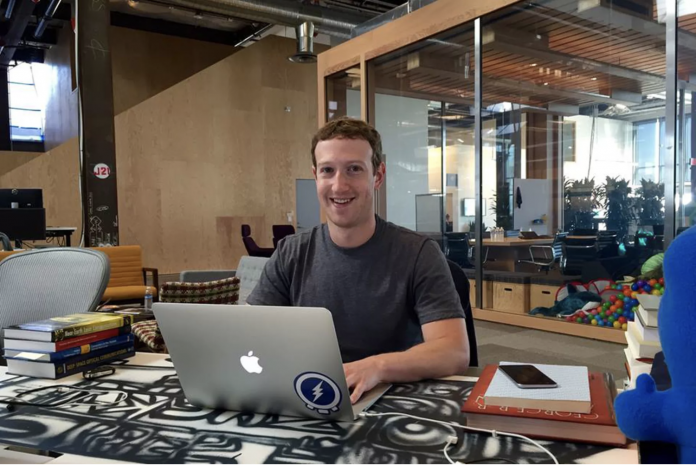
Mark Zuckerberg, the founder and CEO of Facebook, recently posted a photo of his personal computer setup on Instagram. The photo showed a sleek and minimalist desk with a large monitor, a keyboard, a mouse, and a pair of headphones. But what caught the attention of many tech enthusiasts was the massive GPU (graphics processing unit) that was visible behind the monitor.

A GPU is a specialized chip that handles graphics-intensive tasks such as rendering images, videos, and games. GPUs are also used for artificial intelligence and machine learning applications, such as facial recognition and natural language processing. GPUs are usually installed inside the computer case, but Zuckerberg’s GPU was mounted externally on a stand, presumably to showcase its size and power.

Zuckerberg did not reveal the exact model of his GPU, but some speculated that it could be the Nvidia GeForce RTX 3090, which is one of the most powerful and expensive GPUs on the market. The RTX 3090 has 24 GB of memory and can deliver up to 36 teraflops of performance, which is equivalent to 36 trillion floating-point operations per second. The RTX 3090 costs around $1,500 and is often sold out due to high demand.

Zuckerberg’s GPU flex was interpreted by some as a sign of his passion for technology and innovation, as well as his involvement in Facebook’s research and development projects. Facebook owns Oculus, a leading virtual reality company, and also invests in artificial intelligence and augmented reality technologies. Zuckerberg has said that he wants to create a “metaverse”, which is a shared virtual environment where people can interact with each other and digital content.

The metaverse is not a new concept. It was first coined by sci-fi author Neal Stephenson in his 1992 novel Snow Crash and has since been explored by various media and entertainment franchises, such as Ready Player One, The Matrix, and Fortnite. However, Zuckerberg believes that the metaverse is more than just a fictional or gaming scenario. He sees it as the next evolution of the internet, where instead of browsing web pages or watching videos, people can immerse themselves in interactive and immersive experiences that span the physical and digital worlds.

According to Zuckerberg, the metaverse will enable new forms of social connection, entertainment, education, work, commerce, and creativity. He envisions a future where people can teleport to different virtual locations, such as a friend’s living room, a concert hall, or a classroom, using VR headsets or AR glasses.

They can also create and customize their own avatars, express themselves with gestures and emotions, and interact with realistic simulations of objects and environments. Moreover, they can access the metaverse from any device, whether it’s a smartphone, a tablet, a PC, or a console, and seamlessly switch between them.

To realize this ambitious vision, Facebook is not only developing its own hardware and software products, such as the Oculus Quest 2 VR headset, the Horizon social VR platform, and the Spark AR Studio for creating AR effects. It is also collaborating with other companies and developers to create an open and interoperable metaverse ecosystem.

For instance, Facebook recently announced a partnership with Ray-Ban to launch smart glasses that can capture photos and videos. It also joined forces with Microsoft to form the XR Association, an industry group that promotes responsible development and adoption of VR and AR technologies.

Facebook’s metaverse initiative is not without challenges and controversies. Some critics have raised concerns about the potential privacy, security, ethical, and social implications of creating a virtual world that is controlled by a single company that has a history of data breaches and antitrust issues.

Others have questioned the feasibility and desirability of the metaverse itself, arguing that it could create more isolation, addiction, and inequality among users. Furthermore, Facebook faces fierce competition from other tech companies that are also pursuing their own versions of the metaverse, such as Microsoft, Google, Apple, Amazon, and Epic Games.

Despite these hurdles, Facebook is determined to make the metaverse a reality. The company recently announced that it will create a new product team dedicated to building the metaverse platform. It also plans to invest at least $10 billion this year in its VR and AR businesses. Zuckerberg has said that he expects the metaverse to reach a billion users in the next decade. Whether or not Facebook will succeed in creating the ultimate virtual world remains to be seen.

However, Zuckerberg’s GPU flex also drew some criticism from those who questioned his motives and ethics. Some accused him of flaunting his wealth and privilege, especially during a time when many people are struggling financially due to the pandemic.

Others pointed out the environmental impact of using such a powerful GPU, which consumes a lot of electricity and generates a lot of heat. Some also argued that Zuckerberg should focus more on addressing the social and political issues that Facebook has been involved in, such as misinformation, hate speech, privacy breaches, and antitrust lawsuits.

Zuckerberg’s GPU flex was a simple photo that sparked a lot of reactions and discussions online. It showed how much technology has advanced and how much influence Facebook has in the world. It also revealed how people have different opinions and perspectives on Zuckerberg’s personality and leadership.

What is Self-Sovereign Identity?

0

Self-sovereign identity (SSI) is a concept that aims to give individuals full control over their digital identities, without relying on intermediaries or centralized authorities. SSI advocates argue that this approach can enhance privacy, security, and autonomy for users, as well as foster innovation and interoperability in the digital identity ecosystem.

However, SSI is not a silver bullet that can solve all the challenges and risks associated with digital identity. In fact, SSI may introduce new problems or exacerbate existing ones, if not implemented carefully and responsibly. I will discuss some of the limitations and pitfalls of SSI, and why it is not enough to ensure a fair and inclusive digital identity for all.

SSI does not guarantee verifiability or trustworthiness.

One of the main benefits of SSI is that it allows users to create and manage their own identity credentials, without depending on third-party issuers or validators. This can reduce the costs and friction of obtaining and using identity proofs, as well as protect users from identity theft or fraud.

However, this also means that SSI does not guarantee the verifiability or trustworthiness of the credentials. Users may create fake or misleading credentials or use them in inappropriate contexts. For example, a user may create a credential that claims to be a doctor but has no valid certification or license. Or a user may use a credential that proves their age, but not their nationality, to access a service that requires both.

Therefore, SSI requires a mechanism to ensure that the credentials are authentic, accurate, and relevant for the purpose they are used for. This may involve verifying the source and quality of the data, checking the validity and revocation status of the credentials, and establishing the trustworthiness of the issuers and holders. These tasks may require additional infrastructure, standards, and governance models, which may undermine the decentralization and self-sovereignty of SSI.

SSI does not ensure consent or data minimization.

Another benefit of SSI is that it enables users to control what data they share with whom, and for what purpose. SSI advocates claim that this can enhance the consent and data minimization principles of data protection, by allowing users to share only the necessary and relevant data for each transaction.

However, SSI does not ensure that users actually understand and exercise their consent and data minimization rights. Users may face challenges in managing their credentials, such as storing them securely, updating them regularly, and revoking them when needed.

Users may also lack the knowledge or skills to evaluate the risks and benefits of sharing their data, or to negotiate the terms and conditions of data sharing. Moreover, users may face pressure or coercion from service providers or other parties to share more data than necessary, or to accept unfavorable terms of service.

Therefore, SSI requires a mechanism to support users in making informed and autonomous decisions about their data sharing. This may involve providing clear and accessible information about the data requests and the consequences of accepting or rejecting them, offering meaningful choices and alternatives for data sharing, and ensuring accountability and redress for data misuse or abuse. These tasks may require additional education, guidance, and regulation, which may increase the complexity and burden of SSI.

SSI does not address social or ethical implications.

A final benefit of SSI is that it empowers users to express their identity in diverse and flexible ways, without being constrained by predefined categories or labels. SSI advocates suggest that this can promote social inclusion and diversity, by allowing users to self-identify with multiple and dynamic attributes that reflect their personal and contextual identities.

However, SSI does not address the social or ethical implications of self-identifying with certain attributes or groups. Users may face discrimination or exclusion based on their identity claims or be denied access to essential services or rights that depend on certain identity attributes.

For example, a user may self-identify as a refugee, but be rejected by a host country that requires official documentation. Or a user may self-identify as a woman but be excluded from a women-only space that requires biological verification.

Therefore, SSI requires a mechanism to balance the individual’s right to self-identify with the collective’s right to define membership and access criteria. This may involve respecting the diversity and fluidity of identity expressions, while also recognizing the legitimacy and authority of certain identity proofs. These tasks may require additional dialogue, collaboration, and compromise among different stakeholders,
which may challenge the self-sovereignty of SSI.