DD
MM
YYYY

PAGES

DD
MM
YYYY

spot_img

PAGES

Home Blog Page 3423

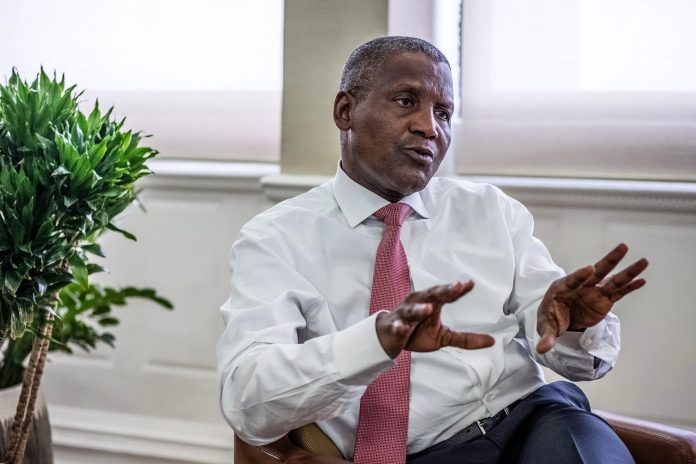
“The biggest mess created was actually the devaluation of the naira from N460 to N1,400” – Aliko Dangote

9

During the annual general meeting of Dangote Sugar Refinery Plc held on Tuesday, Aliko Dangote, the renowned chairman of Dangote Industries Limited, delivered a discourse shedding light on the formidable obstacles encountered by the conglomerate in the tumultuous year of 2023. 

In his assessment, Dangote noted the profound ramifications of the naira devaluation, deeming it as the primary catalyst for significant disruptions across various sectors, particularly the food and beverages industry, within which his company operates.

“The biggest mess created was actually the devaluation of the naira from N460 to N1,400,” lamented Dangote, as he spoke on the widespread challenges faced by companies grappling with the adverse effects of currency fluctuations. 

Expressing concern regarding the dividend payouts for the ongoing fiscal year, Dangote said that many companies, particularly those in the food and beverage sector, were also impacted and would likely be unable to pay dividends.

 “You can see almost 97 percent of the companies, especially in food and beverages businesses, none of them will pay dividends this year for sure but, we will try and get out of it as soon as possible,” he said.

However, he reassured shareholders of the organization’s unwavering commitment to surmounting these challenges through proactive measures and strategic initiatives.

“We want to see that at the end of the day, no matter how small, we will be able to pay some dividends, especially if there is a rebound of the naira.

“We are doing whatever it takes to make sure that at the end of the day, we will be paying dividends because if you look at our dividends last year, it was almost 50 percent more so we will try and get out of the mess,” Dangote affirmed.

In 2023, Dangote Group, Nestle Nigeria, and MTN Nigeria, along with four of Nigeria’s most capitalized companiescollectively lost N1.7 trillion due to the depreciation of the naira. Dangote lost $3.61 billion in personal wealth following the devaluation, according to the Bloomberg Billionaires Index.

Dangote, Nascon proposed sugar production merger

Addressing the suspension of the proposed merger involving Dangote Sugar Refinery, Nascon Allied Industries Plc, and Dangote Rice Limited, Dangote attributed the regulatory delay to the operational status of Dangote Rice, a pivotal component of the consolidation. He assured stakeholders of the company’s intention to resubmit the merger proposal once the requisite conditions are met.

“We will reapply for the merger when the time is right,” Dangote assured, signaling the company’s unwavering commitment to strategic partnerships and expansion endeavors.

Furthermore, Dangote shed light on the ambitious trajectory of Dangote Sugar Refinery, outlining plans to revolutionize the sugar industry in Nigeria by eliminating sugar imports by 2028. Emphasizing the enormity of the company’s sugar master plan, Dangote reiterated the need for domestic sugar production and the adoption of backward integration strategies to enhance stability and mitigate currency exchange risks.

“The sugar master plan we are now taking is very, very serious,” Dangote asserted, underlining the pivotal role of backward integration in securing the company’s future prosperity.

“By the grace of God, in the next four years maximum, our company should be producing what we are selling currently, all domestic, 100 percent domestic,” Dangote declared, projecting a future characterized by self-sufficiency and sustainability.

However, Dangote clarified that any potential sugar imports would serve as a supplementary measure to bolster the company’s domestic production capacity, reaffirming its commitment to supporting local industries and fostering economic growth.

Amidst the challenges and uncertainties, shareholders expressed unwavering confidence in Dangote Sugar Refinery’s strategic vision and steadfast leadership, pledging their continued support as the company embarks on its transformative journey to reshape the landscape of the Nigerian sugar industry.


How Does the Crypto Fear & Greed Index Influence Market Sentiment

0

Making wise investing selections in the fast-paced world of bitcoin trading requires an awareness of market sentiment. The Crypto Fear & Greed Index is one instrument that has drawn a lot of attention for its ability to gauge market emotion. With the use of this multivariate sentiment research tool, investors may gain an understanding of the emotional climate around the bitcoin market and modify their approach based on whether fear or greed is driving the market.

What is the Crypto Fear and Greed Index?

Measured in terms of emotion inside the cryptocurrency market, the Crypto Fear & Greed Index is a useful tool. Offering important insights into the general emotion of the market, it gives a numerical depiction of the degree of fear or greed among investors.

The Fear & Greed Index Indicators

This index considers several variables, such as surveys, market momentum, social media activity, and volatility. The Fear & Greed Index is derived from these variables, which taken together influence the market’s general emotion. For instance, a high degree of volatility combined with a spike in social media engagement may be a sign of increased investor greed.

How Is the Crypto Fear and Greed Index Calculated?

A collection of these indicators, each weighted differently according to how important they are in gauging market sentiment, is used to produce the index. Since volatility directly affects investor behavior, it could be given more weight than social media activity. The index offers a thorough overview of the general attitude in the bitcoin market by combining several data.

Why is the fear and greed index important?

The Fear & Greed Index is significant because it offers insightful information about the market’s emotional condition. Traders can more accurately predict market fluctuations and modify their methods by determining whether investors are motivated by greed or fear. For example, in times of great anxiety, investors may choose to buy assets at a bargain, while excessive greed may indicate that the market is overheated and ready for correction.

What is the impact of fear and greed on the financial market?

Fear and greed are two strong emotions that have a big impact on market dynamics and investor behavior. While greed may rise to speculative bubbles and excessive exuberance, fear frequently causes panic selling and market downturns. Extreme asset price increases brought on by these feelings may hurt investor confidence and market stability.

What is the fear and greed index multifactorial crypto market sentiment analysis?

The Fear & Greed Index looks at several variables to assess the mood of the bitcoin market. In comparison to conventional sentiment research techniques, it offers a more thorough view of investor sentiment by taking into account a variety of indicators, including volatility, social media activity, and market momentum. By utilizing a multifactorial strategy, investors may evaluate the market from several perspectives, improving their capacity to make well-informed selections.

How Should Investors Use the Crypto Fear & Greed Index?

The Fear & Greed Index is a useful tool for investors to assess the current state of the market and spot possible trading opportunities. For instance, when the index shows widespread investor pessimism during times of severe anxiety, it may signify a purchasing opportunity since assets are probably undervalued. On the other hand, investors should proceed with care if the index displays extreme greed since this might suggest that the market is overpriced and vulnerable to a fall.

How Do Fear and Greed Affect the Decisions of Investors?

Investor decisions can be greatly influenced by fear and greed, which frequently result in illogical conduct. Fear may cause investors to panic and sell their assets at a loss, but greed can lead to FOMO (fear of missing out) purchases that push prices to unaffordable levels. Investors must comprehend these feelings and how they affect market sentiment to prevent rash choices and make better selections when navigating the unstable cryptocurrency markets.

Conclusion

To sum up, the Crypto Fear & Greed Index is a useful tool for gauging the mood of the cryptocurrency market. Investors may handle the volatile nature of cryptocurrency markets with more confidence and make better judgments by examining the current state of fear or greed. To create a thorough trading strategy, it’s crucial to keep in mind that, even if the index offers insightful information, it should be utilized in conjunction with other tools for fundamental and technical analysis. The Fear & Greed Index will be a useful tool for investors who want to better understand market sentiment and make more informed investment decisions as the bitcoin industry develops.

The Visit from the Pastor

0
As a kid growing up in Ovim, his teachings shaped us. In the Scripture Union in secondary school, he influenced us. In the University Chapel, as a Sunday School teacher, I borrowed his teachings. And today, whenever I am in Lagos, going to the temple, Deeper Life Gbagada, is always a great experience. Joy in abundance for grace unbounded.
 
So excited that he found time to meet our Governor. Pastor WF Kumuyi, thanks for your prayers for Abia. We’re God’s Own People and with Governor Otti, we’re out of the miry clay into His greener pasture. Yes, the manifestation will become evident because our lives will sing better praise than David’s.
 
Pastor, thanks for visiting!

How to Introduce Financial Concepts in a Child-Friendly Manner

0

From the time a kid is born, parents teach them various things to ensure they survive and thrive in the world. They are taught to talk, walk, and even ride a bike. However, one thing that is often forgotten is financial literacy. At the appropriate age, you’ll give your kids money to go and buy candy and allowances to do with the cash as they please.

But have you taught them how to make good financial decisions? This is crucial because research shows that early awareness of finances provides a solid basis for effective wealth planning, responsible decision-making, and long-term financial stability. Luckily, this post has several tips that you can use to ensure your kid has a great start.

Make the Learning Process Fun

Educating your children about money when they are young prepares them for success in managing their finances later in life. It’s a key trait that will help them throughout their life. The key to ensuring the lesson sticks is to make the learning experience enjoyable. For example, develop scenarios where children can pretend to be shopkeepers or consumers. They may practice basic mathematics and budgeting by trading for goods with fake currency.

If your toddlers enjoy reading, look for fantastic books from the best UK essay writing service with colorful illustrations that you can use to explain key financial concepts to write an entertaining tale for you. Kids who prefer board games can use Monopoly to learn strategies that will lead them to make sound business decisions.

Don’t Overthink

Your little one may not fully comprehend the concept of putting away extra cash, but when they are adults and receive the rewards of smart financial decisions, they will thank you. You don’t have to start talking about cryptocurrency, assets, and bonds. Because they are young, you can concentrate on teaching the fundamentals, such as depositing a few coins from their weekly allowance into a container.

The money will then be used to buy something special like an expensive toy or a present for grandparents. You might have to add to their money, especially if their allowance is small. But that’s okay because they would have learned the intended lesson.

Start With the ABCs

Since people who are not financially literate can make reckless decisions later in life, such as spending too much, going into debt, or falling for various scams, providing your kids with the information needed in the area will help them avoid those traps and acquire everything that is needed for a successful future.

Some of the basics they should know include the difference between coins and bills and the concept of saving or keeping their money safe. If the kids are old enough to change their beds or take out the garbage, you should explain how they can earn an allowance by doing small jobs. This enables children to comprehend the relationship between work and income. Another lesson that children should learn is to distinguish between needs and wants so that they can practice thoughtful spending.

Consider Your Kid’s Age

The challenge is that there is no approach that will work for each kid. The reason is that each youngster is an individual and has his/her own unique preferences. Likewise, for every child, the level of knowledge of such words is various because it depends on what the grownups were saying at home and what other children were talking about.

This is why when it comes to teaching children these concepts, the method you choose should be tailored to suit the interests and needs of each child. For examples some take interest and apply the taught concepts when they are five years old, and others do it later.

Serve as a Role Model

Kids look up to their parents and learn so much from them. They even want to emulate what their parents or older siblings do. So imagine a scenario where you’re telling your little one to save their allowance or spend it wisely, yet they can see you’re extravagant. It’s even worse when kids witness their parents arguing about unnecessary bills and finances.

Like other aspects of guiding a child’s development, you should be their financial role model. By demonstrating responsible financial habits, parents provide tangible examples for children to learn from. In addition, children who see their role models make wise financial choices are more likely to mimic those actions.

Consider Cognitive Competence

Always assess the cognitive competence stage of your child’s development before introducing financial education. This stage typically occurs around ages 6 to 12, when children have developed improved cognitive abilities such as critical thinking and abstract reasoning. At this stage, children can better understand and apply financial concepts. Thus, making it a suitable time for parents to start talking about various aspects of financial literacy.

While cognitive competence generally occurs during middle childhood, it’s essential to recognize that every child develops at their pace. As a parent, you are in the best position to assess your child’s level of responsibility and maturity when deciding when to start teaching financial literacy.

We think that in order to tell whether a child is ready for advanced financial literacy lessons or not, one should look at the topics they are interested in. For example, the child might be showing interest in money topics and express responsible behaviour with an allowance. However, if they mix up coins or are impulsive with spending, you should introduce some basic money concepts before trying to teach advanced topics.

Include Lessons About Digital Currency

The point is that today digital transactions are gradually becoming more and more common. It is partly due to increased use and popularity, as well there are also many more different forms of such. For example, people can pay for different types of services using digital currency, including their subscriptions to various online services like Netflix, Spotify or pay for essay services for online students.

The primary reason for educating your children about such means of payment is to help them better understand its role in the future economy and adapt more effectively to the many advances in technology. Try to provide as compatible with the level of the child’s world as simple a definition as possible, such as explaining what passwords, PINs, or many other safe ways you use are, which might be bad for the digital wallets.

Tekedia Capital Open – Time to #Build

0


It is Tekedia Mini-MBA Graduation Day. Everyone is invited to this free and open event. Join us in 40 minutes. The Zoom link is below..

We invite you to Tekedia Capital OPEN which is scheduled on Saturday, May 4, 2024 at 7-8.30pm WAT. Ndubuisi Ekekwe, the Chairman of Tekedia Capital, will make a presentation titled “Time to Build”. This is an open free event – and every person is invited.

In this presentation, he will explain how Africa is being redesigned by technologies and business models, re-architecting the economies, and in the process unlocking abundance for citizens, communities and nations, across markets and industrial sectors. And upon those, posit that this is the time to #build.

We’re in a new age of value creation, a cambrian moment of entrepreneurial capitalism, and it would be decades-long. The transformations will offer new ordinances in Africa’s market systems, and the implications will be massive: wealth, scaled exponentially, for builders, makers, creators and doers.

Indeed, there is power in a line of software code, the switching of a transistor, and a new business model; Africa will experience that power at scale. Come and learn about the future, and find a path on how to #build.

  • Event: Tekedia Capital Open
  • Topic: Time to Build
  • Date: Saturday, May 4, 2024
  • Time: 7-8.30pm WAT
  • Zoom link: click the link here
  • Contact: capital@tekedia.com

Share this message and come with your friends, associates, colleagues, families, investment club members, etc.

(This event is co-hosted with Tekedia Mini-MBA)

About Tekedia Capital:  Tekedia Capital offers a specialty investment vehicle (or investment syndicate) which makes it possible for citizens, groups and organizations to co-invest in innovative startups and young companies in Africa and around the world. Capital from these investing entities is pooled together and then invested in a specific company or companies.

We invest in mainly technology-anchored companies and are sector-agnostic which means those companies could be operating in any industry, including finance, real estate, education, health, logistics, etc.

The opportunity is open for individuals in Africa, Africans in diasporas, global citizens in any place in the world, investment groups and organizations around the world. To learn more about Tekedia Capital Syndicate, go here.

Tekedia Capital charges $1,000 (or Naira equivalent) annual fee to include an investor in Tekedia Capital deal flows for 12 months or 4 investment cycles. You can join here.