DD
MM
YYYY

PAGES

DD
MM
YYYY

spot_img

PAGES

Home Blog Page 3433

US Banking Landscape, After the Collapse of Republic First Bank

0

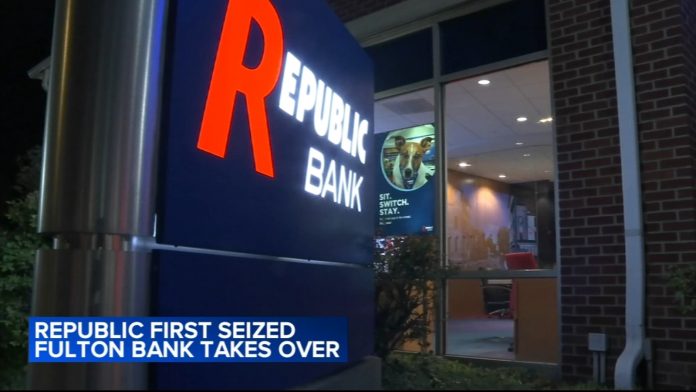
The recent collapse of Republic First Bank marks a significant event in the banking industry, one that has been met with swift regulatory action. The Philadelphia-based lender, known for operating as Republic Bank, faced challenges that led to its seizure by federal authorities. This development comes as a reminder of the fragility within the banking sector, particularly for regional banks grappling with financial pressures.

The collapse of Republic First Bank is a multifaceted story of financial instability, management challenges, and the broader economic pressures that have been impacting regional banks across the United States.

At the core of the bank’s collapse were higher operational costs and a failure to improve profitability, which led to strategic decisions such as job cuts and the exit from its mortgage origination business. These measures, however, were not enough to stabilize the bank’s financial standing. The bank had been struggling with money woes and management turmoil for over two years, which only compounded the challenges it faced.

A significant factor contributing to the bank’s downfall was the large proportion of uninsured deposits it held. With nearly two-thirds of its deposits uninsured, the bank was particularly vulnerable to a run-on deposit, which is precisely what happened in the wake of the collapses of other large regional banks like Silicon Valley Bank and Signature Bank. This led to a loss of depositor confidence and a subsequent withdrawal of funds, further destabilizing Republic First Bank’s financial position.

The closure has prompted a broader discussion about the stability of financial institutions and the safety nets in place for depositors. In the wake of the collapse, Fulton Bank has agreed to assume the majority of the failed bank’s deposits and assets, providing continuity for customers and mitigating immediate financial disruption.

The incident has also sparked a surge in cryptocurrency interest, as investors seek alternative avenues in the face of traditional banking sector turmoil. However, this pivot towards digital currencies is not without its own set of risks, as evidenced by the concurrent tumble in crypto prices following the bank’s shutdown.

Analyzing the broader implications, it’s clear that the banking sector is navigating a complex environment. Rising interest rates and fluctuating commercial real estate values pose challenges, especially for regional and community banks with significant exposure to these areas. The Republic First Bank collapse serves as a cautionary tale and a prompt for the industry to reassess risk management strategies and the robustness of financial safeguards.

As the dust settles, the focus shifts to the future of banking resilience. The lessons learned from this event will undoubtedly shape regulatory policies and banking practices moving forward. For now, the priority remains on ensuring depositor confidence and maintaining the integrity of the financial system in these uncertain times.


Nigeria Appoints Jim Ovia as Chairman of Nigerian Education Loan Fund (NELFUND), Pledges Commitment to Accessible Higher Education

0

In a step aimed towards broadening access to higher education and nurturing skill development among Nigerian students and youths, President Bola Tinubu has appointed Mr. Jim Ovia, CFR, as the Chairman of the Board of the Nigerian Education Loan Fund (NELFUND). 

This appointment underscores the government’s dedication to leveraging expertise and experience in fostering entrepreneurship and educational empowerment.

Mr. Ovia, renowned as the founder of Zenith Bank, brings to his new role a profound understanding of finance, entrepreneurship, and youth development. His alma maters include prestigious institutions such as Harvard Business School and the University of Louisiana, where he acquired a master’s in business administration, highlighting his readiness to steer NELFUND towards its objectives effectively.

President Tinubu expressed unwavering confidence in Mr. Ovia’s capacity to lead NELFUND towards achieving its mission of providing equitable access to higher education. 

“Education is the bedrock of any prosperous society. With Mr. Ovia at the helm, we are reaffirming our commitment to ensuring that no Nigerian student faces barriers to pursuing higher education due to financial constraints,” Tinubu remarked.

The National Student Loan Programme, a flagship initiative introduced during President Tinubu’s administration, aims at ensuring sustainable access to higher education and skill development for Nigerian students and youth. 

Enacted as the “Access to Higher Education Act, 2023,” this groundbreaking legislation established the Education Loan Fund to offer interest-free education loans to Nigerian tertiary education seekers. The repayment period commences two years after the completion of the National Youth Service Corps (NYSC) program.

Under the stewardship of Mr. Ovia, NELFUND seeks to provide financial assistance in the form of loans to economically disadvantaged Nigerian students, empowering them to pursue their academic aspirations without financial hindrances. 

This appointment aligns with President Tinubu’s broader commitment to enhancing access to higher education and fostering critical skill development among Nigerian youths.

The NELFUND emerges as a beacon of hope in the education sector, often marred by financial barriers. The idea, conceived by President Bola Tinubu’s administration, is said to be rooted in the urgent need to address the systemic challenges hindering the educational aspirations of Nigerian youths.

Also, Tinubu’s vision for NELFUND aligns with broader national goals of empowering Nigerian youths with the tools and resources needed to excel on a global scale. With Mr. Ovia at the helm, the Nigerian Education Loan Fund is expected to play a pivotal role in shaping the future of higher education in Nigeria, ensuring that no student faces barriers to pursuing their academic aspirations due to financial constraints.

The Fund is targeting at least 1.2 million beneficiaries in its first disbursement of the student loan, according to Akintunde Sawyerr, managing director of NELFUND.

Addressing concerns about fraud and misuse of the loans, Sawyer also disclosed that the Unified Tertiary Matriculation Examination (UTME) registration number; national identification number (NIN), and bank verification number, (BVN) were major requirements for accessing student loans.

He said disbursement would be in two segments: “The school fee will be paid to the institution on behalf of the student and the stipend directly to the student’s account.”

However, many have criticized the federal government over the amount allocated for the loan scheme, noting that it belies the claim that the government is giving education priorityAcknowledging this, Sawyerr said, the N50 billion was one percent of the revenue generated by the Federal Inland Revenue Service (FIRS) annually.

Google’s Alphabet Becomes Another American $2 Trillion Company

0

In the ever-evolving sectors of technology and commerce, Google has found itself at a crossroads, grappling with two formidable challenges that have reshaped its trajectory: the ascent of generative AI and the encroaching specter of regulation. 

Over its 25-year history, the tech giant has weathered storms and soared to unprecedented heights, yet these dual threats have sparked a fundamental reevaluation within the company.

Responding to the shift brought about by generative AI, Google has embarked on a journey of transformation, embracing artificial intelligence as the cornerstone of its future endeavors. Through extensive restructuring, divisions within Search, Android, and hardware have been realigned to prioritize AI-driven initiatives. Notably, the introduction of the Gemini AI model symbolizes Google’s strategic pivot towards capitalizing on the vast potential of AI technology.

In a bid to reassure stakeholders and fortify its position, Google has undertaken decisive actions, including project terminations and workforce reductions, aimed at streamlining operations and sharpening focus. The culmination of these efforts was underscored by Google’s historic announcement of its inaugural dividend and a monumental $70 billion share buyback, coinciding with the unveiling of its Q1 2024 earnings report.

The market’s response has been resoundingly positive, propelling Google’s parent company, Alphabet, to achieve and sustain a remarkable $2 trillion market capitalization milestone for a whole day. This is unlike in November 2021, when it briefly touched the threshold. With this milestone, Google ranks as the fourth most valuable public company globally. It follows Nvidia with a market capitalization of $2.2 trillion, Apple with $2.6 trillion, and Microsoft with $3.0 trillion. Amazon holds a valuation of $1.8 trillion, while Meta is valued at $1.1 trillion.

In stark contrast to its peers, Google has demonstrated a proactive approach to monetizing AI applications, forging partnerships, and leveraging technology to generate tangible value. Collaborations with industry players like Discover Financial and Ikea underline Google’s commitment to driving innovation and delivering results in the burgeoning AI industry.

According to The Verge, the company also disclosed that Discover Financial is implementing AI tools for approximately 10,000 call center agents, while Ikea is experiencing a rise in revenue through “value-based bidding solutions.” 

Although not currently discussing the monetization of AI-generated answers in Google Search, CEO Sundar Pichai expressed confidence in their ability to manage the costs associated with serving these queries.

Despite these advancements, Google remains cautious about disrupting its core search business, explaining that it has a measured approach to AI integration. CEO Sundar Pichai has emphasized the importance of enhancing the search experience while preserving traffic to external sites, striking a delicate balance between innovation and stability.

We’re being measured in how we do this, focusing on areas where Gen AI can improve the search experience while also prioritizing traffic to websites and merchants,” said Pichai.

Beyond AI, Google’s traditional revenue streams continue to thrive, with robust growth in search and advertising revenue, YouTube ads, and subscriptions. The company’s Q1 2024 financial performance, which shows $23.7 billion in profit on $80.5 billion in revenueindicates that the tech giant is holding tight its traditional revenue streams despite interest in AI.

In the first quarter, search and advertising revenue experienced a 14 percent year-over-year increase, while YouTube ads saw a nearly 21 percent increase. Additionally, revenue from “subscriptions, platforms, and devices” rose by 18 percent year over year, primarily attributed to premium YouTube subscriptions, according to Google’s chief business officer, Philipp Schindler. This growth does not necessarily stem from Pixel 8 sales, per The Verge.

Looking ahead, Google is poised to unveil further innovations and updates at its forthcoming developer conference, Google I/O, slated for May 14th. 

Besides its efforts to grab the maximum share of the emerging AI market, the company announced its efforts to enhance its competitiveness against platforms like TikTok and Instagram Reels. 

Philipp Schindler noted that 50 percent more creators are uploading short-form videos on YouTube Shorts, and the monetization rate of Shorts has increased by 12 percent in the last quarter alone. These improvements indicate Google’s commitment to strengthening its position in the short-form video market.

Unlocking Passive Income: Billion Dollar Jackpot Staking Secrets vs Uniswap and Axie Infinity

0

With increasing cost of living standards and a lack of increasing wages, avenues for passive income have become ever more popular. Side hustle opportunities beckon in the cryptocurrency space with projects like Billion Dollar Jackpot, Uniswap, and Axie Infinity leading the charge. Each of these projects offers a unique proposition for investors seeking to capitalize on the burgeoning crypto landscape.

Current Presale Stage Ends Monday 29th of April! Buy Now! 

Revving Up the GameFi Revolution

Billion Dollar Jackpot (BDJ) is a promising play-to-earn platform within the GameFi sector, currently in its presale phase. BDJ introduces a pioneering prediction game centered around the electrifying sport of Formula One.

Enthusiasts can immerse themselves in the thrill of racing by participating in weekly prediction markets, where forecasting the top 10 unlocks lucrative rewards.

With a season-long accumulation of points, users vie for a shot at the grand prize – the end-of-season jackpot. Earned rewards come in the form of BDJ tokens, empowering users to engage in further races, claim exclusive rewards, or trade on the open market.

As BDJ gains momentum, investors have a golden opportunity to amplify their net worth by purchasing tokens during the presale phase, potentially experiencing substantial returns as the project accelerates towards mainstream adoption. During the presale phase, you can begin earning additional BDJ tokens thanks to the staking platform in place. Head over to the state-of-the-art staking dashboard to see your allocation and rewards.

Pioneering Decentralised Exchange Protocol: Uniswap

Uniswap revolutionizes the cryptocurrency exchange landscape with its decentralized trading platform. As a leading decentralized exchange (DEX) protocol built on Ethereum, Uniswap facilitates seamless token swaps and liquidity provision through automated market-making algorithms.

By eliminating the need for intermediaries and traditional order books, Uniswap empowers users with unparalleled control over their assets and trading experience. With its commitment to decentralization and community governance, Uniswap continues to shape the future of decentralized finance (DeFi) and democratize access to financial services globally.

Reimagining Gaming Economies with NFTs: Axie Infinity

Axie Infinity emerged as a pioneering force in the realm of blockchain-based gaming, leveraging non-fungible tokens (NFTs) to redefine the gaming experience. Set in the vibrant universe of Lunacia, Axie Infinity enables players to collect, breed, and battle adorable creatures known as Axies.

By incorporating play-to-earn mechanics, players can monetize their gaming skills and assets, earning valuable resources and NFTs through gameplay. With a robust ecosystem supported by decentralized finance (DeFi) and community governance, Axie Infinity pioneers the intersection of gaming and blockchain technology, fostering a new era of player-owned economies and digital ownership.

Current Presale Stage Ends Monday 29th of April! Buy Now!

Driving Towards Success with Billion Dollar Jackpot

Passive income opportunities are now aplenty thanks to the world of cryptocurrency. While projects like Uniswap and Axie Infinity offer compelling propositions within their respective niches, Billion Dollar Jackpot stands out as a promising contender in the GameFi space.

With its Formula One prediction markets and lucrative rewards system, BDJ presents investors with a unique opportunity to capitalize on the excitement of racing while potentially multiplying their investments.

As the project gains momentum and moves towards its official launch, early investors have the chance to seize the moment and position themselves for significant returns, making Billion Dollar Jackpot a compelling choice for those looking to drive towards financial success in the world of cryptocurrency.

Find Out More Here:

Website: https://racetoabillion.com/en

Twitter: https://twitter.com/B_DollarJackpot

Telegram: https://t.me/billion_dollar_jackpot

Institutional Crypto Investors Choose ETFSwap (ETFS) As The Better Alternative To Binance And ByBit

0

Following Binance’s $4.3 billion legal settlement with the US SEC in November 2023, a change in the institutional adoption of digital assets is afoot.  Presently, institutional crypto investors are getting wary of these issues and are moving into a highly rated DeFi platform, ETFSwap (ETFS), as a promising alternative to Binance and ByBit.

Binance Gradually Losing Aura 

Binance is a top cryptocurrency exchange founded in 2017 that strongly focuses on altcoin trading. It offers crypto-to-crypto trading in over 350 cryptocurrencies, NFTs, and virtual tokens, including Dogecoin (DOGE), Litecoin (LTC), Solana (SOL), Bitcoin (BTC), and its coin, BNB.

When it comes down to buying and trading cryptocurrency, Binance is one of the biggest names in the crypto industry. Data on CoinGecko shows that it processes an average of $8.6 billion in trades daily.

However, the never-ending tussle with the US government that somewhat led to a trading decline from 81.3% to 55.3% over the year appears to have affected the platform’s dependability. Binance seems to be losing its flair as institutional investors who are seeking better returns are picking the new DeFi platform, ETFSwap (ETFS), over it.

ByBit Losing Its Appeal To Institutional Crypto Investors

Like Binance, ByBit has gained ground in the crypto community since its debut in 2018. ByBit is a digital crypto trading platform that lets users buy, sell, trade, and invest in cryptocurrencies. An attractive feature of this platform is that users don’t need to pay deposit fees for crypto deposits.

Also, it offers a $20 referral bonus to users who fulfill its sign-up requirements. However, only a limited number of cryptocurrencies can be traded on the ByBit network and this doesn’t resonate well with institutional crypto investors as they prefer investing on a platform that encompasses broad trading services.

ETFSwap (ETFS): A DeFi Trading Platform Currently Besting Binance And ByBit

We are in a fresh market cycle with many market opportunities and also seeing innovative platforms frequently spring up. The emergence of these viable platforms that hold tremendous potential in this uncertain market has led to several investors assessing their options.

In a time when exchange-traded funds (ETFs) are shaping the world, ETFSwap (ETFS) has shown initiative by spearheading the sector. The Ethereum-based DeFi platform is keen on transforming the decentralized finance (DeFi) community. It achieves this by seamlessly bridging the gap between traditional finance (TradFi) markets and decentralized finance (DeFi). By doing this, it enables users to easily trade a wide range of ETFs and cryptos on the ETFSwap (ETFS) platform.

Over the last week, the ETFSwap (ETFS) platform has seen an influx of investors looking for better alternatives. Certain tools that the DeFi platform boasts of may have prompted this. For example, unlike top crypto exchanges like Binance and ByBit, which require KYC verification for trading, ETFSwap (ETFS) does not.

Users and investors can trade on the ETFSwap (ETFS) platform without undergoing any KYC process, thereby absolving them of interference from intermediaries or regulated bodies and allowing them to trade completely anonymously.

The platform also boasts a transparent infrastructure that allows users and investors to enjoy flexible, seamless, and efficient trading services. ETFSwap (ETFS) achieves this by utilizing blockchain technology, known worldwide as a network that enables trustless transactions, instantaneous transactions, decentralized governance, and transparency. Consequently, ETFSwap users and investors are assured of real-time on-chain transactions.

The ETFSwap (ETFS) ecosystem is powered by its native token, ETFS. ETFS is a deflationary ERC-20 token that helps maintain prices within the ETFSwap (ETFS) community. Holders of this token can also engage in staking activities and earn passive income, as well as vote to decide the platform’s future.

After successful private fundraising, which resulted in the ETFSwap (ETFS) project raising a mouthwatering $750,000, the platform is riding on this bullish momentum and is currently in its public presale stage.

The ETFS Stage 1 presale is selling for $0.00854 and is fast selling out. The swarm of institutional crypto investors into the presale has seen an increase in the number of tokens sold in the Stage 1 presale, with over 25 million tokens sold. Stage 2 of the presale will sell for $0.01831, reflecting a breathtaking 100% price surge.

For more information about the ETFS Presale:


Visit ETFSwap Presale

Join The ETFSwap Community