DD
MM
YYYY

PAGES

DD
MM
YYYY

spot_img

PAGES

Home Blog Page 3478

BlockDAG Secures $17.6M In Presale Amid Moon Landing, Outperforming Amid Bitcoin Cash Halving And Cosmos (ATOM) Price Rise

0

As Bitcoin Cash and Cosmos navigate the choppy waters of the cryptocurrency market, BlockDAG stands out with its innovative approach. The recent Bitcoin Cash halving and Cosmos’s fluctuating performance serve as reminders of the challenges within traditional blockchain technologies.

In contrast, BlockDAG Network introduces a scalable solution through its Directed Acyclic Graph architecture, enabling faster and more secure transactions. Highlighting its progressive strides, the forthcoming moon-based keynote video and a notable price surge from $0.001 have captured the attention of the crypto community, positioning BlockDAG as a significant participant in blockchain’s evolution.

Bitcoin Cash Halving: Adjusting the Sails of Blockchain Technology

The recent halving event for Bitcoin Cash has lowered the miner rewards to 3.125 BCH per block, a significant milestone for the blockchain that originated as a Bitcoin fork in 2017. This adjustment aims to enhance transaction efficiency and reduce costs, occurring at block height 840,000—a critical evolution in its ongoing development. Despite challenges in widespread adoption, the halving is seen as a pivotal move for Bitcoin Cash, affecting miners’ incentives and overall network security.
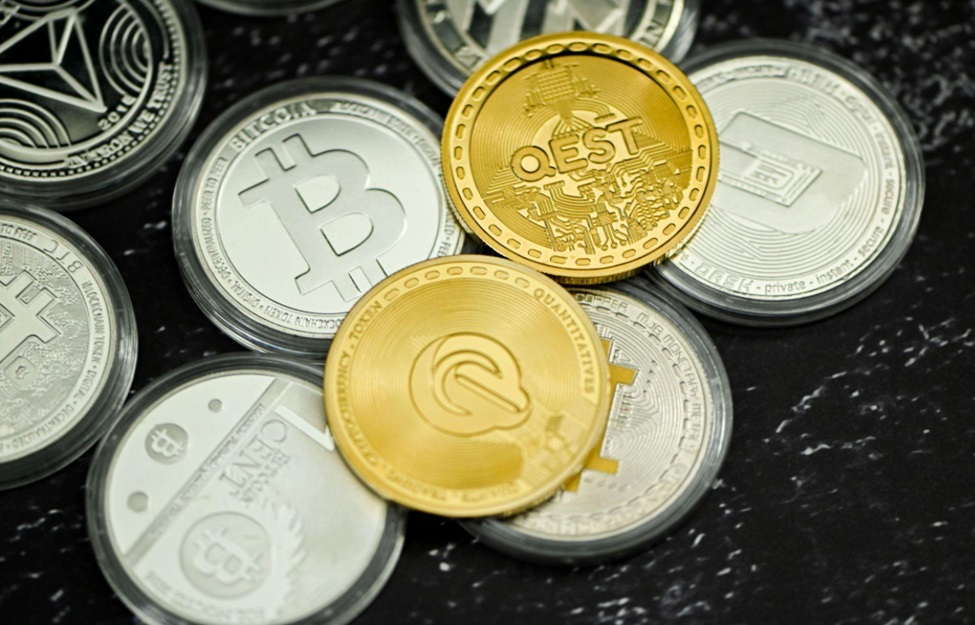
Following this halving, Bitcoin Cash has encountered its highest mining difficulty since 2019, suggesting a complex interplay between mining incentives and network stability. As the cryptocurrency community looks towards the upcoming Bitcoin halving, Bitcoin Cash provides valuable insights into how such events can influence blockchain economics and sustainability. 

Cosmos (ATOM) Price Gains Amid Market Shifts

Currently valued at $11.00, Cosmos (ATOM) has recently enjoyed a 3.04% uptick, performing well against the broader market and increasing by 0.94% against BTC. Despite facing market volatility, projections indicate that Cosmos might reach $12.43 by April 11, 2024, potentially gaining 12.99%.

Though Cosmos has faced a challenging month, losing 20.29% of its value, its performance over the last three months shows a more favorable 12.87% increase, with a slight long-term decrease of -0.07%. These fluctuations highlight the complex patterns Cosmos navigates within the market, continuing to draw attention from investors and market analysts alike.

BlockDAG: Setting New Standards in Blockchain Innovation

BlockDAG has quickly established itself as a leading figure in the crypto market, raising an impressive $17.6 million in its presale and distributing over 7.5 billion coins. By integrating Directed Acyclic Graphs (DAG) into its architecture, BlockDAG offers a solution to traditional blockchain scalability issues, allowing parallel transaction processing that enhances speed without sacrificing security or decentralization.

Increasing excitement for the project, the BlockDAG team has revealed a teaser for an upcoming moon-based keynote video. This unprecedented move in the cryptocurrency field is expected to enhance the project’s popularity and reach, setting the BlockDAG presale apart as a historical event in crypto.
The release of BlockDAG’s technical whitepaper and the new developments posted on its website illustrate the project’s dedication to transparency and active community engagement. Furthermore, BlockDAG’s community-focused initiatives, such as a 10% referral bonus, actively promote organic growth and foster a robust, engaged user base.

The enthusiasm surrounding BlockDAG has intensified with the release of its technical whitepaper, which forecasts a potential 30,000x return on investment. From its initial pricing at $0.001 to the current $0.005, BlockDAG’s value has surged by 400%, attracting global investor interest.

Currently valued at $0.005, BDAG coins are expected to see an increase to $0.006 in the upcoming 48 hours. This potential rise, set against a backdrop of increased presale demand, reflects a significant shift in the market’s dynamics.

Final Thoughts

In conclusion, while Bitcoin Cash and Cosmos continue to adjust and evolve within the cryptocurrency ecosystem, BlockDAG is carving out a distinctive niche with its advanced technology and strategic community engagement. The anticipation surrounding its innovative keynote video and the robust market response to its recent price surge underscores BlockDAG’s potential to significantly influence the future of blockchain technology. As we observe these developments, BlockDAG’s approach offers a compelling glimpse into the possibilities of enhanced efficiency and expanded scalability in the digital currency landscape.


Join BlockDAG Presale Now:

Website: https://blockdag.network

Presale: https://purchase.blockdag.network

Telegram: https://t.me/blockDAGnetworkOfficial

Discord: https://discord.gg/Q7BxghMVyu
BlockDAG Presale Jumps to $17.6M with Moon Shot Teaser Reveal, Dwarfing Cardano Web3 Wallet & Toncoin’s Market Surge

0

In the bustling landscape of cryptocurrency, both Cardano and Toncoin have made significant strides with their recent updates and endorsements. Cardano has enhanced its Web3 wallet, introducing features that streamline asset management on its blockchain. Meanwhile, Toncoin, buoyed by potential ties to Telegram’s IPO, has seen its value increase.

Amid these developments, BlockDAG Network distinguishes itself with a ground-breaking blend of blockchain security and Directed Acyclic Graph (DAG) technology. Its upcoming keynote video has sparked interest, especially with its recent $0.001 price surge, showcasing BlockDAG’s potential to transform the crypto landscape with high transaction speeds and increased accessibility.

Advanced Features Elevate Cardano’s Web3 Wallet

Cardano has recently upgraded its Web3 wallet, Lace, to version 1.9, introducing enhanced features such as multi-account and multi-wallet capabilities that significantly improve digital asset management. This update allows users to engage more seamlessly with the Cardano blockchain, offering improved flexibility in managing ADA and other tokens. The upgrade to the Lace wallet enhances user interaction with its refined interface and strengthens asset security, reinforcing Cardano’s position in the evolving cryptocurrency ecosystem.

Toncoin Reflects Telegram’s Legacy and Ambitions

Toncoin has captured attention with its price climbing above $7, partly driven by speculation around Telegram’s potential initial public offering. Although Telegram had to distance itself from the TON project after facing legal challenges, the community-led initiative, Toncoin, has thrived. Endorsed recently by Telegram’s CEO, Pavel Durov, Toncoin continues to solidify its place in the digital asset market, benefiting from the ongoing support and enthusiasm from developers and the broader community.

BlockDAG: Setting New Standards in Crypto Innovation

BlockDAG stands out as a rapidly growing cryptocurrency, uniquely blending blockchain’s security with the efficiency of Directed Acyclic Graphs (DAG) technology. This combination allows for incredibly fast transaction processing, projecting capabilities of handling 10,000 to 15,000 transactions per second. BlockDAG’s innovative approach is further detailed in its V2 technical whitepaper, which forecasts a revolutionary leap in transaction speeds and system responsiveness.

The excitement around the BlockDAG project has been taken up a notch with the teaser release of an upcoming keynote video from the moon. This unique endeavor in the cryptocurrency field aims to catapult the project to unprecedented popularity and reach, marking the BlockDAG presale as a historic event in cryptocurrency.

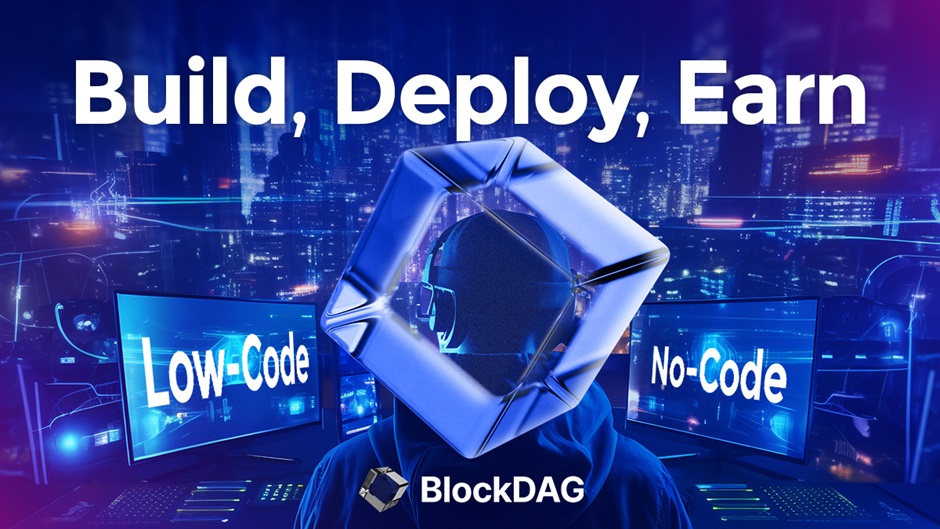
The platform also embraces low-code/no-code solutions, democratising blockchain technology by simplifying the creation and launch of utility tokens, meme coins, and NFTs. This accessibility invites a wider audience to blockchain creation, reducing barriers to entry. Additionally, BlockDAG’s compatibility with the Ethereum Virtual Machine (EVM) enhances its appeal by enabling seamless integration and use of established Ethereum smart contracts.

With $17.6 million already secured and targets set for substantial future funds, BlockDAG’s promising start at just $0.005 per coin positions it as the leading cryptocurrency for potential investors, marking a significant milestone in the development of advanced crypto solutions. With a presale price of $0.005 per coin and analysts projecting a staggering 20,000x return on investment, BlockDAG’s current presale, now in its 9th batch, is a hotbed of investor activity. The project’s swift presale progress demonstrates high demand and anticipates a significant valuation surge post-launch, making it an enticing opportunity for early investors.

With BDAG coins priced at $0.005 today, a move to $0.006 is projected within the next 48 hours. This anticipated increment, prompted by a surge in presale interest, signifies either impending market volatility or a deliberate strategic market positioning.

As the Cardano Web3 Wallet advances digital asset management and Toncoin continues to grow amidst industry challenges, BlockDAG redefines the crypto market with its cutting-edge technology and impressive presale success.


Join BlockDAG Now!

Website: https://blockdag.network

Presale: https://purchase.blockdag.network

Telegram: https://t.me/blockDAGnetworkOfficial

Discord: https://discord.gg/Q7BxghMVyu

Headline Inflation Surges to 33.20% in March 2024: Food Inflation Hits Record High at 40.01%

0

In March 2024, Nigeria witnessed a sharp increase in headline inflation, soaring to 33.20% compared to February’s rate of 31.70%, according to the latest data from the Nigerian Bureau of Statistics (NBS).

The 1.50% rise is attributed to the persistent inflationary pressures gripping the nation’s economy. Year-on-year, the headline inflation rate in March 2024 was 11.16% points higher than the same month in 2023, marking a significant uptick from 22.04% to 33.20%.

Breaking down the data, the month-on-month headline inflation rate for March 2024 stood at 3.02%, slightly lower than February’s 3.12%. This indicates a slower rate of increase in the average price level compared to the previous month.

However, despite this marginal decline, inflationary pressures remain a cause for concern, particularly in the food sector.

“The percentage change in the average CPI for the twelve-month period ending March 2024 over the average of the CPI for the previous twelve-month period was 27.13%, showing a 6.76% increase compared to 20.37% recorded in March 2023,” the NBS said.

Food Inflation Hits Record High

The food inflation rate surged to a record high of 40.01% in March 2024, a staggering 15.56% points higher than in March 2023. This unprecedented rise reflects the acute challenges facing consumers as food prices continue to escalate. Notably, the surge in food inflation was driven by increases in prices across various food categories, including staples like garri, millet, yam, and palm oil.

On a month-on-month basis, food inflation in March 2024 decreased slightly to 3.62%, down from 3.79% in February. This marginal decrease, however, does little to alleviate the burden on consumers already grappling with high food prices. Factors such as disruptions in the supply chain and increased production costs contribute to the persistent upward trajectory of food prices.

The average annual rate of food inflation for the twelve months ending March 2024 was 31.40%, a significant 8.69% points increase from the previous twelve-month average recorded in March 2023. This underlines the sustained upward pressure on food prices, exacerbating the challenges faced by households across the country.

Urban and Rural Inflation

On a year-on-year basis, urban inflation surged to 35.18% in March 2024, a substantial increase of 12.11% points compared to March 2023. Similarly, rural inflation rose to 31.45%, marking a 10.37% increase over the same period. While both urban and rural areas experienced significant inflationary pressures, the burden is particularly acute in urban centers, where prices tend to be higher.

Month-on-month, urban and rural inflation rates remained relatively stable, with urban inflation standing at 3.17% and rural inflation at 2.87%. Despite the slight differences, both urban and rural areas continue to grapple with high inflation rates, eroding purchasing power, and reducing the standard of living for many Nigerians.

Core Inflation

Core inflation, which excludes the prices of volatile agricultural products and energy, surged to 25.90% on a year-on-year basis in March 2024, up from 19.63% in March 2023. This increase reflects broader inflationary pressures beyond the food sector, driven by rising prices in transportation, housing, and medical services.

Month-on-month, core inflation increased to 2.54% in March 2024, up from 2.17% in February. This uptick underscores the broad-based nature of inflationary pressures, affecting various sectors of the economy and impacting consumers’ purchasing power.

State by state inflation rates

In March 2024, headline inflation rates varied across states, with Kogi, Bauchi, Kwara, and Oyo recording the highest rates, while Borno, Benue/Taraba, and Katsina recorded the slowest rise in headline inflation. Similarly, food inflation rates showed regional disparities, with Kogi, Kwara, and Akwa Ibom experiencing the highest rates, while Nasarawa, Borno, and Bauchi recorded the slowest rise in food inflation.

“In March 2024, All Items inflation rate on a Year-on-Year basis was highest in Kogi (39.97%), Bauchi (38.34%), Kwara (38.10%), and Oyo (37.29%), while Borno (25.78%), Benue/Taraba (28.12%) and Katsina (28.32%) recorded the slowest rise in Headline inflation on Year-on-Year basis.

“On a Month-on-Month basis, however, March 2024 recorded the highest increases in Zamfara (3.90%), Abia (3.89%), Ondo (3.75%), while Borno (1.46%), Yobe (1.84%) and Adamawa (1.85%) recorded the slowest rise on Month-on-Month inflation,” the report said.

The surge in headline and food inflation rates in March 2024 underscores the acute challenges facing Nigeria’s economy and has been eroding purchasing power, exacerbating poverty, and undermining economic stability.

Experts said addressing the root causes of inflation, including supply chain disruptions and production bottlenecks, requires concerted efforts from policymakers, businesses, and other stakeholders.

Diminishing Foreign Direct Investments Is A Huge Challenge for Nigeria

0

This is one of Nigeria’s major challenges: diminishing foreign direct investments. Yes, “revelations from a presentation by Wale Edun, Nigeria’s Minister of Finance and Coordinating Minister of the Economy, have shed light on a concerning trend in the country’s foreign direct investment (FDI).

“According to Edun’s presentation, FDI in Nigeria has seen a significant decline, plummeting from $22.7 billion in 2014 to a mere $3.7 billion in 2023. This staggering $19 billion drop over the span of a decade underscores the challenges facing Nigeria’s investment climate and economic stability.”

Note:

Year 2014 – $22.7 billion

Year 2023 – $3.7 billion

That is statistically significant. The question is this: why did that happen? You can also add: do Nigerians really care? When we write here that Nigeria has lost a decade, many will attack me because my name is Ndubuisi. But if for the sake of this post, you assume, I am Wale Adamu Ndubuisi Effong …, would you like to understand why investors have moved on from Nigeria, that within a decade we saw a $19 billion drop?

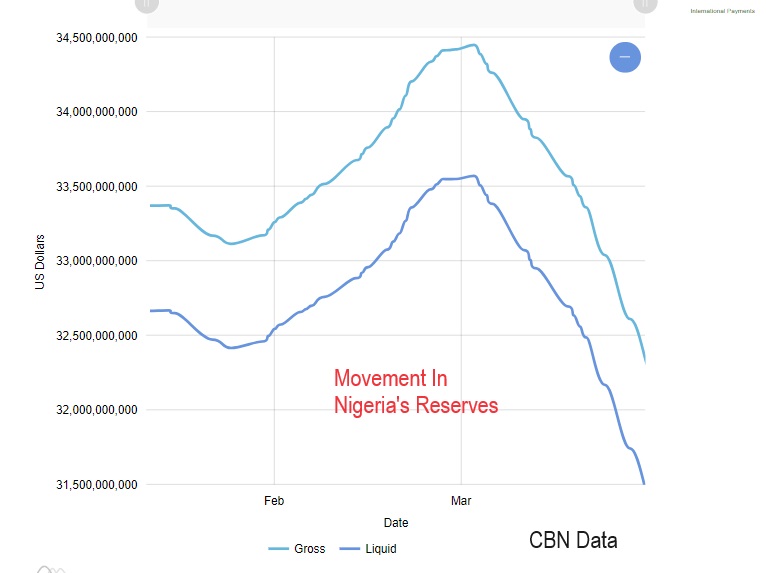
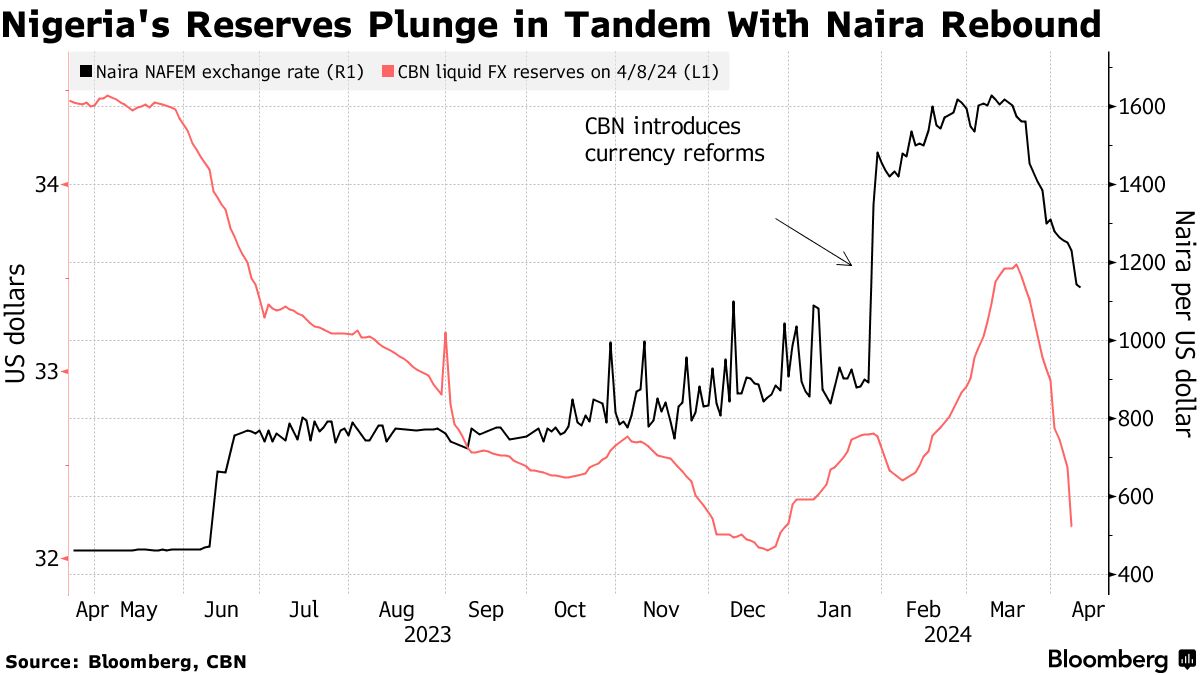
The reserves data and it correlates with the movement of Naira/USD. Largely, we are fighting with the reserves to defend Naira in Nigeria https://www.tekedia.com/nigerias-strategy-for-defending-naira-must-not-rely-solely-on-using-foreign-reserves/

Source: CBN data

Foreign Direct Investments in Nigeria Plummet by $19 Billion Over 10 Years – Finance Minister

Foreign Direct Investments in Nigeria Plummet by $19 Billion Over 10 Years – Finance Minister

0

Revelations from a presentation by Wale Edun, Nigeria’s Minister of Finance and Coordinating Minister of the Economy, have shed light on a concerning trend in the country’s foreign direct investment (FDI).

According to Edun’s presentation, FDI in Nigeria has seen a significant decline, plummeting from $22.7 billion in 2014 to a mere $3.7 billion in 2023. This staggering $19 billion drop over the span of a decade underscores the challenges facing Nigeria’s investment climate and economic stability.

This was revealed during a presentation made by Edun to top business leaders in Lagos, at the prestigious Lagos Business School Breakfast Club. The club, renowned for providing valuable insights into the business environment, offers a platform for C-suite executives to engage with key economic issues and government policies.

At the presentation, Edun spoke about the key issues confronting the economy and what the government was doing about it. He emphasized the kernel of the Federal Government’s economic reforms, which aims to boost forex supply through increased FDI and Foreign Portfolio Investments.

In his presentation, Edun highlighted the significant fluctuations in Foreign Direct Investments (FDI) in Nigeria over recent years. In 2014, FDI stood at $22.7 billion but decreased sharply to $14.4 billion the following year and further declined to $10.4 billion in 2016. Subsequently, FDI continued its downward trend, dropping to $9.8 billion in 2017.

Although there was a slight increase to $11.9 billion in 2018, FDI fell once again to $9.2 billion in 2019. These fluctuations underscore the challenges faced by Nigeria in attracting and retaining foreign investment, reflecting both internal and external economic factors impacting investor confidence and decision-making.

According to Edun’s breakdown, FDI in Nigeria has been on a downward trend over the past decade. In 2014, FDI stood at $22.7 billion, but it witnessed a steady decline in subsequent years, dropping to $3.7 billion in 2023. This decline paints a grim picture of Nigeria’s attractiveness to foreign investors and underscores the urgent need for comprehensive economic reforms.

In addressing the challenges, Edun announced plans by the Federal Government to issue domestic bonds denominated in foreign currency in the second quarter of 2024. This move, aimed at attracting additional foreign exchange inflows to stabilize the country’s currency, underscores the government’s commitment to revitalizing the economy.

However, challenges persist in attracting foreign investors to Nigeria. Edun noted that rising inflation in Western countries and the need to keep interest rates high have dampened investor appetite for FDI. Consequently, the government may turn to domestic resource mobilization and the corporate sector for solutions and investments.

“Because of lack of faith in the currency, many have decided to try to hold and save in dollars,” he said.

“All the funds in the diaspora, we are targeting them. There are all these funds that you have brought into your (local foreign currency) accounts, we are targeting them”

Edun’s presentation was part of the monthly sessions organized by the Lagos Business School Breakfast Club, which provides an avenue for C-suite executives to gain access to high-quality intelligence about the operating business environment. These sessions offer valuable insights into current economic issues and government policies, facilitating informed decision-making among business leaders.

Despite the grim outlook, recent announcements by the Minister of Trade, Industry and Investment, Doris Uzoka-Anite, offer a glimmer of hope. Uzoka-Anite revealed that Nigeria secured investment commitments worth $30 billion within President Bola Tinubu’s first eight months in office.

“The Federal Government has secured an investment commitment of $30bn since we came into power eight months ago. It means the investors are going to bring in the money or a promise to bring in the investment. So the money, investment proposal, and every other thing is done,” Anite said during a press briefing organized by the Ministry of Information.

“Some have already started building and the investments will come in over five to eight years. Some of the monies will come in the form of equipment, and direct investments into manufacturing and the facilities. So that fund is here already.”

While these commitments represent promises from investors rather than immediate cash injections, they signal confidence in Nigeria’s economic potential. Anite further explained that the actual financial inflow from these investments would be spread out over five to eight years.

Additionally, she detailed that the investments would manifest in various forms, including investments in equipment and direct investments in manufacturing facilities. This suggests a long-term commitment from investors and underscores the potential for sustained economic impact from these investments beyond the initial influx of funds.

However, the sharp decline in FDI over the past decade is noted to underline the urgent need for comprehensive reforms to revitalize Nigeria’s investment climate. Against this backdrop, the government’s efforts to attract foreign investors and stimulate economic growth are critical for job creation, poverty reduction, and sustainable development.