DD
MM
YYYY

PAGES

DD
MM
YYYY

spot_img

PAGES

Home Blog Page 35

Bitcoin, Solana, and XRP All Look Bullish—Ozak AI Forecast Beats Them in ROI

0

Crypto market momentum continues heating up as Bitcoin, Solana, and XRP all display strong bullish setups heading into the next major expansion cycle. Yet even as these top-tier assets build powerful market structure, analysts consistently highlight one project with a far more aggressive long-term ROI curve—Ozak AI (OZ).

As an AI-native intelligence engine with working millisecond predictive technology, autonomous AI agents, and cross-chain real-time analytics, Ozak AI enters the market with functional utility rather than speculative promises. With the Ozak AI presale now surpassing $4.8 million, analysts argue that its upside potential could exceed Bitcoin, Solana, and XRP combined during the next two-year window.

Bitcoin (BTC)

Bitcoin trades around $89,252 and maintains a structurally strong macro uptrend. Support at $87,200 keeps the bull structure intact, with deeper confirmation zones near $85,600 and $83,900 protecting long-term momentum.
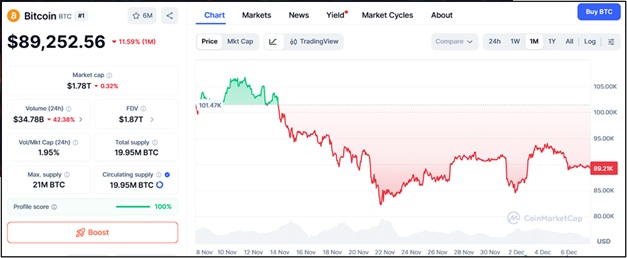
BTC begins shifting into breakout mode once price retests resistance at $91,400, with higher extension zones near $93,200 and $95,600 often driving major continuation moves during peak liquidity cycles. Analysts expect Bitcoin to reach new all-time highs in the next phase, supported by ETF inflows, institutional demand, and supply-side constraints following the most recent halving.

But even with Bitcoin’s solid trajectory, its ability to deliver exponential ROI is limited due to market maturity. Ozak AI, by contrast, is at the beginning of its curve and introduces real-time intelligence that compounds continuously—leading smart-money models to assign it much higher long-term upside than BTC.

Solana (SOL)

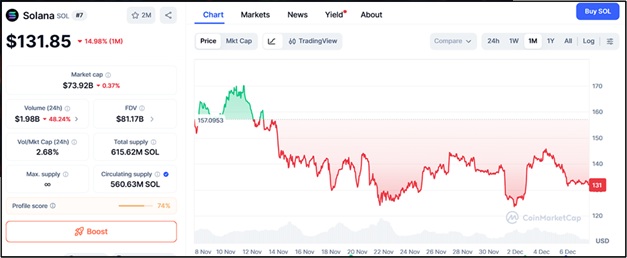
Solana trades near $131.85 and continues to lead high-performance Layer-1s in both user growth and throughput efficiency. Support at $128 reinforces the trend, while deeper zones at $124 and $118 form a durable multi-layered demand structure. Solana’s next acceleration phase begins once the price approaches resistance at $136, followed by higher extension levels near $141 and $148. With rising developer adoption, expanding DeFi activity, and increasing institutional interest, Solana remains one of the strongest large-cap contenders for the coming cycle.

Yet analysts point out that Solana’s growth—while impressive—follows a more predictable linear path. Ozak AI’s compounding intelligence architecture, millisecond-speed predictive system, and autonomous multi-chain agent network create an exponential curve that few major altcoins can match.
XRP

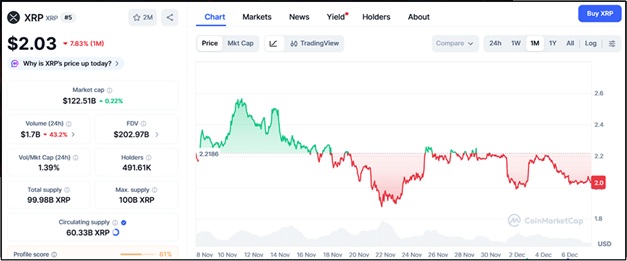
XRP continues its steady recovery as long-term confidence returns. While not part of the title’s data mix for technical levels, XRP still plays a key role in broader market direction, and analysts consistently compare its large-cap outlook to early-stage exponential opportunities like Ozak AI. XRP’s long-term path remains tied to regulatory clarity and institutional settlement adoption—a narrative with strong potential but far less compounding utility than Ozak AI’s AI-driven system.
 

Ozak AI’s intelligence layer, supported by HIVE’s 30 ms signals, SINT’s autonomous agent execution, and Perceptron Network’s 700K+ node footprint, creates a utility loop that expands in value every single day—regardless of market conditions. This is the core reason analysts expect Ozak AI to outperform XRP, Solana, and Bitcoin in ROI over the next 24–36 months.

Ozak AI Becomes the Top ROI Pick of the Cycle

Bitcoin controls market direction. Solana drives performance innovation. XRP strengthens utility adoption. But Ozak AI stands in a different category—an AI-powered intelligence engine that evolves automatically, learns continuously, and increases in value as Web3 becomes more data-dense. Analysts projecting 20x–60x upside for Solana and 3x–10x for Bitcoin now assign Ozak AI a much steeper curve, with forecasts ranging from 50x to more than 100x if adoption accelerates.
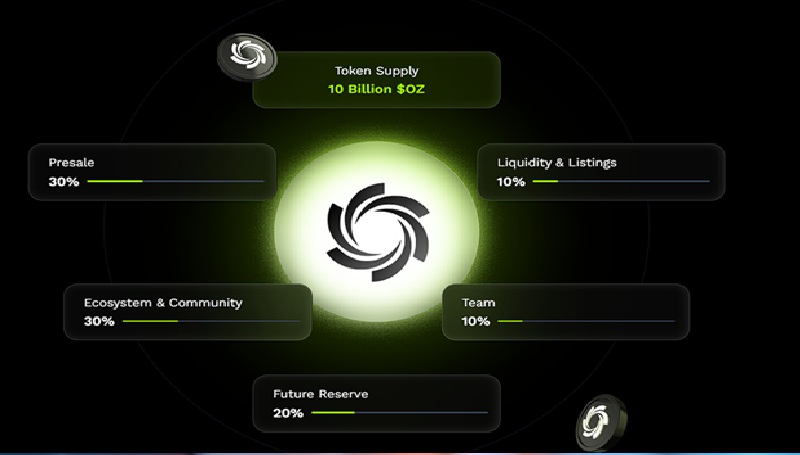
As the next expansion cycle approaches, Ozak AI is increasingly viewed as the highest-ROI opportunity in the market—outperforming even the strongest bullish setups across BTC, SOL, and XRP. 


About Ozak AI

Ozak AI is a blockchain-based crypto project that provides a technology platform that specializes in predictive AI and advanced data analytics for financial markets. Through machine learning algorithms and decentralized network technologies, Ozak AI enables real-time, accurate, and actionable insights to help crypto enthusiasts and businesses make the correct decisions.

For more, visit:

Website: https://ozak.ai/

Telegram: https://t.me/OzakAGI

Twitter: https://x.com/ozakagi
The China’s Record-Breaking Trade Surplus, A $1 Trillion Milestone Amid U.S. Trade Tensions

0

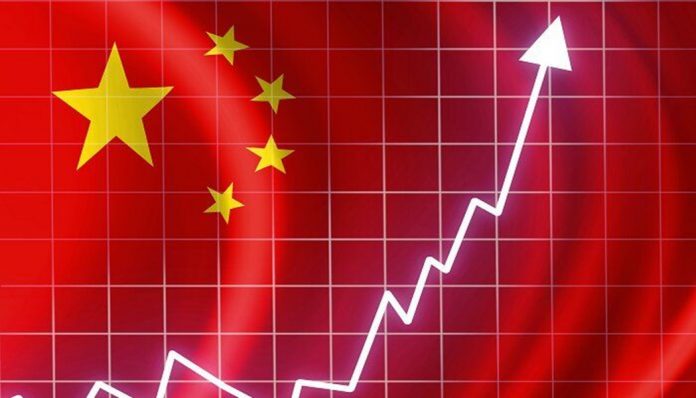
China’s General Administration of Customs, released a report stating that the country’s goods trade surplus for the first 11 months of 2025 reached approximately $1.08 trillion, surpassing the $992 billion full-year total from 2024 and marking the first time it has crossed the $1 trillion threshold.

This surge occurred despite intensified U.S. tariffs under President Donald Trump’s administration, which have slashed direct exports to the U.S. but failed to curb China’s overall export dominance.

Exports rebounded sharply by 5.9% year-over-year to $330.3 billion, exceeding economist forecasts, while imports grew a modest 1.9% to $218.6 billion.

This yielded a monthly surplus of $111.7 billion—the highest since June. Cumulative exports hit $3.38 trillion up 6.5% from 2024, while imports reached $2.30 trillion up 4.1%. The resulting $1.08 trillion surplus reflects China’s export machine outpacing sluggish domestic demand.

Analysts from Capital Economics forecast the 2025 surplus could climb to $1.23 trillion, equivalent to over 1% of global GDP, driven by sustained manufacturing strength. The U.S.-China trade war, escalated in 2025 with tariffs on key sectors like electronics, machinery, and electric vehicles (EVs), has indeed hammered bilateral trade.

Exports to the U.S. plummeted 29% year-over-year in November alone, contributing to a broader annual drop of around 20%. However, China has adeptly pivoted: Shipments to the European Union surged 14.8%, Australia 35.8%, and Southeast Asia 8.2% in November of 2025.

Emerging regions like Latin America and Africa have also absorbed excess capacity. EVs, solar panels, and machinery led the charge, with China overtaking Japan as the world’s top car exporter projected 6+ million units in 2025. Manufacturers preemptively “front-loaded” shipments before tariffs bit harder.

Beijing’s focus on advanced manufacturing and export subsidies, outlined in October’s high-level meeting, has bolstered competitiveness. The yuan’s relative stability has further aided pricing power abroad.

This resilience underscores a key irony: U.S. tariffs, intended to rebalance trade, have instead accelerated China’s global footprint, flooding non-U.S. markets and straining relations with allies like the EU and France, where leaders like Emmanuel Macron have warned of potential countermeasures.

The surplus bolsters China’s foreign reserves now over $3.3 trillion and supports the 5% GDP growth target, but it highlights overreliance on exports amid contracting factory activity eighth straight month in November. Upcoming policy signals from the Central Economic Work Conference could emphasize domestic demand to “wean off” this dependency.

America’s trade deficit narrowed to $59.6 billion in August 2025 down from prior peaks, but the influx of cheap Chinese goods risks job losses in manufacturing hubs like Germany and Japan. It also amplifies calls for a stronger renminbi to address imbalances.

With Trump’s tariffs set to persist into 2026, expect heightened scrutiny at forums like the WTO. Economists warn this could echo pre-2008 crisis dynamics, where China’s surpluses then ~$300 billion fueled global tensions.

In essence, China’s $1 trillion surplus isn’t just a number—it’s a testament to adaptive industrial might outmaneuvering protectionism, reshaping supply chains and trade alliances in the process. If trends hold, 2026 could see even steeper imbalances unless multilateral efforts gain traction.

EVs, alongside batteries and solar panels, accounted for a significant portion of the 6.5% year-over-year export growth, driven by overcapacity, subsidies, and aggressive market diversification. While U.S. tariffs—now at 100% on Chinese EVs—slashed bilateral trade, they inadvertently boosted China’s global EV footprint, flooding emerging markets and straining Western competitors.

By November, BYD alone shipped a record 131,935 vehicles overseas, a 325.9% jump from November 2024, pushing the company’s monthly NEV sales to 480,186 units. EV exports generated over $36.7 billion in 2023, with 2025 values exceeding $20 billion to Europe alone through mid-year.

Globally, China captured 40% of EV exports in 2024, a share that held firm into 2025 despite tariffs. This sector’s strength helped offset a 20% drop in U.S.-bound goods, with EVs leading the “sectoral boom” in machinery and green tech.

Tariffs escalated to 100% on Chinese EVs in May 2025 from 25%, plus 25% on auto parts and batteries, rendering direct exports unviable. U.S. imports from China fell from $388.8 million in 2023 to negligible levels in 2025, displacing just 2% of U.S. EV imports historically.

Trump’s April 2025 global auto tariffs 25% on imports, including from Mexico to curb trans-shipping further tightened the noose, prompting warnings of a 793,000-unit drop in global light-vehicle sales in 2025. China responded with rare earth export controls and blacklisting U.S. firms, but held off on full retaliation to preserve export momentum.

This tit-for-tat has inflated U.S. EV prices by up to 40% in simulations, slowing adoption while benefiting domestic players like Tesla though its China-made exports to the U.S. are minimal. China’s EV makers pivoted swiftly, accelerating pre-trade-war trends.

Africa saw a 184% import surge to over $1 billion in 2025, with EVs and solar panels disrupting local industries in Nigeria and Algeria. Latin America absorbed 85% of sales growth in emerging economies outside China, fueled by affordable pricing.

Southeast Asia’s exports rose 8.2% overall, with production shifting to Vietnam and Indonesia up 23% and 29% in trade volumes to bypass tariffs. Despite EU tariffs up to 45% provisional in 2024, with minimum price talks ongoing, Europe took half of China’s EV exports since 2018, valued at $20 billion in 2025.

Canada joined with 100% tariffs, prompting China’s first use of its Foreign Trade Law for countermeasures like canola probes. Overall, 14 countries spent $1B+ on Chinese EVs in 2025. Firms like BYD and Leapmotor relocated assembly to Mexico and Thailand, though this risks “circumvention” probes.

EVs helped China project 6+ million car exports in 2025, overtaking Japan as top exporter and supporting 5% GDP targets. However, overreliance risks deflation factory activity contracted for eight months and subsidy cuts in the 2026 five-year plan.

Battery exports hit 81.2 GWh in H1 2025 up 36.5%, with LFP tech dominating 40.9% of shipments. Tariffs disrupted supply chains, raising costs for U.S./EU manufacturers reliant on Chinese batteries. This echoes 2008 imbalances, fueling WTO disputes and EU calls for carbon tariffs.

Emerging markets gain jobs but face infrastructure strains; Western auto unions warn of 1 million job losses. With Trump tariffs persisting into 2026 potentially 60% universal, analysts forecast a $1.23 trillion surplus but predict EV export cooling to 10% growth if third-country probes intensify.

Beijing’s October policy push for advanced manufacturing could sustain the edge, but domestic demand stimulus is key to avoiding a “chaotic” global trade scene. In short, U.S. tariffs walled off one market but unlocked others, turning China’s EV overcapacity into a $1T surplus weapon.

This adaptive strategy has accelerated the global energy transition—albeit unevenly—while heightening tensions that could redefine alliances at forums like the WTO. If unaddressed, it risks broader protectionism, but for now, China’s EV juggernaut rolls on.

Nvidia Gets Trump’s Nod to sell H200 chips to China — but Beijing’s Approval is Not Certain

0

Nvidia is poised to regain a foothold in the world’s largest AI market after securing U.S. government approval to sell its high-end H200 chips to China.

The move marks a significant reversal from Washington’s earlier blanket restrictions that barred Nvidia from shipping advanced AI semiconductors to the country. Yet the question now is not whether Nvidia can sell to China, but whether Beijing will let its companies buy.

Under the new arrangement, Nvidia can ship the H200 to “approved customers,” but must hand over 25% of revenue from those sales to the U.S. government. The company had already run up against roadblocks earlier this year, which forced it to design the lower-performance H20 chip specifically to meet export rules.

Reports soon suggested Beijing discouraged local firms from purchasing the H20, and industry watchers have treated the H200 with similar skepticism. The Financial Times reported China would “limit access” to the chip, citing unnamed sources. Earlier this year, Beijing expressed security concerns over Nvidia’s H20, following Washington’s approval for the chip’s supply.

Looking at comments from Nvidia CEO Jensen Huang and tracking Beijing’s behavior over the past year provides hints about how this latest approval might play out.

A political green light from Washington does not guarantee enthusiasm in Beijing. Huang had earlier this month said he was still unsure whether Beijing would even allow Chinese firms to buy the company’s proposed H200 artificial intelligence chips, even if Washington greenlights sales.

China’s reasons to hold off on the H200

On paper, the H200 is one of Nvidia’s most advanced AI accelerators, widely used for training state-of-the-art models. But China has spent years trying to reduce its dependence on American technology, pouring resources into domestic semiconductor programs that can eventually rival Nvidia’s performance.

Neil Shah, partner at Counterpoint Research, told CNBC the U.S. approval may reopen access to American chips, but it does little to change China’s strategic direction.

“The strategic train has already left the station,” he said.

Huang himself has helped set expectations. In a May interview with Bloomberg, he described Huawei’s semiconductor lineup as “probably comparable” to the H200 — a notable endorsement for a company Washington has tried for years to cripple. Huawei’s Ascend chips, once seen as niche competitors, are now being deployed in massive clusters as the company seeks to close the gap in total compute capacity.

In June, Huang told CNBC that if Nvidia were cut off permanently from China, Huawei would eventually meet the country’s chip needs entirely.

China’s technology giants, Alibaba, Tencent, and Baidu, have also been using stockpiled Nvidia chips purchased before restrictions took effect. Combined with accelerating advances in local AI silicon, these companies have been able to train competitive models without depending on new U.S. hardware.

Shah warned that relying heavily on Nvidia carries political risks for Chinese companies. Being “locked in” to an American supply chain, he said, is a “liability with a hanging sword of political uncertainty.” Beijing’s national strategy is built on the opposite idea: reducing exposure to foreign pressure.

For that reason, domestic self-sufficiency remains the overriding priority.

Why China may still want the H200 — at least for now

Despite the political calculus, the H200 remains far more capable than local alternatives, and shortages across China’s semiconductor ecosystem could create immediate demand.

Trump said Chinese President Xi Jinping “responded positively” to the export approval. Meanwhile, Alibaba CEO Eddie Wu recently pointed to supply constraints across the entire chip supply chain — a shortage that stretches from training-grade GPUs to networking components.

Ben Barringer, head of technology research at Quilter Cheviot, said China’s tech firms are likely to buy the H200 simply because the alternative is slower progress.

“There will be demand for H200 as it is a better chip than H20 and there is a shortage of chips in China,” he told CNBC. “The big Chinese tech companies will want to use Nvidia and AMD if possible.”

China may be catching up, but it is still behind.

The country remains unable to manufacture top-tier semiconductors at scale, largely due to U.S. export restrictions that block access to the lithography tools required to produce cutting-edge chips. Even Huawei’s newest products fall short in power efficiency and peak performance when compared to Nvidia’s H200 and AMD’s MI300 series.

Shah said that ramping up domestic systems that can match Nvidia’s efficiency remains “elusive,” making it a costly and time-consuming alternative. “The gap between Nvidia, AMD and Huawei and others is still quite wide,” he said.

For now, the H200 offers an immediate boost that domestic silicon cannot match.

The long game still belongs to Beijing

Even if Chinese firms buy the H200 in the near term, analysts agree that Beijing will not deviate from its self-reliance strategy.

George Chen of The Asia Group said Jensen Huang has a “time window” to sell the H200 in China, but it will not last indefinitely.

“Xi will not be foolish that today Trump can sell H200, and then China just totally relies on U.S. chips,” he said.

China’s leading companies — Huawei, Alibaba, and Baidu — remain essential to the country’s long-term ambition: winning the global AI race without depending on the United States.

The approval gives Nvidia a renewed opportunity to generate revenue from the world’s second-largest AI market. But the combination of political uncertainty, rising domestic alternatives, and Beijing’s long-term industrial strategy means the H200 will be competing not just with local chips — but with the entire direction of China’s semiconductor future.

If Chinese firms buy the H200 now, it may be because they need it — not because Beijing plans to make room for U.S. chips in the years ahead.

Send App by Flutterwave Launches Naira Travel Card For Nigerians in The Diaspora

0

Send App by Flutterwave has announced the launch of the Send App Travel Card, a new physical Naira card designed specifically for Nigerians in the diaspora returning home for the festive season.

Developed in partnership with technology provider Odysy and powered by AfriGO, Nigeria’s domestic card scheme, the Travel Card aims to eliminate long-standing payment challenges faced by travelers and provide a seamless, reliable, and secure spending experience across the country.

Every December, Nigeria experiences one of its most heartwarming annual traditions; the massive homecoming of Nigerians living abroad. From the United States to the United Kingdom, Canada, Europe, and beyond, thousands of Nigerians in the diaspora return home to reconnect with family. While December is filled with excitement and celebration, many Nigerians in the diaspora also encounter financial and payment-related challenges such as cash shortages, unstable exchange rates, foreign card failures, and limited card acceptance during their visits. These issues can disrupt plans and create unnecessary stress.

The Send App Travel Card addresses these issues by allowing customers overseas to pre-order the card, pay for it within the Send App, receive it before traveling, and begin using it immediately upon arrival. The card works across POS terminals, ATMs, and contactless payment systems nationwide. Users can fund the card directly with their UK, US, or EU cards via the Send App’s remittance platform, ensuring a smooth and familiar experience.

In Nigeria, Send App operates under Flutterwave Tech Payment Limited, which holds approval from the Central Bank of Nigeria (CBN) to function as an International Money Transfer Operator (IMTO). This license ensures that all remittance flows processed through Send App are compliant, secure, and aligned with Nigerian regulatory standards for international money transfers.

The introduction of the Travel Card marks a significant step in Send App’s mission to bridge financial distance for the diaspora. By offering not just a channel to send funds home but also a secure and convenient way to spend locally, the platform enables Nigerians abroad to participate more fully in life back home during visits.

Harvey Bahia, Head of Send App Business at Flutterwave, described the launch as a major milestone,

“The Travel Card is a major step forward for Send App. For years, we’ve helped Nigerians abroad support life at home through fast, reliable remittances. Now, for the first time, we’re giving them a physical way to spend with the same ease and control when they return. It’s a significant milestone in making Send App the most complete financial companion for the diaspora.”

Chinonso Nwosu, CEO of Odysy, emphasized the partnership’s shared mission:
“Partnering with Send App on the Travel Card aligns perfectly with our mission to make travel spending seamless, reliable, and accessible. Nigerians in the diaspora deserve a dependable way to spend locally, and together with AfriGO, we’ve built a product that works effortlessly across the country.”

Also commenting, Ebehijie Juliet Momoh, Managing Director/CEO of AfriGO, highlighted the value of powering a product built for Nigerians.

she said, 
“We are delighted that AfriGO is the preferred domestic card scheme powering the Send App Travel Card. By enabling a payment solution designed in Nigeria, for Nigeria, this partnership reinforces our commitment to customer-focused innovation. AfriGO ensures secure Naira-denominated transactions, local data control, instant merchant settlements, and broad acceptance—even in low-connectivity environments.”

The Send App Travel Card can be ready within 24 hours of ordering, with same-day delivery available in Lagos and Abuja for orders placed before 4 PM. Users can lock, freeze, or replace their cards directly within the app. No ATM activation is required, allowing customers to begin spending immediately upon receiving the card.

The launch of the Send App Travel Card signals a major step forward in how Nigerian diaspora travelers manage their finances when returning home. With holiday travel increasing each year, demand for convenient, reliable, and locally compatible payment tools is expected to rise sharply. The card’s ability to bypass foreign card failures, unpredictable exchange rates, and cash limitations positions it as a strong solution for seasonal travelers.

Bitcoin Corrects After Rally Above $94,000 Amid Uncertainty Over Interest Rates

0

Bitcoin has experienced a modest pullback after trading above $94,000, reaching a recent high of $94,583, as traders digest the effects of a rapid rally and await key signals from the Federal Reserve. While the digital asset managed to hold support above $91,000, selling pressure emerged near critical resistance levels, keeping BTC in a delicate balance.

Despite the pullback, buyers re-entered near the $92,000 support zone. At the time of writing, Bitcoin is trading around $92,057. Over the past few days, the crypto asset has fluctuated within a wide range, but the broader momentum has favored the upside rising from below $89,408 to reclaim the mid-$94,000 region. While this acceleration has reignited bullish sentiment, some market watchers warn that the move could be a bull trap.

Crypto analyst Xanrox has echoed this caution, noting that the current rally may offer strategic selling opportunities if momentum weakens. Similarly, investing platform Investtech observed that Bitcoin recently broke above a short-term falling trend channel but described the broader technical outlook as “slightly negative,” citing support near $84,000 and resistance around $107,000.

Analyst Ted further highlighted Bitcoin’s ongoing consolidation around the $90,000 area, pointing to the lack of decisive buying pressure. According to Ted, the slowdown in institutional appetite reflected in weaker spot Bitcoin ETF inflows, has kept BTC range-bound and limited its ability to break through major resistance levels.

Market Turns to Federal Reserve Decision

The Federal Reserve is set to announce its interest rate decision today, followed by Chair Jerome Powell’s press conference. While a 25 basis point rate cut appears almost certain, with traders assigning roughly 85% probability, analysts believe the rate cut alone may not significantly move markets. Instead, the focus will be on Powell’s tone and the Fed’s economic projections regarding 2026 policy.

If Powell suggests that aggressive rate cuts are unlikely next year, risk assets such as Bitcoin could face renewed pressure. Options market activity already indicates that traders are positioning for potential downside, reflecting defensive sentiment ahead of the announcement.

Market strategist Michaël van de Poppe noted that fully expected rate cuts rarely serve as bullish catalysts. With $92,000 acting as a key resistance zone, he warns that a rejection at current levels may trigger a broader correction. Should Powell adopt a hawkish stance, Bitcoin could fall toward the $78,000–$82,000 range before any recovery attempt. Conversely, a clearly dovish signal could support sustained upward momentum and keep the breakout scenario intact.

Outlook

Bitcoin’s near-term direction will likely be shaped by both technical resistance and macroeconomic developments. Holding above key support levels around $91,000–$92,000 will be crucial for sustaining upward momentum, while rejection near $94,000 could trigger a deeper correction toward $88,000–$89,000.

Investors are also closely monitoring the Federal Reserve’s interest rate decision and Jerome Powell’s commentary, as signals on future rate cuts or tighter monetary policy could influence risk appetite. A dovish stance from the Fed may reinvigorate bullish sentiment and support a breakout above $94,500, while a hawkish tone could see BTC testing lower support zones near $78,000–$82,000.

Overall, Bitcoin remains range-bound in the short term, with institutional flows, market sentiment, and policy signals serving as key drivers of price movement in the coming days.