DD
MM
YYYY

PAGES

DD
MM
YYYY

spot_img

PAGES

Home Blog Page 35

Warren Buffett Steps Down After Six Decades as Berkshire Hathaway CEO

0

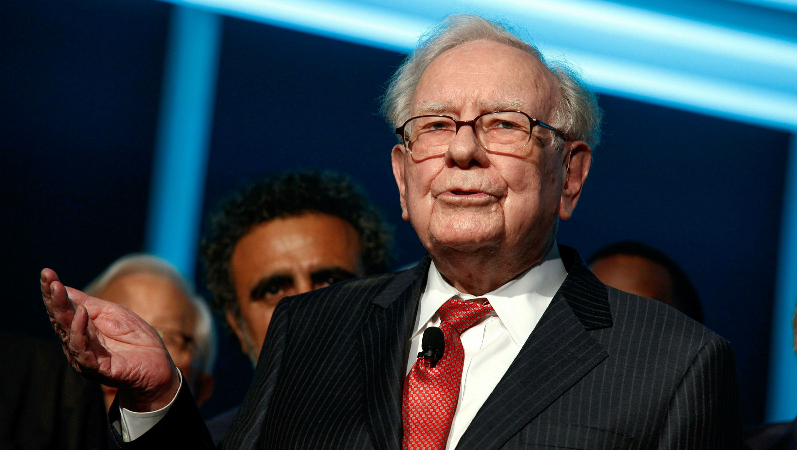
Warren Buffett, the billionaire investor widely known as the “Oracle of Omaha,” has stepped down as Chief Executive Officer of Berkshire Hathaway on Wednesday, ending a remarkable six-decade tenure that transformed the company into a global powerhouse.

Renowned for his astute wisdom and clear-eyed approach to investing, Buffett played a central role in demystifying finance for millions of investors worldwide. He took control in 1965, delivering compounded annual returns of 19.9% that crushed the S&P 500’s 10.4%, turning a $10,000 investment into tens of millions.

According to The Wall Street Journal, Buffett remained consistent with his long-held investment philosophy in his final year at the helm. Berkshire Hathaway sold approximately $10 billion more in stocks than it purchased through September, while the company’s cash reserves swelled to a record $358 billion—underscoring Buffett’s cautious stance amid market uncertainty.

When Buffett took control of Berkshire Hathaway, it was a struggling textile company. Through disciplined capital allocation and long-term thinking, he transformed it into one of the most valuable conglomerates in the world. Under his leadership, Berkshire evolved into a diversified empire with major interests in insurance (GEICO), railroads (BNSF), energy (Berkshire Hathaway Energy), manufacturing, retail, and some of the world’s most iconic public companies, including Apple, Coca-Cola, and American Express.

Berkshire’s growth under Buffett was remarkable. Shareholders who invested early saw returns that consistently outperformed the broader market, making Berkshire Hathaway a benchmark for long-term value creation. His investment philosophy became his signature legacy. Rooted in the value-investing principles pioneered by his mentor, Benjamin Graham, he emphasized buying high-quality businesses with strong fundamentals, durable competitive advantages, and trustworthy management—at reasonable prices. He famously avoided speculation, market timing, and complex financial engineering, advocating instead for patience and discipline.

His annual letters to shareholders became must-read documents for investors worldwide, offering clear insights into markets, economics, and human behavior. In simple, relatable language, Buffett demystified investing and made financial wisdom accessible to millions.

As CEO, Buffett set a high standard for corporate leadership. He ran Berkshire Hathaway with a decentralized structure, trusting managers to operate independently while holding them to strict ethical standards. Integrity, transparency, and accountability were non-negotiable.

He also aligned himself closely with shareholders. He drew a relatively modest salary, avoided excessive executive compensation, and consistently treated shareholders as long-term partners. This approach strengthened trust and reinforced Berkshire’s reputation as a company built to last.

Buffett’s exit as CEO reflects careful succession planning rather than abrupt change. He spent years preparing the next generation of leadership and embedding Berkshire’s culture and values into the organization. His successor inherit not only a strong balance sheet, but a clear philosophy centered on long-term thinking, ethical conduct, and disciplined decision-making.

Notably, Buffett’s exit as CEO reflects careful succession planning rather than abrupt change. He spent years preparing the next generation of leadership and embedding Berkshire’s culture and values into the organization. His successor Greg Abel, steps in as CEO on January 1, inheriting a $381.7 billion cash pile and a diversified empire. As Greg prepares to assume the role of CEO, he faces the immediate challenge of reassuring investors and maintaining confidence in Berkshire’s future.
Xi Jinping Confirms China on Track for 5% Growth in 2025, Vows More Proactive Policies in 2026

0

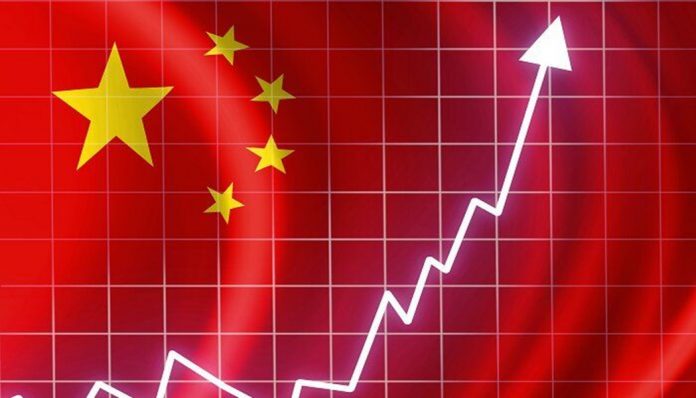
President Xi Jinping declared on Wednesday that China is on course to achieve its “around 5%” growth target for 2025, reaching approximately 140 trillion yuan ($20 trillion), while pledging “more proactive” macroeconomic policies in 2026 to sustain momentum amid persistent domestic challenges and external trade frictions.

In a televised New Year’s address broadcast by state broadcaster CCTV and remarks at a traditional New Year’s tea party with top Communist Party officials, Xi described 2025 as an “extraordinary” year marked by strong resilience, export performance, and technological breakthroughs.

“Our country’s economy is expected to move forward under pressure… showing strong resilience and vitality,” he told party leaders, highlighting advancements in defense capabilities and science and technology as reaching “new levels.”

The confirmation aligns with official projections and recent data showing robust exports offsetting weaknesses in consumption and property investment. China’s trade surplus surpassed $1 trillion for the first time in November, driven by front-loading ahead of potential U.S. tariffs and resilient global demand for manufactured goods. Full-year growth is widely anticipated to land near the target, buoyed by fiscal stimulus, including special treasury bonds and a record surplus providing FX buffers.

However, independent analyses paint a more nuanced picture. The Rhodium Group think tank estimated actual growth at just 2.5% to 3%—roughly half the official figure—citing discrepancies in data reporting and underlying economic strains. BBVA Research raised its 2025 forecast to 5.0%, noting strong first-half performance and stable Q3 growth at 4.8%, down 0.4 points from Q2. The first three quarters officially grew 5.2%, but the seasonally adjusted quarter-on-quarter pace slowed, reflecting headwinds like soft household spending and property woes.

Xi reiterated commitments to “improve the quality of the economy while maintaining reasonable growth” and advance “common prosperity,” but offered no specific new measures. The emphasis echoes the Central Economic Work Conference earlier this month, where leaders pledged a “proactive” fiscal stance for 2026—including “special actions to boost consumption”—and acknowledged “prominent” imbalances between strong supply and weak demand.

Policymakers have allocated 62.5 billion yuan from special treasury bonds for a 2026 consumer goods trade-in scheme offering subsidies for appliances, and front-loaded 295 billion yuan in central budget funding for major projects.

Xi spotlighted China’s “fastest growing innovation capabilities,” citing surges in artificial intelligence, large language models, and “new breakthroughs in independent chip development.” This reflects Beijing’s intensified drive for self-reliance amid U.S. export controls on advanced semiconductors.

The National Integrated Circuit Industry Investment Fund (“Big Fund”) launched its third phase in 2024 with 344 billion yuan in capital, channeling hundreds of billions into domestic chipmaking. Reports emerged this month of Chinese scientists advancing a prototype extreme ultraviolet lithography machine capable of producing cutting-edge nodes—a capability Washington has sought to restrict.

Despite export strength, second-half momentum faltered with soft household spending, persistent deflation with core CPI averaging below 1%, and a prolonged property crisis dragging on developer liquidity and consumer confidence. Property investment contracted 10% in 2025, while retail sales growth slowed to 3%.

Policymakers have responded with targeted measures: allocating 62.5 billion yuan from special treasury bonds for a 2026 consumer goods trade-in scheme offering subsidies for appliances, and front-loading 295 billion yuan in central budget funding for major projects.

Concerns over a second-half slowdown persist, weighed down by soft household consumption, persistent deflation, and a prolonged crisis in the property sector. Despite exports holding up, growth momentum has faltered, weighed down by soft household consumption, persistent deflation, and a prolonged property sector crisis.

China’s trade surplus, which topped $1 trillion for the first time in November, could lead to more tensions with trade partners, some of which are calling on China to do more to reform its economy and reduce its dependence on exports to support growth.

Analysts anticipate continuity in “moderately loose” monetary settings and expanded fiscal support, potentially via a higher deficit target of 4% of GDP and more special bonds. Focus areas include consumption vouchers, property stabilization (white-list financing, inventory purchases), and high-tech investment.

Chinese equities capped a strong year, with the Shanghai Composite Index gaining 18%—its best since 2019—and the blue-chip CSI300 also up 18%, the strongest in five years. The onshore yuan appreciated past the psychologically key 7-per-dollar level for the first time in 2.5 years, on track for its largest annual rise since 2020, supported by capital controls and export earnings.

Musk’s xAI Scales Up Data Centre Footprint with New Facility, Targets Near-2GW Compute Power in Escalating AI Arms Race

0

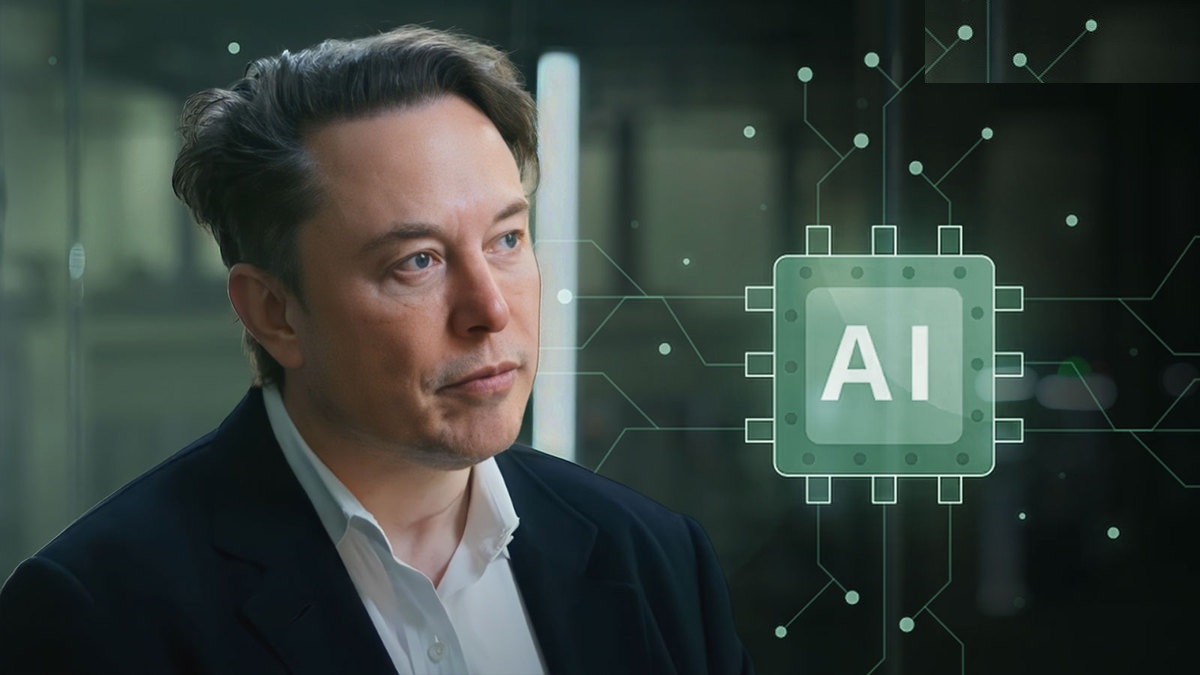
Elon Musk’s artificial intelligence startup xAI is accelerating its infrastructure push, acquiring a third building to expand its data center footprint as it seeks to lift training capacity to nearly 2 gigawatts of compute power.

The move underpins how the race to build ever more powerful AI models is increasingly being decided not just by algorithms, but by access to electricity, land, and specialized chips.

Musk disclosed the purchase on Tuesday in a post on X, saying xAI had bought a third facility called “MACROHARDRR,” without revealing its precise location. The name appears to be a deliberate play on Microsoft, a key backer of OpenAI. Earlier, The Information reported, citing property records and a person familiar with the project, that the building for the third supersized data center is planned outside Memphis, Tennessee, where xAI is already operating its flagship supercomputer cluster, Colossus.

Colossus, based in Memphis, has been billed by xAI as the largest AI supercomputer in the world. The system is central to Musk’s ambition of turning xAI into a credible challenger to OpenAI’s ChatGPT and Anthropic’s Claude. According to people familiar with the plans, xAI intends to expand Colossus to house at least one million graphics processing units, a scale that would put it among the most compute-dense AI installations globally.

The newly acquired warehouse is expected to begin conversion into a data center in 2026, The Information reported. It would complement both the existing Colossus cluster and a planned Colossus 2 facility. Crucially, both sites are located near a natural gas power plant that xAI is building in the area, alongside other power sources, highlighting how energy access has become one of the most significant bottlenecks in advanced AI development.

The near-2GW compute target is striking. For context, data center campuses operating at that level rival the power consumption of small cities. As AI models grow larger and more complex, training runs can take weeks and require an enormous, continuous energy supply. This has pushed leading AI companies to secure long-term power arrangements, invest directly in generation assets, and, in some cases, rethink where data centers are located.

Vertical integration appears to be a strategic choice for xAI. Unlike OpenAI and Anthropic, which rely heavily on cloud partners such as Microsoft and Amazon, Musk is pursuing a more self-contained model, combining proprietary data centers, power generation, and in-house model development. Supporters say this could give xAI greater control over costs and scaling, while reducing reliance on third-party infrastructure that may be constrained by competing demands.

The expansion also reflects the broader surge in capital spending across the AI sector. Tech companies have been pouring hundreds of billions of dollars into data centers, chips, and networking equipment to support a global frenzy for AI solutions. Nvidia’s dominance in AI chips has made access to GPUs a strategic priority, while power availability has emerged as a limiting factor even for the largest cloud providers.

However, the rapid buildout has not gone unchallenged. Environmental groups and local activists have raised concerns about the impact of large data centers, pointing to their heavy electricity consumption, water use for cooling, and increased strain on local grids. xAI’s proximity to a natural gas plant has intensified scrutiny, as critics question the climate implications of fossil-fuel-powered AI infrastructure at a time when governments and companies are pledging to cut emissions.

Musk has previously argued that AI progress requires massive compute and that reliable baseload power is essential to support it. Yet the tension between AI’s growth and sustainability is becoming harder to ignore, particularly as projects scale into the gigawatt range.

Strategically, the expansion signals Musk’s determination to keep xAI in the top tier of AI developers as competition intensifies. With OpenAI reportedly working on increasingly powerful models and Anthropic attracting significant enterprise adoption, the ability to train faster, larger, and more capable systems is becoming a decisive advantage.

xAI’s latest move reinforces a central reality of the sector as the AI arms race deepens: leadership is no longer just about who has the smartest models, but who can marshal the infrastructure, energy, and capital required to run them at unprecedented scale.

Happy New Year, And the Best of 2026

0

It is a beautiful thing to step out of the bounds of 2025 and feel the fresh breeze of 2026. The sun has risen on the horizon, flowers are in bloom, awakened by new energy from the eastern corridor, and the birds sing in quiet ecstasy. Men and women, renewed in imagination, welcome the gentle harmattan as radios and televisions announce the arrival of a new year. A new day. A new year. With drums and songs, claps and clicks, likes and shouts, we welcome 2026.

May 2026 bring abundance to you, your friends, and your families; abundance like the baobab tree, unconstrained in health, wealth, and wisdom. May the works of your hands be blessed. My name is Ndu-bu-isi-uwa (life is first in all things in the universe) and I pray that life, in abundance, finds you this year.

As we cross into 2026, pause and review 2025. Identify where your processes can improve. Then step boldly into the new year with the disciplined energy of harmattan, ready to unlock new vistas in your career and personal economy.

Remember this enduring truth about careers: two energies shape them, the physical energy of youth and the wisdom energy of experience. Early in our journeys, organizations compensate us largely for physical energy: speed, stamina, and execution. Over time, that compensation shifts toward wisdom: judgment, pattern recognition, and leadership. When we fail to recognize and prepare for this transition, we risk breaking the arc of an otherwise great career.

Think of the athlete. In youth, success is driven by strength and vitality. With age, longevity comes from mastery, strategy, and insight. We are all athletes in our respective fields, and 2026 is another opportunity to prepare deliberately for that transition.

So, compound your wisdom. Invest in judgment. Deepen your processes. And let 2026 be a year of sustained growth and victories.

A journey into 2026.
A journey into abundance.
Happy New Year.

China Begins Issuing Second Batch of 2026 Crude Import Quotas to Independent Refiners

0

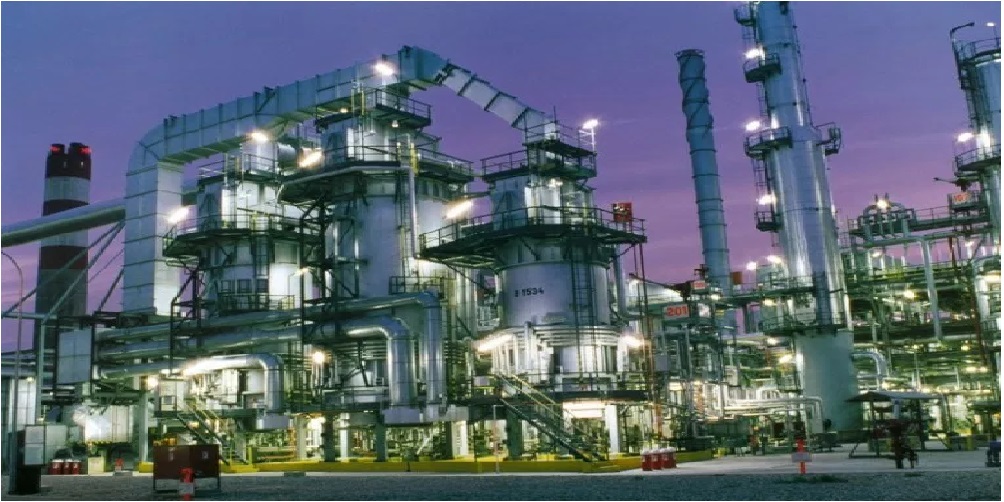
China has started distributing the second batch of 2026 crude oil import quotas to independent refiners, with at least one major facility in eastern China receiving its allocation, sources familiar with the matter revealed to Reuters on Tuesday.

More refiners, particularly in the Shandong province hub, expect notifications in the coming days, signaling Beijing’s calibrated approach to managing non-state imports amid stable overall volumes and a focus on demand flexibility.

The unnamed eastern refiner secured a combined 11 million metric tons (approximately 220,000 barrels per day) across the first two batches—equivalent to about 70% of its projected full-year quota. The initial batch, issued in late November, totaled around 8 million tons nationwide and was usable for cargoes arriving by year-end, providing a bridge amid quota exhaustion in late 2025.

This early release spurred a buying spree among teapots, boosting November crude imports to their highest daily level in 27 months at 12.2 million bpd, as refiners scrambled to utilize the fresh allowances before expiration. Independent refiners—commonly called “teapots,” clustered primarily in Shandong and processing ~20-25% of China’s crude (total imports ~11 million bpd)—anticipate their first two batches will similarly cover 70% of annual allowances, a shift from 2025 when early issuances comprised the full quota.

The reason for front-loading less volume remains unclear, though analysts speculate it allows greater flexibility in response to demand fluctuations, sanctions impacts, or inventory management. Beijing released an additional quota of about 10 million mt to qualified independent refineries for crude imports in 2025 in late November, and the final batch of 2025 quotas totaled more than 7.5 million tons—notably higher than the 6 million tons released in the same period the previous year.

China’s Ministry of Commerce has set the total 2026 quota for non-state firms at 257 million metric tons, unchanged from 2025 and reflecting cautious demand expectations in a slowing economy with 4.7% GDP growth in 2025. This cap covers independent refiners and some private giants, excluding state majors like Sinopec and PetroChina, which import freely.

For 2026, the first batch of fuel export quotas is stable year-on-year, with main recipients being state-owned oil companies Sinopec and CNPC, which received 13.76 million tons of allowances for refined fuels. Independent refiners often favor discounted sanctioned grades such as Russian, Iranian, and Venezuelan, due to price sensitivity, and the quota system, in place since the 1990s, regulates their imports to control refining capacity, fuel quality, and foreign exchange outflows.

Early 2026 allocations enable teapots to plan purchases amid narrowing Russian discounts of $2-4/bbl below Brent and heightened sanctions scrutiny. The November batch spurred a buying spree, boosting utilization rates to over 60% in December and drawing down bonded storage of Iranian crude. Second-batch issuances could sustain this momentum into Q1 2026, supporting sour barrel demand while Beijing manages overcapacity.

Independent refiners exhausted their previous quotas as early as October and were waiting for a new issuance at the end of the year. Shandong teapots, representing 80% of independent capacity (4 million bpd total), have faced headwinds: quota delays, fuel export curbs, and consolidation pressures. Recent revivals—three bankrupt plants resurrected under new owners—highlight resilience, but overall numbers have declined from peaks above 50 refiners.

Stable quotas signal muted growth expectations for 2026 refining throughput, prioritizing efficiency over expansion amid EV adoption and peak oil demand forecasts. Yet, front-loading 70% early provides certainty for discounted sour crude sourcing, potentially stabilizing Asian physical markets. China’s independent refiners boost crude buying after new import quotas, with the total allocation for 2026 set at 257 million tons, the same as a year ago.