DD
MM
YYYY

PAGES

DD
MM
YYYY

spot_img

PAGES

Home Blog Page 3543

Nvidia to Establish $200m AI Center in Indonesia Amid Southeast Asia Expansion

0

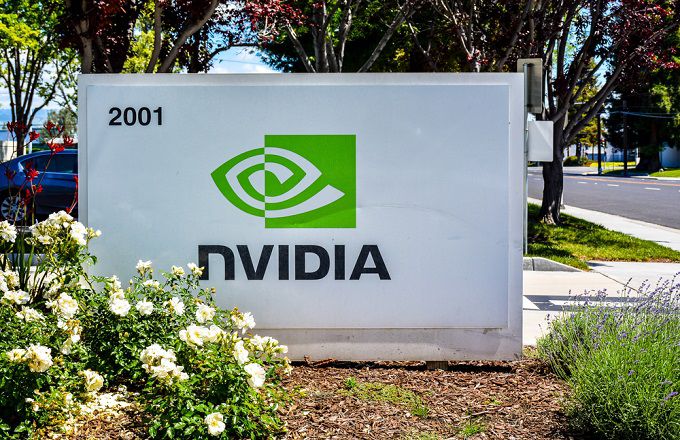
American multinational technology corporation Nvidia, has unveiled plans to establish a $200 million Artificial Intelligence (AI) Center in Indonesia.

The AI-focused tech company’s presence in Indonesia, signals a broader push into Southeast Asia, driven by the increasing demand for data, fueled by the region’s expanding digital economy.

According to Indonesia’s communication minister Budi Arie Setiadi, he disclosed that Nvidia will partner with telecommunications firm Indosat Ooredoo Hutchison for the project, which is expected to bolster local telecommunications infrastructure and digital talent.

Last month, Indosat announced it was ready to integrate Nvidia’s Blackwell GPU architecture into its infrastructure to propel Indonesia into a brand-new era of sovereign artificial intelligence (AI) and technological advancement.

Vikram Sinha, President Director and Chief Executive Officer of Indosat Ooredoo Hutchison, stated that the integration of Nvidia Blackwell products into its infrastructure underscores the company’s commitment to technological advancement and national sovereignty.

With Nvidia’s latest plan to establish a $200 million AI Center in Indonesia, the tech giant has continued to deepen its presence in SouthEast Asia with strategic partnerships, signaling a significant investment in the region’s burgeoning tech landscape.

In February 2024, Singtel a Singapore Telecommunications company, collaborated with NVIDIA to deploy artificial intelligence capabilities in its data centers across Southeast Asia.

Singtel disclosed that the initiative would provide businesses in the region with access to Nvidia’s cutting-edge AI computing power this year, without the need for clients to invest in and manage their own expensive data center infrastructure.

Notably, Southeast Asia has proven to be a major revenue driver for Nvidia. A U.S. Securities and Exchange Commission filing last year showed that about 15% or $2.7 billion of the company’s revenue for the quarter ended October came from Singapore.

In 2023, a report revealed that Singapore accounted for a whopping 15% ($ 2.7 billion) of Nvidia’s revenue for the third quarter (Q3) of 2023, which ended in October. Revenue from the island country in SouthEast Asia, in the third quarter, soared by 404%, from the $562 million in revenue recorded in the same period a year ago.

Singapore trailed behind the United States (34.77%), Taiwan (23.91%), and China (22.24%) in Nvidia’s third-quarter sales rankings.

In Southeast Asia specifically, spending on AI solutions is predicted to increase from US$174 million in 2022 to US$646 million in 2026. The market for this tech is projected to have an annual growth rate of 40.8% from 2021 to 2026.

The adoption of AI platforms in the region is primarily driven by the need to improve employee productivity, accelerate new product introductions, and enhance risk management capabilities.

KPMG Agrees That Nigeria Must Pay Attention on Supply-Side To Win the Battle Against Inflation

1

Good piece by KPMG which echoes my postulation that Nigeria must look deeper into the supply-side of the playbook as we battle inflation, over just focusing on using monetary policies to influence the demand-side when the challenge is not really a demand-pull inflation:

“We recognise that price stability is a necessary condition for economic growth. We equally recognise that raising interest rates is a natural response to inflationary pressures in monetary policy playbooks. However, we emphasise that monetary tightening is more apt for addressing demand-pull inflation. Thus, inflation may yield little in response to the monetary tightening efforts, unless the supply-side bottlenecks fanning cost-push inflation are also addressed. Eliminating these bottlenecks will require concerted efforts from both fiscal and monetary authorities. We are confident that such efforts will better deliver the intended price stability without trading-off economic growth.”  – KPMG

Largely, Western economics textbooks will teach you to raise interest rates to control inflation because they have a decent credit economy. When you raise rates, among many things, you make the cost of borrowing higher, and that can affect consumer spending since credit card rates will move up. If you can depress demand through suppressing consumer spending via high interest rates, you have a good chance of controlling inflation.

But in Nigeria with limited consumer credit, that does not make a lot of sense. In other words, when you increase interest rates, you are not clearly influencing demand since access to credit is limited. Rather, what happens is that when rates go up, companies struggle because the cost of capital is increased, and if that is the case, they do not invest a lot, and that triggers lower supply. With lower supply, inflation jumps up again. That is why for years, inflation has continued to worsen in Nigeria despite our consistent increase in rates.

Sure, I understand that the Central Bank of Nigeria wants to hike rates so that foreign investors can bring money into Nigeria for those rates. Great. But the question is this: would you ever reduce the rates, and if you do, and they decide to pull their funds, what have you accomplished?

My position is clear: Nigeria should modulate on these rate hikes and allow manufacturers and producers who actually need to deepen Supply to reduce inflation. Hiking interest rates will not fix our inflationary problem because it is Supply-driven and unless we deal with that, it is a waste of time.  I recommend a two-tier interest rate: a lower one for producers and whatever for every other vector. 

Finally, the apex bank must also examine the government policy. The government  is injecting a lot of cash into the economy in many forms. You are possibly canceling whatever increased rate is going to accomplish when we push billions to state governments at the end of the month! Those state governments spend all funds immediately, pushing a lot of cash into the system.

So, if you starve manufactures of funds via rate hikes and release billions to the states, the difference is the one which exists between 12 and a dozen. Of course you cannot afford to deny states their funds, meaning that focusing on improving Supply is a better playbook for Nigeria to control inflation.

I am in the school of economics that believes that the best way to manage inflation in a country like Nigeria will be increasing supply (hard in short-term). . If you do that, the price points will move, ceteris paribus.  The The United States is taming demand by increasing interest rate. They have better tools to achieve that since the system is already credit-based.

Yes, the US has tons of consumer credits which can be affected as credit card companies and banks raise interest rates. Nigeria does not have that exposure as our credit systems are largely corporate-anchored.

So, in Nigeria, when you raise interests, you are not shaping consumer purchase that much. Rather, you are influencing corporate investments and that will then negatively affect supply which you need to shift the equilibrium point to bring prices down.

Nigeria’s Central Bank Hikes Interest Rate; We Must Focus More On Supply To Push Price Equilibrium and Tame Inflation

BlockDAG’s Technical Whitepaper V2 Hints 30,000X ROI as Ethena Token & Monero Price Resilience Spur Excitement

0

BlockDAG‘s release of its Technical Whitepaper V2 has electrified the crypto community. It promises a staggering 30,000X return on investment and sets a new benchmark in the blockchain industry. This bold projection comes amidst a wave of excitement spurred by the Ethena token’s potential and Monero’s price resilience, highlighting a robust period of growth and innovation in the cryptocurrency sector.

As BlockDAG positions itself at the forefront of this dynamic market, the resilience and promising outlook of Ethena and Monero further energise investors and enthusiasts alike, pointing to a vibrant future for digital assets where innovation and stability drive unprecedented interest and investment.

Monero (XMR): A Beacon of Resilience

Monero, celebrated for its privacy-centric features, has weathered the storms of the market with remarkable resilience. Despite witnessing a nearly 12% decline from its yearly peak, there remains a glimmer of hope for the XMR token to stage a recovery. Recent weeks have seen a modest downturn of over 3%; however, Monero continues to allure a dedicated user base drawn to its steadfast commitment to anonymity and security.

The fluctuations in its price mirror the broader volatility of the crypto market, underscoring the demand for robust, privacy-focused solutions in the digital landscape. Monero’s unwavering resilience amidst bearish trends serves as a testament to its potential for resurgence and expansion, positioning it as an intriguing option for investors seeking stability and privacy in their digital asset portfolios.

Ethena (ENA): Pioneering Crypto Finance

Ethena’s debut as a governance token on Bitget heralds a groundbreaking leap in crypto finance by introducing a synthetic dollar protocol that revolutionises money management beyond traditional banking paradigms. Anchored by Ethereum, the USDe stablecoin promises scalability, stability, and censorship resistance within the DeFi ecosystem.

Leveraging delta-hedging and futures markets to safeguard USDe’s peg, Ethena’s strategy presents an enticing investment proposition. Its inclusion in Bitget’s Launchpool empowers investors to earn tokens and participate in a protocol poised to redefine digital finance, positioning it as a frontrunner in today’s crypto investment landscape.

BlockDAG’s $13.2 Million Presale and the Journey to a 20,000x ROI

BlockDAG distinguishes itself with its innovative hybrid blockchain-DAG architecture, aiming to tackle the blockchain trilemma by offering a trifecta of security, scalability, and decentralisation. Departing from traditional blockchain structures, BlockDAG integrates a DAG framework, facilitating swift transactions and enhanced throughput without compromising on security.

Facilitating seamless micropayments with swift transactions and nominal fees, BlockDAG fosters a cost-effective environment for users engaging in small transactions, thereby unlocking new avenues for business models. Furthermore, BlockDAG serves as a fertile ground for developers to construct decentralised applications (dApps) and support smart contracts, ushering in a new wave of innovation across diverse sectors, including DeFi, supply chain management, and beyond.

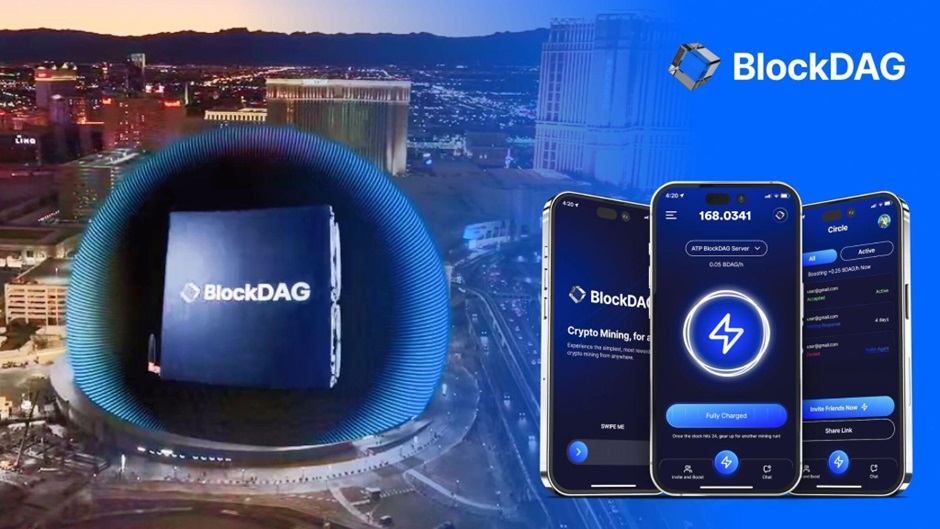
BlockDAG’s recent promotional endeavours, including a captivating presentation at Las Vegas Sphere, underscore its commitment to spearheading blockchain evolution. Bolstered by a successful crypto presale that raised $13.2 million and a visionary strategy promising up to 20,000x ROI, BlockDAG’s strategic positioning in marketing and development positions it as a prospective leader in the crypto market. The meteoric rise of its presale and the resonance of its marketing initiatives underscore the market’s receptiveness to a scalable, secure, and decentralised platform.

BlockDAG’s Promising Trajectory

Comparing BlockDAG to Monero and Ethena elucidates their divergent strategies and market positions. While Monero’s emphasis on privacy and security offers a solid foundation for privacy enthusiasts, Ethena’s innovative financial instruments represent a forward-looking approach to DeFi. However, BlockDAG’s fusion of blockchain and DAG technologies, coupled with its strategic marketing initiatives and the potential for substantial returns reaching up to 20,000 times, positions it at the forefront of the impending crypto evolution.


Invest In BlockDAG

Website: https://blockdag.network

Presale: https://purchase.blockdag.network

Telegram: https://t.me/blockDAGnetworkOfficial

AI To Stimulate Massive Economic Growth in Africa

0

That is a very big one: “Microsoft, the global tech giant, has projected that Artificial Intelligence (AI) could inject a staggering $1.2 trillion into Africa’s economy by the year 2030. This projection is part of a broader estimate of $15.7 trillion as the potential contribution of AI to the global economy by the same year.”

Huhh. In 2023, the estimated GDP of Africa was $3.1 trillion, and $8.86 trillion at PPP. In 2022, Nigeria had the highest GDP in Africa at $477.4 billion, followed by South Africa at $405.7 billion, Egypt, Algeria, and Morocco. In 2022, the GDP per capita in Africa was $2,150.60, the highest value since 2015.

Simply, AI could add close to 40% more on Africa’s GDP in mere 6 years. If that should be the case, every local government, state, etc should develop an AI-centric developmental playbook.

But I doubt that, considering that AI needs electricity, broadband internet, and other things you cannot leapfrog, to work, and deliver productive value.

Microsoft Forecasts $1.2 Trillion AI Boost for Africa’s Economy by 2030

Opensea launches support for Limit Break’s ERC721-C Contract

0

Opensea, the leading marketplace for non-fungible tokens (NFTs), has recently announced its support for Limit Break’s ERC721-C contract. This move is a significant step forward for creators in the NFT space, as it allows them to enforce royalties on sales made through the Opensea platform. The ERC721-C contract is an innovative solution that addresses the long-standing issue of royalty enforcement, which has been a point of contention among creators and collectors alike.

The introduction of the ERC721-C contract by Limit Break represents a pivotal development in the NFT ecosystem. Traditional ERC721 contracts did not have built-in mechanisms to ensure that creators received royalties from secondary sales. This often led to creators missing out on potential earnings when their work was resold. The ERC721-C contract aims to rectify this by providing a programmable royalty enforcement mechanism that creators can leverage to receive their due share from subsequent sales.

Opensea’s adoption of the ERC721-C standard is a testament to the platform’s commitment to supporting creators’ rights and interests. By integrating this contract, Opensea enables creators to set and enforce their royalty terms programmatically. This ensures that creators are compensated fairly for their work, even as it changes hands among collectors. The move also aligns with the broader industry’s shift towards more creator-centric models, where the rights and earnings of artists and creators are prioritized.

The ERC721-C contract also introduces transfer security policies, allowing creators to dictate the terms of token transfers for their collections. This feature is crucial in preventing practices such as wash trading, which can inflate prices artificially and harm the NFT industry’s integrity. With the ERC721-C standard, creators can choose to allow interactions only with contracts and applications they deem safe, thus maintaining control over the distribution of their work.

Opensea’s support for the ERC721-C contract came after the Dencun upgrade on the Ethereum network, which enabled compatibility for this new standard. The upgrade marks a significant milestone in the evolution of the Ethereum blockchain, paving the way for more sophisticated and secure smart contract implementations. Creators who wish to enforce their earnings according to the ERC721-C standard will find their sales supported not only on Opensea but also on other marketplaces that are powered by Limit Break’s Payment Processor.

This development is a game-changer for the NFT industry, as it empowers creators with the tools to protect their intellectual property and financial interests. It also fosters a more sustainable ecosystem where the contributions of creators are recognized and rewarded appropriately. As the NFT market continues to grow and evolve, the support for standards like ERC721-C will likely become increasingly important, setting a precedent for how digital assets are managed and monetized in the future.