DD
MM
YYYY

PAGES

DD
MM
YYYY

spot_img

PAGES

Home Blog Page 3544

Nigeria Must Pay Attention To The Paralysis in UK Universities as Economic Mess Hits Campuses

2

A few years ago, I posited that by 2031, Nigeria could begin to privatize its federal universities, in the same way it privatized its energy infrastructures. I hope that does not happen since the only thing the ordinary citizens get from Nigeria is subsidized university education. If you remove that, inequality will scale and inter-generational poverty will become a constant. I was a three-time University Scholar while in FUTO, and the generosity of Nigeria on my education remains appreciated

Good People, the global university education has many structural challenges. In the UK, it is assuming a new dimension: “The Vice-Chancellor of the University of Kent, Karen Cox who has occupied the position since 2017, will step down from her role next month, following a significant restructuring effort amidst a potential £30 million deficit. The deficits are as a result of dwindling student recruitment compared to expanding Russell Group institutions and elevated dropout rates due to rising living costs.”

In the UK, besides the immigration changes, the BREXIT was an own-goal. But do not take out the impact of inflation. In other words, if the citizens are fighting for food, going to school may not be an immediate priority. As a great comment on this piece noted, “there is also a 40% drop in the number of part-time entrants, which make up a big part of the total student population of 2.8M.” In other words, in the UK, continuous education is stalled and people cannot easily pay for part-time education. That is scary for a top-10 global economy!

In the Igbo Nation, it is always a great honour when you call your kinsmen and they gather to listen to you. The UK was a center of gravity in Europe, but it did not see it as an honour. It went to dismantle what made UK amazing, via BREXIT, etc. Today, even its universities are paying the prices as inflation rises and poverty scales in the land.  After BREXIT, I wrote that it was a huge irony that the “Great Britain which used to annihilate kingdoms and colonized them” would like to be left alone, peacefully! Unfortunately, that would weaken the UK because it did not know the power of its strength. 

Back to Nigeria, the nucleus of my postulation is the evidence that Nigeria is largely fading across most developmental indicators. Yes, people who graduated in the 2000s had better job opportunities than those who finished in the decade of 2010s. And those in the 2010s are better than those in the 2020s. And the current 2020s will be better than those coming in the 2030s.

Indeed, there is nothing happening in Nigeria today that will show that those graduating in the 2030s will have better opportunities. If that trajectory continues, the university system will be under massive stress. Simply, if 40% of UK part-time students can drop out of the UK educational system, because of high inflation and challenging living standards, you can extrapolate what will happen for all the many federal universities in Nigeria.

Dangote Refinery Delivers Products and UK Universities Are in Enrollment Crisis


Implications of a Steady Interest Rate Environment are multifaceted

0

The low probability of a recession means the US Federal Reserve and other major central banks may be less aggressive in cutting interest rates.

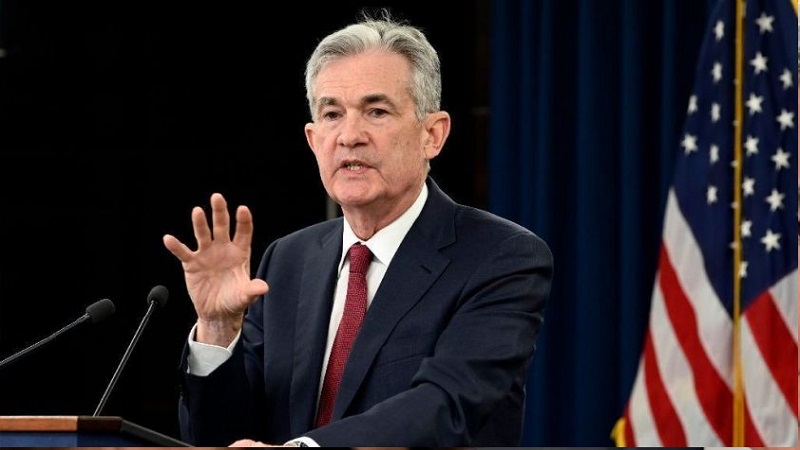
In the intricate dance of the global economy, the Federal Reserve (Fed) and other major central banks play pivotal roles, often signaled by their monetary policy decisions. Interest rate adjustments are one of the most powerful tools at their disposal, influencing economic activity, inflation, and currency values. The current economic landscape suggests a low probability of a recession, which in turn implies that these central banks might adopt a less aggressive stance on cutting interest rates.

The Federal Reserve, as the central bank of the United States, wields a comprehensive set of tools to implement monetary policy, aiming to promote maximum employment, stable prices, and moderate long-term interest rates. These tools are designed to influence the availability and cost of money and credit to help achieve the nation’s economic goals.

The Fed, in particular, has a dual mandate to foster maximum employment and price stability. In times of economic uncertainty or downturn, the Fed may lower interest rates to stimulate borrowing, spending, and investment. Conversely, when the economy is robust, interest rates may be increased to temper inflation and prevent overheating.

Recent data from the CME FedWatch Tool indicates a high likelihood that the Fed will maintain the current target rate in the upcoming Federal Open Market Committee (FOMC) meetings. This aligns with the market’s expectations, which, according to futures pricing data, do not foresee significant rate cuts in the near future. Such sentiment is echoed by financial analysts who monitor the Fed’s policy signals and economic indicators closely.

The implications of a steady interest rate environment are multifaceted. For consumers, it could mean more predictable borrowing costs, potentially encouraging larger purchases like homes and cars. For businesses, it could translate to stable loan terms, supporting investment and expansion plans. Investors might find a less volatile bond market, as interest rate stability can reduce the uncertainty that typically leads to market swings.

However, the Fed’s cautious approach also reflects the complexities of managing an economy that is interconnected with global markets. Major central banks around the world often move in concert, as unilateral decisions can have ripple effects across borders. The European Central Bank (ECB), the Bank of Japan (BOJ), and others also weigh similar considerations when setting their policies.

The current economic indicators suggest that the Fed and its global counterparts may take a measured approach to interest rate adjustments. While the low probability of a recession provides some breathing room, central banks remain vigilant, ready to act should the economic winds shift. As always, their decisions will be closely watched by market participants and policymakers alike, as they continue to balance growth with stability in an ever-evolving economic landscape.

Understanding the Federal Reserve’s monetary policy toolkit is crucial for grasping how the central bank influences the economy and financial markets. These tools, along with the Fed’s communication strategies, play a significant role in shaping economic expectations and outcomes. For those interested in the intricacies of monetary policy, the Federal Reserve offers extensive resources and educational materials to explore.

Implication of ARK 21Shares ETF $88M of Outflows on the Crypto markets

0

The ARK 21Shares Bitcoin ETF (ARKB) recently experienced a significant shift in its investment flows, recording an outflow of $88 million. This event marked a notable moment in the cryptocurrency investment space, as it was the first time that outflows from ARKB surpassed those of Grayscale’s Bitcoin Trust (GBTC), which saw outflows of $81 million.

This development is particularly intriguing as it reflects investor sentiment and market dynamics within the cryptocurrency exchange-traded funds (ETFs). The ARKB, which went live in January, had not seen such a substantial outflow until this point. The previous day, it had recorded its first-ever outflows, albeit a much smaller amount of $300,000.

The cryptocurrency market, known for its volatility, has seen various shifts in investor behavior, with ETFs being a significant avenue for investment. The outflows from ARKB and GBTC were the only losses among the 11 ETFs tracked, with the sector’s net inflows standing at $40 million. Leading the growth were BlackRock’s IBIT and Fidelity’s FBTC, which took in $150 million and $44 million, respectively.

Despite these outflows, the overall net inflows into the sector suggest a continued interest in cryptocurrency investments. Bitcoin prices remained relatively stable over the 24-hour period, trading at just over $66,000. However, the broader CoinDesk 20 index was down by 0.6%.

The outflow from ARKB, the largest since its inception, could be interpreted in various ways. On one hand, it might suggest a waning investor confidence in ARKB specifically or a reaction to broader market conditions. On the other hand, the overall sector saw net inflows of $40 million, with BlackRock’s IBIT and Fidelity’s FBTC leading the growth, which implies that the appetite for crypto-related ETFs remains robust, albeit selective.

It could indicate a shift in investor preference within the cryptocurrency ETFs or a broader market trend affecting the sector. The fact that Grayscale’s total outflows now exceed $15 billion, with continuous outflows since March 15, adds another layer to the analysis of market trends and investor confidence.

The impact of such outflows on the crypto markets can be multifaceted. While the outflows from ARKB are notable, the stability of Bitcoin’s price around $66,000 suggests that the broader market sentiment towards Bitcoin remains unaffected in the short term. The crypto market is known for its volatility, and while ETF outflows can reflect investor sentiment, they do not necessarily dictate market direction.

Moreover, the competitive environment for Bitcoin ETFs is underscored by these outflows, highlighting the dynamic nature of the market. Investors may be reallocating funds within the crypto ETF space, seeking better performance or management. This could lead to increased competition among ETF providers to offer more attractive products and could potentially drive innovation in the sector.

The outflows from ARK 21Shares ETF represent a noteworthy development in the crypto ETF arena. While it may raise questions about investor confidence in certain funds, the overall increase in sector inflows and price stability of Bitcoin indicate a complex interplay of factors influencing the crypto market. Investors and market observers will undoubtedly keep a close watch on these trends to gauge the evolving dynamics of cryptocurrency investment through ETFs.

As the cryptocurrency market continues to mature, the movements of funds into and out of various investment products will be closely watched. These flows can serve as a barometer for the health of the market and the sentiment of investors looking to either capitalize on or hedge against the volatility of digital assets.

The implications of these outflows for the future of cryptocurrency investments and the strategies of ETF providers will be a topic of discussion and analysis in the coming days and weeks. As the market evolves, so too will the approaches to investing in this dynamic and ever-changing asset class.

Join us on June 3 for Tekedia Knowledge Festival

0

Do not miss the knowledge festival which will begin on June 3, 2024. The knowledge of a people is the wealth of a people. Tekedia Institute is the temple for the mastering of the mechanics of entrepreneurial capitalism and business systems in Africa. Yours truly, Ndubuisi Ekekwe, will be the lead priest along with dozens of business executives from global and local companies you admire.

We have got many NEW courses developed by our world-class faculty members. Go into the future of markets with them. Be a Champion. Be an Innovator. Ascend into that New leadership position. We have got the tools to help you. But you need to come to the festival.

Come to Africa’s temple of business knowledge. REGISTER here and get the massive discounts if you register today. N90,000 (or $170) for the 12-week program.

Crypto Market Analysts Raise BlockDAG ROI Outlook to 20,000x Post-Whitepaper as Borroe Finance and Galaxy Fox Presales Lag

0

The crypto community is excited about groundbreaking developments that promise to transform the crypto landscape significantly. The upcoming Galaxy Fox (GFOX) market launch is among the most noteworthy updates. Not to be outdone, BlockDAG (BDAG) and Borroe Finance presales are also gaining significant traction.

However, BlockDAG outshines all other presales with its groundbreaking tech detailed in the new technical whitepaper and its 30,000x ROI potential predicted by analysts. Currently in its sixth presale batch, with BDAG coins priced at $0.0035, BlockDAG has raised $13 million as sets its sights on achieving its $600 million fundraising goal by the end of 2024.

Borroe Finance Presale Gains Traction

Borroe Finance (ROE) has made a noteworthy entrance into the presale market with its innovative approach to transforming how businesses access funds. By enabling businesses to sell NFTs representing future revenues, Borroe Finance introduces a solution to the liquidity challenges in the Web3 space.

Leveraging AI and blockchain technology, the platform aims to streamline the fundraising process, reduce human intervention, and provide quicker, more affordable access to capital. The Borroe Finance team is optimistic about the future trajectory of ROE, encouraging investors to buy and hold the token in anticipation of significant growth.

Galaxy Fox’s (GFOX) Incoming Launch

Galaxy Fox (GFOX) is poised for a strong market entry, with 97% of its tokens sold out in presale. Galaxy Fox’s launch is anticipated to attract a considerable retail investor base, especially those interested in meme coins, due to its hybrid model that combines the appeal of meme coins with the functionality and entertainment value of a play-to-earn (P2E) project. The GFOX’s presale run is attributed to its tokenomics, which includes a token burn mechanism to reduce supply and staking rewards for passive income.

Top Presale Crypto 2024: BlockDAG’s Make a Splash on Las Vegas Sphere

BlockDAG (BDAG) has hit a remarkable milestone, hitting $13.2 million during its sixth presale batch with the current price of each BDAG coin at $0.0035. BlockDAG’s latest display on the Las Vegas Spehere and the recent release of BlockDAG’s V2 technical whitepaper have significantly boosted investor interest, propelling a surge in BlockDAG’s presale investments and ROI projections to go up to 20,000x.

This massive influx of funds into the project’s presale underscores investors’ growing faith in BlockDAG’s hybrid model, establishing it as a formidable player in the blockchain arena.

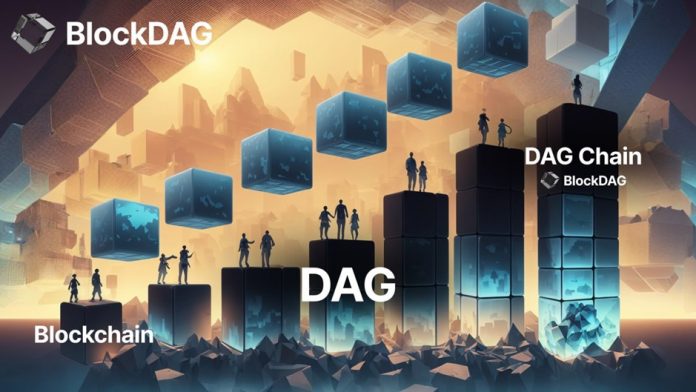
BlockDAG’s innovative platform merges the strengths of blockchain and Directed Acyclic Graph (DAG) technologies to offer unmatched speed in transaction processing while ensuring robust security. The DAG architecture enables near-instant transaction confirmations, sidestepping the typical mining delays found in traditional blockchain networks.

On top of that, BlockDAG represents a decentralized platform capable of supporting smart contracts, thus facilitating a broad spectrum of decentralized applications, from decentralized exchanges (DEXes) to logistics solutions.

Final Words

Amid the much-anticipated Galaxy Fox (GFOX) launch, BlockDAG rises as the frontrunner in the presale scene, swiftly raising $13.2 million in only six presale batches and setting the goal to secure $600M by the end of 2024. The current price of $0.0035 in the sixth presale batch presents a lucrative entry point for investors, with the listing price set at $0.05 per BDAG. Analysts foresee a 20,000x ROI for BlockDAG, citing its groundbreaking blockchain-DAG hybrid model and robust smart contract capabilities.


Join BlockDAG Presale Now:

Website: https://blockdag.network

Presale: https://purchase.blockdag.network

Telegram: https://t.me/blockDAGnetworkOfficial

Discord: https://discord.gg/Q7BxghMVyu