DD
MM
YYYY

PAGES

DD
MM
YYYY

spot_img

PAGES

Home Blog Page 3560

Bondly, A Tekedia Capital Portfolio Startup, Provides Peace of Mind via Escrow Services

0

How do you deal with Trust deficiency in the digital world, especially in Africa? In the last few days, we have invested in Dojah and Bondly to provide roadmaps. Dojah ensures that the person is who he/she says he/she is and Bondly brings another layer: we know you but we will still escrow the payment.

Together, we do believe that freelancers, SMEs, large companies, etc can operate more confidently in the digital commerce-sphere, with these infrastructures, through embedded APIs and other distribution mechanisms. For more on Bondly, go here mybondly.com; for Tekedia Capital, capital.tekedia.com and for Dojah, here dojah.io .

Tekedia Capital invests in technology-anchored early stage startups and companies. Our opportunity antenna and grassroot connections with innovators enable us to see patterns as they develop.  We invite you to partner with us as we nurture and build category-king companies in Africa and beyond, and in the process advance citizens, communities and nations. At Tekedia Capital, we fund the foundations of the NEXT African economy.

As Recently As The 1960s, Securities Settlement Was Strictly Physical

0

In the past, the process of transferring ownership of securities from one party to another was very different from today. It involved the actual delivery of paper certificates that represented the shares or bonds being traded. This was a slow, costly and risky method that required a lot of manual work and verification.

It was not uncommon for transactions to take weeks or even months to settle, and for errors or frauds to occur along the way. This was the reality of securities settlement until the 1960s, when technological innovations and regulatory reforms started to transform the industry.

Privacy Enhancing Technologies

Privacy Enhancing Technologies (PETs) are tools and methods that aim to protect the personal data of individuals and organizations from unauthorized access, use, or disclosure. PETs can help users to exercise control over their own data, enhance their trust in online services, and comply with data protection regulations.

There are different types of PETs, such as encryption, anonymization, pseudonymization, data minimization, differential privacy, and zero-knowledge proofs. Each of these techniques has its own advantages and limitations, depending on the context and the goals of the data processing.

Encryption is the process of transforming data into an unreadable form, using a secret key. Only those who have the key can decrypt the data and access its original content. Encryption can protect data in transit (such as when sending an email or browsing a website) or at rest (such as when storing data on a device or a cloud service).

Anonymization is the process of removing or modifying any information that can identify a person or a group of persons from a dataset. Anonymized data cannot be linked back to the original individuals, even with additional information or sophisticated techniques. Anonymization can enable data sharing and analysis for research or statistical purposes, without compromising the privacy of the data subjects.

Pseudonymization is the process of replacing identifying information with artificial identifiers, such as random numbers or codes. Pseudonymized data can still be linked back to the original individuals, but only with access to a separate database that contains the mapping between the identifiers and the real identities. Pseudonymization can reduce the risks of data breaches and unauthorized access, while preserving some functionality and utility of the data.

Data minimization is the principle of collecting and processing only the minimum amount of data that is necessary for a specific purpose. Data minimization can reduce the exposure and impact of potential privacy violations, as well as the costs and complexity of data management. Data minimization can be achieved by applying techniques such as data aggregation, filtering, sampling, or deletion.

Differential privacy is a mathematical framework that quantifies the privacy loss of a data analysis algorithm. Differential privacy guarantees that the output of an algorithm does not reveal much information about any individual in the dataset, regardless of what other information is available. Differential privacy can enable privacy-preserving data analysis and machine learning, while providing rigorous and provable guarantees.

Zero-knowledge proofs are cryptographic protocols that allow one party to prove to another party that a certain statement is true, without revealing any other information. Zero-knowledge proofs can enable secure authentication, verification, and computation on sensitive data, without disclosing the data itself.

PETs are not only technical solutions, but also social and legal ones. PETs require the collaboration and coordination of various stakeholders, such as users, developers, providers, regulators, and researchers. PETs also need to comply with ethical principles and legal frameworks, such as the General Data Protection Regulation (GDPR) in the European Union.

PETs are not a panacea for privacy challenges, but rather a part of a holistic approach that involves awareness, education, empowerment, and accountability. PETs can help users to protect their privacy rights and interests, but they also come with responsibilities and trade-offs. Users need to understand how PETs work, what benefits and risks they entail, and how to use them effectively and appropriately.

How did technology change securities settlement?

Securities settlement is the process of transferring ownership of securities from one party to another after a trade. In the past, this process was very cumbersome and inefficient, as it required the physical delivery of paper certificates that represented the securities being traded. This method had many drawbacks, such as:

It was slow, as transactions could take weeks or even months to settle. It was costly, as it involved a lot of intermediaries, fees and paperwork. It was risky, as it exposed the parties to the possibility of errors, frauds or losses of the certificates.

However, in the 1960s, the securities industry underwent a major transformation, thanks to technological innovations and regulatory reforms. Some of the key changes were:

The introduction of electronic book-entry systems, which eliminated the need for physical certificates and enabled faster and cheaper settlement. The creation of central securities depositories (CSDs), which centralized the custody and administration of securities and facilitated their transfer and settlement. The adoption of delivery versus payment (DVP) mechanisms, which ensured that the delivery of securities and the payment of funds occurred simultaneously and reduced the counterparty risk.

These changes improved the efficiency, security and reliability of securities settlement, and paved the way for further developments in the global financial markets.

Montana’s Attempt to Ban TikTok Blocked by U.S. Judge, Citing Violation of Free Speech Rights

0

In a significant legal development, U.S. District Judge Donald Molloy has issued a preliminary injunction to block Montana’s state ban on the popular short-video sharing app TikTok.

The judge ruled that the ban, scheduled to take effect on January 1, violated the free speech rights of users and “overstepped state power.”

Montana’s legislature had passed a first-of-its-kind state ban on TikTok, citing concerns about the personal data of Montana users and potential Chinese spying. The Chinese-owned app, owned by ByteDance, promptly filed a lawsuit against the state in May, arguing that the ban infringed upon the First Amendment free speech rights of both the company and its users.

Judge Molloy concurred with TikTok’s arguments, stating in his ruling, “In shutting off TikTok, the Legislature has both harmed User Plaintiffs’ First Amendment rights and cut off a stream of income on which many rely. Thus, Plaintiffs have established a likelihood of irreparable harm.”

The judge further noted that the state ban “violates the Constitution in more ways than one” and emphasized that Montana had sought to exercise foreign policy authority held by the federal government, making the state’s action overly broad.

TikTok users in Montana had also filed a separate suit to block the ban, expressing concerns about the impact on their free speech rights and livelihoods. The state ban did not impose penalties on individual TikTok users but could have imposed fines of $10,000 for each violation by TikTok in the state.

The ruling, while preliminary, marks a significant victory for TikTok and its users in Montana. However, Emilee Cantrell, a deputy communications director at Montana’s attorney general’s office, noted that the analysis could change as the case proceeds and stated that the office is considering its next steps.

“The judge indicated several times that the analysis could change as the case proceeds and the State has the opportunity to present a full factual record. We look forward to presenting the complete legal argument to defend the law that protects Montanans from the Chinese Communist Party obtaining and using their data,” Cantrell said.

TikTok responded to the ruling, expressing satisfaction that the judge “rejected this unconstitutional law” and emphasized the app’s role as a platform for self-expression, income generation, and community-building for hundreds of thousands of Montanans.

Judge Molloy, appointed by Democratic President Bill Clinton, also referenced what he termed “the pervasive undertone of anti-Chinese sentiment that permeates” Montana’s legal case and legislation, suggesting that the state’s focus was more on targeting China’s role in TikTok than protecting Montana consumers.

Molloy said that despite the state government’s attempt to defend the law, “the current record leaves little doubt that Montana’s legislature and Attorney General were more interested in targeting China’s ostensible role in TikTok than with protecting Montana consumers.”

The case underscores the ongoing legal battles surrounding TikTok in the United States, with previous attempts by former President Donald Trump to ban the app facing legal challenges and court decisions.

TikTok has also faced efforts by some in Congress to ban the app or give the Biden administration powers to impose restrictions or bar foreign-owned apps, but those efforts have stalled. The U.S. government fears that the short-form video app could serve as a conduit pipe for Chinese espionage.

While many states and the U.S. government have restricted TikTok on government-owned devices, Montana stood out as the only state seeking a comprehensive ban on the app’s use.

The ruling is considered a big blow to the push to ban the use of TikTok in the US, as it sets a precedent that may be followed in other states.

On Thursday, another judge, Jennifer DeGroote of Indiana state, dismissed a lawsuit brought by the state of Indiana against TikTok. The lawsuit alleged that TikTok made false assertions regarding the safety of user data and appropriate content for different age groups. Judge DeGroote ruled that the court did not have “personal jurisdiction” over TikTok, according to court documents.

Montana’s attempt to ban TikTok statewide has been halted in federal court. A U.S. district judge issued a preliminary injunction Thursday, saying the law “oversteps state power and infringes on the constitutional rights of users,” Axios reports. Some other states have banned TikTok on government-issued devices, but Montana would be the first to “completely restrict a single app within a state’s borders,” per NPR, should the law take effect as planned on Jan. 1. A trial date to determine its legality has not been set, according to The Wall Street Journal. In targeting TikTok, Montana lawmakers cited concerns about user data in the hands of ByteDance, the Chinese company that owns the app.

2024 Appropriation Bill Passes Second Reading in the Nigerian House of Reps

0

The Nigerian House of Representatives has successfully passed the 2024 Appropriation bill for a second reading, following a two-day debate on the general principles of the legislation.

The budget, presented by President Bola Tinubu on Wednesday, moved forward during a special plenary session on Friday, despite facing scrutiny for perceived extravagant spending, particularly for political office holders.

On Thursday, the House commenced the debate on the bill. After about two hours of debate, the Speaker of the House, Abbas Tajudeen, announced a special session to be held on Friday to conclude the debate.

The legislative process unfolded amidst backlash over components of the budget that were criticized as frivolous. The concerns echo similar discontent expressed earlier in November when civil society organization Tracka opposed the approval of the N2.17 trillion 2023 supplementary budget by the Senate.

On November 2, Tracka, through a letter, moved to stop the Senate from approving an earlier N2.17 trillion 2023 supplementary budget for its frivolous items. The items in question, including a yacht, cars for the First Lady, and office building renovations, drew public outrage.

Tracka rerouted and submitted the letter to the Office of the Secretary to the Government of the Federation, asking the president not to assent to the supplementary budget. Despite Tracka’s efforts to prevent the supplementary budget’s approval, it was assented.

Similar to the supplementary budget, the 2024 proposed budget has faced criticism for allegedly neglecting the most pressing needs of the Nigerian people.

Hon. Yusuf Shitu Galambi reportedly told BBC Hausa that the budget is empty. “We sat yesterday to discuss the general principles of the budget but nobody got a copy. The truth is that the president came with an empty case,” he said.

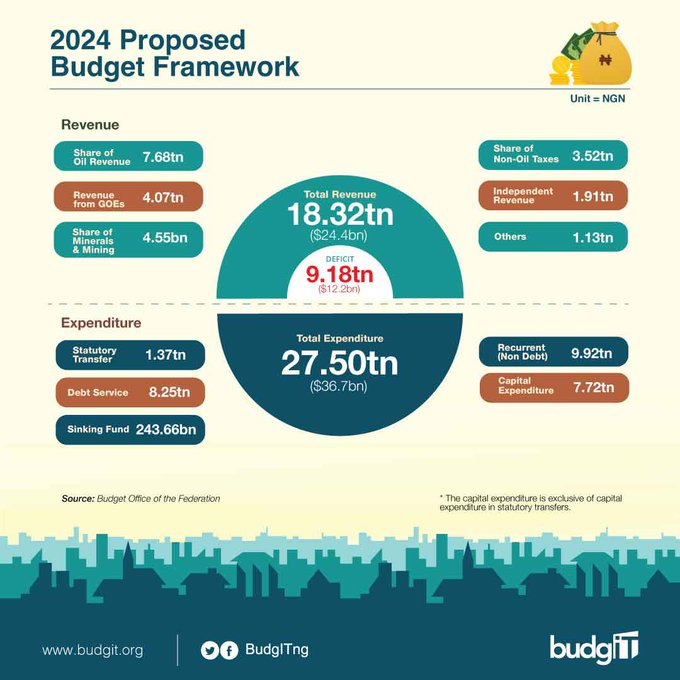
The 2024 budget proposal has an aggregate expenditure of N27.5 trillion, with N9.92 trillion allocated to recurrent expenditure, N8.7 trillion to capital expenditure, a projected deficit of N9.18 trillion, and debt servicing estimated at N8.25 trillion. Despite the sizable allocation, concerns have been raised about the budget’s allocation not adequately addressing critical national needs.

The education sector is set to receive N2.18 trillion, with allocations to the Ministry of Education and its agencies, the Universal Basic Education Commission (UBEC), and the Tertiary Education Trust Fund (TETFund). The health sector is allocated N1.33 trillion, covering the Ministry of Health and its agencies, GAVI immunization, and statutory transfers to the Basic Healthcare Provision Fund.

The defense sector, however, garnered a substantial share of 12 percent of the entire budget, totaling N3.25 trillion, while infrastructure is allocated N1.32 trillion.

Some of the lawmakers are asking for more funds to be allocated to transportation, health and education.

Following the conclusion of the budget debate, Speaker Tajudeen announced that the Appropriations Committee would meet after the plenary session. The Deputy House Leader, Ali Halims, proposed the adjournment of the House until December 12 to allow committees to engage with relevant Ministries, Departments, and Agencies (MDAs). The motion for adjournment received unanimous support from the House.

COP28: Okonjo-Iweala Urges Nigeria to Secure Increased Financial Support from Investors

0

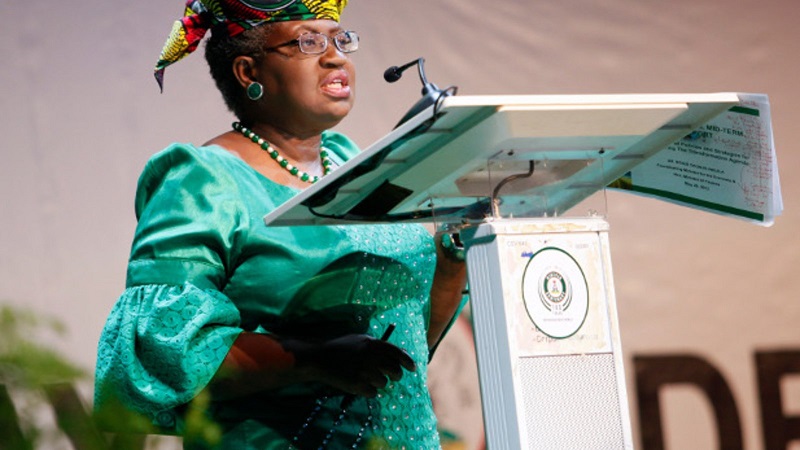
The Director-General of the World Trade Organization (WTO), Ngozi Okonjo-Iweala, has emphasized Nigeria’s comparative advantage in attracting and harnessing potential investments, particularly amidst the ongoing 28th meetings of the United Nations Conference of the Parties (COP28) in Dubai, UAE.

Speaking after addressing world leaders at the World Climate Action Summit, Okonjo-Iweala urged Nigeria to seize the opportunity presented by substantial pledges, including Germany’s commitment of $100 million.

“This is the time for us (Nigeria) to harness the investments that are potentially out there. We must grab a slice of that $100 million Germany is promising,” Okonjo-Iweala asserted, underlining the importance of positioning Nigeria to attract investment flows resulting from the climate commitments being made at COP28.

The WTO official highlighted the imperative for Nigeria to intensify efforts in developing and implementing its Energy Transition Plan (ETP). Nigeria has outlined ambitious targets, planning to allocate $1.9 trillion between 2022 and 2060 across five sectors to meet the goals of its ETP.

One of Nigeria’s priorities at COP28 is to secure increased financial support from investors to facilitate the implementation of the ETP and other climate actions within the country.

During the COP28 opening plenary on Thursday, a historic agreement was reached with the adoption of the inclusion of the loss and damage operationalization fund in the summit’s agenda. This development prompted countries to make significant pledges in solidarity with the new fund, with over $450 million pledged by countries on the first day of the summit.

Okonjo-Iweala sees immense opportunities for Nigeria in the current global climate discourse, particularly in the areas of solar, wind, hydrogen, and other climate-smart initiatives. She stressed the need for Nigeria to position itself to access funding for these initiatives, given the growing momentum of financial pledges by world leaders at COP28.

Addressing the energy transition plan, Okonjo-Iweala acknowledged the importance of utilizing gas as a transition fuel for Nigeria, recognizing the country’s status as a developing nation with a significant population of economically disadvantaged individuals. However, she urged prompt action, noting that Nigeria should start the transition process now to tap into the available financial resources.

Highlighting recent commitments, she mentioned the UAE’s announcement of a $30 billion fund for investment and urged Nigeria to leverage such opportunities. She emphasized the importance of accessing investments for green hydrogen, not only for Nigeria’s benefit but also to contribute to global efforts in sustainable energy.

“…we are still a developing country with many poor people. But we should start now,” she said.

“Let us not stay behind, let’s try to grab the investments that are willing to be made now. You heard today that the UAE announced a $30 billion fund for investment so we must tap into that. We must tap into the one from the US to start building up green hydrogen not only for ourselves but also for others.”