DD
MM
YYYY

PAGES

DD
MM
YYYY

spot_img

PAGES

Home Blog Page 3564

Physics of Pricing – How Do You Price Your Products?

0

The greatest moment in a business is when a company discovers and operates a great business model. Why? It is through a business model that companies create value. Yes, a business model encapsulates the logic of a firm, and the way it combines and uses factors of production to create value for stakeholders.

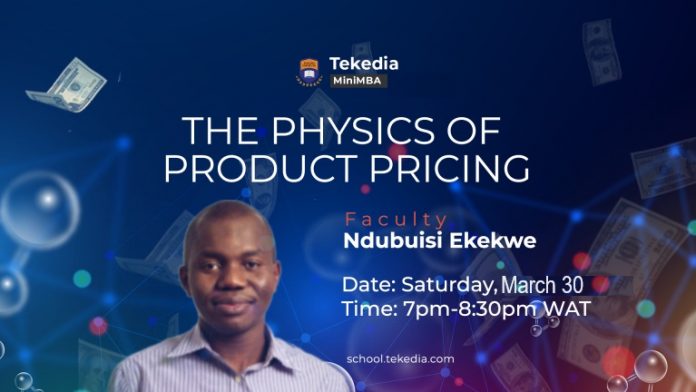
But how do you create value for a profit company? Great question. Join me tomorrow as we discuss Pricing. Do you go cost plus or value-based pricing? How is that pricing going to help you scale, looking at your marginal cost?

Good People, your pricing strategy affects value capture which can shape your unit economics. When the unit economics is bad, you are not SCALING, but growing, and will hit diminishing returns soon on making money! The greatest companies SCALE, not just grow. And that happens when revenue and profit grow faster than your cost. So, if you plot the transaction cost, distribution cost, fixed cost, revenue, and profit, against Growth, the first three will be largely flat even as the last two are shooting into space. Go exponential on PROFIT!

Amazing People, when marginal cost continuously tends towards zero (i.e. asymptotically to the horizontal line) even as growth happens, you have a GREAT company because growth becomes unbounded and unconstrained – and alpha comes. Welcome to a successful company!

My grandmother, Lechi, in Orendu Market Ovim, on her yam and garri stores understood the shifting nature of pricing. If you cannot sell the plantain before the bulk traders from Umuahia are done buying, re-price immediately. If you do not do that, that product is possibly a waste due to lack of storage facilities.

Join me for the Physics of Pricing. This is Tekedia Institute, and we’re the #best. Pick a seat here for the next edition of Tekedia Mini-MBA here.

Making #BuyNaijaGrowNaija Campaign Work to Restore Naira’s Value

0

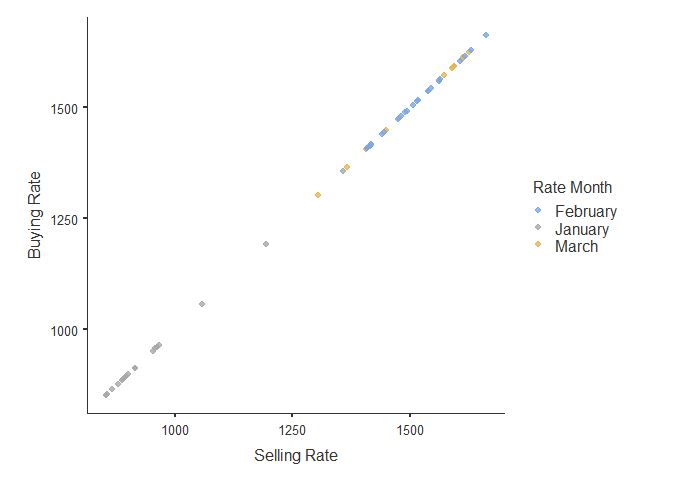
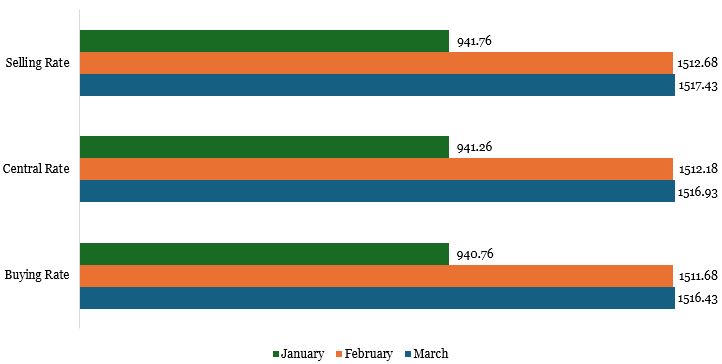
For the first time in three decades, Nigerians experienced what academics and public affairs specialists described as “severe panic” over the future of Africa’s most populous country. The fear escalated when the Naira’s floating policy against foreign currencies, particularly the US dollar, began to produce unforeseen results across sectors. The results began to have a significant impact on food and imported items in early February. As the data in Exhibits 1 and 2 show, Nigerians are clearly facing one of the most severe shocks of Naira depreciation.

The depreciation of the Naira has been a persistent concern for Nigerians and policymakers alike. Factors such as fluctuating oil prices, inadequate diversification of the economy, fiscal mismanagement, and external pressures have contributed to the erosion of the Naira’s value. Additionally, the prevalence of import dependency has exacerbated the situation, leading to a drain on foreign reserves and widening trade deficits.

As citizens grapple with the repercussions of a weakened currency, initiatives like the #BuyNaijaGrowNaija campaign spearheaded by Reno Omokri have emerged as beacons of hope, aiming to bolster the value of the Naira and revitalize the economy. In this thought leadership article, we delve into the dynamics of the Naira’s depreciation, the significance of the #BuyNaijaGrowNaija campaign, and propose strategies to ensure its success.

Exhibit 1: Average rate of Naira to Dollar (US) between January 1, and March 27, 2024

Source: Central Bank of Nigeria, 2024; Infoprations Analysis, 2024

Exhibit 2: Linearity of selling and buying rate between January and March 2024

Source: Central Bank of Nigeria, 2024; Infoprations Analysis, 2024

Reno Omokri believes that one of the important answers to the situation is for Nigerians to consume locally made goods and services from indigenous businesses. With this perspective, our analyst observes that Mr. Omokri has taken Nigerians back in time, calling their attention to the indigenous policies of governments in the early 1970s. According to Mr. Omokri, the goal is to encourage consumers to support indigenous firms, so driving economic growth, creating job opportunities, and ultimately strengthening the Naira.

Even though people are joining Mr. Omokri on X and other social media platforms by retweeting and creating content related to the campaign, our analyst observes that in order to ensure the campaign’s success, a number of strategies must be put into place. Regarding this, our analyst notes that in order to revive Nigerians’ interest in developing indigenous enterprises and the country’s economy in general, measures such as consumer education, government support, collaboration, awareness, and advocacy campaigns are needed now more than ever.

Initiatives must be developed to educate people about the benefits of purchasing locally produced goods. Highlighting the economic benefits, quality assurance, and good influence on communities might encourage people to make informed purchasing decisions. The government has an important role in promoting local industry growth. Policies such as tax breaks, access to financing, infrastructure development, and trade protection measures can help local firms prosper. The campaign’s successful implementation requires collaboration among government agencies, industry associations, financial institutions, and civil society organizations. By using the skills and resources of multiple stakeholders, synergies can be maximized, and difficulties handled collaboratively.

Embracing technology and innovation can help Nigerian products compete better in both domestic and international markets. Investments in R&D, digitization, and value chain optimization can increase efficiency and product quality. Continuous advocacy and awareness initiatives are required to maintain momentum and promote a cultural change toward supporting local industries. Leveraging traditional and digital media outlets, influencers, and community involvement efforts can help the campaign reach and affect more people.

Tether announces shift towards Open-Source Artificial Intelligence

0

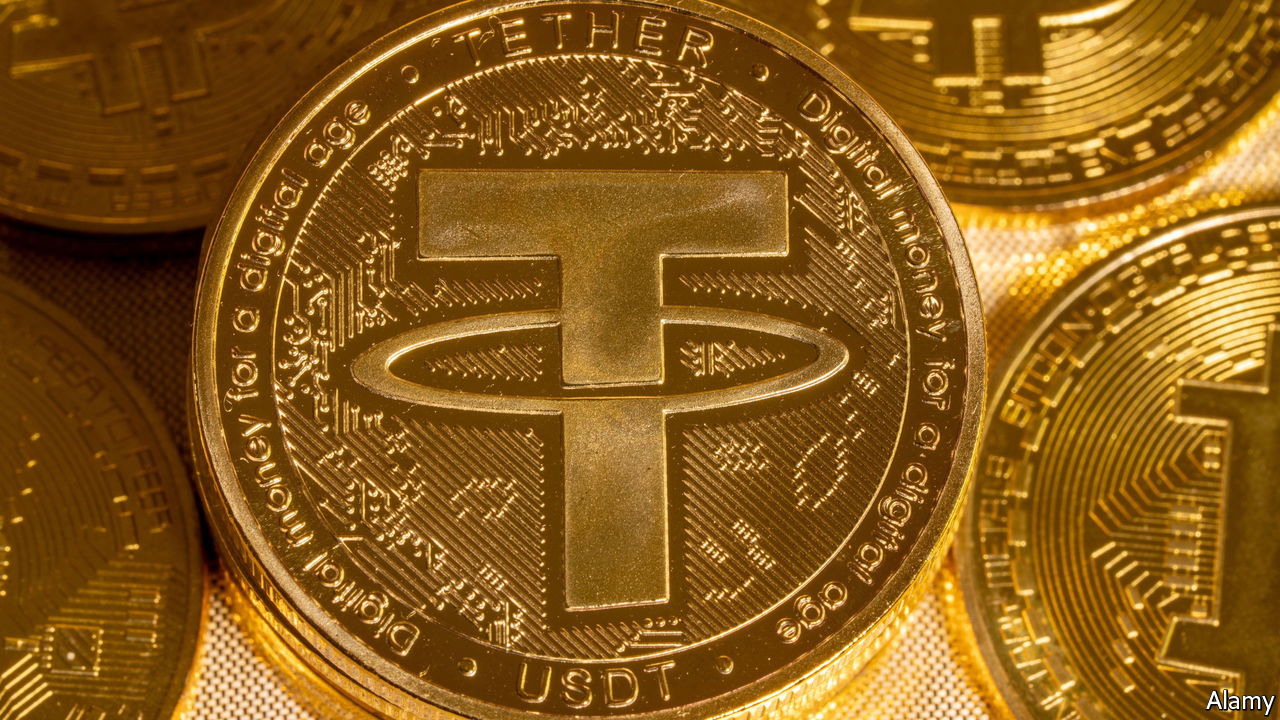
Tether, the company behind the world’s largest stablecoin, USDT, has recently announced a significant shift in its strategic focus towards Artificial Intelligence (AI), specifically in the realm of open-source AI. This move is a testament to the company’s commitment to innovation and its foresight in recognizing the transformative potential of AI technologies.

Tether’s foray into the realm of Artificial Intelligence (AI) is marked by a strategic focus on developing open-source, multimodal AI models. These models are designed to set new industry standards by driving innovation and enhancing accessibility within the AI technology space. The company’s commitment to open-source AI is a significant move that could democratize AI technologies and foster a more inclusive ecosystem for innovation.

The announcement comes at a time when the monopolization of AI technologies by a few tech giants has raised concerns about accessibility and transparency. Tether’s decision to pivot towards open-source AI is a bold step that could democratize access to AI technologies and foster a more inclusive ecosystem for innovation.

Tether’s expansion into AI will involve the development of open-source, multimodal AI models. These models are expected to set new industry standards, driving innovation and accessibility within the AI technology space. By opting for an open-source approach, Tether aims to ensure that the benefits of AI can be leveraged by a broader range of individuals and organizations, without the barriers often imposed by proprietary systems.

Moreover, Tether is not only focusing on the technological aspects but is also actively seeking top-tier talent to fuel its AI initiatives. The company has announced a global recruitment drive, inviting passionate individuals to explore career opportunities within its burgeoning AI division. This recruitment effort underscores Tether’s dedication to building a strong foundation for its AI endeavors, with a team that can push the boundaries of what’s possible in AI.

The strategic shift towards AI also aligns with Tether’s history of investing in diverse sectors, including renewable peer-to-peer telecommunications, energy, and bitcoin mining. The company’s approach to AI seems to be in line with its broader vision of fostering technological advancements that can address real-world challenges.

As Tether embarks on this new journey, the implications for the AI industry could be profound. An increase in open-source AI projects could accelerate innovation, enhance collaboration, and potentially lead to breakthroughs that might have been stifled under more restrictive, closed-source models.

Tether’s shift towards open-source AI marks a pivotal moment for the company and the AI industry at large. It reflects a growing recognition of the importance of open, collaborative efforts in driving technological progress. As Tether continues to expand its focus and recruit talent, it will be interesting to watch how this initiative unfolds and what it means for the future of AI.

As Tether continues to redefine AI boundaries and democratize privacy-preserving open AI technology, the industry watches with keen interest. The potential for these AI projects to revolutionize various facets of our lives, both in the real and digital worlds, is immense. With Tether’s strategic investments and innovative approach, the future of AI looks promising and is poised to benefit a wide array of sectors.

Elon Musk-Owned AI Chatbot Grok, Set to Launch an Upgraded Model

0

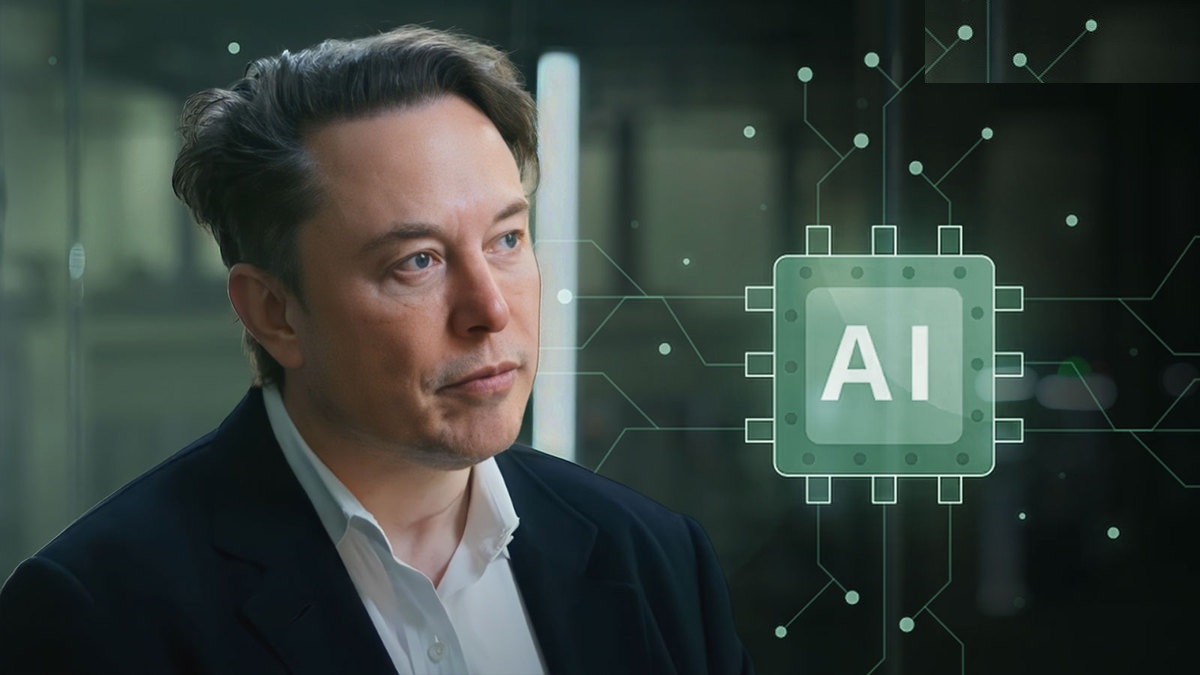
Elon Musk-owned AI Chatbot Grok has announced the release of an upgraded version of Grok 1.5, as it intensifies rivalry with OpenAI’s ChatGPT.

The advanced version of Grok comes with improved reasoning and a context length of 128,000 tokens. This allows Grok to have an increased memory capacity of up to 16 times the previous context length, enabling it to utilize information from substantially longer documents.

Grok will be made available to early testers and existing Grok users on X in the coming days.

Announcing the rollout of an upgraded Grok version, the company wrote via a blog post,

“Introducing Grok-1.5, our latest model capable of long context understanding and advanced reasoning. Grok-1.5 will be available to our early testers and existing Grok users on the X platform in the coming days. By releasing the model weights and network architecture of Grok-1 two weeks ago, we presented a glimpse into the progress xAI had made up until last November. Since then, we have improved reasoning and problem-solving capabilities in our latest model, Grok-1.5.”

“One of the most notable improvements in Grok-1.5 is its performance in coding and math-related tasks. In our tests, Grok-1.5 achieved a 50.6% score on the MATH benchmark and a 90% score on the GSM8k benchmark, two math benchmarks covering a wide range of grade school to high school competition problems. Additionally, it scored 74.1% on the HumanEval benchmark, which evaluates code generation and problem-solving abilities.”

One remarkable thing that sets Grok apart from other generative AI Chatbots is that the model responds to questions about politics that are typically off-limits to other models, like conspiracies and more controversial political ideas. The chatbot also has access to real-time information via the X platform which adds to its personality. It answers spicy questions that other AI systems may reject. 

Elon Musk said one goal for his AI chatbot Grok, a rival to OpenAI’s ChatGPT, is to be the funniest chatbot, after criticizing other chatbots for being too woke, a direct jab at ChatGPT which was criticized for producing biased responses at times. 

Musk has voiced strong criticism of ChatGPT’s perceived censorship of certain answers on certain topics, which according to him spurred the launch of Grok, to be a better representation of truth.

The billionaire owner of X (formerly Twitter) spoke with investor Cathie Wood in an X Spaces conversation about the future of Grok. 

He said,

“Grok is pretty funny. I think one of our goals for Grok is to be the funniest AI. So I mean if you ask Grok to provide a vulgar roast, it’s really good.”

In his conversation with Wood, Musk added that Grok will be a significant truth improver.

“That is our goal, to be maximally truth-seeking, maximally curious, minimizing the error between perceived reality, and described reality, and actual reality,” he added.

Grok was created by xAI, a company founded by Musk in March 2023, and was released to the public in November. Grok is xAI’s generative AI chatbot, based on a large language model, the underlying algorithm that uses deep learning and analyses significant amounts of data to generate content.

The Next Investment Cycle of Tekedia Capital Syndicate will Begin on April 15

0

The next investment cycle of Tekedia Capital Syndicate will begin on April 15. If you want to own a piece of Africa’s and global startups, click here and join our community.

We’re making it easier for citizens, groups, investment clubs, companies, organizations, etc to own a piece of early-stage, high-growth technology startups operating across Africa and beyond.

Our opportunity antenna and grassroot connections with innovators enable us to see patterns as they develop. We invite you to partner with us as we nurture and build category-king companies in Africa and beyond, and in the process advance citizens, communities and nations.

At Tekedia Capital, we fund the foundations of the NEXT African economy through entrepreneurial capitalism. A  membership fee which covers 4 investment cycles (we typically do 2-3 cyclers every 12 months)  of $1,000 or equivalent is required; click and join today.

Timeline for Tekedia Capital Syndicate April 2024 Cycle