DD
MM
YYYY

PAGES

DD
MM
YYYY

spot_img

PAGES

Home Blog Page 3587

Achieving Universal Health Coverage in Nigeria via the National Health Insurance Scheme

0

According to an editorial in Population Medicine by Dalhatu & Don (2022), the National Health Insurance Act of 2022 (NHIA) was signed into law on May 19, 2022, replacing the National Health Insurance Scheme Act of 1999, which had failed in terms of level of enrolment among citizens. One of NHIA’s key goals is to ensure healthcare accessibility for all, particularly vulnerable individuals who lack access to basic care, residing in suburban and rural areas.

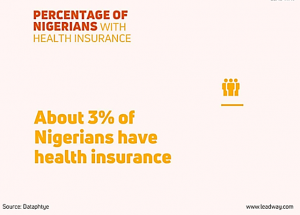
The fact that for some reason, when you think of your health, you have a mild kind of anxiety owing to the fact that you have to take a chunk of money you had planned for other things, then channel it to save your life corroborates the narrative that more than 70% of Nigerians have now been conditioned to this habit. Depending on the economic status where you live and other indicators of a health system strength, that number could go up to a high 90%. The 2018 Nigeria Demographic and Health Survey alluded to the low enrolment rate as it was revealed that over 97% of Nigerians lack any form of health insurance.
The NHIA 2022 aims to establish health insurance programs in states lacking them and ensure accreditation of additional facilities to enhance public accessibility. State-owned facilities are integral to the development plan, particularly in rural areas where the government predominately owns healthcare structures. When fully optimized and supported by the Insurance Act, these facilities can effectively address patient needs, including disease prevention, health promotion, and maintenance. They will provide essential diagnostic tests, safe and affordable medications, and vaccines, all contributing to the achievement of Universal Health Coverage (UHC).

Tied to the National Insurance Act, some of the outcomes expected from a successful national campaign is expected to lead to a shift in culture that favours individuals to take a more proactive step towards their health and wellbeing. Another outcome is that it challenges the health system to deliver due to demand for quality healthcare. This article covers the basic facts about health insurance in Nigeria, some hurdles insurers have to overcome, my discussion with researchers on a typical health insurance scheme from the public sector, lessons from systems outside of Nigeria. All of this information could determine how National Health Insurance Act 2022 can be optimised for the health of all Nigeria.

A RECENT STUDY ON THE LAGOS STATE HEALTH INSURANCE SCHEME

During a recent conversation with Olubukola OLUMUYIWA , a public health researcher in Lagos, I got some insights into the current State of the Lagos State health Insurance Scheme. She discussed the findings from her research. The study, conducted in 2023, sought to assess the effectiveness of the scheme by examining factors such as enrolment rates, health-seeking behaviour, and overall impact since 2018. I enlisted the main points from our discussion below.

  1. The scheme has enrolled about 6% of the total population of the state across.
  2. It attributed the low enrolment rate to: little or no awareness about the scheme, enrolment cost especially for self-employed/entrepreneurs, as well as already existing insurance plans by other residents.
  3. Due to the scheme, enrolees report increased hospital visits due to the assurance of free and quality care, which indicates the utilization of the scheme by the enrolees.
  4. Despite the positive testimonials shared, the study identified several gaps to the performance of LSHIS such as limited access to quality medicines, insufficient coverage of health services, poor internet connectivity and slow responses from LASHMA needed to be fixed to prevent the collapse of the scheme.
  5. It was also found that among the beneficiaries there is a huge gap in knowledge about expected benefits from the plan subscribed to, so there is the “what I ordered vs what I got” syndrome running through their minds that could lead to dis-enrolment or discontinuation of the scheme by these beneficiaries.

THE CASE OF LAGOS STATE HEALTH INSURANCE SCHEME (LSHIS)

The Lagos State Health Insurance Scheme (LSHIS) was established in May 2018 as part of efforts towards achieving universal health coverage (UHC) in Lagos State, Nigeria’s largest city with over 20 million residents, according to the Lagos State Health Management Agency (2023). The scheme aims to leverage mandatory health insurance to provide affordable, quality, and accessible healthcare for all Lagos residents, especially the poor and vulnerable.

As stated earlier, to bridge the healthcare access gap in Lagos, Former Governor Akinwumi Ambode, signed into law the Lagos State Health Scheme Law in May 2015 which birthed the LSHIS three years later. Specifically, as outlined in the Lagos State Health Scheme Law (2015), the scheme has the mandate to cover basic primary and selected secondary healthcare services for enrolees with funds pooled by an annual contributory amount determined by residency status. Enrolees only pay small registration fees at accredited facilities with the LSHIS covering the balance of treatment costs directly to healthcare providers.

Corroborating the gaps identified in the study cited earlier by Olubukola Olumuyiwa, one report by the Lagos State Health Management Agency (LASHMA) noted delayed issuance of insurance ID cards is one of the factors accounting for low adoption of health insurance in Lagos State. More so, addressing issues of increasing public awareness & mistrust among residents, inadequate number of accredited facilities and improving health service delivery, costs of insurance premiums have been recommended as critical areas for the LSHIS to successfully translate into substantial gains in healthcare access for Lagos residents (Lagos State Health Management Agency survey, 2022).

Beyond resolving these barriers, is the need to embrace changes quickly, and apply lessons from the success stories of similar schemes in countries. Having an expanded global view where public health service providers indeed have the interest of patients at heart is key.

GLOBAL LESSONS

Rwanda’s Community-Based Mutuelles Scheme:

Launched in 1999, the Community-Based Mutuelles Scheme aimed to provide affordable health insurance to all Rwandans, with a particular focus on rural and underserved communities. The success of the Mutuelles Scheme can be attributed to several key factors. First, the scheme embraced a community-based financing model, where individuals contribute premiums based on their ability to pay. This approach ensured that even the poorest Rwandans could access essential healthcare services without facing financial hardship, thereby promoting equity and inclusivity. Also important is that the Mutuelles Scheme fostered a sense of ownership and solidarity among Rwandan communities, with residents actively participating in health education programs and community health initiatives. This grassroots engagement not only helped to raise awareness about the importance of preventive healthcare but also strengthened social cohesion and resilience in the face of health challenges.

Thailand 30 Baht Universal Coverage Scheme:

Sharing a common problem of large proportion of citizens uninsured in Nigeria, the 30 Baht Universal Coverage Scheme by the Thai government aimed to provide healthcare to citizens. At its core was a concept: a flat-rate fee of 30 Baht for all essential healthcare services. This nominal fee, designed to be affordable for even the poorest citizens, served as a gateway to comprehensive healthcare coverage. There were also other enablers. The government tripled the number of primary care units, ensuring that healthcare services were accessible to even the most remote communities. Additionally, a comprehensive public education campaign was launched, utilizing various mediums such as television, radio, and community events to raise awareness about the benefits of health insurance and encourage enrolment.

Philippines Health Insurance Corporations:

In the Philippines, access to healthcare has long been a challenge, with fragmented insurance initiatives hindering efforts to achieve universal coverage. Recognizing the need for a cohesive and inclusive approach, the government took bold steps to consolidate various health insurance programs under the umbrella of the Philippines Health Insurance Corporations (PhilHealth). The creation of PhilHealth streamlined insurance programs. One of the key strategies employed was the digitization of payment of insurance premiums, making it easier for individuals to enrol and access insurance benefits. This initiative helped to overcome barriers such as bureaucratic inefficiencies and geographical constraints, particularly in remote areas.

THE FORWARD COURSE

Based on a market Study report commissioned by the Embassy of the Kingdom of Netherlands in Nigeria, Nigeria has 34,076 Primary Healthcare (which accounts for close to 90% of total hospitals in the country), across its 774 local government areas. Of this number, it was estimated that only 20% of the PHCs are functional, according to PharmAccess Foundation.

The Health System is at one of its lowest strengths fuelled by the current economic stress. The inflation makes getting care almost like a distant dream. Yet I still believe even though this is not the ideal time to plan for the health and social care needs of the populations, this is the best time to have every actor in the health system – health administrators, workforce, health techies, government, development organizations, CBOs & CSOs, health innovators, researchers, business-owners & entrepreneurs in the healthcare business to play their part towards the collective wellbeing of Nigerians. Perhaps we could do have a sovereign national conference for health or a regional conference like the African Climate Summit for Africa, something to reflects a State of Emergency for Health in Nigeria. At the moment, the vision of an equitable, climate-resilient health system cannot be achieved with the lacklustre effort put by those tasked with ensuring that the right to health for Nigerians are upheld.

A high performing health security in place to cater for the health and social care needs of citizen have several long-term outcomes from longer life expectancy to economic resilience and sustainable development owing to large scale productivity of all people.

To ensure the 2022 National Health Insurance Act achieves its goal of universal health coverage (UHC) in Nigeria, several deliberate interventions must be taken, as enlisted below.

Increasing Awareness and Education: A fundamental challenge such as the example of the LSHIS is low awareness among residents. Over 60% of respondents were unaware of the scheme’s existence, indicating a pressing need for aggressive statewide campaigns. Multichannel promotion initiatives, including radio, social media, and community outreaches, should be deployed to educate the public about the scheme’s benefits and encourage enrolment. A lot of innovations can come from co-creating programs with CBOs and CSOs who already at adept at community-led engagement when deploying their development interventions

Enhancing Affordability: Affordability is a significant barrier to enrolment, particularly with the economic crunch. There is need to develop innovative ways that will increase uptake of insurance products such as exploring innovative subsidy schemes that reflect economic realities, using embedded financing to ensure poor communities have access to health, flexible payment structures to mention a few.

Improving Healthcare Infrastructure and Service Delivery: Inadequate healthcare infrastructure and gaps in service delivery undermine the value proposition of picking up a health insurance plan. There is expectation that anything government, is likely to be substandard. Efforts should be made to expand the provider network, increase healthcare facilities’ accreditation, and enhance availability of medicines. Collaborating with private healthcare facilities and pharmaceutical companies can help bolster service offerings and improve access to quality care.

Streamlining Administrative Processes: The benefits of how streamlining the administrative processes helped improved the outlook of the insurance industry can be cultivated. Bureaucratic delays hinder smooth benefits access and discourage enrolment. No one is really interested in filling out hundreds of forms, we just want to get well. Embracing innovations around claims processing and customers’ complaint resolution with artificial intelligence could bring the needed ‘fresh air’ towards improving speed and convenience around service delivery.

Customers want to see that certain things change. We could also do more to improve on customers services aspects and the use of artificial intelligence with built-in advanced analytics capabilities to increase product satisfaction and improve service delivery for healthcare facilities. To this end, there is need for more workforce development program in the health sector.

Before we bother about level of coverage of health insurance for over 220 million Nigerians, how about we think about some foundational issues: How many States actually have a sustainable, strategic plan around a government-owned health insurance scheme? How many facilities are functional and are there plans to rehabilitate these facilities in line with the attainment of the universal health coverage (UHC)? How are we ensuring that the best minds are in the position to lead this movement towards UHC?

As I often hear it being said, contrarily to what people may think about the public sector, indeed the public sector needs even smarter people in administration compared to the private owing to the level of problems they are confronted by.

As Sentiment for Meme Coins Goes Bullish, Here Are the Top Three Tokens To Keep an Eye On

0

In the cryptocurrency sector, which is fast-paced, meme coins always keep traders hooked. Currently, three of them are making headlines: Floki (FLOKI), Shiba Inu (SHIB) and KangaMoon (KANG). While you may be familiar with FLOKI and SHIB, KANG is a Stage 3 presale star that could become the next 100 meme coin in 2024. Let’s discover why.

Floki (FLOKI): Pumping by Nearly 350%

Recently, Floki (FLOKI) has been riding a bullish wave. The Floki price increased from $0.000027 to $0.000122 in only the previous 30 days, according to statistics from CoinMarketCap. This is a 341% pump. This meme coin’s market cap increased from $265M to $1.16B simultaneously.

This meme coin’s technical analysis likewise presents a positive image. For instance, the Floki coin is now trading above its 50—and 100-day EMAs. Furthermore, 27 technical indicators show buy signals for this meme coin. As a result, experts in the crypto field foresee a surge to $0.000171 within Q2 of 2024 in their Floki price predictions.

Shiba Inu (SHIB): Reaches #10 on the Top Crypto Charts

Meanwhile, Shiba Inu (SHIB) has also seen tremendous growth. This meme coin flipped Avalanche (AVAX) and is now the #10 top cryptocurrency. CoinMarketCap data shows that the Shiba Inu price increased from $0.0000090 to $0.00003415 in the past month. Its market cap jumped from $5.33B to $20.15B during that period.

As one of the meme coin titans, this bullish trend may continue. The Shiba Inu technical analysis shows exactly that, as 27 indicators are flashing green. Not only that, but SHIB is now trading above its 50—and 100-day EMAs. Market analysts have made a bullish Shiba Inu price prediction—a rise to $0.000042 within Q2 of 2024.

KangaMoon (KANG): The Rising Meme Coin Star

KangaMoon (KANG) is one of the rising stars in the meme coin space. What sets KANG apart from other projects is its utility and emphasis on community engagement. In other words, KANG tokens will soon be used as the in-game currency for a play-to-earn (P2E) game. Players will use this meme coin to purchase in-game items and character upgrades.

The token is currently in Stage 3 of its presale. With nearly $670K already raised, it is clear that demand for this project is high. It now costs just $0.01125 – a 125% ROI for those who bought it early on. However, this percentage will increase as experts foresee a 100x pump once a Tier-1 CEX lists this meme coin in Q2 of 2024.

Experts also predict that the P2E NFT games market will hit $885M by 2028, so this meme coin has plenty of room to grow. One thing worth noting is that those who actively participate within the community by sharing posts and commenting on tweets are eligible to earn free KANG tokens at this very moment.

If you want free KANG tokens, become an active community member, and you may get lucky. With this incentive, KangaMoon could foster the most active meme community in the meme coin market. To become a member, sign up below and obtain a 10% bonus on each purchase.

Will KangaMoon Outpace Floki and Shiba Inu?

Currently, KangaMoon has a low market cap of $11.25M. This gives it an advantage over Floki and Shiba Inu as it requires fewer new funds for a massive surge. Due to all these reasons, KANG may become one of the best new meme coins to watch.

Discover the Exciting Opportunities of the KangaMoon (KANG) Presale Today!

Website: https://Kangamoon.com/

Join Our Telegram Community: https://t.me/Kangamoonofficial

$NVDA and $META beat analysts’ expectations on earnings per share

0

In this blog post, I will analyze the impressive performance of two tech giants that have dominated the industry in 2024: NVIDIA Corporation (NVDA) and Meta Platforms, Inc. (META). Both companies have delivered stellar results in terms of revenue, earnings, innovation, and customer satisfaction, leaving their competitors far behind. Let’s take a closer look at what makes these two companies so successful and what are their prospects for the future.

NVIDIA Corporation (NVDA) is the leading provider of graphics processing units (GPUs) and artificial intelligence (AI) solutions. The company has benefited from the strong demand for its products across various sectors, such as gaming, data centers, automotive, healthcare, and cloud computing.

NVIDIA has also invested heavily in research and development, launching new products and platforms that enable faster and more efficient computing. Some of the notable examples are the NVIDIA Grace CPU, the NVIDIA Omniverse platform, the NVIDIA GeForce RTX 40 series GPUs, and the NVIDIA Drive AGX Orin system.

Meta Platforms, Inc. (META) is the parent company of Facebook, Instagram, WhatsApp, Messenger, and Oculus. The company has rebranded itself as Meta in 2024 to reflect its vision of building the metaverse, a virtual environment where people can interact with each other and digital content.

Meta has leveraged its massive user base and social network to create immersive and engaging experiences for its customers. Some of the key initiatives that Meta has undertaken are the Horizon Worlds platform, the Project Cambria VR headset, the Ray-Ban Stories smart glasses, and the Novi digital wallet.

Both NVIDIA and Meta have shown remarkable growth in 2024. According to their latest quarterly reports, NVIDIA’s revenue increased by 52% year-over-year to $9.7 billion, while Meta’s revenue rose by 35% year-over-year to $34.8 billion. Both companies also beat analysts’ expectations on earnings per share, with NVIDIA reporting $3.12 and Meta reporting $4.27.

Moreover, both companies have enjoyed high customer loyalty and satisfaction ratings, as well as positive reviews from industry experts and analysts.

Looking ahead, both NVIDIA and Meta have strong competitive advantages and growth opportunities in their respective fields. NVIDIA is well-positioned to capitalize on the increasing demand for high-performance computing and AI solutions, as well as to expand its presence in emerging markets such as edge computing and robotics.

Meta is well-positioned to lead the development of the metaverse and to monetize its vast network of users and content creators, as well as to diversify its revenue streams with e-commerce, payments, and advertising.

NVIDIA Corporation (NVDA) and Meta Platforms, Inc. (META) are two of the most successful tech companies in 2024. They have demonstrated exceptional performance in terms of financial results, innovation, and customer satisfaction. They have also established themselves as leaders in their respective domains and have promising prospects for the future. I believe that these two companies are worth investing in and following closely.

Ethereum and Solana are two of the most Innovative PoS Blockchains

0

If you are interested in the future of decentralized applications, you might have heard of Ethereum and Solana. These are two of the most popular and innovative PoS blockchains, which use a different consensus mechanism than the traditional PoW blockchains like Bitcoin.

PoS stands for Proof-of-Stake, which means that the validators of the network stake their own tokens to secure the blockchain and process transactions.

Unlike PoW, which requires a lot of computational power and energy to solve complex puzzles, PoS relies on the economic incentives of the validators to act honestly and avoid malicious behavior. If a validator tries to cheat or attack the network, they will lose their stake and be penalized.

Ethereum is the native token of Ethereum, the second largest blockchain by market cap and the most widely used platform for smart contracts and dApps. Ethereum is currently transitioning from PoW to PoS, with the launch of the Beacon Chain in December 2020.

The Beacon Chain is a parallel blockchain that runs alongside the main Ethereum chain and implements the PoS consensus. The final goal is to merge the two chains and make Ethereum fully PoS by late 2022 or early 2023.

In 2023, Ethereum witnessed the successful implementation of the Shanghai upgrade, a pivotal moment that significantly bolstered the network’s infrastructure. Despite the absence of a singular, monumental event, Ethereum experienced steady growth throughout the year. The consistency in Ethereum’s development, particularly its transition to PoS and ongoing advancements in layer 2 solutions, laid a solid foundation for its future dominance.

Developers in the crypto and Web 3 market focused on building during 2023, and Ethereum was no exception. Many projects initiated in preceding years came to fruition, contributing to the network’s robust tech stack. While time-consuming in development, these technological improvements position Ethereum for enhanced performance in 2024.

JPMorgan analysts share a similar outlook, predicting that Ethereum will outperform Bitcoin in 2024. Here are the key drivers behind their assessment:

EIP-4844 Upgrade (Protodanksharding): Scheduled for the first half of 2024, this upgrade aims to reduce transaction costs and enhance transaction speeds on the Ethereum network. By improving network activity, it is expected to boost Ethereum’s performance.

Dominance in Transaction Activity: Despite competition from networks like Solana and Cardano, Ethereum remains dominant in transaction activity.

Solana is a newer blockchain that was launched in March 2020 and claims to be the fastest, cheapest, and most scalable PoS blockchain in the world. Solana uses a novel consensus algorithm called Proof-of-History (PoH), which creates a cryptographic timestamp for each transaction and allows the validators to process them in parallel without relying on a leader. Solana can achieve over 50,000 transactions per second (TPS) and sub-second finality, with fees as low as $0.00001 per transaction.

Both Ether and Solana have their own strengths and weaknesses when it comes to PoS. Ether has a larger and more diverse ecosystem of developers, users, and applications, as well as a higher level of security and decentralization.

However, Ether also faces challenges such as scalability, congestion, high fees, and complexity of the transition to PoS. Solana has a faster and cheaper network, as well as a growing community and innovation. However, Solana also has drawbacks such as lower adoption, less compatibility with other blockchains, and potential trade-offs between speed and security.

Optimism $86M private sale and SEI moving to Ethereum Virtual Machine

Meanwhile, Optimism, a leading layer 2 scaling solution for Ethereum, has announced that it has sold $89 million worth of its native token, OP, in a private transaction. The sale was led by Paradigm, a crypto-focused investment firm, and included participation from other prominent investors such as Coinbase Ventures, Alameda Research, and Pantera Capital.

The OP token is designed to secure the Optimism network, which uses optimistic rollups to enable fast and cheap transactions on Ethereum. Optimistic rollups are a form of layer 2 scaling that bundle multiple transactions into a single proof that is verified on the main chain. This reduces the congestion and fees on the Ethereum network, while preserving its security and decentralization.

Optimism claims that its solution can increase the throughput of Ethereum by up to 100x, while maintaining full compatibility with existing smart contracts and developer tools. Optimism has already launched its mainnet beta, which is currently being used by several popular applications such as Uniswap, Synthetix, and Chainlink.

The OP token sale is a milestone for Optimism, as it demonstrates the strong demand and support for its technology from the crypto community. The funds raised will be used to further develop and improve the Optimism network, as well as to foster its adoption and growth. Optimism plans to launch its public mainnet in the second quarter of 2024, which will allow anyone to use its scaling solution without any restrictions.

Optimism’s co-founder and CEO, Jinglan Wang, expressed her excitement and gratitude for the successful token sale. She said:

“We are thrilled to have such a stellar group of investors backing us in our mission to scale Ethereum. We believe that optimistic rollups are the best way to unleash the full potential of Ethereum, and we are working hard to make them accessible and easy to use for everyone. We are grateful for the trust and support of our community, and we look forward to delivering on our vision of a scalable and decentralized web.”

SEI TRANSITION TO EVM

SEI, the leading platform for decentralized finance, is transitioning to the Ethereum Virtual Machine (EVM) compatible blockchain. This will enable SEI to leverage the benefits of interoperability, scalability, security, and innovation that the EVM ecosystem offers.

SEI is a crypto project that aims to democratize access to financial services and products for everyone, regardless of their location, income, or identity. SEI enables users to create and manage their own decentralized financial instruments, such as lending, borrowing, trading, investing, and saving. SEI also provides a marketplace for users to discover and interact with other decentralized applications (DApps) built on SEI or other EVM-compatible blockchains.

The transition to the EVM will allow SEI to tap into the network effects and synergies of the largest and most vibrant blockchain community in the world. SEI will be able to integrate with existing EVM DApps and protocols, such as Uniswap, Aave, Compound, MakerDAO, Chainlink, and many more.

SEI will also be able to benefit from the innovations and improvements that are constantly being developed on the EVM, such as layer 2 solutions, sharding, proof-of-stake, and zero-knowledge proofs.

  1. The transition process will be gradual and smooth for our users and developers. We will provide detailed guides and tutorials on how to migrate your SEI tokens, assets, and DApps to the new EVM-compatible blockchain. We will also ensure that there is minimal disruption or downtime during the transition period -SEI.

Internet frenzy PEPE leads the ATH rally as Ethereum nears $4K per Ether

0

The cryptocurrency market has been on a tear lately, with many coins reaching new all-time highs. Among them, Ether (ETH), the second-largest cryptocurrency by market capitalization, has been inching closer to the $4,000 mark, breaking its previous record of $3,985 set in May.

But while Ether and other major coins like Bitcoin (BTC) and Cardano (ADA) have been stealing the spotlight, some lesser-known tokens have also been making waves. These are the so-called meme coins, cryptocurrencies that are inspired by internet memes and often have little to no intrinsic value.

One of the most prominent meme coins is PEPE, a token that features the image of a frog with a human-like expression. PEPE was launched in 2016 as a parody of the popular Pepe the Frog meme, which became associated with various political and social movements.

PEPE claims to be the “original rare Pepe blockchain trading card project”, and its website states that it is “a decentralized community experiment”. According to CoinMarketCap, PEPE has a market cap of over $1.2 billion and a circulating supply of 700 million tokens. It is currently trading at around $1.7 per token, up more than 1,000% since the beginning of the year.

PEPE is not the only meme coin that has been surging in value. Other examples include Dogecoin (DOGE), Shiba Inu (SHIB), and Akita Inu (AKITA), all of which are based on images of dogs. Dogecoin, which started as a joke in 2013, has become one of the most popular cryptocurrencies in the world, thanks to the endorsement of celebrities like Elon Musk and Mark Cuban. Shiba Inu and Akita Inu are newer projects that aim to be alternatives to Dogecoin, with similar names and logos.

The rise of meme coins has been attributed to various factors, such as the influence of social media, the appeal of humor and novelty, and the desire to make quick profits. Some analysts also see meme coins as a sign of market euphoria and irrationality, warning that they could pose risks for investors who are not aware of their volatility and lack of fundamentals.

However, some meme coin enthusiasts argue that these tokens have more value than meets the eye. They claim that meme coins represent a form of cultural expression and community building, and that they can also serve as a gateway for newcomers to enter the crypto space. Moreover, some meme coins have been developing their own use cases and features, such as governance systems, charity donations, and NFT platforms.

One factor that may affect the future of memecoins is regulation. As cryptocurrencies become more mainstream and attract more attention from governments and regulators, memecoins may face more scrutiny and challenges. For example, some countries may ban or restrict the use of memecoins, or impose taxes or fees on them. This may reduce the demand and liquidity of memecoins, and make them less attractive to investors and users.

Another factor that may affect the future of memecoins is innovation. As the cryptocurrency space evolves and develops, new technologies and features may emerge that may enhance or challenge the existing memecoins. For example, some memecoins may adopt smart contracts, decentralized applications, or layer 2 solutions that may improve their functionality and scalability.

On the other hand, some new memecoins may emerge that may offer better value propositions, user experiences, or communities than the existing ones. This may increase the competition and diversity of memecoins, and make them more dynamic and adaptable.

Whether meme coins are here to stay or just a passing fad remains to be seen. But one thing is certain: they have added a new dimension to the crypto landscape, and they have shown that anything is possible in this emerging industry.