DD
MM
YYYY

PAGES

DD
MM
YYYY

spot_img

PAGES

Home Blog Page 3589

700 Out of 770 OpenAI’s Employees Threaten to Quit If Altman & Brockman Aren’t Reinstated

0

OpenAI, the renowned artificial intelligence research lab, is grappling with a major internal crisis as a majority of its workforce, comprising about 700 out of approximately 770 employees, is on the brink of resigning. 

The uproar stems from the abrupt ousting of CEO Sam Altman and co-founder Greg Brockman, leading to a call for their reinstatement and the resignation of the four-person board responsible for their dismissal.

The disgruntled employees expressed their discontent in a letter that was initially posted online by veteran technology journalist Kara Swisher. The letter said partly, “We are unable to work for or with people that lack competence, judgment (sic), and care for our mission and employees.” 
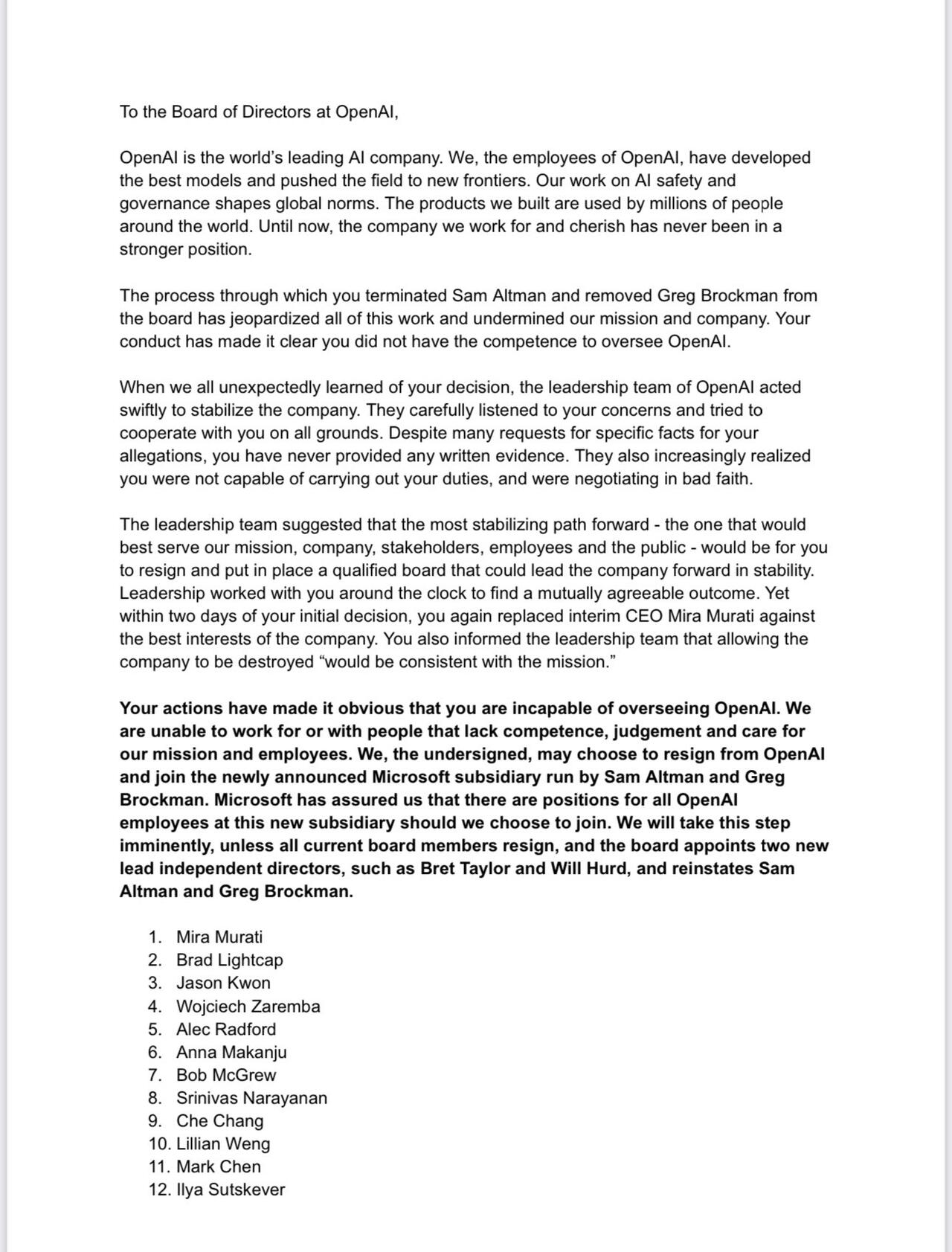
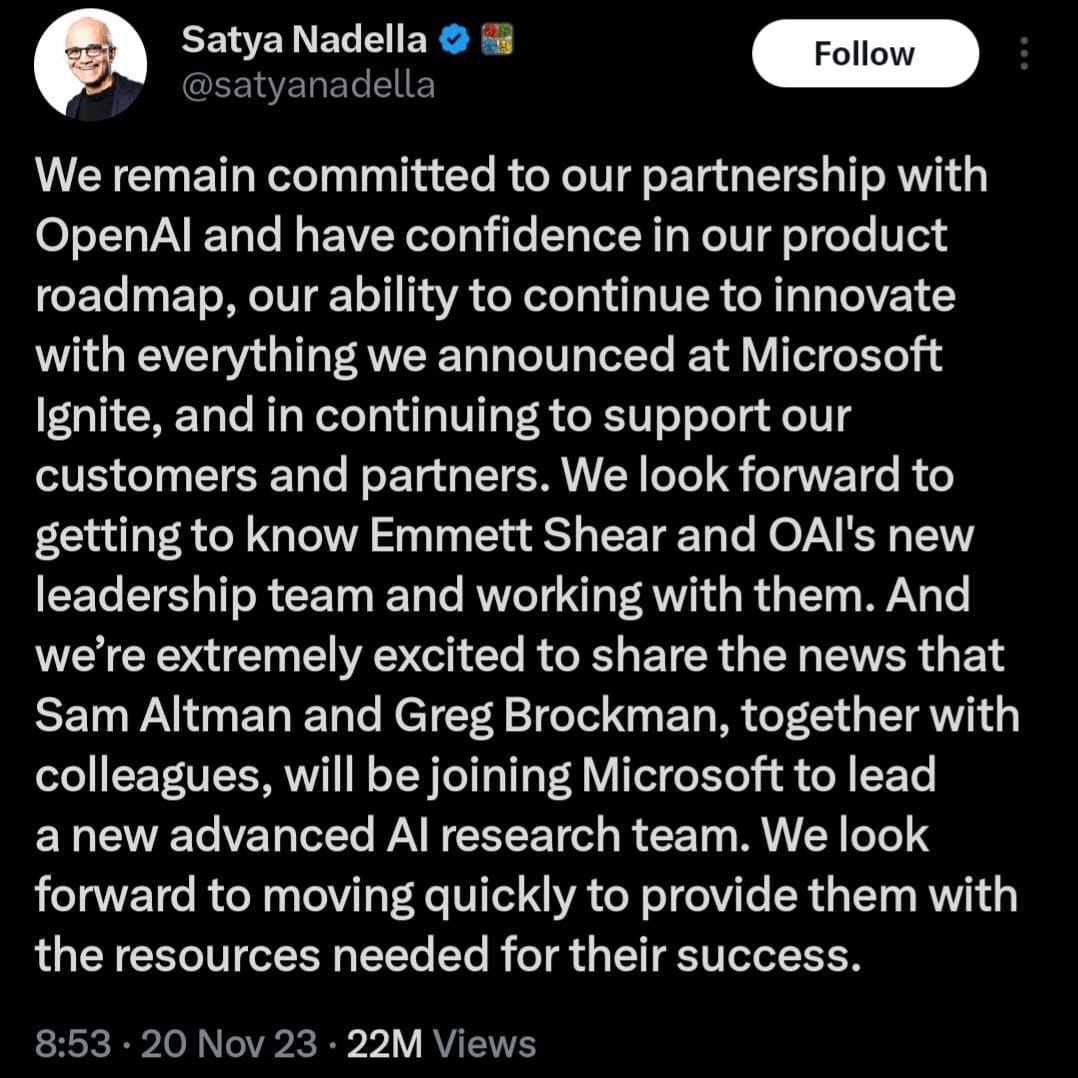
The employees also raised the stakes, threatening to abandon OpenAI altogether and join a newly announced Microsoft subsidiary led by Altman and Brockman. Their decision is based on purported assurances from Microsoft that positions are available for all OpenAI employees.

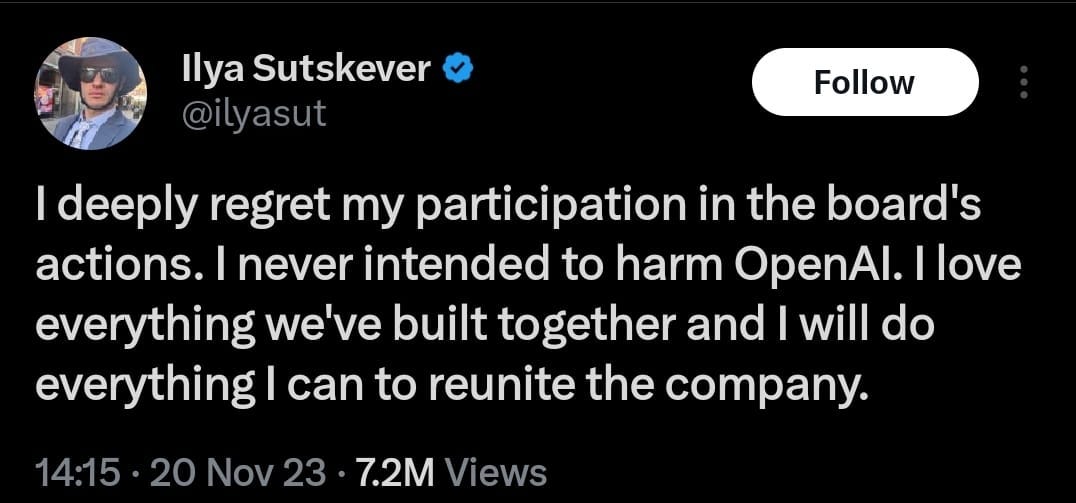
Notable signatories to the document include Mira Murati, OpenAI’s chief technology officer, who briefly served as interim CEO, and Ilya Sutskever, a board member allegedly involved in Altman’s sudden firing on Friday. Sutskever expressed remorse on Monday, stating, “I deeply regret my participation in the board’s actions. I never intended to harm OpenAI. I love everything we’ve built together, and I will do everything I can to reunite the company.”

Altman’s removal on Friday caught both his colleagues and Microsoft, OpenAI’s largest shareholder and technology partner, by surprise, according to the employees’ letter. The subsequent attempt to reinstate Altman failed, leading to the appointment of Emmett Shear, co-founder and former CEO of Twitch, as interim CEO.

The unexpected departure of Altman, Brockman, and other top researchers raises concerns about OpenAI’s future, given its status as one of the world’s most valuable tech startups. 

“If the architects and vision and brains behind these products have now left, the company will be a shell of what it once was,” Sarah Kreps, director of Cornell University’s Tech Policy Institute, commented.

Microsoft’s stock rose over 2% on Monday to a record high of $378.82 as investors celebrated the news of Altman and Brockman’s hiring. Analysts, however, view Shear’s appointment as a “tainted move” that has caused internal and external chaos for OpenAI.

OpenAI’s statement on Friday cited Altman’s lack of consistency in communications with the board as the reason for his dismissal. Shear, in a post on X on Monday, announced plans to hire an independent investigator to probe Altman’s ouster and produce a report within 30 days. He acknowledged the mishandling of the removal process and pledged to drive necessary changes, emphasizing that the decision was not due to a “specific disagreement on safety.

The controversy surrounding OpenAI’s mission to safely develop AI smarter than humans, coupled with Altman’s push for more advanced products, is believed to be at the core of the internal turmoil, per CSBNews. New Street Research analysts suggest that regardless of the outcome, the OpenAI that existed before the crisis is effectively over.

While OpenAI remains tight-lipped about the specifics behind Altman’s removal, sources indicate that both Altman and Brockman are open to returning if their demands, including the resignation of board members involved in their dismissal, are met.

As the drama unfolds, uncertainties loom over OpenAI’s future. Speculations range from potential resignations within the board to a mass exodus of staff, leaving the company’s future hanging in the balance.


Argentina Now Has A Bitcoin Friendly President

0

In a historic election, Argentina has chosen a new leader who is openly supportive of Bitcoin and other cryptocurrencies. Javier Gerardo Milei, a former vice president and senator, defeated the incumbent Alberto Fernández by a narrow margin of 51.2% to 48.8%. Duhalde campaigned on a platform of economic reform, social inclusion and digital innovation, promising to make Argentina a global hub for blockchain and crypto development.

Javier Gerardo Milei is not new to the crypto scene. He has been an active investor and advocate of Bitcoin since 2017, when he publicly declared that he had bought some bitcoins as a hedge against inflation and currency devaluation. He has also participated in several crypto events and conferences, where he shared his vision of how Bitcoin can empower individuals and communities, especially in developing countries like Argentina.

Javier Gerardo Milei’s victory is seen as a positive sign for the crypto industry in Argentina, which has been struggling with regulatory uncertainty and high taxes. According to a recent report by Chainalysis, Argentina ranks among the top 20 countries in the world in terms of crypto adoption, with an estimated 2.1 million users and $1.4 billion in transactions in 2020. However, the government has imposed strict controls on foreign exchange and capital flows, limiting the access and use of crypto for many Argentinians.

Argentina’s inflation

Argentina’s inflation is one of the highest in the world, reaching 51.4% in 2020 and expected to surpass 60% in 2023. This has severe consequences for the economy and the living standards of the population, especially the poor and the middle class. In this blog post, we will explore the causes, effects and possible solutions for this chronic problem that has plagued Argentina for decades.

The causes of inflation are complex and multifaceted, but they can be broadly divided into two categories: demand-pull and cost-push. Demand-pull inflation occurs when aggregate demand exceeds aggregate supply, creating excess pressure on prices. Cost-push inflation occurs when the costs of production increase, forcing producers to raise prices to maintain their profit margins. Both types of inflation can be influenced by external factors, such as exchange rate fluctuations, international trade, commodity prices and global economic conditions.

In Argentina, demand-pull inflation has been driven by expansionary fiscal and monetary policies, which have increased public spending and money supply without a corresponding increase in productivity or tax revenues. The government has resorted to printing money to finance its deficits, which has eroded the value of the peso and fueled inflation expectations.

Moreover, the government has implemented price controls and subsidies on essential goods and services, such as utilities, transport and food, which have distorted market signals and created shortages and black markets.

Cost-push inflation has been exacerbated by the devaluation of the peso, which has increased the cost of imported inputs and intermediate goods. Argentina is highly dependent on imports for its industrial and agricultural sectors, as well as for its energy needs.

The depreciation of the peso has also increased the burden of external debt, which is mostly denominated in foreign currency. Additionally, Argentina faces structural problems that hinder its competitiveness and productivity, such as high labor costs, rigid labor laws, inefficient taxation system, low investment levels and institutional weaknesses.

Javier Gerardo Milei has pledged to change that. He has announced that he will introduce a new legal framework for crypto that will recognize it as a legitimate form of money and property, protect the rights and interests of users and investors, and foster innovation and competition in the sector. He has also said that he will lower the taxes on crypto transactions and mining and create incentives for entrepreneurs and startups to launch crypto-related projects in Argentina.

Javier Gerardo Milei’s pro-crypto stance has earned him the support and praise of many prominent figures in the global crypto community, such as Michael Saylor, Jack Dorsey, Vitalik Buterin and Changpeng Zhao. They have congratulated him on his victory and expressed their willingness to collaborate with him on advancing the adoption and development of crypto in Argentina and beyond.

Javier Gerardo Milei’s election marks a historic moment for Argentina and the world. It shows that crypto is not only a technological innovation, but also a political and social force that can influence the outcome of elections and shape the future of nations. It also signals that Argentina is ready to embrace the opportunities and challenges of the digital age and become a leader in the global crypto movement.

Ways To Improve Environmental Footprints at Homes and Offices

0

1. Conduct a Sustainability Audit

The first step towards positive change is self-awareness. Businesses and individuals alike should conduct a sustainability audit to assess their current environmental impact. If you have a business, you must evaluate your energy consumption, waste generation, and resource usage and see how and where you may impact the environment. Understanding your baseline is crucial to identifying areas for improvement and setting realistic sustainability goals. You can also do this even if you don’t have your business, but now you would be making this assessment based on your lifestyle habits.

2. Embrace Renewable Energy Sources

One of the most impactful ways to reduce your environmental footprint is by transitioning to renewable energy sources. Businesses can explore solar panels, wind energy, or green energy providers, while individuals can opt for renewable energy options available in their region and within their purchasing power. This not only lowers carbon emissions but also promotes the growth of sustainable energy industries. Over time, these renewable energy sources are cheaper and better for your bottom line, anyway.

3. Implement Waste Reduction Practices

Both businesses and individuals can significantly contribute to environmental sustainability by minimizing waste. Adopting practices such as recycling, composting, and reducing single-use items can make a substantial difference. Businesses can review their supply chain to identify opportunities for waste reduction, while individuals can cultivate habits like using reusable bags and containers.

4. Promote Sustainable Transportation

Transportation is a significant contributor to carbon emissions. Businesses can encourage sustainable commuting options, such as remote work policies or incentives for using public transportation. Individuals can explore alternatives like carpooling or using electric vehicles if it is available and affordable to them. These choices not only reduce carbon footprints but also contribute to a healthier environment. Not to mention that they save costs too.

5. Invest in Eco-Friendly Technologies

Businesses can integrate eco-friendly technologies into their operations, such as energy-efficient appliances and smart building systems. Individuals can make similar choices at home, opting for energy-efficient appliances and smart home solutions. These technologies not only reduce energy consumption but also often result in long-term cost savings. Partnering with services like Utility Bidder can help businesses optimize their water and energy usage, further enhancing sustainability efforts.

6. Prioritize Sustainable Sourcing

Businesses play a crucial role in influencing sustainable practices throughout the supply chain. Where and how do you source your raw materials? Prioritizing sustainable sourcing of materials and products contributes to a more responsible and eco-friendly ecosystem. Similarly, individuals can make informed choices by supporting brands and products that adhere to sustainable and ethical production practices.

7. Educate and Advocate for Change

Knowledge is a catalyst for transformation. Both businesses and individuals can contribute to a greener future by educating themselves and others about sustainable practices. Businesses can organize workshops, training sessions, and awareness campaigns, while individuals can share information through social media, community events, and personal networks. Advocating for sustainable practices not only creates a ripple effect of awareness but also fosters a culture of environmental responsibility.

Small Steps, Big Impact

Protecting our environment requires a collective effort from businesses and individuals alike. By taking these seven steps, we can make meaningful strides towards a more sustainable and environmentally conscious future.

Each positive action, no matter how small, contributes to the greater goal of preserving our planet for future generations. Whether you’re a business leader or an individual, your choices matter, and together, we can create a world where sustainability is not just a goal but a way of life.

Zoho Partners With StartupSouth to Foster The Growth of Startups in Nigeria

0

Zoho, a global technology company has partnered with StartupSouth, Nigeria’s leading startup & innovation ecosystem development and advocacy organization, to foster the growth of startups in Nigeria.

At the company’s annual user conference, Zoho disclosed that it will be providing its contract management solution, Zoho contracts, free for three months to help businesses improve compliance with the Nigerian Data Protection Law.

Furthermore, the company said its partnership with StartupSouth, and the special offer on Zoho contracts are further steps that underscore its commitment to serve the business community in the region.

Speaking further on Zoho’s partnership with StartupSouth through its Zoho for Startups program, the Convener, StartupSouth, Uche Aniche explained that part of the partnership is that startups associated with StartupSouth, which are new customers for Zoho, can avail Zoho Wallet credits worth N470,000.

According to Uche, he further disclosed that the credit can be used to purchase or upgrade any of Zoho’s 55+ products, including Zoho One, the operating system for business, over a period of 360 days.

Zoho One offers a unified platform that brings together over 50 Zoho products from CRM to HR management. The startups will also receive training to help them leverage Zoho’s products for their growth in a way that they can easily scale.

Zoho recently declared a 50% growth in Nigeria, which according to the company is a direct result of Nigerian businesses embracing cloud technology.

Speaking on the company’s growth in Nigeria, Regional Director, MEA Zoho, Ali Shabdar said,

“Our growth is a direct result of Nigerian businesses embracing cloud technology, especially unified platforms, to digitally transform and build resilience to adapt to challenging market conditions. Zoho’s unified technology stack, built from the ground up, allows us to meet such transformation needs of businesses with robust solutions that deliver consistently seamless user experiences at an unbeatable value”.

Notably, Zoho also grew its partner network by 22% and more than doubled its employee count in 2022 in Nigeria to reinforce its local presence and serve its customers.

StartupSouth on the other hand has been a driving force in ecosystem development and advocacy, particularly focusing on high-impact ventures in Nigeria’s South-South and Southeast regions.

Uche Aniche, Convener, StartupSouth said,  the collaboration between StartupSouth and Zoho for Startups is not merely a partnershi, but it’s a meeting of shared values and objectives.

He pointed out the alignment between the two entities, highlighting Zoho’s mission to localism and establishing offices in rural locations rather than concentrating solely in major cities. This according to him is in line with  StartupSouth’s goal to extend economic opportunities beyond urban centers.

Sam Altman, the ex-CEO of OpenAI, will join Microsoft along with other EX staff

0

Microsoft announced today that it has hired Sam Altman, the former CEO of OpenAI, as a senior advisor on Artificial intelligence and Innovation. Altman, who stepped down from OpenAI on 18th, November 2023, will join Microsoft along with several other former OpenAI staff members, including Ilya Sutskever, Greg Brockman, and Wojciech Zaremba.

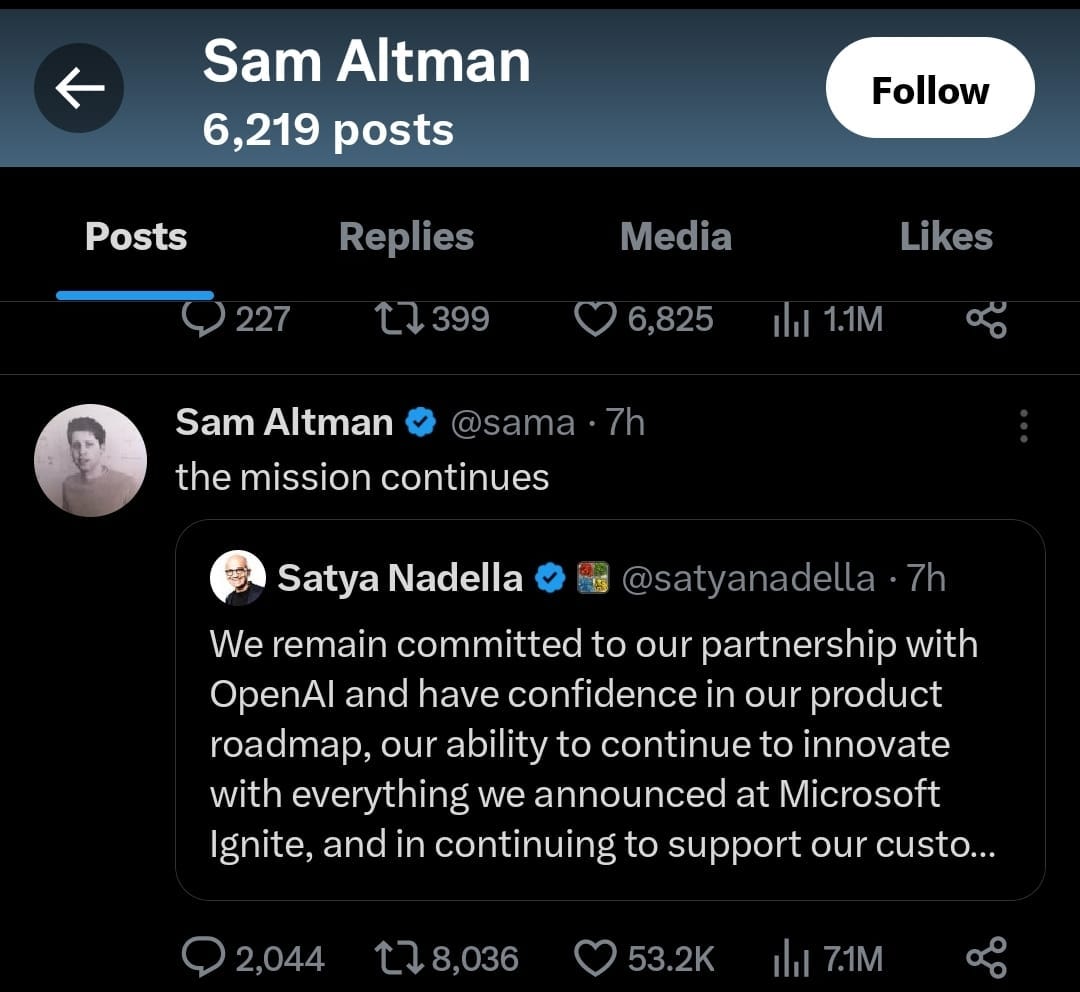
Microsoft said that the new hires will help the company accelerate its AI research and development, as well as foster collaboration with the broader AI community. Microsoft has been a major supporter of OpenAI since 2019, when it invested $1 billion in the research organization and became its exclusive cloud provider. Sam Altman has responded to Microsoft CEO offer on X with few inscriptions “The mission Continues” showing interest in the new offer.

Altman is a prominent figure in the tech industry, having previously led Y Combinator, one of the most influential startup accelerators in Silicon Valley. He was also one of the co-founders of OpenAI, along with Elon Musk and other tech luminaries, in 2019. OpenAI is a non-profit organization dedicated to creating and ensuring the safe and beneficial use of artificial general intelligence (AGI), which is the hypothetical level of AI that can perform any intellectual task that a human can.

OpenAI board destroying $100B in enterprise value in one weekend, allowing Satya Nadella to acquire their entire team.

In a stunning display of mismanagement and shortsightedness, the board of OpenAI has effectively destroyed $100 billion in enterprise value in one weekend and allowed Satya Nadella, the CEO of Microsoft, to acquihire their entire team.

The chain of events that led to this outcome began on Friday, November 17, when OpenAI announced that it was spinning off a new for-profit company called OpenAI LP, which would be able to attract more funding and talent, while still pursuing the same mission as the original non-profit. The new company would be governed by a “capped return” model, which would limit the returns to investors to 100x their initial investment and direct any excess profits back to the non-profit entity.

However, this announcement raised more questions than answers. How would OpenAI LP ensure that its research and products are aligned with the public interest and not influenced by the profit motive? How would it balance the need for openness and transparency with the need for secrecy and competitiveness? How would it prevent conflicts of interest among its investors, board members, and researchers? And most importantly, how would it maintain its independence and autonomy from Microsoft, which had invested $1 billion in OpenAI earlier that year and had a seat on its board?

The answers to these questions were not reassuring. On Saturday, November 18, OpenAI revealed that Microsoft had acquired an exclusive license to use its most advanced technology, the GPT-3 language model, which can generate coherent and convincing text on almost any topic. This meant that Microsoft would have a monopoly on one of the most powerful AI tools ever created, while other researchers and developers would have to rely on a limited and restricted API access. Moreover, Microsoft would have the ability to censor or manipulate the output of GPT-3 according to its own interests and agenda.

The reaction from the AI community was swift and harsh. Many criticized OpenAI for betraying its own principles of openness and fairness, and for handing over a potentially dangerous technology to a corporation that has a history of antitrust violations and unethical practices. Some even accused OpenAI of being a “Trojan horse” for Microsoft, which had used its investment to gain control over its research and talent.

The final blow came on Sunday, November 19, when OpenAI announced that it was dissolving its non-profit entity and merging with OpenAI LP, effectively becoming a fully owned subsidiary of Microsoft. The board of OpenAI claimed that this was necessary to simplify the legal structure and streamline the operations of the organization. However, many saw this as a blatant capitulation to Microsoft’s demands and a complete abandonment of OpenAI’s original mission and vision.

The consequences of these decisions are likely to be devastating for OpenAI and the AI field at large. By losing its independence and credibility, OpenAI will also lose its ability to attract and retain top talent, who will either leave for other organizations or join Microsoft.

By giving up its most valuable asset, GPT-3, to Microsoft, OpenAI will also lose its competitive edge and innovation potential, while enabling Microsoft to dominate the AI market and shape the future of humanity according to its own interests. And by abandoning its non-profit status and mission, OpenAI will also lose its moral authority and social responsibility, while betraying the trust and support of its donors, partners, and stakeholders.

OpenAI’s board has made a grave mistake that will haunt them for years to come. They have not only destroyed $100 billion in enterprise value in one weekend, but they have also jeopardized the future of AI and humanity.

Altman said that he is excited to join Microsoft and work with its talented AI team. He also praised Microsoft’s vision and commitment to advancing the field of AI for the common good. “Microsoft is one of the few companies that has the resources, the expertise, and the culture to make a positive impact on humanity through AI,” he said. “I look forward to working with them to create breakthroughs that will empower everyone to achieve more.”

Microsoft CEO Satya Nadella welcomed Altman and his colleagues to the company and expressed his admiration for their work at OpenAI. He also said that Microsoft shares their passion and vision for creating responsible and trustworthy AI systems that can benefit society.

“We are thrilled to have Sam Altman and his team join us at Microsoft,” he said. “They are some of the brightest minds in AI, and we are confident that they will help us push the boundaries of what is possible and create new opportunities for our customers and the world.”

I deeply regret my participation in the board’s actions. I never intended to harm OpenAI. I love everything we’ve built together, and I will do everything I can to reunite the company, ILya Sutskever, OpenAI board member wrote on X today.