DD
MM
YYYY

PAGES

DD
MM
YYYY

spot_img

PAGES

Home Blog Page 3589

US: Wyoming grants legal structure for DAOs

0

Wyoming has become the first state in the US to recognize decentralized autonomous organizations (DAOs) as a new type of legal entity. This is a major milestone for the blockchain and crypto industry, as it opens up new possibilities for innovation and governance.

DAOs are organizations that are governed by smart contracts on a blockchain, rather than by traditional legal structures and human intermediaries. DAOs can have various purposes, such as managing funds, coordinating collective action, or providing public goods. DAOs are often seen as a way to achieve more transparency, efficiency, and democracy in organizational decision-making.

However, until now, DAOs have faced significant legal uncertainty and regulatory challenges. Without a clear legal status, DAOs could not enter into contracts, own assets, or sue or be sued in court. This made it difficult for DAOs to operate and interact with the real world and exposed them to potential liabilities and risks.

Wyoming’s new law, which was signed by Governor Mark Gordon on March 4, 2024, aims to address these issues by creating a framework for DAOs to register and operate as legal entities in the state. The law defines a DAO as “an organization that is formed for any lawful purpose or business that is governed by smart contracts on a distributed ledger technology platform”. The law also specifies the requirements and procedures for DAO formation, governance, dissolution, and taxation.

According to the law, DAOs can choose to register as either limited liability companies (LLCs) or nonprofit corporations. DAOs that register as LLCs will enjoy the same benefits and protections as traditional LLCs, such as limited liability for members and managers, flexibility in governance and taxation, and access to courts and contracts.

DAOs that register as nonprofit corporations will have similar advantages but will also have to comply with additional rules regarding their charitable purpose and activities.

The law also allows DAOs to adopt any governance model that suits their needs, as long as it is consistent with their smart contracts and articles of organization. DAOs can use any distributed ledger technology platform that supports smart contracts, such as Ethereum, Tezos, or Cardano. DAOs can also amend their smart contracts and articles of organization by following their own procedures or the default rules provided by the law.

The law also clarifies some of the rights and responsibilities of DAO members and managers. For example, the law states that DAO members have the right to inspect the records of the DAO, to vote on matters affecting the DAO, and to receive distributions from the DAO. The law also states that DAO managers have the duty to act in good faith and in the best interest of the DAO, to avoid conflicts of interest, and to disclose any material information to the members.

The law also provides some guidance on how to resolve disputes involving DAOs. The law states that any claim or action against a DAO must be brought in Wyoming courts, unless the parties agree otherwise. The law also states that any arbitration or mediation involving a DAO must be conducted in accordance with the rules of the American Arbitration Association or another reputable organization. The law also encourages DAOs to use online dispute resolution platforms that are compatible with their smart contracts.

The law also addresses some of the tax implications of DAO registration. The law states that DAOs that register as LLCs will be subject to Wyoming’s favorable tax regime, which does not impose any corporate income tax or franchise tax on LLCs. The law also states that DAOs that register as nonprofit corporations will be exempt from Wyoming’s sales and use tax but will have to apply for federal tax exemption if they want to enjoy other benefits such as deductibility of donations.

The law also creates a sandbox program for DAOs that want to experiment with new ideas and technologies without being subject to all the regulations and requirements of the law. The sandbox program will allow eligible DAOs to operate in Wyoming for up to three years with reduced oversight and compliance costs. The sandbox program will also provide feedback and guidance to help DAOs improve their operations and governance.

Wyoming’s new law is expected to attract more innovation and investment to the state’s blockchain and crypto sector, which has already been growing rapidly in recent years. Wyoming has been a pioneer in creating a friendly environment for blockchain and crypto businesses, by enacting laws that recognize digital assets as property, create special purpose depository institutions for crypto banking, and establish a fintech sandbox for testing new products and services.

Wyoming’s new law is also expected to inspire other states and countries to follow suit and create their own frameworks for recognizing and regulating DAOs. As more jurisdictions adopt similar laws, DAOs will have more opportunities to expand their reach and impact across different markets and domains.

Wyoming’s new law is a historic step forward for the blockchain and crypto industry, as it recognizes DAOs as legitimate entities that can contribute to social and economic development. By granting DAOs new legal structure, Wyoming has opened up new horizons for the future of organization and governance.


The role of Blockchain Technology is Becoming Increasingly Significant

0

Blockchain is a technology that enables the creation of distributed, decentralized and immutable records of transactions. Blockchain can be used to enhance the security, transparency and efficiency of various digital infrastructures, such as identity management, supply chain management, e-government, e-health and e-voting.

Identity management is a process of verifying and authenticating the identity of individuals or entities in a digital environment. Blockchain can provide a secure and decentralized way of storing and sharing identity information, without relying on centralized authorities or intermediaries. Blockchain can also enable self-sovereign identity, where individuals have full control over their own identity data and can choose how to share it with others.

Supply chain management is a process of managing the flow of goods and services from the source to the destination. Blockchain can improve the traceability and visibility of supply chain activities, by creating a shared ledger of transactions that can be accessed by all participants. Blockchain can also reduce the costs and risks of fraud, corruption and human error, by ensuring the authenticity and quality of the products and services.

E-government is a process of delivering public services and information to citizens and businesses through digital channels. Blockchain can enhance the efficiency and accountability of e-government, by enabling secure and transparent transactions between the government and its stakeholders. Blockchain can also improve the participation and trust of citizens in e-government, by allowing them to verify the validity and integrity of public records and decisions.

E-health is a process of providing health care and wellness services through digital platforms. Blockchain can improve the interoperability and accessibility of health data, by creating a distributed network of health records that can be shared among different health care providers and patients. Blockchain can also protect the privacy and security of health data, by encrypting it and giving patients the right to consent to its use.

E-voting is a process of conducting elections or referendums through electronic means. Blockchain can enhance the reliability and verifiability of e-voting, by creating a tamper-proof record of votes that can be audited by anyone. Blockchain can also increase the convenience and inclusiveness of e-voting, by allowing voters to cast their ballots from anywhere and anytime.

Blockchain is a powerful technology that can transform various digital infrastructures, by providing them with more security, transparency and efficiency. Blockchain can also empower individuals and organizations to have more control and trust over their digital interactions, by enabling them to verify and validate their own data and transactions.

Despite the hype and promise of blockchain technology, many projects failed to deliver on their goals or meet the expectations of their users and investors. Some projects suffered from poor design, execution or governance, while others faced scalability, security or usability issues. Many projects also struggled to find a viable business model or a clear value proposition for their users.

As a result, many projects became obsolete or irrelevant, or were abandoned by their developers or communities. The blockchain industry also faced a challenge in attracting and retaining talent, as many developers and experts left the industry for more lucrative or stable opportunities in other sectors.

Africa has the potential to become a major player in the Global Pharmaceutical Market

0

Africa imports 800% of medicines, says AFDB.

Africa is the world’s second largest and second-most populous continent, with a population of over 1.3 billion people. It is also home to some of the most diverse and rich cultures, languages, and natural resources. However, Africa also faces many challenges, such as poverty, conflict, disease, and climate change.

Africa is heavily dependent on imported medicines, according to a recent report by the African Development Bank (AFDB). The report, titled “Pharmaceutical Manufacturing in Africa: Status, Challenges and Prospects”, reveals that the continent imports about 80% of its pharmaceutical needs, with some countries importing as much as 95%. This situation exposes Africa to various risks, such as supply disruptions, price fluctuations, substandard products and counterfeit medicines.

The report argues that developing a local pharmaceutical industry in Africa is not only vital for ensuring access to quality and affordable medicines, but also for creating jobs, enhancing skills, boosting innovation and fostering economic growth. It identifies several challenges that hinder the growth of the sector, such as weak regulatory frameworks, inadequate infrastructure, limited financing, high production costs and low competitiveness.

It also proposes some policy recommendations to address these challenges, such as strengthening regional integration, enhancing public-private partnerships, promoting research and development, and improving human capital.

The report calls for a collective action from all stakeholders, including governments, development partners, private sector, civil society and academia, to support the development of a sustainable and competitive pharmaceutical industry in Africa. It also highlights some success stories and best practices from countries that have made significant progress in this area, such as Ethiopia, Ghana, Kenya, Morocco, Nigeria and South Africa.

This means that Africa is highly dependent on external sources for its pharmaceutical needs, which exposes it to various risks, such as:

High prices: Importing medicines from abroad increases the cost of drugs for African consumers, who often have to pay out-of-pocket for their health care. According to a study by the United Nations Economic Commission for Africa (UNECA), the average price of imported medicines in Africa is 2.5 times higher than the international reference price.

Low quality: Importing medicines from abroad also raises concerns about the quality and safety of the drugs, as they may not meet the standards and regulations of the African countries. According to a report by the WHO, about 42% of substandard and falsified medicines reported globally between 2013 and 2017 were from Africa.

Supply chain disruptions: Importing medicines from abroad also makes Africa vulnerable to supply chain disruptions, such as delays, shortages, or stock-outs, due to factors such as political instability, trade barriers, natural disasters, or pandemics. For example, during the COVID-19 crisis, many African countries faced difficulties in procuring essential medicines and medical supplies from abroad, as global demand surged, and export restrictions were imposed by some countries.

The implication of this situation is that many Africans are unable to access the medicines they need for their health conditions, which leads to increased morbidity and mortality rates, reduced productivity and economic growth, and increased inequality and social unrest.

To address this challenge, Africa needs to develop its own pharmaceutical industry, which can produce locally relevant, affordable, and quality medicines for its population. This would not only improve the health outcomes and well-being of millions of Africans, but also create jobs, stimulate innovation, enhance regional integration, and foster self-reliance and sovereignty.

Some of the steps that can be taken to achieve this goal include:

Investing in research and development (R&D) to discover and develop new drugs that are tailored to the specific needs and preferences of African patients, such as drugs for neglected tropical diseases or drugs that are suitable for tropical climates.

Strengthening the regulatory capacity and harmonization of African countries to ensure that the medicines produced in Africa meet the highest standards of quality, safety, and efficacy.

Promoting public-private partnerships and collaboration among African countries and stakeholders to leverage their complementary strengths and resources, such as human capital, infrastructure, technology, markets, and financing.

Enhancing the local production capacity and competitiveness of African pharmaceutical manufacturers by providing them with incentives, subsidies, tax breaks, preferential procurement policies, technical assistance, and access to raw materials.

Improving the distribution and access of locally produced medicines by expanding the coverage and affordability of health insurance schemes, strengthening the supply chain management systems, reducing tariffs and non-tariff barriers, and raising awareness among consumers and health workers.

Africa has the potential to become a major player in the global pharmaceutical market, which is expected to reach $1.5 trillion by 2023. By developing its own pharmaceutical industry, Africa can not only improve its health security and resilience but also contribute to its economic development and social transformation.

The report is part of the AFDB’s efforts to promote industrialization and economic transformation in Africa, as outlined in its High 5 priorities. The AFDB believes that a vibrant pharmaceutical sector can contribute to improving the health and well-being of the African population, as well as to achieving the Sustainable Development Goals and the African Union’s Agenda 2063.

The Futility on Predicting the Naira’s Stable State by Wall Street Banks

0
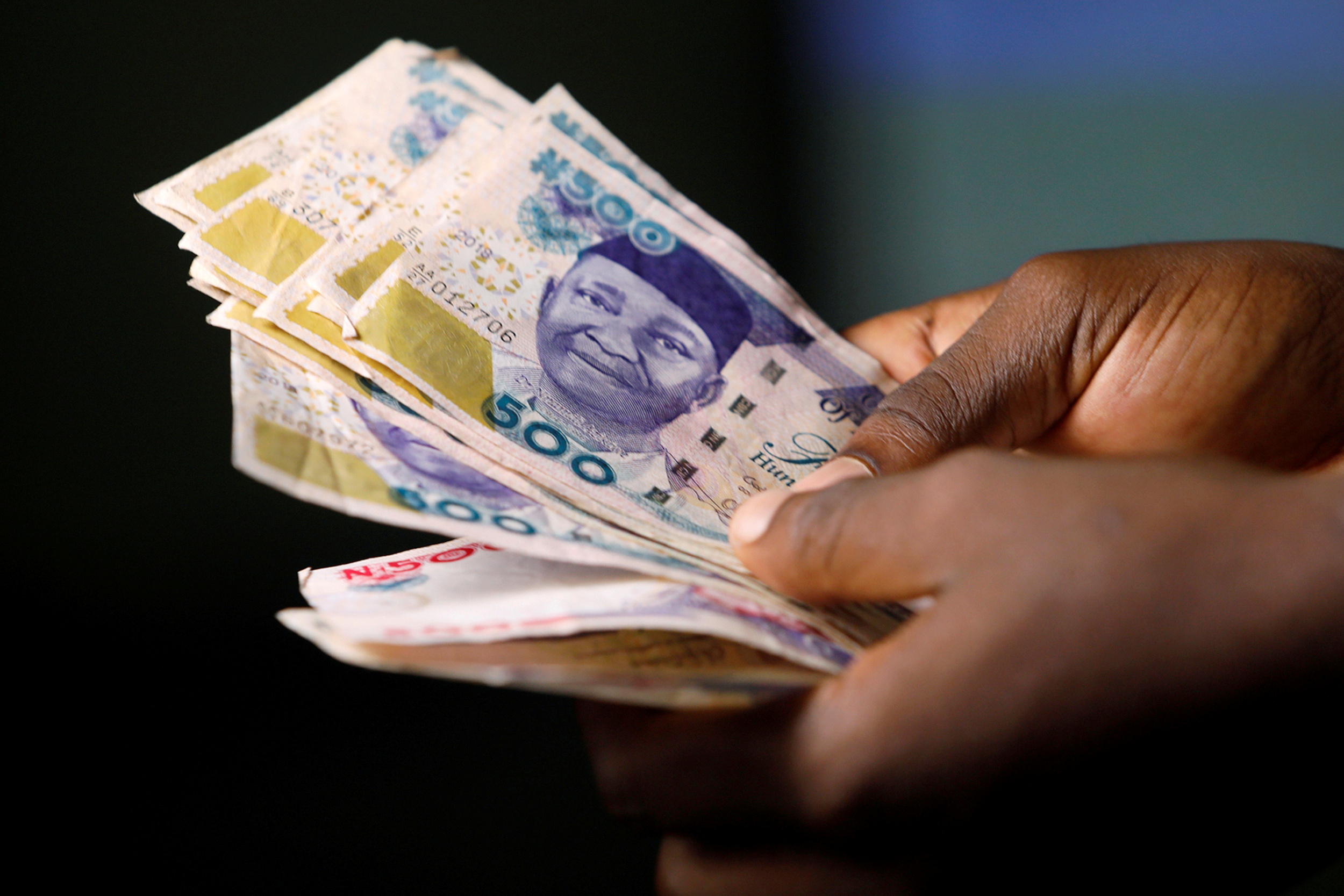
Nigerian naira banknotes are seen in this picture illustration, September 10, 2018. REUTERS/Afolabi Sotunde/File Photo

Not sure we should celebrate N1,200/$ since it took Naira about 50 years to get from about N1/$ to N415/$, only to crash to N1,600/$ in 9 months: “Goldman Sachs analysts Andrew Matheny and Bojosi Morule have projected a significant turnaround for Nigeria’s currency, foreseeing a remarkable appreciation to N1,200 against the US dollar within the span of 12 months.” Naira is currently hovering around N1,600/$.

Indeed, anything more than N600/$ should be considered a monumental bad policy in the annals of history. Also, do not waste your time thinking that Wall Street banks understand what is happening in Nigeria. From JP Morgan to GS and even IMF, all of them called it wrong after the floating:

“Also, in June 2023, JP Morgan projected that the naira, which was at N755/$1 then, would appreciate in the coming months, trading around N600 to a dollar. A statement by the institution said: “While it will take a few days for USD/NGN spot to settle, we fully expect an initial overshoot towards the parallel market rate of -750 or higher, after which, we expect USD/NGN to settle in the high 600s over [the] coming months.”

Their assumptions about Nigeria are off by miles and those predictions have no real values. I mean they should not be wasting their time sharing opinions on where the Naira will settle, since the $billions we were promised will come from investors, after floating the Naira are yet to arrive.

If Nigeria had attracted say $50 billion post-float, things would have normalized. But the problem is that the floating has depressed investments, triggering a paralysis across the nation. If the government can find how to adjust for that, at least Naira will stabilize.

Nigeria’s problem now is not even Naira as the abduction of students has returned at scale, with more than 400 under the control of terrorists in the last 6 days.

Early this week, reports of mass abduction of residents across communities in Borno and Kaduna states by armed groups, compounded an existing insecurity and economic hardship in Nigeria under the watch of President Bola Tinubu.

The communities in Borno and Kaduna where the kidnappings occurred are some of the most insecure communities in the troubled states and have witnessed repeated terror attacks in the past. The insecurity in the areas also means limited access to non-residents including journalists, making real-time information difficult to get.

Goldman Sachs Analysts Forecast Naira Appreciation to N1,200/$ in 12 months

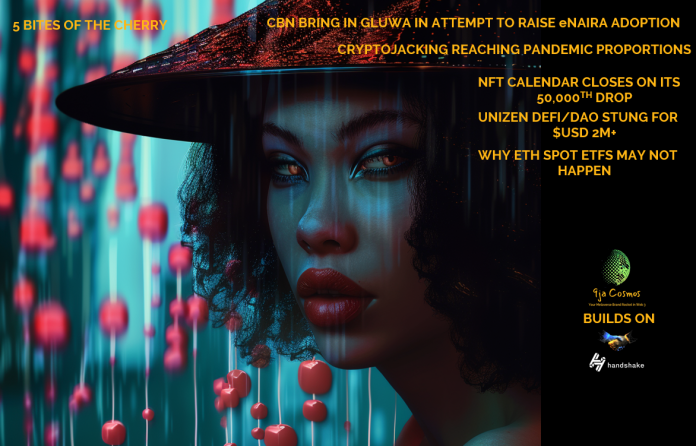
5 BITES OF THE CHERRY – eNAIRA, CRYPTOJACKING, NFT CALENDAR, UNIZEN, ETH ETF DEMISE

0

CBN bring in Gluwa in attempt to raise eNaira adoption.

So, apparently, Gluwa Nigeria Limited (Gluwa) has entered into a strategic partnership with the Central Bank of Nigeria (CBN).

The Gluwa website seems very new, and the anchor content on it seems to revolve around its’ so called ‘strategic partnership with CBN, whatever that might mean.

‘This partnership with the CBN signifies a significant stride in Gluwa’s mission to develop a borderless financial ecosystem centred on emerging markets, aiming at broadening financial inclusion.’ – code for marketing tripe.

The Marketing Director is one Alan Kong. Very ‘son of the soil’ 9ja name it is. Must be from some obscure part of ‘North’ I don’t know, because being tribally titled for over 20 years, I tend to recognise Nigerian names.

I cannot find any long term history of Alan Kong online in relation to Gluwa.

At time of writing, it’s difficult to establish Gluwa architecture, beyond their own statement about it being an L1. They have 46 Github repositories here.

I haven’t really had time to look at it in detail, but despite my distain for CBDCs, I see that some of those repositories refer to ERC 20, and that should be nowhere near any nations sovereign digital currencies than 20 x 20 foot barge poles.

Not sure what is going on here and why local engagement hasn’t happened on this. It makes the recent headline grabbing drama and reversal regarding Expatriate Levy look at best, ‘somehow’.

We have folk on ground like Franklin Peters, Hanu Fejiro Agbodje, Efosa Ighodaro, Deborah Ojengbede and Oyemi Victor (to name a few).

With the (ominous) lack of visibility on the issue at time of writing, I will be politically economical and file this under ‘perplexing’

Additional Perspective – Coinchapter, Chainwire

Cryptojacking on the rise since BTC ETFs.

Cryptojacking is a growing trend of cybercrime that involves the unauthorized use of a computer, mobile device, or server to mine cryptocurrencies. It presents a lower risk than ransomware because it operates almost silently in the background, constantly providing a pay-out for the perpetrators. It uses a distributed computing model to mine, usually completely undetected by the device owner, who may notice drops in performance, particularly over an internet connection. 

Attacks in the financial sector have risen by more than 250 percent in the past year. The US and Europe saw significant increases in cryptojacking, with a 340% and 788% rise respectively, and incidents increased to 332 million compared to 67 million a year ago, targeting cloud and macOS devices. The intensity of cryptojacking has been significant since the approval of Bitcoin Spot ETFs. – Additional Perspective – Sonic Wall

NFT Calendar closing on its 50,000th Drop.

NFT Calendar is a well known free promo tool for announcing and managing NFT releases and it has been operating since 2021. It is well over the 49k mark in assisted drops, and is eyeing 50,000. With the release trajectory for new series heating up, this milestone is likely to be met sooner rather than later.

There is also an interesting article about different options to promote an NFT collection on the site by Alice Lynx

Over $USD 2M unaccounted For on Unizen; hack suspected.

Unizen, which is described as a DeFi trading platform is suspected of being attacked, possibly due to an approval-related vulnerability. The total losses are estimated to exceed $2 million.

While Unizen describes itself as a Cross-Chain enabled DeFi / DEX Aggregator on Ethereum, Eth has been becoming steadily more centralized since ‘The Merge’. It still remains the best of bad choices in the EVM Compatible Ecosystem and its contradictory to describe anything built on top of them as DEX or DeFi, or DAO or ‘De’ anything.

Ultimately the only way of achieving true DEX,  DeFi, or DAO is to run it on top of a Nakamoto Consensus PoW Blockchain.

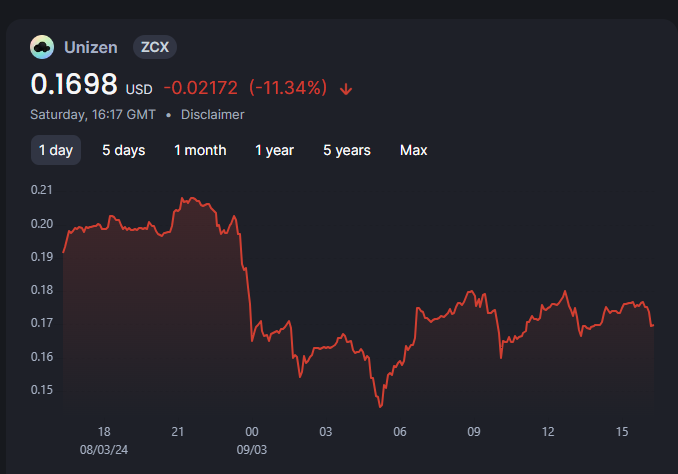
Users of the approval-related transaction aggregator are advised to withdraw as soon as possible. Unizen (ZCX)  lost 11.34% in the days’ trading on the news.  Additional Perspective – Foresight News, Binance News

Why Ethereum Spot ETFs may never happen.

The resistance within the ‘against’ camp for Eth ETFs isn’t just confined to the SEC. There are many somewhere between ambivalent and hostile on the basis that Ethereum has commercial actors endemic to its core operations in ways Bitcoin does not.

This means the SEC has allies where it did not have with the BTC ETFs and at a minimum, many counterweights to SEC BTC ETF opposition would be absent in its crusade against Eth ETF.

Grayscale, who was motivated to sue the SEC in order to be able to convert the assets in its Bitcoin trust to an ETF, won’t do so for its Ethereum.

The SEC approved all spot Bitcoin ETFs to begin trading at the same time, and after an expensive lawsuit, Grayscale then ended up in a spot ETF issuers race,  losing market share rather than keeping its first-mover advantage.

Once bitten, twice shy.

The SEC has set May 23 as a deadline for spot Eth ETFs submissions, and applicants are nowhere near the engagement milestones with the SEC as spot bitcoin ETF applicants were positioned within their timeline relative to the closure deadline.

Besides the concern about commercial actors, such as stakers and validators who stand to benefit without ever actually investing in an Eth ETF, an asset struggling to achieve $USD 4k a unit, is not the same as the approx $50k BTC unit price around the time of ETF launch.

Structurally, Handshake is Bitcoins closest relative, and operates on Nakamoto Consensus, but at a unit price of only USD 3 cents, and lucky to scrape a USD$100k daily volume, it sits light years outside the interests of Financial Houses.

There really isn’t another crypto-asset to rival Bitcoin in the combination of its market cap and fixed supply with its robustness and ownerlessness of structure.

Also listen to Laura Shin and Eric Balchunas here

Additional Perspective – Unchained

9ja Cosmos is here…

Get your .9jacom and .9javerse Web 3 domains  for $2 at:

.9jacom Domains

.9javerse Domains

Visit 9ja Cosmos LinkedIn Page

Visit 9ja Cosmos Website

Preview our Sino Amazon/Sinosignia releases (Ente)

Preview our Sino Amazon/Sinosignia releases (Pinterest)