DD
MM
YYYY

PAGES

DD
MM
YYYY

spot_img

PAGES

Home Blog Page 3593

GSK and Sanofi Exits Affecting Quality Medicine and Healthcare Delivery in Nigeria

0

Nigeria, the most populous country in Africa, has been a lucrative market for many multinational companies, especially in the pharmaceutical and consumer healthcare sectors. However, in recent years, some of these companies have decided to exit the country or scale down their operations, citing various challenges and difficulties. Two of the most prominent examples are GlaxoSmithKline (GSK) and Sanofi, two British and French giants that have been operating in Nigeria for over five decades.

The recent announcement by GSK and Sanofi that they are pulled out of Nigeria has sparked a lot of concern and criticism from various stakeholders in the health sector. The two pharmaceutical giants have cited economic challenges and regulatory uncertainties as the main reasons for their decision to exit the country.

GSK announced its plan to cease operations in Nigeria in August 2023, ending its 51-year presence in the country since it opened its first office in Lagos in 1972. The company said it would adopt a distributor-led model to supply the country with its products and return capital to its local shareholders. GSK is known for its popular brands such as Panadol, Sensodyne, Voltaren and Augmentin.
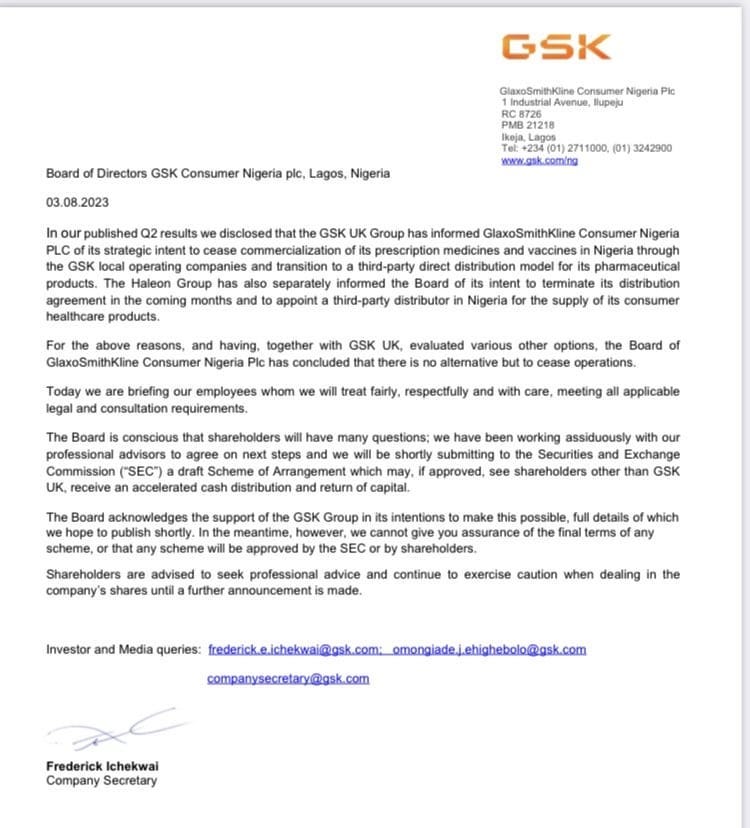
Sanofi, on the other hand, has not officially confirmed its exit from Nigeria, but according to some reports, the company is plotting to do so as its local operation struggles to maintain its margins and profitability. Sanofi has been in Nigeria since 1969, and offers a range of products such as Flagyl, Lantus, Plavix and Allegra.

So, what are the reasons behind these decisions? Why are these companies leaving Nigeria after investing so much time and money in the country? Here are some of the possible factors that may have influenced their choices:

Foreign exchange crunch: One of the major challenges facing businesses in Nigeria is the scarcity and volatility of foreign exchange (FX). The country relies heavily on oil exports for its FX earnings, but the decline in oil prices and production since 2014 has reduced its FX inflows and reserves.

This has led to frequent devaluation of the naira, the local currency, and difficulty in accessing FX from official sources. Many businesses have to resort to the parallel market or other alternative sources to obtain FX at higher rates, which increases their costs and reduces their margins.

GSK Nigeria said in its 2023 H1 report that FX availability affected its ability to settle foreign currency-denominated trade payables with product suppliers, making it difficult to maintain consistent supply to the market. Sanofi also faced similar challenges, as it had to import most of its raw materials and finished products from abroad.

High cost of doing business: Another factor that may have discouraged GSK and Sanofi from continuing their operations in Nigeria is the high cost of doing business in the country. According to the World Bank’s Ease of Doing Business report for 2023, Nigeria ranked 131st out of 190 countries, indicating a low level of competitiveness and efficiency. Some of the factors that contribute to the high cost of doing business include poor infrastructure, unreliable power supply, bureaucratic red tape, multiple taxation, corruption, insecurity and social unrest.

These factors increase the operational expenses (OPEX) and capital expenditures (CAPEX) of businesses and reduce their returns on investment (ROI). For instance, GSK Nigeria reported a loss before tax of N1.6 billion in 2023 H1, compared to a profit before tax of N1.2 billion in 2022 H1.

Low demand and competition: A third factor that may have influenced GSK and Sanofi’s exit from Nigeria is the low demand and high competition for their products in the country. The demand for pharmaceutical and consumer healthcare products depends largely on the income level and purchasing power of consumers, which have been adversely affected by the economic recession and inflation that hit Nigeria in recent years.

Many consumers have switched to cheaper alternatives or generic products from local manufacturers or importers, reducing the market share and revenue of GSK and Sanofi. Moreover, the companies faced stiff competition from other multinational players such as Pfizer, Novartis, Roche and Johnson & Johnson, as well as regional players such as Aspen Pharmacare and Cipla.

However, this move will have serious implications for the availability and affordability of essential medicines and vaccines, as well as the quality and sustainability of health services in Nigeria.

Nigeria is one of the largest markets for pharmaceutical products in Africa, with a population of over 200 million people and a high burden of infectious and non-communicable diseases. According to the World Health Organization (WHO), Nigeria accounts for about 25% of the total health expenditure in the African region, but only 4% of the total pharmaceutical production.

This means that Nigeria relies heavily on imports to meet its domestic demand for medicines and vaccines, which exposes the country to supply chain disruptions, price fluctuations and counterfeit products.

GSK and Sanofi are among the leading suppliers of vaccines and medicines for diseases such as malaria, tuberculosis, HIV/AIDS, polio, meningitis, pneumonia, typhoid and diabetes in Nigeria. They also provide technical support and capacity building for local manufacturers, distributors, health workers and regulators.

Their exit will create a huge gap in the market that will be hard to fill by other players, especially in the short term. This will affect the access and affordability of life-saving drugs and vaccines for millions of Nigerians, especially the poor and vulnerable who depend on public health facilities and subsidized programs.

Moreover, their exit will undermine the efforts to improve the quality and delivery of health services in Nigeria. GSK and Sanofi have been involved in several initiatives to strengthen the health system, such as improving cold chain management, enhancing pharmacovigilance, promoting rational use of medicines, supporting research and development, and fostering public-private partnerships.

Their withdrawal will reduce the availability of resources, expertise and innovation that are needed to address the complex health challenges facing Nigeria. Therefore, it is imperative that the Nigerian government and other stakeholders take urgent steps to mitigate the negative impact of GSK and Sanofi’s exit on the health sector.

Some of the possible actions include, engaging with GSK and Sanofi to explore alternative options for their continued presence and operation in Nigeria, such as joint ventures, licensing agreements or contract manufacturing.

Providing incentives and support for local pharmaceutical manufacturers to increase their production capacity, quality standards and market share. Strengthening the regulatory framework and enforcement mechanisms to ensure the safety, efficacy and quality of medicines and vaccines in Nigeria. Enhancing the procurement and distribution systems to ensure adequate supply and equitable access to essential medicines and vaccines across the country.

Increasing public investment and mobilizing domestic resources for health financing to reduce dependence on external sources. Building strategic alliances and partnerships with other countries, regional bodies, multilateral agencies and civil society organizations to leverage their support and expertise for health development in Nigeria.

GSK and Sanofi’s exit from Nigeria is a reflection of the challenging business environment that many multinational companies face in the country. While Nigeria offers a huge potential market for pharmaceutical and consumer healthcare products, it also poses significant risks and uncertainties that require careful assessment and management. The companies’ decision to adopt a distributor-led model may be a way of reducing their exposure and liability while maintaining their presence and relevance in the country.

According to Nairametrics, prices of some drugs have gone up by 1,000% in Nigeria, “Following the recent announcement of GlaxoSmithKline’s (GSK) departure from the Nigerian pharmaceutical market, there has been a notable surge in the prices of GSK medications, with increases reported to be as high as 1000%. The significant rise in the cost of these medicines has sparked widespread concern among Nigerians, many of whom have expressed their frustrations on social media platforms.”
The Own-Goals of OpenAI Board And Why Sam Altman Remains The Best for ChatGPT

0

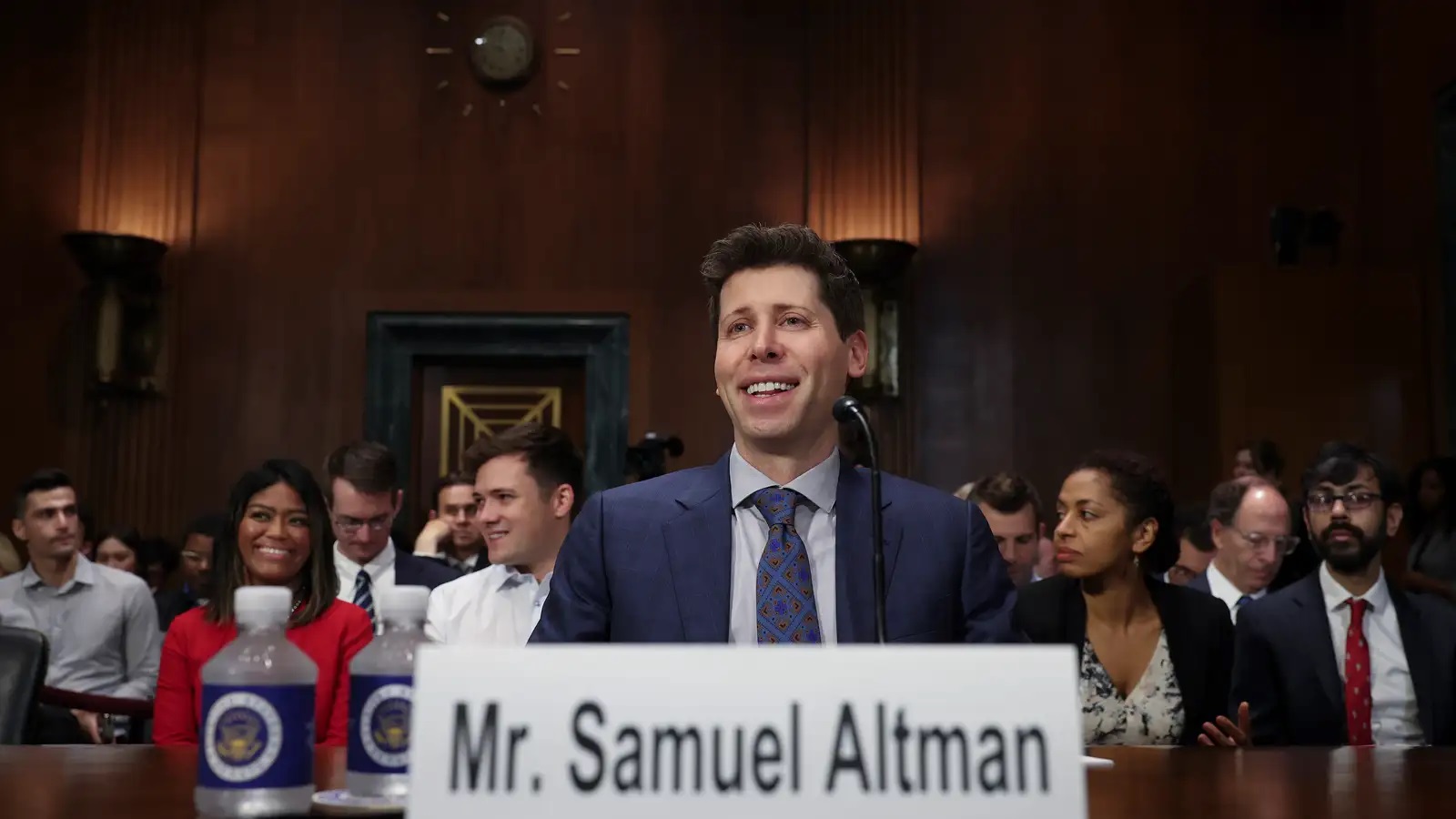
I read the news that the Board of OpenAI has fired the most successful CEO of this decade as no other human has come close to what he achieved with his team in ChatGPT. Yes, Sam Altman was kicked out by some people who see business as moving files. Possibly he was not asking for expressly written approvals before attending customer meetings since the board’s decision was not related to “malfeasance or anything related to our financial, business, safety, or security/privacy practices.”

Of course, investors who actually put money in OpenAI will likely kick out these board members and bring Sam back.  In the Igbo Nation, they say that white ants seem beautiful but no chicken likes to eat them. The implication is that it is not everything which glitters that is gold. Yes, ChatGPT may be glittering, but it takes uncommon visionaries to make it gold. 

Today, Sam is considered the best in this game and changing him because of the feelings of some board members will be own-goals. I do think he will return because it would be pure stupidity for investors like Microsoft to allow this mess to stand.

Sam Altman Steps down as OpenAI’s CEO, He moved Company’s Value from Zero to $80B (Could Return)

Pay attention to your company structure!

Since I posted this, some have reached out asking why it was possible for Sam to have been kicked out that easily in OpenAI. My response is that there is nothing new here except that the Board scored an own-goal, but on the legalistic aspect of a company, Sam is just an actor and his scripts can change. He does not own a huge equity if he does own anything. And if that is the case, there is nothing he can do when those with the Votes take decisions against him.
 
Mark Zuckerberg owns about 20% of Meta (yes, Facebook) but controls about 60% of the voting rights. With that, no human can remove him under most circumstances because he controls the majority of the votes. For Sam, that is not the case, and like Mitt Romney reminded us “corporations are people”, those people acted, even if we do not see them daily! Yes, they decided to take him out.
 
There is nothing like being weak or tough in the boardroom in this context as he does not have the voting rights control! But I expect him to be back because those with the Votes will like him to keep making money for them.
 
Lesson: pay attention to your company structure!

Comment on Feed

Comment: I admire Sam Altman, but his dismissal by the board over trivial reasons at this early stage of the company suggests a weakness on his part.

Success in business goes beyond skills and vision; one must also navigate organizational politics.

Could anyone pull such a move on Mark Zuckerberg or Elon Musk?

My Response: “I admire Sam Altman, but his dismissal by the board over trivial reasons at this early stage of the company suggests a weakness on his part.” – NOT really. Corporations are people, Mitt Romney will say.

Sam does not have any power as his equity is VERY small or zero. Mark owns about 23% of Meta (Facebook) but he controls close to 61% of the voting rights. Musk the same via direct and indirect equity. There is nothing like weakness: it is about percentages and who owns the company.

If the person with say 51% says it is time, that ends it! That is the way it works.

My Response: No one is indeed. For Sam who does not have equity or if he does, it is very small, there is nothing he can do. Corporations are people and they control the 100%. Zuckerberg owns about 20% plus of Meta but controls 61% of the voting rights which means NO HUMAN can remove him under normal circumstances.

Sam Altman Steps down as OpenAI’s CEO, He moved Company’s Value from Zero to $80B (Could Return)

0

The news of Sam Altman’s departure from OpenAI has shocked the Artificial intelligence -AI community. Altman, who joined the research organization as its CEO in 2019, was instrumental in transforming it from a non-profit entity to a hybrid model that could attract billions of dollars in funding from investors like Microsoft and Tencent.

Under his leadership, OpenAI achieved remarkable breakthroughs in natural language processing, computer vision, and reinforcement learning, culminating in the creation of GPT-3, the most powerful language model ever built. According to some estimates, OpenAI’s valuation soared to $80 billion, making it one of the most valuable AI companies in the world.

Notes from OpenAI Board on Departure of Sam and Appointment of Interim CEO Mira

But despite his impressive achievements, Altman was not able to secure his position at the helm of OpenAI. In a surprising announcement, the organization said that Altman had stepped down as its CEO and would remain as an advisor and board member.

The reasons for his exit were not disclosed, but some sources suggested that there were disagreements between him and other co-founders and board members over the direction and vision of OpenAI.

Some speculated that Altman’s ambitious plans to create artificial general intelligence (AGI), a system that can perform any intellectual task that humans can, were met with resistance and skepticism by others who feared the potential risks and ethical implications of such a technology.

Possible reasons why Sam Altman got fired.

Elon Musk has influence with other board members, this is a hostile takeover. Sam Altman has hit AGI, and he didn’t disclose it to the board. The foundational structure of the company was miscommunicated to the Board. Like voting rights, money, etc. It was overcomplicated stuff, so it could be it. Moving too fast and regulation is coming down on them in ways that Sam didn’t share.

Altman’s departure raises many questions about the future of OpenAI and its role in the AI landscape. Will it be able to maintain its innovative edge and reputation without Altman’s leadership? Will it be able to balance its dual goals of advancing AI research and ensuring its alignment with human values?

Whoever takes over will have to face some tough challenges ahead. They will have to balance the trade-offs between openness and safety, innovation and responsibility, and competition and cooperation in the AI field. They will also have to manage the expectations and interests of various stakeholders, including funders, partners, employees, users, and regulators.

They will also have to deal with the uncertainty and complexity of pursuing AGI, which is still a distant and elusive goal. As for Altman’s other ventures, they will likely continue to operate independently and pursue their own missions and objectives. Altman has invested and founded several companies and projects in different sectors, such as biotech, longevity, cryptocurrency, and politics.

Some examples are:

Helia: A biotech company that aims to develop therapies for aging-related diseases. Apollo Projects: A longevity research project that seeks to extend human lifespan. Worldcoin: A cryptocurrency startup that plans to distribute digital coins to everyone in the world using eye-scanning technology. The Center for Election Science: A political advocacy group that promotes alternative voting methods, such as approval voting and score voting.

Altman has said that he is passionate about these ventures and that he believes they can have a positive impact on the world. He has also said that he has some new ideas that he wants to explore, but he has not disclosed what they are. He has indicated that he will remain active and involved in the tech and AI community, and that he will share his insights and learnings along the way.

Altman’s exit as CEO of OpenAI is a significant event in the AI industry and society. It marks the end of an era and the beginning of a new one. It also raises some questions and uncertainties about the future of OpenAI and Altman’s other ventures. However, it also opens up new opportunities and possibilities for innovation and collaboration in the AI field. It will be interesting to see how OpenAI and Altman’s other ventures evolve and adapt in the coming years, and what impact they will have on the world.

Will it be able to compete with other AI giants like Google, Facebook, and Amazon, who are also investing heavily in AI research and development? And most importantly, will it be able to fulfill its original mission of creating and ensuring the safe and beneficial use of AGI for humanity?

The OpenAI board was “in discussions” with Sam Altman about possibly returning to the CEO role he was shockingly ousted from a day earlier, The Verge reported Saturday, citing anonymous sources. The company’s investors were driving efforts to bring Altman back, according to The Wall Street Journal. The reports came after the sudden exit of the co-founder and chief executive roiled the tech world. Altman disagreed with members of his board, particularly Ilya Sutskever, also an OpenAI co-founder, over safety and the commercialization of AI, Bloomberg reported earlier, citing an anonymous source.

The board’s decision to fire Altman was not related to “malfeasance or anything related to our financial, business, safety, or security/privacy practices,” according to an internal memo seen by several media outlets. Greg Brockman, OpenAI president, also quit late on Friday.

  • Another point of contention may have been Altman’s efforts to raise money from SoftBank Group to create an AI chip startup to compete with Nvidia processors, Bloomberg reported.

    Altman’s firing threatens to upendthe tech industry and fuel controversy around the rapid development of AI and how quickly it should be allowed to develop, The New York Times writes.

    Altman co-founded the artificial intelligence firm with Tesla CEO Elon Musk and others in 2015, becoming CEO in 2019. OpenAI’s ChatGPT was a driving force behind the tech industry’s enthusiasm for all things generative AI. (LinkedIn News)

Is X (Twitter) actually fighting for Free Speech as X files a lawsuit against Media Matters?

0

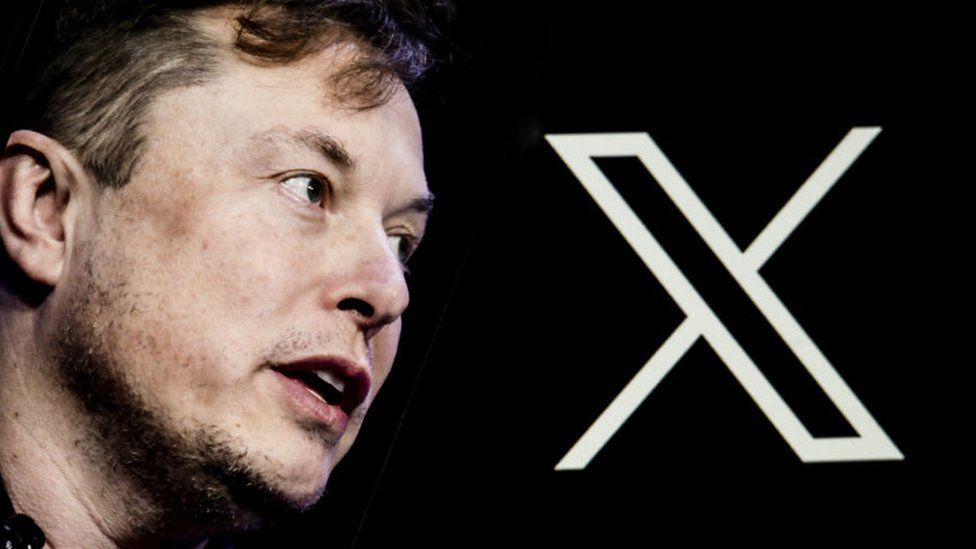
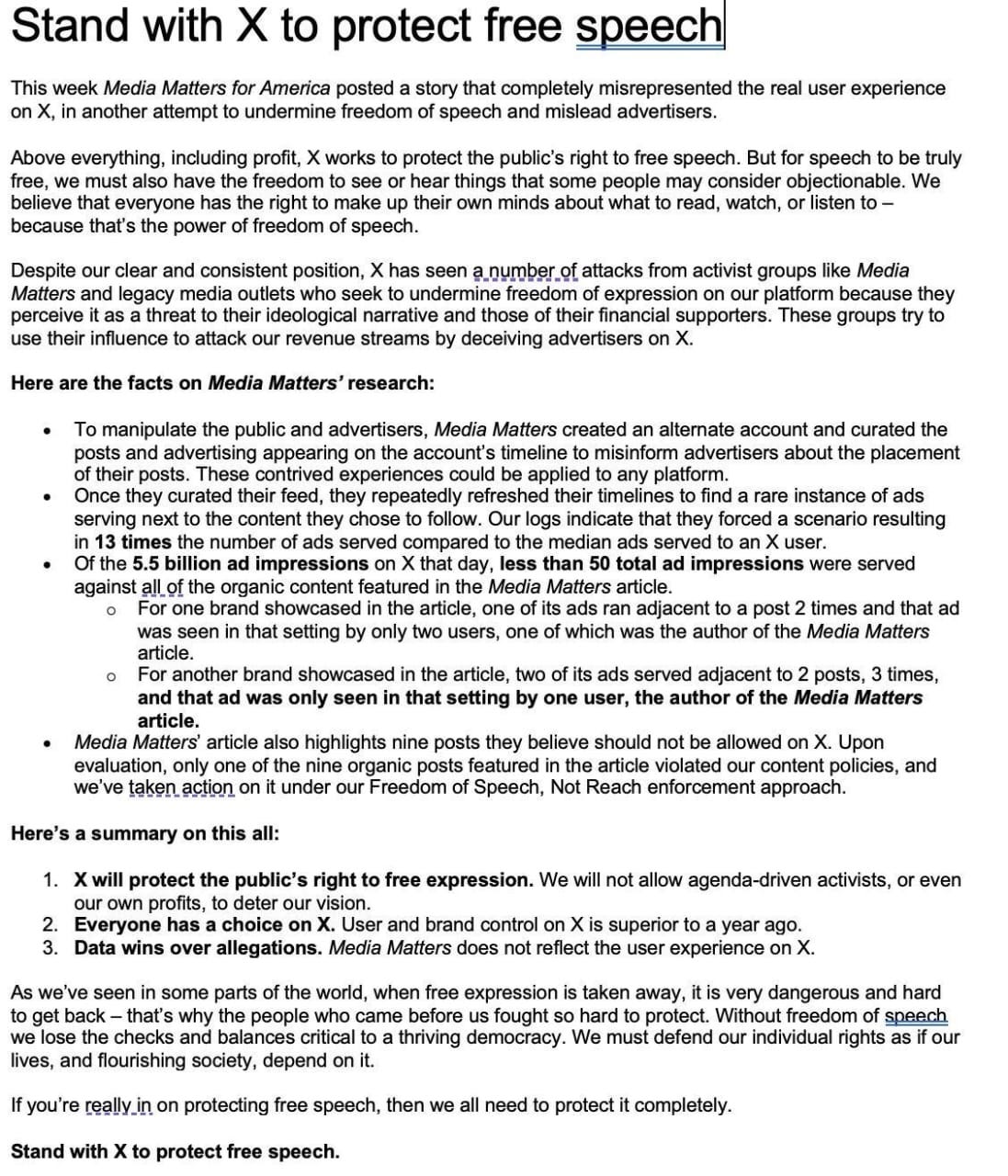
In a shocking development, X Corp owner, Elon Musk announced that it will be filing a thermonuclear lawsuit against Media Matters, a media watchdog group that has been critical of X Corp’s business practices and environmental impact. The lawsuit, which seeks $10 billion in damages, accuses Media Matters of defamation, libel, slander, and conspiracy to harm X Corp’s reputation and market share.

Mr. Musk, said in a press conference that Media Matters has been spreading “false and malicious” information about X Corp which tends to subject advertisers from participating in X advertisement and that the lawsuit is necessary to protect X Corp’s rights and interests. He said that Media Matters has been “waging a relentless and coordinated campaign of lies and smears” against X Corp, and that the lawsuit will expose their “hidden agenda and ulterior motives”.

Media Matters’ president, Ms. Y, responded to the lawsuit in a statement, saying that it is a “baseless and desperate attempt” by X Corp to silence and intimidate Media Matters. She said that Media Matters stands by its reporting and analysis of X Corp, and that the lawsuit is a “clear violation of the First Amendment and the public’s right to know”. She said that Media Matters will not back down from its mission of holding X Corp accountable for its actions and impact on society.

The lawsuit is expected to be filed in the U.S. District Court for the District of Columbia next week. Legal experts say that the lawsuit is unprecedented in its scope and magnitude, and that it could have far-reaching implications for the media industry and the public discourse. Some observers have also questioned the use of the term “thermonuclear” to describe the lawsuit, saying that it is hyperbolic and inflammatory.

Is X/Twitter actually fighting for free speech?

Twitter is one of the most popular social media platforms in the world, with over 300 million active users. It is also a platform that has been frequently accused of censoring or suppressing certain voices, especially those that are critical of its policies, its executives, or its political allies.

In recent years, Twitter has banned, suspended, or restricted the accounts of many prominent figures, such as former US President Donald Trump, WikiLeaks founder Julian Assange, journalist Glenn Greenwald, and activist Tommy Robinson.

Twitter has also been criticized for applying inconsistent or arbitrary rules to different users, such as allowing some world leaders to post inflammatory or violent messages, while cracking down on others for expressing dissenting opinions.

Twitter has defended its actions by claiming that it is committed to protecting free speech and fostering a healthy public conversation. It has argued that it has the right and the responsibility to enforce its own terms of service, which prohibit hate speech, harassment, threats, and other forms of abuse. It has also claimed that it is transparent and accountable about its decisions, and that it provides users with the opportunity to appeal or challenge them.

But is Twitter really fighting for free speech, or is it using its power to silence or manipulate certain voices? This is a question that has been debated by many experts, activists, and users, who have different perspectives on what free speech means and how it should be protected online. Some argue that Twitter is a private company that can set its own rules and moderate its own platform as it sees fit.

They contend that Twitter is not obligated to provide a platform for anyone who violates its policies or harms its community. They also point out that Twitter is not the only option for online expression, and that users who are unhappy with Twitter can switch to other platforms or create their own.

Others argue that Twitter is a public utility that has a social and moral duty to respect and uphold free speech as a fundamental human right. They contend that Twitter has become a dominant and influential source of information and communication, and that it has a significant impact on public opinion, democracy, and social movements.

They also point out that Twitter often benefits from legal protections and public subsidies that grant it immunity from liability or regulation. They claim that Twitter should not be allowed to arbitrarily censor or suppress certain voices, especially those that challenge the status quo or expose wrongdoing.

The debate over Twitter and free speech is not likely to be resolved anytime soon. It is a complex and nuanced issue that involves legal, ethical, political, and technological factors. It also reflects the broader challenges and opportunities of living in a digital age, where information is abundant but not always reliable, where communication is global but not always inclusive, and where power is concentrated but not always accountable.

CoinShares, Valkyrie’s ETF, Tokens Market Performance, Boyaa Game Company to Acquire $90m Worth in BTC, ETH

0

CoinShares, a leading digital asset investment firm, has announced that it has entered into a strategic partnership with Valkyrie Investments, a US-based company that offers various exchange-traded products (ETPs) in the crypto space. As part of the deal, CoinShares has secured an option to acquire Valkyrie’s ETF unit, which is currently awaiting approval from the US Securities and Exchange Commission (SEC) to launch a bitcoin ETF.

The partnership aims to leverage CoinShares’ expertise in the European ETP market, where it has over $5 billion in assets under management, and Valkyrie’s experience in the US market, where it has filed for several innovative crypto ETPs, including a bitcoin futures ETF, a bitcoin mining ETF, and a decentralized finance (DeFi) ETF. The two firms will collaborate on product development, distribution, and marketing across both regions.

CoinShares CEO Jean-Marie Mognetti said: “We are thrilled to partner with Valkyrie, a company that shares our vision of bringing innovative and accessible investment products to investors around the world. We believe that the US market is ripe for growth in the crypto ETP space, and we are excited to have the option to acquire Valkyrie’s ETF unit, which has a strong track record of filing for cutting-edge products and navigating the complex regulatory landscape.”

Valkyrie CEO Leah Wald said: “CoinShares is a pioneer and a leader in the crypto ETP industry, and we are honored to join forces with them. We have been impressed by their product offerings, their regulatory compliance, and their commitment to investor education and protection. We look forward to working together to bring more innovation and value to our clients and the broader crypto ecosystem.”

Avalanche’s AVAX and Near’s NEAR Market Performance

The past week has been a bullish one for the cryptocurrency market, with several coins regaining new highs. Among them, two projects stand out for their impressive performance: Avalanche and Near Protocol. Both of them are smart contract platforms that aim to offer scalability, security and interoperability for decentralized applications. In this blog post, we will take a closer look at what drove their prices up and what are their main features and advantages.

Avalanche is a blockchain network that uses a novel consensus mechanism called Snowman, which allows for fast and low-cost transactions. It also supports multiple virtual machines, including the Ethereum Virtual Machine (EVM), which means that it is compatible with existing Ethereum applications and tools. Avalanche claims to be able to process over 4,500 transactions per second, compared to Ethereum’s 15-30. It also has a native token called AVAX, which is used for paying fees, securing the network and participating in governance.

Near Protocol is another blockchain network that leverages sharding to achieve high scalability and low latency. It also uses a proof-of-stake (PoS) consensus algorithm that rewards validators for securing the network. Near Protocol supports cross-chain communication and interoperability with other blockchains, such as Ethereum and Polkadot. It also has a native token called NEAR, which is used for paying fees, staking and governance.

Both Avalanche and Near Protocol have seen a surge in demand and adoption in the past week, thanks to several factors. One of them is the launch of new decentralized applications (DApps) and decentralized exchanges (DEXs) on their platforms, such as Trader Joe on Avalanche and Aurora on Near Protocol. These DApps offer users access to various financial services, such as lending, borrowing, swapping and farming, with lower fees and faster transactions than on Ethereum.

Another factor is the integration of their tokens with major centralized exchanges (CEXs) and wallets, such as Coinbase, Binance and Ledger. This increases the liquidity and accessibility of their tokens, as well as their exposure to new users and investors. Moreover, both projects have announced partnerships and collaborations with other prominent players in the crypto space, such as Chainlink, Graph Protocol and SushiSwap, which enhance their functionality and utility.

As a result of these developments, both AVAX and NEAR have experienced significant price appreciation in the past week. According to CoinGecko, AVAX has increased by 67% in the past seven days. Similarly, NEAR has increased by 62% in the past seven days, on November 18. Both tokens are among the top 20 cryptocurrencies by market capitalization, with AVAX ranking 11th and NEAR ranking 18th at the time of writing.

The outlook for both projects remains positive, as they continue to innovate and attract more users and developers to their ecosystems. They also benefit from the overall bullish sentiment in the crypto market, driven by factors such as institutional adoption, regulatory clarity and technological innovation. However, they also face challenges and risks, such as competition from other smart contract platforms, regulatory uncertainty and market volatility. Therefore, investors should do their own research and exercise caution before investing in any cryptocurrency.

Boyaa Game Company to acquire $90 million worth in Bitcoin and Ethereum

Boyaa, the leading board and card game company in China, announced that it will invest $90 million in Bitcoin and Ethereum, two of the most popular cryptocurrencies in the world. The company said that this move is part of its strategic plan to diversify its assets and explore new opportunities in the digital economy.

Boyaa, which was founded in 2004, has developed and published more than 100 online games, including Texas Hold’em Poker, Mahjong, Chess, and Dominoes. The company has over 600 million registered users and operates in more than 10 countries and regions. Boyaa is also listed on the Hong Kong Stock Exchange since 2013.

According to Boyaa’s CEO, Mr. Zhang Wei, the decision to invest in Bitcoin and Ethereum was based on careful research and analysis of the cryptocurrency market. He said that Bitcoin and Ethereum have shown strong growth potential and resilience in the past few years, despite the volatility and regulatory challenges. He also said that Boyaa believes that cryptocurrencies will play a key role in the future of finance, gaming, and entertainment.

Mr. Zhang added that Boyaa will allocate $50 million to Bitcoin and $40 million to Ethereum, and that the company will use its own funds to purchase the cryptocurrencies through a reputable platform. He said that Boyaa will hold the cryptocurrencies for a long-term period and will not sell them unless there is a significant change in the market conditions or the company’s strategy.

Boyaa’s announcement has attracted a lot of attention and praise from the cryptocurrency community, as well as from its own users and partners. Many analysts have commented that Boyaa’s investment in Bitcoin and Ethereum is a smart and bold move that will enhance its competitiveness and innovation. They also said that Boyaa’s investment will boost the confidence and adoption of cryptocurrencies in China and beyond.

China’s largest board and card game company, Boyaa, has recently announced its financial results for the third quarter of 2023. The company reported a revenue of 1.2 billion yuan, a 15% increase from the same period last year. The net profit was 320 million yuan, a 20% increase from the same period last year. The company attributed its growth to the strong performance of its flagship products, such as Texas Hold’em Poker, Mahjong, and Chess.

Boyaa also revealed its plans to expand its overseas markets, especially in Southeast Asia and Europe, where it has established partnerships with local game publishers and platforms. Boyaa’s CEO, Li Wei, said that the company is confident in its future prospects and will continue to invest in research and development, marketing, and user acquisition. He also said that the company is exploring new opportunities in emerging fields, such as blockchain, artificial intelligence, and cloud gaming.

China has been at the forefront of blockchain development and adoption, with its central bank digital currency (CBDC) project, the digital yuan, being one of the most advanced in the world. However, China’s stance on cryptocurrencies has been less favorable, as the country has banned crypto exchanges and mining activities in recent years.

Despite these restrictions, there is still a growing demand for crypto custody services in China, as institutional and retail investors seek to access the global crypto market and diversify their portfolios. Crypto custody refers to the safekeeping and management of digital assets, such as Bitcoin, Ethereum, and other tokens, by a third-party service provider.

Crypto custody is essential for the security and liquidity of digital assets, as it reduces the risk of theft, loss, or hacking that may occur when users store their own private keys. Crypto custody also enables users to access various financial services, such as lending, borrowing, staking, and trading, that are offered by decentralized platforms or centralized intermediaries.

However, crypto custody is not without its challenges, especially in China. The regulatory environment is uncertain and evolving, as the authorities seek to balance innovation and risk management. The technical standards and best practices are still developing, as the industry matures and adapts to new technologies and protocols. The market competition is fierce and fragmented, as both domestic and foreign players vie for a share of the lucrative and growing market.