DD
MM
YYYY

PAGES

DD
MM
YYYY

spot_img

PAGES

Home Blog Page 3594

The Apple’s Playbook As A Platform To Unify The Best

0

When Uber was making driverless cars, I wrote here that it was a bad strategy. Yes, Uber does not need to make driverless cars since it has the world’s finest and largest ecosystem for the orchestration and aggregation of drivers and riders. Simply, focus on making that ecosystem to remain the category-king, and any person who makes the best robot-cab will come to partner with Uber, since that company, if great, will like to work with the best.

Apple in its own game plan has continued to make the best consumer devices. The implication is that the best will like to converge on the Apple iPhone and its ecosystems. The Google Gemini AI is coming to the Apple world, and today we are reading that Baidu AI will do the same in China for Apple: “In a strategic move aimed at enhancing its offerings in the Chinese market, US tech giant Apple has reportedly selected Chinese search engine powerhouse Baidu to provide generative artificial intelligence (AI) technology for its upcoming iPhone 16 and other products slated for release in mainland China this year.”

It is what it is: it takes the killing of one leopard to be called a killer of leopards. Yes, just WIN big in one thing, and if you sustain that position, you will capture a lot of value in this world. For Apple and its iPhone, there is a moment: ‘a New York Times report offers a specific figure: it says Google paid Apple “around $18 billion” in 2021’ to be Apple’s default search engine.

If someone can pay you that yearly to have a storefront on your device, why do you need to fight that person? People, Apple is minding its own lane, and that is wisdom.

Apple Partners with Baidu for AI Technology in Mainland China Amidst Rising Competition and Regulatory Scrutiny

Apple Partners with Baidu for AI Technology in Mainland China Amidst Rising Competition and Regulatory Scrutiny

0

In a strategic move aimed at enhancing its offerings in the Chinese market, US tech giant Apple has reportedly selected Chinese search engine powerhouse Baidu to provide generative artificial intelligence (AI) technology for its upcoming iPhone 16 and other products slated for release in mainland China this year.

This collaboration signifies Apple’s commitment to leveraging locally-built technology to address rising national security concerns and regulatory pressures in China, according to a report from Chinese media outlet China Star Market.

The decision to partner with Baidu underscores Apple’s recognition of the importance of tailoring its products and services to meet the specific needs and preferences of Chinese consumers. By integrating Baidu’s Ernie Bot into its iPhone 16, Mac OS, and iOS 18, Apple aims to enhance user experiences while complying with local regulations.

The reported partnership with Baidu comes amidst mounting concerns over the use of foreign tech products in China, with the Chinese government actively promoting domestic alternatives. As part of these efforts, the government has sought to reduce the use of iPhones among state employees, leading to a resurgence of domestic competitors like Huawei.

Following the news of the collaboration, Baidu’s share price surged by as much as 6% in Hong Kong on Monday morning, reflecting investor optimism about the potential benefits of the partnership. However, both Baidu and Apple have refrained from commenting on the report.

Tim Cook, Apple’s CEO, has emphasized the importance of China to the company’s operations.

“There’s no supply chain in the world that’s more critical to us than China,” Cook was quoted by China’s state-owned Global Times as saying.

Cook’s recent visit to China further underscores the company’s commitment to the Chinese market. During his visit, Cook inaugurated a new retail store in Shanghai and reaffirmed Apple’s partnership with key Chinese suppliers. Cook’s remarks at a high-profile summit hosted by the Chinese government emphasized the significant contributions of Chinese suppliers to Apple’s carbon-neutral goals.

Despite Apple’s efforts to strengthen its presence in China, the company faces stiff competition in the smartphone market. According to a report by Counterpoint Research, iPhone sales in China declined by 24% year-on-year in the first six weeks of 2024, attributed to increased competition from domestic rivals such as Huawei, Oppo, Vivo, and Xiaomi.

The potential partnership between Apple and Baidu aligns with broader trends in the tech industry, as companies seek to integrate AI technology into their products to enhance user experiences. Samsung Electronics, for instance, recently announced plans to integrate Baidu’s Ernie large language model (LLM) into its flagship 5G devices, highlighting the growing importance of AI in the smartphone market.

However, AI service providers in China are facing increased regulatory scrutiny, with authorities issuing new guidelines and rules to ensure compliance with government standards. Last August, China implemented detailed regulations governing domestic generative AI services, signaling a proactive approach to regulating emerging technologies.

Against the backdrop of regulatory challenges and escalating competition in the Chinese market, Apple seems to have recognized that its future success in China hinges on adapting to local dynamics. This adaptation involves forming strategic partnerships with domestic players such as Baidu.

It is believed that working with established Chinese companies will help Apple to better manage the complex regulatory requirements and better understand the preferences and needs of Chinese consumers. These partnerships not only improve Apple’s market presence but also facilitate the development of customized products and services that appeal to the local audience.

Embracing such localized strategies underscores Apple’s commitment to maintaining its position in one of the largest and most dynamic markets in the world.

Discover Mines of Knowledge with Tekedia Mini-MBA

0

“Mines of knowledge, not gold or diamond or silver, will connect Africa to a greater destiny and to the growth regions of the world” – Ndubuisi Ekekwe, Harvard Business Review.

Today, I invite you to Tekedia Mini-MBA, a temple for the mastering of the mechanics of business. The next edition begins in June, and it is going to be the best yet. Register and let us build mines of knowledge for your career, business and community. Save with early bird discounts here.

Tekedia Mini-MBA is an innovation management 12-week program, optimized for business execution and growth, with digital operational overlay. It runs 100% online. The theme is Innovation, Growth & Digital Execution – Techniques for Building Category-King Companies. All contents are self-paced, recorded and archived which means participants do not have to be at any scheduled time to consume contents. Besides, programs are designed for ALL sectors, from fintech to construction, healthcare to manufacturing, agriculture to real estate, etc.

Spurred by Media Merger, Trump’s Wealth Surges to $6.5bn Amidst Legal Troubles

0

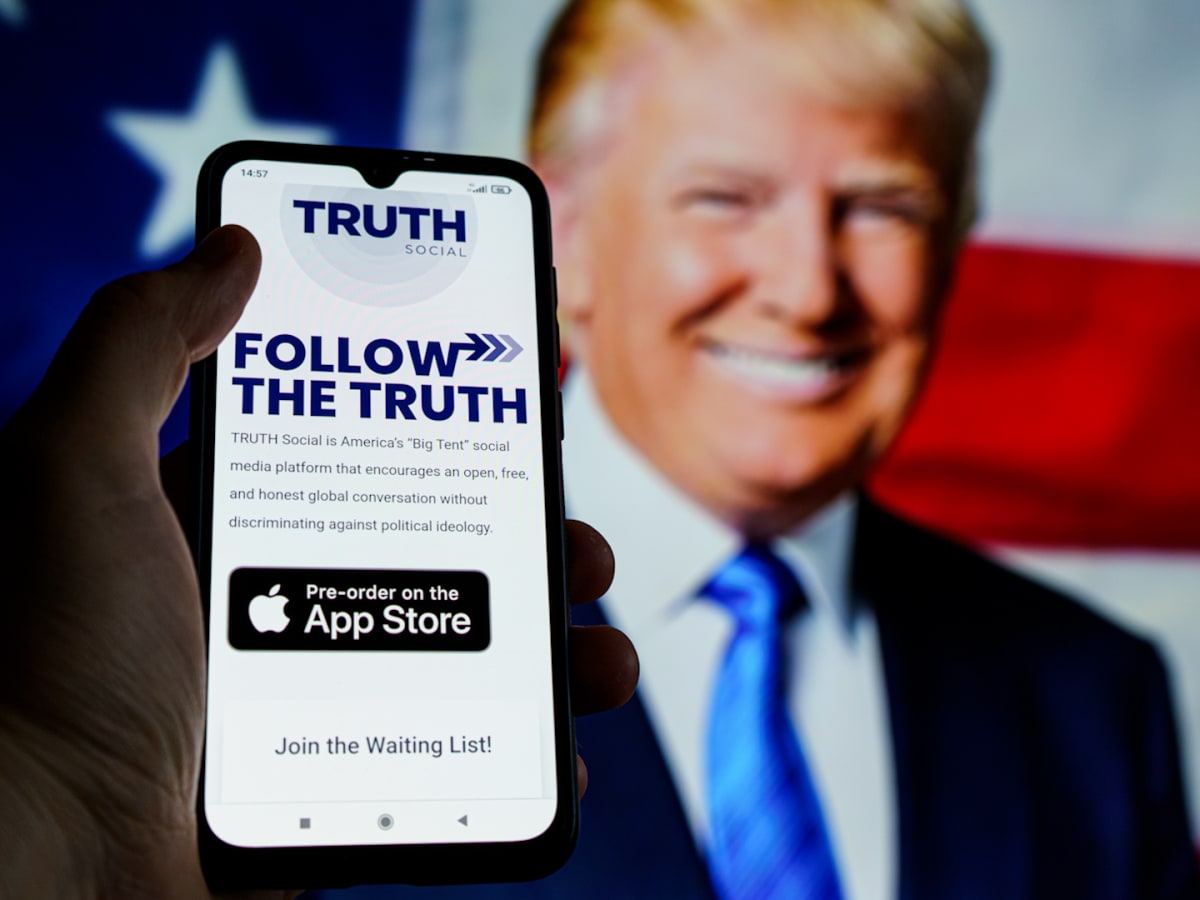
Former President Donald Trump, despite facing a myriad of legal challenges and business setbacks, witnessed a remarkable surge in his net worth, reaching unprecedented heights of over $6.5 billion on Monday, according to Bloomberg.

This surge, exceeding $4 billion in recent days, is primarily attributed to a landmark merger between Trump’s social media venture, Trump Media & Technology Group, and Digital World Acquisition Corp. (DWAC), a shell company.

The merger, which gained approval on Friday, catapulted Trump’s net worth due to his substantial ownership stake in Trump Media. Holding nearly 80 million shares, equivalent to roughly 58% ownership of the social media company operating Truth Social, Trump’s paper stock value soared to $4 billion based on DWAC’s closing price of $49.95 per share on Monday.

As a result of the merger, the newly formed entity is slated to commence trading under the ticker symbol DJT, symbolizing Trump’s significant influence on the venture. The surge in DWAC’s share price by 35% during Monday’s trading session was further propelled by a favorable legal development—a New York appeals court ruling that significantly reduced the bond requirement for Trump to avoid immediate payment of a $454 million civil fraud penalty.

Earlier in the day, Trump encountered challenges in meeting the initial $550 million bond requirement. However, the court’s decision revised the bond down to $175 million, with a 10-day grace period. Trump expressed confidence in his ability to cover the reduced bond amount, providing a boost to investor confidence.

Trump’s inclusion in the prestigious Bloomberg Billionaires Index marked a significant milestone in his financial trajectory, although uncertainties persist regarding the sustainability of his newfound wealth. Restrictions preventing Trump from selling his DWAC shares for six months, coupled with the stock’s volatile history, underscore the inherent risks associated with his investment.

Despite the surge in Trump’s net worth, concerns linger over the financial performance of his media venture. Trump Media reported revenue of less than $3.5 million in the first nine months of 2023, accompanied by a net loss of $49 million during the same period. Analysts, including MSNBC’s Stephanie Ruhle, caution that Trump’s media venture is largely perceived as a meme stock heavily reliant on his persona, which may pose challenges to its long-term viability.

Bloomberg’s estimation of Trump’s net worth relied on comprehensive assessments, including ethics disclosures mandated for presidential candidates, public filings related to his significant real estate holdings, and staff reporting. While Trump’s financial fortunes have experienced a remarkable upswing, the sustainability of his wealth remains contingent upon the resolution of legal battles and the performance of his media enterprise.

The Legends of Money As Trump Goes for $3 billion on Truth Social

Access Bank Parent Firm Partners Safaricom, M-Pesa to Facilitate Remittances in East And West Africa

0

Access Holdings, a leading multinational financial services group that offers commercial banking, lending, payments, amongst others, has partnered with Coronation Group, Safaricom and M-Pesa to facilitate remittances in East and West Africa.

This strategic partnership is led by Access Holdings Chairman Aigboje Aig-Imoukhuede, who noted that the alliance encompasses more than a convergence of capabilities, but rather signifies the fusion of collective expertise, resources, and unwavering commitment to drive financial inclusion, empowering millions throughout Africa.

Also commenting on the partnership, managing director, M-Pesa Africa Sitoyo Lopokyit said,

“African countries trade more with nations outside the continent than within themselves. Initiatives such as the African Continental Free Trade Area (AfCFTA) seek to address the lack of intra-continental trade. This partnership with Safaricom, Coronation Group and Access Holdings seeks to explore remittance corridors between East and West Africa, bringing alive the AfCFTA spirit.”

The first phase of the collaboration will concentrate on the biggest markets in East And West Africa, which include, Kenya, Nigeria, Tanzania and Ghana. Notably, this collaboration holds a significant promise, considering Africa’s substantial remittance flows, with Nigeria and Kenya emerging as primary recipients in their respective regions.

Also, the collaboration between these financial giants Access Holdings, Safaricom, and M-Pesa, is projected to enhance remittance services by leveraging their combined expertise and resources.

Access Holdings which has a presence in 14 African countries and is the largest consumer banking institution, is expected to provide technology-infused financial services and Coronation Group will bring its technology expertise to the deal.

The payment company leverages the strong suite of the Bank’s existing assets and customer base, creating a super fintech that is poised to become Africa’s most powerful business services network.

On the other hand, Safaricom’s fintech subsidiary M-Pesa is a very strong player in this alliance. The payment platform currently dominates the mobile money market in Kenya with a 96.5% share of the market.

M-Pesa has a significant presence in Kenya, with over 30 million customers, and also operates in other African countries such as Tanzania, Lesotho, Ghana, Mozambique, Egypt, and the Democratic Republic of Congo. Its customers conduct transactions worth more than $314 billion annually, with M-Pesa responsible for 60% of formal remittances in Kenya and 20% in Tanzania.

The platform has made financial services accessible to millions of people who previously lacked access to traditional banking services and has transformed how people in Africa handle their money.

Based on a 2023 report, remittances to Nigeria constituted 38% of the $58 billion remittance flows to Africa, experiencing a modest 2% growth. Meanwhile, other major recipients such as Ghana and Kenya witnessed estimated increases of 5.6% and 3.8%, respectively.

This collaboration which is subject to approval from the Kenyan financial authorities, will see the players connect more than 60 million customers and 5 million businesses across 8 countries and process more than $1 billion in a day in transaction value.