DD
MM
YYYY

PAGES

DD
MM
YYYY

spot_img

PAGES

Home Blog Page 36

OpenClaw 2.0, Cursor and the Battle for Developers

0

Technology rarely announces its revolutions with thunder. Sometimes, they arrive quietly, disguised as a version number, a partnership ending, or a post-mortem published after the applause has faded.

Yet beneath these seemingly separate events, the artificial intelligence industry is rearranging its foundations. OpenClaw 2.0 enters this restless landscape as another signal that AI is moving beyond conversation and toward agency.

The significance of a modern AI system is increasingly measured not only by the elegance of its answers, but by the work it can perform. The frontier is shifting from what machines can say to what they can actually do.

For developers, that distinction is enormous. The emerging generation of AI tools is learning to navigate repositories, manipulate software, coordinate workflows, use external tools, and participate in the construction of applications.

OpenClaw 2.0 arrives amid this accelerating movement, where AI agents are becoming less like passive assistants and more like digital collaborators.

But every new capability creates a new contest for control. The reported end of OpenAI’s Cursor partnership following a SpaceX deal adds another chapter to that contest.

In the AI economy, partnerships are rarely simple arrangements. They can determine access to models, distribution, compute, developers, data, and strategic markets. When one alliance dissolves, the industry immediately begins asking what new alignment is taking its place.

Developers have become one of AI’s most valuable territories. For years, coding assistants were treated as convenient tools sitting beside the programmer. Now they are becoming gateways into the software-development process itself.

The company that controls that gateway can influence which models developers encounter, which workflows become standard, and how deeply artificial intelligence becomes embedded in the architecture of tomorrow’s software.

The SpaceX connection makes the story even larger. As artificial intelligence reaches into rockets, robotics, communications, and industrial infrastructure.

The boundary between digital intelligence and physical ambition is becoming increasingly thin. Software is no longer merely operating inside machines; increasingly, it is helping determine what machines can become.

Then there is the Hugging Face post-mortem, a quieter but equally revealing piece of the puzzle. Post-mortems are the confessional rooms of technology. They expose assumptions that failed, decisions that proved costly, systems that broke, and lessons purchased through experience.

In an industry addicted to speed, failure is not always the enemy of progress. Sometimes it is the toll paid for reaching unfamiliar territory. OpenClaw 2.0, the reported Cursor partnership rupture.

The SpaceX deal, and the Hugging Face post-mortem describe an industry entering a more consequential phase. The central competition may no longer be simply about who builds the smartest model.

It may be about who places intelligence closest to human ambition: inside the code editor, across enterprise workflows, within autonomous agents, and eventually inside the physical machines shaping the world. AI is becoming infrastructure for creation.

And infrastructure determines who gets to build, who gets to participate, and who gets left standing outside the gates. The future is therefore not merely arriving. It is being negotiated through launches, partnerships, failures, and new alliances.

One line of code at a time, the machine is learning to reach for the world. As those hands grow steadier, the oldest question returns: who decides where artificial intelligence should lead, and where humanity remains sovereign.

When Steam Turns a Routine Flight Into an Unexpected Journey

0
Aviator game player taking strategic risks

A routine evening flight can change in an instant. On Saturday, a Eurowings aircraft traveling from Cologne, Germany, to Mallorca, Spain, made an unscheduled landing in Paris after steam was detected coming from the aircraft’s onboard galley.

What began as an ordinary journey toward the Mediterranean suddenly became a reminder of the careful vigilance that governs modern aviation. The aircraft had departed Cologne with Mallorca as its destination, carrying passengers expecting a straightforward flight to the Spanish island.

But during the journey, steam was noticed coming from the galley area. Although steam may appear harmless compared with smoke or flames, anything unusual detected inside an aircraft demands immediate attention. In aviation, uncertainty itself can become a reason to act.

Eurowings confirmed that the aircraft was diverted to Paris and landed there safely on Saturday evening. The decision illustrates one of the most fundamental principles of commercial aviation: precaution comes before convenience.

Rather than continuing toward Mallorca while an unexplained situation remained unresolved, the crew chose to land at an airport capable of providing the necessary inspection and support.

For passengers, such a diversion can transform an anticipated holiday into a moment of anxiety. Mallorca, with its beaches, warm Mediterranean waters and bustling resorts, was suddenly farther away. Paris became an unexpected waypoint, not because it was part of the itinerary, but because safety required the journey to take a different course.

The galley is an essential part of an aircraft, but it also contains electrical equipment, heating systems and other components that can generate heat. Any unusual vapor, smell or indication from that area therefore deserves investigation.

The presence of steam does not necessarily mean that a serious fire occurred, and the information released by Eurowings did not indicate that the aircraft had suffered a major emergency. Aviation procedures are designed around preventing small uncertainties from developing into larger problems.

The incident also demonstrates the importance of airports and aviation networks beyond their intended destinations. Paris was not where the passengers expected to land, yet it became the safest available place to pause the journey.

Airports function not only as gateways for planned travel but also as critical safety infrastructure when circumstances change unexpectedly.

For the passengers aboard the Eurowings flight, the experience may have been unsettling, frustrating or simply strange. A trip beginning in Cologne and bound for Mallorca instead included an unplanned stop in Paris.

Yet behind that disruption was a system built on caution, coordination and disciplined decision-making. Air travel often feels effortless precisely because thousands of procedures operate quietly in the background. When something unusual happens, those procedures suddenly become visible.

A diversion may inconvenience hundreds of people, but it can also demonstrate that aviation’s safety culture is working as intended. The aircraft’s unscheduled landing in Paris was therefore more than a change of destination.

It was a small chapter in the larger story of how modern aviation manages uncertainty. The steam in the galley interrupted the flight, but caution kept the journey from becoming something far more serious. And sometimes, in the skies, the safest journey is the one willing to take an unexpected turn.

The Strange Poetry of LinkedIn’s Professional Performance

0

There is a peculiar theatre unfolding on LinkedIn, where ambition dresses itself in polished sentences and every career milestone arrives beneath a carefully chosen photograph.

Workers may cringe at the performative enthusiasm, the endless declarations of gratitude, the humblebrags disguised as vulnerability, and what some have begun calling “grindslop”—the flood of motivational content that turns ordinary working life into an endless sermon about productivity.

And yet, they remain. LinkedIn has become the room many professionals cannot afford to leave, even when they dislike the conversation taking place inside it. The platform has become less a social network than a digital office lobby, a public résumé, a networking event that never closes its doors.

To disappear from it can feel like disappearing from the professional map. The contradiction is striking. People mock the performance while participating in it. They roll their eyes at posts beginning with dramatic lessons from mundane experiences, then carefully compose their own version of the same ritual.

A promotion becomes a leadership story. A conference becomes a reflection on growth. A difficult Monday becomes a lesson in resilience. Even failure is polished until it shines brightly enough to attract engagement.

In this strange economy of attention, authenticity itself can become a performance. The pressure is not entirely imagined.

Personal branding has become a form of professional currency. Recruiters search for talent online. Executives cultivate public identities. Freelancers depend on visibility. Founders narrate their journeys. Young workers are encouraged to build in public, demonstrate expertise and transform their knowledge into content.

The résumé tells employers what someone has done. LinkedIn increasingly tells them who that person appears to be. That distinction matters. A professional can possess extraordinary skills and still remain invisible. Another person, perhaps less accomplished, may dominate attention because they understand the language of the platform.

The digital workplace therefore rewards not only competence but communication, consistency and visibility. Now, some companies are taking the performance one step further by helping—or effectively directing—employees to create LinkedIn content.

What was once an individual’s personal space is becoming another extension of corporate communications. The employee becomes both worker and broadcaster, carrying the company’s story into their personal network.

There is something almost, and slightly unsettling, about this transformation. The modern worker does not simply perform a job. They may be expected to perform the story of having that job. The danger is that professional identity becomes increasingly manufactured.

When every employee speaks in polished corporate language, individual voices begin to blur. LinkedIn can become a landscape where everyone is enthusiastic, grateful, inspired and “excited to announce,” even when real life is considerably messier.

Yet beneath the polished surface lies a genuine human desire: to be seen. People want their work to matter. They want opportunities. They want recognition. They want their names to travel beyond the walls of their offices.

Personal branding, at its best, can give workers a microphone in an economy where attention often determines opportunity.

Perhaps the answer is not to abandon LinkedIn, but to reclaim some honesty within it.

There is room for ambition without theatre, expertise without self-congratulation and success without pretending every obstacle was a beautiful lesson. Professionalism does not require pretending to be endlessly inspired.

In the end, LinkedIn is merely a mirror of the modern workplace: ambitious, anxious, competitive and hungry for recognition. We may laugh at its polished reflections, but many of us still look into the mirror—because somewhere inside the noise, we hope someone will notice who we really are.

Gulf Stocks Fall as Warsh Revives Fed Rate-Hike Bets and Higher U.S. Yields Pressure Markets

0

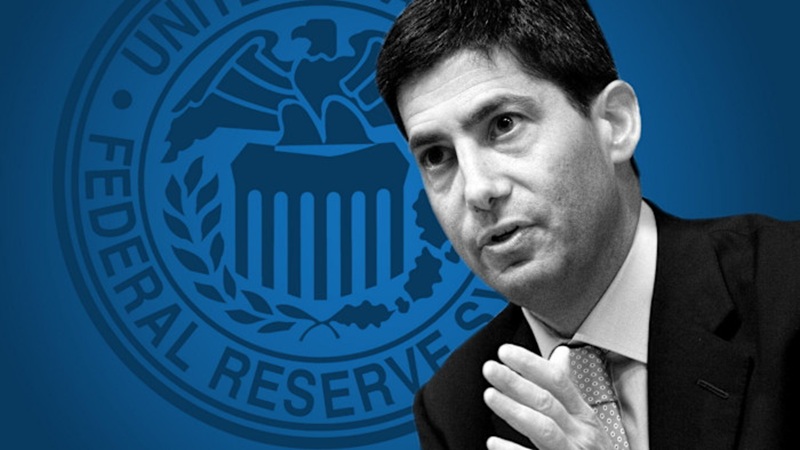
Gulf stock markets mostly closed lower on Sunday as investors turned cautious after Federal Reserve Chair Kevin Warsh signaled that U.S. interest rates may need to remain elevated to ensure inflation returns to the central bank’s 2% target.

Warsh’s comments at the Fed’s annual economic symposium in Jackson Hole prompted a sharp repricing of U.S. monetary policy expectations. He said policymakers would “have work to do” if they were not confident that underlying inflation was moving back toward 2% and indicated that financial conditions did not appear restrictive.

The comments strengthened expectations of another U.S. rate increase. Market-implied odds of a hike at the Fed’s September meeting climbed to 55.7%, from 35.4% on Thursday, according to CME Group’s FedWatch tool.

The shift is significant for Gulf markets because most regional currencies are pegged to the U.S. dollar. Gulf central banks generally have limited scope to cut or hold rates independently when the Fed is tightening, as large interest-rate differentials can put pressure on currency pegs and capital flows.

Higher U.S. yields can also make dollar-denominated bonds more attractive relative to emerging-market equities, while increasing borrowing costs for companies and households. Banks can benefit from higher interest income in some circumstances, but tighter financial conditions can eventually weigh on credit demand, asset valuations and economic activity.

Saudi Arabia’s benchmark index fell 0.7% for a second consecutive session, with most constituents ending in negative territory. Saudi Arabian Mining declined 3.3%, while Saudi National Bank, the kingdom’s largest lender by assets, lost 1.2%.

The decline also followed several sessions of gains, increasing the incentive for investors to lock in profits as the global interest-rate outlook becomes less favorable.

“The Saudi market could remain vulnerable to further downside if investors continue taking profits after several sessions of gains,” said Hani Abuagla, senior market analyst at XTB MENA.

Qatar’s benchmark index edged 0.1% lower, with financial and communications stocks weighing on the market. Doha Bank dropped 5.1%, while Commercial Bank fell 2.5%.

Energy-related stocks provided some support. Industries Qatar gained 0.6%, while Gulf International Services advanced 3.9%.

Qatar’s energy market is also being closely monitored because of continuing uncertainty around shipping through the Strait of Hormuz. QatarEnergy sold at least 7 million barrels of various Qatari crude grades through a tender during the week for October loading, according to trade sources.

The Strait remains a critical risk for Gulf markets. Roughly one-fifth of global daily oil and liquefied natural gas supplies normally pass through the waterway, meaning any deterioration in shipping conditions could quickly affect crude prices, freight costs, inflation expectations and the outlook for global interest rates.

For Gulf economies, higher oil prices present a mixed picture. They can strengthen government revenues and external balances for major hydrocarbon exporters, but a renewed energy-price shock could also keep global inflation elevated. That would make it harder for the Fed and other central banks to shift toward lower interest rates.

“Looking ahead, GCC markets are likely to remain sensitive to shipping developments in the Strait of Hormuz and any diplomatic progress,” Abuagla said. “Strong domestic fundamentals may help limit downside risks, though investor caution could persist as global bond yields rose following Warsh’s remarks, with attention now turning to the Fed’s next meeting.”

The gap between energy-sector support and tighter global financial conditions is likely to remain a defining feature of Gulf markets. Strong oil and gas revenues can cushion government finances and corporate earnings, but higher U.S. yields raise the opportunity cost of holding equities and can place pressure on valuations.

Outside the Gulf, Egypt’s blue-chip index fell 0.3%, with most shares trading lower. Commercial International Bank declined 0.8%, while Talaat Moustafa Group lost 1.3%.

Abu Qir Fertilizers and Chemical Industries was a notable exception, rising 4.8% after the company said it had expanded ammonia production capacity and reduced natural-gas consumption.

The broader regional move shows how quickly Gulf equities can respond to changes in U.S. monetary-policy expectations. With currency regimes closely linked to the dollar, investors are now balancing three competing forces: the prospect of higher-for-longer U.S. interest rates, the earnings and fiscal support provided by energy markets, and the geopolitical risks surrounding the Strait of Hormuz.

Why I Think Gaming Platforms Are Changing How We Build Digital Infrastructure

0

I’ve been watching how entertainment platforms handle massive user loads for years now, and honestly, I keep coming back to one thing: they’re solving problems most tech companies haven’t even noticed yet. Gaming sites process about 847 transactions per second during peak hours. That’s not just impressive engineering.

When I started looking at how platforms like RexBet manage real-time data across different regions, I realized they’re basically running distributed systems that would make most fintech companies jealous. We’re talking about systems that can’t go down, can’t lose data, and can’t show different users conflicting information. Ever.

What I Learned From Watching These Systems Scale

Gaming platforms aren’t just handling transactions, they’re managing user sessions across 12 different time zones while processing payment rails that connect to 47 different banking systems and maintaining sub-200ms response times.

In my experience building APIs for e-commerce, we celebrated when we hit 99.5% uptime. Gaming platforms? They’re running at 99.97% because anything less means they’re literally losing money every second. That’s roughly $23,000 per hour for a mid-sized operation.

You start to see patterns. Real ones.

The Infrastructure Nobody Talks About

I noticed something weird about 8 months ago. Gaming platforms were adopting edge computing before half the SaaS companies I know even understood what it meant. A user in Toronto can’t wait 340ms for a server in Virginia to respond. They’ll leave.

So what did they do? Built content delivery networks where every static asset, every game state, and every user preference gets cached within 50 miles of where you’re sitting. I’ve tested from coffee shops in 6 different states.

And the database architecture? I’ve worked with PostgreSQL for 9 years. What gaming platforms do with data replication and consistency makes my old implementations look like toy projects. They’re running multi-region writes without conflicts, which is basically the holy grail of distributed databases.

What All This Means For Everyone Else

I think we’re about to see gaming tech spread everywhere. Banking apps that actually work instantly. E-commerce checkouts that don’t freeze. Streaming services that never buffer.

Most companies won’t build infrastructure like gaming platforms themselves because they can’t. You need teams of 30+ engineers who understand distributed systems, real-time data processing, and regulatory compliance across different jurisdictions. I know maybe 4 companies outside of gaming that have talent like that in-house.

So they’ll probably license what gaming platforms already built.

I’ve been testing different platforms to see who’s actually implementing these ideas versus just talking about them. The difference is obvious once you know what to look for. Response times don’t lie. Neither do error logs.

What’s funny is that platforms focused on entertainment figured out infrastructure problems that “serious” enterprise companies are still struggling with. Maybe because they had to. Maybe because their users are way less forgiving than business software users. When someone’s trying to place a bet at 8:47pm on a Sunday, that button better work.