DD
MM
YYYY

PAGES

DD
MM
YYYY

spot_img

PAGES

Home Blog Page 3600

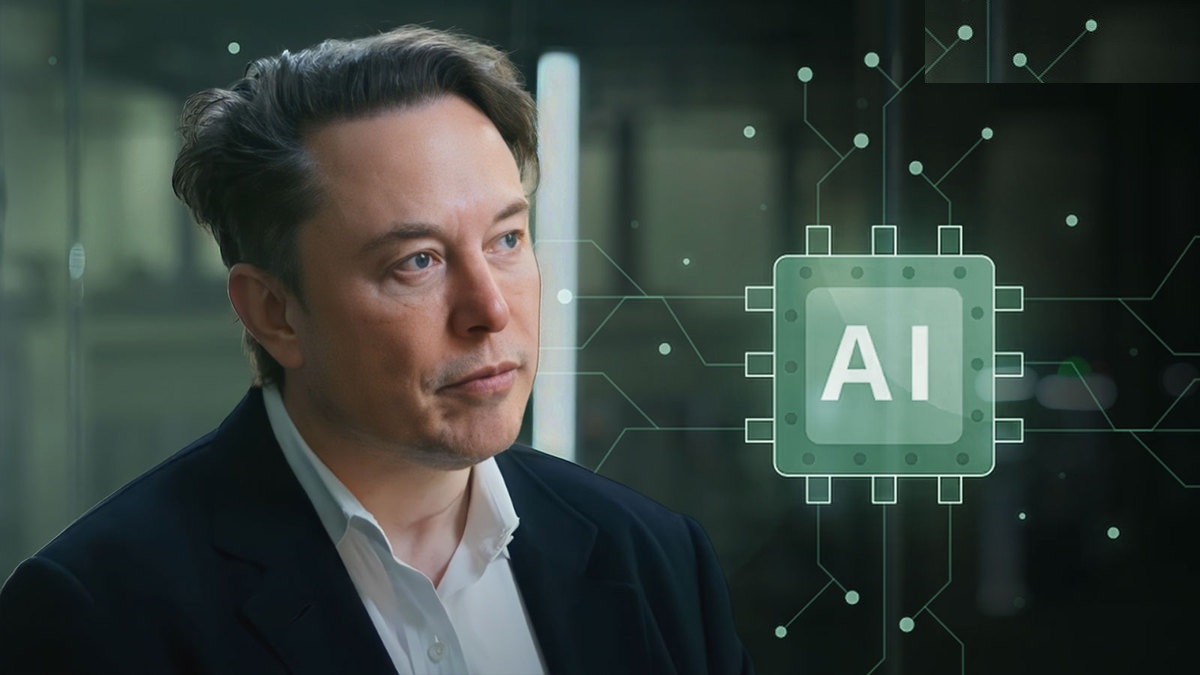
AI will surpass the intelligence of any human being by 2029 – Musk

0

In a recent conversation, Elon Musk, the visionary behind SpaceX and Twitter CEO, has once again ignited a firestorm of debate and speculation regarding the future of artificial intelligence (AI). 

Musk boldly proclaimed that by 2025, AI will surpass the intelligence of any human being, and by 2029, it will surpass all of humanity. These provocative statements, made in response to a discussion on a Joe Rogan podcast episode, have sent shockwaves through the technological and philosophical communities alike.

The tweet in question referenced a segment from a recent Joe Rogan Experience episode featuring an interview with futurist Ray Kurzweil. The conversation between Kurzweil and Rogan delved into the intricate history and potential future of AI, specifically focusing on its comparison to human intelligence.

Musk’s assertions didn’t stop with a mere tweet. During a riveting discussion with British Prime Minister Rishi Sunak at the AI Safety Summit, Musk elaborated on his vision for the future of AI on a global scale. He emphasized that AI represents “the most disruptive force in history,” painting a picture of a future where AI capabilities surpass those of the most brilliant human minds.

“We will have for the first time something that is smarter than the smartest human… there will come a point where no job is needed. You can have a job if you wanted to have a job for personal satisfaction. But the AI will be able to do everything,” Musk explained passionately to Sunak.

He noted the rapid advancement of AI capabilities and the challenges it poses for governance and adaptation.

“The pace of AI is faster than any technology I have seen in history by far. And it seems to be growing in capability by at least fivefold, perhaps tenfold, per year… and the government isn’t used to moving at that speed,” said Musk.

The concepts of artificial general intelligence (AGI) and its implications dominated the discourse between Musk, Kurzweil, and other experts. AGI, unlike the AIs commonly encountered today, such as chatbots or large language models, is envisioned to possess human-like cognitive abilities and efficiencies, without the need for rest or sustenance.

The rise of AGI signals a monumental shift in the technological landscape, with experts debating its potential for both awe-inspiring innovation and existential risk. Most agree that AGI, once achieved, would quickly outstrip the intellectual capacity of even the brightest human minds and potentially reshape the very fabric of society.

Sam Altman, cofounder and CEO of OpenAI, expressed his belief that AGI could be the most powerful technology humanity has ever created. 

“If you think about the cost of intelligence and its equality, the cost falling, the quality increasing by a lot, and what people can do with that, it’s a very different world,” Altman remarked to Time Magazine, highlighting the transformative potential of AGI.

Whether one shares Musk’s ambitious timeline or holds a more conservative view, the consensus among experts is clear: we stand on the brink of a new era in which artificial intelligence may surpass humanity’s wildest imaginations. As the world grapples with the profound implications of this impending reality, one thing remains certain: the future of AI promises to be as fascinating as it is uncertain. 

Apple moves to integrate Google’ Gemini AI into iPhone features

0

Apple’s strategic focus on Artificial Intelligence (AI) development has taken a new turn as reports suggest a potential collaboration with Google to integrate the Gemini AI model into iPhone features.

This shift follows Apple’s suspension of its self-driving car ambitions, indicating a redirection of efforts toward AI innovation. Despite Apple’s own efforts in AI development, the company is exploring partnerships to catch up with competitors like OpenAI, Microsoft, Anthropic, and Google.

According to Bloomberg, Apple is in discussions with Google to license its AI technology, specifically the Gemini AI model, to introduce AI-powered features in iOS updates later this year. This move underscores Apple’s commitment to enhancing user experience through AI-driven functionalities. Additionally, Apple has explored partnerships with OpenAI, reflecting the company’s efforts to leverage cutting-edge AI technologies.

Apple’s CEO, Tim Cook, confirmed the forthcoming integration of Gen-AI features, signaling the company’s determination to stay competitive in the emerging AI industry. While Apple has been developing internal tools powered by generative AI, the consideration of third-party AI technologies highlights the need to expedite progress in AI implementation.

Challenges and Opportunities in AI Collaboration

Google’s Gemini AI model, despite facing setbacks such as historical inaccuracies in image generation, presents significant potential for smartphone-related features. Google’s existing partnerships, including collaborations with Samsung for the Galaxy S24 series, demonstrate its capability to integrate AI functionalities seamlessly into mobile devices.

The potential collaboration between Apple and Google raises questions about the branding and implementation of Google’s AI technology in Apple’s ecosystem. While Apple has existing agreements with Google, concerns about monopolistic practices and market dominance have surfaced, particularly regarding the default search engine arrangement.

The company’s longstanding partnership with Google for default search engine provision has come under regulatory scrutiny, reflecting broader concerns about market dominance. A potential expansion of this partnership into the AI domain could attract further regulatory attention.

However, if the partnership between Apple and Google materializes, it could extend the reach of Google’s AI tools to over 2 billion iPhones globally. However, Bloomberg suggests that such a collaboration might signify Apple’s acknowledgment of its AI technology lagging behind competitors.

Reports indicate internal testing of Apple’s in-house chatbot, Apple GPT, and the development of a large language model codenamed Ajax. Nonetheless, Apple’s AI advancements reportedly trail those of its rivals.

The timing of any potential announcement regarding the AI collaboration remains uncertain, with speculation pointing towards the Worldwide Developer Conference (WWDC) in June as a possible venue.

Despite the anticipation surrounding this partnership, Apple’s strategic shift towards AI development underscores the company’s commitment to innovation and enhancing user experiences.

The Cupertino giant’s decision to pivot towards collaborative AI development with Google marks a pivotal juncture in its technological trajectory. By leveraging external expertise and forging strategic alliances, Apple aims to bolster its AI capabilities and deliver enhanced experiences to its vast user base.

Apple’s endeavors in this domain are expected to shape the future of mobile technology and user interactions. While challenges and uncertainties persist, the pursuit of AI advancements is seen as part of the company’s commitment to maintaining its competitive edge in the tech industry.

From LinkedIn

Apple is in “active negotiations” to license and build Google’s Gemini artificial intelligence models into the iPhone in updates this year, Bloomberg reports, citing anonymous sources. The deal — dubbed a “blockbuster agreement that would shake up the AI industry” — would put Google’s AI in a commanding position with billions of users, but risks a significant escalation of antitrust scrutiny for both companies. It could also signal Apple may not be as advanced in its AI efforts as some might have hoped. Apple recently held discussions with OpenAI too, the sources said.

  • The generative AI features in question would be baked into Siri and other apps, per Bloomberg. Apple has been testing its own large language model since early last year, but its AI technology remains inferior to tools from rivals, the sources said.
  • Meanwhile, Apple’s CarPlay has become its “only hope of seriously cracking the automotive market” now that the company has shut down its electric vehicle project.

Beyond Binance: Why Nigeria Must Conclude The Case Fast, and Move On, As Binance Is Not Naira’s Problem

0

The game of chess has started as Binance responds to Nigeria: “According to data provided by Binance to the ONSA [Office of National Security Adviser], Nigerian trading volume on the platform in 2023 alone amounted to $21.6 million.” Note “million”, not “billion”.

Recall that Nigeria had noted that about $26 billion was moved via Binance from Nigeria (I assume lifetime data). Binance was founded in 2017. If you take the average, you should be getting $4.3 billion per year. But Binance said it did only $21.6M in 2023!

“We are concerned that certain practices go on that indicate flows, going through a number of these entities and suspicious flows. In the case of Binance, in the last year, $26 billion has passed through Binance Nigeria from sources and users who we cannot identify” –   Governor of Central Bank of Nigeria, Olayemi Cardoso.

Good People, it does seem like the only way is for Binance to produce the data requested since the numbers are totally out of sync. As that happens, no one should be deceived that Binance is Naira’s problem. Since they disconnected Naira in their ecosystem, Naira has not returned to N600/$.

Yes, Binance obey the law of the land, and for Nigeria, do your thing and move on, because Binance was not the reason why Naira is fading. Binance still operates in other markets across Africa and their currencies have not collapsed.

Partly, the reason Naira has been fading was on display in the National Assembly when senators padded the budget, making it clear that we wasted the 2023 electoral cycle when we thought it could bring a reset on governance at the federal level. Until we fix those demons, the Naira will continue to fade, Binance or no Binance.

Court orders Binance to turn in users’ data to Nigerian govt. as experts warn of economic consequences

Court orders Binance to turn in users’ data to Nigeria as experts warn of economic consequences

0

The Abuja Division of the Federal High Court has made a significant decision in the ongoing investigation into alleged money laundering and terrorism financing activities on Binance, a prominent cryptocurrency exchange platform.

The presiding judge, Justice Emeka Nwite, granted an interim order compelling Binance Holdings Limited to furnish the Economic and Financial Crimes Commission (EFCC) with comprehensive data on all Nigerian traders using its platform.

“The applicant’s application dated and filed 29th February, 2024, is hereby granted as prayed. That an order of this honourable court is hereby made directing the operators of Binance to provide the commission with comprehensive data/information relating to all persons from Nigeria trading on its platform,” the judge ordered.

This order, issued following an ex parte motion moved by the EFCC’s legal representative, Ekele Iheanacho, aims to provide crucial information to the anti-graft agency for its investigation. The ex parte motion marked FHC/ABJ/CS/259/2024 was brought pursuant to Sections 6(b), (h), (I), 7(1), (a)(2), and 38 of the Economic and Financial Crimes Establishment Act, 2004 and Section 15 of the Money Laundering (Prevention and Prohibition) Act, 2022 (as amended) and the inherent powers of the court.

Justice Nwite’s ruling mandates Binance to disclose detailed information on Nigerian users trading on its platform.

This development comes in the wake of an affidavit filed by Hamma Bello, an EFCC operative attached to the Special Investigation Team (SIT) of the commission, which operates under the Office of the National Security Adviser (ONSA). According to Bello’s deposition, intelligence received by the SIT indicated illicit activities, including money laundering and terrorism financing, being carried out on the Binance platform.

“The team uncovered users who have been using the platform for price discovery, confirmation, and market manipulation, which has caused tremendous distortions in the market, resulting in the Naira losing its values against other currencies,” stated Bello.

Bello further disclosed that Binance had been notified of these issues and was urged to cooperate with the investigation by delisting the Naira and providing detailed information on Nigerian users’ activities. According to data provided by Binance to the ONSA, Nigerian trading volume on the platform in 2023 alone amounted to $21.6 million.

Bello emphasized the urgency and public significance of the matter, stating that the data requested would facilitate the commission’s investigative efforts. He argued that granting the application was crucial for the interests of justice, as denying it would significantly impede the commission’s investigation.

Last week, the Federal Government sought an extension of the detention of two Binance officials, Tigran Gambaryan and Nadeem Anjarwalla, who have been held since their arrest about two weeks.

This move has attracted criticism from various quarters, including Bright Johnson, a Lagos-based tech analyst specializing in cryptocurrency growth.

Speaking at a press conference in Lagos on Friday, he criticized the apparent targeting of crypto exchanges by Nigerian authorities, suggesting they are being made scapegoats for the recent devaluation of the naira against the US dollar and the country’s soaring inflation rate, which has surpassed 20 percent.

He argued that targeting cryptocurrency exchanges like Binance and detaining their executives could undermine the government’s efforts to address economic challenges such as inflation and currency devaluation.

“The real leverage the government holds is not the detainment of two foreign nationals, but rather the immense appeal of Nigeria as Africa’s largest and leading economy. The simple fact is that crypto businesses want to operate in the Nigerian market because of its economic importance and until recently, its relatively amenable policies toward crypto adoption by both individuals and businesses.

“Crypto exchanges are not the cause of Nigeria’s economic and inflation woes; this stems from more deeply entrenched policy challenges, global headwinds impacting commodity prices, and other macroeconomic factors beyond the control of any single company. Blaming Binance and seeking to penalize it with dramatic actions like the detention creates an adversarial climate that will deter investment rather than encourage productive engagement,” he said.

M-Pesa Celebrates 17 Years: How The Sub-Saharan Africa Fintech is Revolutionizing Financial Inclusion in Kenya And Beyond

0

M-Pesa, a Kenyan-based mobile money payments and transfer service, celebrates 17 years in operation since its launch in March 2007.

The Safaricom PLC-owned solution, which began in Kenya as a mobile money service, has grown into Africa’s leading all-in-one fintech platform, offering everything from merchant services to savings and loans, which has revolutionized financial inclusion in Kenya and beyond.

Since the launch of M-PESA which was designed to enable remittances, the fintech has revolutionized various aspects of the Kenyan economy transforming the way people conduct financial transactions and access financial services.

This has seen the fintech gain widespread adoption in Kenya, with 96% of households in the East African country having at least one M-Pesa account.

M-Pesa was developed to transform the way that money is managed and transferred by the average consumer. The strategy the company deployed to achieve this objective rested on the following pillars:

1. Scale (customers and money volume) – the success of M-Pesa rested on the company’s ability to generate a sufficient foundation of users due to the network effect. This was due to not only ensure the future growth of the user base but also to attract enough 3rd-party agents to execute operationally.

2. Low cost to the user – Given the low-income levels of the typical customer and the relatively low ticket sizes of money transfers, a low

transaction cost was critical for adoption to be achieved. The company’s ability to employ such competitive rates rested on this success in driving volume.

3. Product simplicity – With the typical consumer uneducated about certain core banking products, Mpesa had to roll out a simple standardized product to bypass several barriers.

With regard to financial inclusion, M-Pesa has played a pivotal role by providing a convenient and accessible mobile money platform, which has enabled millions of Kenyans, including those in remote and underserved areas, to access formal financial services.

Through the platform, it has empowered individuals to save, send and receive money, pay bills, and access credit, thereby enhancing their economic resilience and opportunities.

Moreover, Mesa has fueled entrepreneurship and economic growth in Kenya. The platform has facilitated the growth of small businesses by providing them with a reliable and efficient means of accepting payments and managing their finances.

It has also fostered innovation and entrepreneurship in the digital economy, with numerous startups and businesses leveraging its infrastructure to create innovative solutions and services.

Additionally, Mpesa has contributed to the efficiency of the Kenyan economy by reducing transaction costs and improving the speed and convenience of financial transactions. This has facilitated trade and commerce, supported supply chains, and boosted overall economic productivity. An analysis by the World Bank found that since its launch in 2007, the fintech platform has contributed 2 percent to Kenya’s GDP, and has created over 185,000 jobs in Kenya.

The company has recorded impressive milestones so far which include;

•Serving 7 African countries such as Kenya, Tanzania, Mozambique, DR Congo, Lesotho, Ethiopia, and Ghana.

•It has grown to over 51 million customers, and 970k+ merchants on its platform, recording $1 billion transacted daily, from 150 million daily transactions

•Also, M-Pesa has recorded $4 billion in annual cross-border transactions, with $6 billion in annual credit disbursed.

Despite its remarkable performance, M-Pesa has continued to be incredibly successful, rolling out and upgrading new features, with no signs of slowing down. With its strategic expansion into new regions, the fintech company is poised to play a pivotal role in enhancing financial inclusion and helping nations overcome economic barriers.