DD
MM
YYYY

PAGES

DD
MM
YYYY

spot_img

PAGES

Home Blog Page 3601

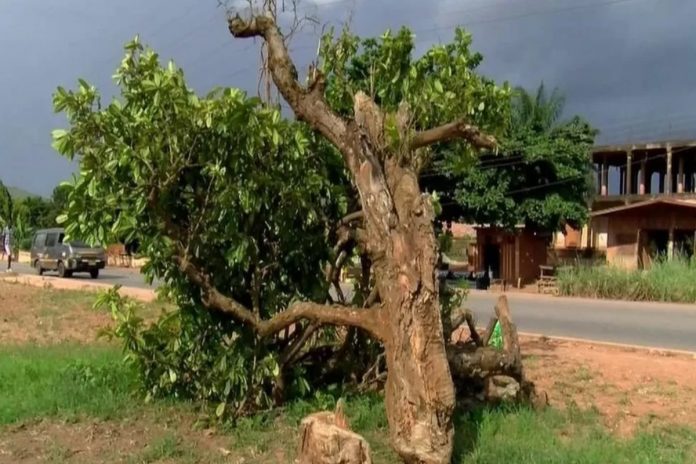
The Fallen 300-Year-Old Tree in Ghana and the Physics of African Culture

1

It was a major news story on BBC Newshour on Monday. Yes, someone had chopped down a famous 300-year-old kola tree in Ghana. Many Ghananians especially in the town of Feyiase were outraged because this tree was like a deity with mystical and healing powers. You cannot write the history of the legendary Ashanti Kingdom without mentioning this tree, indicating the treasured nature of this tree.

Who might have chopped it? And for what?

If you lived in the village as I did, you might have encountered young men who wanted to test their new belief by challenging and demonstrating that the gods are not indeed capable of defending themselves. Yes, they will go to the village stream to harvest fishes (abominations!) or draw water from streams with basins violently, when you are expected to gently scoop the water with small native bowls.

I was a member of my secondary school Scripture Union and we were part of the “anointed ones”, baptized and protected by the Blood. But going into a shallow freshwater village stream to kill fishes made no sense. I felt there was a Physics in the ordinance passed by the elders, despite anything the gods or norms or beliefs might have held.

In Ovim, while the Tantuta Ugwunta stream has an ordinance of not to fish therein, the Iyinta Obayi banned both fishing and using large buckets to scoop water. Examining the two streams, Tantuta flows from a higher level to a lower one which means there was no need to restrict on the scooping method since if you stir the lower level, it would not affect the source of the freshwater. But when you go to Ide (a bigger water body), all those rules vanish, allowing you to fish and do whatever you want!

Indeed, if you fish in shallow village streams, you will distort a source of drinking water, causing problems for the whole village. If you use a large bucket to scoop the water, you will distort its flow and it will take time to settle in slow flowing streams. So, to stop people from doing those things, norms are invented, scaring people. And most times, it was a tradition which has emerged as a means for people to preserve a way of living, and not necessarily connected to any absolute deity. So, when you kill those fishes, you may not be annoying any god; you are simply a stupid person who does not want people to have clean water!

People, do not chop native trees. Some of those trees may be the only survival herbs which have medicinal value. When people boil their leaves, they get better, and due to that villagers will come together to protect them. That tradition is passed from generation to generation. You do not need to destroy them just to prove your new faith because doing that is stupidity since most of the time, there is really nothing religious about them! 

It is all part of the physics of African culture; if they had invented a way of writing to chronicle them, you may be studying for a PhD to master them.

(Sure, some trees, fishes, etc have powers. Do not try)

Crypto.com Joins the World Economic Forum, ERC-4337 Account Abstraction on FuseBox

0

Crypto.com, one of the leading platforms for buying, selling and trading cryptocurrencies, has announced that it has joined the World Economic Forum (WEF) as a partner. The WEF is an international organization that brings together leaders from business, government, civil society and academia to shape global, regional and industry agendas. Crypto.com will collaborate with the WEF on various initiatives related to blockchain, digital assets and financial inclusion.

According to a press release, Crypto.com will contribute its expertise and insights to the WEF’s Global Future Council on Cryptocurrencies, which is co-chaired by Meltem Demirors, Chief Strategy Officer of CoinShares, and Sheila Warren, Head of Blockchain and Data Policy at the WEF. The council aims to provide a vision for how cryptocurrency can improve the lives of billions of people, while addressing the challenges and risks posed by this emerging technology.

Crypto.com will also participate in the WEF’s Centre for the Fourth Industrial Revolution (C4IR) Network, which is a global hub for multi-stakeholder cooperation on the governance and policy of new technologies. The C4IR Network works on various projects related to blockchain, digital identity, data policy, artificial intelligence, drones, internet of things and autonomous vehicles.

Kris Marszalek, Co-Founder and CEO of Crypto.com, said: “We are honored to join the World Economic Forum as a partner. We share the WEF’s vision of using technology for good and creating a more inclusive and sustainable world. We look forward to working with the WEF and its network of partners to advance the adoption and innovation of blockchain and cryptocurrencies.”

The partnership with the WEF is another milestone for Crypto.com, which has been growing rapidly in the past year. The platform now has over 10 million users worldwide and offers a range of products and services, including a crypto app, a Visa card, an exchange, a DeFi wallet, a lending platform and an NFT marketplace. Crypto.com also recently launched a $200 million fund to invest in crypto startups and projects.

ERC-4337 Account Abstraction on FuseBox

If you are a developer who wants to build decentralized applications (dApps) on Ethereum, you might have encountered some challenges with the current account model. For example, you have to deal with complex gas management, user experience issues, and security risks. Wouldn’t it be nice if you could abstract away these details and focus on your core logic?

That’s where ERC-4337 comes in. ERC-4337 is a standard for account abstraction that allows dApps to pay for their users’ transactions, while giving users full control over their accounts. With ERC-4337, you can create accounts that are smart contracts, and use them to interact with any other contract on the network. This opens up a whole new world of possibilities for dApp development.

But how do you implement ERC-4337 in practice? That’s where FuseBox comes in. FuseBox is a framework that makes it easy to create and use ERC-4337 accounts. With FuseBox, you can:

Generate ERC-4337 accounts on the fly, without deploying any code. Use a simple API to send transactions from your accounts, without worrying about gas fees or signatures. Customize your accounts with hooks and plugins, to add features like meta-transactions, recovery mechanisms, or access control. Integrate your accounts with any existing contract or protocol, without modifying them.

ERC-4337 Account Abstraction is a proposed Ethereum improvement that aims to simplify the user experience of interacting with smart contracts. It allows users to delegate the responsibility of paying gas fees and signing transactions to a third-party service provider, called a sponsor. This way, users can use any wallet or application that supports ERC-4337 without having to worry about the technical details of the Ethereum network.

One of the main barriers to mass adoption of Ethereum and DApps is the complexity and friction of using them. Users have to deal with concepts such as gas fees, gas price, gas limit, nonce, transaction hash, private keys, public keys, signatures, etc. These are unfamiliar and confusing for most people, especially those who are used to traditional web or mobile applications.

Moreover, users have to manage their own funds and keys, which exposes them to the risk of losing access or being hacked. They also have to constantly monitor the network conditions and adjust their gas fees accordingly, which can be costly and time-consuming.

ERC-4337 Account Abstraction aims to solve these problems by abstracting away the low-level details of the Ethereum protocol and providing a more user-friendly interface for interacting with DApps. It enables users to delegate the tasks of paying gas fees and signing transactions to a sponsor, who acts as a proxy between the user and the network.

ERC-4337 Account Abstraction offers several benefits for both users and developers of DApps:

For users, it simplifies the user experience and reduces the cognitive load of using DApps. Users do not need to understand or care about gas fees, signatures, keys, etc. They can simply use any wallet or application that supports ERC-4337 and enjoy a seamless and consistent experience across different DApps.

For developers, it lowers the barrier to entry and increases the reach of DApps. Developers do not need to implement their own custom solutions for handling gas fees and signatures, which can be complex and error prone. They can leverage existing standards and tools that support ERC-4337 and focus on building their core features and logic. They can also attract more users who may otherwise be deterred by the complexity and friction of using DApps.

For sponsors, it creates new business opportunities and incentives for providing value-added services to users and developers. Sponsors can charge fees for their services, such as subsidizing gas costs, providing faster confirmations, offering better security, etc. They can also differentiate themselves by offering various features and options for users and developers to choose from.

ERC-4337 Account Abstraction is not without its challenges and trade-offs. Some of the main ones are:

For users, it introduces a new dependency and trust assumption on the sponsor. Users have to rely on the sponsor to pay gas fees and sign transactions on their behalf. This means that users have to trust that the sponsor will not act maliciously or negligently, such as censoring transactions, stealing funds, compromising privacy, etc. Users also have to accept the terms and conditions of the sponsor, which may vary depending on the service level and quality.

For developers, it requires some changes and adaptations to their existing codebase and infrastructure. Developers have to update their smart contracts to support ERC-4337 Account Abstraction, which may involve some redesign and refactoring. They also have to integrate with different sponsors and handle potential errors or failures from their side.

For sponsors, it imposes new technical and operational challenges and risks. Sponsors have to implement a robust and scalable system that can handle a large number of transactions from different users and DApps. They also have to manage their own funds and keys, which exposes them to the risk of losing access or being hacked. They also have to comply with any legal or regulatory requirements that may apply to their services.

ERC-4337 Account Abstraction is a promising Ethereum improvement that aims to simplify the user experience of interacting with smart contracts. It allows users to delegate the responsibility of paying gas fees and signing transactions to a third-party service provider, called a sponsor. This way, users can use any wallet or application that supports ERC-4337 without having to worry about the technical details of the Ethereum network.

However, ERC-4337 Account Abstraction also comes with its own challenges and trade-offs, such as introducing a new dependency and trust assumption on the sponsor, requiring some changes and adaptations from developers, and imposing new technical and operational challenges and risks for sponsors.

FuseBox is designed to be flexible, modular, and extensible. You can use it as a standalone library, or as a plugin for popular frameworks like Hardhat or Truffle. You can also mix and match different components of FuseBox, depending on your needs.

How ERC-4337 works and why it is useful. What is the difference between ERC-4337 and other standards. How to install and configure FuseBox. How to create and use ERC-4337 accounts with FuseBox. How to customize your accounts with hooks and plugins. How to integrate your accounts with other contracts and protocols.

Implications of Indonesia $100m solar farm on its Digital Economy

0

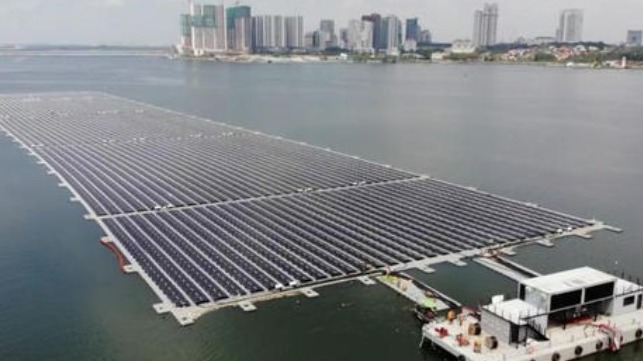
Indonesia has recently inaugurated a $100 million floating solar farm, the largest in Southeast Asia and the third biggest in the world. The Cirata floating solar farm, located on a 200-hectare reservoir in West Java, has a capacity of 192 MW peak and is expected to generate 300 GWh/year of clean electricity.

This solar farm is located in Pidie Jaya Regency, Aceh, and occupies an area of 200 hectares. The project is part of the government’s efforts to increase the use of renewable energy and reduce dependence on fossil fuels. This project is a significant milestone for Indonesia’s transition to renewable energy and its economic development.

The Cirata floating solar farm is a collaboration between Indonesia’s state-owned electricity company PLN and Masdar, a renewable energy company based in Abu Dhabi. The project was financed by Sumitomo Mitsui Banking Corporation, Societe Generale and Standard Chartered. The solar farm consists of 340,000 panels that can supply electricity to 50,000 households in the Cirata area. The project is also planned to be expanded to 500 MW peak in the future.

The inauguration of the Cirata floating solar farm aligns with Indonesia’s commitment to achieve net-zero emissions by 2060 and net-zero power sector emissions by 2050. Indonesia has set a target to increase its renewable energy mix to 23% by 2025, although it faces challenges due to the Covid-19 pandemic and its reliance on fossil fuels. Indonesia is also trying to position itself as a key player in the electric vehicle market as the world’s largest producer of nickel, a crucial component of lithium-ion batteries.

The Cirata floating solar farm has several implications for Indonesia’s economy and digital economy. First, it can reduce Indonesia’s dependence on fossil fuels and imported energy, which can lower its energy costs and improve its energy security. Second, it can create jobs and income for the local communities, especially in the construction, operation and maintenance of the solar farm.

Third, it can support Indonesia’s digital transformation by providing reliable and affordable electricity for various sectors, such as e-commerce, fintech, education and health. Fourth, it can enhance Indonesia’s reputation as a leader in renewable energy and attract more foreign investment and collaboration in this field.

The Cirata floating solar farm is a remarkable achievement for Indonesia’s renewable energy sector and its economic development. It can have positive impacts on Indonesia’s economy and digital economy by reducing its carbon footprint, lowering its energy costs, creating jobs and income, supporting its digital transformation and enhancing its international image.

Indonesia unveils $100m solar farm.

This solar farm was built by private company PT Sky Energy Indonesia, at a cost of about $100 million. The project received support from the Ministry of Energy and Mineral Resources, the Ministry of Environment and Forestry, and the Government of Aceh. The solar farm is expected to provide electricity to around 70,000 households in Aceh and surrounding areas.

According to the Minister of Energy and Mineral Resources, Arifin Tasrif, this solar farm is one of the concrete steps to achieve the renewable energy mix target of 23% by 2025. Currently, the contribution of renewable energy in Indonesia is only around 12%. “We hope this project can be an example and inspiration for other regions in Indonesia to develop their renewable energy potential,” Arifin said in his speech.

Meanwhile, President Director of PT Sky Energy Indonesia, Budi Santoso, said that this solar farm uses efficient and environmentally friendly photovoltaic (PV) solar panel technology. “This PV technology can convert sunlight directly into electricity, without requiring additional fuel or producing greenhouse gas emissions. In addition, this technology is also durable and easy to maintain,” said Budi.

This solar farm is also equipped with a battery energy storage system (BESS) that can store electricity generated during the day and flow it at night or during cloudy weather. Thus, this solar farm can operate stably and continuously for 24 hours. However, Indonesia also faces several challenges in its transition to renewable energy. Some of these challenges are:

Land use conflicts: Acquiring land for renewable energy projects is a complex and lengthy process that involves multiple government agencies and stakeholders. Land governance is fragmented and often lacks transparency and accountability. Land disputes can arise between project developers and existing land users, especially in forest areas where land tenure is unclear or contested.

Grid integration: Indonesia’s power grid is low quality and unreliable, with frequent blackouts and voltage fluctuations. Integrating variable renewable energy sources such as solar and wind requires grid modernization, automation and digitalization, as well as adequate transmission and distribution infrastructure. These investments are costly and require coordination among different actors in the power sector.

Policy uncertainty: Indonesia’s renewable energy policy framework is still evolving and subject to frequent changes. Renewable energy tariffs are often set below cost-recovery levels, making them unattractive for private investors. Coal and fuel subsidies distort the market and create unfair competition for renewable energy sources. Regulatory barriers and bureaucratic hurdles hamper the implementation of renewable energy projects.

Financing gaps: Renewable energy projects face high financing costs due to perceived risks, lack of bankability and limited access to capital markets. There is a need for innovative financing schemes that can mobilize private sector investment, such as green bonds, blended finance and public-private partnerships. There is also a need for capacity building and awareness raising among financial institutions, project developers and consumers.

This solar farm was inaugurated by President Joko Widodo via video conference from the State Palace. The President expressed his appreciation for this project and invited the public to support the development of renewable energy in Indonesia. “Renewable energy is our future. Renewable energy is clean, cheap, and sustainable energy. Let’s use the natural resources we have for the welfare of the people and environmental sustainability,” said the President.

Poloniex Exchange hacked for over $100 Million

0

In a major blow to the cryptocurrency industry, Poloniex, a leading exchange platform founded by Tron’s Justin Sun, has suffered a massive security breach that resulted in the loss of over $100 million worth of digital assets. The hack, which occurred on November 14, 2023, was confirmed by Poloniex in an official statement posted on its website and social media channels.

According to the statement, the hackers exploited a vulnerability in the exchange’s hot wallet system, which stores a small portion of the funds online for faster transactions. The hackers were able to access and transfer out over 20,000 bitcoins (BTC), 10,000 Ethereum (ETH), 5,000 Tron (TRX), and other tokens from the hot wallet to various unknown addresses. The exchange said that it has notified the relevant authorities and is working with them to track down the perpetrators and recover the stolen funds.

Poloniex also assured its customers that their funds are safe and that the exchange will cover the losses from its own reserves. The exchange said that it has temporarily suspended all deposits and withdrawals until further notice, and that it is conducting a thorough security audit to prevent any similar incidents in the future. Poloniex apologized for the inconvenience and urged its users to remain calm and patient.

The hack is one of the largest and most devastating in the history of cryptocurrency exchanges, surpassing the infamous Mt. Gox hack of 2014, which resulted in the loss of 850,000 bitcoins (worth about $450 million at the time). The hack also raises serious questions about the security and reliability of centralized exchanges, which have been repeatedly targeted by hackers and cybercriminals over the years.

The hack also casts a shadow over Tron founder Justin Sun, who acquired Poloniex in October 2019 from Circle, a US-based fintech company. Sun, who is known for his controversial and flamboyant marketing tactics, has been promoting Poloniex as a flagship platform for his own cryptocurrency, TRX, as well as other projects under his umbrella, such as BitTorrent and Steemit. Sun has not yet commented on the hack publicly, but some critics have accused him of negligence and mismanagement.

Justin Sun is one of the most prominent figures in the cryptocurrency industry. He is the founder of Tron, a blockchain platform that aims to create a decentralized internet and entertainment system. Tron has a native token called TRX, which is used to power various applications and transactions on the network.

But before Tron, Sun was involved in another crypto project that had a significant impact on the industry. He was the chief representative of Ripple in China, a company that provides cross-border payment solutions using its own cryptocurrency, XRP. Sun joined Ripple in 2014 and helped establish partnerships with major Chinese banks and financial institutions. He also promoted Ripple’s vision of creating an internet of value, where money can move as fast and cheaply as information.

Sun left Ripple in 2016 to launch his own project, Tron. He claimed that Tron would be a better version of Ethereum, the leading smart contract platform in the crypto space. He also said that Tron would surpass Bitcoin in terms of scalability, security, and efficiency. Sun raised $70 million in an initial coin offering (ICO) in 2017, attracting thousands of investors and supporters.

However, Sun’s previous crypto precedence also brought him some controversies and criticisms. Some accused him of plagiarizing the whitepapers of other projects, such as Filecoin and IPFS. Others questioned his marketing tactics and hype strategies, which often involved making bold claims and announcements without delivering on them. Sun also faced legal issues, such as being sued by former employees for harassment and violence and being investigated by Chinese authorities for illegal fundraising and money laundering.

Despite these challenges, Sun has managed to keep Tron relevant and competitive in the crypto market. He has acquired several platforms and companies, such as BitTorrent, Steemit, and Poloniex, to expand Tron’s ecosystem and user base.

He has also launched several initiatives and programs, such as the Tron Foundation, the Tron Accelerator, and the Sun Network, to support developers and entrepreneurs who want to build on Tron. He has also engaged with influential figures and celebrities, such as Warren Buffett, Kobe Bryant, and Lindsay Lohan, to promote Tron and crypto adoption.

Sun’s previous crypto precedence shows that he is a visionary and ambitious leader who wants to make a difference in the world. He is also a controversial and polarizing figure who faces many challenges and criticisms. Whether he can achieve his goals and overcome his obstacles remains to be seen.

The hack is likely to have a negative impact on the cryptocurrency market as a whole, as it erodes investor confidence and trust in the industry. The prices of major cryptocurrencies, including BTC, ETH, and TRX, have dropped sharply following the news of the hack, wiping out billions of dollars in market capitalization. The hack also highlights the need for more regulation and oversight in the cryptocurrency space, as well as the adoption of more secure and decentralized alternatives to centralized exchanges.

HMD To Launch First Phone In April 2024

0

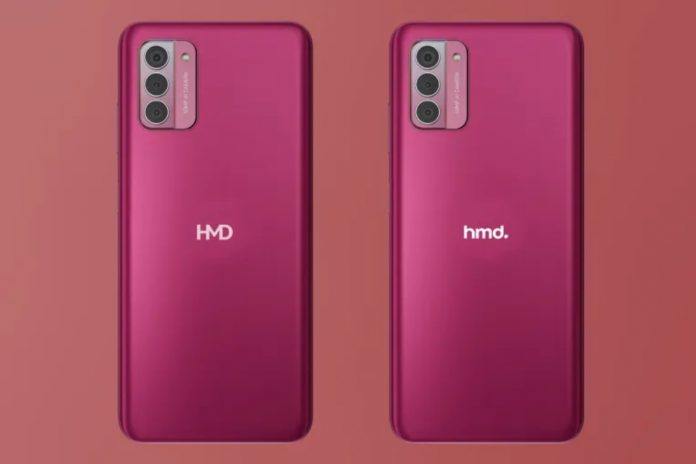
HMD Global, the company behind the Nokia brand, has announced that it will launch its first smartphone in April 2024. The device, which has not been named yet, will be the first to run on HMD’s own operating system, called HMD OS.

HMD Global was founded in 2016 and acquired the rights to use the Nokia brand for mobile devices. Since then, it has launched several Nokia-branded phones, mostly in the low-end and mid-range segments. The company has also revived some of the iconic Nokia models, such as the 3310 and the 8110.

However, HMD has not been able to compete with the likes of Samsung, Apple and Huawei in the high-end segment. With its first smartphone and its own operating system, HMD hopes to change that and establish itself as a major player in the industry.

HMD OS is based on Linux and promises to offer a fast, secure and user-friendly experience. HMD says that its OS will support a wide range of apps and services, including popular ones like WhatsApp, Instagram and Spotify. HMD also claims that its OS will have better privacy and security features than other platforms, such as end-to-end encryption, biometric authentication and automatic updates.

One of the main differences between HMD OS and other operating systems like Android and iOS is that HMD OS is not tied to any specific hardware or software vendor. This means that HMD can customize its OS to suit its own devices and offer more flexibility and choice to its customers. HMD also says that its OS will be compatible with existing Android apps and will allow users to switch between HMD OS and Android easily.

Another benefit of HMD OS is that it will be compatible with existing Android apps and will allow users to switch between HMD OS and Android easily. HMD says that its OS will use a virtual machine to run Android apps without compromising the performance or security of the device. Users will also be able to access the Google Play Store and other Android services if they wish.

HMD says that its OS will not collect or share any personal information without the user’s consent. HMD also says that its OS will use advanced encryption techniques to protect the user’s data from hackers and malicious actors. HMD’s Chief Privacy Officer, explains:

“We take privacy very seriously at HMD. Our OS is designed to give users full control over their data and how it is used. We do not collect or share any personal data without the user’s permission. We also use state-of-the-art encryption methods to ensure that the user’s data is safe and secure at all times.”

The smartphone will be powered by a Qualcomm Snapdragon 888 processor, which is one of the most powerful chips available in the market. It will also have a 6.7-inch OLED display with a 120Hz refresh rate, a 108-megapixel rear camera with optical zoom and a 32-megapixel selfie camera. The battery capacity will be 5000 mAh, which should last for a full day of usage. The phone will also support wireless charging and reverse wireless charging.

HMD says that its smartphone will be priced competitively and will be available in several markets around the world. The company hopes that its smartphone will attract customers who are looking for a premium device with a unique operating system. HMD also plans to launch more devices running on HMD OS in the future, including tablets, smartwatches and smart TVs.