DD
MM
YYYY

PAGES

DD
MM
YYYY

spot_img

PAGES

Home Blog Page 3611

The Payment Privacy Act, Self-custody Crypto Bill, Grupo Cuscatlán Payments

0

In a surprising move, US Congressman, Warren Davidson has announced that he is working on a new bill that would protect the privacy of online payments and promote the adoption of Bitcoin. The bill, dubbed the Payment Privacy Act, would prevent the government and other third parties from accessing or collecting information about users’ online transactions, such as their identities, locations, amounts, and purposes.
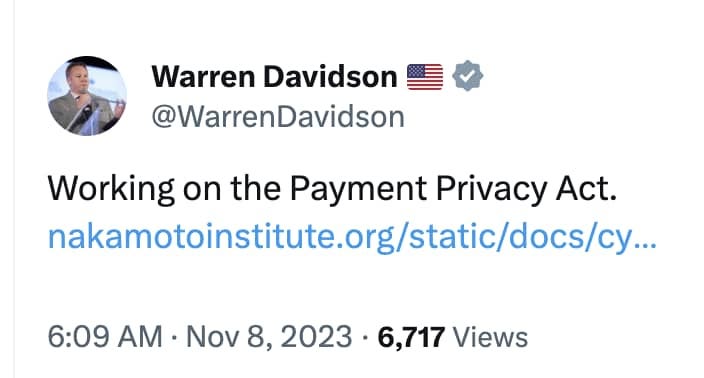
The Congressman said that he was inspired by the Nakamoto Institute, a research organization dedicated to advancing the ideas of Bitcoin creator Satoshi Nakamoto. He shared a link to the institute’s website, where he said he learned about the benefits of Bitcoin as a decentralized, censorship-resistant, and sound money system.

“I believe that privacy is a fundamental human right, and that online payments should be no exception. The Payment Privacy Act would ensure that Americans can use the internet to transact freely and securely, without fear of surveillance or interference. It would also encourage the innovation and adoption of Bitcoin, which is the most secure, transparent, and democratic form of money ever created,” he said in a statement.

The Congressman added that he hopes to introduce the bill in the next session of Congress, and that he welcomes feedback and support from his colleagues and constituents. He said that he believes that the Payment Privacy Act would benefit not only individual users, but also businesses, charities, and the economy as a whole.

“This bill is not only about protecting privacy, but also about promoting prosperity. By allowing people to use Bitcoin as a medium of exchange, store of value, and unit of account, we can unleash the full potential of this revolutionary technology. Bitcoin is not only a currency, but also a network, a protocol, and a platform for innovation. It can enable new forms of commerce, governance, and social interaction that are more efficient, fair, and inclusive than ever before,” he said.

US Congressman Tom Emmer has launched a scathing attack on SEC Chair Gary Gensler, accusing him of being ineffective and incompetent in regulating the crypto industry. In a blog post published on his official website, Emmer said that Gensler’s lack of clarity and leadership has created uncertainty and confusion for innovators and investors in the digital asset space.

Emmer argued that Gensler’s approach to crypto regulation is based on outdated and rigid frameworks that do not reflect the dynamic and evolving nature of the technology. He also criticized Gensler for ignoring the calls from Congress and the industry for a balanced and collaborative regulatory framework that fosters innovation and protects consumers.

Emmer said that Gensler’s failure to provide clear guidance and rules has left the US behind other countries that have embraced crypto and blockchain as a source of economic growth and opportunity. He urged Gensler to listen to the voices of the stakeholders and work with them to create a regulatory environment that supports the development and adoption of crypto in the US.

US Senator Ted Budd introduces bill to protect the right to self-custody Bitcoin and crypto.

In a major development for the crypto industry, US Senator Ted Budd has introduced a bill that aims to protect the right of individuals to self-custody their own digital assets. The bill, titled the “Financial Technology Protection Act of 2023”, would prohibit any federal agency from requiring individuals to use a third-party custodian or intermediary to access or control their own crypto assets.

The bill also establishes a FinTech Leadership in Innovation and Financial Intelligence Program, which would provide grants and incentives for research and development of blockchain and other financial technologies. The program would also support efforts to combat illicit use of crypto and enhance national security.

Senator Budd, who is a member of the Senate Banking Committee and the co-chair of the Congressional Blockchain Caucus, said that the bill is a response to the growing demand for crypto and the need to protect the rights and privacy of users.

“Crypto is not only a revolutionary technology, but also a powerful tool for financial inclusion and empowerment. Millions of Americans are using crypto to store their wealth, make payments, access financial services, and participate in the digital economy. They deserve to have the freedom and security to self-custody their own assets, without fear of government interference or coercion,” he said.

He added that the bill also recognizes the importance of innovation and leadership in the FinTech sector, and the potential of blockchain and other technologies to enhance efficiency, transparency, and security in the financial system.

“The US cannot afford to fall behind in the global race for FinTech innovation and adoption. We need to foster a regulatory environment that supports innovation and protects consumers, while also addressing the national security challenges posed by malicious actors who abuse crypto for illicit purposes. This bill will help achieve these goals and ensure that the US remains at the forefront of the FinTech revolution,” he said.

The bill has been referred to the Senate Banking Committee for further consideration. It has also received support from several industry groups and advocates, such as the Blockchain Association, Coin Center, and the Chamber of Digital Commerce.

Grupo Cuscatlán in El Salvador now accepts Bitcoin Payments

In a major milestone for the adoption of Bitcoin in El Salvador, the second-largest distributor of consumer goods in the country has announced that it will accept Bitcoin payments for its products and services. The company, Grupo Cuscatlán, operates in various sectors, including food, beverages, personal care, household items, and pharmaceuticals. The company has over 2,000 employees and more than 500 distribution points across El Salvador.

Grupo Cuscatlán said that it decided to embrace Bitcoin as a way to support the government’s initiative to make the cryptocurrency legal tender, as well as to offer more convenience and choice to its customers. The company has partnered with OpenNode, a Bitcoin payment processor, to enable fast and secure transactions using the Lightning Network. Customers can pay with Bitcoin using their Chivo wallet or any other compatible wallet.

The company’s CEO, Carlos Hernández, said that he believes that Bitcoin will bring many benefits to El Salvador’s economy and society, such as financial inclusion, innovation, and entrepreneurship. He also said that he hopes that other businesses will follow Grupo Cuscatlán’s example and adopt Bitcoin as a payment option.

This news comes after El Salvador became the first country in the world to make Bitcoin legal tender on September 7, 2021. The move was met with mixed reactions from the international community and the local population. Some praised it as a bold and visionary step, while others criticized it as risky and irresponsible. The implementation of the law also faced some technical and logistical challenges, such as network outages, protests, and legal disputes.

However, despite the difficulties and controversies, El Salvador’s experiment with Bitcoin is still ongoing and attracting attention from other countries and regions that are interested in exploring the potential of the cryptocurrency. According to President Nayib Bukele, more than 2.1 million Salvadorans are using the Chivo wallet, which represents about 32% of the population. He also claimed that Bitcoin transactions have saved the country $400 million in remittance fees.

What are the challenges and opportunities of using bitcoin in El Salvador?

The adoption of bitcoin in El Salvador has been met with mixed reactions from different stakeholders. On one hand, some supporters of the initiative have praised it as a bold and innovative step that could empower millions of people and transform the country’s economy.

They argue that bitcoin offers a more democratic, transparent, and efficient alternative to the traditional financial system, which is often plagued by instability, inflation, and exclusion. They also point out that bitcoin could help El Salvador diversify its sources of income and reduce its reliance on foreign aid and debt.

On the other hand, some critics of the initiative have raised concerns about its feasibility, legality, and impact. They contend that bitcoin is too volatile, risky, and complex to serve as a reliable medium of exchange or store of value. They also question the readiness of the country’s infrastructure, regulation, and education to support such a radical change.

They warn that bitcoin could expose El Salvador to money laundering, tax evasion, cyberattacks, and sanctions from international institutions and partners. They also fear that bitcoin could undermine the country’s monetary sovereignty and fiscal policy.

The implications for the future of cryptocurrency and financial inclusion?

The adoption of bitcoin in El Salvador is a historic experiment that could have significant consequences for the global cryptocurrency market and the broader financial system. Depending on its outcome, it could either inspire or discourage other countries to follow suit or adopt their own digital currencies. It could also influence the development and regulation of cryptocurrency technology and innovation around the world.

Moreover, the adoption of bitcoin in El Salvador could have important implications for financial inclusion and development. It could either expand or limit the access and opportunities of millions of people who are currently excluded or underserved by the formal financial sector. It could also either enhance or erode their financial literacy, security, and rights.

Ultimately, the success or failure of El Salvador’s crypto drive will depend on how well it addresses the needs and expectations of its people and stakeholders, as well as how it adapts to the challenges and opportunities that arise along the way.

It remains to be seen how Bitcoin will impact El Salvador’s economy and society in the long term, but for now, it seems that more and more businesses and individuals are willing to give it a try. Grupo Cuscatlán’s announcement is a clear sign that Bitcoin is gaining traction and legitimacy in the country, and that it may soon become a common and accepted way of paying for goods and services.

African Development Bank Allocates $1.5 Billion to Promote Food Processing, Export Across Africa

0

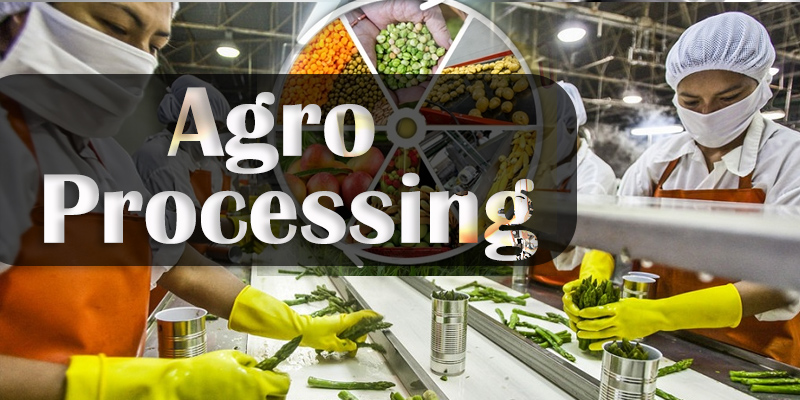
The President of the African Development Bank (AfDB), Dr. Akinwumi Adesina, announced at the 2023 Africa Investment Forum (AIF) Market Place in Marrakesh, Morocco, that the bank has provided $1.5 billion to support the export of value-added agricultural products through the Special Agro-Industrial Processing Zones (SAPZs) initiative.

The announcement was made during the inauguration of the Alliance for SAPZs.

Adesina emphasized the importance of Africa moving away from the export of raw agricultural commodities and focusing on exporting value-added products. He stated that SAPZs play a crucial role in providing the necessary infrastructure to support agro-industrial development in Africa.

“Africa must end the export of raw agricultural commodities. We must recognize that the fastest way to poverty is via the export of raw commodities, while the highway to wealth is from the export of value-added products,” he said.

“And that is why SAPZs are important. They provide critical infrastructure to support agro-industrial development in Africa.”

The partners in the Alliance for SAPZs include the Islamic Development Bank, the International Fund for Agricultural Development, the Arab Bank for Economic Development, the European Union, and the Korean Export-Import Bank. The collective effort of these partners has mobilized $1.5 billion in support of establishing 25 SAPZs in 11 African countries.

To further expand SAPZs across the continent and leverage the Africa Continental Free Trade Area (AfCFTA), Adesina emphasized the need for countries to scale up resources, partnerships, and alliances. He expressed excitement about the growing number of partners joining forces to rapidly scale up SAPZs across Africa.

The Alliance aims to mobilize at least $2 billion in financing and investment commitments from its members and partners over the next five years. Achieving this goal will lead to an additional 15 to 20 SAPZ projects in various countries across the continent.

“The Alliance will raise funds through various investment windows for project preparation, project development and construction, and financing for tenant companies,” Adeshina said.

The AfDB president announced last week at the Norman E. Borlaug Dialogue organized by the World Food Prize Foundation, that Africa’s food and agricultural industry is projected to be worth an estimated $1 trillion by 2030. This underscores the AfDB’s push to bolster food production and export in the continent.

During the inauguration of the SAPZs, partners pledged an additional commitment of about $3 billion to support the initiative. The SAPZs’ initiative is seen as a strategic move to enhance agricultural value chains, promote industrialization, and contribute to economic development in Africa.

Tackling the challenges

Despite efforts by the AfDB and stakeholders to promote the SAPZs initiative, several challenges have stood in the way. Dr. Benedict Oramah, the President of the African Export-Import Bank (Afreximbank), highlighted political instability in Africa as a significant obstacle to funding major projects, including those related to agro-industrial development. He emphasized the need for the development of comprehensive project financing ideas and proposals for the continent.

Oramah also pointed out that budgetary constraints are a primary obstacle to facilitating financing and project implementation. He stressed the importance of resource allocation and suggested the establishment of continental regulations that countries should respect. Additionally, he emphasized the significance of justice for initiatives beneficial for business.

While there is a commitment from partners to support the SAPZs initiative with an additional pledge of about $3 billion, addressing political instability and budgetary constraints remains crucial for the successful implementation of projects aimed at promoting agricultural value chains and industrialization in Africa.

Moody’s Lowers Outlook on U.S. Debt to “Negative” Amid Rising Economic Concerns

0

In a move that underscores growing concerns about the global economic and political landscape, Moody’s Investors Service announced on Friday that it has downgraded its outlook on the U.S. government’s debt from “stable” to “negative.”

This decision was attributed to the combination of escalating interest rates and heightened political polarization within Congress.

While Moody’s retained its top triple-A credit rating on U.S. government debt, it is the last of the three major credit rating agencies to do so. Fitch Ratings had previously lowered its rating to AA+ from AAA in August, and Standard & Poor’s downgraded the U.S. in 2011. The shift to a negative outlook, however, raises the risk that Moody’s could eventually strip its triple-A rating from the U.S.

The implications of a lower credit rating are substantial. A reduced rating could lead to increased interest rates on Treasury bills and notes, potentially impacting taxpayers. The yield on the 10-year Treasury has surged from about 3.9% to 4.6% since July, a sharp increase that some market analysts attribute in part to the August Fitch downgrade.

“In the context of higher interest rates, without effective fiscal policy measures to reduce government spending or increase revenues, Moody’s expects that the U.S.’s fiscal deficits will remain very large, significantly weakening debt affordability,” Moody’s stated in a release.

The Biden administration pushed back against Moody’s decision, pointing at the strength of the American economy.

“While the statement by Moody’s maintains the United States’ Aaa rating, we disagree with the shift to a negative outlook,” Deputy Treasury Secretary Wally Adeyemo said. “The American economy remains strong, and Treasury securities are the world’s preeminent safe and liquid asset.”

However, Moody’s cited concerns about congressional dysfunction as one of the reasons for the downgrade in outlook. As lawmakers left Washington for the weekend, there was no clear plan to avoid a potential government shutdown by Nov. 17.

Moody’s highlighted recent events, including debt limit brinkmanship and political turmoil, as indicators of the deepening political divisions in the U.S.

“Recently, multiple events have illustrated the depth of political divisions in the U.S.: Renewed debt limit brinkmanship, the first ouster of a House Speaker in U.S. history, prolonged inability of Congress to select a new House Speaker, and increased threats of another partial government shutdown,” Moody’s said.

The federal government’s budget deficit surged to $1.7 trillion in the budget year that ended on Sept. 30, up from $1.38 trillion the previous year. Analysts warn that with interest rates on the rise, interest costs on the national debt could consume a growing share of tax revenue.

Even though the move by Moody’s does not automatically downgrade America’s creditworthiness, it heightens the possibility. The prospect of a U.S. downgrade could have ripple effects, potentially impacting Americans’ investment portfolios, making borrowing more expensive, and increasing the cost for the government to service its debts.

Working in America Where Subordinates Can Earn More Than Supervisors

1

At Tekedia Institute, my lectures have been focusing on Personal Economy and Global Workplaces.  Let’s discuss compensation and how it varies across economies and markets,

Compensation is a mirage in America because it could be convoluted. Yes, you can be a supervisor, big boss, and “Oga”, and the person reporting to you is making more money than you! Unlike in Corporate Nigeria where titles/levels correlate with earning, in America, anything is possible!

In the semiconductor industry, they can hire you as a new PhD graduate, and your role is to “supervise” design legends, with some logging decades of experience.  You “manage” them, “review” them and set  deadlines for them, but do not be deceived, you are an “ofeke boss”. Some earn 3x whatever you make. And if one is a Technical Fellow, you could be “managing” someone who earns 8x your take-home.

How does that happen? America pays for value added, not titles, they say. The design legend you “manage” delivers more value than you the manager. It is like an Athletic Director in a university who hires a coach and can fire a coach, but the coach can make 10x what that Director takes home! Of course, in Southern America, the highest paid people in universities are not the presidents (i.e. vice chancellors) but football coaches (Alabama’s coaching legend Nick Saban takes home $11.41M yearly, the athletic director, his boss, may be taking home around $1M).

As we evaluate workplaces, Nigeria makes them simpler: in a bank, once you move a level, you earn what everyone at that level is earning. In the US, there is nothing like that. Both could be doing the same thing but the other colleague is going home at 2x your rate. 

Here is my message: put efforts as you negotiate those range-based compensations of  $25 – $120 per hour, knowing that someone could be paid $120 per hour when you are offered $30 per hour.

Comment on Feed

Comment 1: I once had a former colleague who had issues with this because he was earning lower than a subordinate.??. It’s actually painful if you are the one affected, but funny if you are not.

Although some Nigeria HRMs intentionally do this because of favouritism and not because of value added.

My Response: In Nigeria, you manage that by asking to be put in the right level. In the US, you can be in that level but still be paid lower. Levels typically correlate with pay scale in Nigeria; in the US, not.

How To Build A Professional Webinality | Tekedia Mini-MBA

0

Join us today at Tekedia Mini-MBA as we examine how to build professional webinality (web+personality). Yes, in this social media age, to ascend professionally, you need to find a creative way for people to know what you think you know. If you know it and keep it to yourself, you stall. But if you make it possible for others to know, wings will emerge to carry you up, because the zenith of all careers happens when people could recommend you in your absence.

Good People, you must build your professional webinality!

Tekedia Mini-MBA is an innovation management 12-week program, optimized for business execution and growth, with digital operational overlay. It runs 100% online. The theme is Innovation, Growth & Digital Execution – Techniques for Building Category-King Companies. All contents are self-paced, recorded and archived which means participants do not have to be at any scheduled time to consume contents.

Besides, programs are designed for ALL sectors, from fintech to construction, healthcare to manufacturing, agriculture to real estate, etc. And we have 3 LIVE Zoom sessions weekly, anchored by business executives you admre. It is the #best school.

Go here and register for the next edition. We’re rated 5 stars, Excellent and Amazing. Cost is N90,000 or $170 for the 12-week program.