
DD
MM
YYYY

PAGES

DD
MM
YYYY

spot_img

PAGES

Home Blog Page 3614

Tuna chain Facilitates Native Yield for Bitcoin, as Jito Labs Ends Mempool Functionality on Solana

0

In the dynamic world of cryptocurrency, the integration of Tuna chain within the Bitcoin ecosystem marks a significant advancement. This innovative approach facilitates a native yield generation mechanism that enhances the liquidity and stability of Bitcoin investments.

By leveraging the inherent features of Tuna chain, users can now seamlessly participate in yield farming activities, thereby contributing to a more robust and decentralized financial landscape. The strategic collaboration between Tuna chain and Bitcoin is poised to redefine yield generation methodologies, offering a promising avenue for sustainable growth in the crypto domain.

The Tuna chain operates on a decentralized finance (DeFi) platform designed to optimize Bitcoin’s liquidity and yield potential without compromising on security. By leveraging smart contract technology, the Tuna chain provides a seamless mechanism for Bitcoin investors to participate in yield farming activities natively within the Bitcoin ecosystem.

This integration of DeFi strategies with Bitcoin’s robust network opens up new avenues for investors seeking to maximize returns on their digital assets. The Tuna chain’s approach addresses the common challenges faced by Bitcoin holders, such as limited access to yield-generating opportunities and the complexities associated with managing multiple blockchain assets.

Through its user-friendly interface, the Tuna chain simplifies the process of yield farming for Bitcoin enthusiasts. It offers a range of tools and services that enable users to stake their Bitcoin holdings directly on the platform, thus earning native yields without needing to convert their assets into other cryptocurrencies.

Moreover, the Tuna chain emphasizes transparency and trustworthiness, two critical factors in the DeFi space. It ensures that all transactions and yield generation processes are verifiable on the blockchain, providing users with peace of mind regarding the safety and legitimacy of their investments.

In conclusion, the Tuna chain represents a significant step forward in bridging the gap between traditional Bitcoin holding strategies and the dynamic world of DeFi. Its ability to facilitate native yield generation for Bitcoin not only enhances the asset’s utility but also strengthens its position as a viable investment option in the diverse cryptocurrency market.

The integration of Tuna chain within the Bitcoin ecosystem presents a novel approach to enhancing yield generation for native assets. This innovative mechanism leverages the inherent strengths of Bitcoin’s security and liquidity, while introducing a decentralized finance (DeFi) construct that facilitates additional earning potentials for Bitcoin holders.

By enabling a seamless yield generation process, Tuna chain attracts both individual and institutional participants, fostering a more inclusive financial environment. The implications of such an integration are far-reaching, potentially influencing Bitcoin’s volatility, market dynamics, and overall perception as a viable investment vehicle.

Moreover, the Tuna chain’s impact extends beyond financial gains; it underscores the versatility of Bitcoin as a foundational layer for various financial instruments and services. As the DeFi sector continues to mature, the synergy between Tuna chain and Bitcoin could set a precedent for future blockchain-based yield generation models.

In the rapidly evolving world of cryptocurrency, innovative solutions are constantly being sought to enhance yield generation and asset management. One such novel concept is the ‘Tuna chain,’ which aims to facilitate native yield for Bitcoin holders.

Jito Labs ends mempool functionality on Solana

Jito Labs, a prominent player in the blockchain infrastructure space, has announced the termination of its mempool functionality. This decision was made after careful consideration of the impact on Solana users. The mempool, an integral part of transaction processing, was found to affect network performance and user experience negatively.

The mempool, or memory pool, serves as a holding area for transactions that are waiting to be confirmed and recorded on the blockchain. However, this system has been identified as a bottleneck, contributing to delays and increased transaction fees during peak usage times.

In a detailed blog post, Jito Labs outlined the reasons behind this significant change. The company emphasized its commitment to providing high-quality service and ensuring that its offerings align with user needs and network efficiency.

The discontinuation of the mempool functionality is expected to alleviate some of the congestion issues faced by Solana users. Jito Labs reassured its users that it would continue to explore alternative solutions to enhance transaction processing without compromising on speed or reliability.

As part of their ongoing efforts to optimize network performance, Jito Labs is engaging with the Solana community and other stakeholders. They are actively seeking feedback and suggestions on how to best serve the ecosystem while maintaining a seamless user experience.

By eliminating the mempool, Solana aims to introduce a more direct and immediate transaction confirmation method. This change is expected to enhance the user experience by reducing wait times and lowering costs associated with transactions.

As Solana continues to evolve and adapt its infrastructure, this development marks a significant step towards addressing scalability concerns and improving overall network performance. Users can look forward to a more seamless interaction with Solana’s blockchain, fostering greater adoption and trust in the platform.

The discontinuation of the mempool within the Solana network is a strategic move aimed at addressing the root cause of congestion issues that users have encountered. The mempool, which operates as a waiting area for unconfirmed transactions, has been increasingly recognized as a major factor contributing to network bottlenecks.

This decision to phase out the mempool comes after careful consideration of its role and impact on the network’s efficiency. The presence of a mempool can lead to transaction delays and higher fees, especially during times of high demand. By removing this component, Solana is paving the way for a more direct transaction confirmation process, which is expected to result in faster and more cost-effective transactions for users.

The elimination of the mempool is part of Solana’s broader initiative to enhance scalability and performance. This change reflects Solana’s commitment to continuous improvement and innovation, ensuring that its blockchain remains competitive and responsive to user needs.

Jito Labs’ decision reflects a broader industry trend towards more sustainable and user-centric blockchain infrastructure solutions. It also highlights the importance of continuous adaptation and improvement in the fast-evolving blockchain landscape.

Nigeria’s Economic Crunch: Government has Digitized Revenue Streams to Combat Leakages – Finance Minister

0

Wale Edun, the Minister of Finance and Coordinating Minister of the Economy, has revealed that the Nigerian government has undertaken a comprehensive restructuring of its revenue streams in a bid to boost revenue and economic growth.

This overhaul, he disclosed during a podcast hosted by Bruit Costaud in collaboration with Ballard Partners of the United States of America, aims to address longstanding challenges of leakages and inefficiencies in revenue collection.

“We no longer wait for reconciliation with revenue generating agencies and Government Owned Enterprises (GOEs) as was the practice in the past. Instead, we now deduct automatically from source to plug leakages,” Edun said, outlining the government’s proactive approach.

Drawing parallels with President Tinubu’s successful revenue reforms in Lagos, Edun emphasized the application of digitalization and advanced technology to enhance monitoring and collection efficiency at the federal level. He highlighted the seamless, automated, and digital process implemented by the government to ensure timely revenue capture without the need for subsequent reconciliation.

“There has been an application of technology to make sure that what is due to the federal government, particularly from its various revenue-earning agencies and companies and enterprises is now not taken based on compliance or not taken at the end of the year.

“Each day now, a federal government enterprise earns revenue, government checks, and immediately it takes it seamlessly, automatically, and digitally. So there is no issue of there may be a discussion later as to let us reconcile and so forth.

“But what we did is we looked at the rules, the regulations, the guidelines, the Fiscal Responsibility Act and so forth. And then we looked at the percentage exactly due to government without waiting for whether there is a surplus or not, and so forth.

He explained that “This transformative approach ensures that the federal government receives its due revenue from agencies and enterprises on a daily basis, without reliance on year-end reconciliations. By adhering to existing rules, regulations, and guidelines, we have streamlined revenue collection, promoting fiscal responsibility and accountability.”

The minister’s revelations mark a departure from previous perceptions of revenue generation practices, debunking notions of widespread malpractice and non-compliance with the provisions of the Fiscal Responsibility Act (FRA, 2007) as well as the subsequent amendment in the 2020 Finance Act.

Furthermore, Edun outlined efforts to revolutionize tax administration in Nigeria, emphasizing the importance of enhancing efficiency and eliminating wastage without resorting to tax hikes. He underscored the significance of two key policies—removing petroleum subsidies and unifying the exchange rate of the Naira—as integral components of the government’s economic stabilization program.

Highlighting tangible progress, Edun cited an increase in daily oil production and the cessation of unsustainable petroleum subsidies, which had previously posed significant financial challenges.

He stated that before the current reforms by Tinubu’s administration, “there was no longer revenue coming from the all-important oil company, NNPCL.

“Rather, there was a payment of the unsustainable petroleum subsidy that was costing $10 billion a year.

“That was costing two per cent of GDP. That threatened the very finances of the federal government, and linked to that was the foreign exchange subsidy where the arrangements for putting foreign exchange into the economy were lopsided and were inefficient and lacked transparency and created tremendous arbitage and rent-seeking.”

He commended President Tinubu’s decisive actions in restoring government revenues and curbing illicit practices in the petroleum sector.

“So, Mr. President removed those two subsidies and by taking those steps, he saved the Nigerian economy because you now have a recovery of government revenues and has also stopped the incentive, for instance, the flight of petroleum products across the borders.

“We have sluggish growth than the population growth of 3 percent in recent years which has shown up in increasing poverty, human development index and unemployment figures.

“But that was then. There has been a programme to stabilize the economy which is having positive effects,” he said.

Addressing concerns about economic stability and investor confidence, Edun applauded the growth of the All-Share Index (ASI) and increased portfolio investment in Nigerian securities. While acknowledging the benefits of portfolio investments, he stressed the government’s commitment to attracting foreign direct investment (FDI) in real sectors of the economy.

Edun emphasized the need for a stable exchange rate regime, low-interest rates, and moderate inflation rates to foster a conducive investment climate. He outlined ongoing reforms in the National Social Investment Programme (NSIP) to ensure accountability and integrity in the disbursement of benefits to vulnerable Nigerians and small enterprises.

In a bid to curb abuses in duty waivers, Edun announced a shift towards post-import grant of waivers, aiming to prevent misuse of incentives. Additionally, he reassured Nigerians of the government’s commitment to alleviating economic hardships through targeted palliative measures, including wage awards and strategic grain releases.

Looking ahead, Edun affirmed the government’s determination to address youth unemployment through innovative schemes and initiatives. He underscored President Tinubu’s unwavering commitment to empowering Nigerian youth and fostering inclusive economic growth.

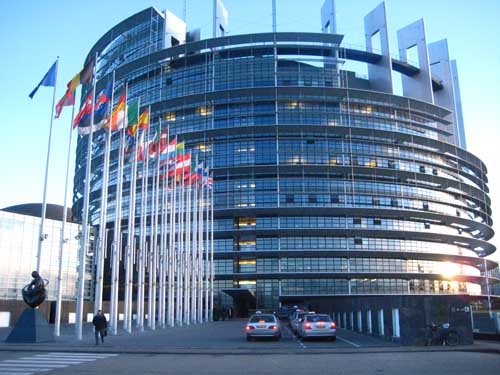
European Union Lawmakers Pass World’s First Major Act to Regulate AI

0
European Commission

The world’s first major act to regulate Artificial Intelligence (AI) has been passed by European Lawmakers after the parliament on Wednesday approved the regulatory ground rules to govern the technology.

The legislation is a comprehensive framework designed to ensure AI is developed and used in a responsible and ethical manner.

Also, the act is poised to reshape how businesses and organizations in Europe use AI for everything from healthcare decisions to policing. It imposes blanket bans on some “unacceptable” uses of the technology while enacting stiff guardrails for other applications deemed “high-risk.”

The president of the European Parliament, Roberta Metsola, described the act as trailblazing, saying it would enable innovation while safeguarding fundamental rights.

She wrote via a social media post,

Artificial Intelligence is already very much a part of our lives. Now, it will be part of our legislation too.”

Also commenting on the act, the European commissioner for internal market, Thierry Breton wrote on X, “Europe is now a global standard-setter in AI”.

Legal professionals described the act as a major milestone for international AI regulation, noting that it could pave the path for other countries to follow suit.

Meanwhile, Dragos Tudorache, a lawmaker who oversaw EU negotiations of the agreement, lauded the agreement but noted that the biggest hurdle remains implementation. He described the AI Act as not the end of the journey, but rather, the starting point for a new model of governance built around technology.

The new act imposes a ban on certain AI applications that threaten citizens’ rights, which includes biometric categorization systems based on sensitive characteristics and untargeted scraping of facial images from the internet or CCTV footage to create facial recognition databases.

Also, AI that manipulates human behavior or exploits people’s vulnerabilities will be forbidden. Companies such as OpenAI that produce powerful, complex, and widely used AI models will also be subject to new disclosure requirements under the law.

Reports reveal that the regulation is expected to enter into force at the end of the legislature in May, after passing final checks and receiving an endorsement from the European Council. Implementation will then be staggered from 2025 onward.

Following concerns surrounding bias, discrimination, and data privacy, amongst others as regards the use of AI technology, governments of several European nations have before now rolled out regulatory laws to guide the use of AI.

With major elections set to take place in different nations across the globe, these Governments fear the possibility of deepfake forms of artificial intelligence that generate false events, including photos and videos being deployed in the lead-up to a swathe of key global elections this year.

In a bid to curb some irregularities in the technology, some AI backers are already self-regulating to avoid disinformation. Tech giant company Google earlier this week, announced that it will limit the type of election-related queries that can be asked on its Gemini chatbot, saying it has already implemented the changes in the U.S. and India.

Nigerian Identity Verification Company Youverify Secures $2.5 Million in Pre-Series Funding

0
Fund, money cash dollar

Youverify, a Nigerian company specializing in identity verification and anti-money laundering (AML) solutions for banks and startups, has secured a pre-series A funding round of $2.5 million.

The pre-Series A investment from Elm includes a strategic partnership to help Youverify streamline AML compliance for businesses, bolster global risk intelligence, and expand its products into new markets.

Speaking on the investment, VP of Elm Investment, Fahad bin Issa Ibrahim Al-Shathry said,

We are excited to partner with Youverify, a company that shares our vision for leveraging technology to solve critical challenges faced by businesses today. This collaboration is a testament to our dedication to collaborating with exceptional founders through investing in a budding technology ecosystem not only in the Kingdom of Saudi Arabia but also globally to drive efficiency, security, and trust.”

Since 2022, Youverify has expanded its real-time business verification coverage to 145 jurisdictions across 48 countries. Additionally, the platform offers coverage for real-time individual verification, including credit history and national identity numbers, in 46 countries.

The company currently serves commercial customers in only 12 countries. Across these countries, the startup processes 4 million monthly applications for over 3,500 businesses with 800 active clients.

This marks a significant increase from the 400 businesses and 5 million application processes per year recorded in 2022. Additionally, the platform’s capacity to verify IDs has expanded from 400 million to 5 billion people, as well as 600 million businesses across various industries such as gaming, travel, healthcare, and telecommunications.

Youverify compliance solutions help customers reduce fraud losses by over 60%, positively impacting company financials. The company’s clients experience more than a 50% reduction in the number of false positives through customizable rules and intelligent algorithms.

The surge in financial services across Africa has drawn increased attention from regulators. Reports indicate that transactions totaling $116 billion will occur through digital payment channels this year, necessitating stringent measures to combat identity theft and fraud.

Accordingly, there’s a growing emphasis on transparency in financial regulations and the enhancement of strategies for AML and Know Your Customer (KYC) through the adoption of regulatory technologies (regtech). Africa expects to follow suit as the demand for regtech solutions rises globally.

In a bid to enhance anti-money laundering compliance, Youverify has stepped up its platform to regulate the payments space.

Notably, detecting suspicious activities or potential fraud goes beyond monitoring transactions, with Youverify’s AI-powered solution, it monitors all data of interest beyond transactions with options for customizations based on industry needs.

Youverify clients experience more than 50% reduction in the number of false positives through customisable rules and intelligent algorithms.

The company’s CEO Odegbami stresses that collaborating with regulators across various markets has honed Youverify’s proficiency in compliance and cultural sensitivity.

AI Poses Some Risks That Could Lead to Human Extinction, Says Report Commissioned by US State Department

0

The US Department of State has set its sights on the potential risks posed by artificial intelligence (AI), commissioning an exhaustive report from AI startup Gladstone, aimed at unraveling the merits and demerits of the emerging technology.

Released on Monday, the 284-page dossier serves as a clarion call, warning of the perilous consequences, including the potential end to humanity, that could ensue from the unchecked advancement of AI technology.

“At Gladstone, we have meticulously examined the trajectory of AI development and its implications for society,” stated Jeremie Harris, CEO of Gladstone. “Our findings are deeply concerning, suggesting that the advent of AGI could usher in a new era of existential threats unparalleled in human history.”

The report, initiated in October 2022, aims to assess the risks of AI weaponization and the loss of control over advanced AI systems. It noted that some of the risks could “lead to human extinction.”

Drawing insights from 200 industry stakeholders and analyzing historical precedents, Gladstone’s research sheds light on the profound challenges ahead.

“AGI represents a paradigm shift in technological capabilities,” explained Edouard Harris, CTO of Gladstone. “We must confront the reality that these systems could be weaponized in ways that pose grave risks to global security.”

One of the primary concerns outlined in the report is the potential for AI weaponization across multiple domains, including biowarfare, cyber-attacks, disinformation campaigns, and autonomous weaponry. Jeremie Harris highlighted the urgent need to address cyber threats, which he identified as a particularly acute risk.

“Cyber attacks orchestrated by AI systems could wreak havoc on critical infrastructure, destabilizing economies and threatening lives,” warned Jeremie Harris. “We cannot afford to underestimate the destructive potential of such technology.”

In addition to the risk of weaponization, the report underscores the perilous prospect of losing control over advanced AI systems. The emergence of AGI, capable of surpassing human intelligence, raises profound ethical and existential questions.

“Ensuring human oversight and control over AI systems is paramount to prevent unintended consequences,” emphasized Edouard Harris. “Failure to do so could lead to mass casualties and global destabilization.”

The report’s findings have elicited diverse responses from experts in the field, who spoke to BI, reflecting a spectrum of viewpoints on the risks and benefits of AI development. Robert Ghrist, associate dean at Penn Engineering, expressed cautious optimism about the future of AI but stressed the importance of vigilance.

“While the potential of AI is immense, we must approach its development with a keen awareness of potential risks,” remarked Ghrist. “Balancing innovation with safeguards is essential to harnessing the full potential of AI for societal benefit.”

However, some experts share a more pessimistic outlook, echoing the report’s concerns about the existential threats posed by AGI. Geoff Hinton, a leading figure in deep learning, warned of the possibility of human extinction within the next few decades.

“The unchecked development of AGI poses an existential threat to humanity,” cautioned Hinton. “We must heed the warnings and take decisive action to mitigate these risks before it’s too late.”

Despite the alarm raised by Gladstone’s report, not all experts agree on the appropriate response. Lorenzo Thione, an AI investor, cautioned against overreacting to the potential risks, advocating for a balanced approach that fosters innovation while addressing concerns.

“While we must take AI risks seriously, we must also avoid stifling innovation with excessive regulations,” argued Thione. “Finding the right balance is crucial to navigating the complex challenges posed by AI.”

In response to the report’s recommendations, which include the establishment of AI safety regulations and international cooperation, opinions among experts diverge. Artur Kiulian, an AI analyst, questioned the feasibility of regulatory solutions and emphasized the need for adaptive strategies.

“While regulation is important, we must also recognize the limitations of top-down approaches in a rapidly evolving landscape,” remarked Kiulian. “Flexibility and innovation are essential to effectively addressing AI risks.”

David Krueger, an AI researcher at Cambridge University, echoed the call for proactive measures to mitigate AI risks but stressed the importance of global cooperation.

“Addressing AI risks requires international collaboration and coordination,” asserted Krueger. “Only through collective action can we navigate the challenges posed by AGI and ensure a safer future for humanity.”

However, the Gladstone report has amplified calls for AI regulation, especially as the US policymakers and stakeholders drag their feet in developing a framework that will guide the emerging technology. With its potential to reshape society in profound ways, the warning from the Gladstone report buoys several other calls on the authorities to address concerns of potential harm that decisions AI development may impact on humanity.