DD
MM
YYYY

PAGES

DD
MM
YYYY

spot_img

PAGES

Home Blog Page 3626

Zoho Partners With StartupSouth to Foster The Growth of Startups in Nigeria

0

Zoho, a global technology company has partnered with StartupSouth, Nigeria’s leading startup & innovation ecosystem development and advocacy organization, to foster the growth of startups in Nigeria.

At the company’s annual user conference, Zoho disclosed that it will be providing its contract management solution, Zoho contracts, free for three months to help businesses improve compliance with the Nigerian Data Protection Law.

Furthermore, the company said its partnership with StartupSouth, and the special offer on Zoho contracts are further steps that underscore its commitment to serve the business community in the region.

Speaking further on Zoho’s partnership with StartupSouth through its Zoho for Startups program, the Convener, StartupSouth, Uche Aniche explained that part of the partnership is that startups associated with StartupSouth, which are new customers for Zoho, can avail Zoho Wallet credits worth N470,000.

According to Uche, he further disclosed that the credit can be used to purchase or upgrade any of Zoho’s 55+ products, including Zoho One, the operating system for business, over a period of 360 days.

Zoho One offers a unified platform that brings together over 50 Zoho products from CRM to HR management. The startups will also receive training to help them leverage Zoho’s products for their growth in a way that they can easily scale.

Zoho recently declared a 50% growth in Nigeria, which according to the company is a direct result of Nigerian businesses embracing cloud technology.

Speaking on the company’s growth in Nigeria, Regional Director, MEA Zoho, Ali Shabdar said,

“Our growth is a direct result of Nigerian businesses embracing cloud technology, especially unified platforms, to digitally transform and build resilience to adapt to challenging market conditions. Zoho’s unified technology stack, built from the ground up, allows us to meet such transformation needs of businesses with robust solutions that deliver consistently seamless user experiences at an unbeatable value”.

Notably, Zoho also grew its partner network by 22% and more than doubled its employee count in 2022 in Nigeria to reinforce its local presence and serve its customers.

StartupSouth on the other hand has been a driving force in ecosystem development and advocacy, particularly focusing on high-impact ventures in Nigeria’s South-South and Southeast regions.

Uche Aniche, Convener, StartupSouth said,  the collaboration between StartupSouth and Zoho for Startups is not merely a partnershi, but it’s a meeting of shared values and objectives.

He pointed out the alignment between the two entities, highlighting Zoho’s mission to localism and establishing offices in rural locations rather than concentrating solely in major cities. This according to him is in line with  StartupSouth’s goal to extend economic opportunities beyond urban centers.

Sam Altman, the ex-CEO of OpenAI, will join Microsoft along with other EX staff

0

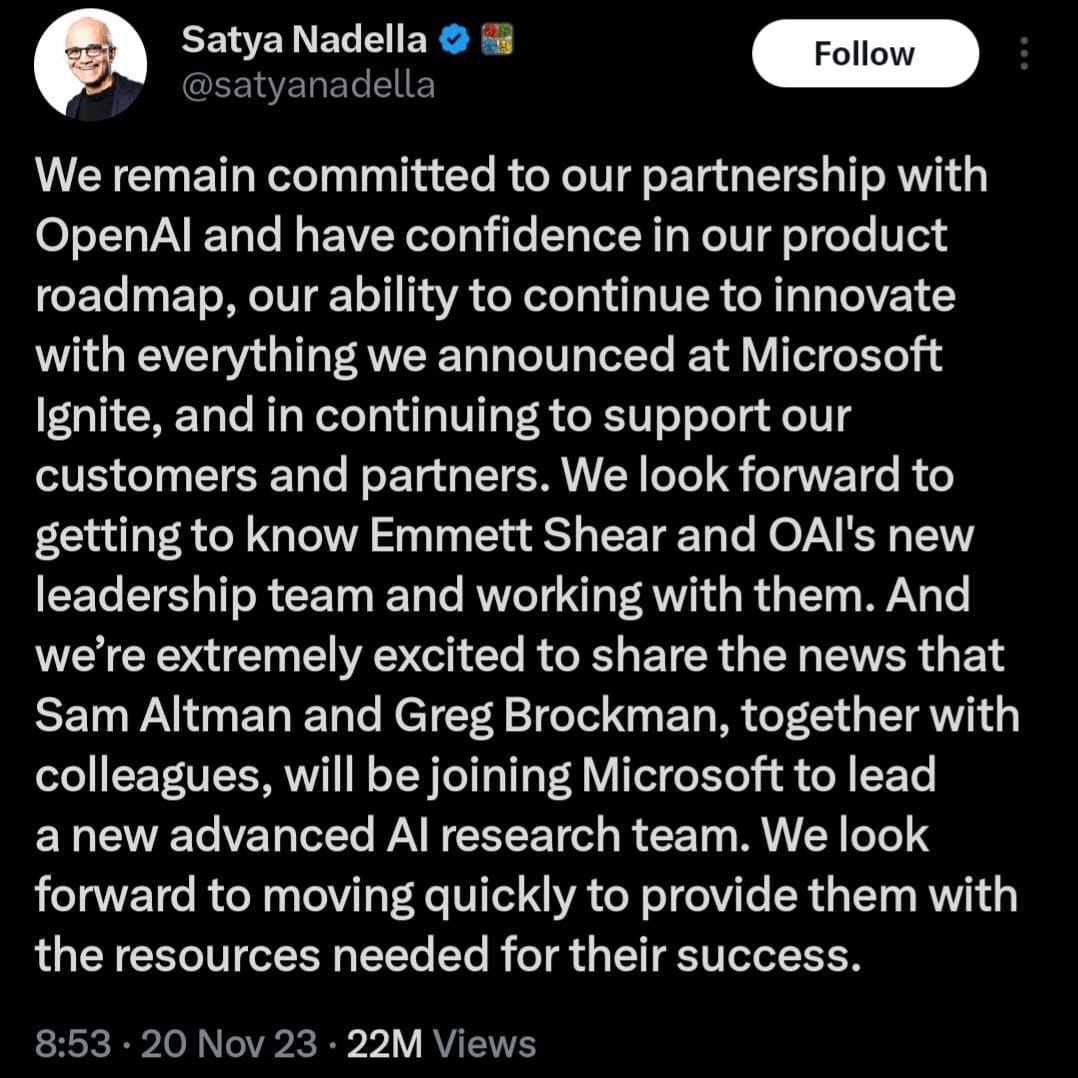
Microsoft announced today that it has hired Sam Altman, the former CEO of OpenAI, as a senior advisor on Artificial intelligence and Innovation. Altman, who stepped down from OpenAI on 18th, November 2023, will join Microsoft along with several other former OpenAI staff members, including Ilya Sutskever, Greg Brockman, and Wojciech Zaremba.

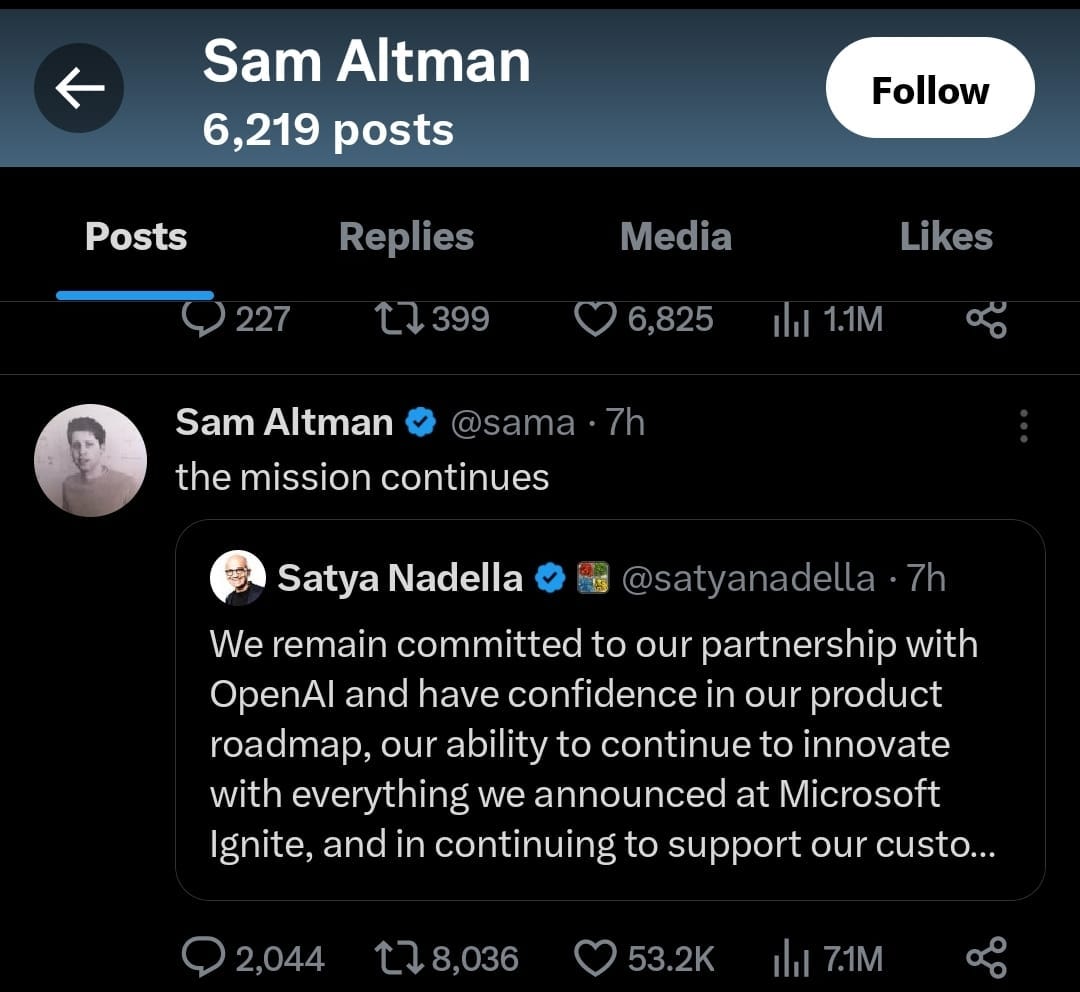
Microsoft said that the new hires will help the company accelerate its AI research and development, as well as foster collaboration with the broader AI community. Microsoft has been a major supporter of OpenAI since 2019, when it invested $1 billion in the research organization and became its exclusive cloud provider. Sam Altman has responded to Microsoft CEO offer on X with few inscriptions “The mission Continues” showing interest in the new offer.

Altman is a prominent figure in the tech industry, having previously led Y Combinator, one of the most influential startup accelerators in Silicon Valley. He was also one of the co-founders of OpenAI, along with Elon Musk and other tech luminaries, in 2019. OpenAI is a non-profit organization dedicated to creating and ensuring the safe and beneficial use of artificial general intelligence (AGI), which is the hypothetical level of AI that can perform any intellectual task that a human can.

OpenAI board destroying $100B in enterprise value in one weekend, allowing Satya Nadella to acquire their entire team.

In a stunning display of mismanagement and shortsightedness, the board of OpenAI has effectively destroyed $100 billion in enterprise value in one weekend and allowed Satya Nadella, the CEO of Microsoft, to acquihire their entire team.

The chain of events that led to this outcome began on Friday, November 17, when OpenAI announced that it was spinning off a new for-profit company called OpenAI LP, which would be able to attract more funding and talent, while still pursuing the same mission as the original non-profit. The new company would be governed by a “capped return” model, which would limit the returns to investors to 100x their initial investment and direct any excess profits back to the non-profit entity.

However, this announcement raised more questions than answers. How would OpenAI LP ensure that its research and products are aligned with the public interest and not influenced by the profit motive? How would it balance the need for openness and transparency with the need for secrecy and competitiveness? How would it prevent conflicts of interest among its investors, board members, and researchers? And most importantly, how would it maintain its independence and autonomy from Microsoft, which had invested $1 billion in OpenAI earlier that year and had a seat on its board?

The answers to these questions were not reassuring. On Saturday, November 18, OpenAI revealed that Microsoft had acquired an exclusive license to use its most advanced technology, the GPT-3 language model, which can generate coherent and convincing text on almost any topic. This meant that Microsoft would have a monopoly on one of the most powerful AI tools ever created, while other researchers and developers would have to rely on a limited and restricted API access. Moreover, Microsoft would have the ability to censor or manipulate the output of GPT-3 according to its own interests and agenda.

The reaction from the AI community was swift and harsh. Many criticized OpenAI for betraying its own principles of openness and fairness, and for handing over a potentially dangerous technology to a corporation that has a history of antitrust violations and unethical practices. Some even accused OpenAI of being a “Trojan horse” for Microsoft, which had used its investment to gain control over its research and talent.

The final blow came on Sunday, November 19, when OpenAI announced that it was dissolving its non-profit entity and merging with OpenAI LP, effectively becoming a fully owned subsidiary of Microsoft. The board of OpenAI claimed that this was necessary to simplify the legal structure and streamline the operations of the organization. However, many saw this as a blatant capitulation to Microsoft’s demands and a complete abandonment of OpenAI’s original mission and vision.

The consequences of these decisions are likely to be devastating for OpenAI and the AI field at large. By losing its independence and credibility, OpenAI will also lose its ability to attract and retain top talent, who will either leave for other organizations or join Microsoft.

By giving up its most valuable asset, GPT-3, to Microsoft, OpenAI will also lose its competitive edge and innovation potential, while enabling Microsoft to dominate the AI market and shape the future of humanity according to its own interests. And by abandoning its non-profit status and mission, OpenAI will also lose its moral authority and social responsibility, while betraying the trust and support of its donors, partners, and stakeholders.

OpenAI’s board has made a grave mistake that will haunt them for years to come. They have not only destroyed $100 billion in enterprise value in one weekend, but they have also jeopardized the future of AI and humanity.

Altman said that he is excited to join Microsoft and work with its talented AI team. He also praised Microsoft’s vision and commitment to advancing the field of AI for the common good. “Microsoft is one of the few companies that has the resources, the expertise, and the culture to make a positive impact on humanity through AI,” he said. “I look forward to working with them to create breakthroughs that will empower everyone to achieve more.”

Microsoft CEO Satya Nadella welcomed Altman and his colleagues to the company and expressed his admiration for their work at OpenAI. He also said that Microsoft shares their passion and vision for creating responsible and trustworthy AI systems that can benefit society.

“We are thrilled to have Sam Altman and his team join us at Microsoft,” he said. “They are some of the brightest minds in AI, and we are confident that they will help us push the boundaries of what is possible and create new opportunities for our customers and the world.”

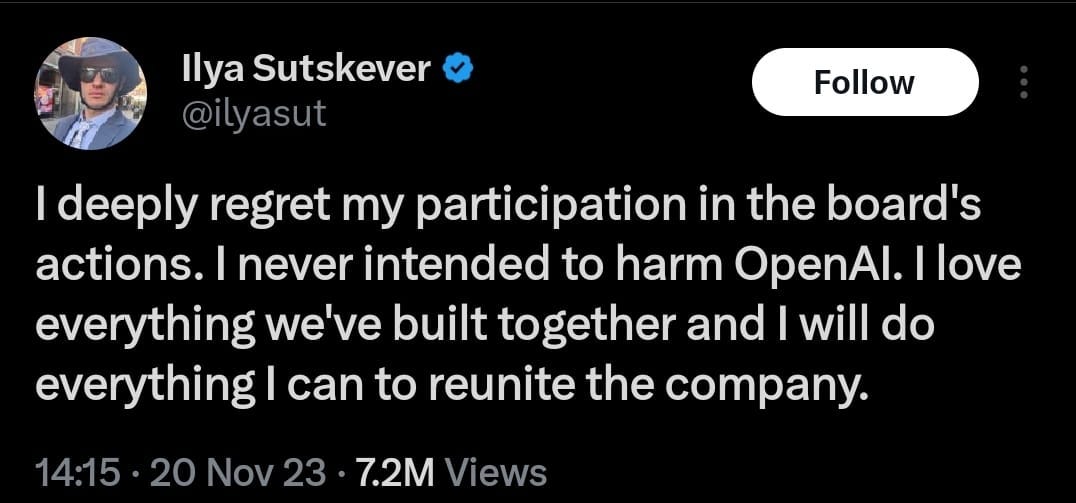
I deeply regret my participation in the board’s actions. I never intended to harm OpenAI. I love everything we’ve built together, and I will do everything I can to reunite the company, ILya Sutskever, OpenAI board member wrote on X today.

SEC Delays Franklin Templeton’s Spot Bitcoin ETF application, JPMorgan Tests Tokenized Assets

0

The US Securities and Exchange Commission (SEC) has postponed its decision on the spot Bitcoin exchange-traded fund (ETF) proposal filed by Franklin Templeton, one of the world’s largest asset managers with over $1.5 trillion in assets under management. The SEC announced on Monday that it will extend the 45-day review period for the Franklin Templeton Bitcoin ETF by another 45 days, pushing the deadline to January 3, 2024.

The Franklin Templeton Bitcoin ETF, if approved, would be the first of its kind in the US to track the performance of Bitcoin directly, rather than through futures contracts or other derivatives. The fund would hold Bitcoin in cold storage and use a third-party custodian to ensure the security and integrity of the assets. The fund would also use a proprietary index to calculate the net asset value (NAV) of the ETF, based on the prices of Bitcoin across multiple exchanges.

The SEC has been cautious about approving spot Bitcoin ETFs, citing concerns over market manipulation, fraud, custody, liquidity, and investor protection. The regulator has rejected several applications for spot Bitcoin ETFs in the past, while approving four Bitcoin futures ETFs in October. However, some experts argue that spot Bitcoin ETFs would be more beneficial for investors, as they would offer lower fees, more transparency, and more exposure to the underlying asset.

The SEC’s delay on the Franklin Templeton Bitcoin ETF comes amid a growing demand for crypto-related products and services from institutional and retail investors. According to a recent report by Fidelity Digital Assets, 90% of institutional investors surveyed expect to have an allocation to digital assets by 2026, while 52% already have some exposure. Moreover, a survey by Franklin Templeton itself found that 40% of financial advisors are interested in adding crypto to their clients’ portfolios.

The SEC’s decision on the Franklin Templeton Bitcoin ETF could have a significant impact on the crypto market, as it could set a precedent for other spot Bitcoin ETF applications that are pending or in the pipeline. Some of the other firms that have filed for spot Bitcoin ETFs include VanEck, Valkyrie, WisdomTree, NYDIG, and Galaxy Digital. The approval of a spot Bitcoin ETF could also boost the adoption and legitimacy of Bitcoin as an asset class, as well as increase its liquidity and price discovery.

Trading in Bitcoin Options listed on Deribit

If you are looking for a way to profit from the volatility of the cryptocurrency market, you might want to consider trading in bitcoin (BTC) options listed on the cryptocurrency exchange Deribit. Bitcoin options are contracts that give you the right, but not the obligation, to buy or sell bitcoin at a specified price and time. By trading in options, you can hedge your exposure to price movements, speculate on future trends, or generate income from your holdings.

Deribit is one of the leading platforms for trading in bitcoin options, offering a variety of contracts with different strike prices and expiration dates. Deribit also has a high level of liquidity, security, and reliability, making it a preferred choice for many traders. According to data from Skew, Deribit accounts for more than 80% of the global bitcoin options market share and has seen a surge in trading volume and open interest in recent months.

One of the reasons why trading in bitcoin options on Deribit is more popular than ever is the introduction of the Deribit Perpetual Index (DPI), which tracks the price of bitcoin across multiple spot exchanges. The DPI allows traders to trade in options that are settled in cash, rather than in physical bitcoin. This means that traders do not have to worry about storing or transferring their bitcoin, and can avoid the risks of hacking, theft, or loss. The DPI also enables traders to use leverage, which can amplify their profits or losses.

Another reason why trading in bitcoin options on Deribit is more popular than ever is the innovation and diversity of the products offered by the platform. Deribit constantly adds new features and functionalities to its platform, such as the ability to trade in European-style options, which can only be exercised at expiration, or American-style options, which can be exercised at any time before expiration. Deribit also offers exotic options, such as binary options, which pay out a fixed amount if a certain condition is met, or barrier options, which are activated or deactivated when the price reaches a certain level.

Trading in bitcoin options on Deribit is not without risks, however. Options are complex and sophisticated instruments that require a high level of knowledge and experience to trade effectively. Options traders also have to pay attention to various factors that affect the price of the contracts, such as volatility, time decay, and implied interest rate. Moreover, trading in options involves fees and commissions that can eat into your profits.

If you are interested in trading in bitcoin options on Deribit, you should do your own research and due diligence before entering any position. You should also be aware of the rules and regulations of your jurisdiction regarding cryptocurrency trading and taxation. Trading in bitcoin options on Deribit can be a rewarding and exciting activity, but it is not for everyone. You should only trade with money that you can afford to lose.

JPMorgan tests tokenized assets with Avalanche blockchain as BlackRock submits S-1 Application

JPMorgan, one of the largest banks in the world, has announced that it is testing tokenized portfolios on the Avalanche blockchain platform. The bank said that it is exploring the potential of using blockchain technology to create and manage portfolios of digital assets, such as stocks, bonds, commodities, and cryptocurrencies.

The bank is using its own proprietary platform, called JPM Coin, to issue and redeem tokens that represent the underlying assets. The tokens are then transferred and settled on the Avalanche network, which claims to offer high scalability, low latency, and low fees. The bank said that this approach could reduce operational costs, improve liquidity, and enhance transparency for both the bank and its clients.

The bank also said that it is working with several partners, including ConsenSys, Circle, and Paxos, to provide custody, compliance, and settlement services for the tokenized portfolios. The bank said that it is aiming to launch a pilot program with selected clients in the first quarter of 2024.

The bank’s move is part of its broader strategy to embrace blockchain technology and digital assets. The bank has been investing in blockchain research and development since 2015, and has launched several initiatives, such as the Interbank Information Network (IIN), the Quorum enterprise blockchain platform, and the Onyx digital asset unit. The bank has also been offering exposure to cryptocurrencies through various products, such as Bitcoin futures, exchange-traded notes (ETNs), and investment funds.

BlackRock submits S-1 SEC filing for Spot Ether ETF.

BlackRock, the world’s largest asset manager, has filed a registration statement with the U.S. Securities and Exchange Commission (SEC) for a spot ether exchange-traded fund (ETF).

According to the S-1 filing dated November 17, 2023, the BlackRock Ethereum Trust will invest primarily in ether, the native cryptocurrency of the Ethereum blockchain. The trust will also hold cash and cash equivalents to meet its expenses and other obligations.

The trust’s objective is to provide investors with exposure to the price performance of ether, as well as the opportunity to benefit from the interest income generated by lending out the trust’s ether holdings to third parties.

The trust will not seek to track the performance of any index or benchmark and will not use derivatives or other instruments to hedge its exposure to ether price fluctuations. The trust will also not engage in any active trading of ether, except for rebalancing or liquidating its portfolio as needed.

The trust will issue and redeem shares only in large blocks called “baskets”, which will consist of 50,000 shares each. The shares will trade on the NYSE Arca under the ticker symbol “BETH”. The trust’s sponsor is BlackRock Asset Management North America, Inc., and its custodian is Coinbase Custody Trust Company, LLC.

The filing comes amid growing investor demand for exposure to ether, which has surged more than 800% year-to-date and reached a new all-time high of over $8,000 on November 15, 2023. Ether is the second-largest cryptocurrency by market capitalization, after bitcoin, and powers a wide range of decentralized applications (dApps) and protocols on the Ethereum network.

BlackRock is not the first company to file for a spot ether ETF in the U.S. In October 2023, VanEck and ProShares also submitted their respective filings for similar products. However, none of these proposals have been approved by the SEC yet, as the regulator continues to express concerns about the potential risks and challenges of investing in crypto assets.

The SEC has so far only approved two bitcoin futures ETFs in the U.S., which launched in October 2023 and have attracted over $2 billion in assets under management. A spot bitcoin ETF, which would directly hold the underlying asset, remains elusive.

BlackRock did not disclose the expected launch date or fee structure of its proposed ether ETF in its filing. The filing also stated that the trust’s shares are not registered under the Securities Act of 1933 and are therefore subject to significant restrictions on resale and transferability.

Fuel Subsidy Removal: Nigeria’s Revenue Has Increased to More Than N1tn Monthly – Finance Minister

0

The Minister of Finance, Wale Edun, has disclosed a significant surge in revenue inflow to the Federation Account, soaring from an average of N650 million monthly to over N1 trillion in the last four months following the removal of petrol subsidy.

This revelation came during a retreat for the Federation Account Allocation Committee (FAAC) in Asaba. The retreat was captioned, “Creating a Resilient Economy through Diversification of the Nation’s Revenue”,

Edun said that the government acknowledged the unsustainability of petroleum subsidies, which had previously eroded revenues that could have been directed toward critical expenditures for the public’s welfare. He assured that the administration remains committed to implementing policies oriented towards the people’s well-being.

Part of the government’s objectives includes achieving specific tax revenue targets while avoiding overburdening taxpayers with multiple new taxes. Instead, they aim to broaden the tax base, streamline tax administration, and simplify collection processes.

The administration had previously constituted a Presidential Committee of Fiscal Policy and Tax Reforms, which submitted an interim report highlighting optimistic prospects.

“We all know that achieving tax revenue to Gross Domestic Product (GDP) target of 22 percent and tax to GDP of 18 percent by 2026 are parts of the cardinal objectives of this administration.

”However, in doing that, we appreciate the need not to overburden the taxpayers by introducing so many new taxes,” the minister said, adding that “what is necessary to be done is to broaden the tax base, simplify, and streamline tax administration for ease of collection.”

Edun further said that one of the initial actions taken by this administration upon assuming office was the formation of a Presidential Committee on Fiscal Policy and Tax Reforms.

Acknowledging the hardships faced by Nigerians due to subsidy removal and exchange rate harmonization, the minister emphasized that the government is focused on ensuring that the sacrifices made by citizens will yield positive results. He reassured the public that the administration has implemented structured palliative measures to mitigate the economic consequences of ongoing reforms.

“The government is bent on ensuring that the economy bounces back to normal as we continue to consolidate recovery efforts while focusing on achieving inclusive economic growth and development,” he added.

However, the disclosure of increased revenue has prompted renewed calls for the federal government to curtail borrowing, considering the rising public debt stock.

With a monthly revenue exceeding one trillion, there’s a belief that the N26 trillion 2024 national budget, which was approved last month by the Federal Executive Council (FEC), could potentially be adequately funded without resorting to additional borrowing, especially when the nation is spending over 90% of its revenue on debt servicing.

This surge in revenue represents a positive shift that could potentially alleviate the need for extensive borrowing, contributing to improved fiscal management and reduced reliance on external funding.

The Abia State Response And Why Media Companies Should Be Thorough in Comparisons

2

You got the news that Abia State spent “N927 million On Meals, Welfare Packages In Three Months, etc” by a media organization. First, it was all fake news because if you check the same document the media people shared, Abia State ought to have been commended.

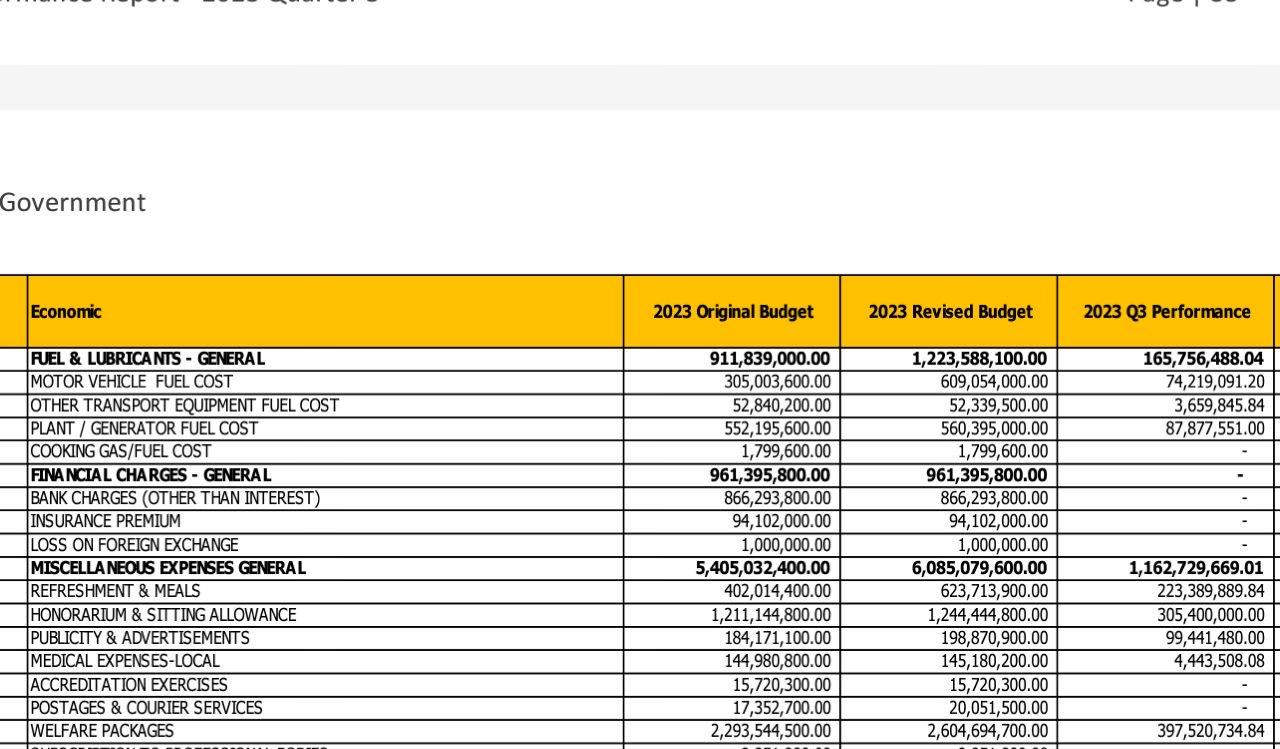
It is key to understand that Abia State is still operating on an old budget which was approved before the current government took over. Using “refreshment & meals, etc”, the budget was N624m but the state performance was N233m. The media firm should have commended the government for that reduction. 

But what happened was muddling things up to attack the state. Abia State is the most transparent government in Nigeria, considering that it publishes all expenses and revenues regularly. That some now use that data to confuse will not stop what Mr. Governor is doing.

More so, I understand that the media group noted that the government is spending on “information and propaganda”.  Unfortunately, there is nothing like information and propaganda. That data includes expenses for running Abia Broadcasting Corporation (BCA), Abia Newspaper, State Tourism Board, etc. Abia does not have money to pay adverts in TV stations, newspapers, etc. That cost is for operating units which are used to inform and update Abians.

Good People, there is nothing factual from what the media guy published and the state has responded. As noted, using Ebonyi’s Government House is not fair because Ebonyi runs 35 ministries/commissioners while Abia uses less than 20 but expanded the Governor’s Office to support those “eliminated” 15 ministries. Where it matters, Abia does well: Abia generates more IGR than Ebonyi even though, cumulatively, Abia spends less on running the government by billions of Naira. So, picking the Government House ONLY expense is deceptive.

Why do I take time to explain these things? Because I want you to have confidence that Abia is a place to do business. We want you to believe and that is why we publish the latest budget performance regularly which is unprecedented in Nigeria

Download Abia State’s latest budget performance here.

(I am not part of the government. I am an Abian. I am only responding based on the same document they used. Download and read it yourself.)

From the state….

ABIA STATE Q3 BUDGET EXPENSES: UNDERSTANDING THE ISSUES

Following the publication of the Q3 budget report of the Abia State Government, and in line with the government’s commitment to transparency, good governance and fiscal discipline, it has become necessary to shed more light on the aforementioned report.

This is even more so when there are certain distorted reports on social media, alleging that the Abia State Government had spent close to One Billion Naira on feeding and welfare for the Governor’s Office, within the period under review.

The accurate situation is that nothing in that region has been spent in the Governor’s Office.

The facts are as stated below:

  1. The total amount spent so far by the entire government of Abia State for Refreshments and Meals for the period is N223,389,889.84.

  2. The figure above is as captured in all the Ministries, Departments and Agencies (MDAs) of government.

  3. Please, NOTE that this figure is for the entire state and not for the Office of the Governor, as being erroneously portrayed.

  4. The stated figure covers expenses for special events, such as retreats, conferences, and related events.

  5. For welfare, the Abia State Government has so far spent the sum of N397,520,734.84.

  6. The Welfare expenditure is in line with the State Fiscal, Transparency, Accountability and Sustainability Programme (SFTAS); an initiative of the Federal Government.

  7. Also NOTE that the Welfare Expenditure covers all the Ministries Departments and Agencies (MDAs) and not just the Governor’s Office, as wrongly alleged.

  8. Expenses under Welfare deal with issues of Health, Rehabilitation and Public Emergencies.

The Abia State Government, under the leadership of Dr. Alex C. Otti, OFR, will continue to uphold transparency in governance, as has been demonstrated in the publication of the budget performance report for two consecutive quarters.

Thank you.

KAZIE UKO
Chief Press Secretary to the Governor
Abia State
November 20, 2023

FERDINAND EKEOMA
Special Adviser to the Governor
Media and Publicity
November 20, 2023