
DD
MM
YYYY

PAGES

DD
MM
YYYY

spot_img

PAGES

Home Blog Page 3637

Nigerian Fintech Startup Chimoney Acquires Payments App Scrim For an Undisclosed Amount

0

Chimoney, a Nigerian Fintech payment platform and API provider for global money movement, has acquired Scrim, a Gen Z mobile app that lets users send and receive real-time payments from their friends & family, for an undisclosed sum.

According to Chimoney, the acquisition of Scrim is not just a corporate merger, but a strategic move to empower Africans and others in emerging markets, who have long faced discrimination in global financial platforms.

Speaking on the acquisition of Scrim, CEO of Chimoney Uchi Uchibeke said that having observed that African entrepreneurs, freelancers, and businesses have struggled with receiving payments from global clients, he saw the need to close the gap, hence the reason for the acquisition of Scrim.

He said Chimoney’s acquisition of Scrim appears to be a solution to addressing the payment gap, offering a solution that not only enables global payouts but also integrates seamlessly with local currencies and payment methods.

“The idea behind the Scrim app is simply brilliant. I have collaborated with Pleasant and the Scrim team on several projects including Scrims integration with Chimoney’s API and Wallets. It’s a no-brainer for us to acquire the Scrim App and help it grow. Working with members of the Chimoney team has been fantastic. Together, we’re going to take Scrim to new heights”, he added.

Reports reveal that Chimoney first took note of Scrim’s remarkable achievements in the social payments Fintech landscape when Scrim started integrating with Chimoney’s API.

Following the acquisition, the Scrim App will be relaunched in December 2023 with enhanced features powered from the ground up by Chimney’s API and Wallet as a Service (WaaS).

The relaunched app will have the following features such as global real-time payments, earning opportunities, and Shop with Scrim wallet balance.

Also, Scrim users will have the flexibility to withdraw their funds in a manner that suits them best. Options include transferring to bank accounts in more than 100 countries, converting to Airtime, using Mobile Money wallets in 17 countries, obtaining gift cards valid in 210 countries, engaging in cryptocurrencies across seven blockchains, or making purchases on platforms such as Amazon and Shopify.

With Chimoney’s API, global payouts are no longer a challenge but an opportunity. Chimney’s APIs enable payouts to Banks in 100 Countries, Mobile Money, Gift Cards, Airtime, and Crypto on seven Blockchains.

Scrim integration with Chimoney’s API and Payment infrastructure exemplifies how versatile and powerful Chimoney’s solutions are in the evolving landscape of digital payments, onramps, and offramps. This move is more than an acquisition; rather it is a reshaping of the global remittance narrative and making launching a global Fintech as easy as hosting a website on the Cloud.

From Financial uncertainty to Fintech trailblazer, Chimoney was launched out of a vision to empower individuals and businesses to send bulk pay-outs to recipients worldwide through emails and phone numbers.

The platform’s revolutionary approach enables businesses to seamlessly pay one or a million people across the globe with just a click, using only an email or phone number. This innovation is not just changing the way payments are made, it is also opening doors to financial accessibility and inclusion for people around the world.

With Chimoney’s remarkable payout platform, the startup is not only transforming the fintech landscape but also making global payments seamless and swift.
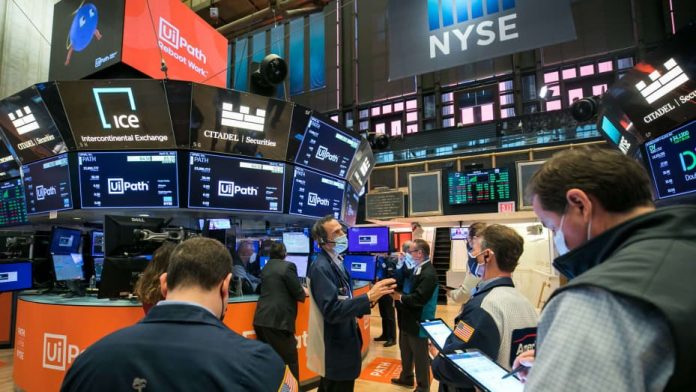
Implications of $739 billion added on the US Stock Market on November 13, 2023

0

The US stock market witnessed a remarkable surge this week as $739 billion was added to its total value. This is the largest single-day increase in history, surpassing the previous record of $586 billion set on March 24, 2020. What drove this unprecedented rally, and what does it mean for investors and the economy?

On Monday, November 13, 2023, the US stock market witnessed a historic surge of $739 billion in its total market capitalization, reaching a new record high of $52.7 trillion. This was driven by a combination of factors, including positive earnings reports, vaccine breakthroughs, and easing geopolitical tensions. But what does this mean for the US economy and the world at large? Here are some possible implications of this unprecedented event:

A boost to consumer confidence and spending: The stock market rally could translate into higher consumer confidence and spending, as investors feel wealthier and more optimistic about the future. This could stimulate the demand for goods and services, creating a positive feedback loop for the economy.

A challenge to inflation and interest rates: The stock market rally could also pose a challenge to the Federal Reserve, which has been trying to keep inflation and interest rates low amid the pandemic recovery. The surge in stock prices could reflect higher inflation expectations, as investors anticipate stronger economic growth and higher corporate profits. This could put pressure on the Fed to tighten its monetary policy sooner than expected, raising interest rates and slowing down the economy.

A shift in global power and influence: The stock market rally could also have geopolitical implications, as the US asserts its dominance and leadership in the global arena. The US stock market accounts for about 40% of the world’s total market capitalization, making it the largest and most influential market in the world. The rally could enhance the US’s soft power and attractiveness, as well as its hard power and leverage, in dealing with other countries and regions.

A risk of volatility and correction: The stock market rally could also entail some risks and challenges, as the market becomes more vulnerable to shocks and corrections. The rally could be driven by excessive optimism and speculation, rather than by fundamentals and valuations. The market could also face headwinds from external factors, such as new variants of the virus, political instability, trade disputes, or cyberattacks. These could trigger a sudden sell-off and a reversal of the gains.

According to analysts, several factors contributed to the bullish mood on Wall Street. First, the Federal Reserve announced that it would keep interest rates near zero until at least 2023, signaling its commitment to support the recovery from the pandemic-induced recession.

Second, the US Congress reached a bipartisan agreement on a $1.2 trillion infrastructure bill, which is expected to boost economic growth and create millions of jobs. Third, several major companies reported better-than-expected earnings for the third quarter, showing resilience and innovation amid the ongoing health crisis.

The stock market’s performance today reflects the optimism and confidence of investors in the US economy’s prospects. However, some experts warn that the rally may not be sustainable, as there are still many uncertainties and challenges ahead. For instance, the delta variant of the coronavirus continues to pose a serious threat to public health and business activity.

Moreover, inflation and supply chain disruptions could hamper consumer spending and corporate profits. Finally, geopolitical tensions and regulatory pressures could also affect the market sentiment in the coming months.

Therefore, investors should be cautious and diversified in their portfolio allocation, and not get carried away by the euphoria of this week’s gains. While the US stock market has shown remarkable strength and resilience, it is also subject to volatility and corrections. As always, a long-term and balanced approach is advisable for achieving financial goals.

The stock market rally of $739 billion added to the US stock market is a remarkable phenomenon that has significant implications for the US economy and the world. It could bring benefits and opportunities, as well as risks and challenges, depending on how it evolves and how it is managed. It is important for investors, policymakers, and observers to monitor the situation closely and act accordingly.

MultiChoice Group Reports $49m After Tax Loss Due to Nigeria’s FX Woes and South Africa’s Power Outages

0

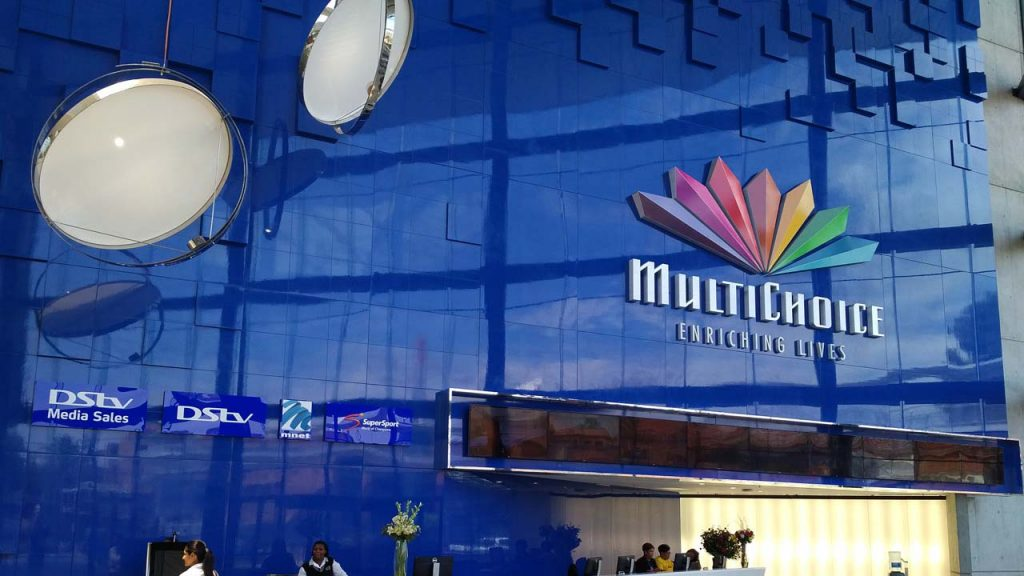
MultiChoice Group Ltd., Africa’s largest pay-TV company, has reported its third consecutive semi-annual loss, attributing the financial challenges to foreign exchange difficulties in Nigeria and persistent power outages in South Africa. Despite securing a significant gain in the African streaming market, effectively overtaking Netflix as the leader, the company faced substantial setbacks in its financial performance.

In a filing, MultiChoice disclosed a net loss of 1.32 billion rand ($72.4 million) for the six months ending Sept. 30. The company cited the poor performance of the Nigerian Naira against the dollar as a primary cause for the recorded loss. The challenges stemmed from Nigeria’s mid-June decision to allow the Naira to trade more freely against the dollar, leading to a 40% devaluation. This compelled MultiChoice to revalue inter-group loans, resulting in substantial foreign exchange losses.

Despite adding 1.4 million new subscribers in the previous financial year, subscriber growth in the Rest of Africa slowed down during the specified period. Factors contributing to this slowdown included inflationary pressures in key markets like Nigeria, following previous patterns seen after major football events such as the FIFA World Cup or northern hemisphere football off-season.

While the Rest of Africa segment’s active subscriber base remained stable at 8.9 million subscribers, subscription revenues witnessed a 14% organic growth. However, revenue of ZAR10.5 billion remained flat, with a weaker ZAR against the USD offsetting the impact of weaker local currencies.

The RoA (Return on Assets) segment delivered a trading profit of ZAR330 million, a significant increase on an organic basis, attributed to cost interventions around decoder subsidies and content costs. However, weaker currencies significantly hindered profitability, with substantial negative impacts due to sharp falls in exchange rates against the USD.

In addition to currency challenges, South Africa experienced rolling blackouts, contributing to a 5% decline in the number of active days per subscriber. This exacerbation further impacted MultiChoice’s financial performance during the specified period.

The company’s financial statement reads partly: “After adding 1.4m new subscribers in FY23, subscriber growth in the Rest of Africa was more subdued in 1H FY24. This was due to the impact of inflationary pressures in key markets like Nigeria, and similar trends to previous periods which followed a FIFA World Cup or northern hemisphere football off-season.

“A total of 0.1m subscribers were added to end the period at 13.0m 90-day active subscribers. The active subscriber base was broadly stable at 8.9m subscribers and subscription revenues grew 14% organically. Revenue of ZAR10.5bn was flat (+13% organic) with a weaker ZAR against the USD on conversion, offsetting the impact of weaker local currencies relative to the USD.

“The RoA (return on assets) segment delivered a trading profit of ZAR330m (+ZAR2.2bn YoY on an organic basis) which was underpinned by specific cost interventions around decoder subsidies and content costs.

“Weaker currencies remained a significant impediment to improvements in profitability, with average first-half exchanges falling sharply against the USD.

“The sharp fall of the naira resulted in a large proportion of the previously recognised losses incurred on cash remittances now being recorded in trading profit. The net effect of these forex movements was a negative ZAR1.6bn impact on the segment’s trading profit for the period.”

Following these challenges, the company’s shares fell 0.6% in Johannesburg, after a plunge of as much as 3.6% to a record low. MultiChoice plans to relaunch its Showmax streaming service in the second half of the financial year and introduce a sports betting service in South Africa, inspired by a successful offering in Nigeria.

Despite financial woes, MultiChoice’s Showmax presently holds 40% of the continent’s streaming market, as per Omdia Research, showcasing its continued influence in the African entertainment landscape amid recent setbacks.

Bankruptcy Claims: Obi Challenges Nigerian Government to Declare Assets, Deficit Inherited

0

Peter Obi, the Labour Party’s presidential candidate for the 2023 elections, has urged the Federal Government to unveil the true financial state inherited from the previous administration led by ex-President Muhammadu Buhari.

This call comes in response to recent statements made by President Bola Tinubu, indicating that his government inherited both assets and deficits from the preceding administration; and the National Security Adviser, Nuhu Ribadu, who claimed that the terrible economic situation that Nigerians are crying about, was bequeathed to the present administration by the past government.

In a statement released on X on Thursday, Obi challenged the government’s lack of transparency regarding the assets and deficits passed on to them. He highlighted the importance of accountability in governance, emphasizing that the disclosure of inherited deficits is crucial for the public to comprehend the nation’s current financial standing and future trajectory.

“One major characteristic of responsible governance is transparency and strict accountability. This demands that the government disclose exactly the degree of deficit they inherited. What is inherited should be disclosed to enable the public to know where we are and where we are headed,” he said.

Obi criticized the present administration’s claim of inheriting a financially distressed nation without providing specific details that justify the alleged bankruptcy status. He underscored that responsible governance necessitates transparency, insisting that the government should openly declare the extent of the deficits they inherited.

Drawing a parallel to the transition from the APC-led government in 2015, Obi criticized the lack of detailed disclosure regarding the inherited situation back then.

The former Anambra State governor also spoke about the alarming escalation of Nigeria’s debt profile during the previous administration, highlighting the increase from N12.6 trillion in 2015 to N87 trillion in 2023 without significant improvements in developmental indices such as education, healthcare, poverty alleviation, and security. He lamented the deteriorating state of the country across various vital sectors, leading to the prevailing grim situation faced by Nigerians on a daily basis.

Obi stressed that Nigerians seek actionable steps and tangible improvements rather than mere statements on the state of affairs.

“Nigerians know things are bad, and they experience it daily. What they now want to hear regularly are measurable and verifiable steps to improve the situation. Also, the alarm raised by the government about the bad state of our finances raises questions about the rationale behind some expenditure items in the supplementary budget recently signed into law,” he said.

Obi questioned the justification behind certain expenditures outlined in the recently signed supplementary budget in light of the government’s claims of financial distress.

Moreover, the presidential candidate reiterated his longstanding stance on the exorbitant cost of governance, advocating for a substantial reduction. He suggested that a financially strained nation should prioritize investing available resources into critical sectors like security, healthcare, education, and poverty eradication, particularly by tackling youth unemployment.

Obi said there is a need for measurable and verifiable strategies aimed at uplifting the country from its current economic challenges, rather than allocating resources to non-essential areas.

“The present revelation also goes to buttress the argument that I have made since electioneering season that the cost of governance is too high and must be drastically reduced,” he said.

Winich, A Tekedia Capital Portfolio Firm, Is An AgTech Innovator

0

Winich Inc is one of the finest companies in Africa, growing rapidly and demonstrating that agriculture is a big business. Winich provides technologies and systems where food producers and informal processors/retailers deal directly without the activities of middlemen.

Our mission at Tekedia Capital, remains to build the foundation of the Next Africa through entrepreneurial capitalism. Yearly, we invest millions of US dollars, building and rebuilding critical sectors in Africa and beyond.

Winich, backed by Tekedia Capital, is here to serve you:

To learn more about Winich Farms, go here

To learn more about Tekedia Capital, go here